
I Bought This Saw
It looked rugged on the site, hence a cheaper price for so classic a saw made by wonderful maker. Half the plate has now gone through sharpening but there is still another 50 good years of dovetailing service in it I think. It will see me out.
Anyway, I set to to sharpen the teeth and set them too. It came out fine although I think the teeth to be quite big for fine work. I will likely file them all off at some point and recut them. I removed the handle which was loose and found rust inside the enclosure of the handle which cause it to wobble and just enough flex like that will restrict your accuracy. I suspect this happened after the old woodworker passed as it is most likely that this has seen three or more users throughout its lifetime. There are three names on the handle, with my own yet to come, so as many owners did not stamp their names, it could well be more.
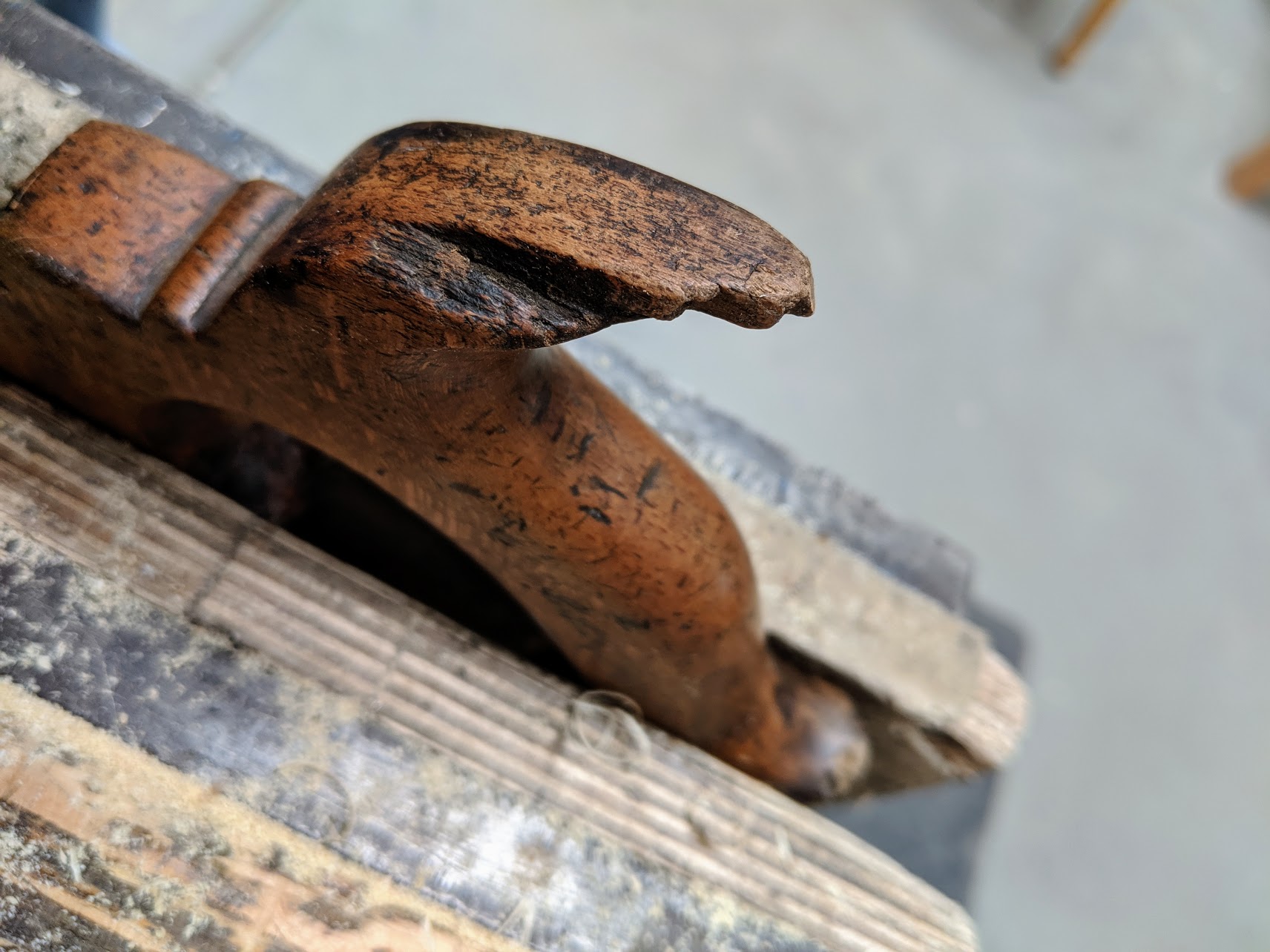
Firstly I planed of the damaged horn with a bench plane. to get a true a flat is essential.

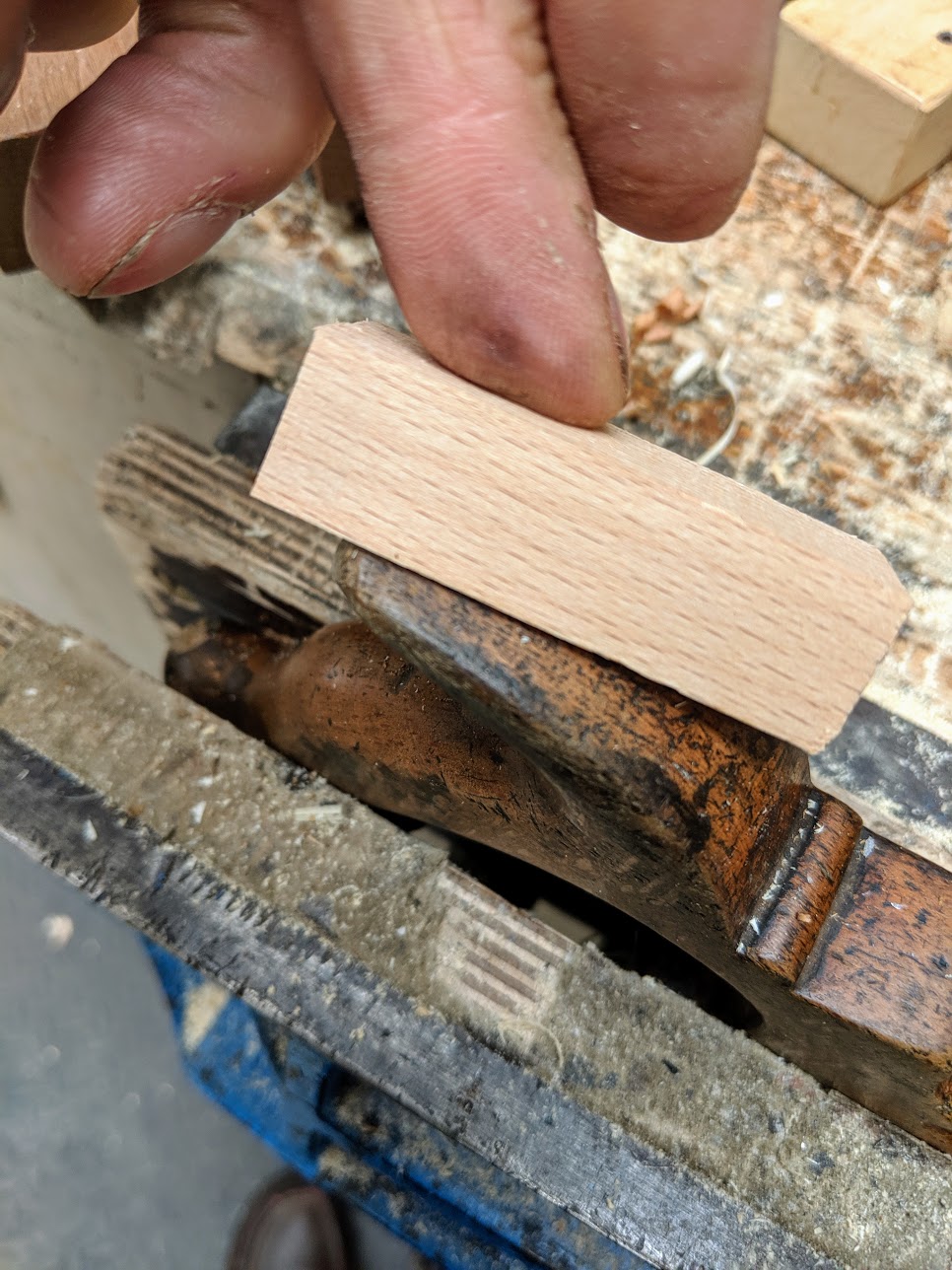
I found an offcut of beech to match the beech wood handle.
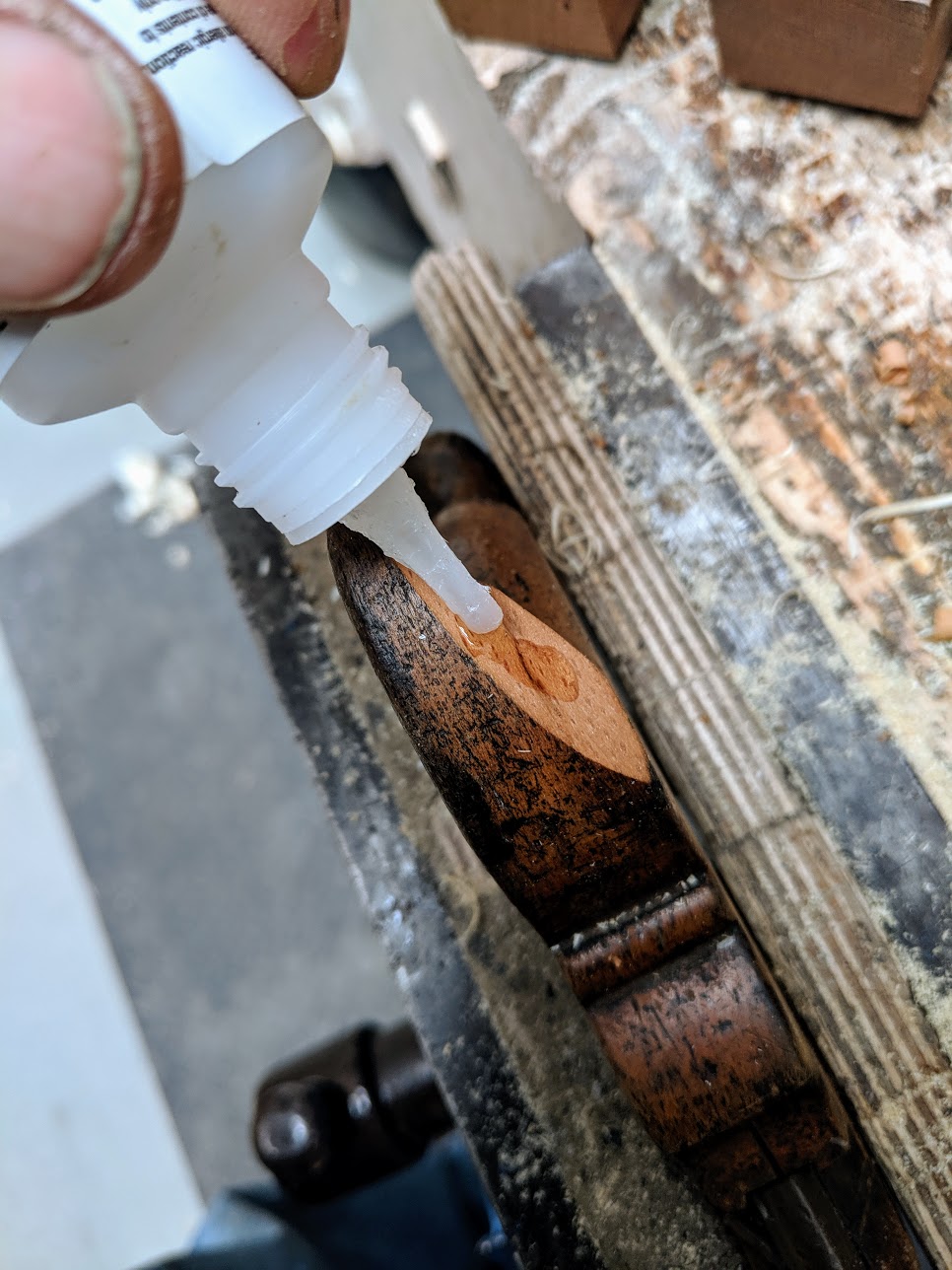
I have used superglue to glue such parts together with great success as you get no slippage and the superglue holds up long term just fine. There really is very little pressure. Mostly the damage is caused by the saw falling onto a hard floor - concrete being especially bad. Best to put rubber matting down.
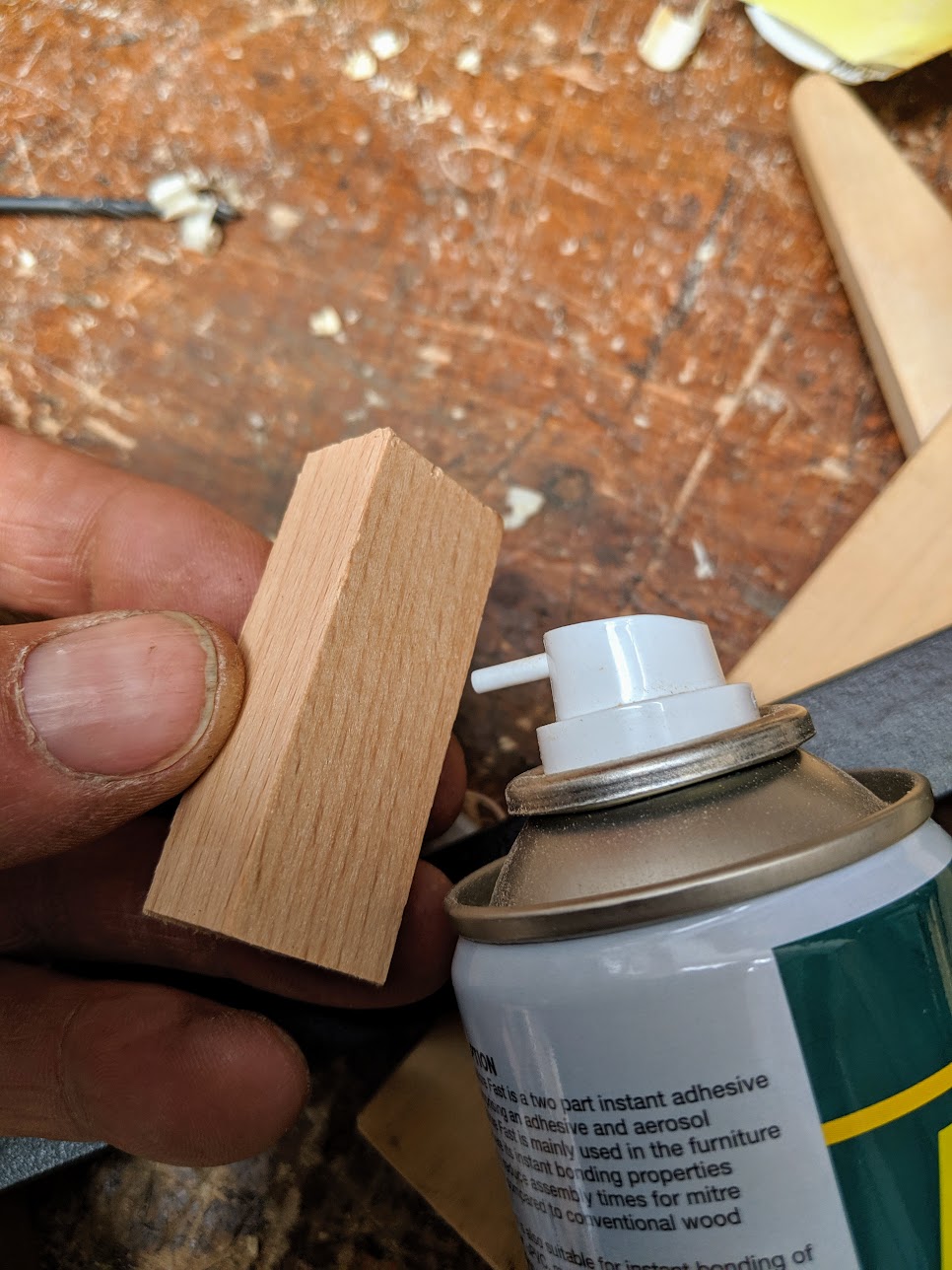
An accelerator speeds up the set time to near instancy and you can work the shaping immediately with no down time.
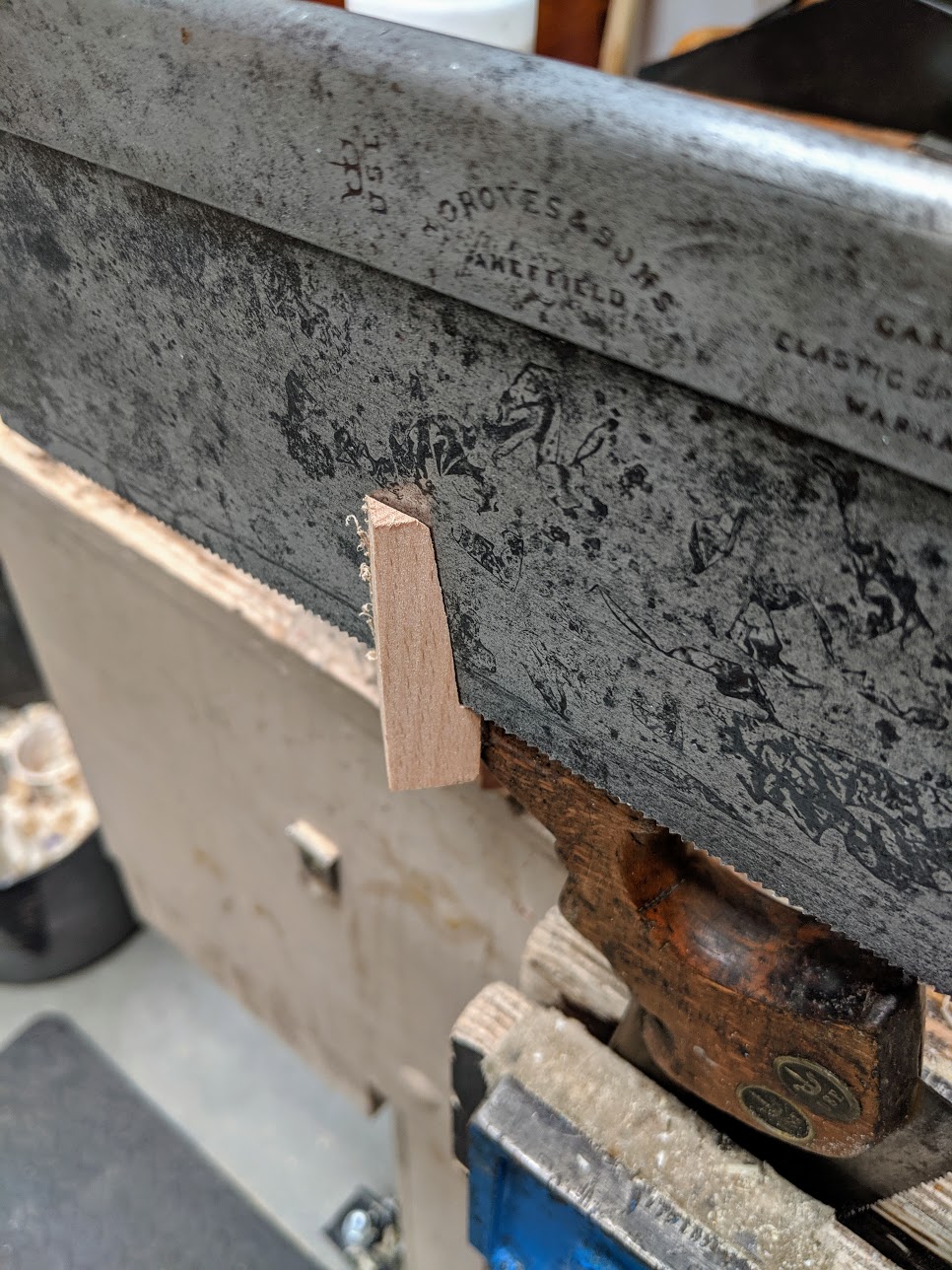
I cut the bulk of the side waste off with a tenon saw.
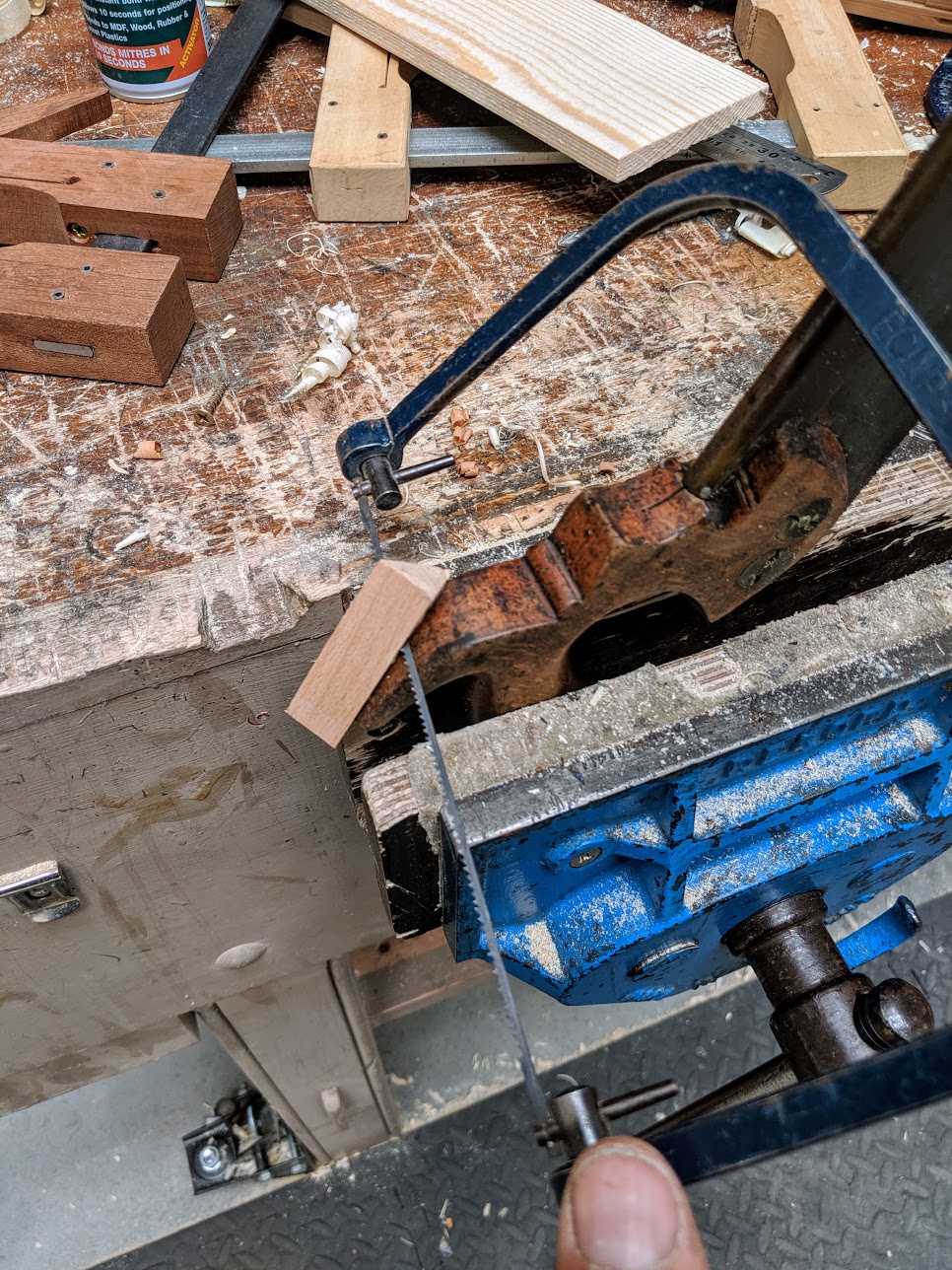
Then I cut the waste from the curved top using a coping saw and following the existing handle, just leaving enough on to level and shape with a rasp.
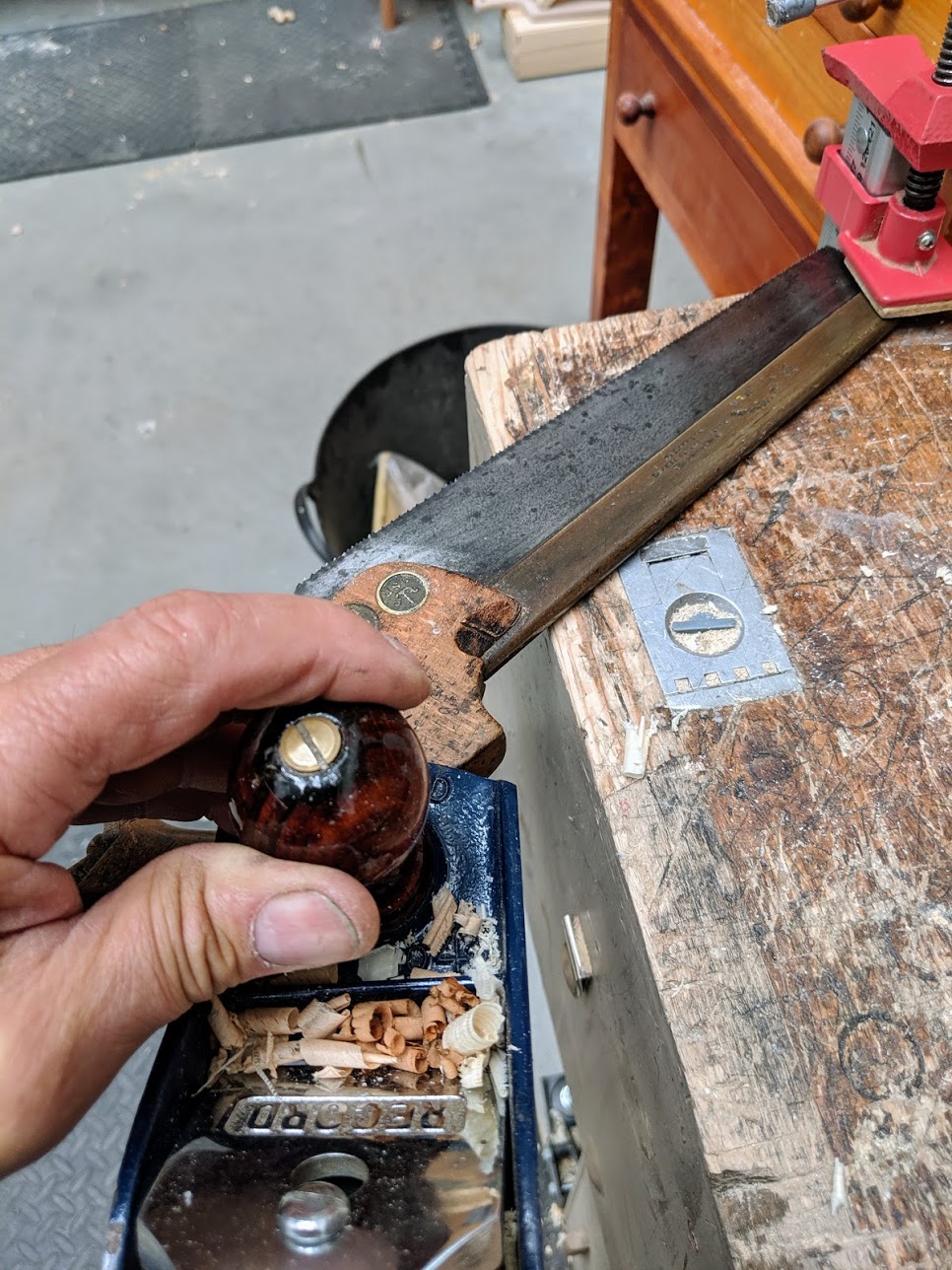
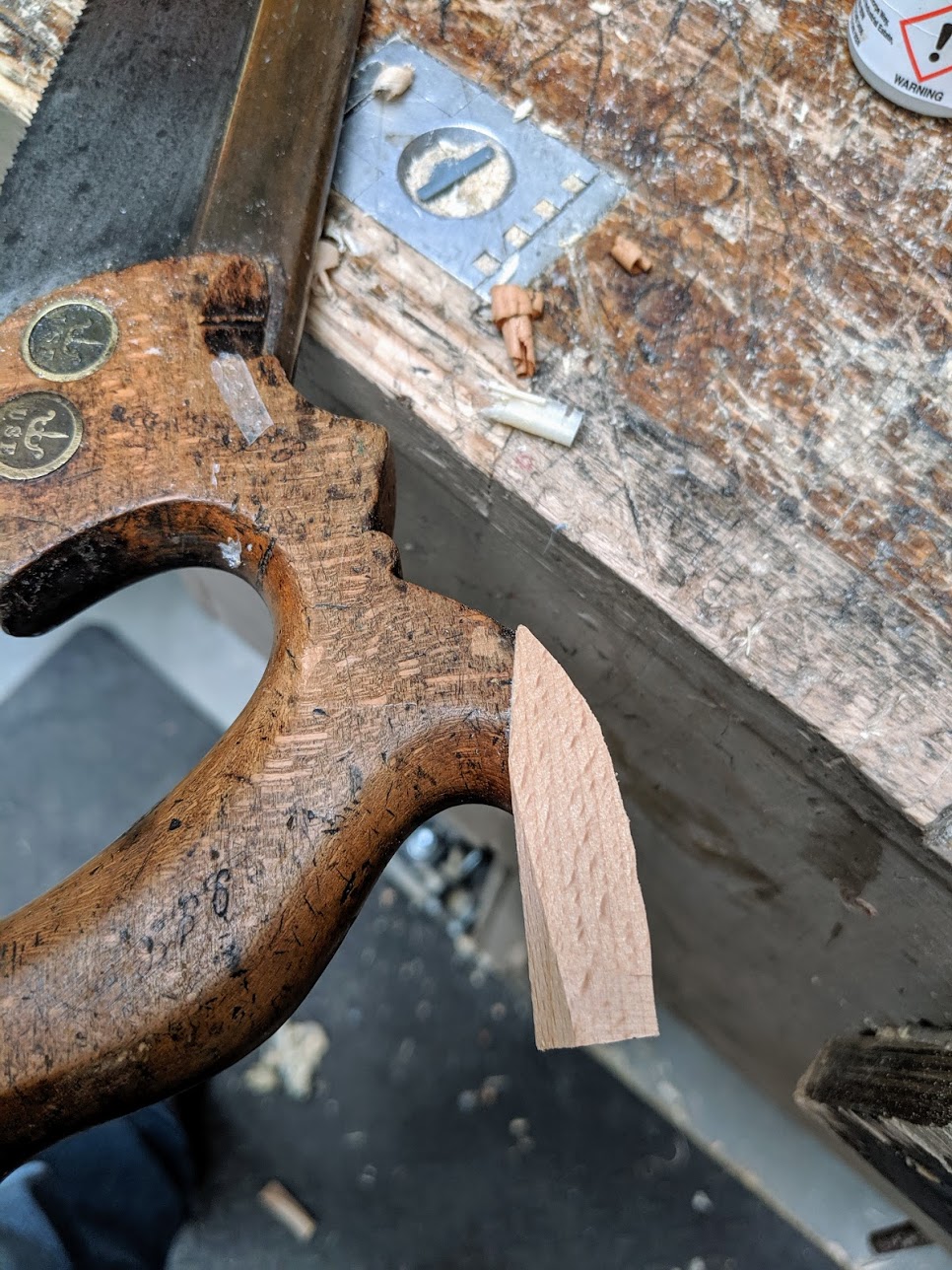
I planed the side down to flush...
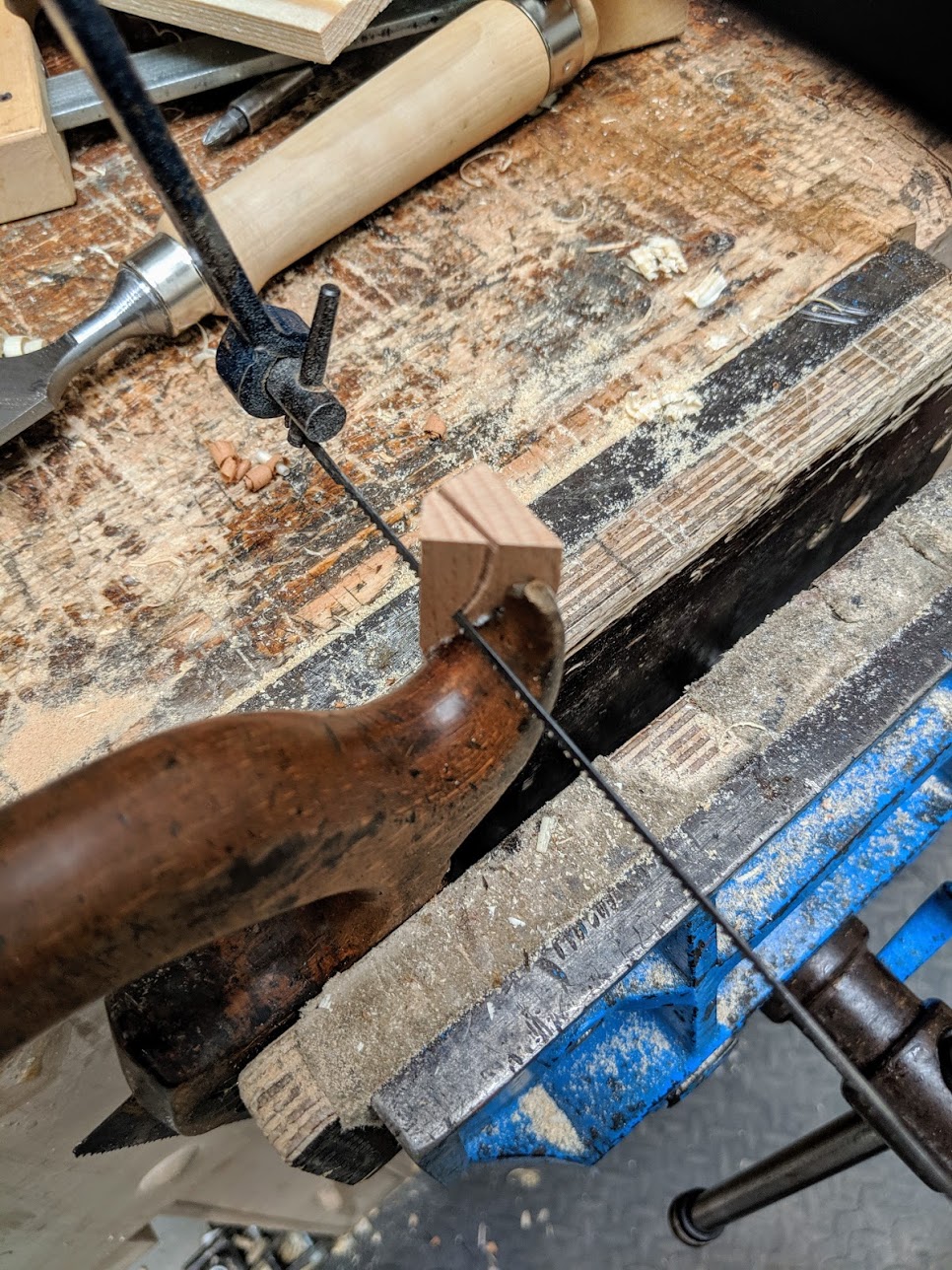
...and again used the coping saw to remove the waste to the hand enclosure.
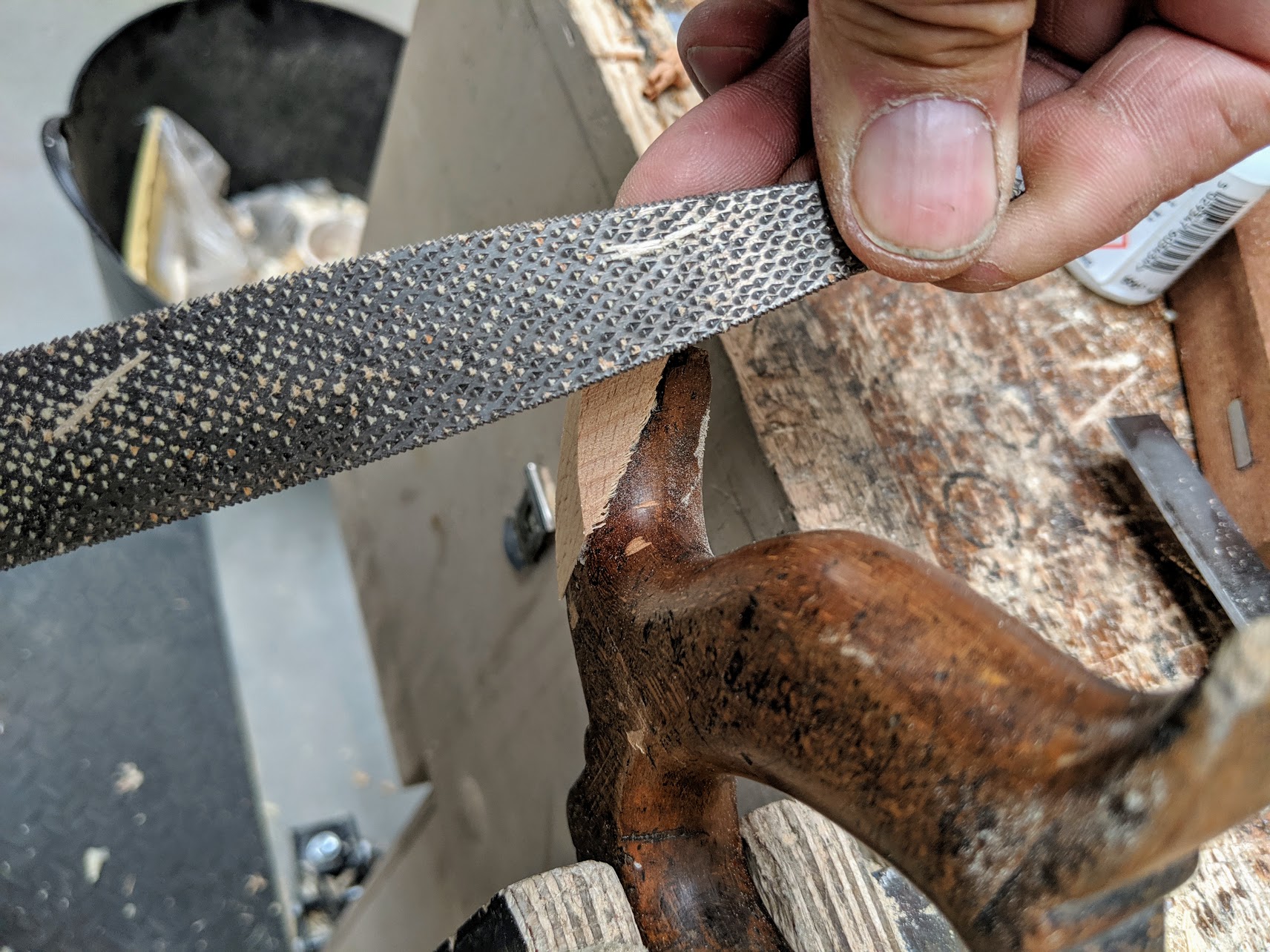
The fine rasp made short work of the coved work.
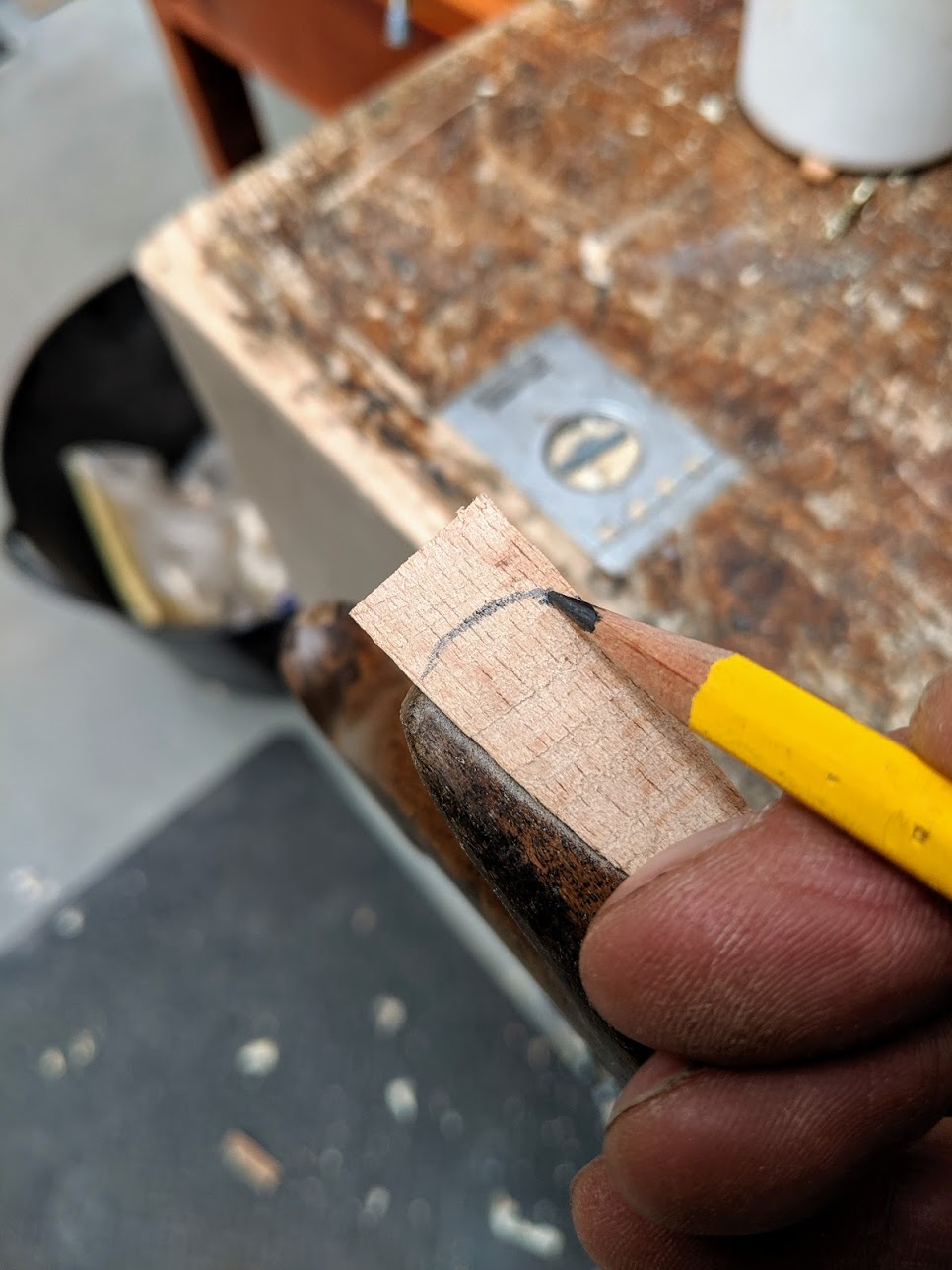
Pencilling in the cut lines helps to make sure you don't take too much off and that you work to definitive lines.
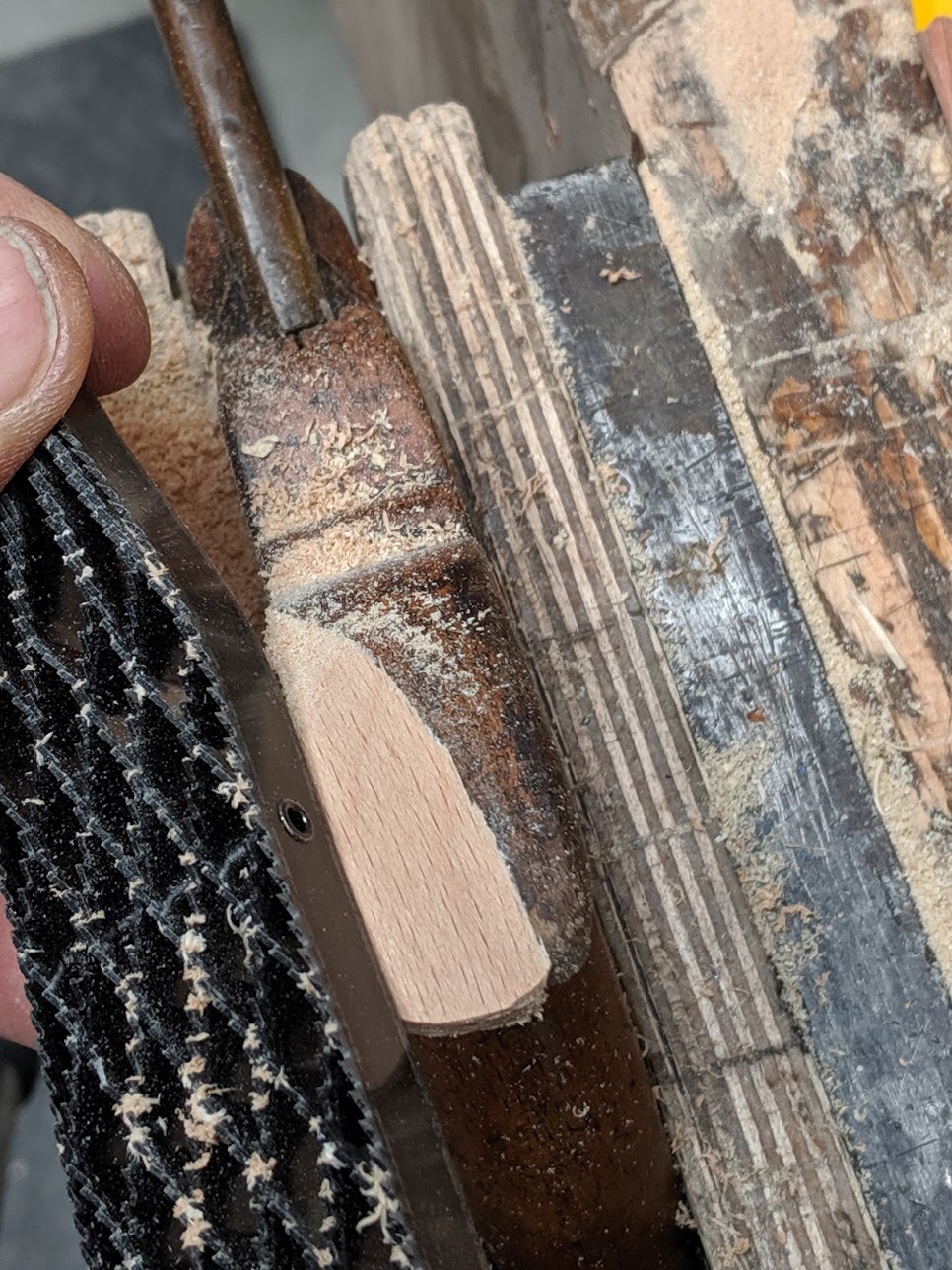
I used a Shinto saw shaping tool to remove most of the waste.
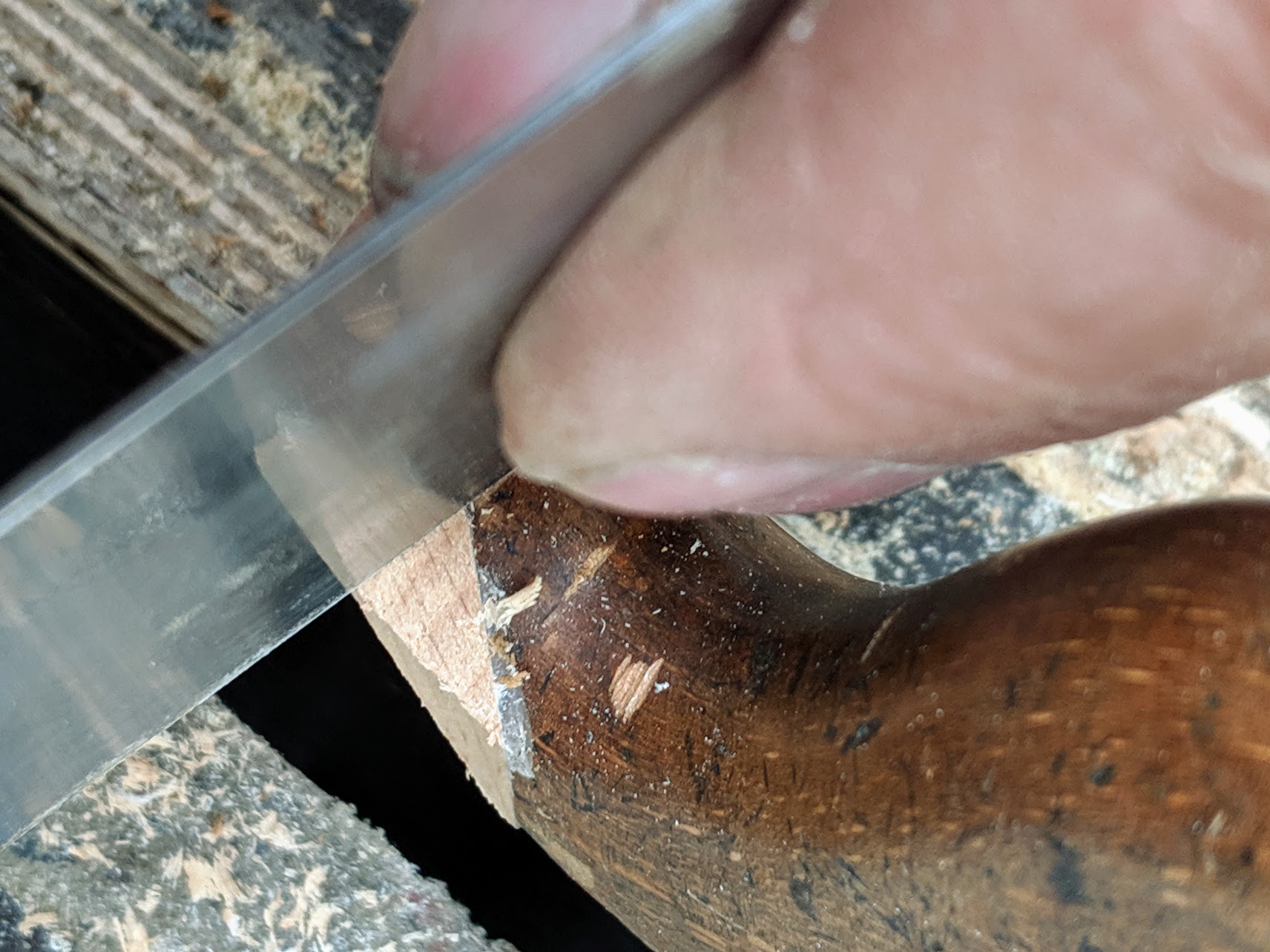
A card scraper is perfect for perfecting the shape at minutely close levels.
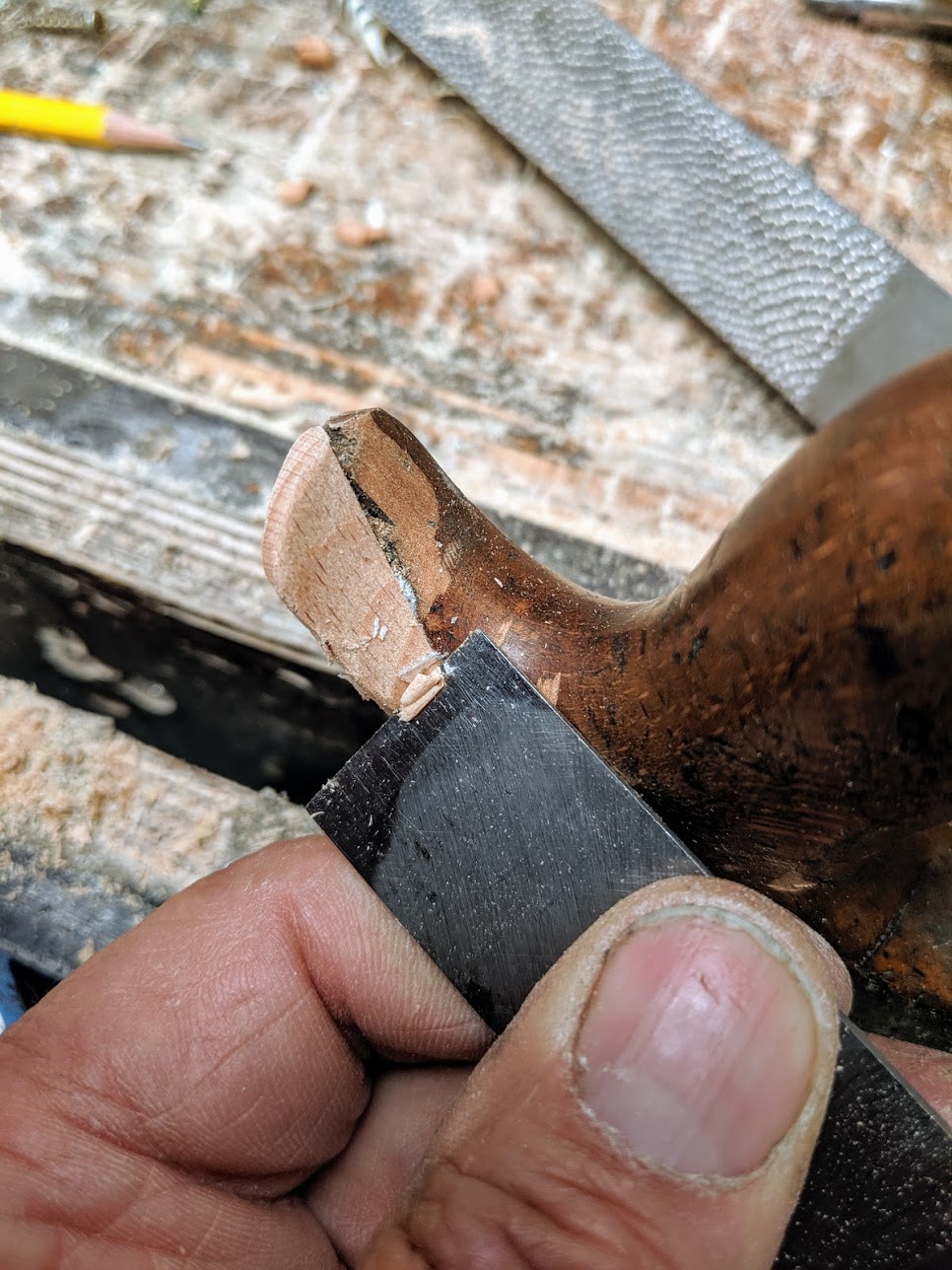
And so too the bevel down chisel to cove the meeting lines inside the coves of the handle.

Sanding softens the lines and makes for comfort.
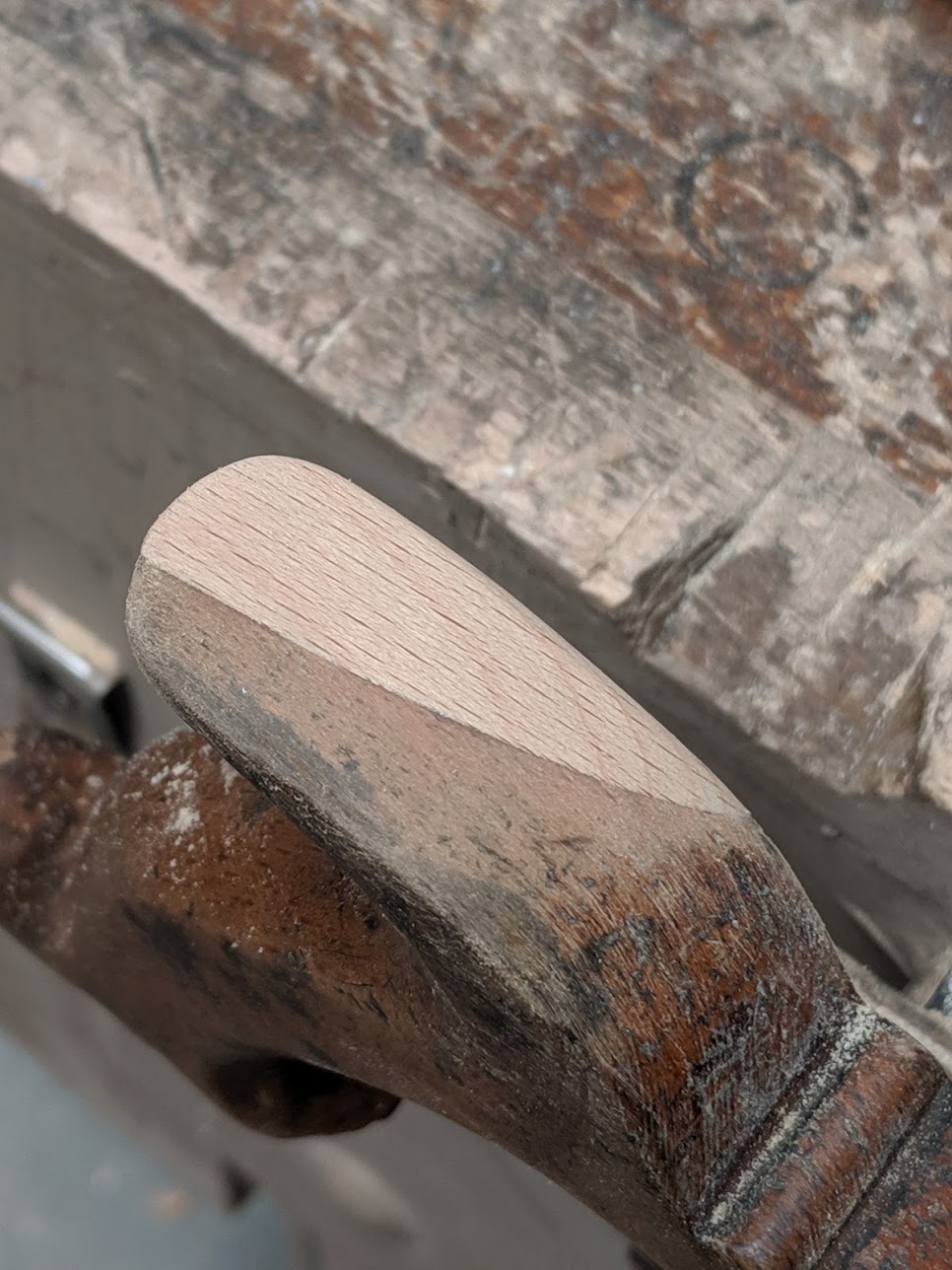
Now it looks good...
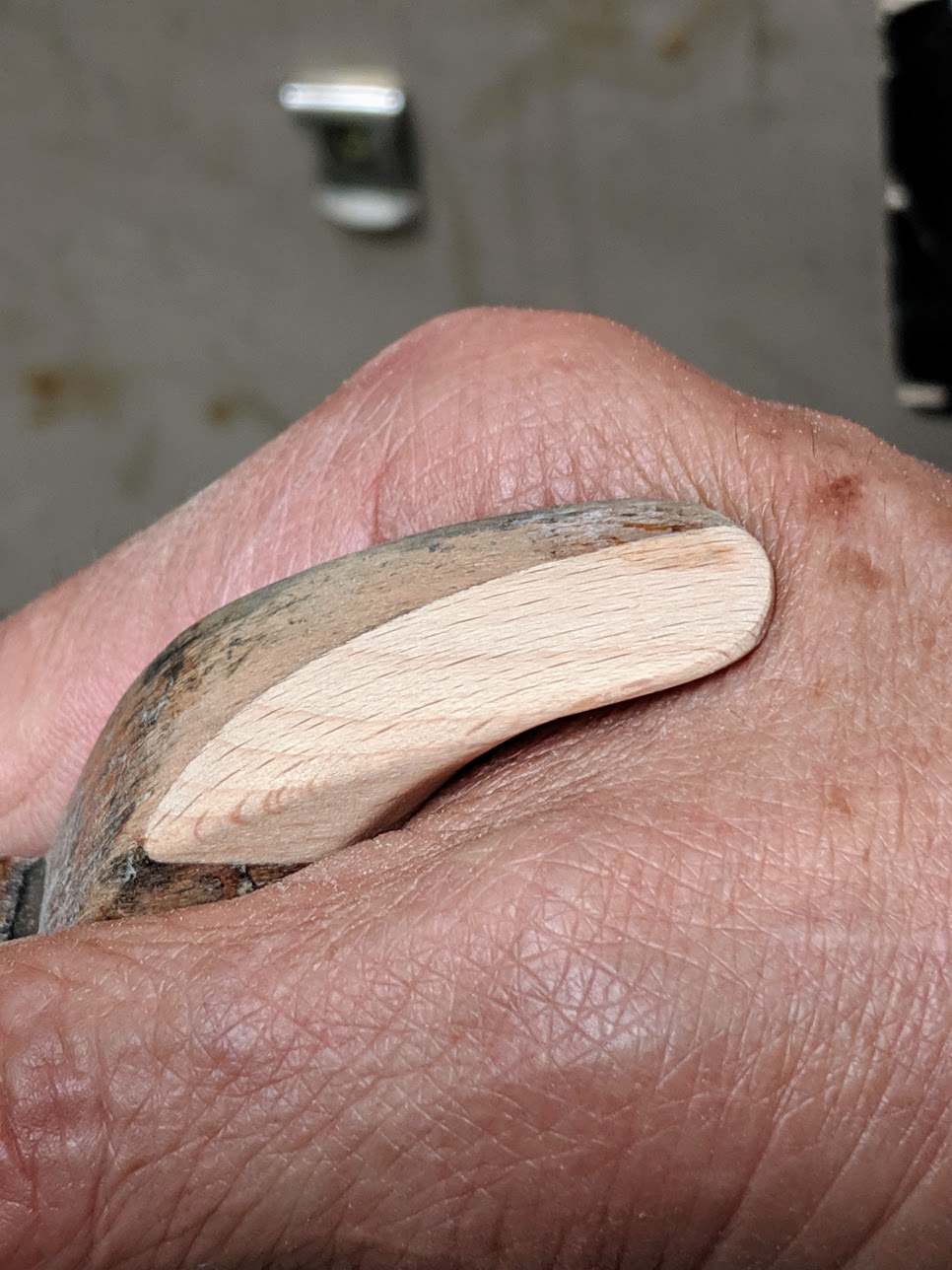
...feels fit for my hand...
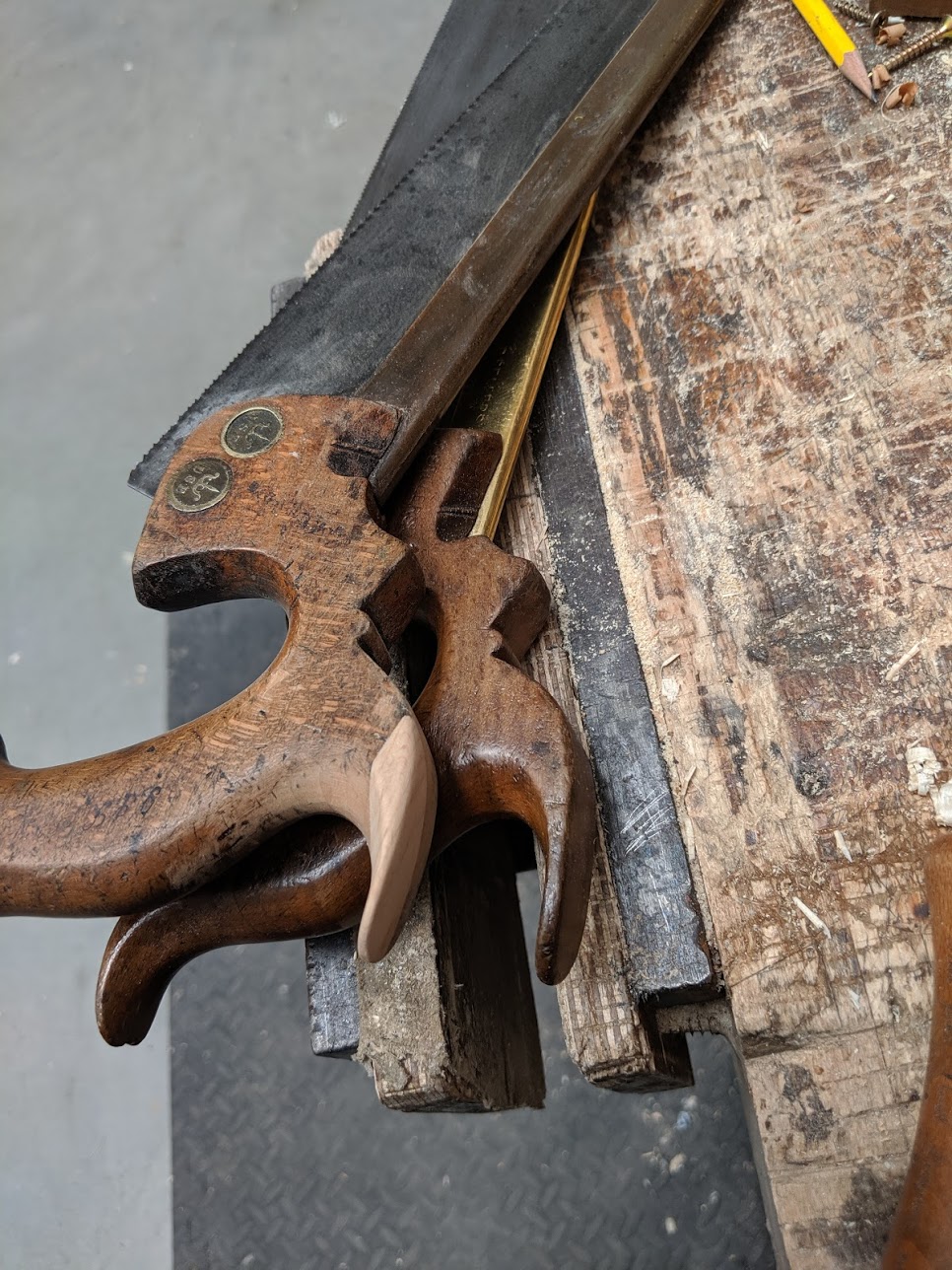
...and matches my other Groves 10" dovetail saws.
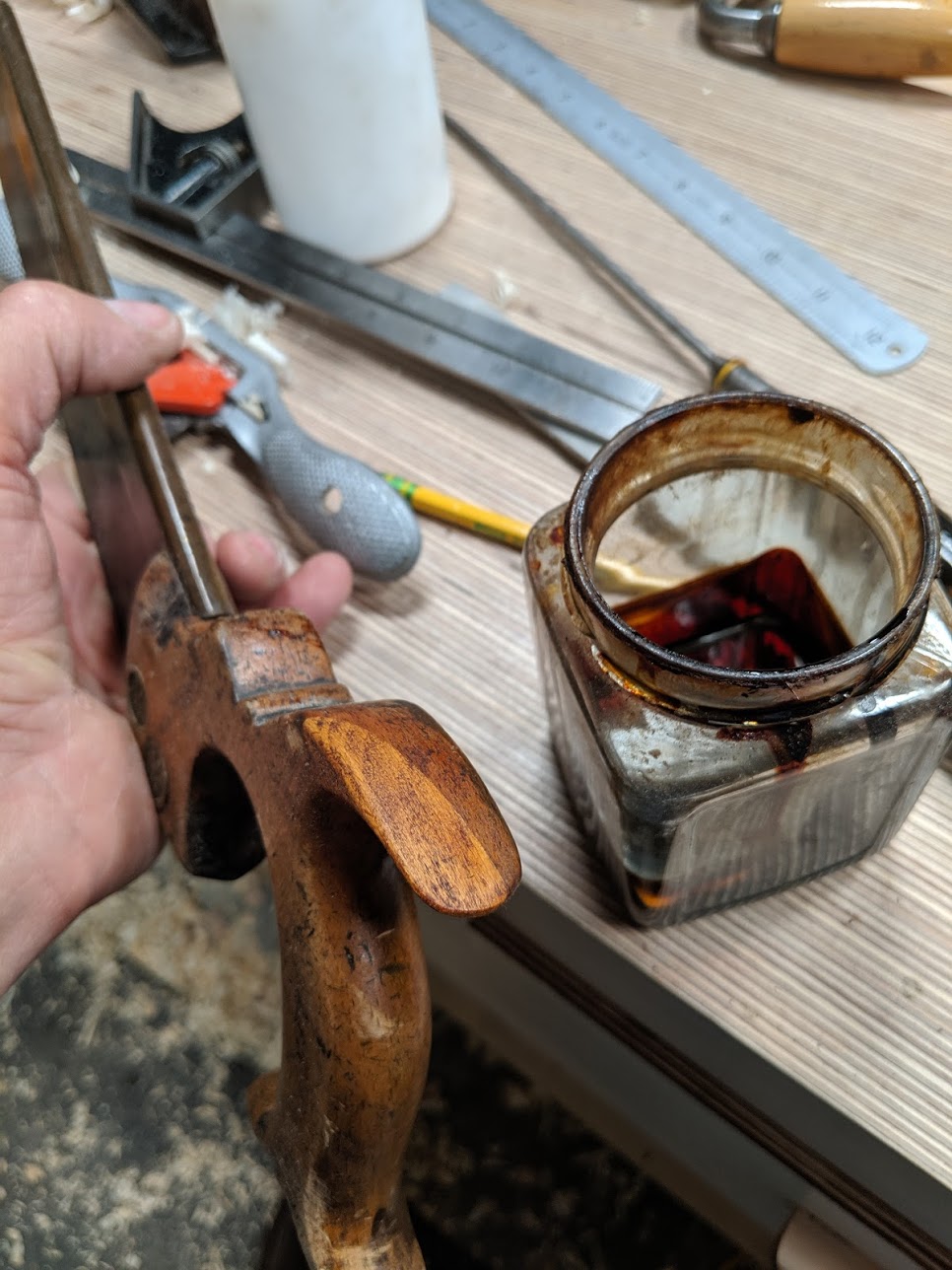
Adding a little leather dye in shellac tones down the contrast.
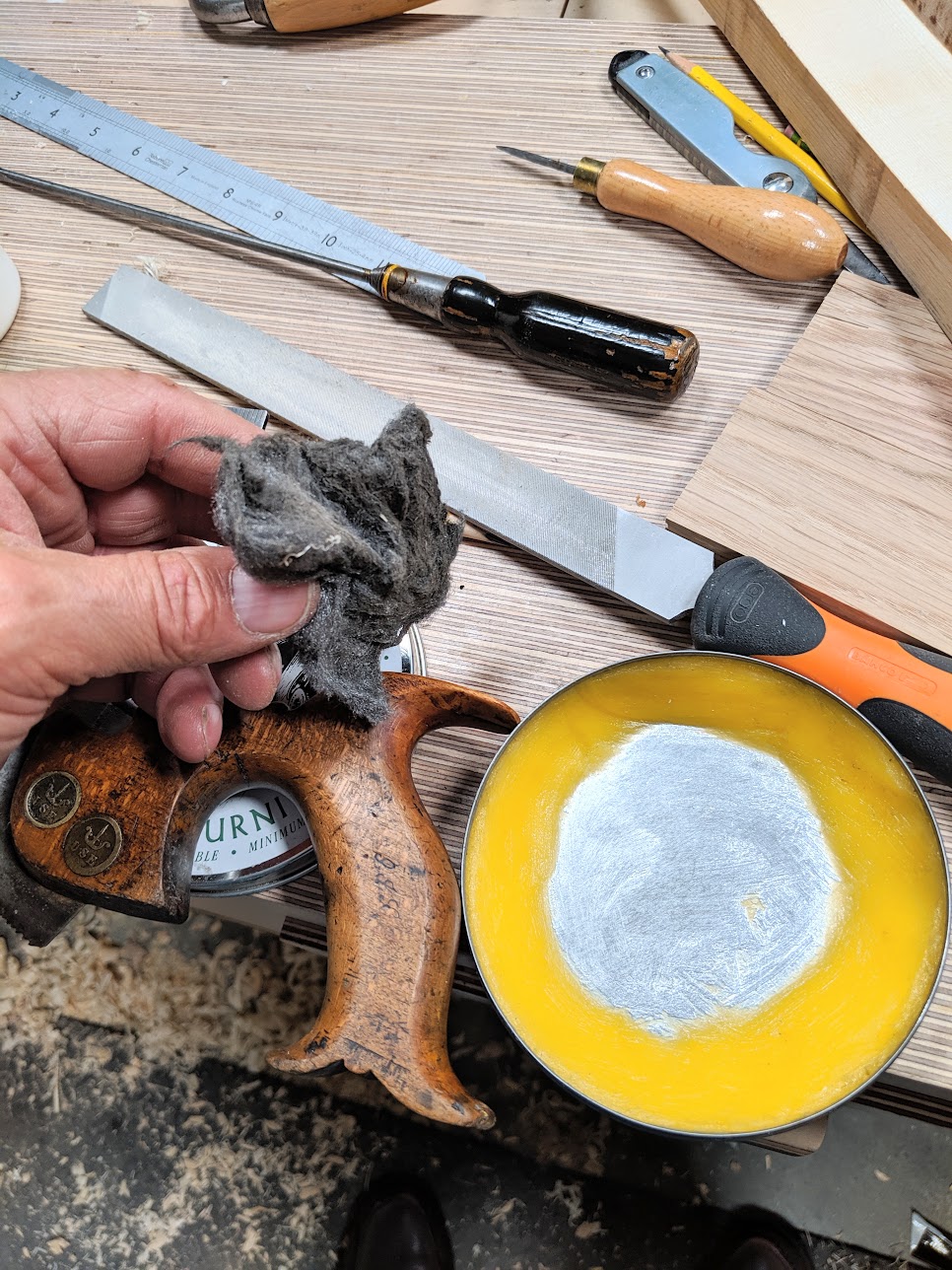
Some wax polish is all I need now to soften the feel to my hand.
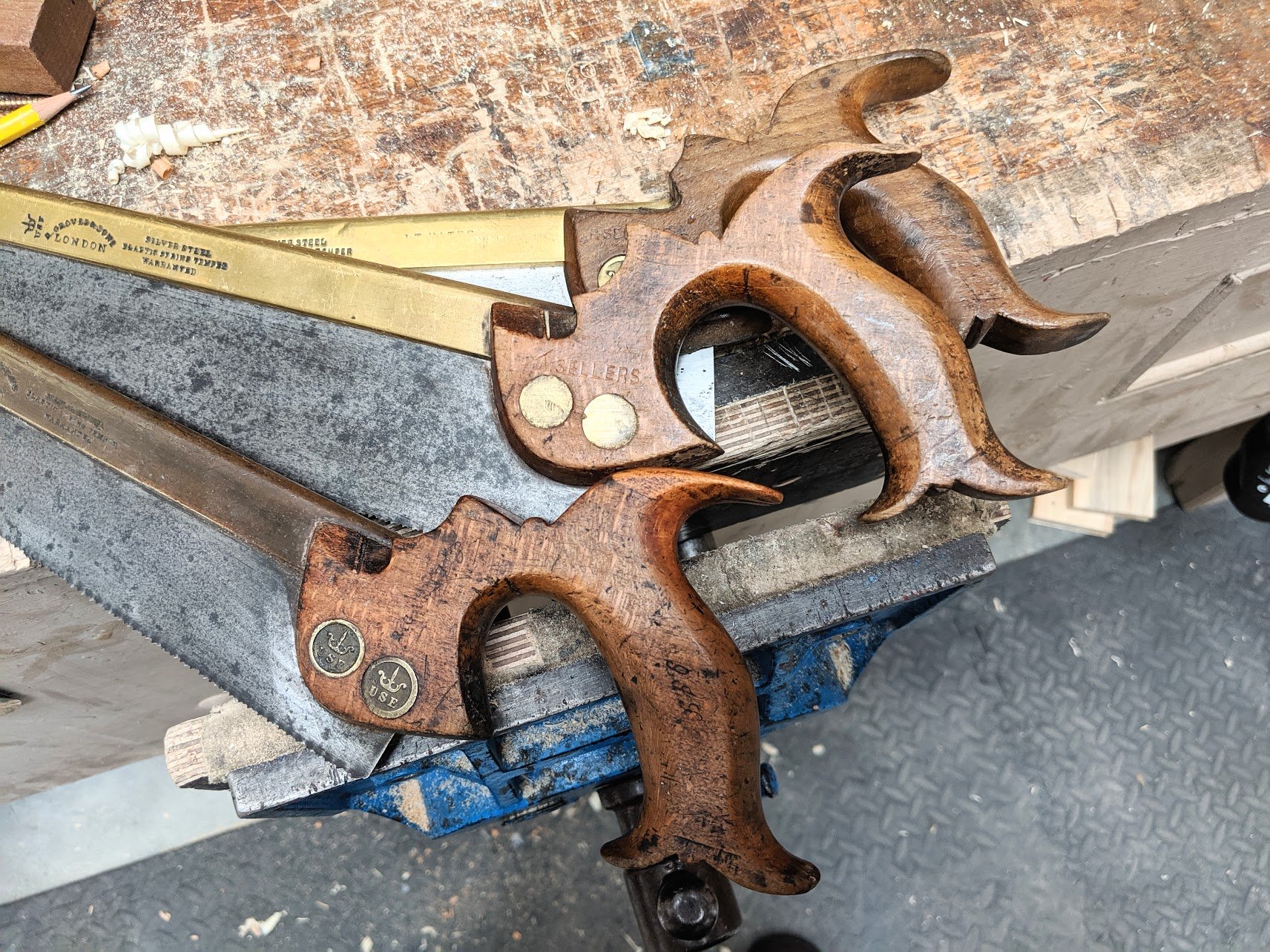
With a few years of work it will all blend in to disappear.
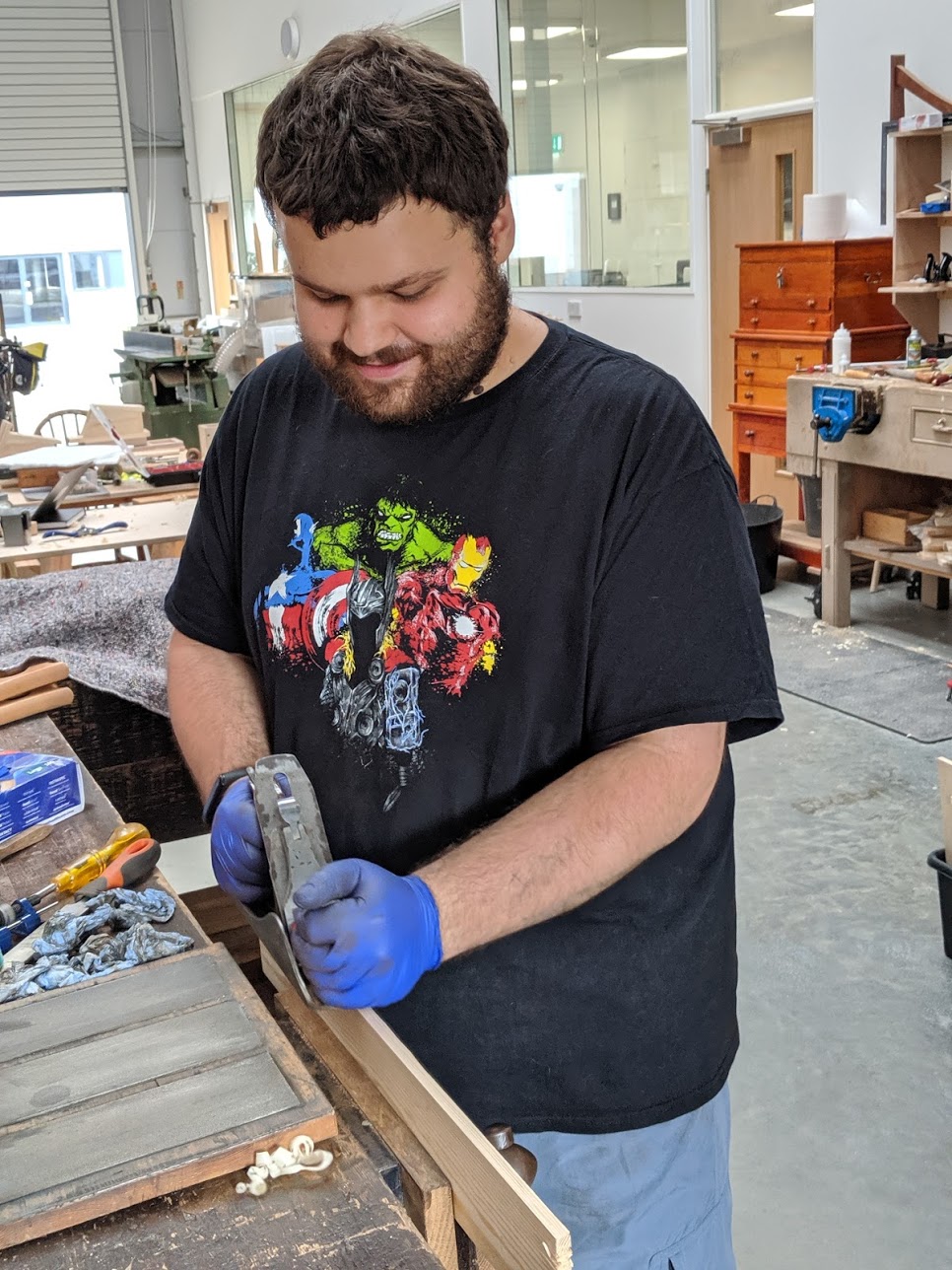
I did all of this Saturday morning, amongst a dozen other things, while Jack restored his first #4 bench plane.
Comments ()