
Alignment
In preparing for the house full of furniture I found myself reflecting on all of the pieces I've made over the years both to sell on the one hand and then to teach others. Woodworking masterclasses has been a dream come true because when I was teaching my classes more one on one I was worried that I couldn't reach those who would but never could come to such a course. When I first started teaching in the US there were only half a dozen schools going.
Mostly their teaching surrounding long courses with the promise of work at the end of them but they also carried a big bill. I determined not to teach machine work because you could learn that in a few hours per machine just about anywhere. I focussed only on skilled work using hand tools. My courses were punchy and short and they worked. I proved what people really needed and it was simple too. In those days I worked out that with three basic joints and ten hand tools you could make almost anything from wood. Combine that with the right instruction, and I worked out exactly what was needed, people could match my skills in a matter of a few weeks. They didn't need mass-making equipment to substitute for developing skills which is what the magazines all promoted back then, they just needed an alternative reality that reached back to well proven technologies. It still amazes me when I look back to that first piece I made in front of a camera for a video not knowing whether anyone would even listen to me.They did!
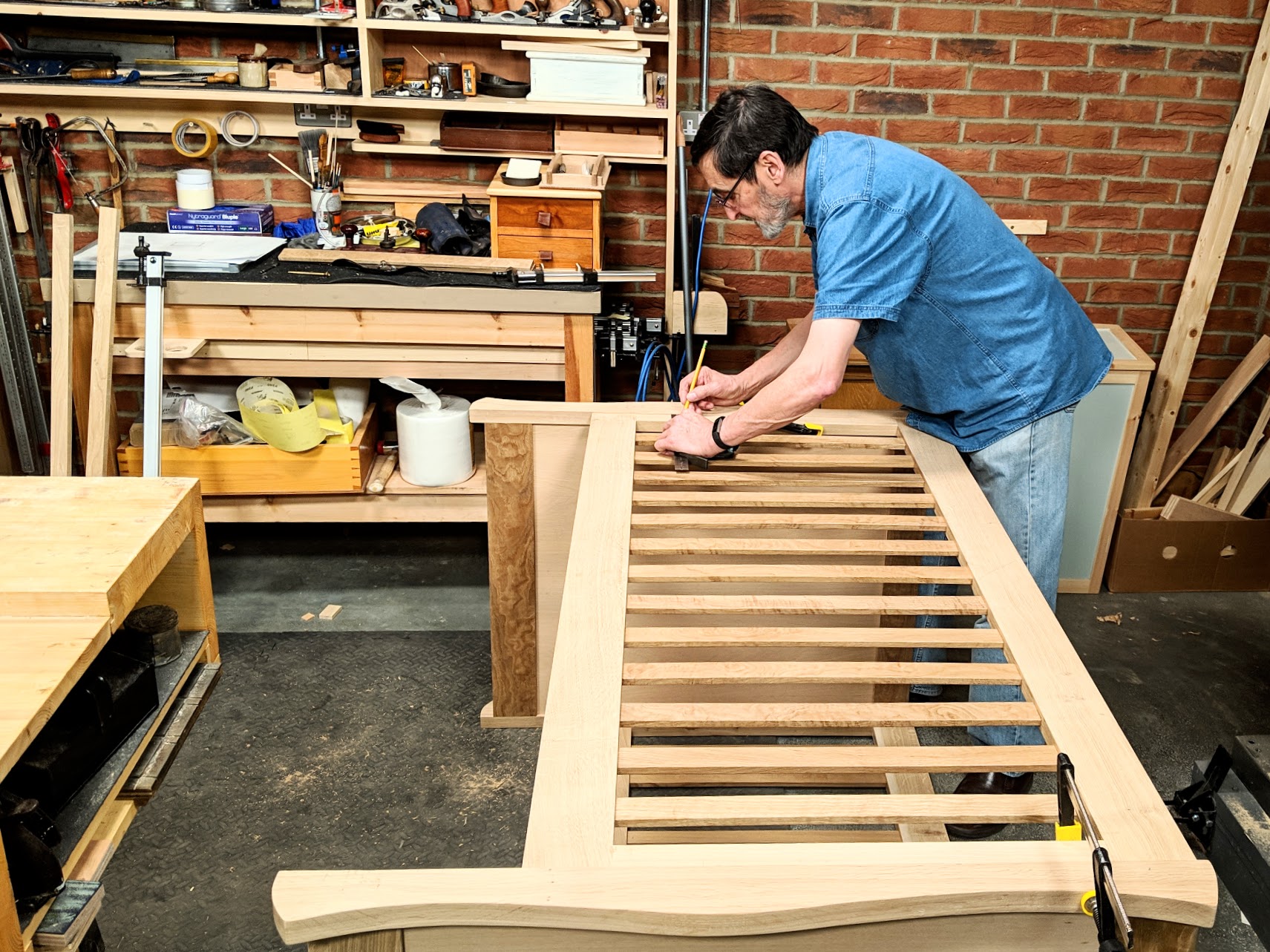
As we built the pieces and introduced methods of working, techniques and such, the puzzle pieces all started to come together. Much of what I teach came from working out my own methods of work and my teaching was never merely from gaining a college or university degree on paper to become a teacher or lecturer with no background in living the subjects. I built each method line upon line and precept on precept because I wanted something untainted by economics and politics of such backgrounds. My audience wanted realness and the only realness needed to come from a craftsman at his bench who had lived through decades of providing for his family year on year.
My working enabled me to build my own mental library of techniques and methods - such that didn't come merely through books or even very much from my apprenticeship. I was developing my own upbringing as an adult and then much of the development came through my teaching thousands upon thousands of students right there in the schools I established and taught through. Now I am in continuing education where my students and apprentices still teach me through the burden I carry to pass along my craft into lived lives. By this I know my craft will be preserved and not some dumbed-down UK apprenticing strategy promoted by politicians self promoting themselves as do gooders and many of which only walk along a production line but never lifted any tool to any physical work.
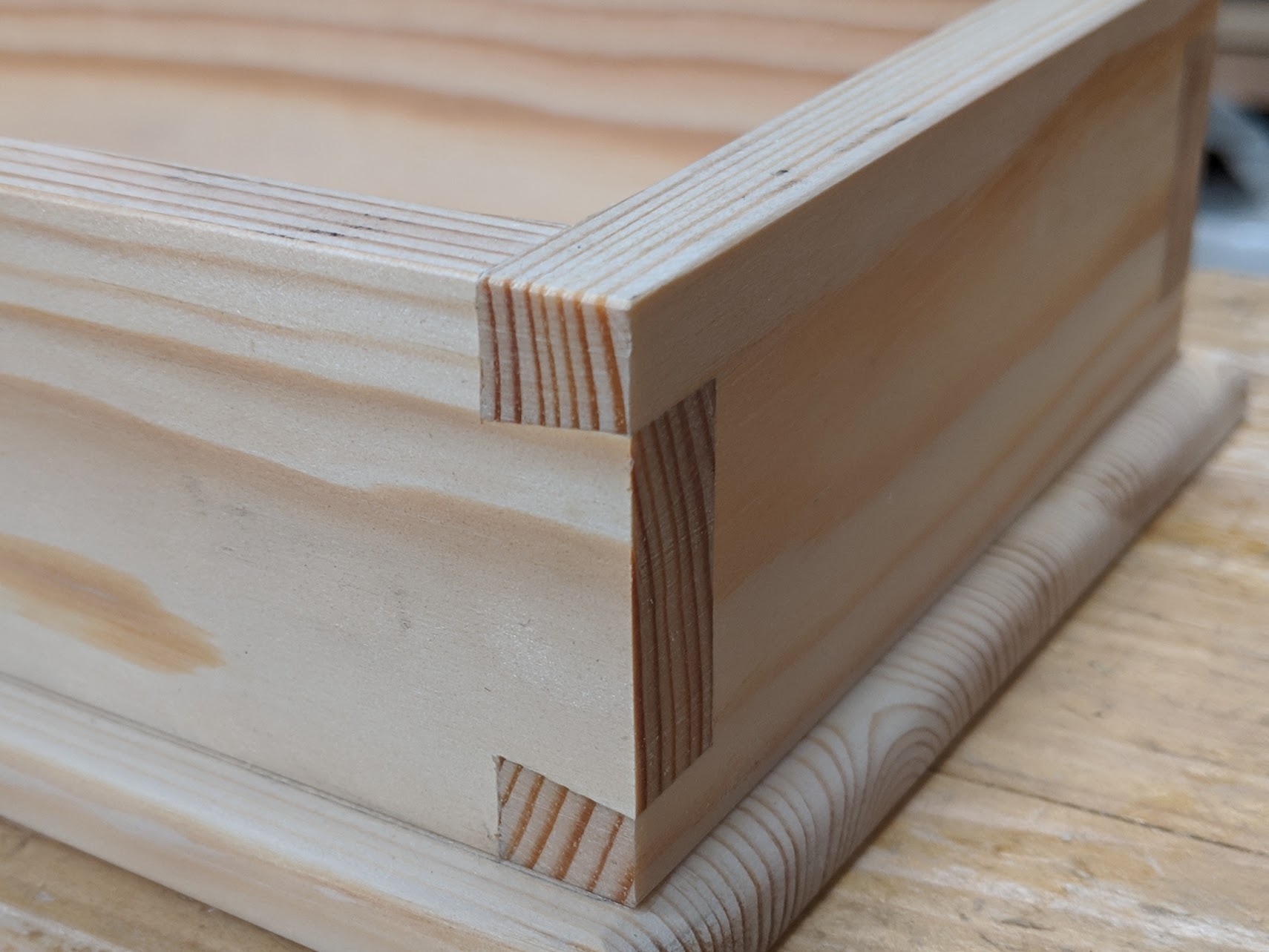
Joinery is mostly about cutting dead square, paring to knifewalls as definitive cut lines, feeling for how much the wood compresses under certain pressures and of course much more. Exact sizing is not what I want; by that I mean an exact 1/2" piece cut and fitted into an equally exact opposite. I want that fractional compression that 'breathes in' and then 'breathes out' in the certainty if settledness. Some woods, softer woods for instance, and those with large pores, oak, readily compress whereas others just don't compress in any measure at all. Most of our temperate woods, both hard and soft, will compress and it's getting to know which ones and by what amount. This comes over a number of years and a number of workings. Even within the species this can vary markedly and then too you learn by touch and look which ones will compress to what degree. Other considerations will be the structure of grain surrounding the knots and the areas where the branches were supported by added interlocking of the grain structure in support.
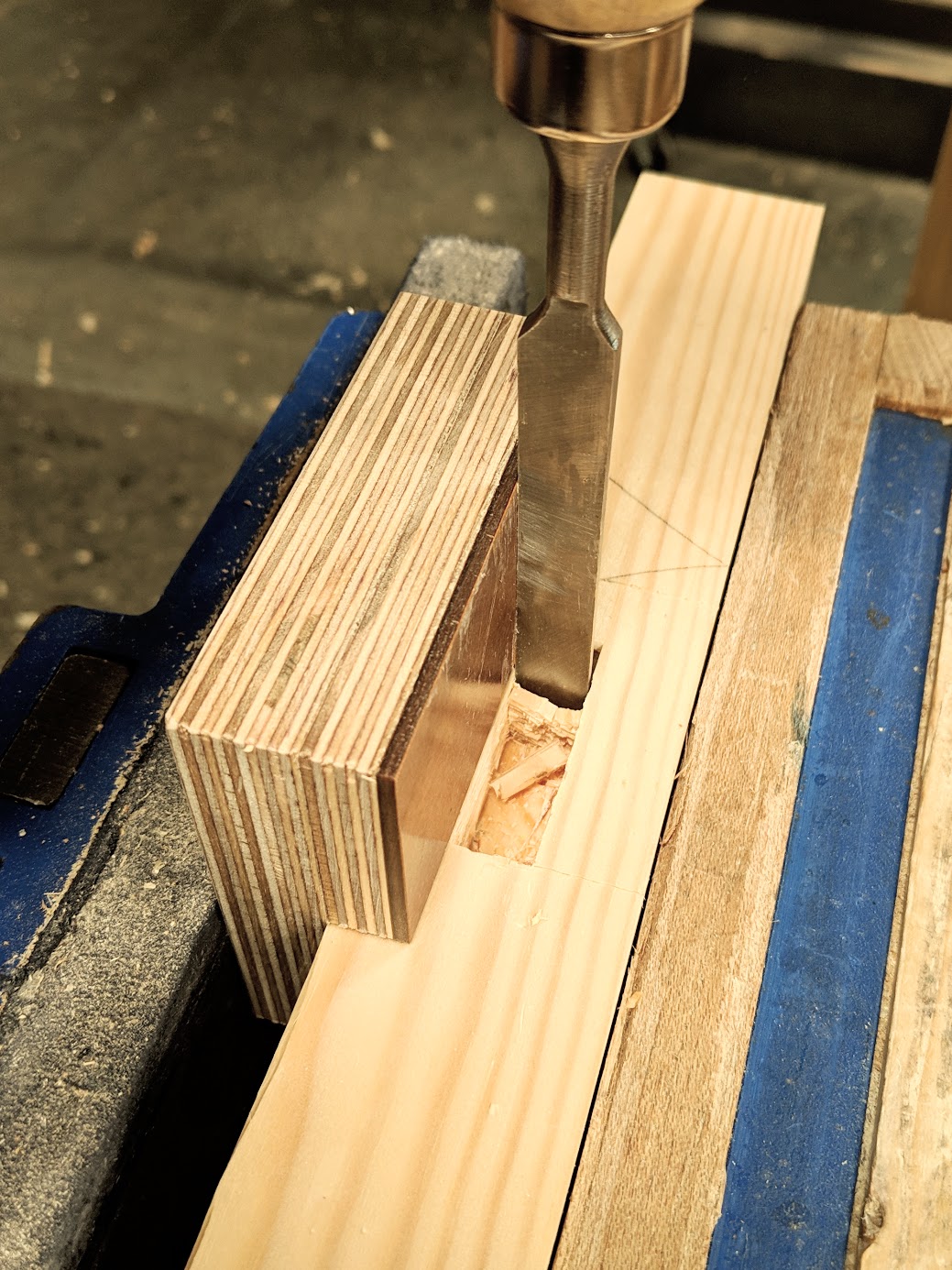
These past few videos you will have seen me more rely on the use of the mortise alignment jig I've developed and used over the past couple of decades. If you missed the reasoning then I'll say it here, again. When you form a tenon you have externally visible gauge lines from the mortise gauge to work too. Keep to the lines and the cheeks of the tenon both sides will be paraplanar to the long axis of the rail you are creating the tenons on. But no matter how accurate this is, if the mortise is one degree off, and by that I mean out of parallel to the outside faces, then it is not possible for the tenon to align perfectly with the face of the stile, leg or post. This in turn means one shoulder will be gapped. The tendency too will be to chop all of the mortises to any bias leaning you develop as habit. Remember that practice makes permanent more than perfect! Ultimately you may have tenons that fit into mortises perfectly sized but whatever frame you are forming will indeed be twisted. For say a dining table this is less a problem because the weight of the top will take over and force the table flat to the floor it sits on: it flexes, but when you are making small frames, doors for instance, where they hang freely with no constraining except by hinges on the stile to the frame, a twisted door will stick out like a sore thumb.
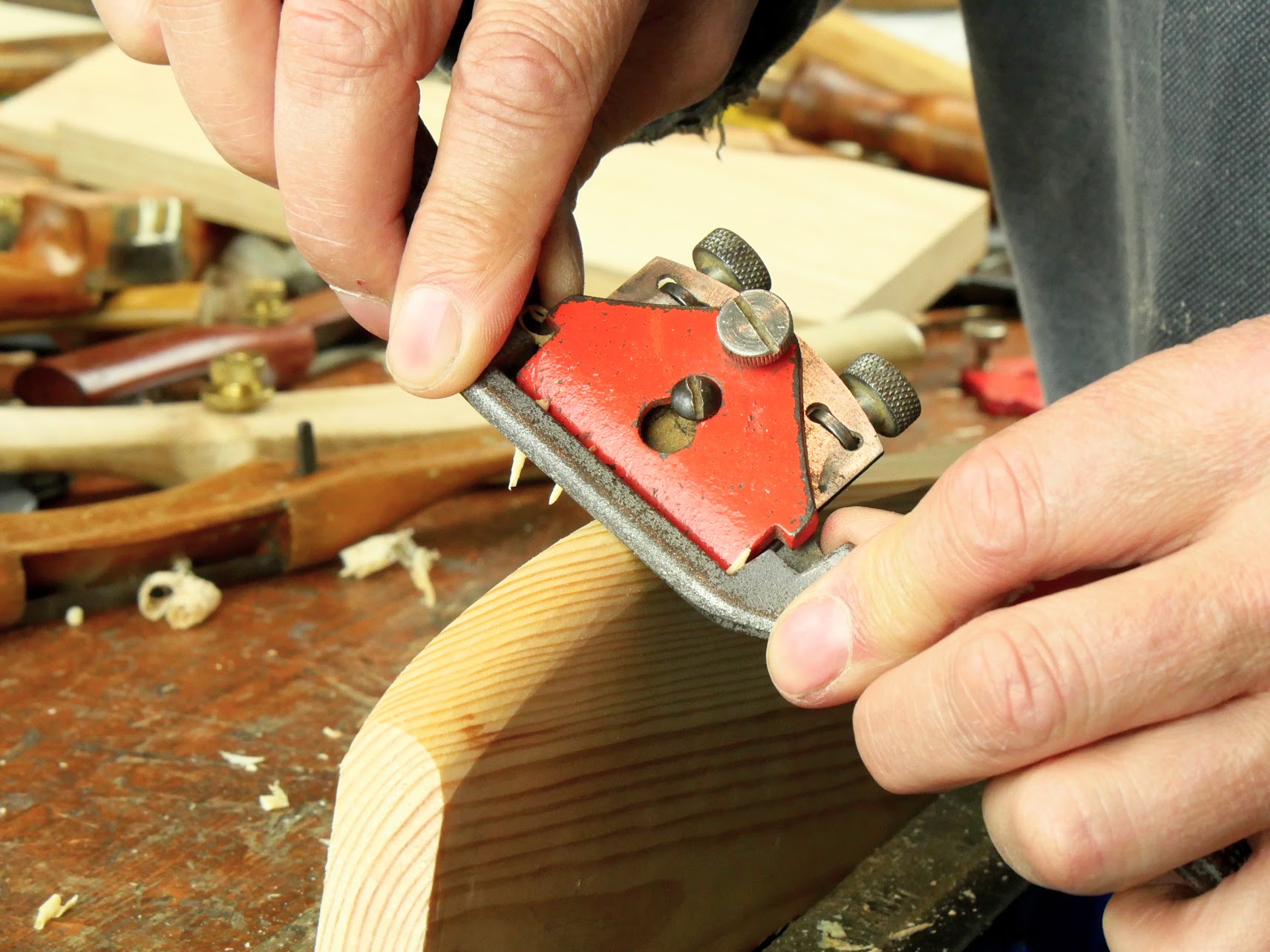
I worked with several people new to woodworking who had not used any woodworking tools this week. Things we long term woodworkers take for granted are major control issues for them. Without alignment to the perpendicular, be that vertical or horizontal, the work was a serious struggle. Introduce an angle and they lose it. Over a few practice sessions they started to get it and lined the brace up square to the work or in alignment to the angle. It was then that they began to enjoy the results. Without alignment the chisels and planes end up out of square, with a thick edge and unable to cut much at all. The thing about woodworking is it is about aligning your whole being to the work. It's a whole body experience and this includes the emotions and the mental acuity you develop.

Teaching them made me conscious that we all need alignment guides. Our lives become aligned to the world around when we see how much we align the things that carry us, stack the things we work with and all other things we become immersed in. My technical drawings, though often sadly lacking, start with my aligning vertical and horizontal lines. I work from certain points that guarantee accuracy. Imagine visiting a library without the Dewey decimalised classification system. In my world, and that includes nature itself, everything is about alignment. My hand and my eye must align, as must the sensing of the other organs that tell me to change pitch, stance, balance and so much more. Alignment is not about forcing things to align but flexing things to tolerate alternative pressures to absorb changes as the saw moves into the wood.
Comments ()