
A Spokeshave
Another most undervalued and underestimated tool
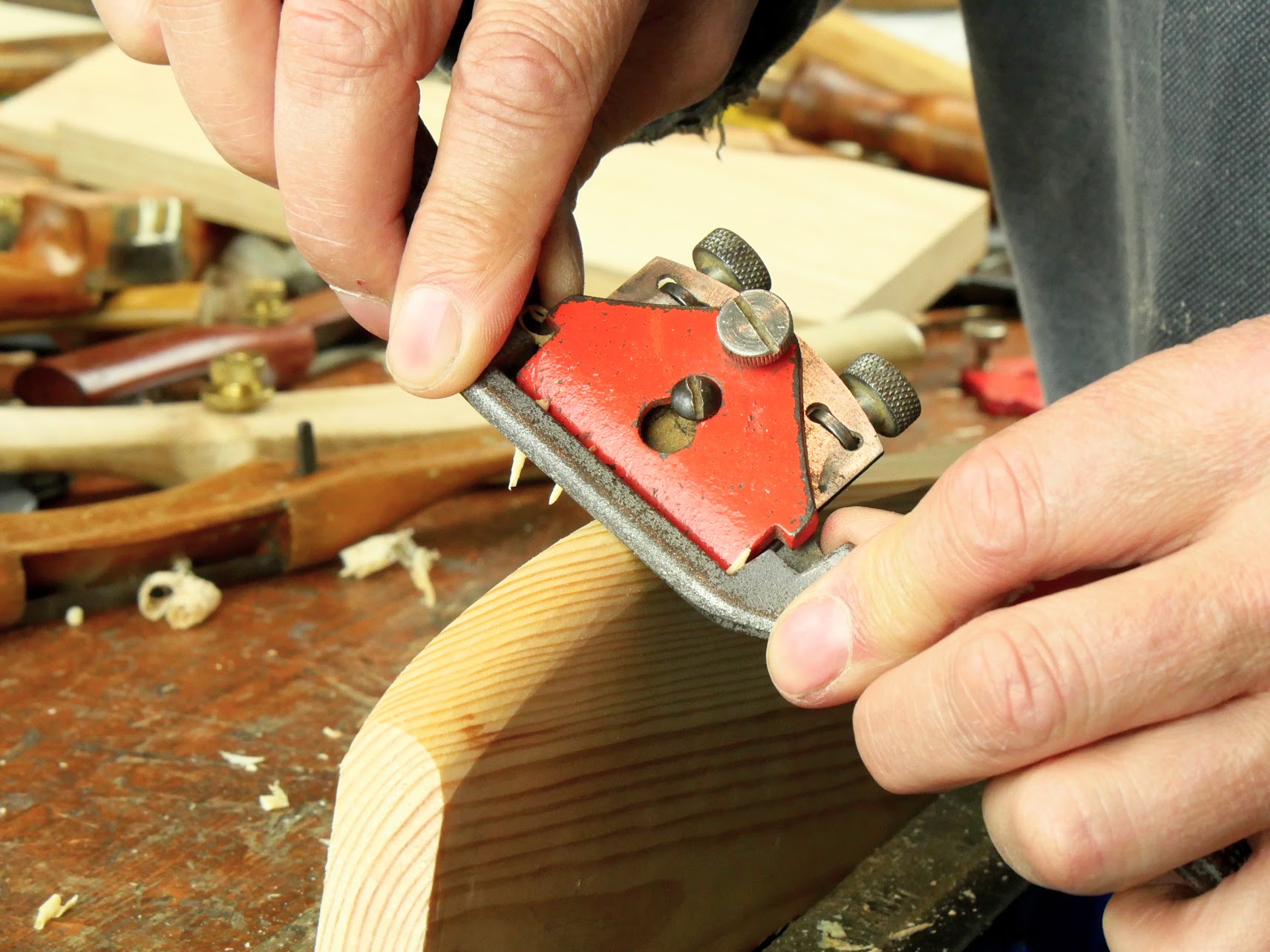
I often wonder if spokeshave is something of a misnomer, spoke, spindle, spike and so on serve only to tell of a small facet of what this tool capably makes. In the former world before the chair bodger's demise it simplified the making of simple vernacular chair pieces ideally suited for woodland making and itinerant makers. In my world of making wood work it presents a massive range of options for shaping and shaving world masterpieces for a wide range of woodworking crafts including pattern making and the making of scientific instruments that were at one time widely dependent on wood for component parts. Of course we have fine furniture making, musical instrument making and much more beyond my finite imagination. I start with this to encourage all to relook at this , one of the humblest of planing and shaping tools who's identity is mostly lost to its modern-day all-to-clever audience often ignorant that the tool ever existed.
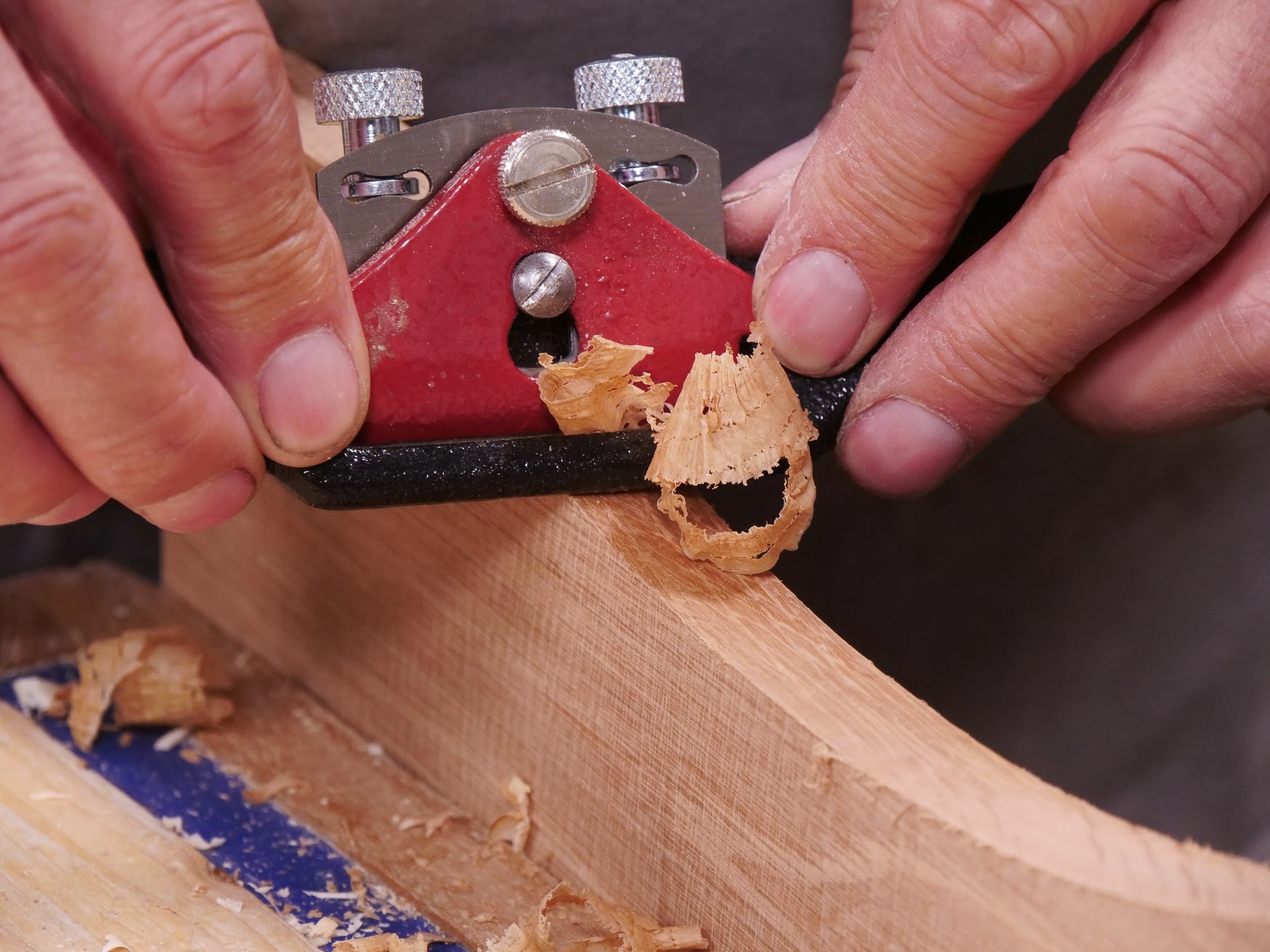
Start with the truth. In the early beginnings of my woodworking I was handed a sharp, well set, flat-bottomed spokeshave with which to shape the sides to my wall shelf. The rich, red mahogany peeled shavings from the squared off edges like peels from a potato peeler. The edges were transformed beneath my hands from squares to rounds and of course, like many a boy before me, I fell in love!
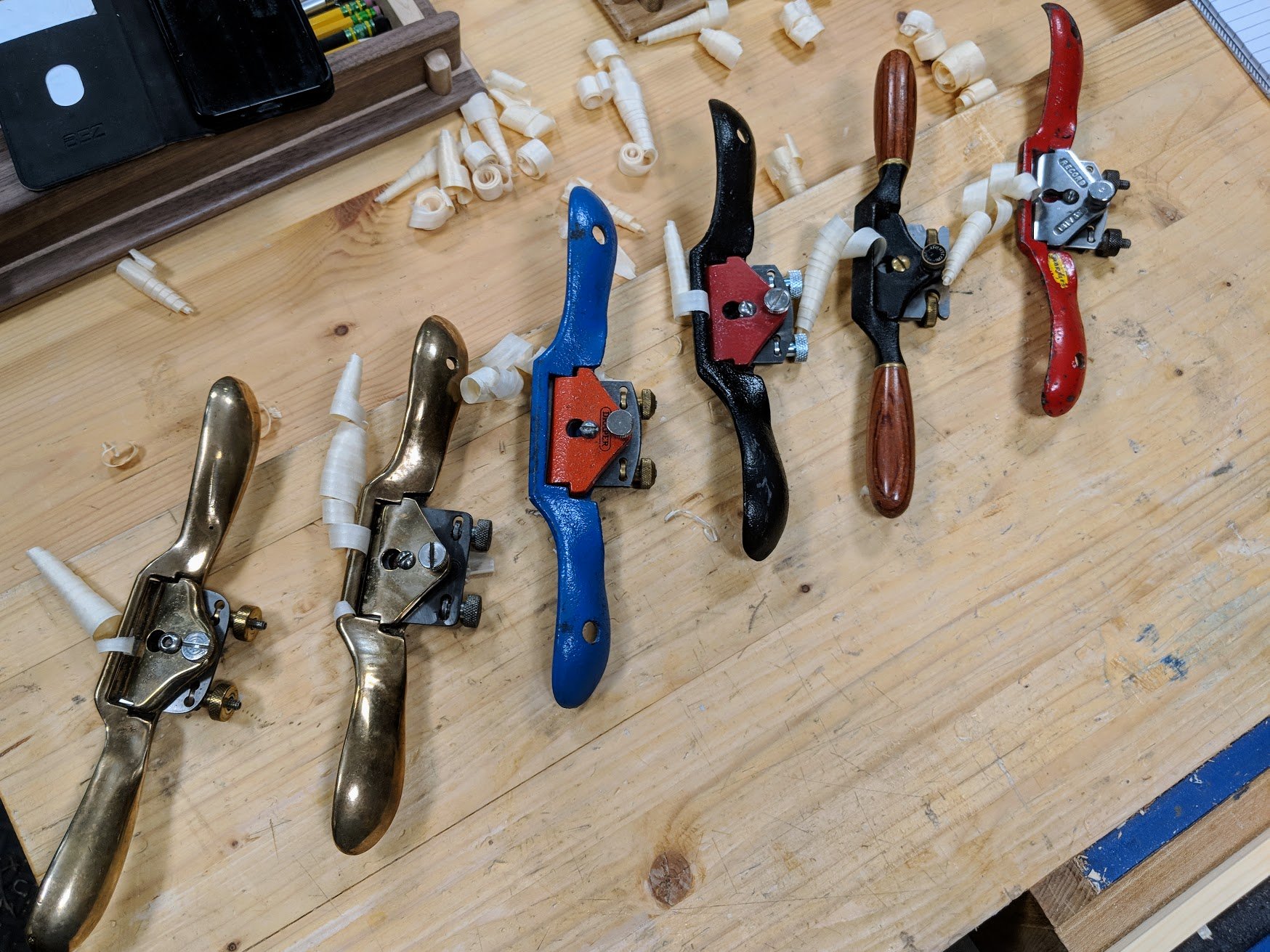
A misunderstood and neglected tool. I've used spokeshaves most days of my life for one task or another. Since 1963 I have only seen others use them rarely; very rarely and never outside of my classes. I have always felt spokeshaves to be mostly misunderstood - misunderstood, underestimated, undervalued and lost to too many as far as its use and amazing versatility. As with many hand tools - saws, planes, chisels and so on - our first experience with them can be at best negative; and for a variety of reasons we might well pass them by. For the main part spokeshaves are very often picked up and put down in poor condition. I doubt that most people even know what they did let alone how to use them, set them up or restore them.
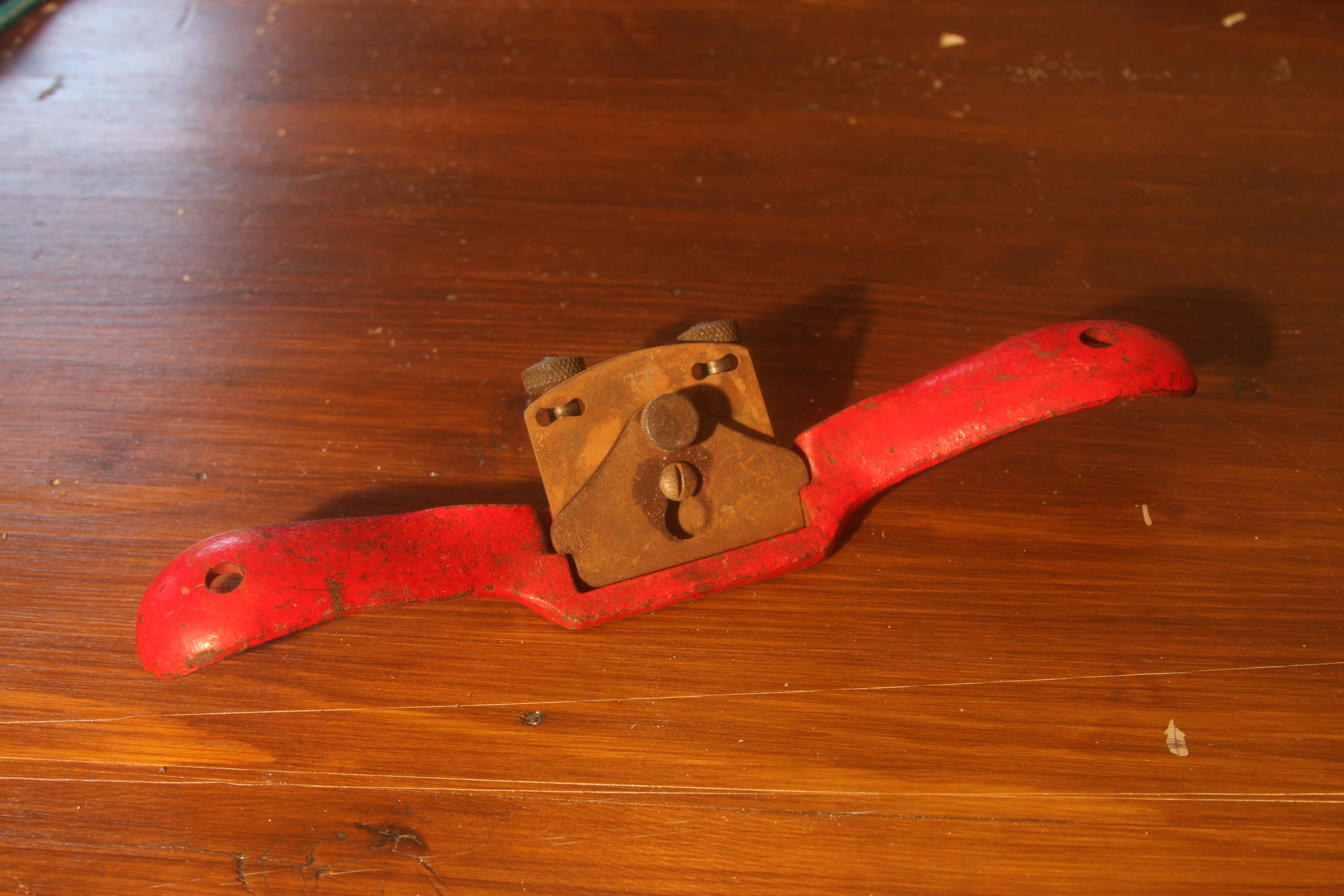
It's not even use that rendered them such, mostly it would be neglect and ignorance I think. Sharpness is almost an unknown to spokeshaves. I often find them used straight from the maker without any signs of ever having been actually sharpened beyond the ground 25-degree bevel. Thick rust, paint splurges, greasy gunge and oil is often typical too. That's how many of mine have come to me. I think this picture of general neglect reflects too both the demise of interest in them and the lack of knowledge what they do. After two thirds of a century being bombarded by the power router that replaced the need for skill with a spokeshave to perform rounding tasks for things such as chair rails, rungs and legs. The reality set in that no one really needed the humble spokeshave in their work. The knowledge of working them by hand then working with spokeshaves too was mostly lost as 'progress' passed the 1960s. In terms of percentages, the reduced use and need of spokeshaves in woodworking began when mass made chairs from woodland setting were transferred to manufacturing factories and then ultimately other countries on other continents. Eastern Europe, especially Romania, took on the mantle of being exporters of chairs to around the world. In the USA you could visit a raw furniture outlet and pick up a well-made Windsor for $50 a chair. Pint, stain or still in the white, most of us couldn't buy the wood for that.
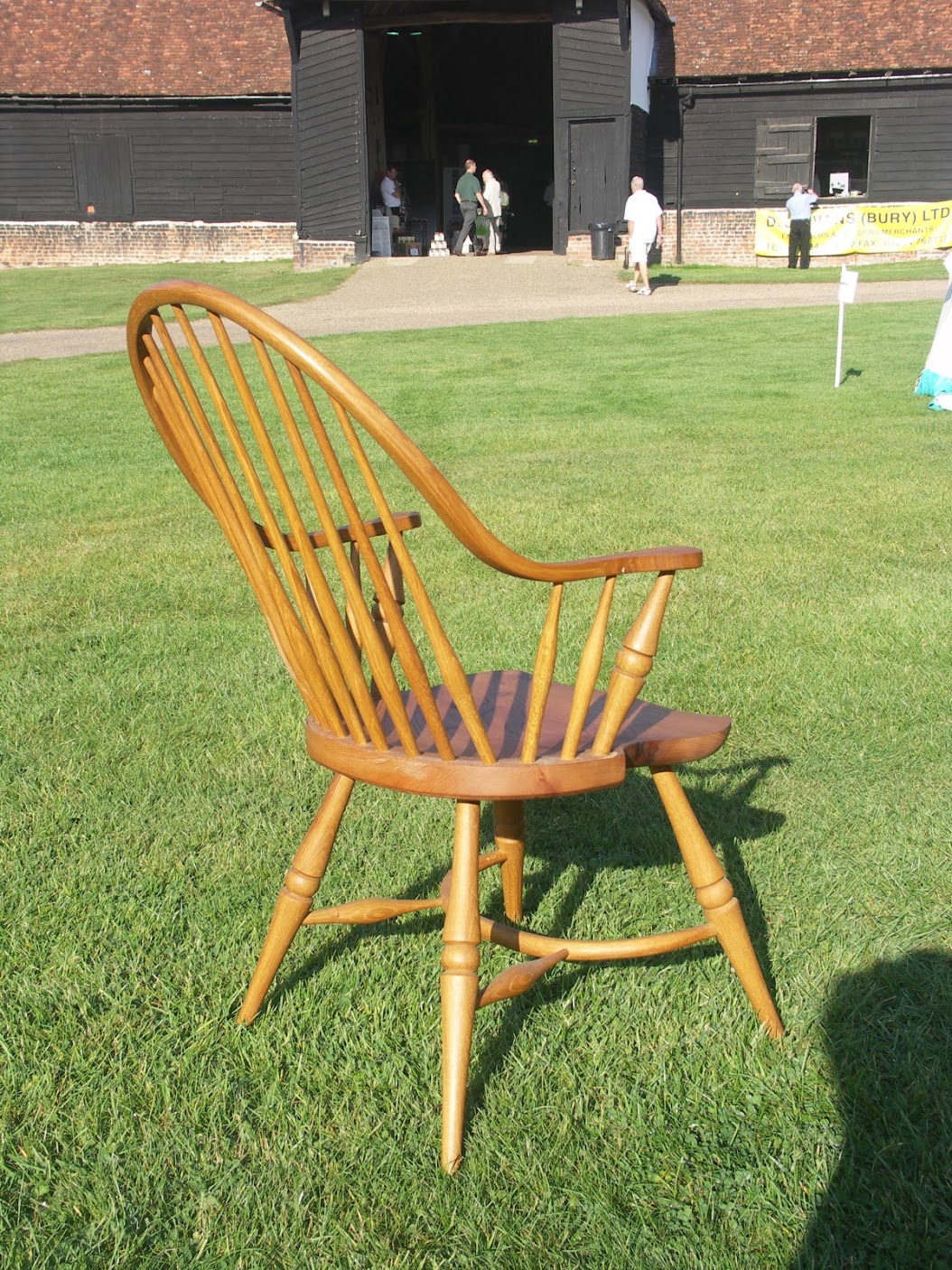
Of course they were not hand made. A mass-made chair made from 20 or more spindles take less than a few minutes to make using modern equipment. Seats can be shaped for comfort in a single pass of rotary cuts and sanders refine the work for spraying in seconds. Assembly with dextrous hands and a soft-faced hammer completes the job. I doubt that such a chair takes more than five minutes to completely complete and man power may be as little as two of those minutes. They can be solid oak, beech or maple and no hand tool beyond the assembly hammer touched any part of the work. This is the reason for the chair maker's demise. And don't think for a minute that such chairs, mass made and sold for such a little amount are in any way inferior to a hand made version. Take a look first at restaurant chairs and ask yourself how come they last so well. Every angle and joint line is usually perfect. The machines are set up for a million cuts per day and checked for synchrony by computers every few hours or even minutes automatically.
When we begin. A spokeshave can of course simply be mis-set, be that by too much or too little. Any over-extension of the blade leads to catastrophic gouging and skudding and the resulting washboard surface is made worse stroke by stroke. It's all to do with leverage. The more the blade is out, the greater the penetration into the wood and the more the hand tilts the spokeshave forward to misregister the sole to the wood. Tilted forward thus, the forepart of the sole balks at the work and the spokeshave skips and jumps over the surface like a newborn lamb with shark's teeth. As with any miscalculation it's best to go back up the sum until you pick up the point where the mistake occurred. Reworking from there is simpler. Until thirty years ago, tools like the spokeshave and drawknife of the chair bodging era were all but gone.
Whereas my view of woodworking differs to that of others, my main perspectives are shaped from my using tools like spokeshaves in the day to day of my daily life. Many of you followed me split sticks to shape into spindles either with a spokeshave or on the lathe for the shaker bench we made. I've shaved and shaped coves and cambers as well as compound curves on everything from coracles to oak wagon bows at the basic level and then used very ordinary spokeshaves to resolve complex the range of shaping tasks I've encountered periodically throughout my life as a furniture maker and woodworker and indeed in woodturning too. To begin describing the range of complex intricacies would be futile. Begin with violin necks and move on to moulds for shaping moulds fo forming leather cases for leather boxes. Look too to inlay veneers and sections of intarsia where a knife and a spokeshave can do amazing work and eliminate the need for mechanical sanding altogether.
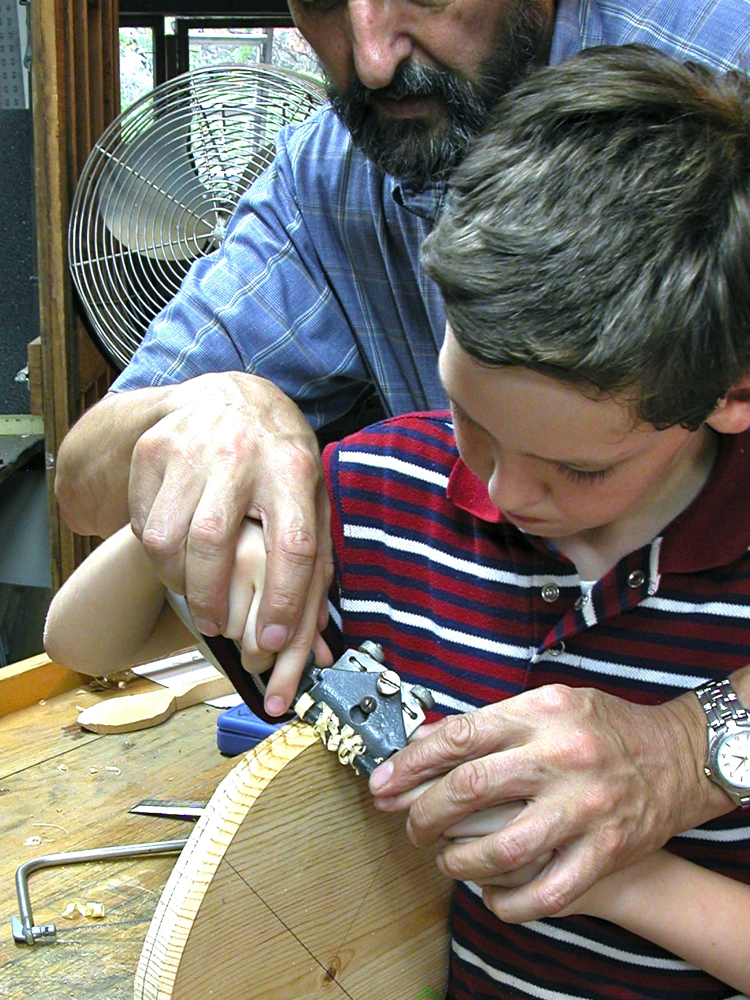
Because the craft as a craft was dead, the tools too became redundant. When that happens and a few decades pass, knowledge of the tools too die with the former users. In the late 80s something of a revival came to the bodger's craft as many a man and woman took to the woods and copses to build a chair. Walking back from the woods at the end if a week's chair making gave them a satisfaction because they'd made a free chair from sticks and stems harvested during the week. There is of course something primordially written into our DNA to take the raw and transpose it into something as functional as a chair. What I speak of is not so much skilfully made by a master maker so much as the first steps for someone trying to discover a new outlet in a desire to understand how something can be taken and made from the raw. So too is true of the spoon maker, trap and cage maker, basket weaver and hurdle maker. When your job is working in a suit in an office or retail store it's a rewarding thing to dress down and weave willow from a riverside into a functioning basket. Equally so a chair from woodland and a spoon from a stem of hazel. It's in all us to make. Let's not deny it!

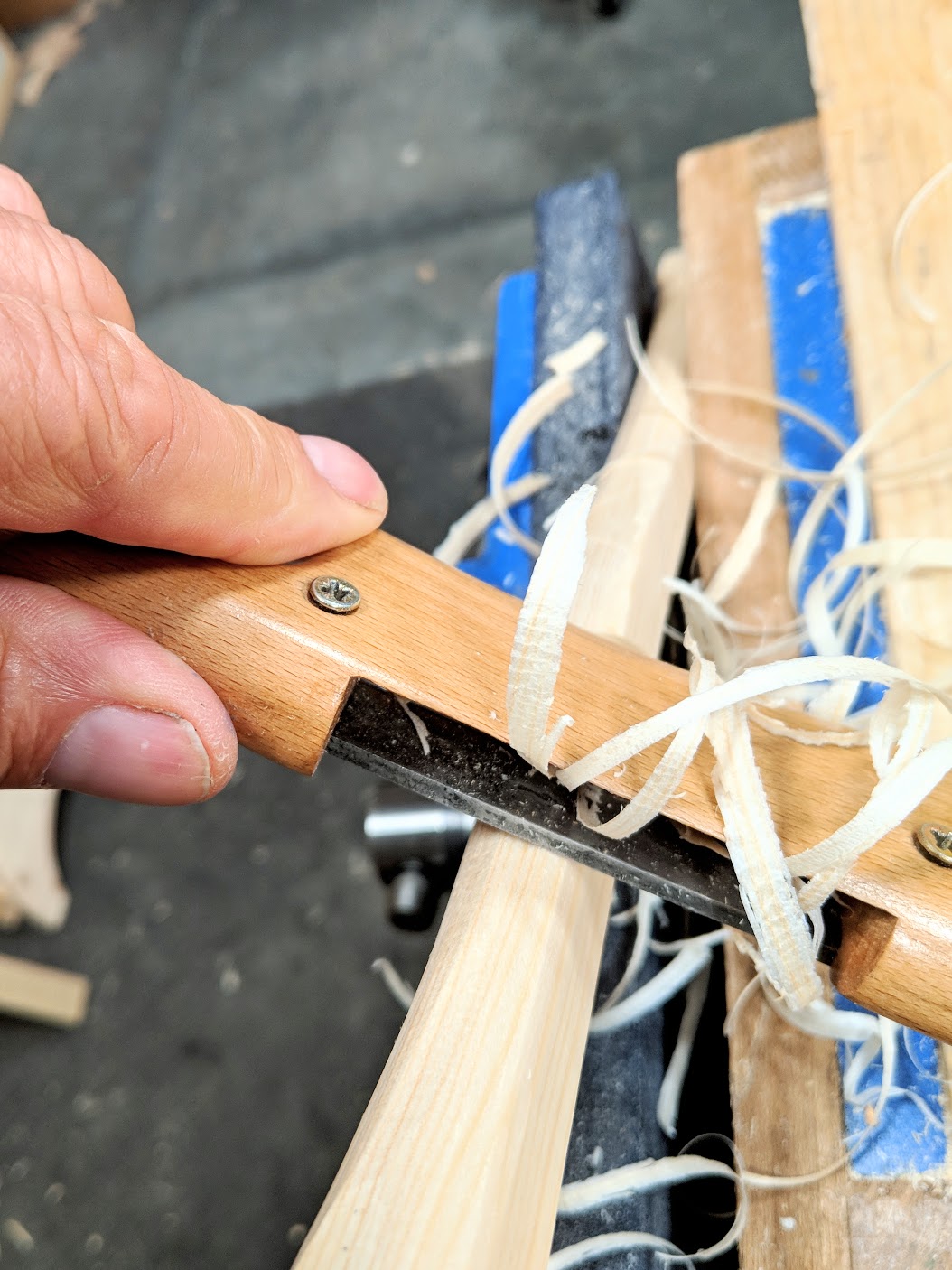
Yes, it works well on greenwood stems for stools As I have shown with most hand tools commonly held in low esteem over the years, this has been mostly because of ignorance. The internet and videography was the game changer men of my age shunned as a teaching medium because they couldn't adapt quickly enough. In my youth men passed on their skills to half a dozen others one on one at the bench. It was indeed a word of mouth training where a man shared and another listened. Skill was passed on and each of those men would have passed on their knowledge had it not been in the demise era of craftsmanship when trades like woodworking, dozens of trades of different types, became surplus to modern world demands. Whereas wheelwrights and coopers, trades such as that are indeed done and past as far as supplying modern day requirements, other craft trades such as the cabinet maker, carpenter and joiner also faced progressive redundancy too. Carpentry, joinery and cabinet making today are mostly assembly tasks. Doors come pre-hung and cabinets in cardboard boxes. I learned three decades past that when others underestimated the amateur woodworker as an emerging phenomenon far more powerful than in trade realms. The trades died with each generation trying against all odds to somehow turn the tide but yet ill-equipped because those verbal links of passing on skills were no longer. Why do I say that? Well, it's to do with talking and listening to professionals - lecturers from colleges, teachers in schools and then men working in the trades of carpentry, joinery and furniture making.
Comments ()