
Strategy for Making Draw-Bore Pegs
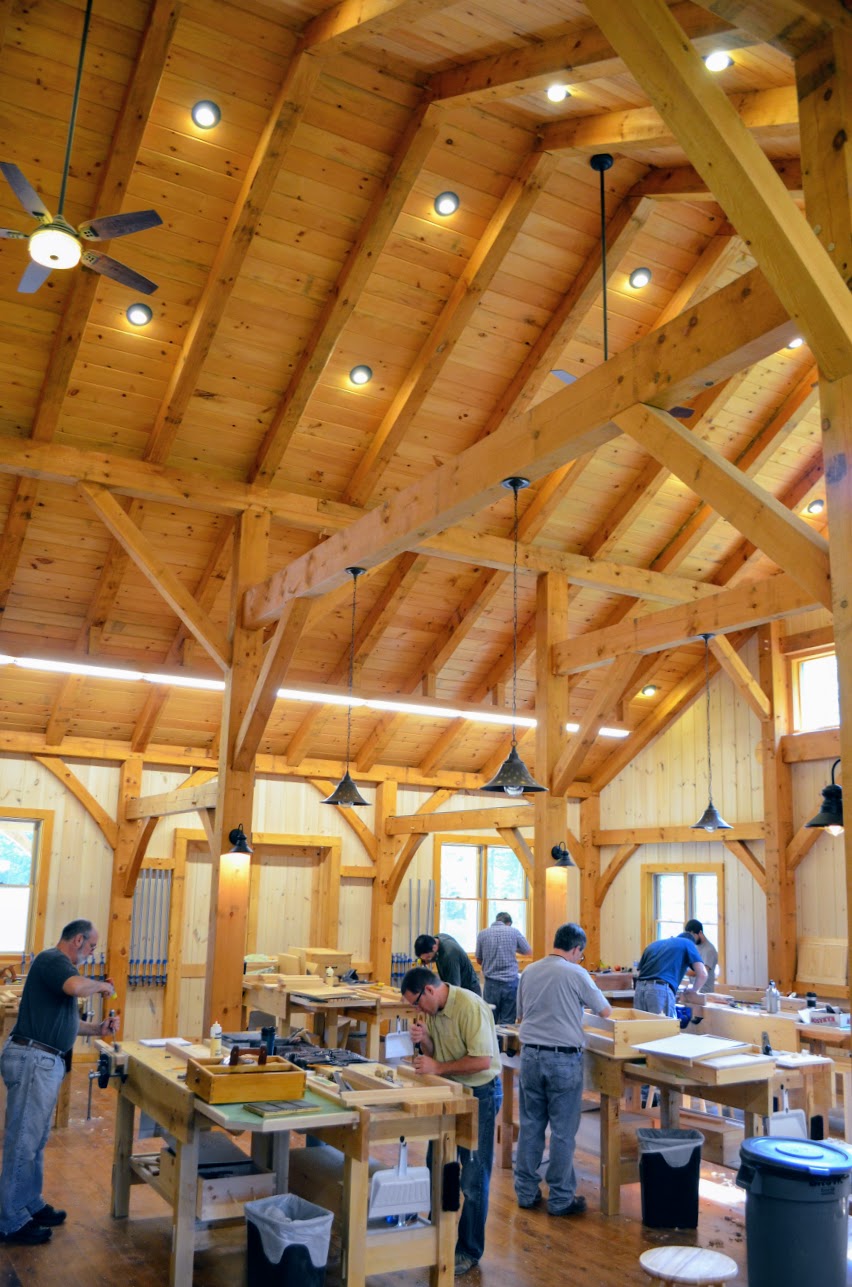
Smaller draw-bore pegs are unlike timber-framing pegs, primarily because of size. On a timber-framed structure for a building the pegs can be from 3/4" on up to 1 1/4" depending on where the pegs are used--main frame posts, collars, tie beam, brace and so on. Draw bore pegs for buildings are typically shaped and sized with little more than a draw knife although some builders have them turned on a lathe too. For furniture our pegs are much more diminutive, rarely are they more than 1/2" in diameter and they then go on down to as little as 1/16". Mostly they are 1/4" through 1/2". The danger with draw bore pegs is increasing the diameter of the peg and the resultant hole can markedly reduce the strength of the other two components, the mortise wall and or the tenon. It's generally about finding the balance. Now that we have seen that I can introduce my own methodology for making furniture draw bore pegs also called pins, trunnels, trenails and treenails amongst others.
As a preventative, I make a quick dovetailed corner I can clamp into the vise to chisel against. It saves my bench top.
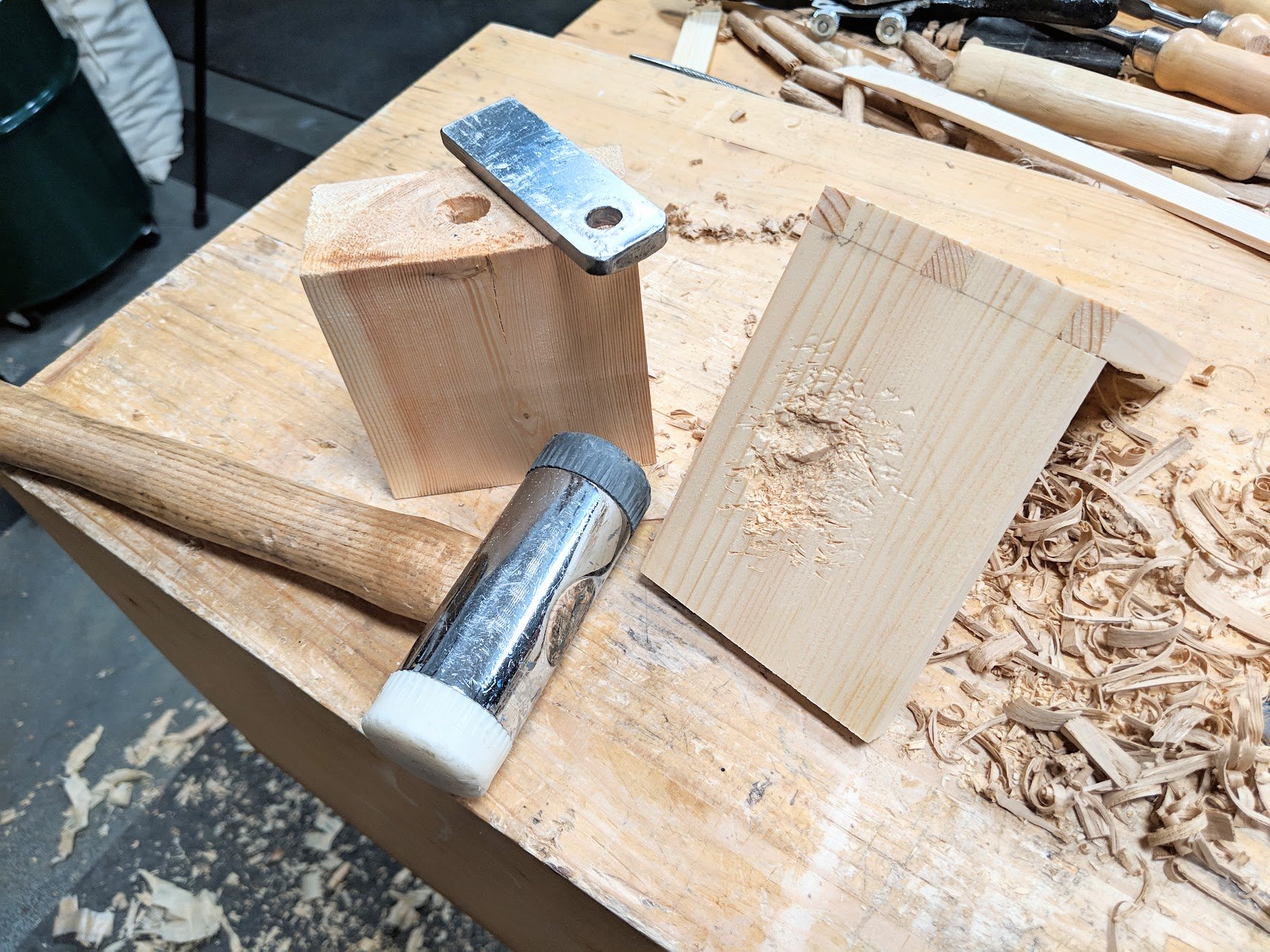
It clamps nicely into the vise and rests safely and securely on the bench top; no slippage.
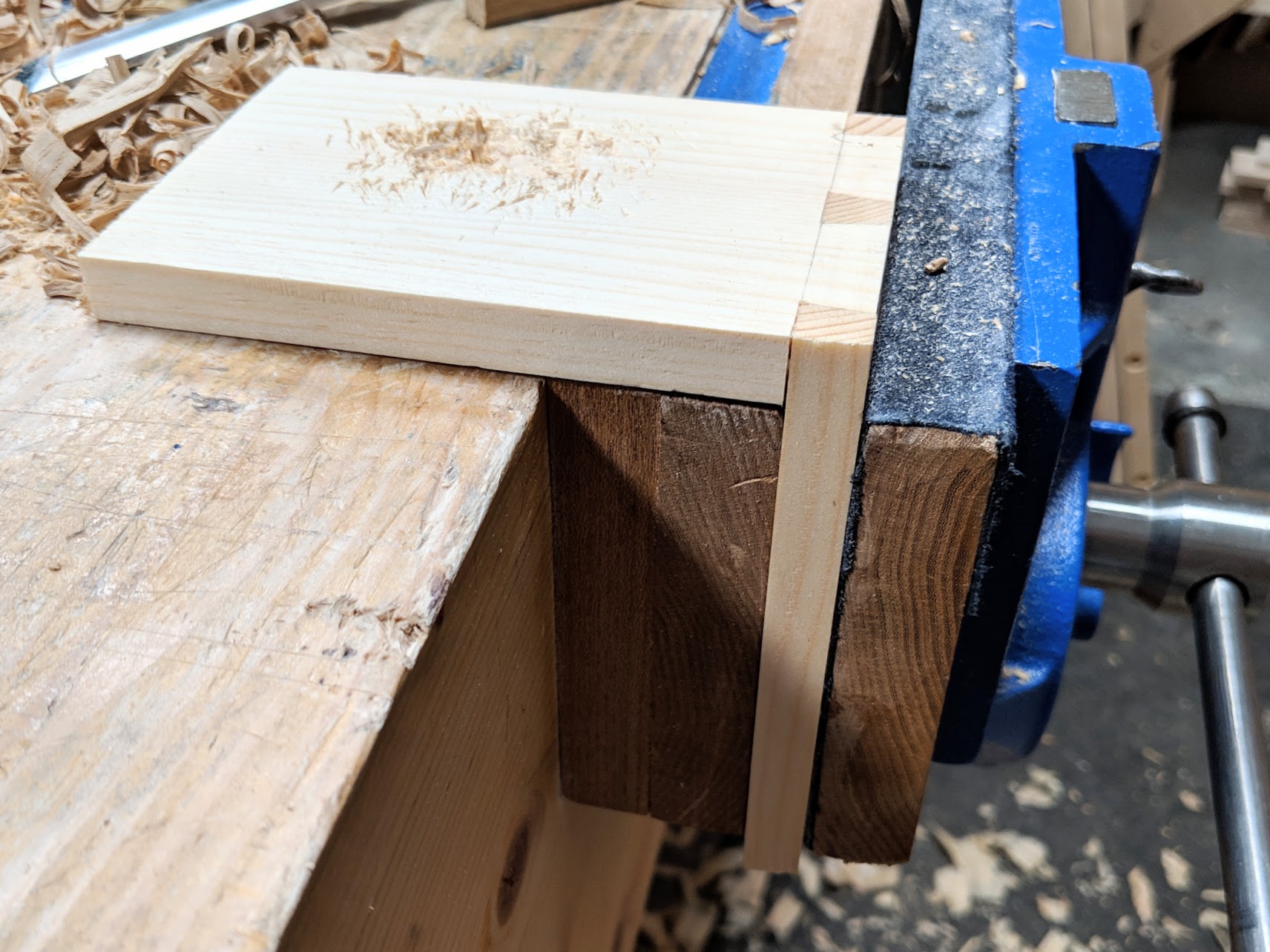
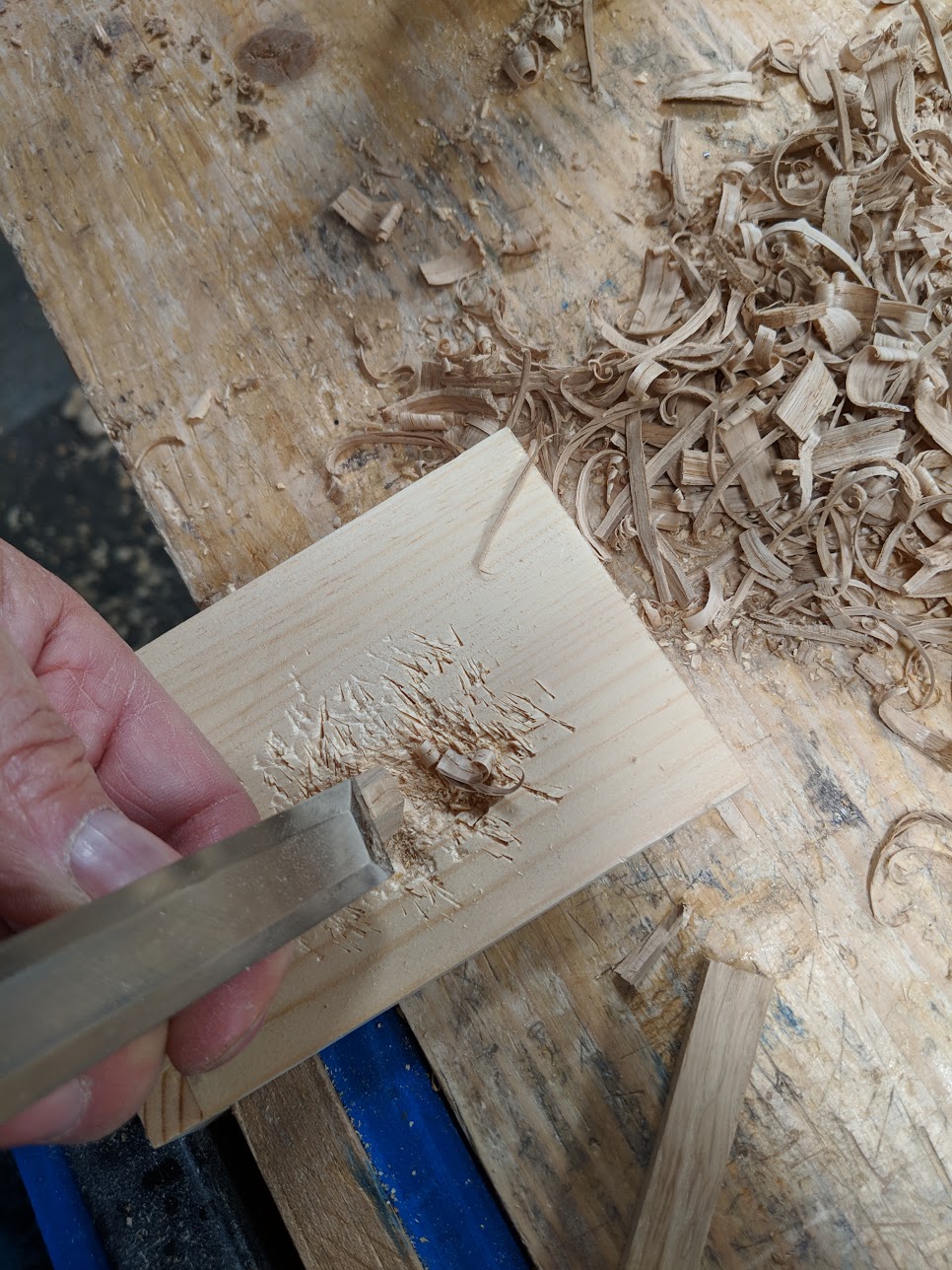


Our trunnels can be made completely dead round or indeed octagonal. The idea of the octagonal pegs is good compression but it really works best with bigger trunnels. Driving the octagonal shape into a perfectly round hole causes the hard edges to bite into the walls of the hole. The flat faces have gaps and the hard edges consolidate under the driven pressure and fill in the gaps. There is better bite, better spring and better cohesion this way. The struggle is variance in size. It is much easier to size the peg to exact size by basically drilling the desired hole size into a section of steel and driving the peg through the steel. This gives you an exact sized peg.


The best system is to preshape the peg using a suitable sized chisel. I prefer a 3/4" bevel-edged chisel. Tapering the start to a point gives a leading edge into the hole of the steel. Removing the corners reduces the force needed to drive the peg into and through the steel.
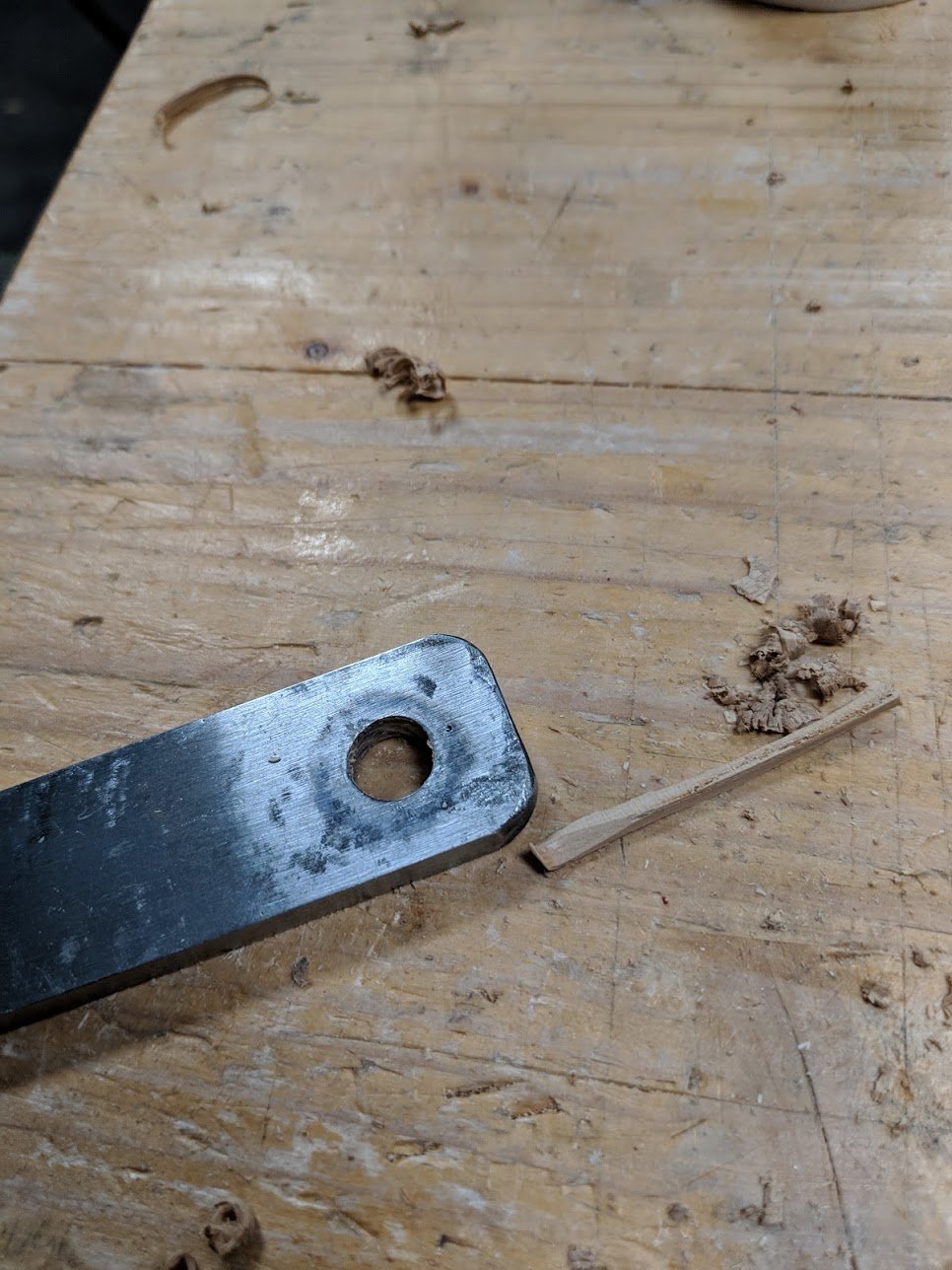
Drill the hole size you need through any piece of thick steel you can lay your hands on. Alternatively a steel washer will work for this too provided it is thick enough to withstand hammer blows.
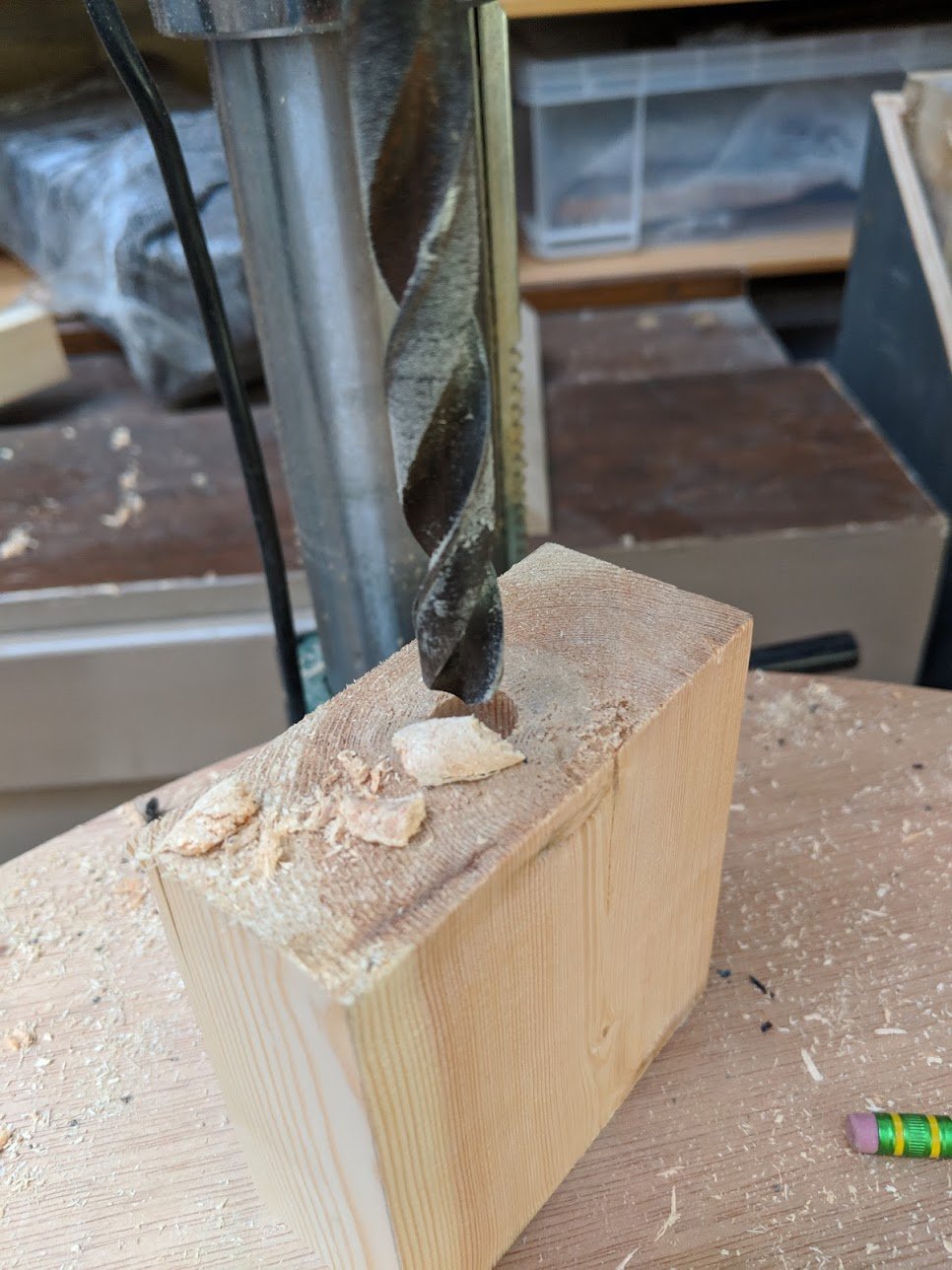
I also drill an oversized hole into a block through the end grain. This serves to support the steel dowel maker when I drive the blank to develop the peg.
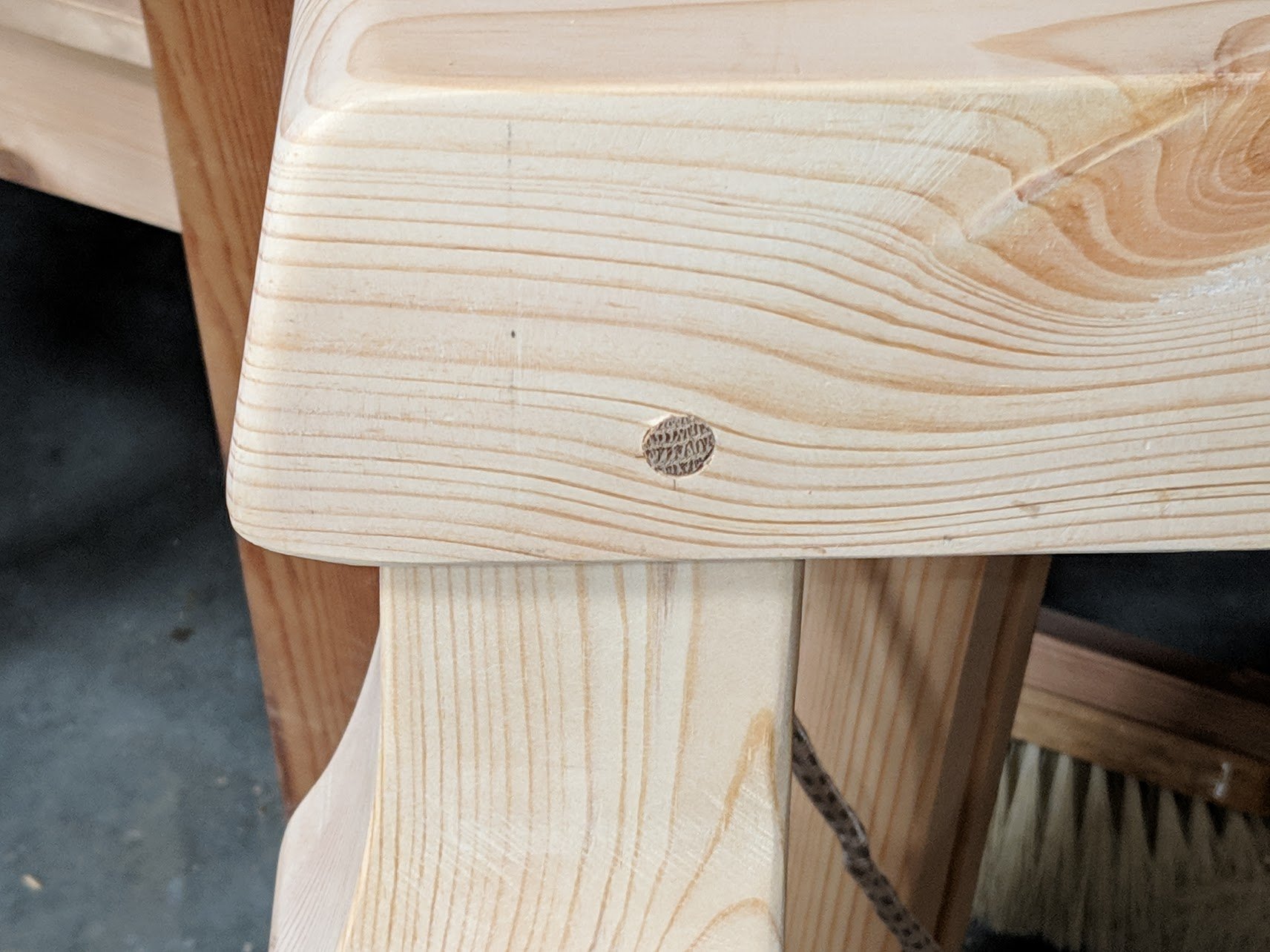
Here it is!
Comments ()