
A Plain Bullnose
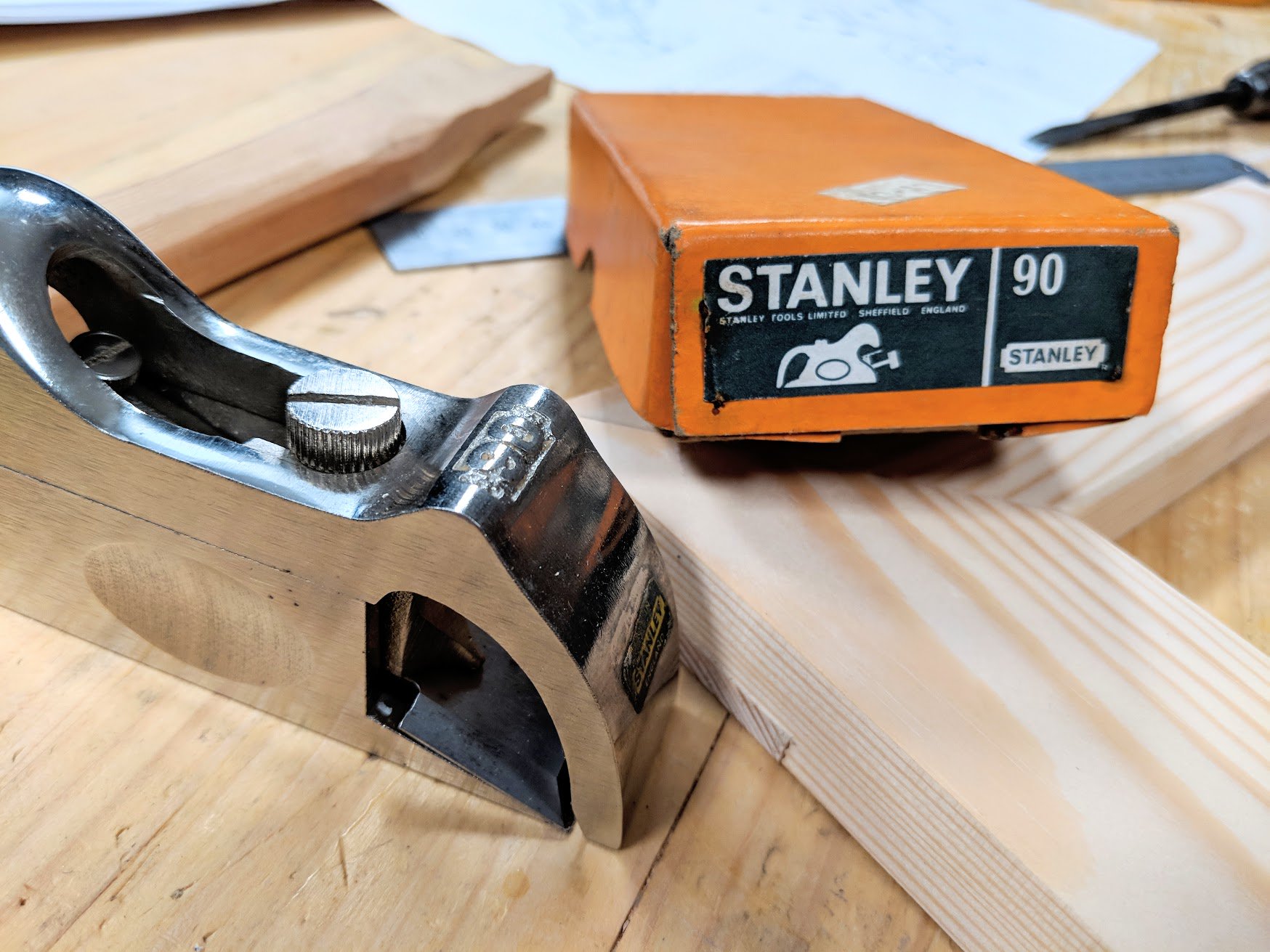
I have several bullnose planes. Too many. I've used and tested all of them. These low-angle bevel-ups stolid and unpretentious planes are the handiest little tenants on my shelves and in my tool chests. There is no equal for a variety planing tasks because when you need them there is no other plane or indeed tool to deal with the task. Forget magazine articles comparing one to the other in silly Best on Test articles or worse still Editor's choice! Where any and all tools test out best is on the job in the hands of an experienced user or two. By that I mean someone who knows the tools. Comparison tests are often of little value at all, in my view.
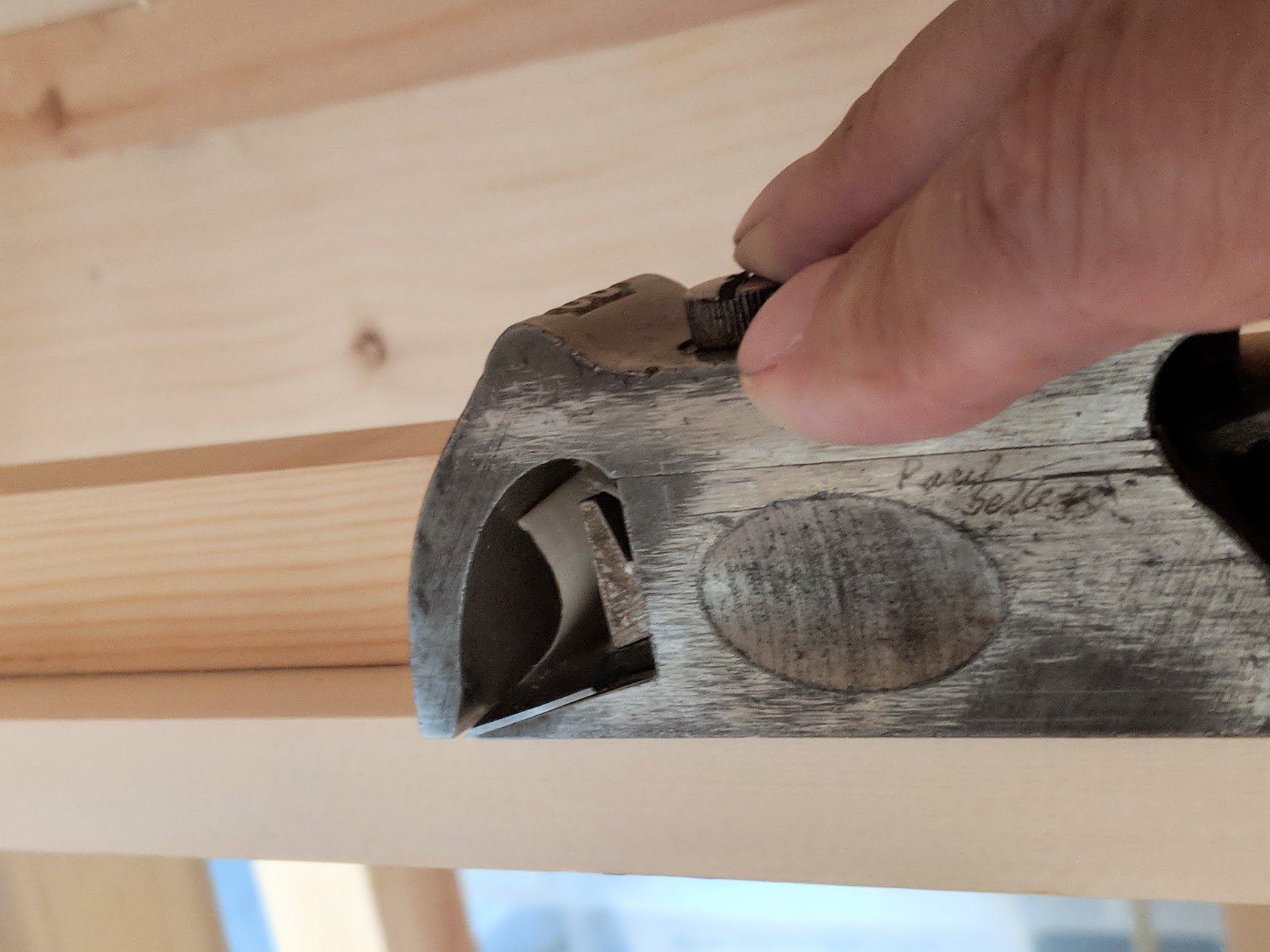
The bullnose plane works especially well for micro adjusting rebates to receive doors and panels, refining rabbets to finesse adding a corner in an alternative wood. But premium of all in my world of furniture making is working on the wooden drawer runners inside a cabinet. Slip this little bullnose along the surface front or back and suddenly the sticking drawer glides like silk into place. Whereas my favourite bullnose amongst my prizes will always be the well proven Stanley #90, there is something about the older no-name versions in bronze and brass and steel that harkens me.
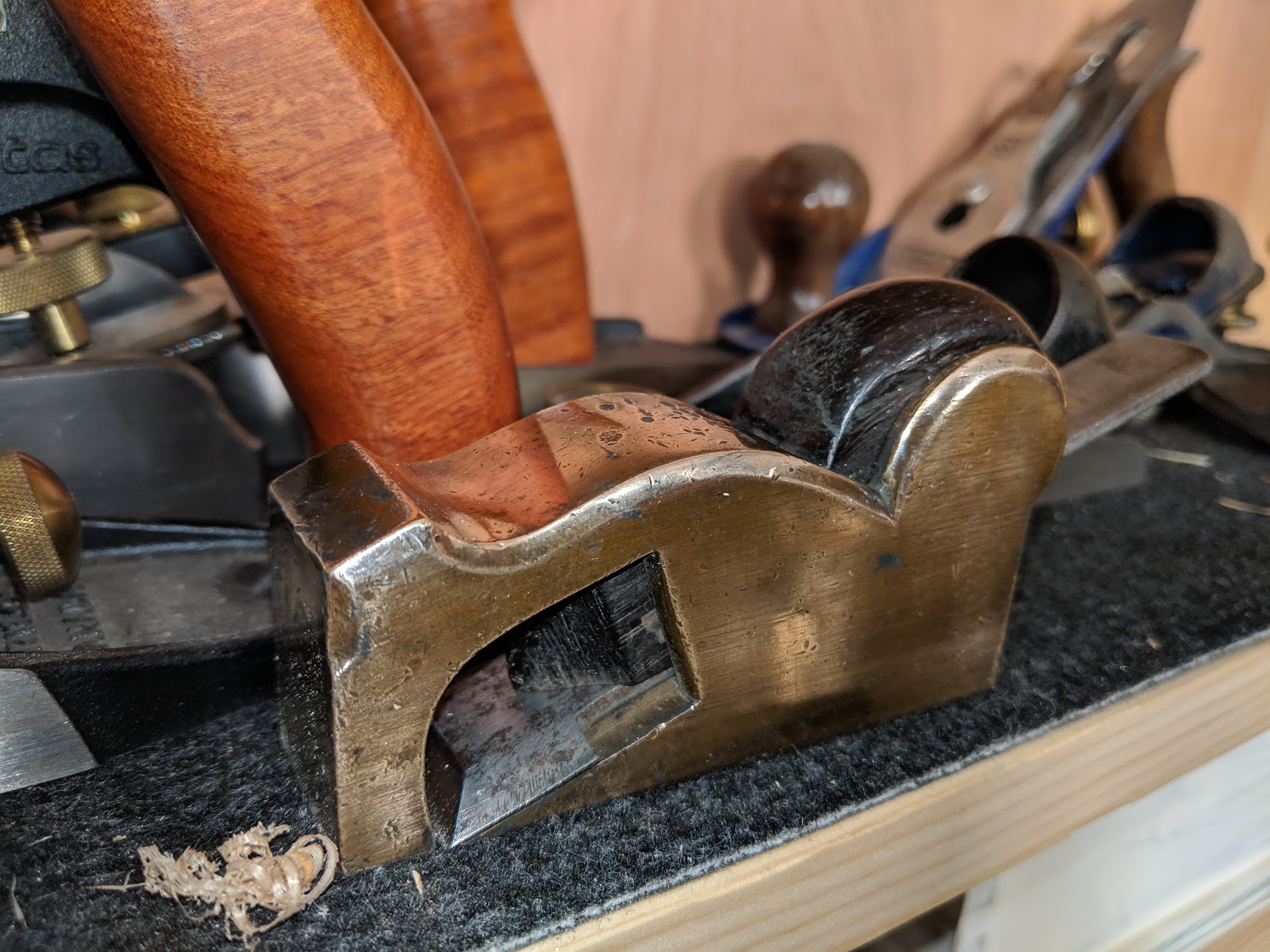
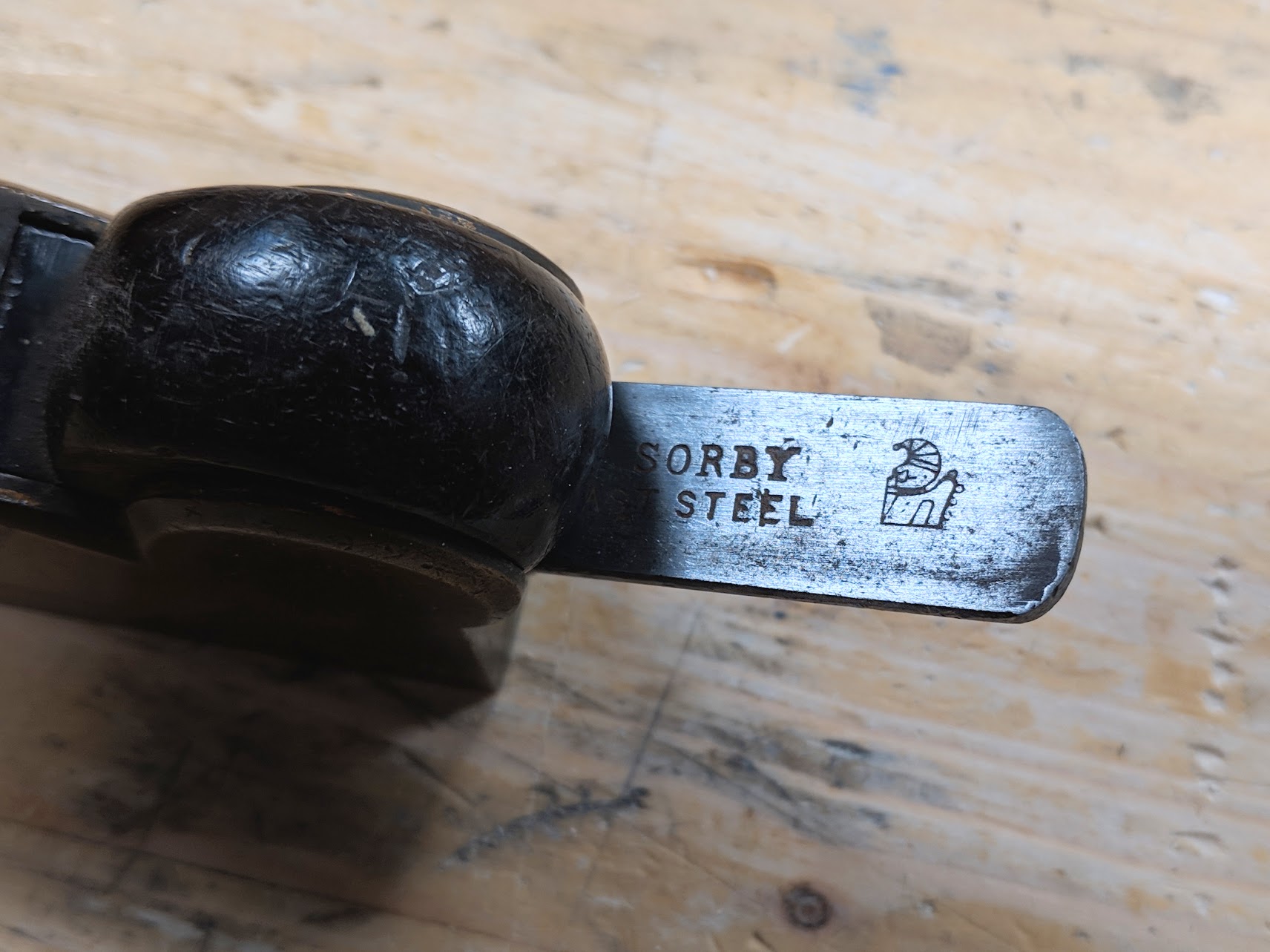
I had bought this via an eBay sellers. It was advertised as an I Sorby but in reality that was just the blade and not the plane. It's a neat and compact little plane without mechanical adjustment and uses the hammer tap adjustment method which is extremely practical.
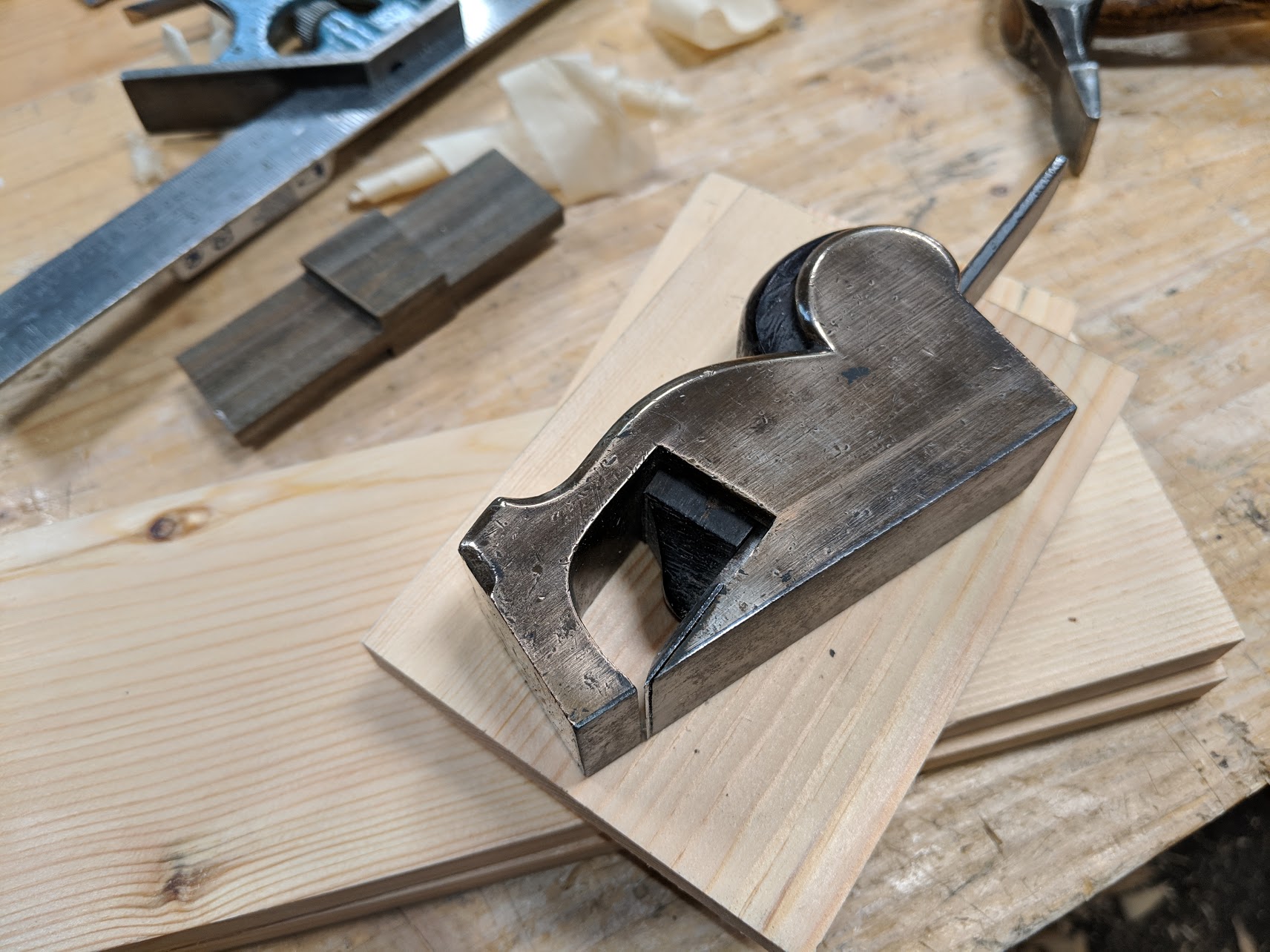
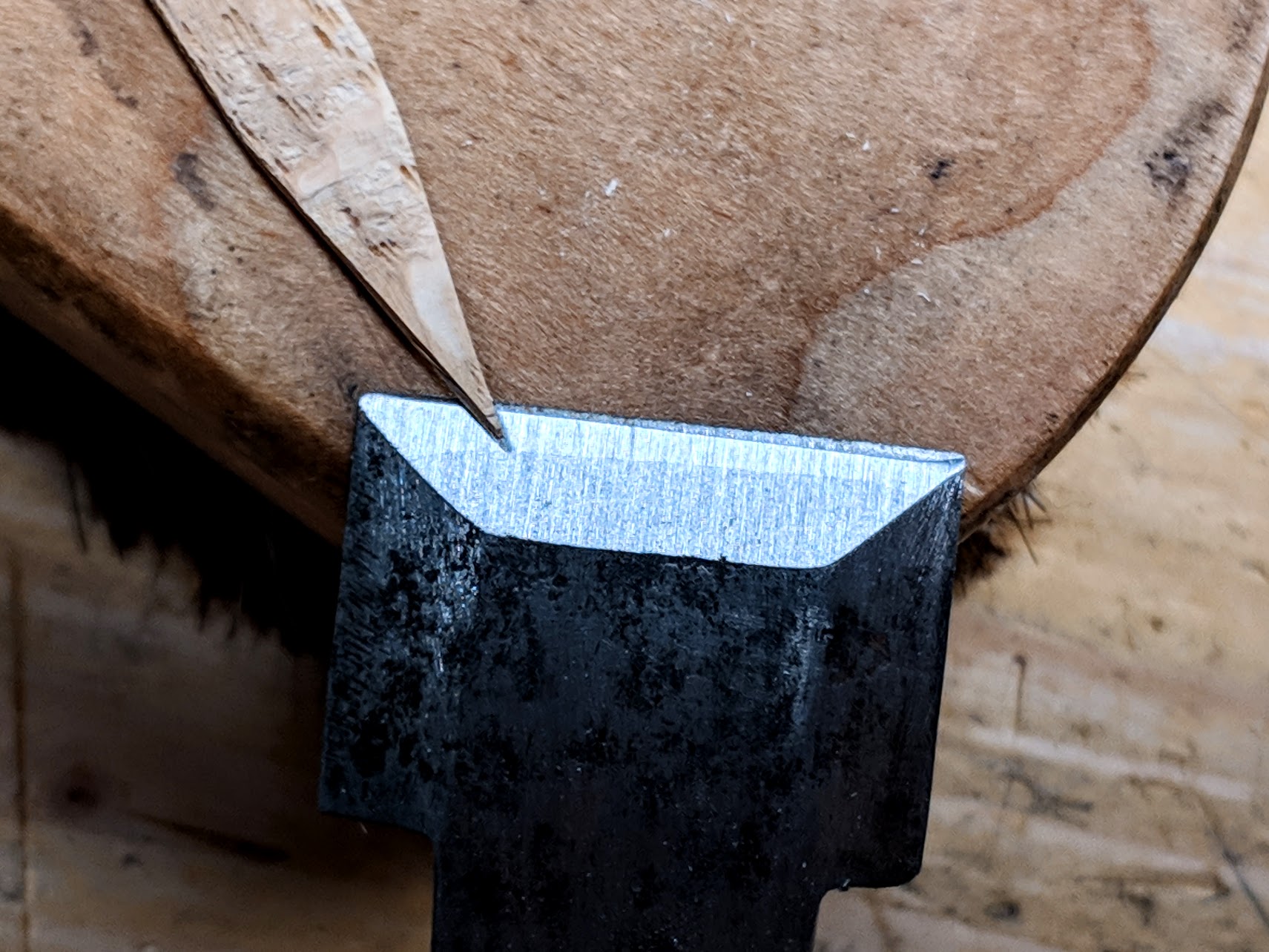
The body of brass has a laminated steel sole a millimetre thick. I liked that. But what I really liked and what was not obvious until I started sharpening was the the laminated blade. This is where savvy blade makers take mild steel for the main blade and laminate hardened steel in a counterpoised rake and laminate it to the rake on the main blade. This gives a strong and resilient blade overall with a hardened steel cutting edge that both takes a good edge and one that has good edge retention.
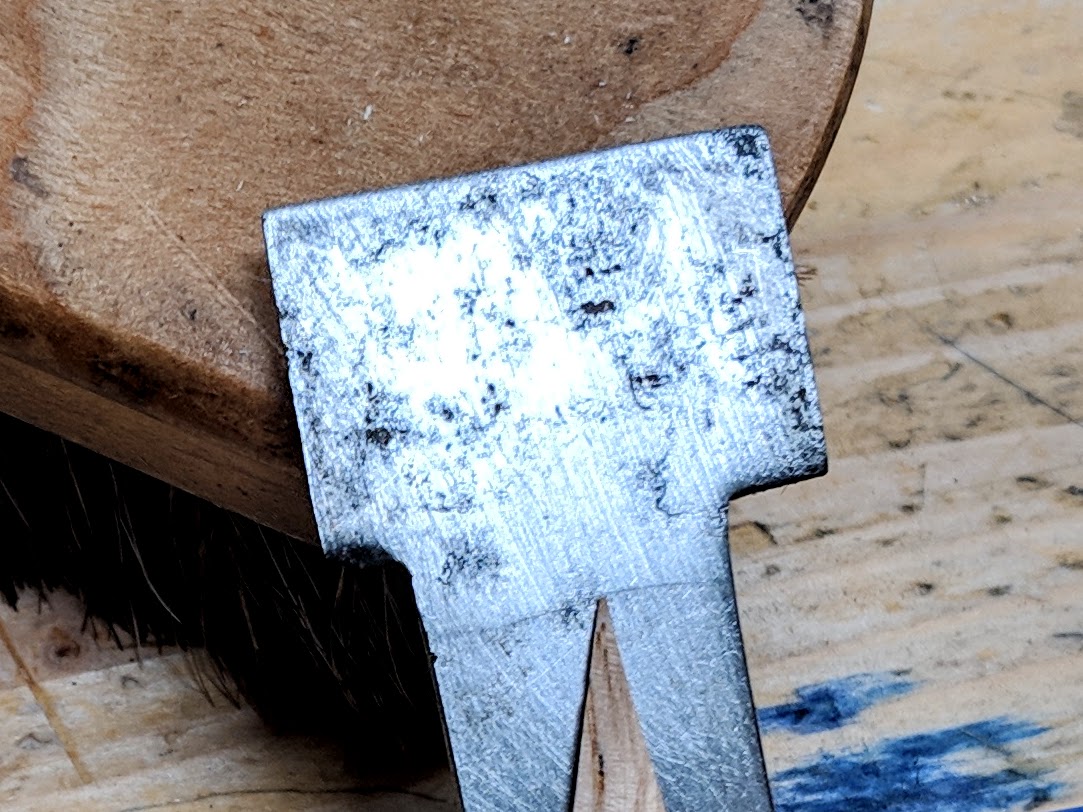
It's the art of the tool maker to deliver a quality blade with shock absorption and hardness. You can see the arrow showing the lamination lines both large flat face and the bevel edge of the blade. Look out for laminated blades. Even Stanley made some with laminated blades but all too briefly.
Comments ()