
Mis-fit
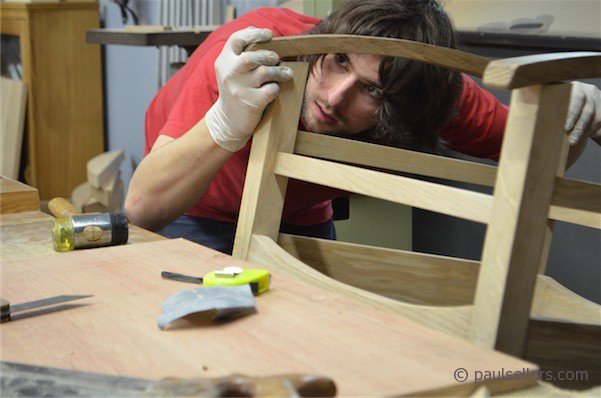
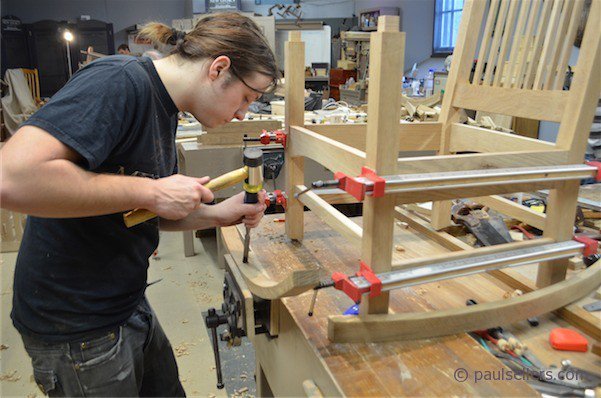
I'm sitting in the cafe thinking about all of the people I have nudged along this road I call real woodworking. They have come and gone and I expected them to eventually leave to do their own thing. Men do that. Go their own way, strike out, set up as what is now a disguise called 'freelancing'. Freelancing saves you admitting that you cannot find work despite your having gone into a £30,000 debt based on the advice of parents, relatives and college lecturers. Legitimised debt by government seems somehow more acceptable than all other forms of debt because you don't have to pay it back until you earn over a certain amount. Disguising it is a sick economic because most graduates never actually use their degree for the work they ultimately end up doing. Freelancing is a more acceptable term than self-employed, even though there may be little or no difference. I think that this millennialist term staves off giving an account for being between jobs or indeed gives reason to a term between leaving university and the quest of finding any kind of job related to your degree. It's surprising the jobs people take to earn a living once the lofty portals have been left behind. Self employment really means you have taken steps to set yourself up, you have work coming in and you are receiving payment for your skills and paying your taxes etc. Whether its easier to digest being a freelancer or not is immaterial. It's still a hard struggle getting your foot on the first rung of the right ladder when you are so young and inexperienced. What worsens the reality is when advisors at college tell you not to say that you are unemployed but that you are a 'freelancer'. I see more freelancers leaving uni these days than ever. Parents like telling their friends that their child has become a freelance than anything else. It may sound good, legitimise something, but it's not quite like being a freelance journalist or consultant.
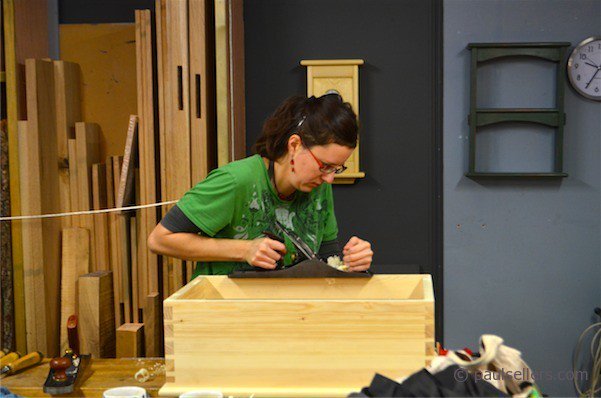
I have seen my apprentices leave and move into other situations still based on their quest to become craftsmen. Hannah is my first woman apprentice and I hope not the last. But what I am realising more and more is that it is these individuals I have trained that have usually stayed the course to become artisans in their own right. They quietly go about their work making and gradually start to sell their work, take commissions and so on. So it has been for three decades now.
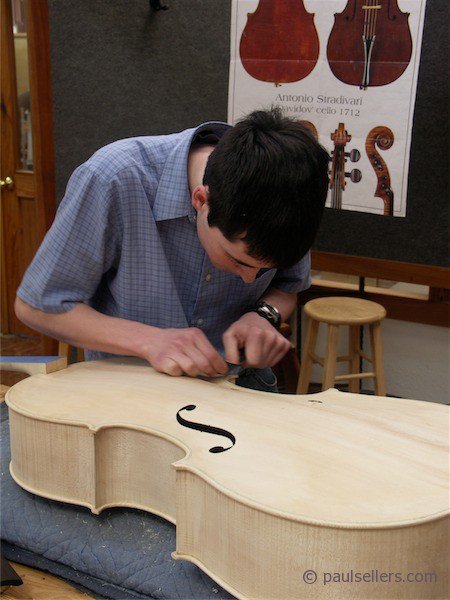
Mis fit is myself. I have in many ways felt like a misfit. The main reason is my perspective on wood and tools and the reasons I work and then the outcome. Behind my instruction lies the heart of my hope. My hope is that many will come and leave to become their own boss. Of course there is no such thing as being your own boss. I think you will understand that when someone pulls out the check book they are paying you to do work for them. But there is freedom for you to pick your work times, methods of working, things like that. But I am still struck by the amount of people I have trained who are indeed quite different. There is a sort of independence about them where they set themselves a part but seem gregarious and are not. They like talking about their work but often don't like sharing it. They are possessive and even precious about it. In essence they are mainly controlling and rightly so. This is what sets them apart for the rest. Mostly these are the 'not team players' companies often avoid taking on because they can be so problematic and indeed argumentative. I understand this phenomenon. Armies wear uniforms for one reason alone. Hospital staff, supermarkets and so on, all in all many entities insist on uniform wearing so that they can in fact be uni, one, form. Without it there is too much individuality. It takes a certain type of person to be self employed and it takes a certain type of person to be employed. Mostly it's to do with personality. Not everyone can be self employed. Especially is this so if you do not have self discipline, self motivation, drive, tenacity.
Misfits like myself can and do often work amiably with others. Fact is that I have often worked with others who are equally protective of their work, even working in the same piece. What I liked was when someone working on the same piece scrapped a whole door because they felt their work let down the other work. That they would work hours over to make the corrections and bring it up to standard. I suspect that there are many more individualistic people sharing workspace to work on the same project to project their abilities into something bigger than themselves than we might realise. The important thing in my view is to always be aware that you can indeed provide a workplace to help others into individualism rather than corporate even though there can be a corporate outcome in the end.
Comments ()