
Cognitive Feedback
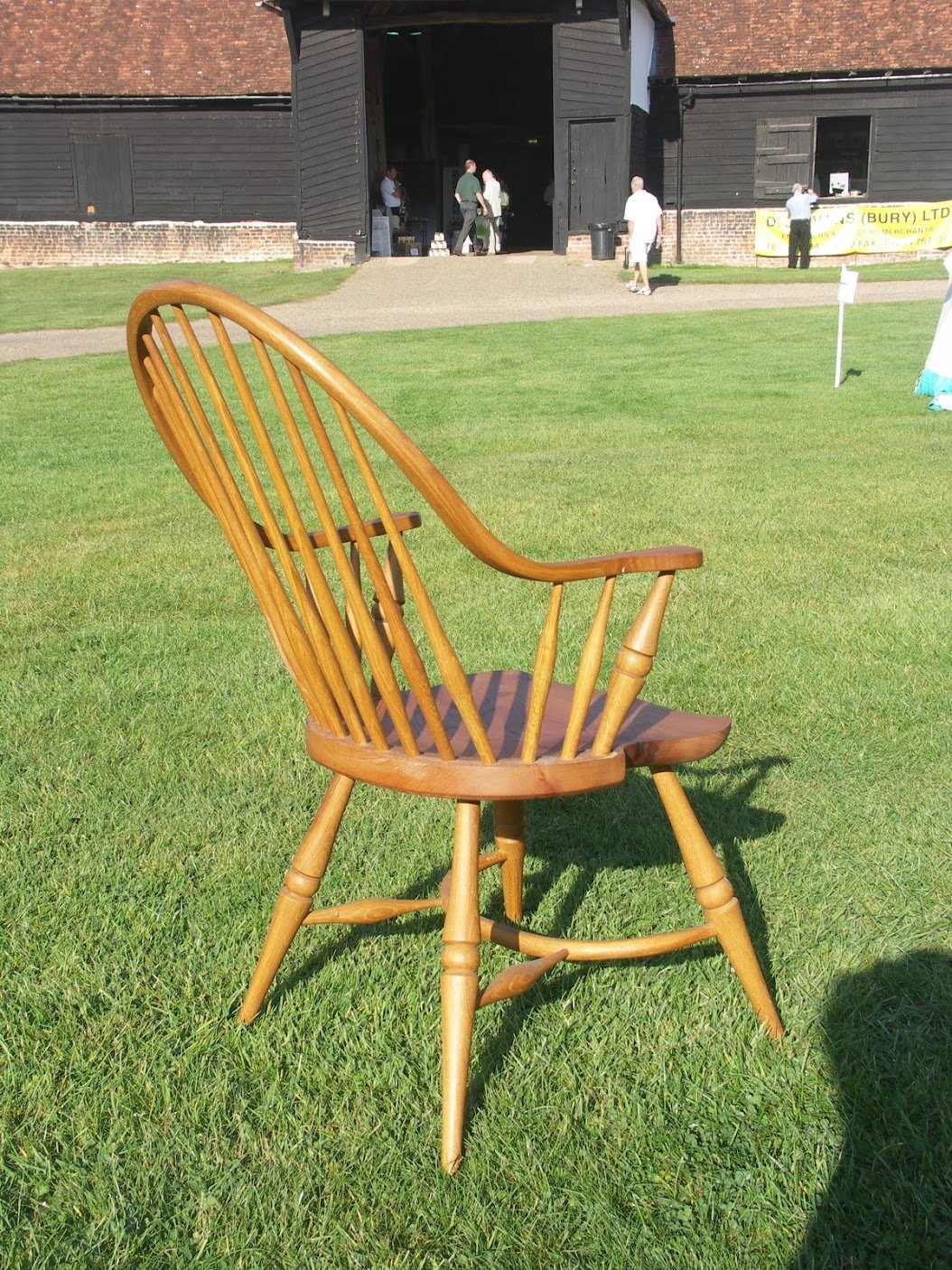
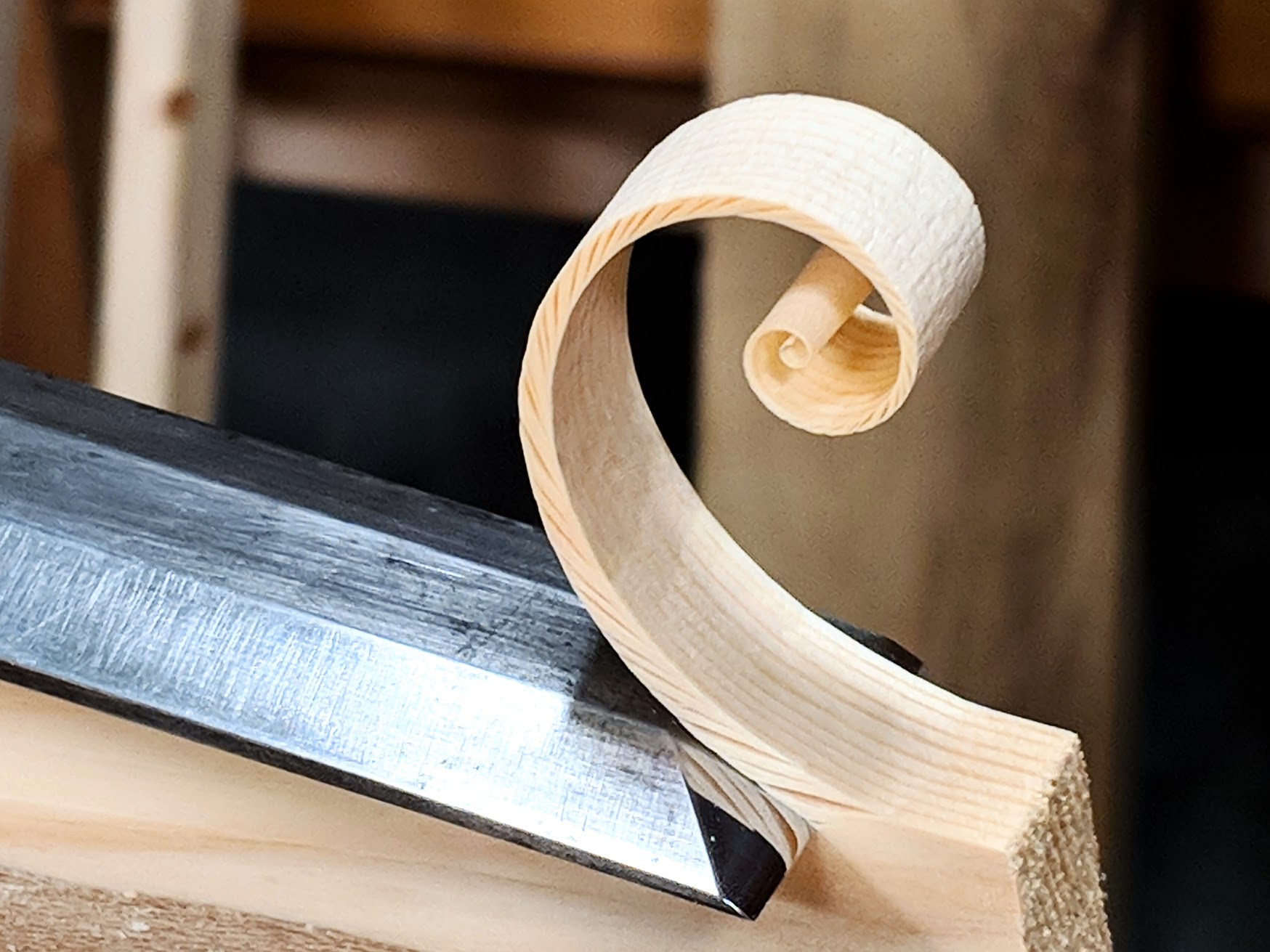
Woodworking by hand is purely sensory. I read someone who said he bought chisels in and used them as his "beaters". Shameful! Such careless statements sadden me because though I know what people mean and where they're coming from, it's a highly disrespectful way of referring to what was indeed a violent act. I'm not sure where the term came from (I can guess) or why it gained acceptance. Craftsmanship defies such levels of aggression and insensitivity in work. Craftsmanship relies demands sensitivity. I've watched a skilled stone mason split a rock with a cold chisel and a light sledge and with skill, sensitivity and heightened awareness throughout the task, the rock split along his intended line. The same is true with an 18" diameter oak stem eight or more feet long. Steel or wooden wedges cautiously placed and well driven at intervals and before too long a Windsor chair emerged from the sticks and stems and spokes.
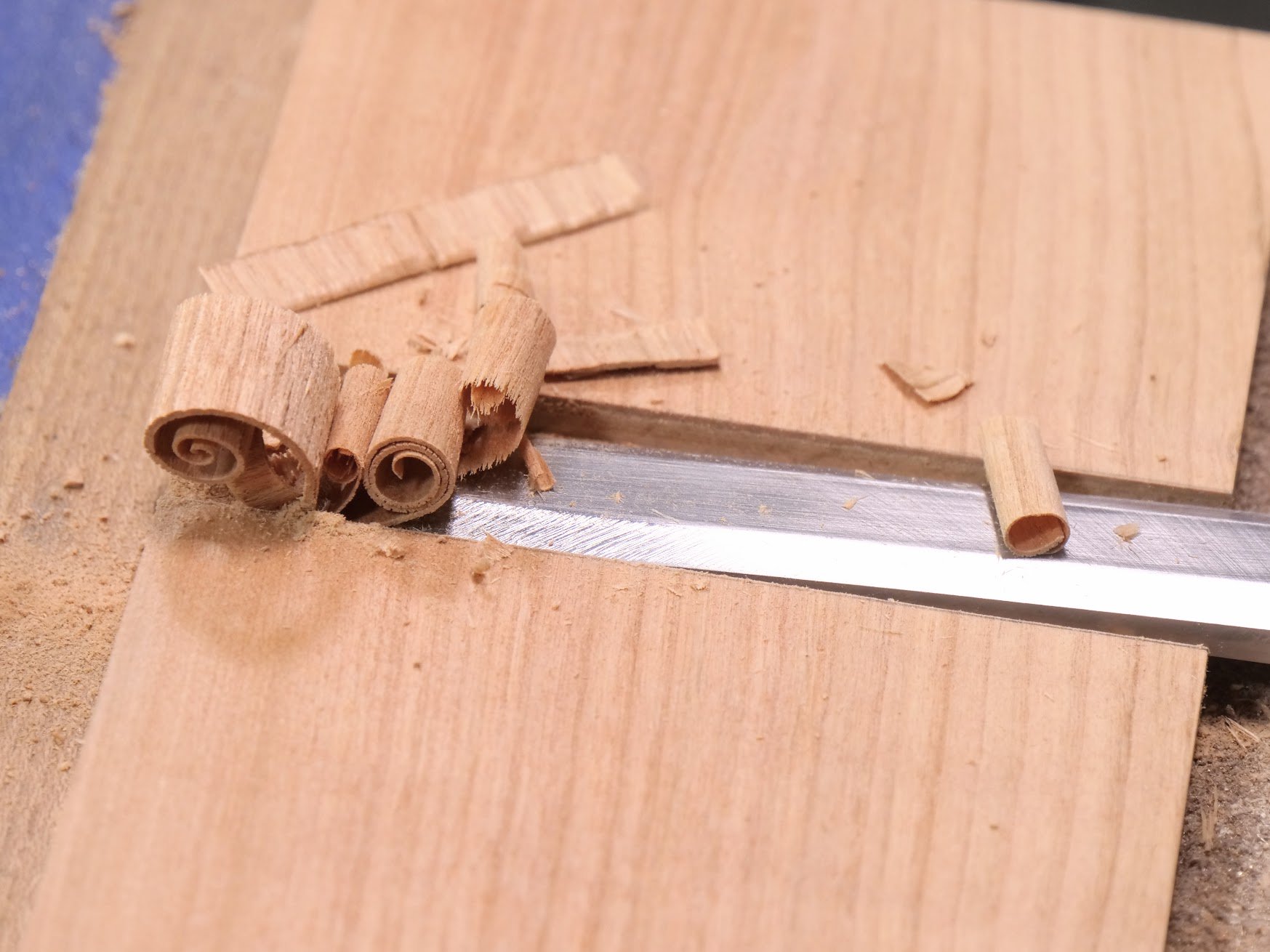
The more I work with wood the more I realise that it is less to do with force than it is to sensitivity. Less to do with the over use of power and more to do with controlled effort. A bandsaw uses a thousand unnecessary revolutions and millions of unused tooth cuts to part off the waste from the wanted. Every stroke with a handsaw is effort needed and used expediently. Nothing is wasted. My thoughts today rest safely on the reality that craftsmen and women become increasingly more sensitised to their need for controlled power the more they work their material. Their awareness is heightened so that they become increasingly aware of what they are doing by sensitivity to feedback coming from resistance from their materials through the tools they use.
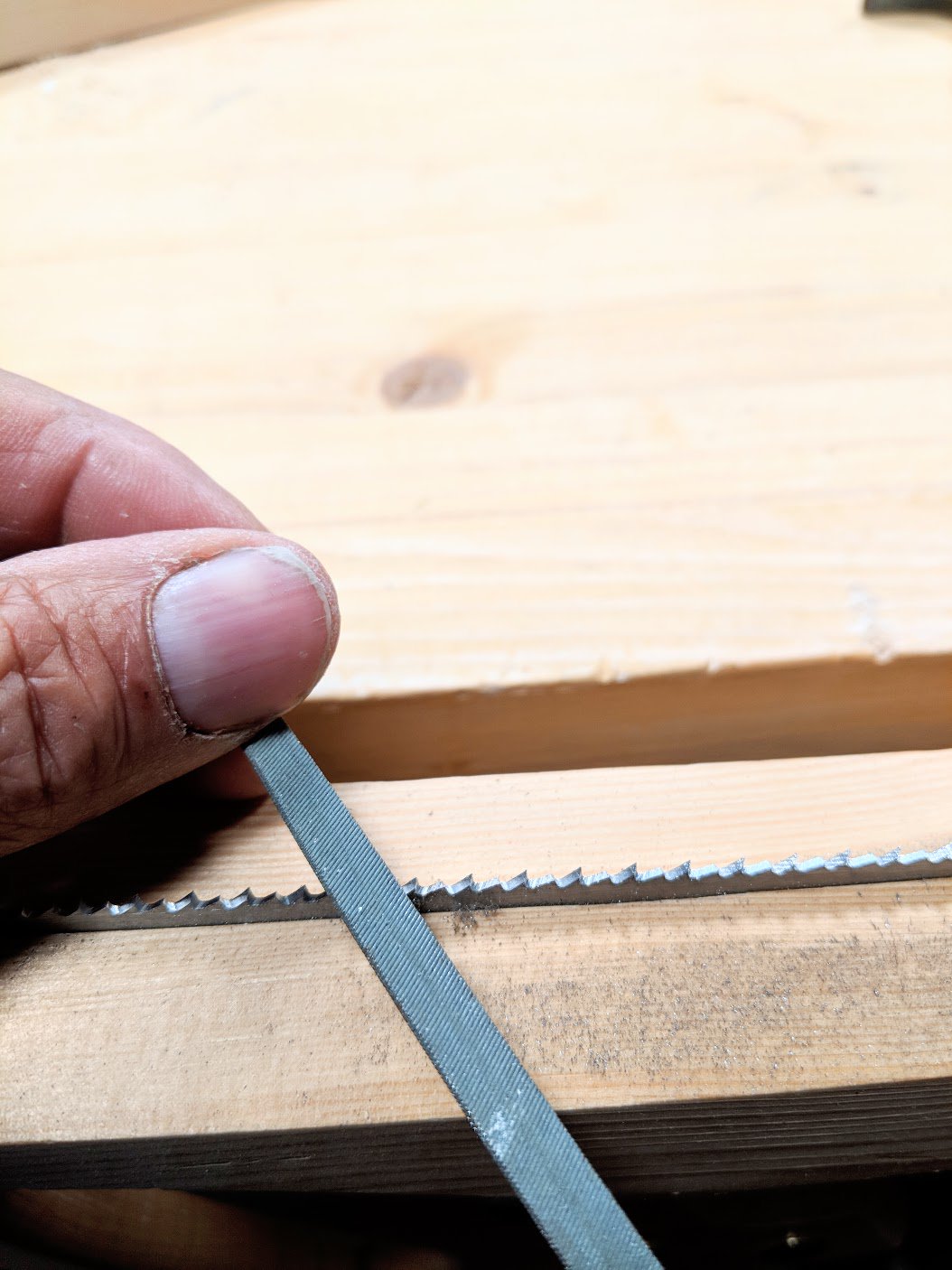
Our awareness grows in response to what we feel. We become aware of dullness only when we have become aware of what sharpness is. In my opening classes through the years and now decades I always start the first hour with sharpening planes and chisels followed by saws. The effort needed to use these tools is the difference between sensitive severance and brutally bruising. They place the chisel to the wood and the light goes on. Now they know the truth. They can now draw a comparison for ever. Once you know what sharpness is, when you have worked with it for a period, you become sensitive to the need to return to the sharpening stones. The number one failure in most woodworking is mostly to do with sharpness and the lack of it. I think people who ask the question, "How often do you need to sharpen?" is the same as asking, "How long is a piece of string? You can never sharpen too often and sharpness is all to do with recognising how much pressure the last cut took to part the waste from the wanted. Feedback is everything but it's only any good if we acquire sensitivity to feedback. As a second step it's also important to understand that we MUST be responsible by willingly turning to the sharpening stones and the file minute by minute. It is too easy to take one extra stroke with dullness in the cutting edge to ruin the work when even for that one stroke it would have been well worth the effort to remove the dullness from the iron and the dullness by our unwillingness to sharpen for a single stroke. Laziness is usually the enemy of fine workmanship and not the dull cutting edge.
So I am convinced that few people sharpen when they should. The stones are right there, the fluid, the rag, all these things there by the vise close to hand. "But I just sharpened ten minutes ago." I said to George; I was 16 years old. "Then do it again and tell me what you feel." Two minutes. Two minutes is all it took! The difference? Night and day! "It was that spruce knot," George said. 'When you hit that I knew the edge would be gone. if you're not willing to resharpen then you should, then go find another job." Even The new and more modern planes with supposedly high-quality steel blades need resharpening more regularly than people do. The teeth of saws can feel sharp but a single light pass through each saw gullet even after a couple of days of use results in a pristine cutting peak to every tooth, but even that is not it. It's the sides of the teeth that give the shearing cut to the wall of the kerf that I am looking for. This sets me apart. It's by this attention to detail that we perform good workmanship. Training your senses should always be followed up with a willingness to respond with action. This is sharpness!
Comments ()