
Plane Handling—Squaring the Edge
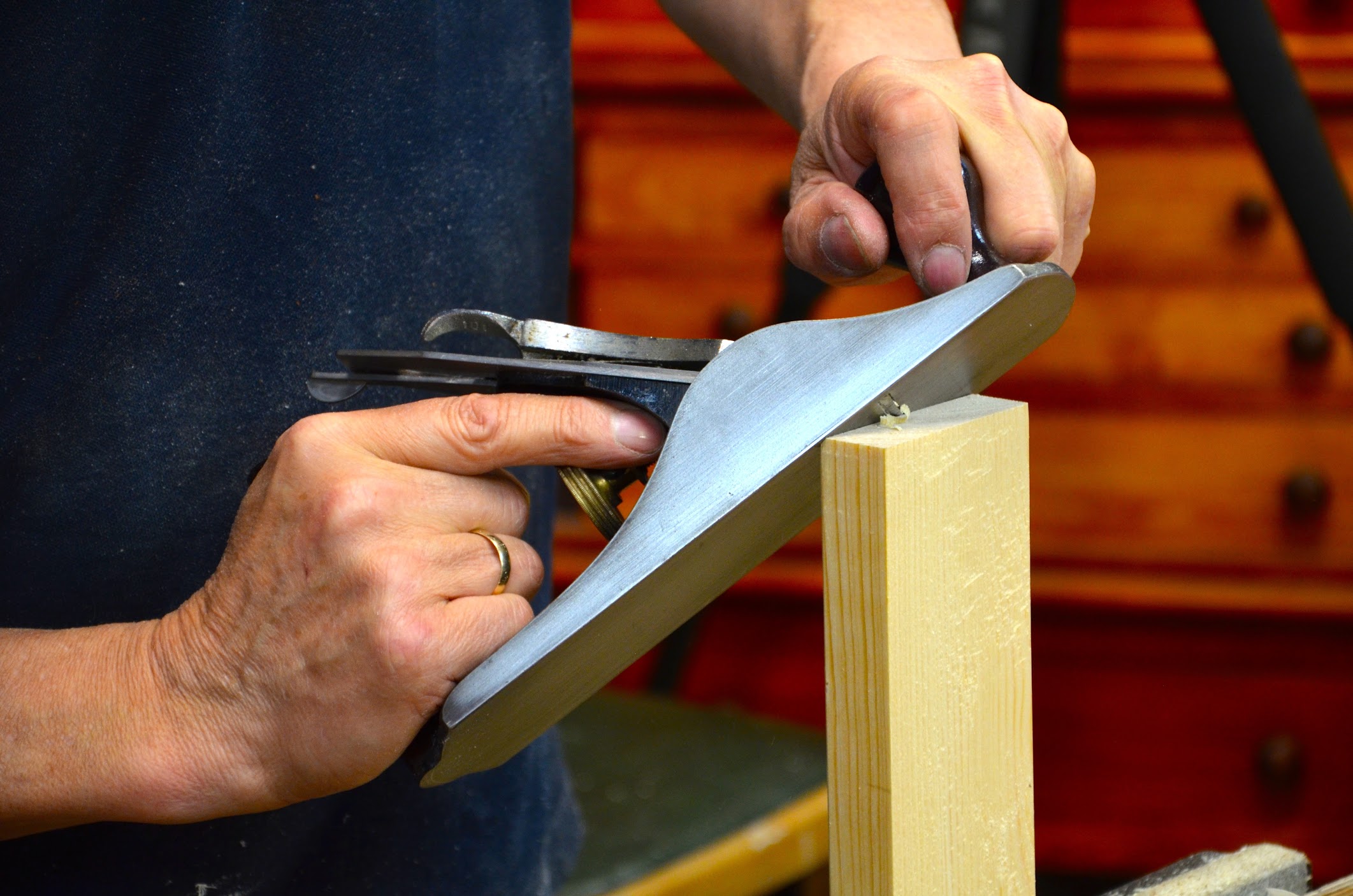
I think it's true that when you first start to handle a plane you might feel more a bit like a juggling klutz than someone fully controlled and conversant with its idiosyncrasies to smooth and refine wood with. Jerks, jams, stammers and stutters usually trip up our intent on straightening, smoothing and squaring wood. So many things to think about, to engage with—what pressure where, what tilt, where to transfer from and to with regards to keeping things level. It's more a modern day problem I think, there is no software or computer to correct the errors this thing is capable of developing: no delete button; no way to copy and paste the work of another to replace our own lack. This entry into realness displaces the invasion of the digitised and virtual world where instant results yet inside us have this desire to make wood straight and smooth and square and unmachined. I get it!
Planing is not easy at first but if you take project making out of the equation somehow the drive to get this or that element right can be removed from the equation. Add the project in and suddenly fear is introduced—fear of failure, fear of wasting wood, wasting time and effort and then too doubting ourselves develops to prevent us moving forward. There are times even now when I just do not get it right first time. I think it is also true that sometimes we set ourselves up to fail because we expect too much in the short term. Planing must be set up. It's not for the lazy. By that I mean you cannot sit (and I do not mean people who are incapacitated by health, strength age or ability to stand and brace and use their legs, stomach or whatever), you cannot not sharpen and keep sharpening, you cannot be lethargic. Planing is total body, mine, emotion experience and demands that all of the 9 to 21 senses neurologists identify as part of several somatic senses, including that which gauges things such as pressure, heat discomfort in the form of pain. Additionally, what about the interoceptive senses that analyse and interpret information originating from within the body. Do we actually respond as we should or is this ability as yet undeveloped or underdeveloped. Think about it. If we have yet to have our bodies discover these influences over our work then our expectations are truly unrealistic. The chemistry in the brain, having never had the opportunity to work on our behalf through lack of experience, is still lying dormant. When we start working the plane we release that chemistry drop by drop to do its work in us and we begin to feel with different receptors and the experience can indeed be by degrees more euphoric than we might ever imagine.
If interoceptive senses include our balance, where we sense our upper body's positioning in alignment to task and such, then working actively with all of our body components working together to control a two handled piece of steel with a blade in it is not like lifting a sledge hammer to drive a stake. There is a dynamic working we may never have checked out before. Though macro-slamming with a sledge takes accurate alignment, finessing with a fine and narrow edge suspended between two handles at a precise angle becomes even more demanding because one slice at the wrong position can ruin the refinement we strive for. There is organic sensing within us even when we are working where we subconsciously discern what our internal conditioning provides to us that enables us to relate fully to our surrounding work; for instance smell and taste in relation to satiating thirst and hunger. Elements in the brain's knowledge constantly make us subconsciously stimulated to make us aware of all the relative positions of the parts of our body. This proprioception comes into play as we work our bodies reliant on micro-adjustments we really know nothing of because they are deeply seated inside us and never ever discussed in normal circumstances. Some times individuals have limited access to this proprioception which can result in a general lack of coordination. Ever been in an unusual situation where you are doing something you never did before and you feel completely uncoordinated to the point where the mind seems unable to coordinate the particular task you have at hand? Even simple things like digging with a spade?
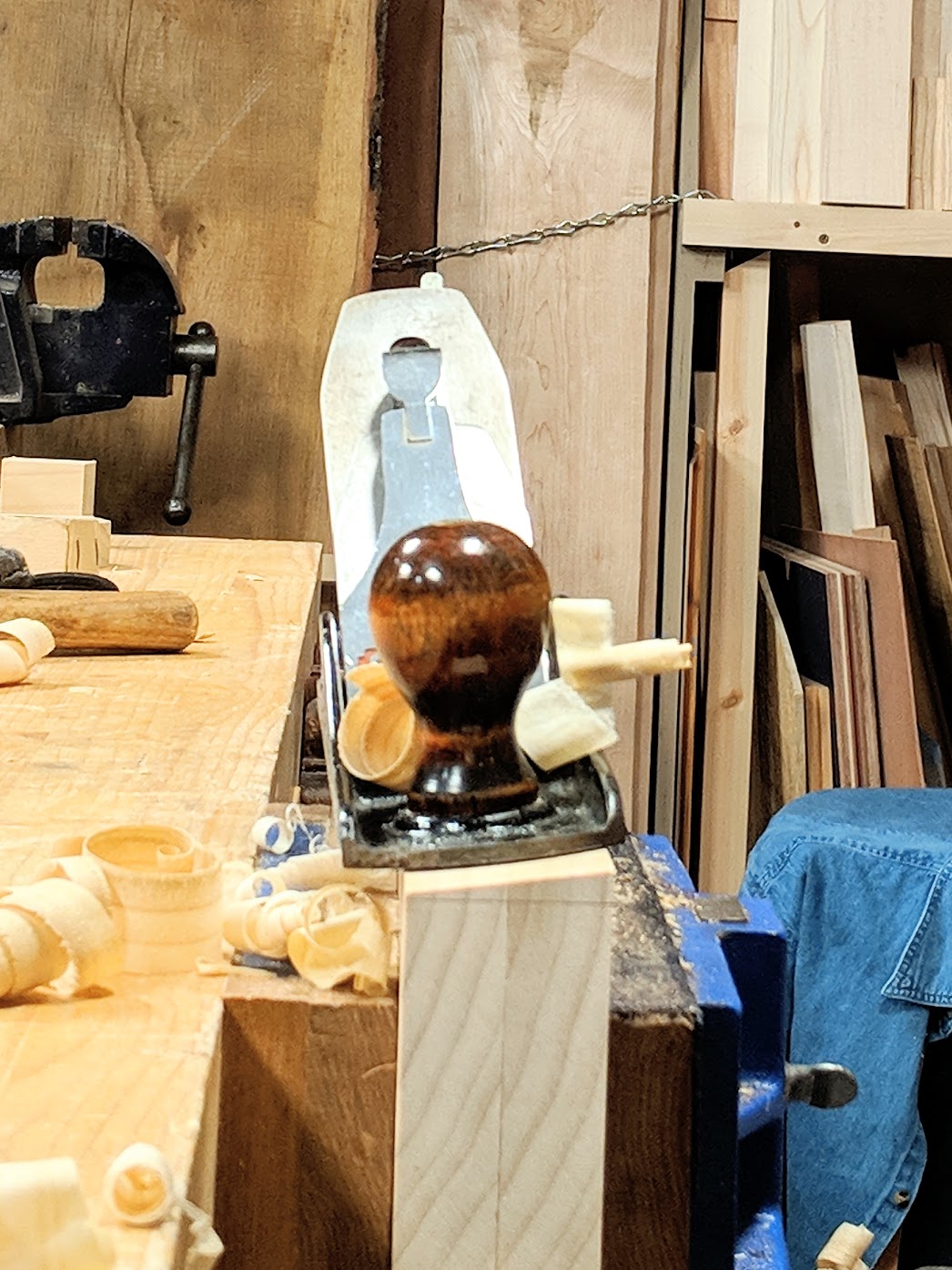
I think it comes up as a question all too often. "I cannot get a square edge to adjoining boards for a tabletop using my hand plane." For some this is as problematic as squaring the circle which can indeed mean trying to tackle the impossible. A video is on its way that should help you to achieve square edges every time you make a correction to an unsquare edge, but I want to preface it here with a couple of very erroneous pieces of advice tat people often give that I have often come across.
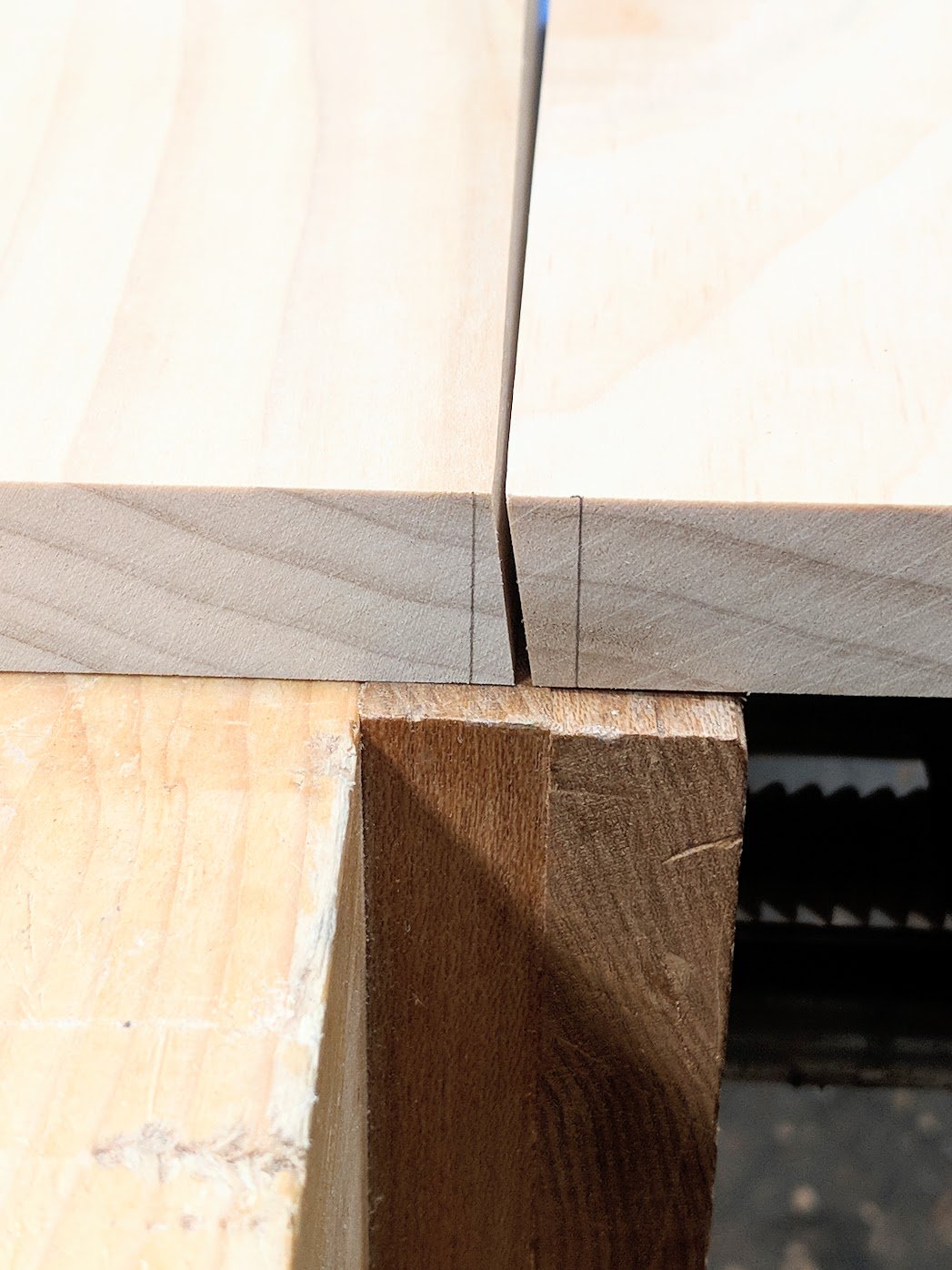
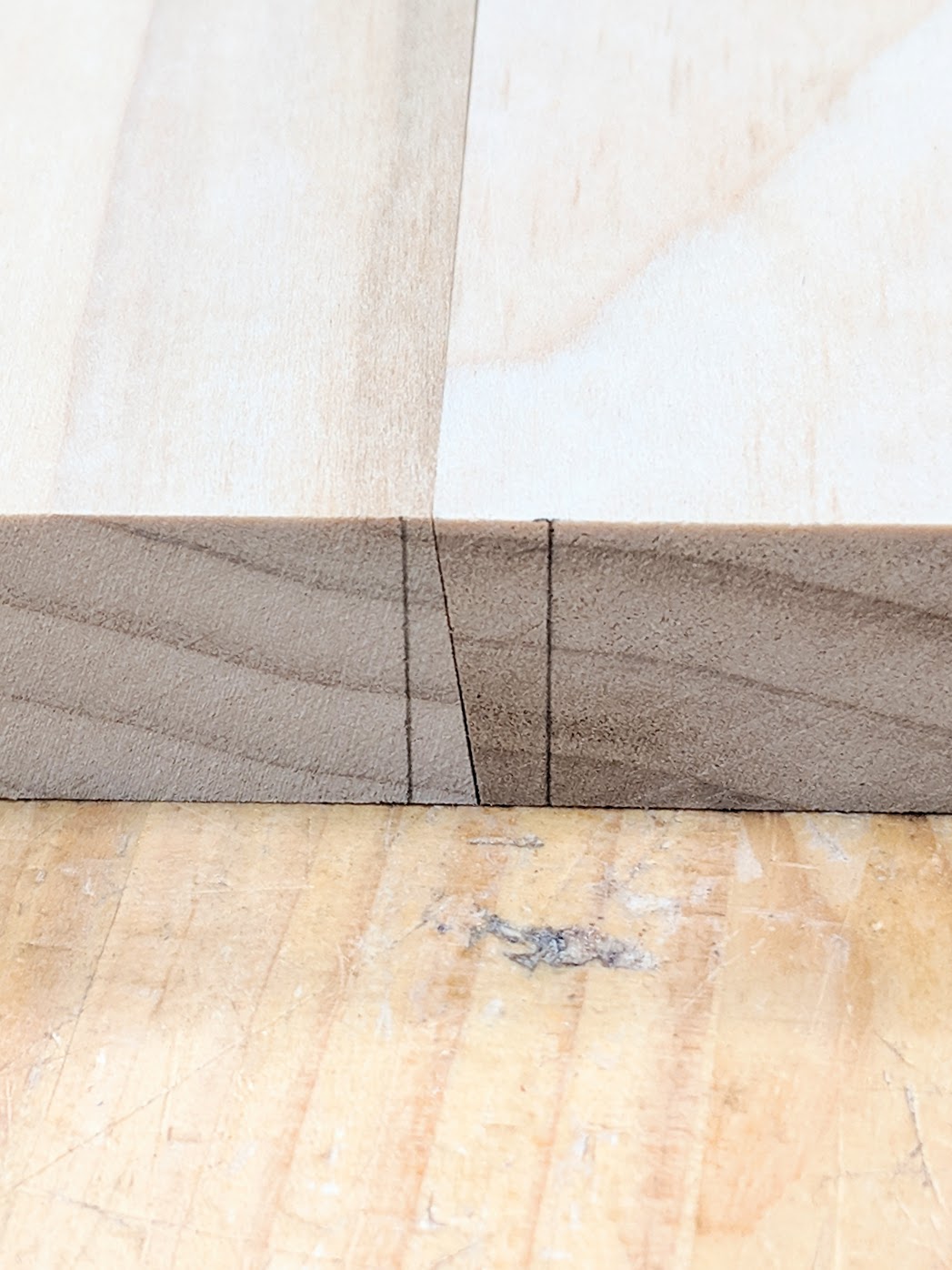
Planing square edges is not necessary if you are in fact cojoining two adjoining edges as you might generally for say a panel or a tabletop. Usually two adjacent edges are planed jointly alongside one another along the length at the same time. Once planed, even if out of square, each side compensates for the other because once raised to final position they are exact opposite angles. As long as the inaccuracy is not too great (so as to slide when under pressure from the clamps with wet glue between the meeting surfaces) the glued edges can be clamped, left to dry and when scraped and planed the outer faces will be perfectly in line and level. This is not generally what people are talking about. They are talking about simply squaring one edge face to an adjacent wide face—where the edge is very narrow rather than wide as in a square section of wood such as a chair or table leg. A good instance would be a 3/4" edge adjacent to a 6" wide surface.
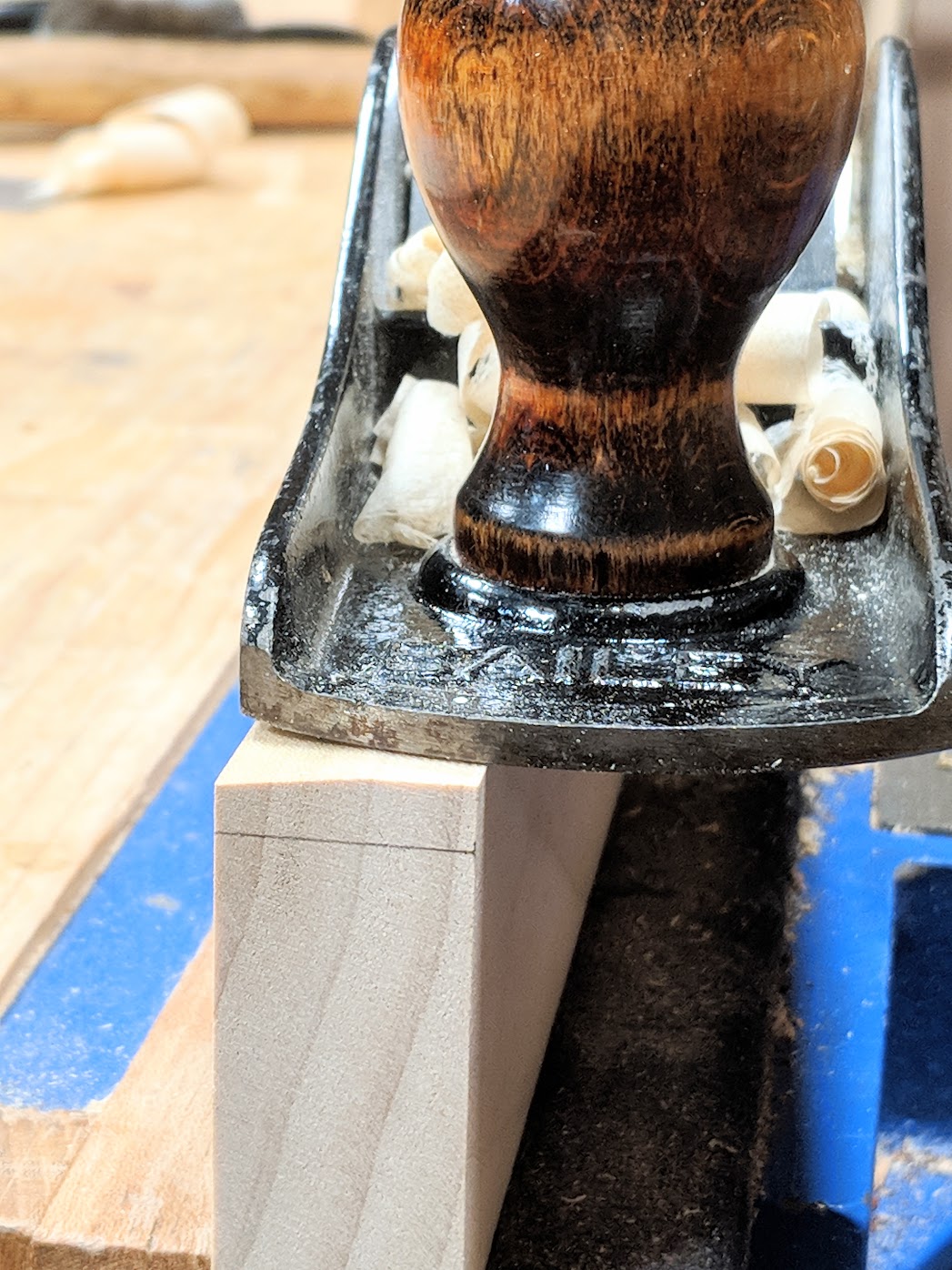
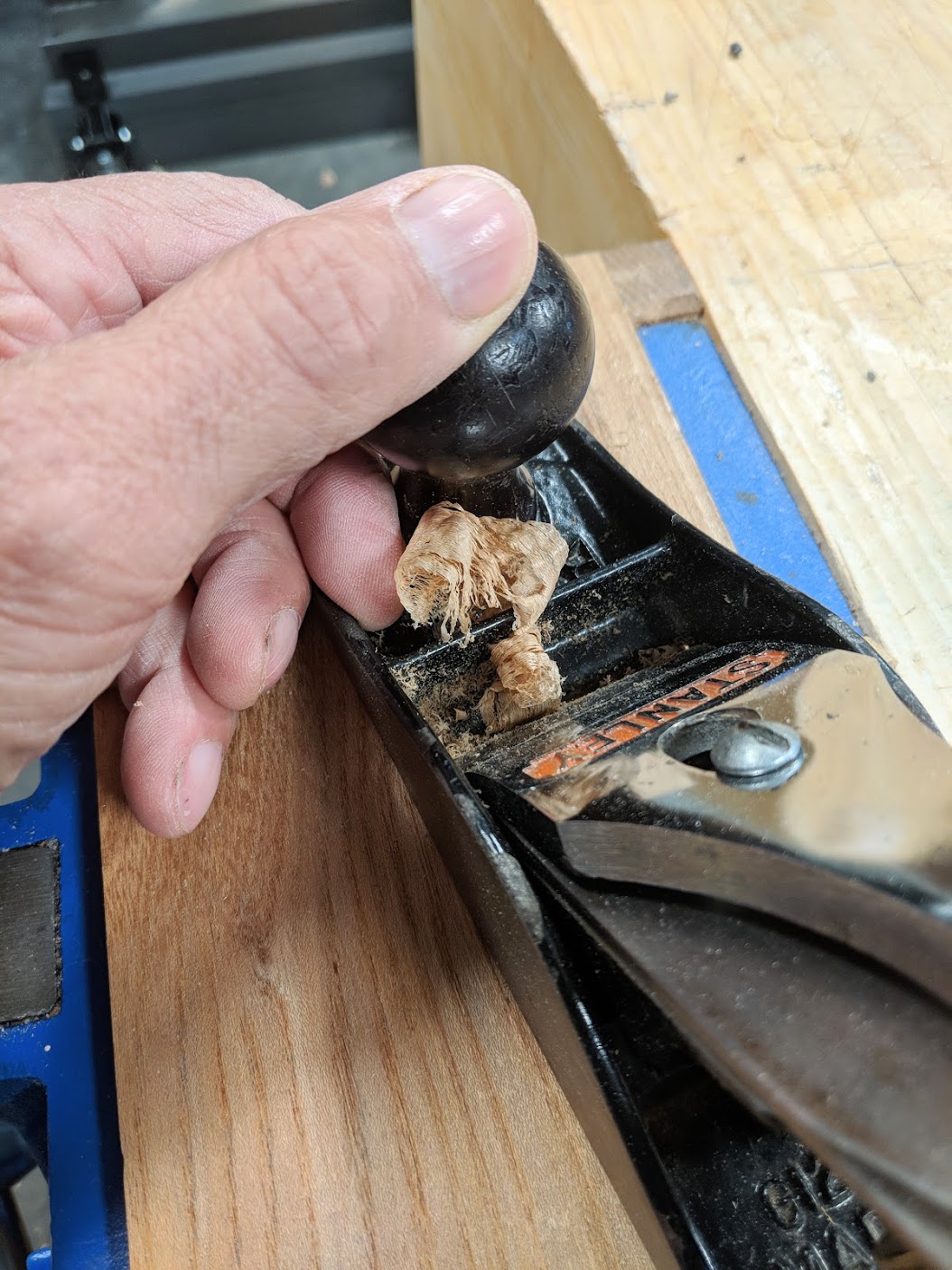
So, that lateral adjuster that cants the blade by pivoting left to right is not to cant the blade over to one side with an aim to taking off a thicker shaving on side of the stroke and at the same time a thinner one on the opposite other. It is purely to enable compensating for a blade that has been sharpened a slight amount out of square so that the blade can be readily aligned parallel to the sole and then, further, it allows alignment when the cutting iron assembly has been jolted from alignment if the plane hits some king of a protrusion or the assembly engages some kind of difficult grain, perhaps surrounding a knot or a knot itself. Another erroneous concept is that the lateral canting of the blade is to put a beveled edge on the edge of a board. Not the case at all. Now having said that, you can actually do both that way but it takes much more skill to deliver a square edge this way and I do not in any way suggest you try it (except to see how impossible it is). It's much easier to cant the plane over to achieve a beveled edge. In my experience it is much easier to position the plane off centre with the right hand side of the plane on the left side of the wood where the high is and vice versa as shown here. Avoid full fist grips on the fore end tote. I often use the finger position in the bottom pic.
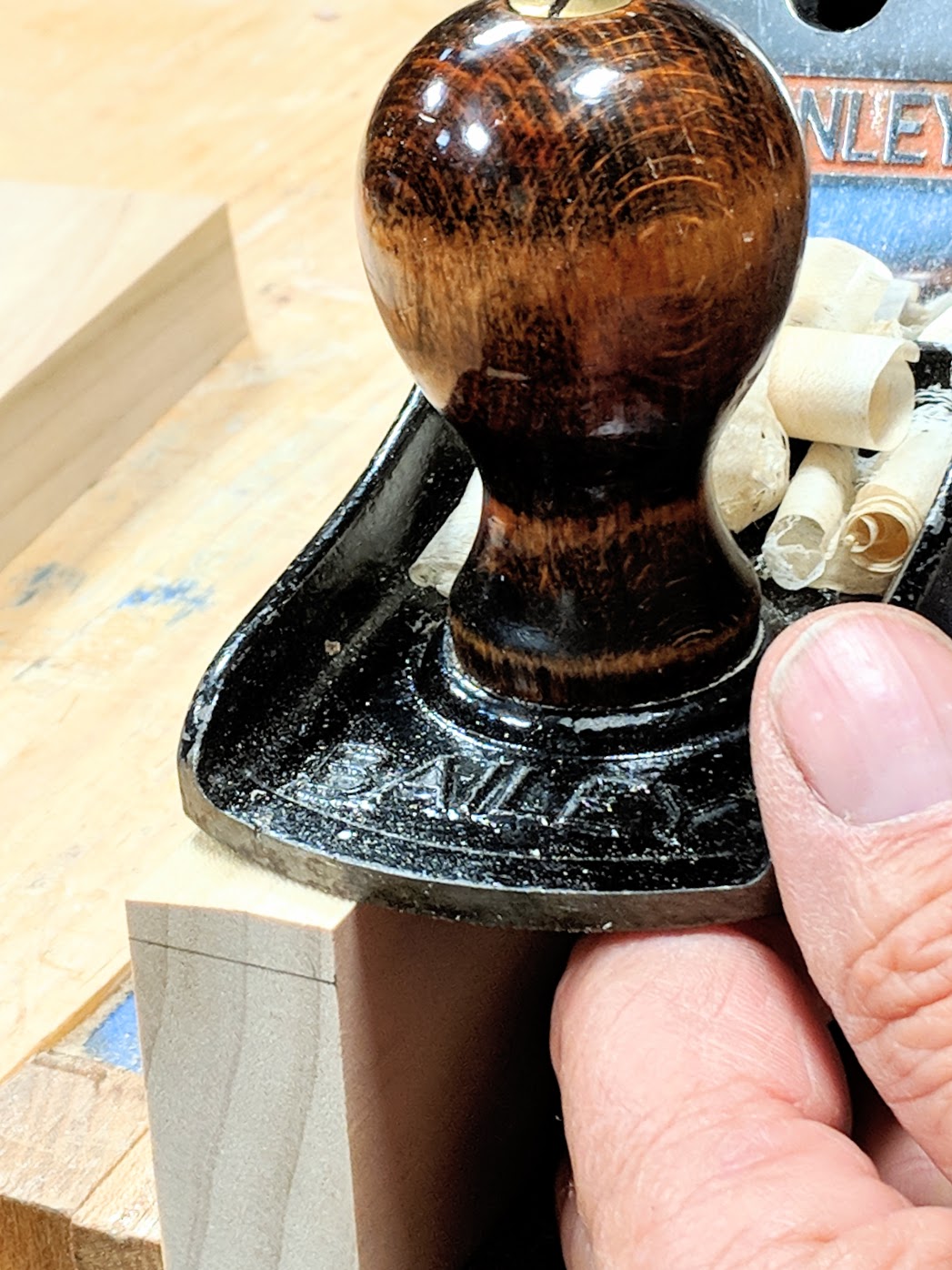
Now, there are some quick video bits I am putting together to help you. Follow it on practice wood, something like clear pine should work well. Knot free means you can focus on plane handling.

Comments ()