
I Grab a Few Treasures to Work On
Joseph once told me that he saw how significant it was for me to repair things, you know, an old saw, a plane or a piece of discarded furniture. He said in all the years he had consciously known me at my workbench as a furniture maker he'd noticed there were always pieces dotted around that went from apparent trash to total functionality.. It's true. This week I looked around and saw that I had gathered yet more to turn back into full work life. I picked up a dozen bits from the charity shop,more on eBay and then some from my packing cases on my return to the `uk from living two decades in the USA, my home from home.
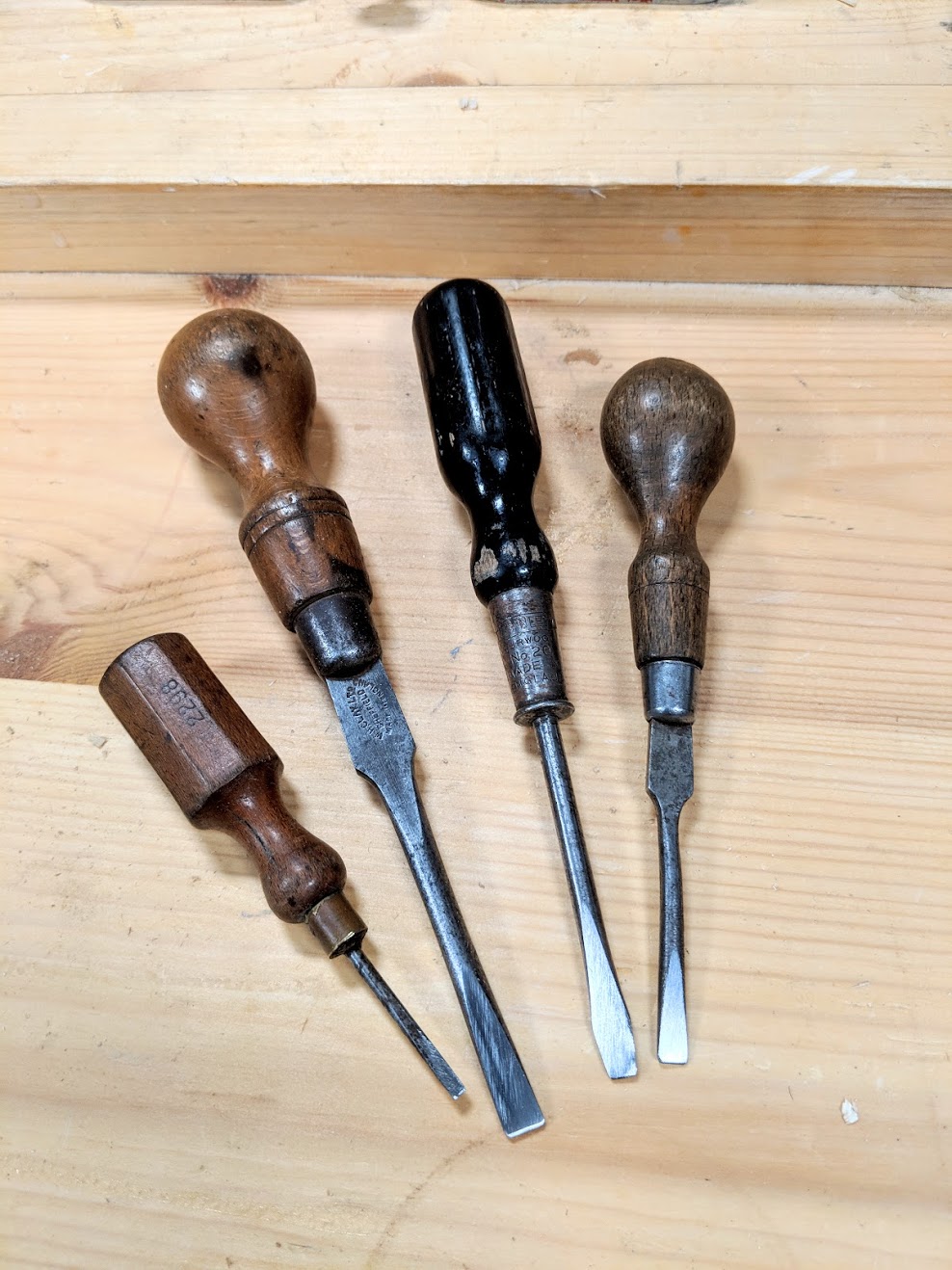
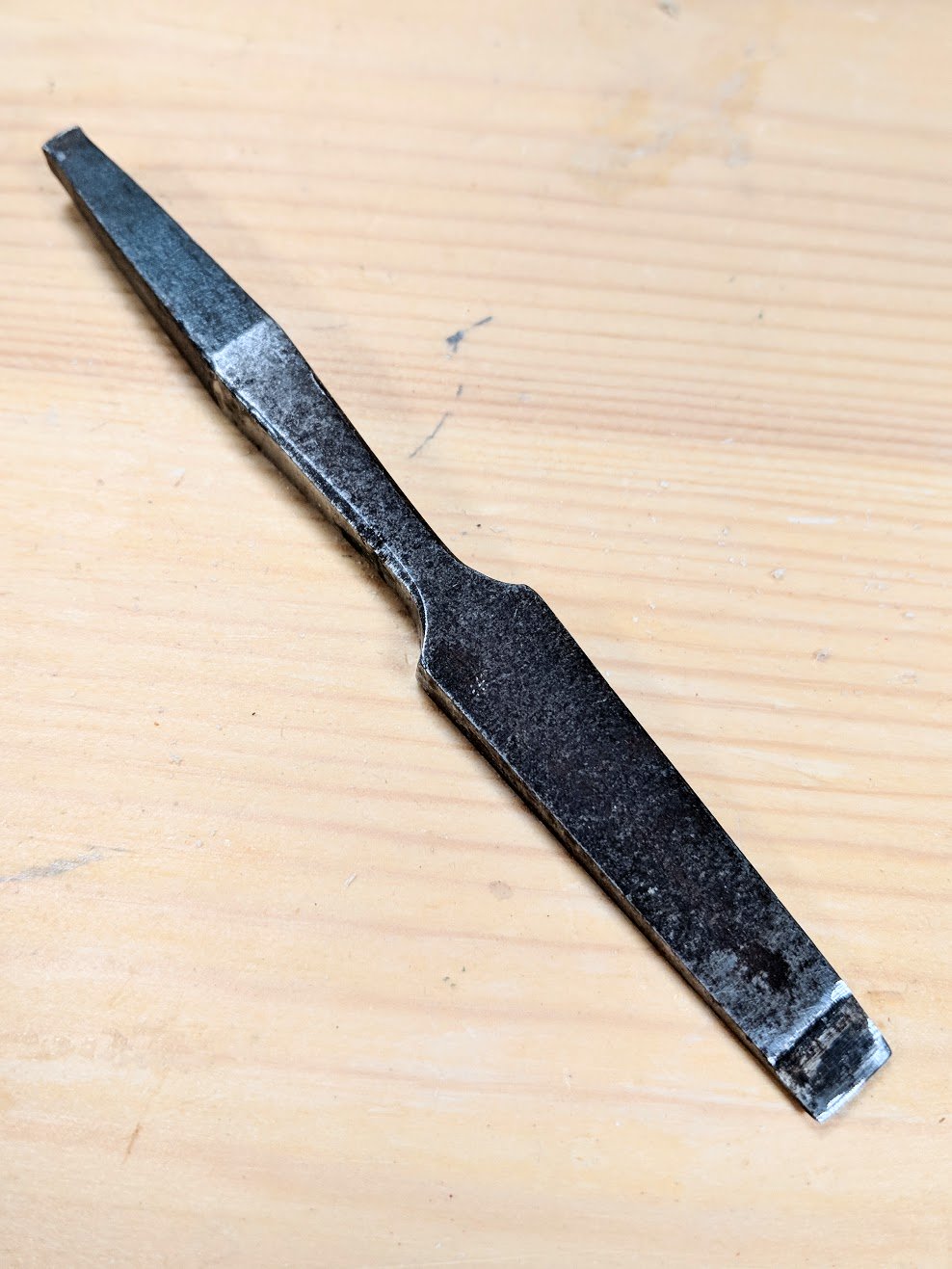
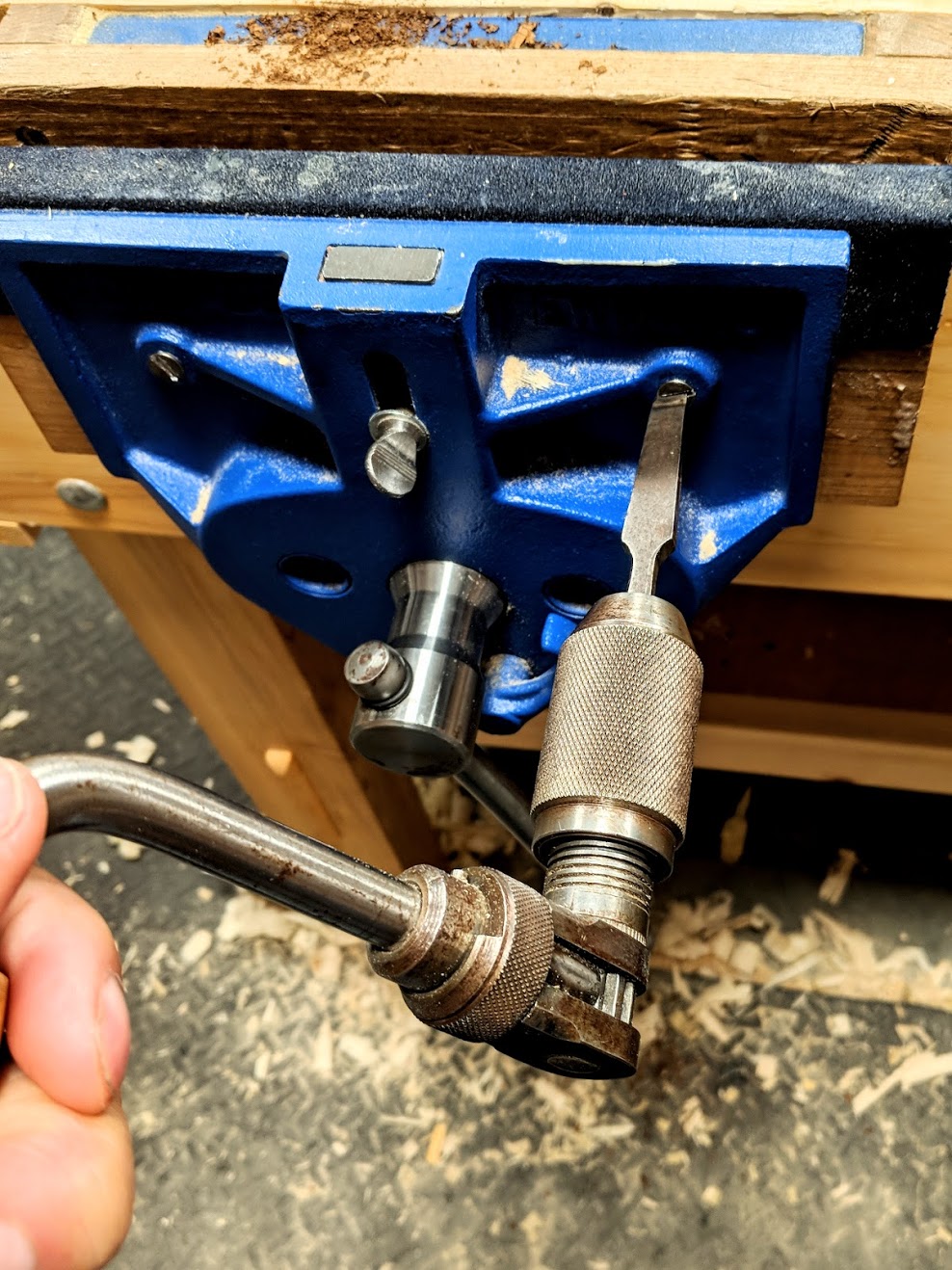
Dismantling and repairing has been my great training ground. With and without others to teach me I searched out my teachers in the work they left behind. I think I have learned more from them than any modern-day maker since my apprenticeship. The whole process of dismantling and restoring teaches you many things. Mostly for me it taught me the essentiality of personal integrity. I am always left in awe when ten panels eight foot long of mahogany two feet wide are all flawlessly hand planed and were never sanded with paper by a man with a 3 1/2" wide by 18" long bench plane. If you have read any of my blogs or watched my videos you will know this.
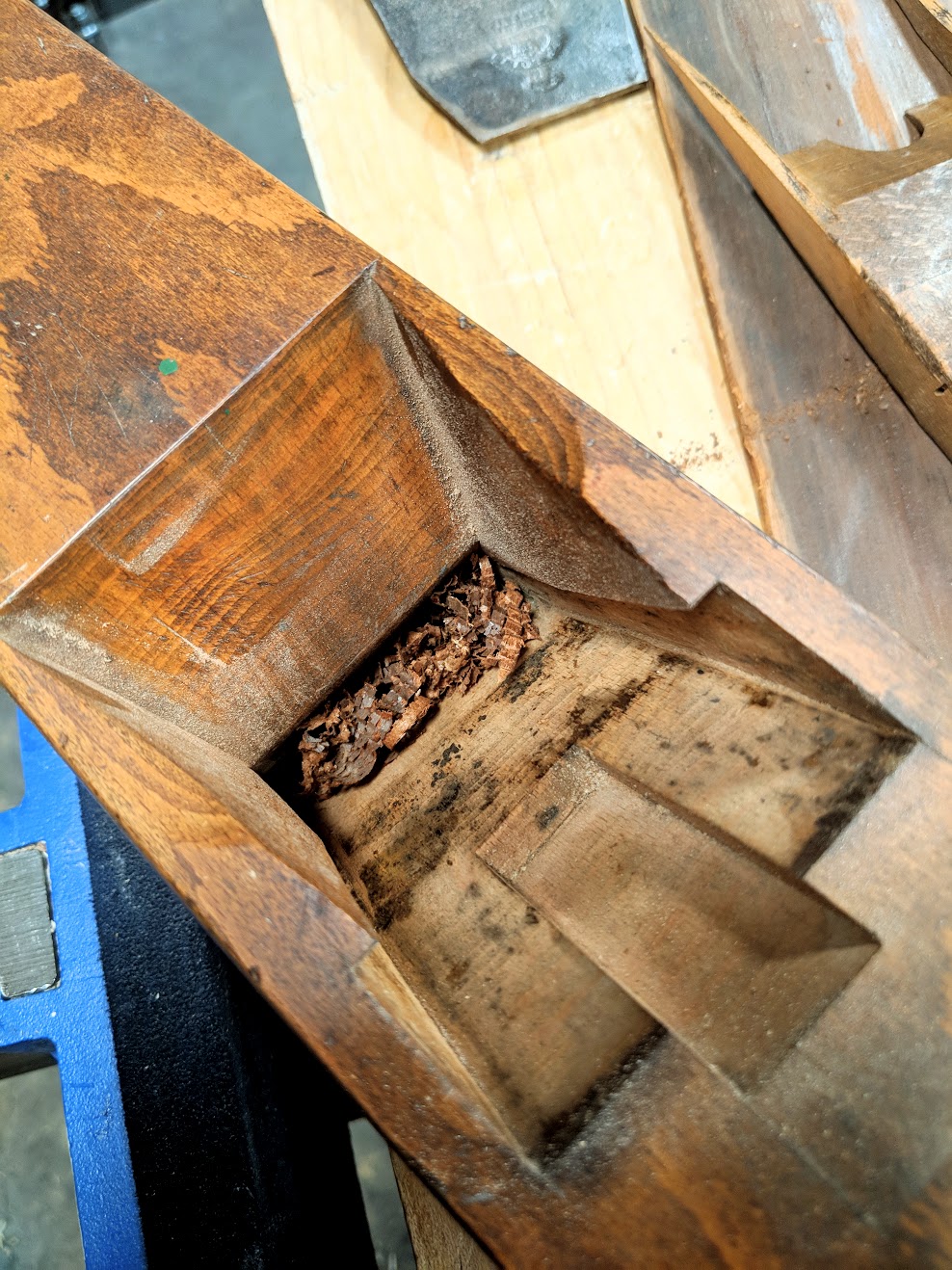
A table with splayed and tapered legs taught me as much in two hours as I would ever learn in organised education in a month. The reason of course is my fascination with the subject matter. As it is with most teachers and a genuine student, a symbiotic tie is quickly unknotted that becomes the conduit for the impartation of knowledge from student to teacher. In the case of my researching most of my teachers died decades and centuries ago. The designer and maker of a wooden table was talking to me in the same room through the work of his hands. It's not mystical or ethereal, just that their work spoke eloquently of concepts surrounding specific elements of design, of composition, of their choices and placement of wood, of its seasoning, colour and grain direction, of joints and the complexities of not just making the joints but ways of awkward working that avoided damage when the completed joint needed planing, assembling, clamping or dismantling.
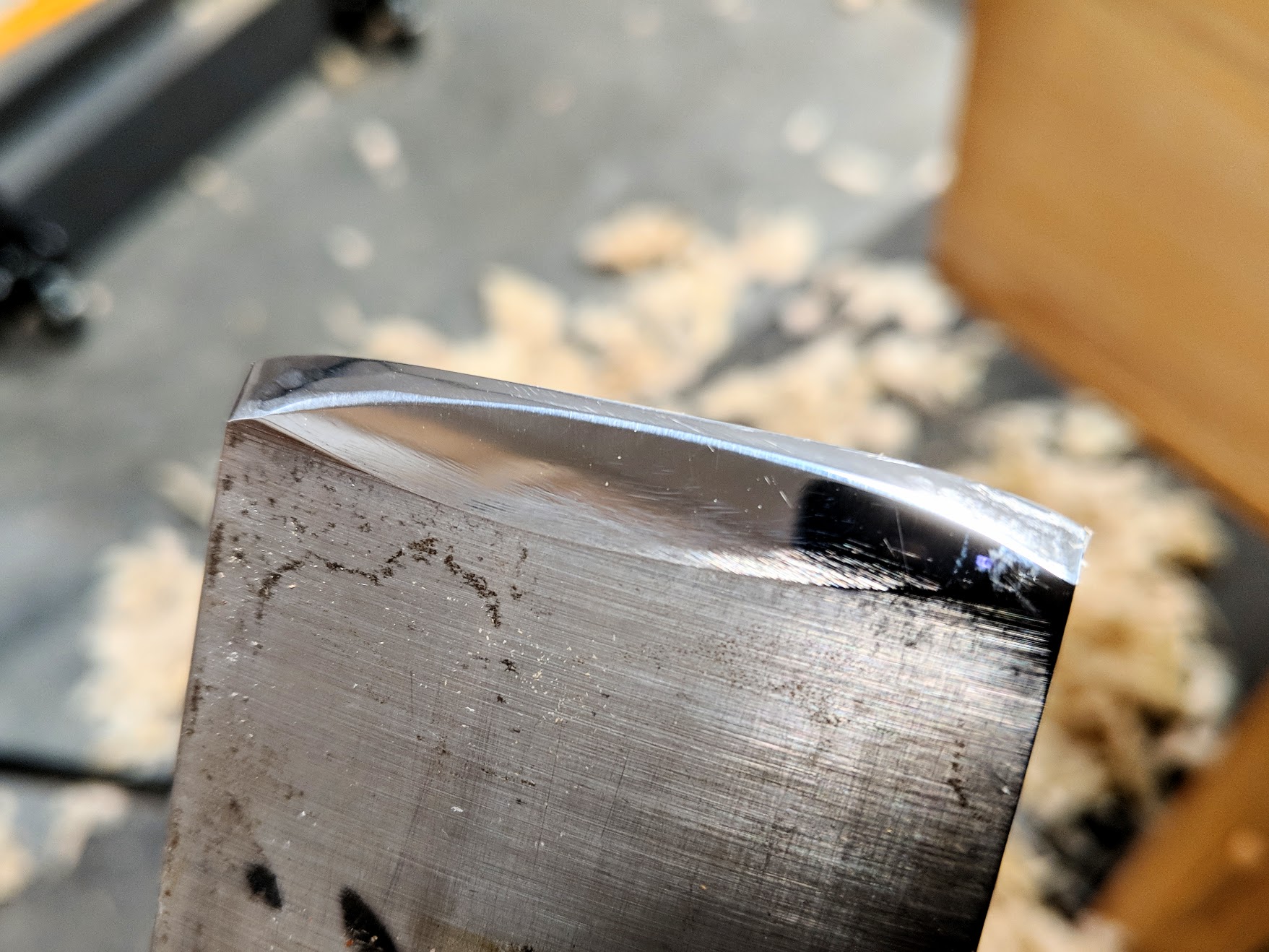
Each time I dismantle a plane I look for shavings inside and beneath the cutting iron. I look at the bevel and the way it was sharpened. Here is one you may or may not like. It was rough in its shape when it came and I confess being critical of the man that ground it-even cross. The reality was that the blade had been used as a scrub blade in a basic #4. In other words the cutting edge was cambered as it is now. But the scallop! What about the awkward scallop? Well it's not the first time I've seen it and it seems to make no sense. Let me tell you something, it makes an inexplicable sense. When I decided to keep the concave yet follow the curve with my standard convex I found it sharpened very quickly and thereby more easily. I also like the way it looks. These are the things that draw me in.
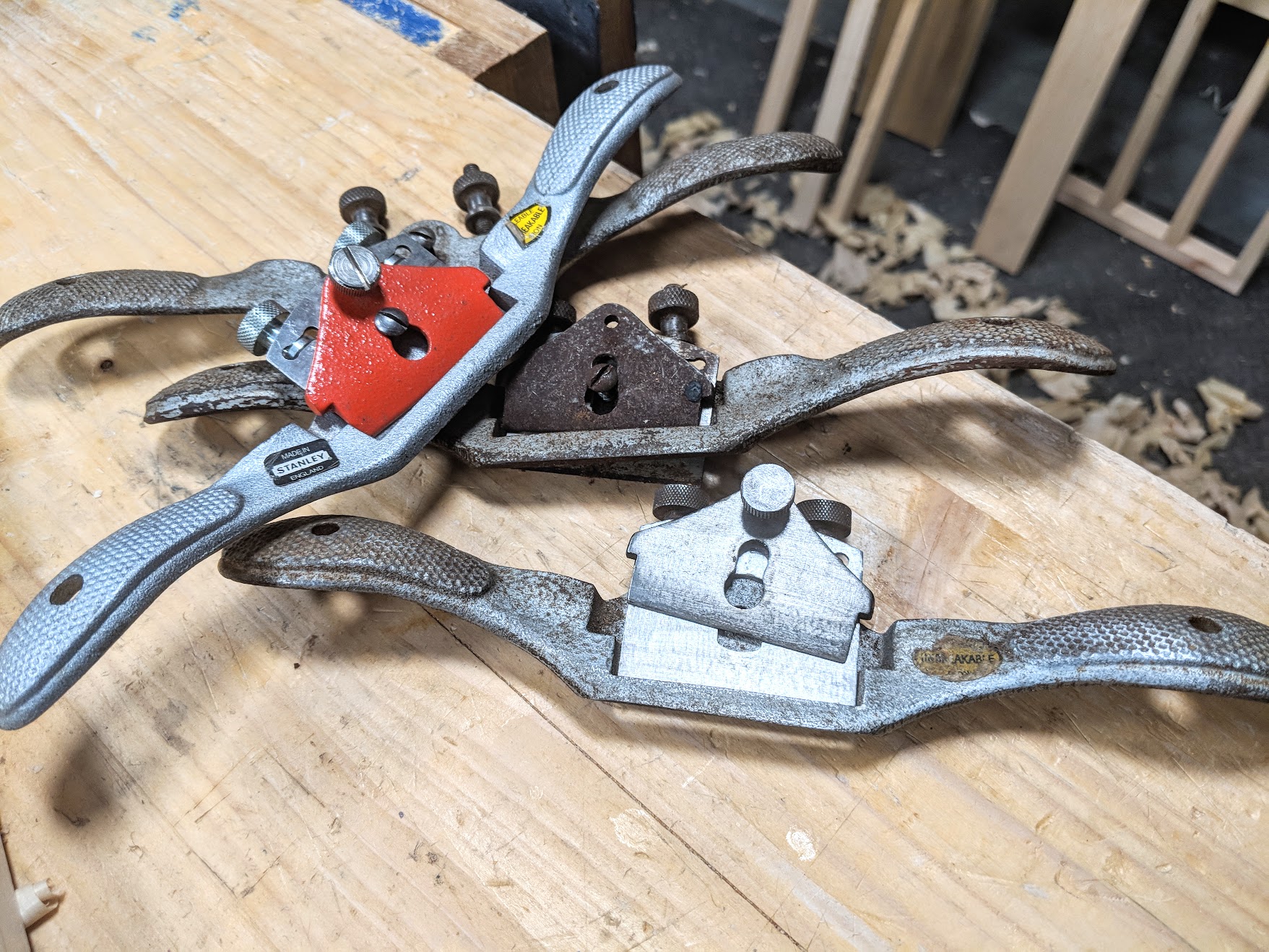
I did buy rather too many spokeshaves on eBay this past two weeks. #151 Stanleys, the ones made of malleable steel. Drop them on concrete and they don't break. I had bought a perfect one and then one that was sold with the wrong screws. I looked online for the screw and they were grossly overpriced. I found two for parts for #8 so combining the four I will end up with three good ones for around £15 and a perfect one for £20. I jus wanted to blog and vlog on them because I thought to share the experience and then the outcome. Inside an hour they will ll work and work well. Then they can be passed on. It's going to be a what to do and what not to do i think. So far anyway.
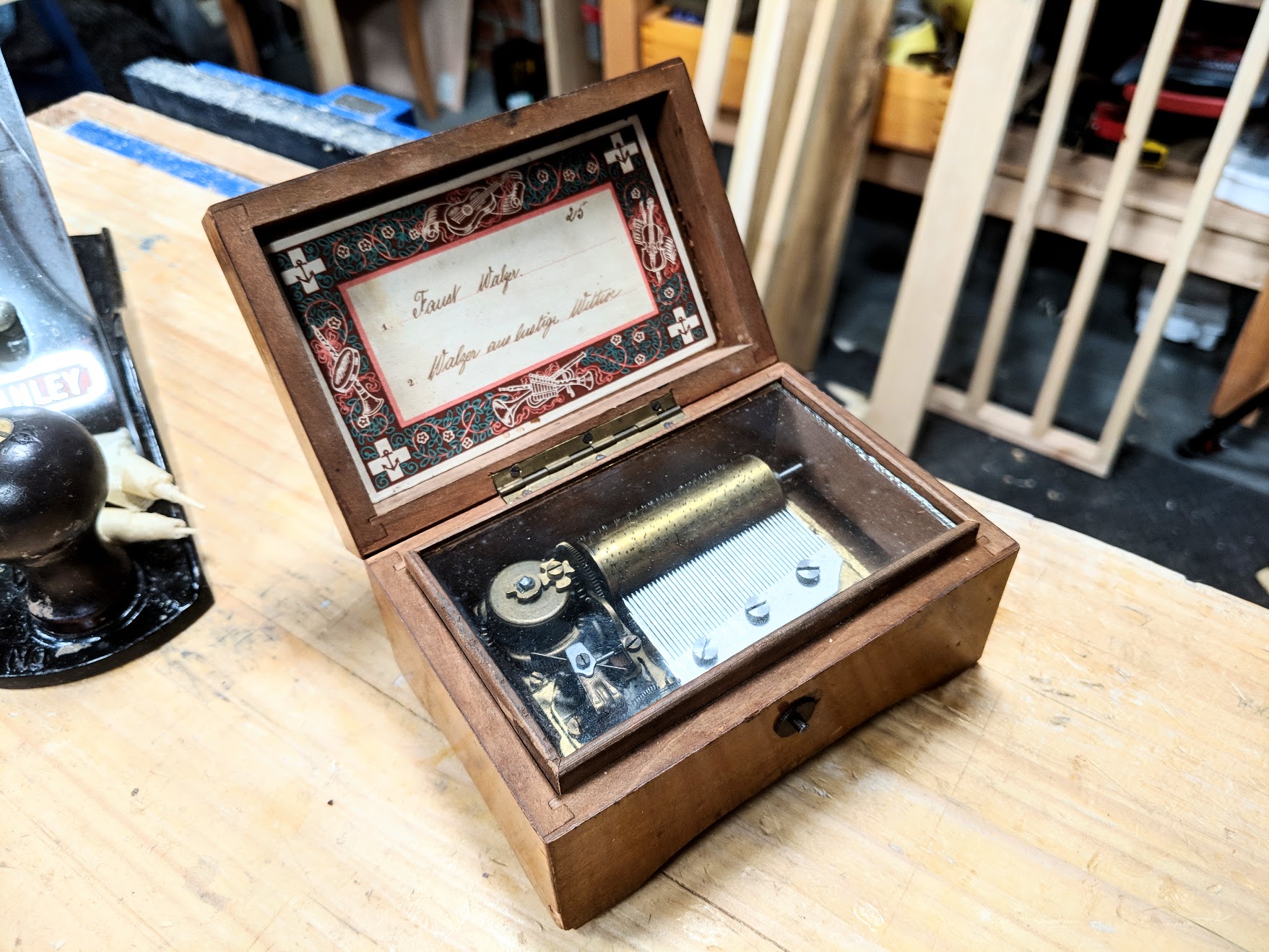
The music box is an old one. I have had it since 1987 but it dates back far beyond that. The glass does not quite fit and the outside need refinishing with shellac. When that's done it will be a fully functional model. It's only a few minutes work to preserve what was put together by another.
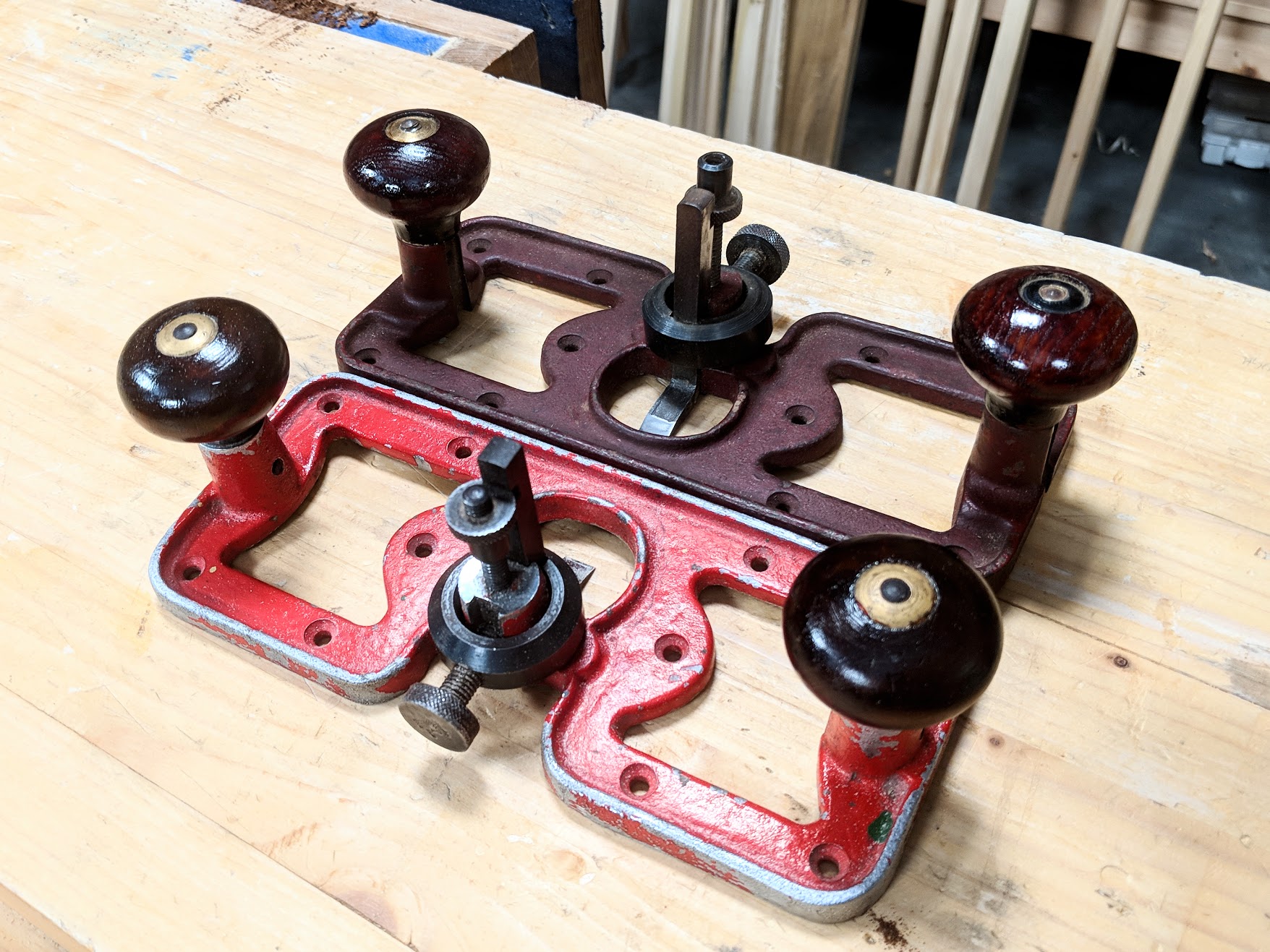
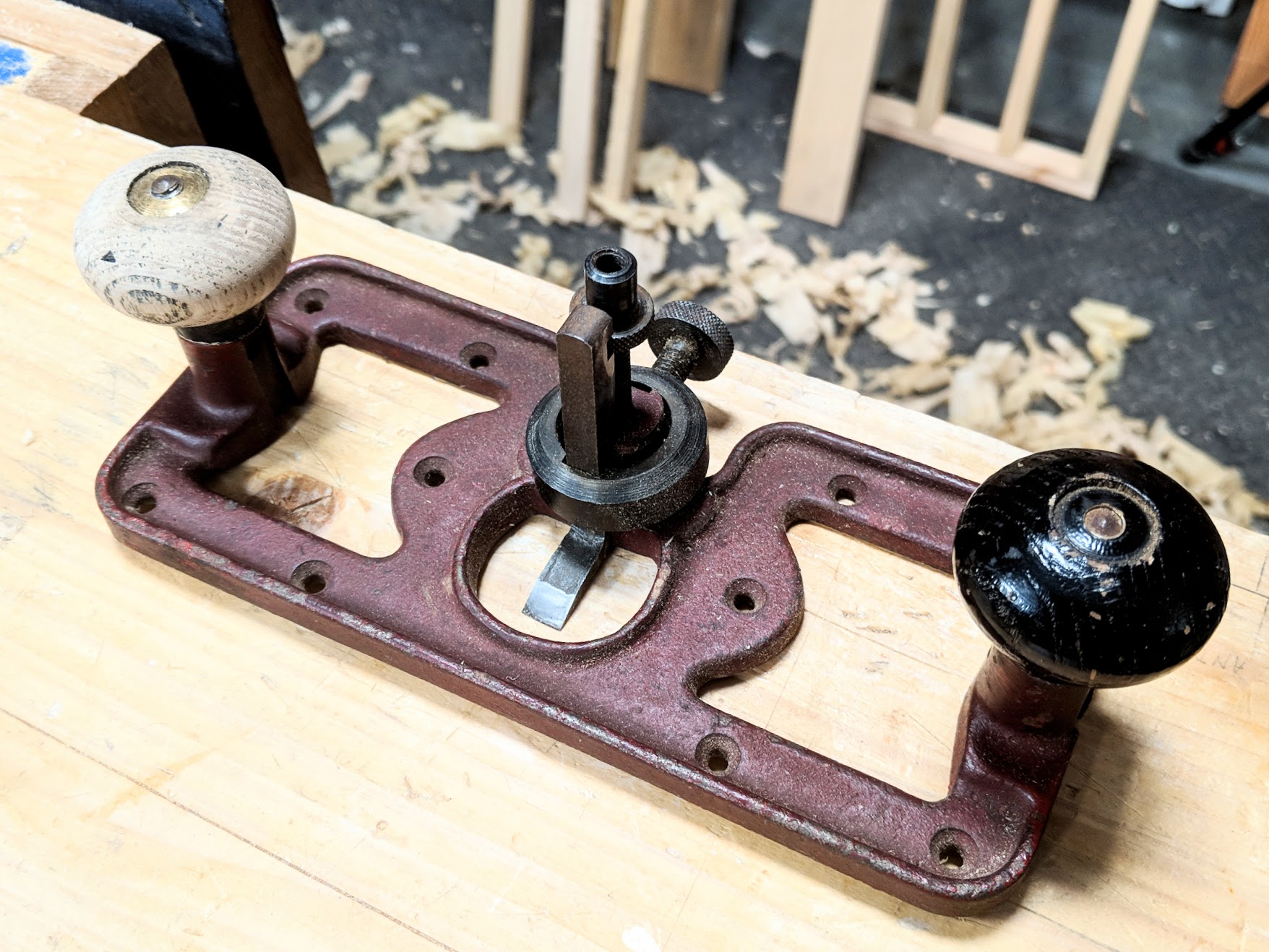
Now this Tyzack hand router plane is one from my US tools that I shipped back to the UK last year. I never liked the roughness of the handles nor the black paint so I chucked one in the lathe to sand off the black paint knowing the wood was ash. I will use dyed shellac for these handles. One I mixed that has a red colour. My old Preston version has that and I really like its colour and feel.
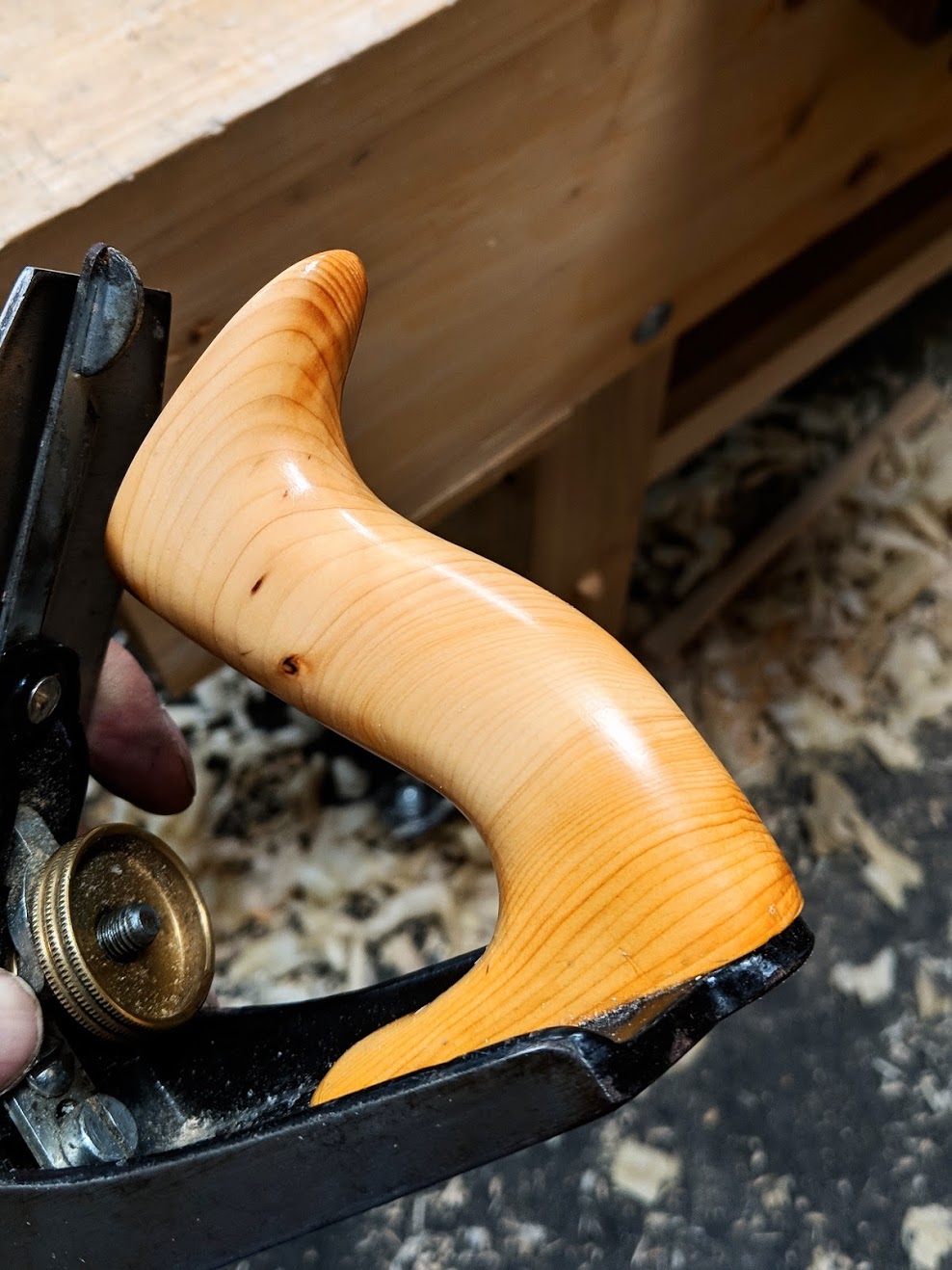
I have also been restoring a hand plane by making a new tote and will be showing you a new and foolproof way to make one via a video.
There you are. I have started this work alongside all my other making of new things. I apply my knowledge and pass it on through the blogs and videos.
Comments ()