
Spend Time Drawing
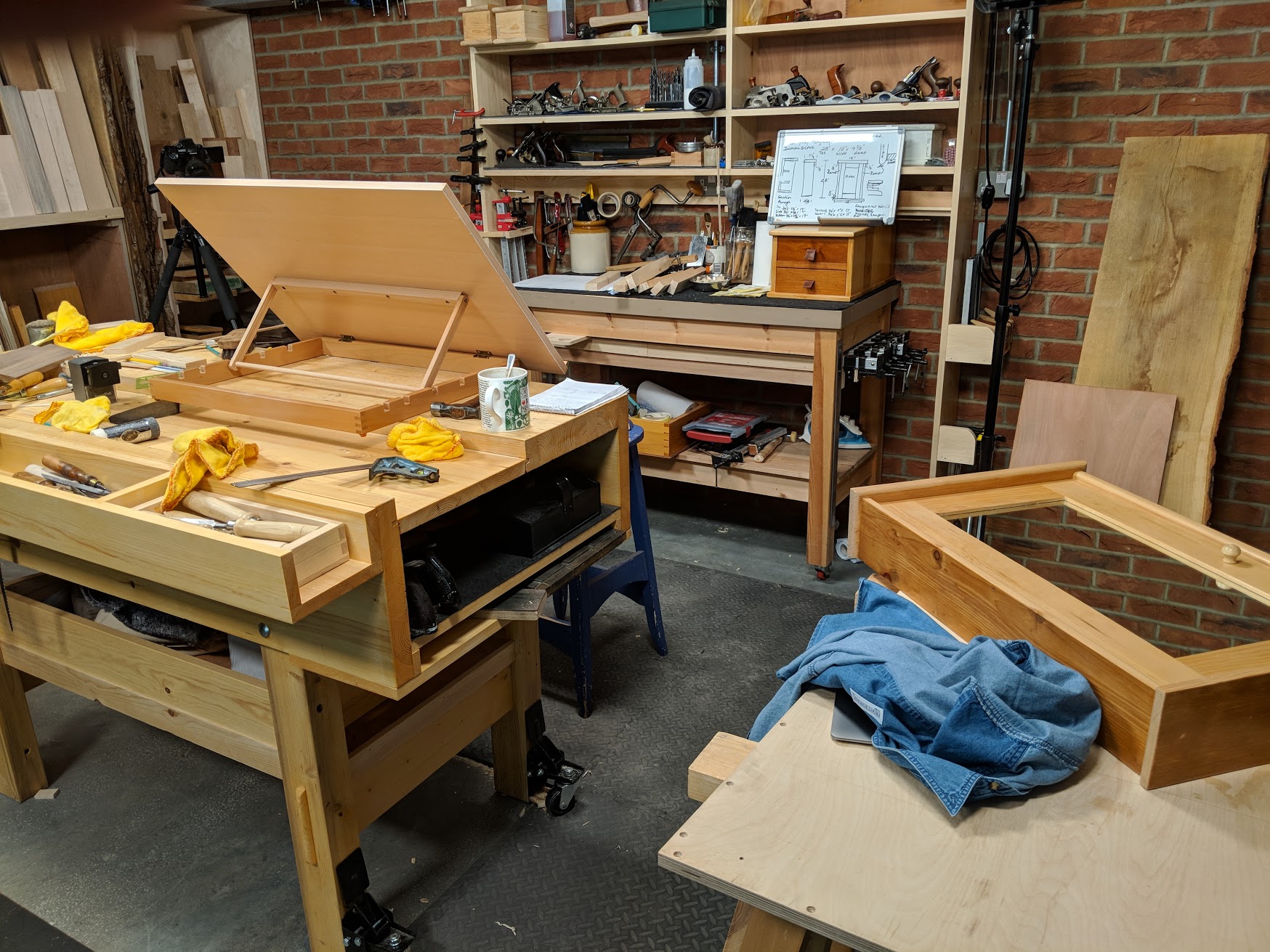
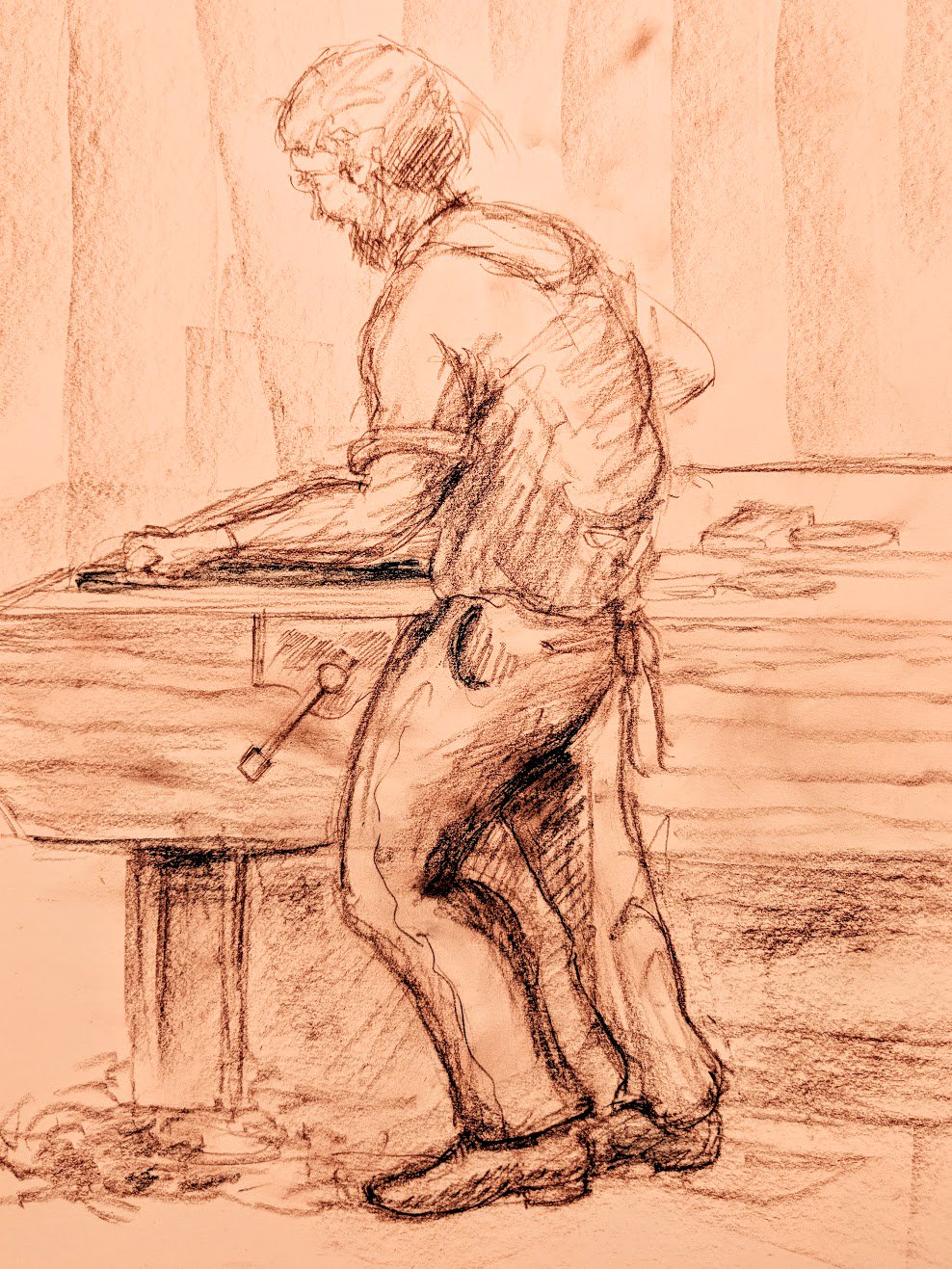
Drawing, like many things, writing, craft work, woodworking, if you want to do it well, starts out as an interesting notion and then develops into a discipline. You can enter the portals of institutions and learn there or you can find some other way. All will be equally good. I draw for myself and mostly do so to help me see what I might miss otherwise. Drawing forces me to look harder, garner the pertinent and then too the unimaginable hidden elements we are in danger of missing otherwise. When I start to add up the increments for a M&T joint in a rebated door I can see what the proportions will be in relation to the thickness of the tenon and the thicknesses then of the walls of the mortise. When I flesh out an idea on paper, add a few notes, I often reveal issues that might compromise my working. For the purpose of a customer needing a perspective sketch of what they are considering, a sketch without specific joinery details is usually all that is needed. Working with other craftsmen and women to build a project I need exact measurements to avoid confusion and mistakes. Drawings are a way of cross-referencing our work, the equivalent of double entry bookkeeping which enables us to satisfy the equation assets equals liabilities plus equity. Seeing things multidimensionally through drawings and sketches and a few added notes to ourselves often shows us negative possibilities and probabilities versus the fully orbed ideas that will make our project work.
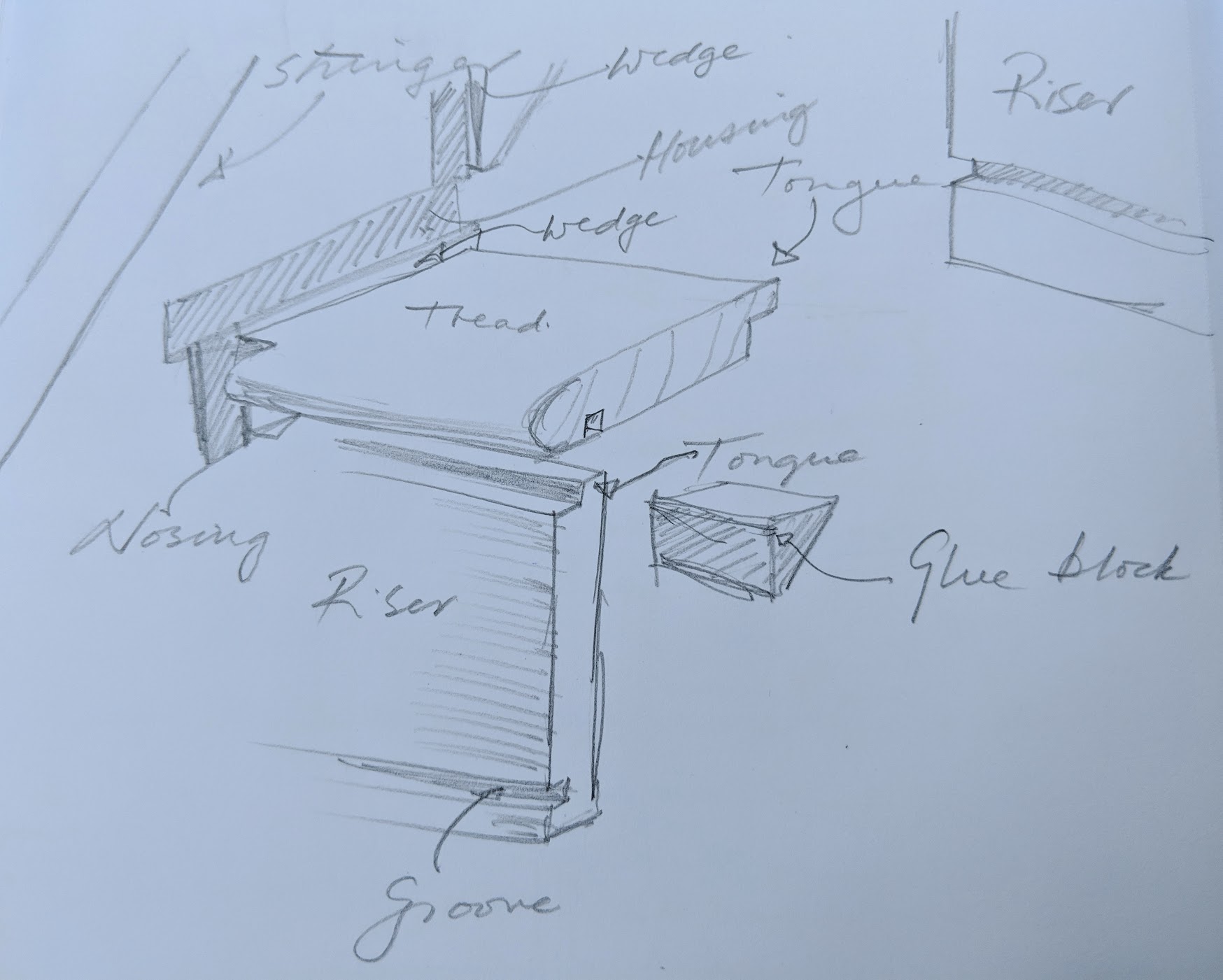
Working on our own we might convince ourselves that there is only us and therefore no need for a drawing. In my view it is always worth a drawing of some kind or another. Seeing then that drawing makes me think about issues I might otherwise overlook in the building of a project. I will at some point usually regret not drawing a project up ahead because I simply didn't think through certain proportions that later led to me scrapping what I planned in my head but did not plan out and flesh out on paper, cardboard, a piece of wood or the back of a napkin. Also, once completed, joints are often hidden inside themselves, whether wholly or partially and can be completely lost to the outside world. When that happens, and I have failed to draw out the details, I have to retrace my steps one by one and use logic to regain what would have been simple with the addition of a drawing.
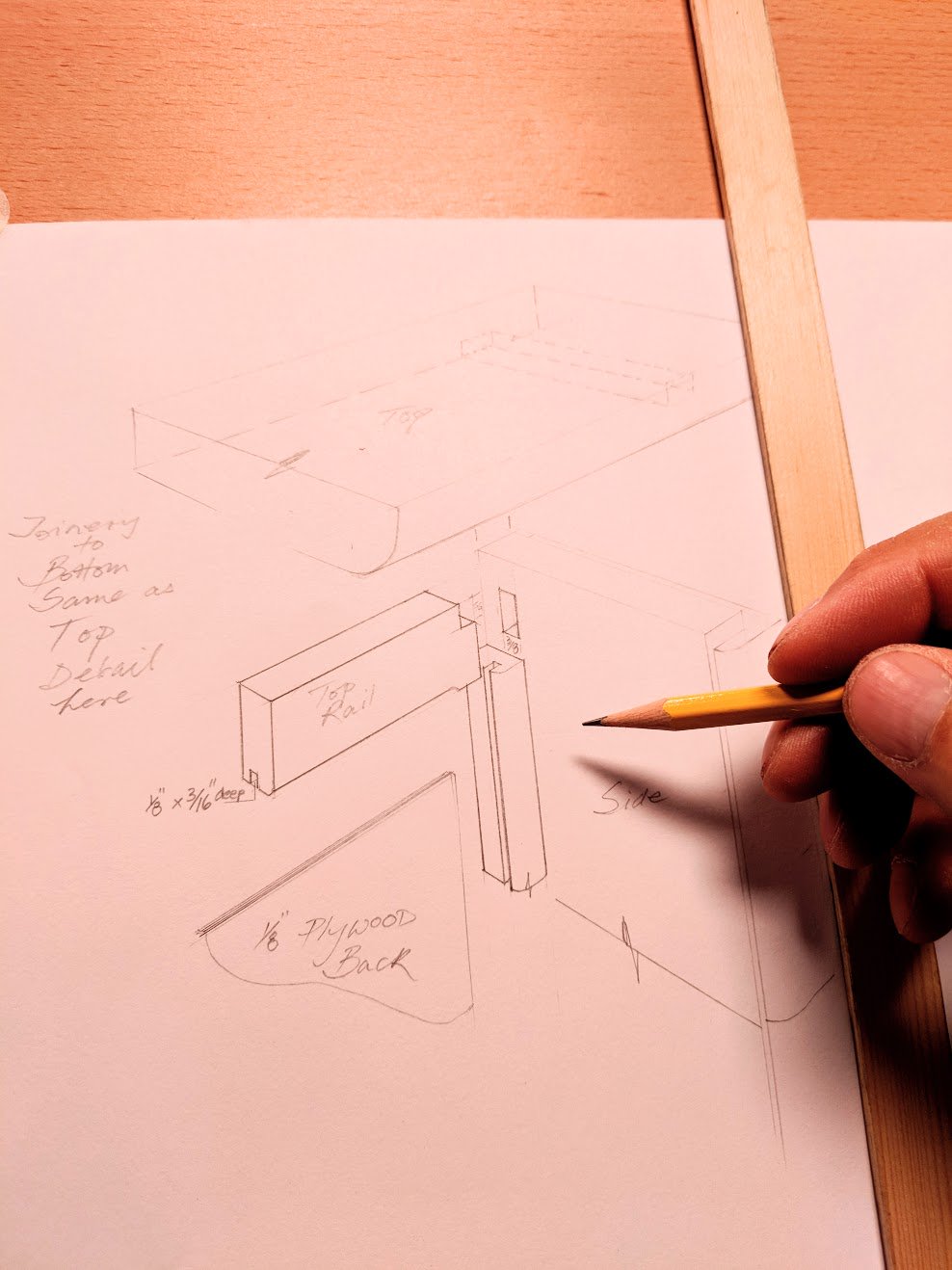
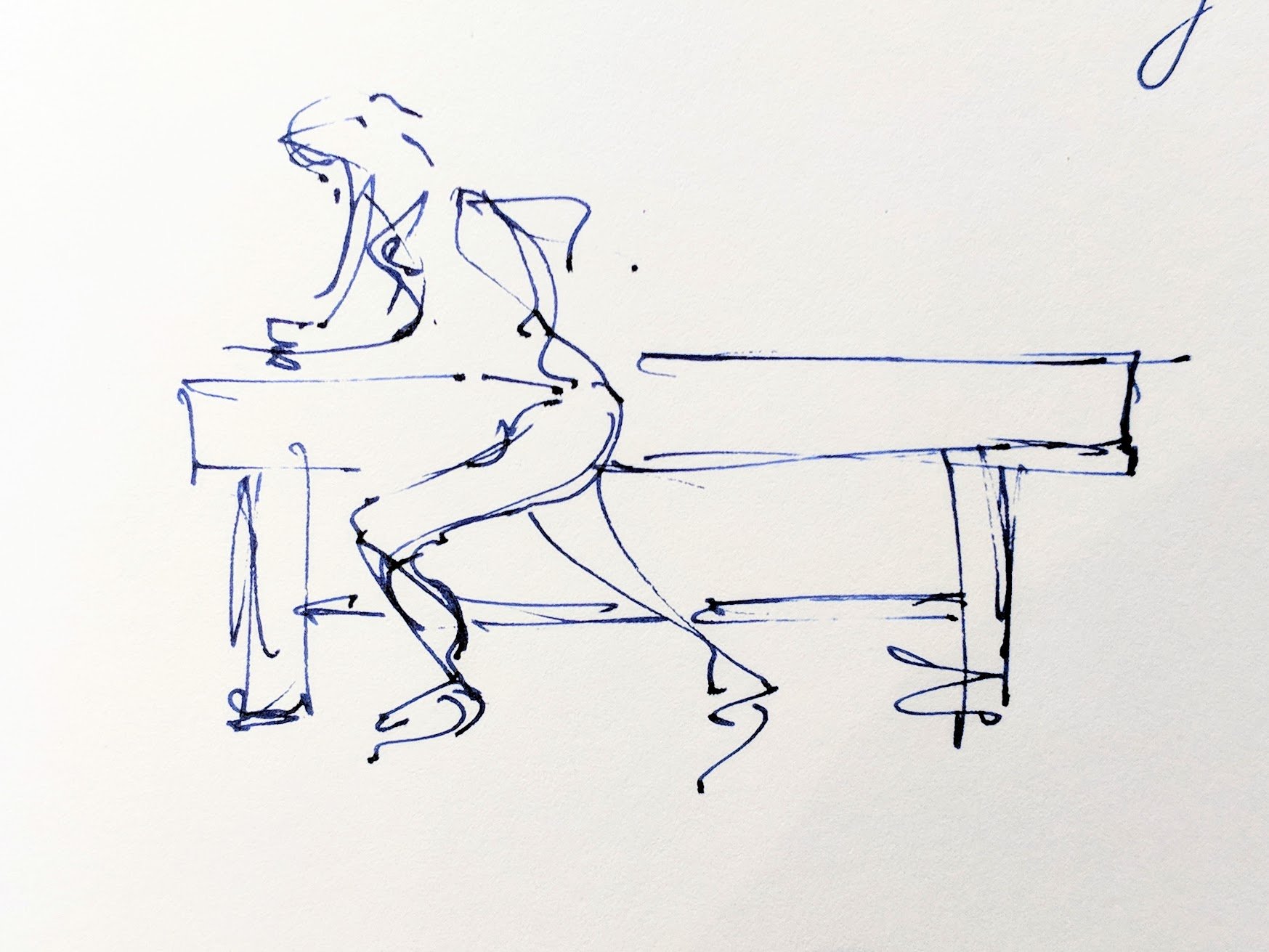
In some of my habits I'm old fashioned. It's not that I shun more technological solutions so much as like what I have and can do that most others don't and cannot. I like the organic look I get when I draw as I still draw with a drawing board, T-square and scale rulers. I also sketch every day for one reason or another. I like the way it looks and feels and I find it relaxing because it's at a pace set by me that fits my woodworking and planning. I know it will seem silly, but interspersing my day with a break or two to draw and write gives me punctuation points when meaning is evaluated and crystallised into reality for me. I actually like the periodic interruptions like sharpening my pencils. These I see as commas, apostrophes and then semicolons. I know, "Paul get a life!" I like sweeping away the eraser residue to though. Mostly it's about my preserving the fine hand movements technical drawing and then sketching requires—"Use it or lose it!" —You know! Beyond that, as there is with handwriting, another thing I practice daily in my journalling, there is the development of your own style in all things and especially in your drawing. Style only develops when you do something regularly. The flourish in a signature, the speed of it, the identity of it become yours when you do it. Which kid didn't see someone write their signature in that grammar-defying way that said now this, this is something i alone own. This name is mine and when I write it down as a signature the very signature belongs to me. Drawing is an extension of who you are from the very minute you start. Why not develop a style of drawing and writing that belongs to you by and in the doing of it?
Comments ()