
Push-Me-Pull You Seesawing
Many things affect our ability to work wood. As a kid of 13 my experiences were mixed. I learned first that woodworking planes like the #4 Stanley or Record didn't work; that they didn't smooth wood but hacked it. I learned that thick, black, heavy pencil lines made the contrast far greater than a thin one and that the width of the line expanded to lower demand for accuracy. The outcome would be obvious but not at that time to me. I was taught to lay a plane on its side, did as I was told until I knew better, and then too to pull the saw on a reverse stoke to start the cuts with it. The saws given needed maximum force to cut wood, especially harder, denser grained woods. They were dull, dull dull. Of course the saws were dull, unset and badly maintained all round, but how were we to know when we had nothing with which to compare it. The planes, all 20 of them, had several issues in each plane including dullness, assemblies installed upside down, bevel-down irons installed as bevel-ups. If you took it to the teacher the class was almost over before you reached the end of the line. I say all of this because my woodworking teacher was a former joiner and carpenter and yet what should have been a true adventure ended up being a weekly misadventure. The reality is that it hasn't really changed much. It constantly concerns me that I personally feel disempowered to make change happen because there is such a confidence that the system knows what's best. How can basic issues be changed then?
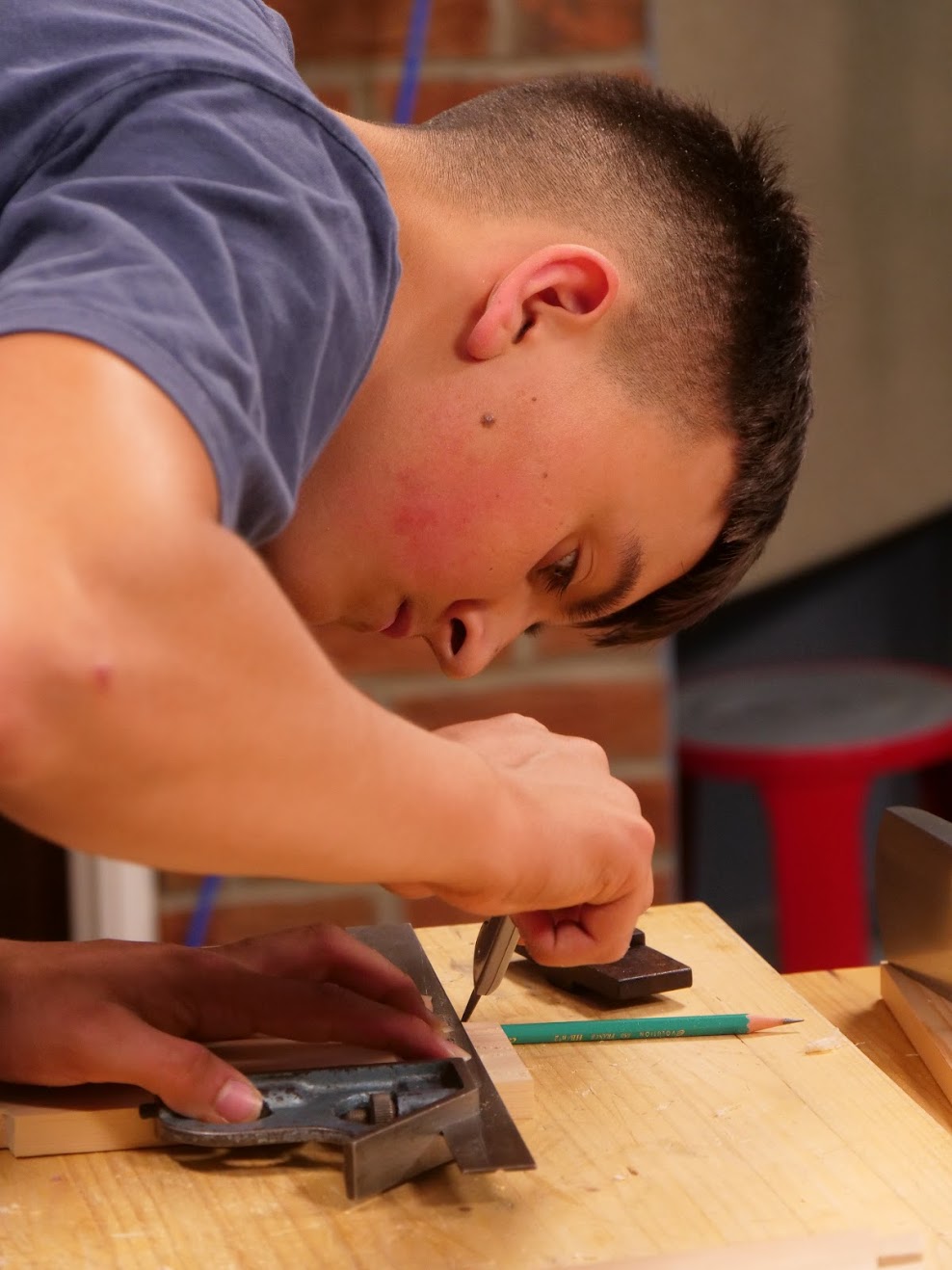
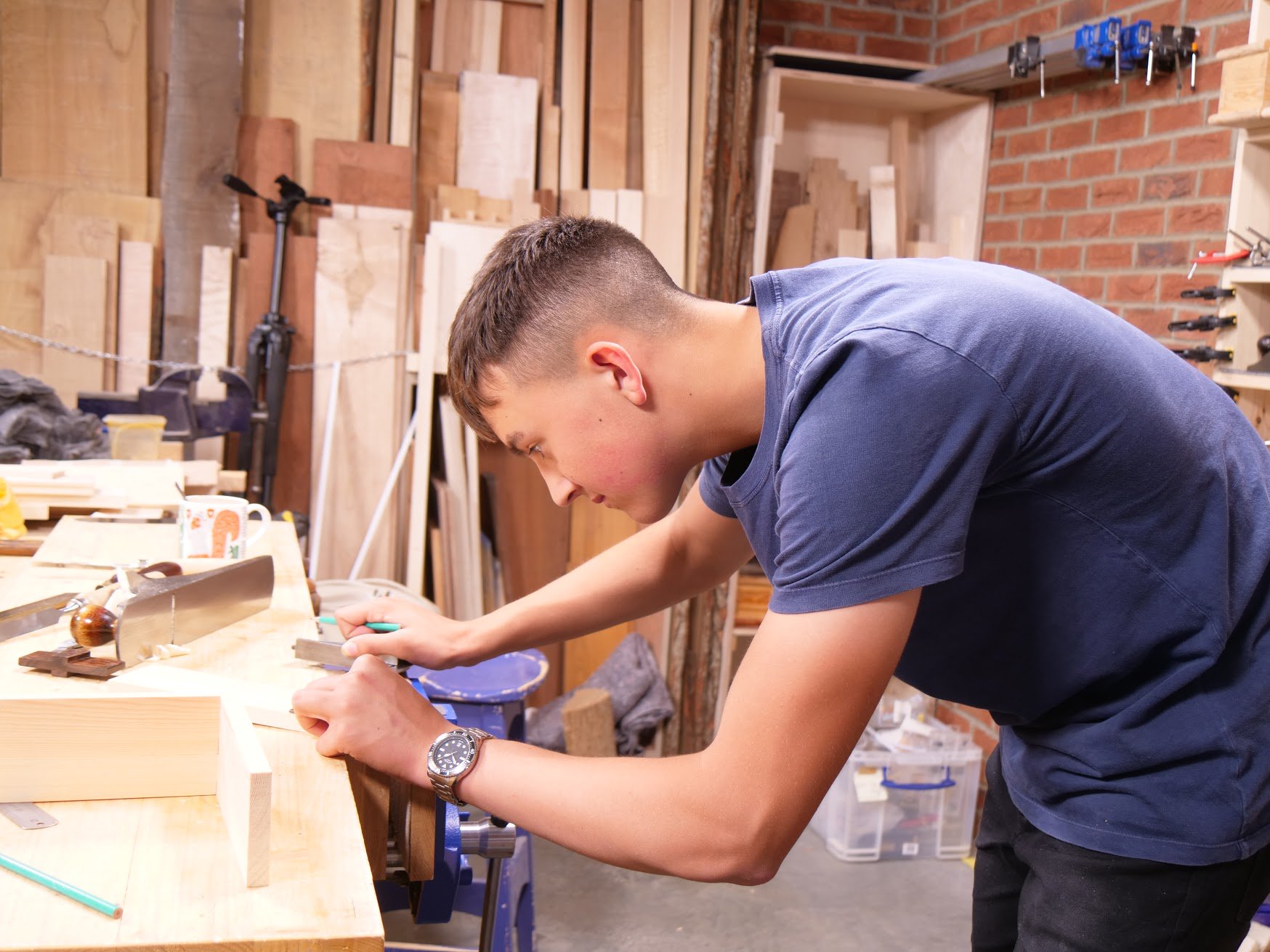
This past week my grandson came for five days of work experience with us, to learn about what life would be like when he started working. Mostly he was involved with the whole of our work, including much of the technical side, but some woodworking too. One thing I noticed was how very willing he was. Not just willing to work but willing to ask and search and seek the answers for what he didn't know and then to provide answers to things too. Bright, willing, open to learn. All the ingredients I generally find in young people. Picking up the saw I saw the age-old issue of reverse action to start the western saw. I queried the method:
'I just wondered why you were pulling the saw?'
"Ah, that's what my teacher taught me to do. Three strokes backwards and none forward" He answered.
'Oh, I see.' I said. 'Did you think to ask why?'
"No, I just thought she would know best."
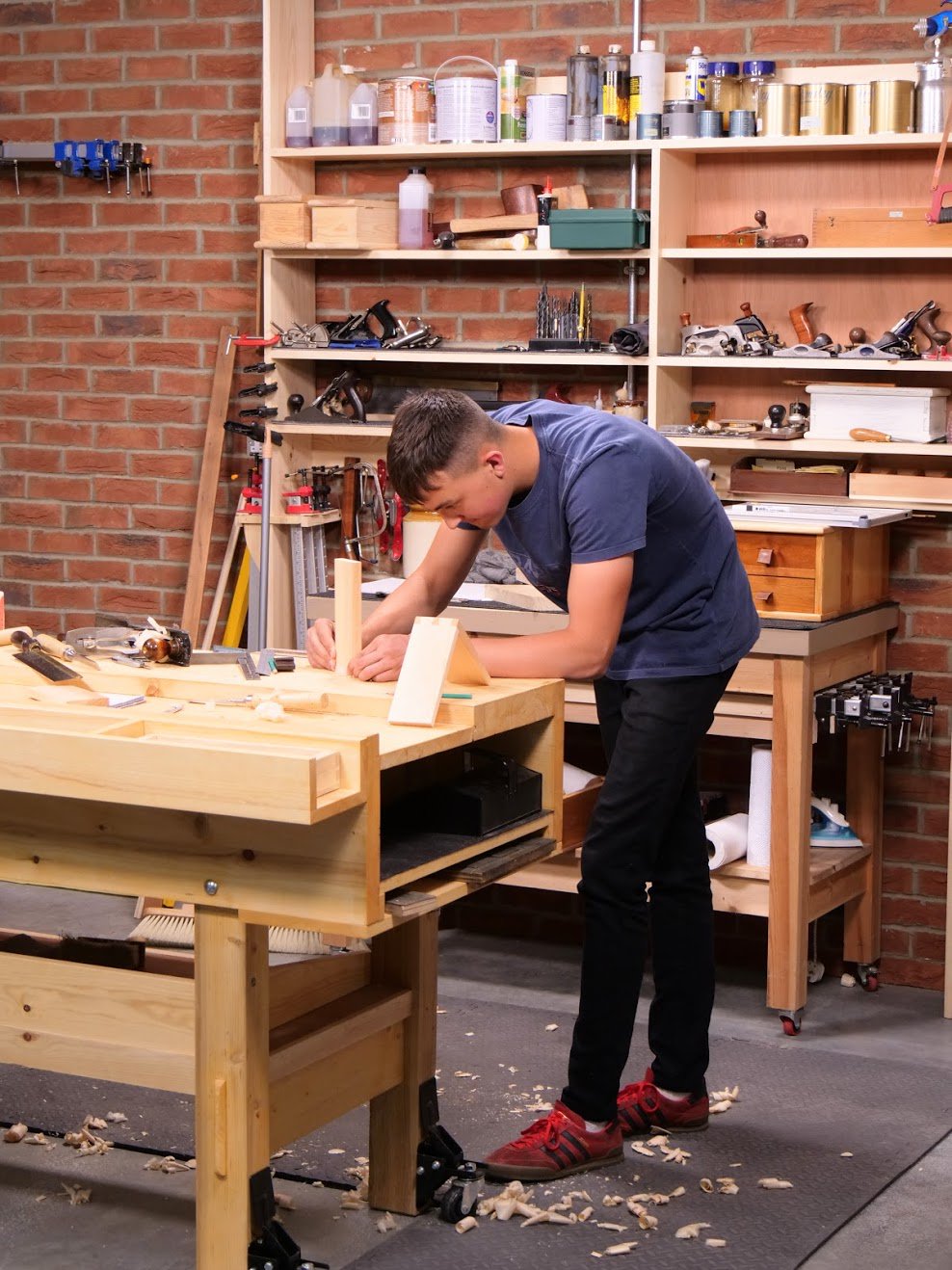
Of course I didn't want to undermine his teacher. I did tell him to always question the authority though. Not the authority of the teacher per se but just what was the source of the information and was it indeed right.
It is a common belief that to start a western type saw it is best to pull it back and scratch the surface with the teeth first. Western saws cut on the push stroke and no one is inferring that the saw is cutting when it is pulled, just that its best to use pull stoke first. These things are difficult to reverse, as we have seen with laying planes on their sides, issues like that. To somehow make a groove to set the saw to its task in is hard for those taught that way to stop doing it and to lighten up on the opening forward stroke with a gentle and light push first. I was taught that school way too. Thankfully I began working with knowledgeable experts just a short time later. Several of them, who stood watching me in a circle. Master craftsmen. One of them took charge of the situation and said, "Put yer thumb up to the side of the saw plate and push forward." I did. The saw stuck. "Push lighter!" he said. I did. It cut. It cut smoothly, progressively. I never looked back.
As it is with many things woodworking with hand tools, we believe that more elbow power is needed until someone gives us the right tools for the job with the perfected cutting edges too. That's a myth. A saw continues to cut with zero downward pressure from the hand as long as it is set and sharpened correctly. And it does not matter whether it is a push-stroke saw or a pull-stroke saw. People say that lots of over-the-bench pressure is essential to planing but that's not altogether true either. Oh well.
Well, of course, there is nothing wrong with a few pulls on the saw, or some extra downward pressure when planing. If it gives you added confidence then go for it. Everyone can do whatever they want. Within a few saw strokes Max got it. He was working the saw like a pro progressively into his dovetails. It took a few minutes for him to understand that the difference surrounding functionality was a well set, well sharpened saw and not necessarily him—something he had never really understood until now.
Comments ()