
The Meaning of Economy
Storing my wood
Our economy's different than business economy, more sort of domestic, kitchen-like, gardening-like economy. We work in different realms of domesticity and woodworking has always been part of my family and domestic life. Never distinctly sawn off as somewhere I go to from. Oh we still have constraints, but it's not so much to do with bottom-line profitability in money so much as profiting in freed time, freed space, a sense of freed wellbeing as it might well be called today. There's something real about it. It's not an other-worldly ethereal body control but the tangible freedom real work and working itself brings. Economy of this kind, lifestyle craft as an art, is about saneness, redeeming time in the core value of work ethic. A place to sweat and stretch the whole body in working by working your mind, your emotions. The economy of the whole releases you and your time to become that punchy activity that results in decisive action without the hindrance of the world you might be trying to leave outside your creativity. Let's look at a small aspect of it. By doing that, we create our own sphere of economic creativity. It's both liberating and empowering as long as we don't over engineer it.
Saw stowage
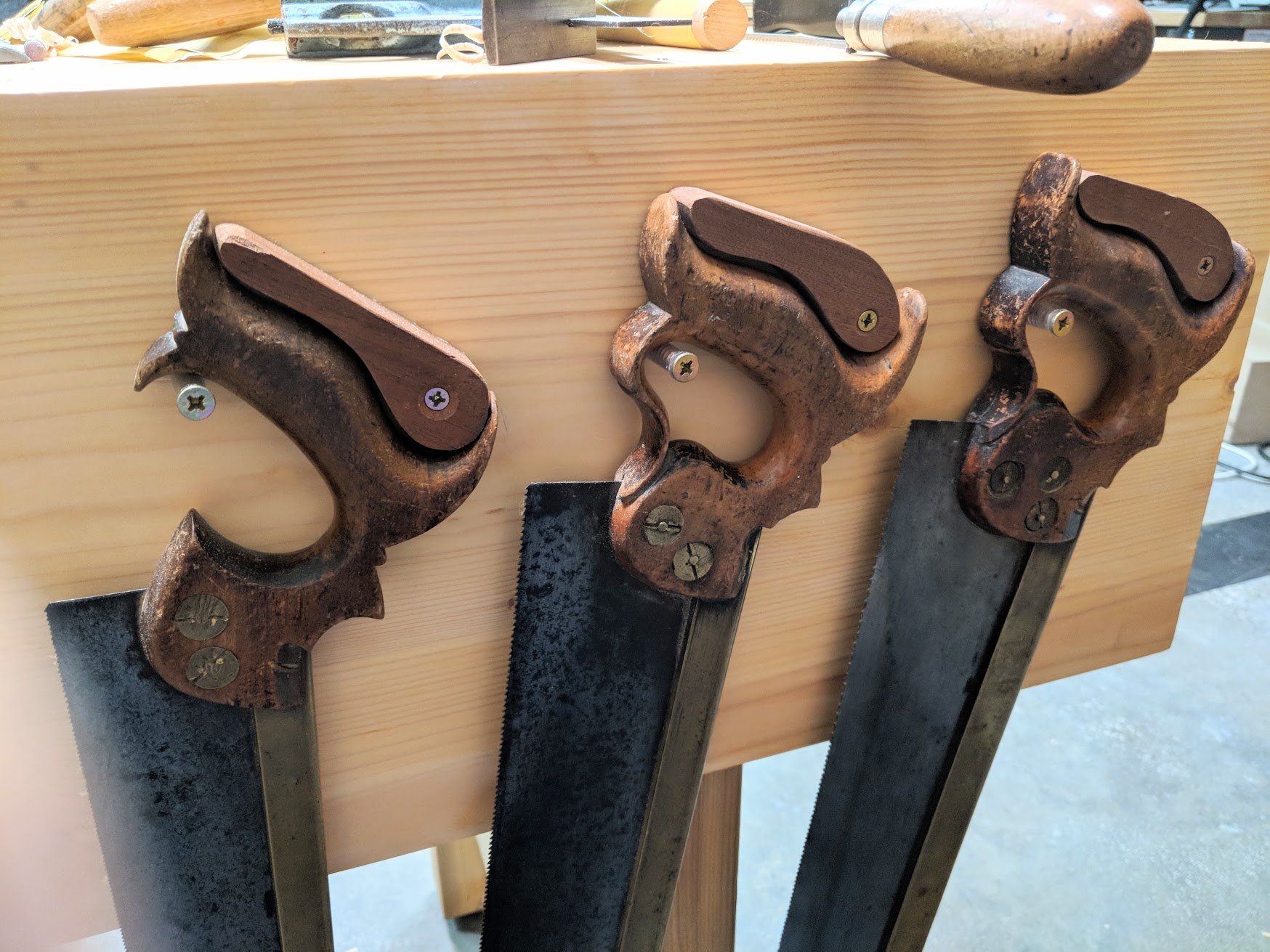
I use three ways to keep my saws. Working economically in our home workshops means not having to make too many manoeuvres to make things work efficiently. My saws hanging to my right hand gives immediacy when I need it. Three saws, three sizes all with backs is my joinery answer. It means they are pulled to task in a split second economy and they are indeed replaced there in the same time. This alone frees my benchtop from clutter and believe me, having half these saws out at any given time soon takes over the workbench top.
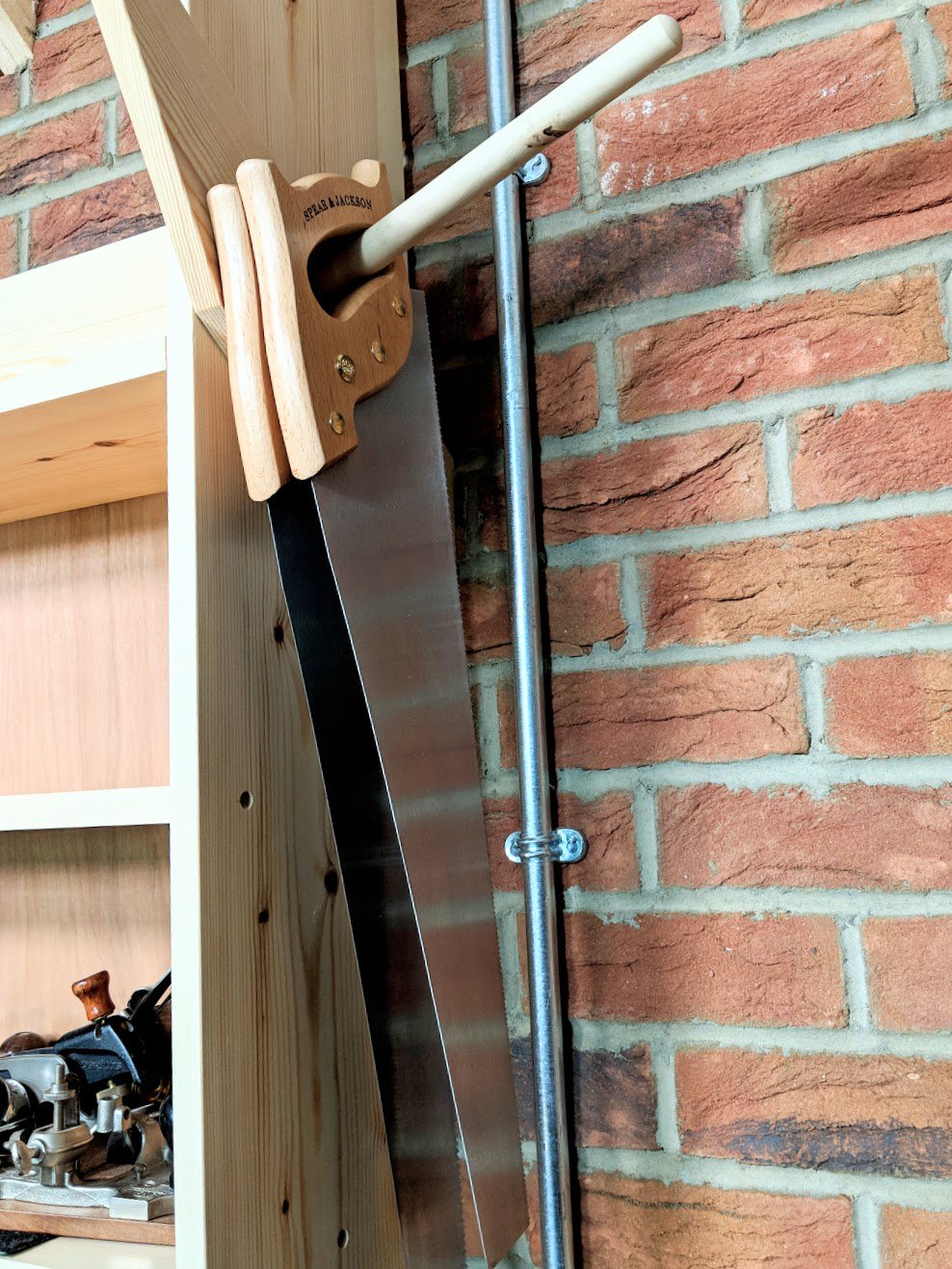
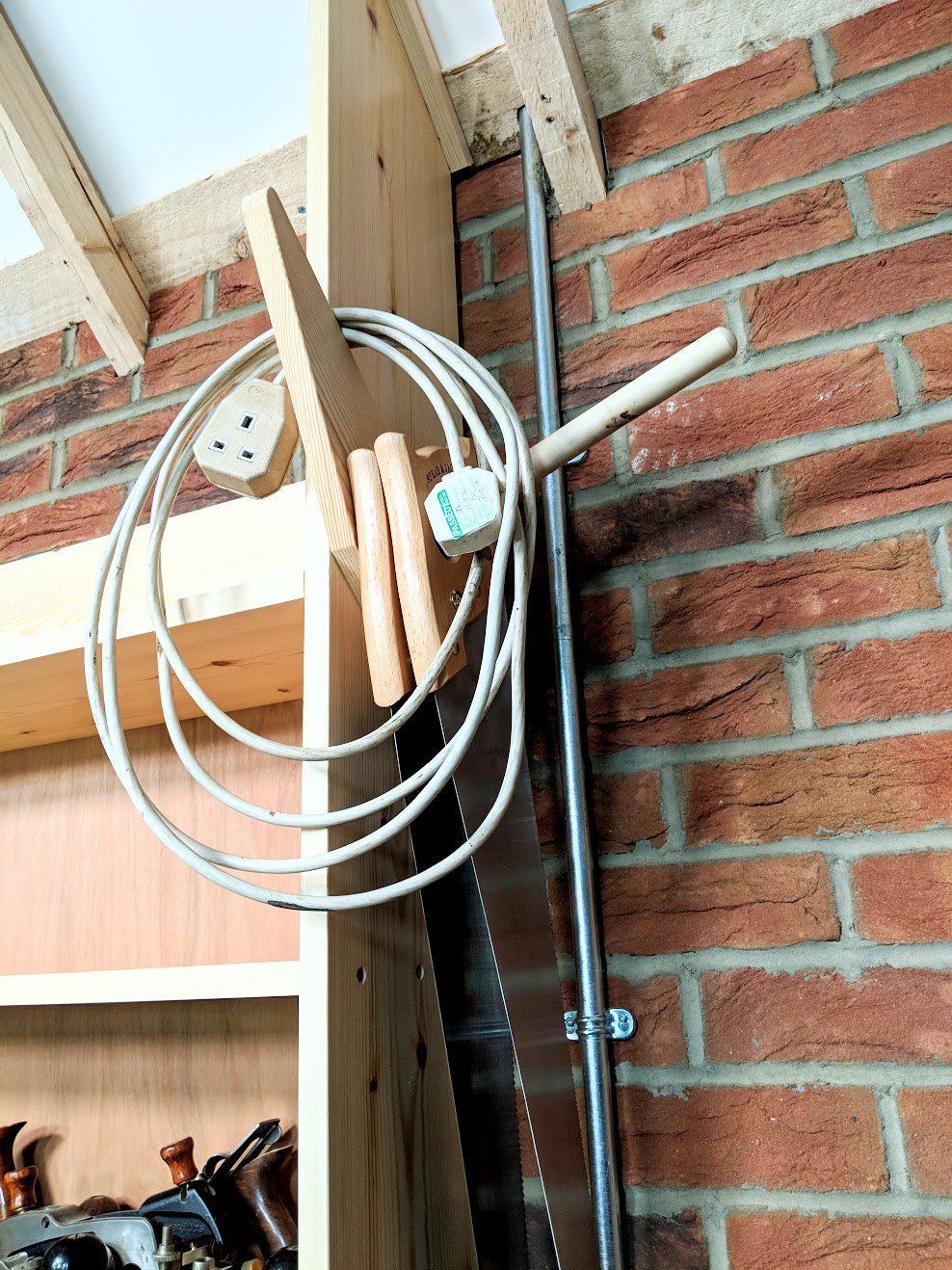
For my handsaws, which are generally used less, I hang them from a sloping 7/8" dowel. I love my handsaws and I usually hang three or four but at the end of the day I rely on the two newish Spear and Jackson saws shown, a 7PPI ripcut and 10PPI crosscut. I can also use this type of holder for electric cords, rope or whatever else.
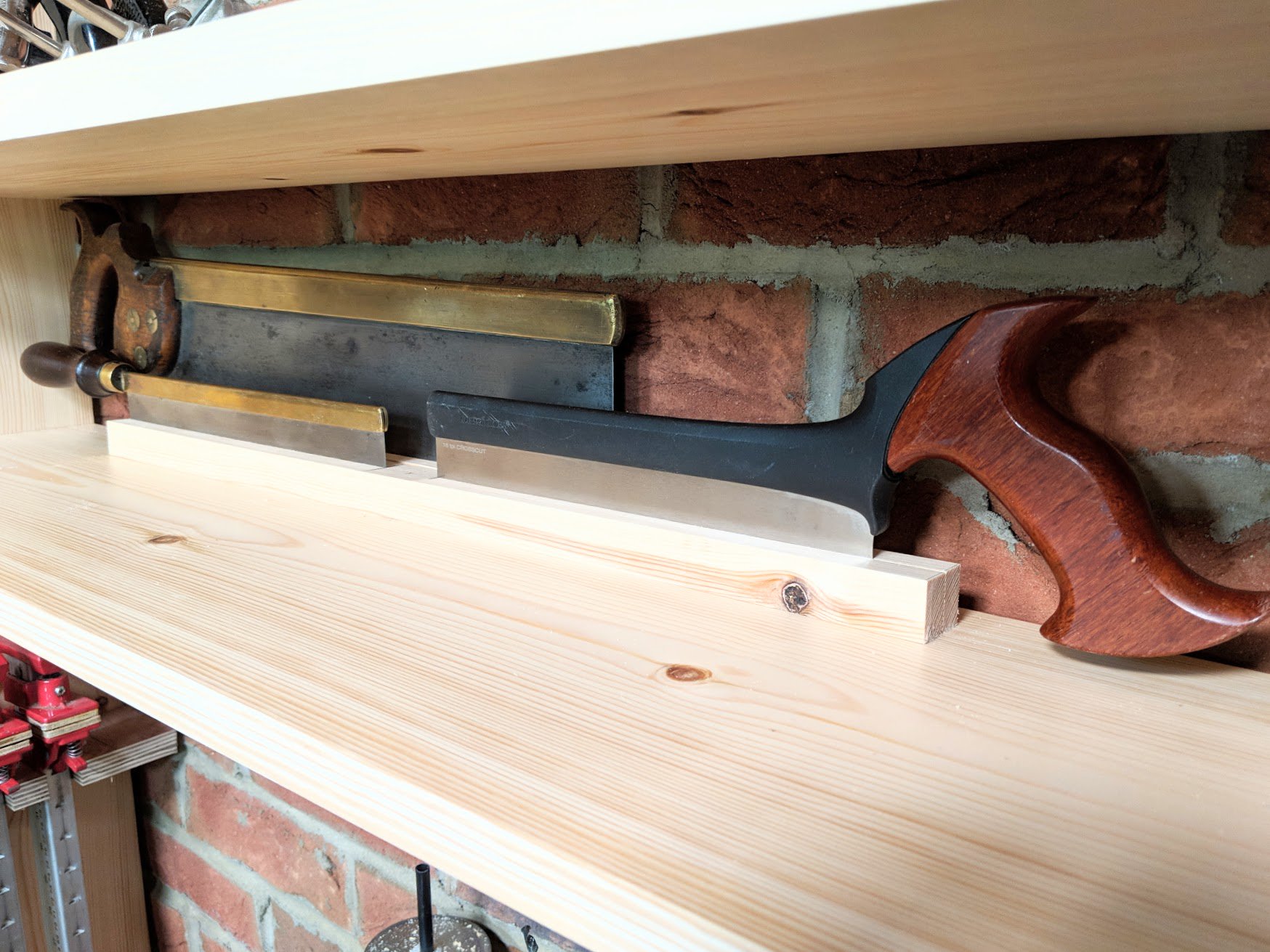
The third one happened by accident mostly. I slipped a small gents saw into my saw sharpening strip one time and saw how it stood there upright and taking less space. Putting this to the back of a shelf for my lesser used saws made good sense to me. In this case it was my 16" tenon saw, my Veritas 10" backsaw and my 10" gent's saw.
Clamp stowing
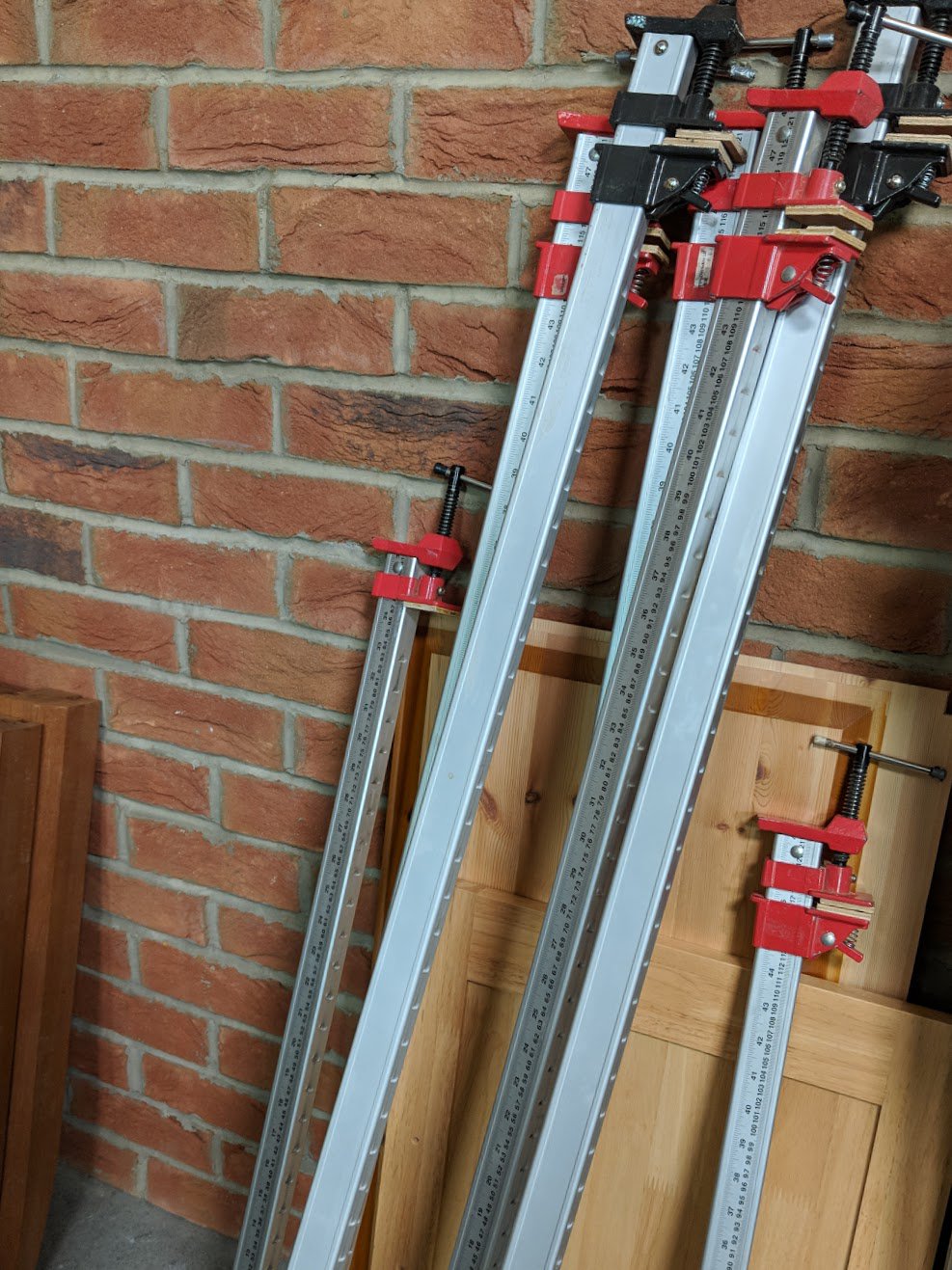
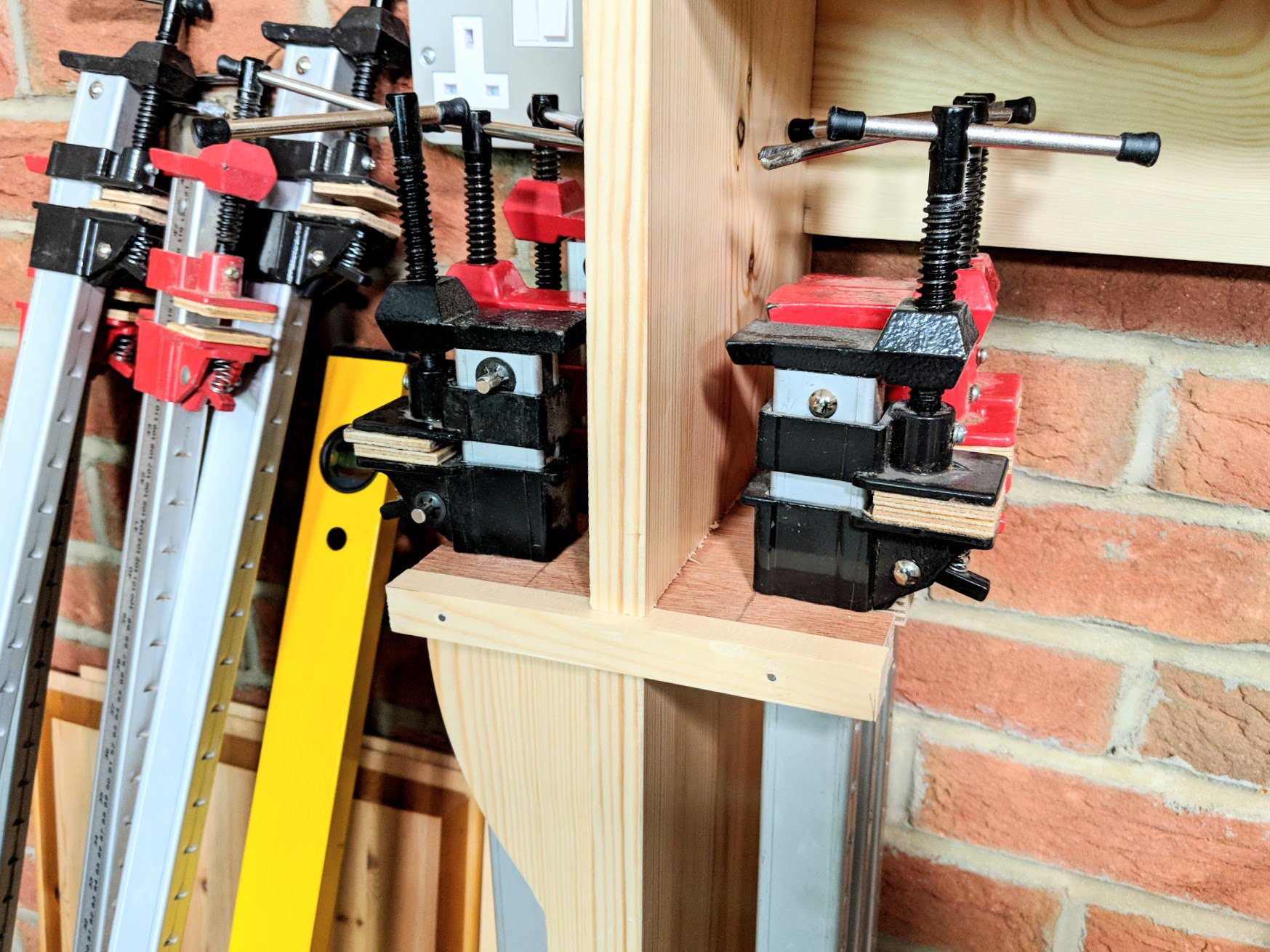
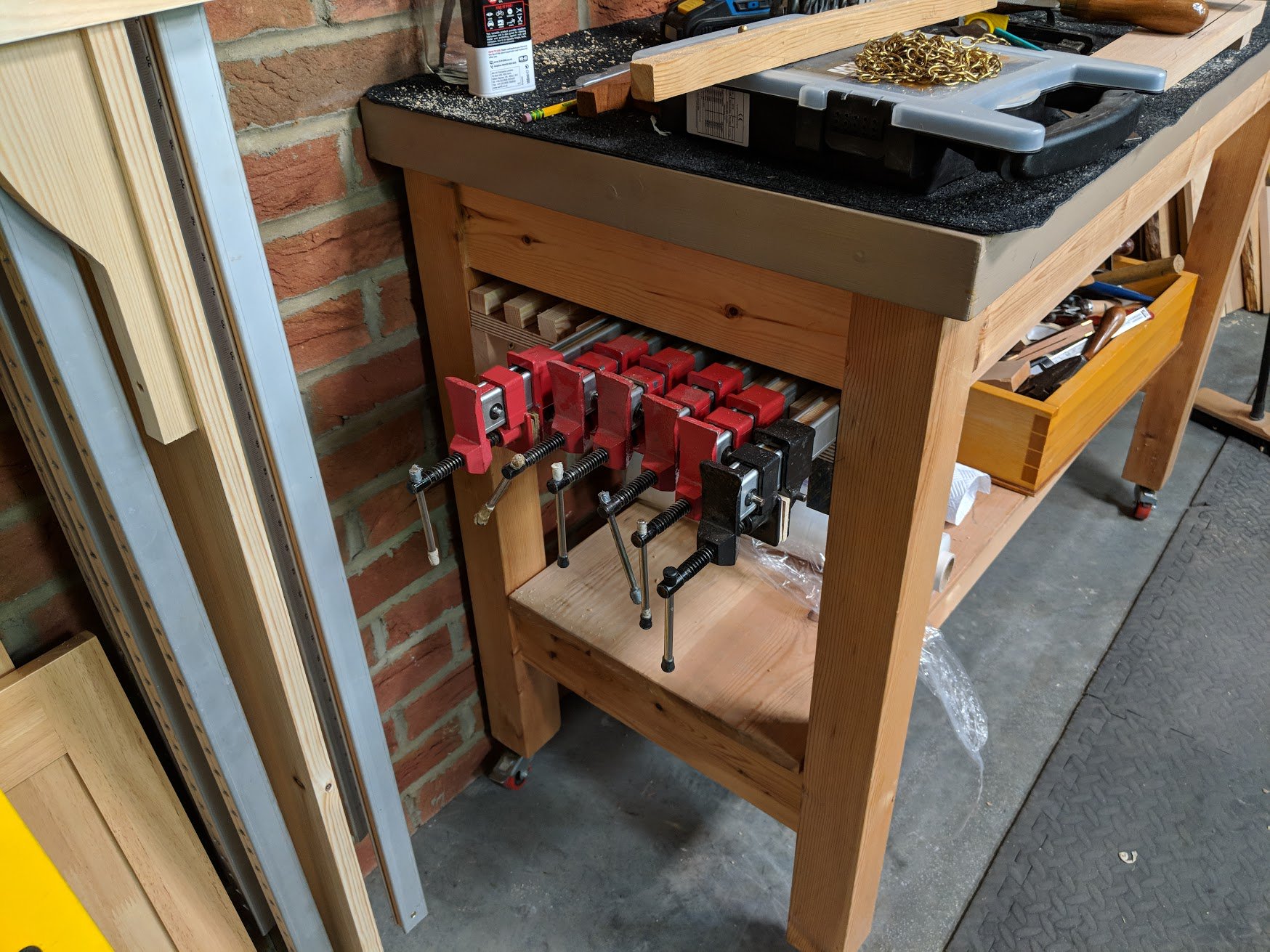
The same is true of clamps. Here they take a massive footprint during a project. Yes, you pull them off a project onto the benchtop and it builds up, but when you have a home to stow them in it improves your sanity. Here they are stowed discreetly yet accessibly with this simple under-counter addition. Some of you feel that my wheel around cart was an ideal way of stowing but not really in a garage; too big a footprint. I have those for the school, to wheel between workbenches, not my home garage workshop.
Smaller clamps I am still working on yet.
Think shelf
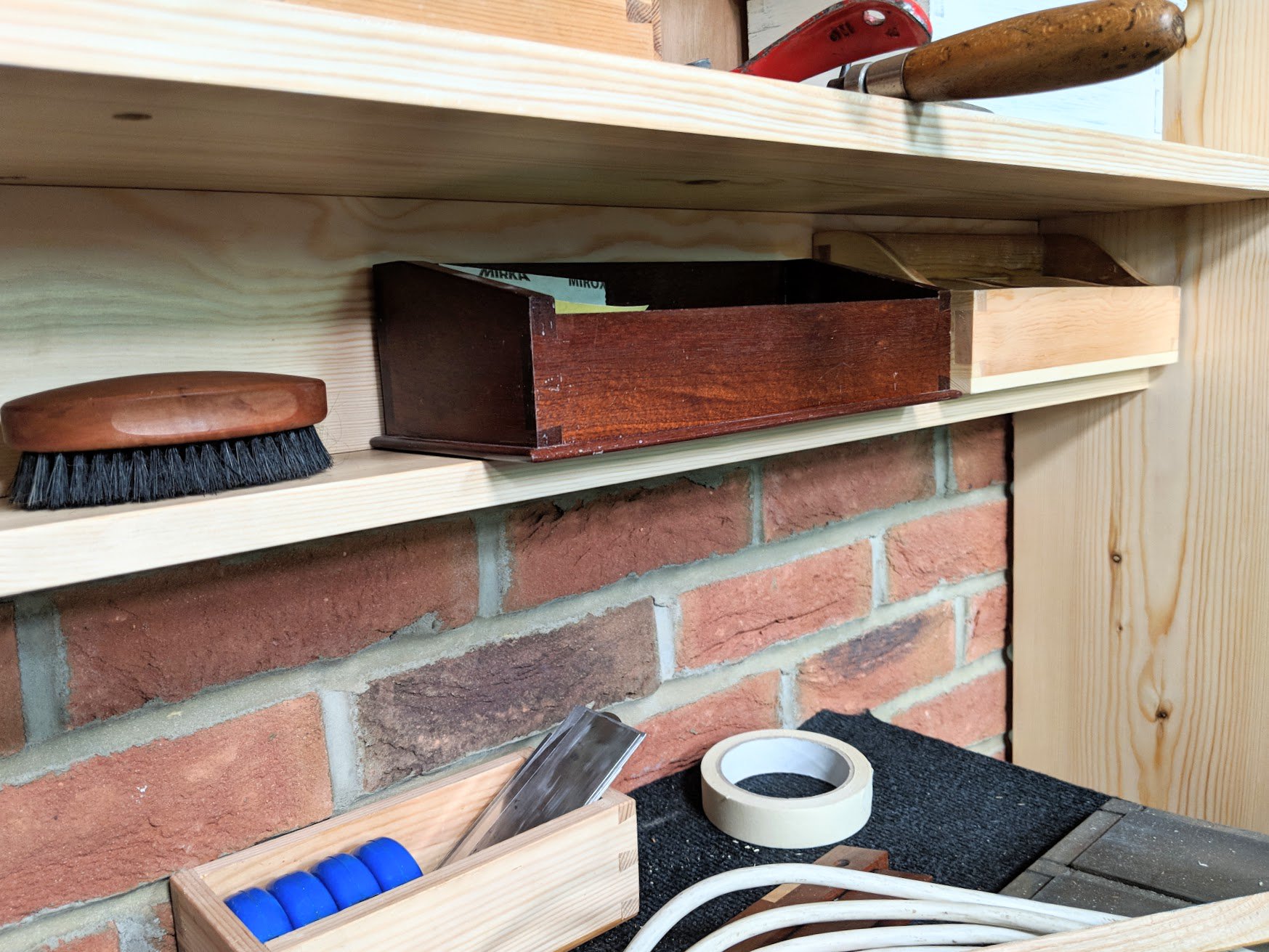
This and other narrow shelving came from an improvement I made to our home kitchen years ago. Beneath the upper cupboards and above the countertop is a valuable corner you rarely even see or notice. By running a full length narrow shelf 5" down we could keep the kitchen smalls like condiments and coffee mugs, caddies and such, freeing up larger flat areas fir larger containers and dishes. Here I have my nail caddy and my sandpaper in an arm's reach.
Repurposing
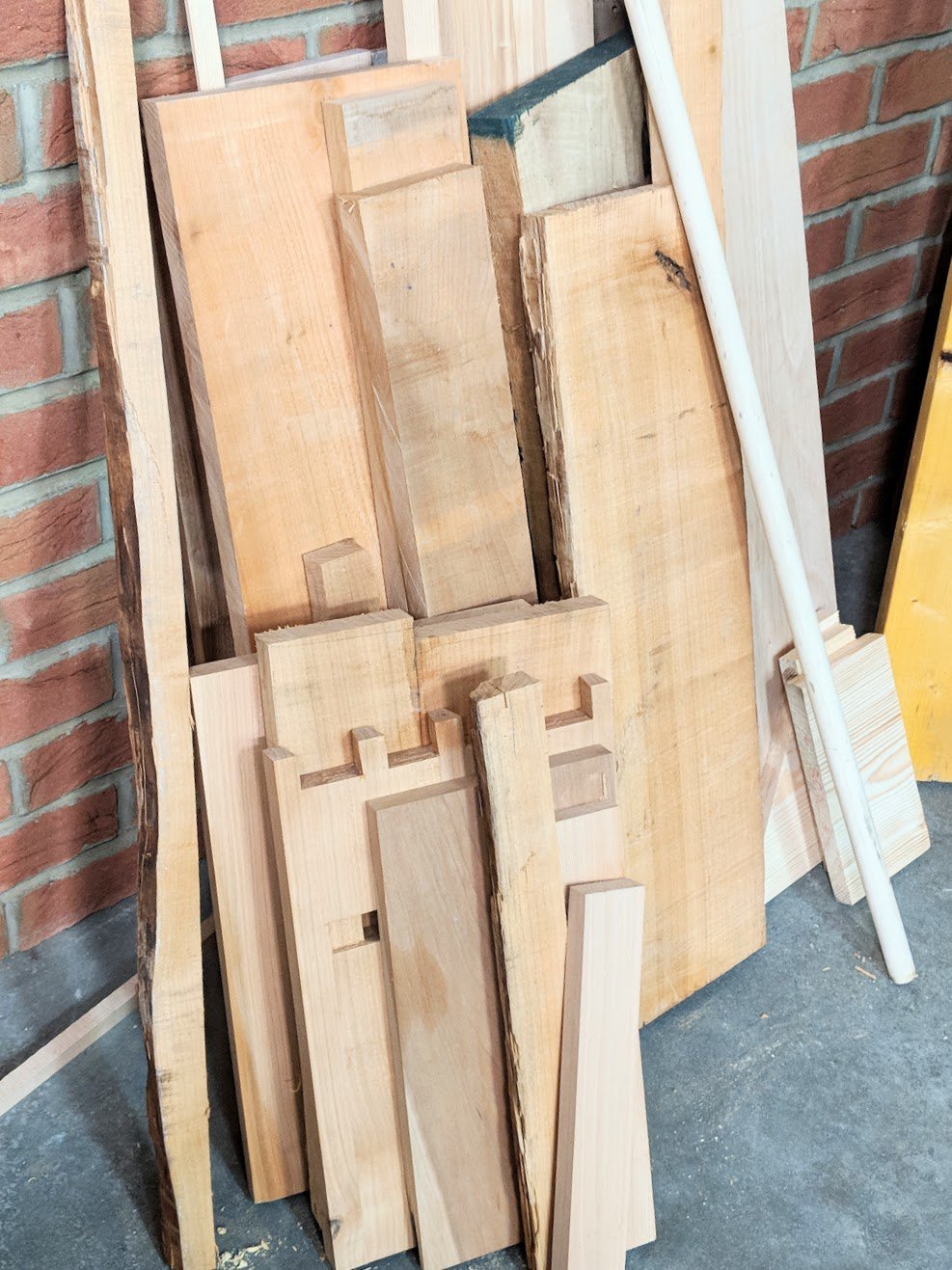
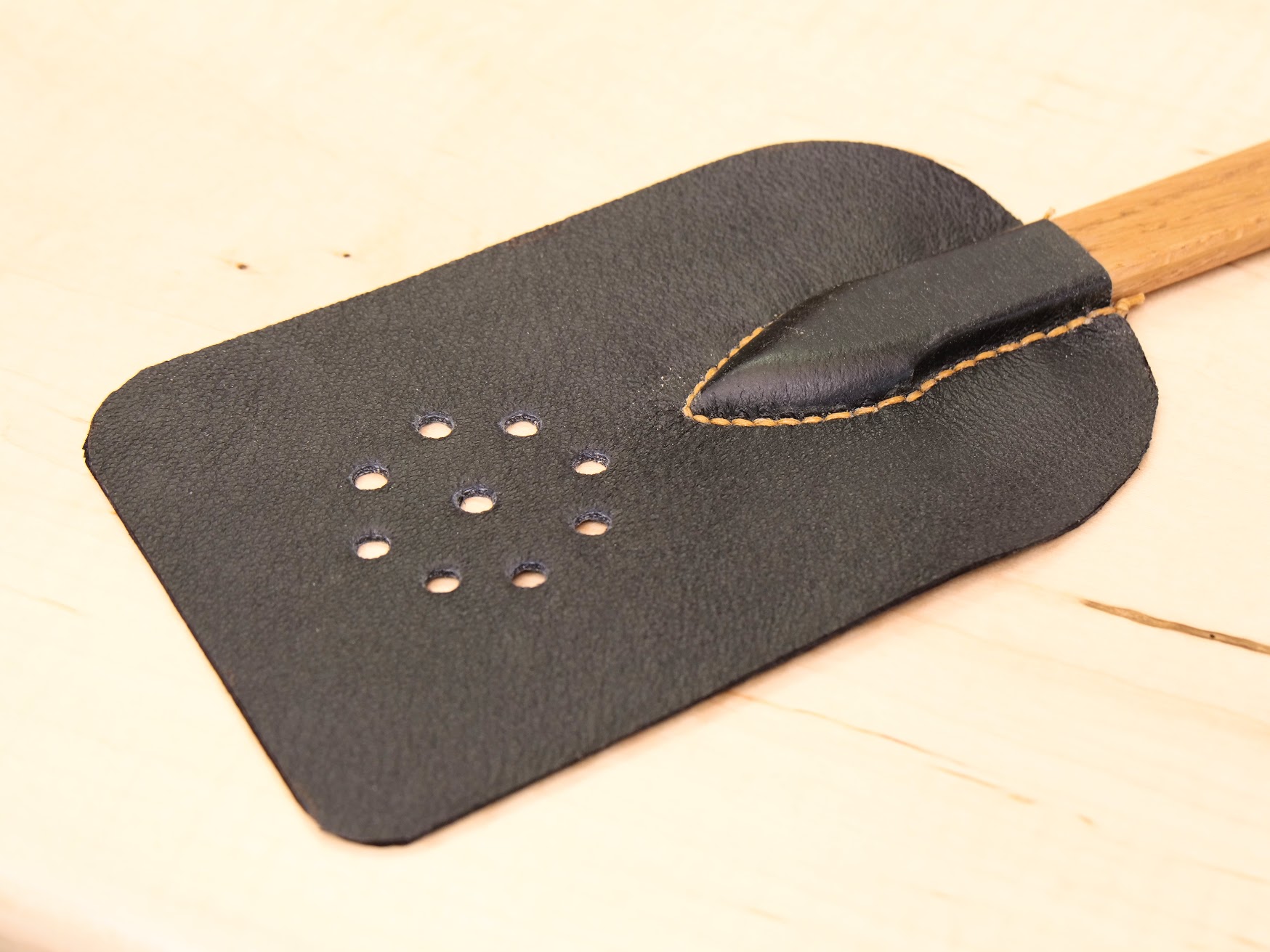
Using what I have has been a theme thread woven throughout my work. Economy is important, time and money, materials and equipment, they must all be used responsibly. My dad saved every nail and screw in jars and rarely bought either. Often time it is more economical to buy in than to search for a missing piece, especially when it is so quick and easy to order via the internet and have it delivered by the following day via a Prime account. I made a point, no pun intended, of using up screws withdrawn during the dismantling process of the move in my restructured projects for the garage workshop. Plywood and bench tops, workbench leg frames and so on have all been put back together and to good use. This coming week I attack the wood storage in my garage. Small scale workshops where an individual maker works alone or with one other usually means that every offcut is kept, stowed and brought out when it fits the purpose. To the small entity a square foot of cherry at £6 becomes a cutting board for a wedding gift or Etsy selling. Suddenly it becomes worth £30 and you increased your wages. My fly swats are another good example. I have sold hundreds of these through the years and they were all made from strips of wood of no use for anything else and the leather offcuts from upholstering my rocking chairs made the swat part. In many cases it's not the cost of the goods but the inconvenience and breaking into the work flow to go buy. Ever given away something that at the time seemed worth just pennies to someone only to find you had to drive to the store to buy another pack? Someone breaks a small component and you spend an hour resourcing the replacement! To them it was just a tiny thing. For you it was time equals loss of income.
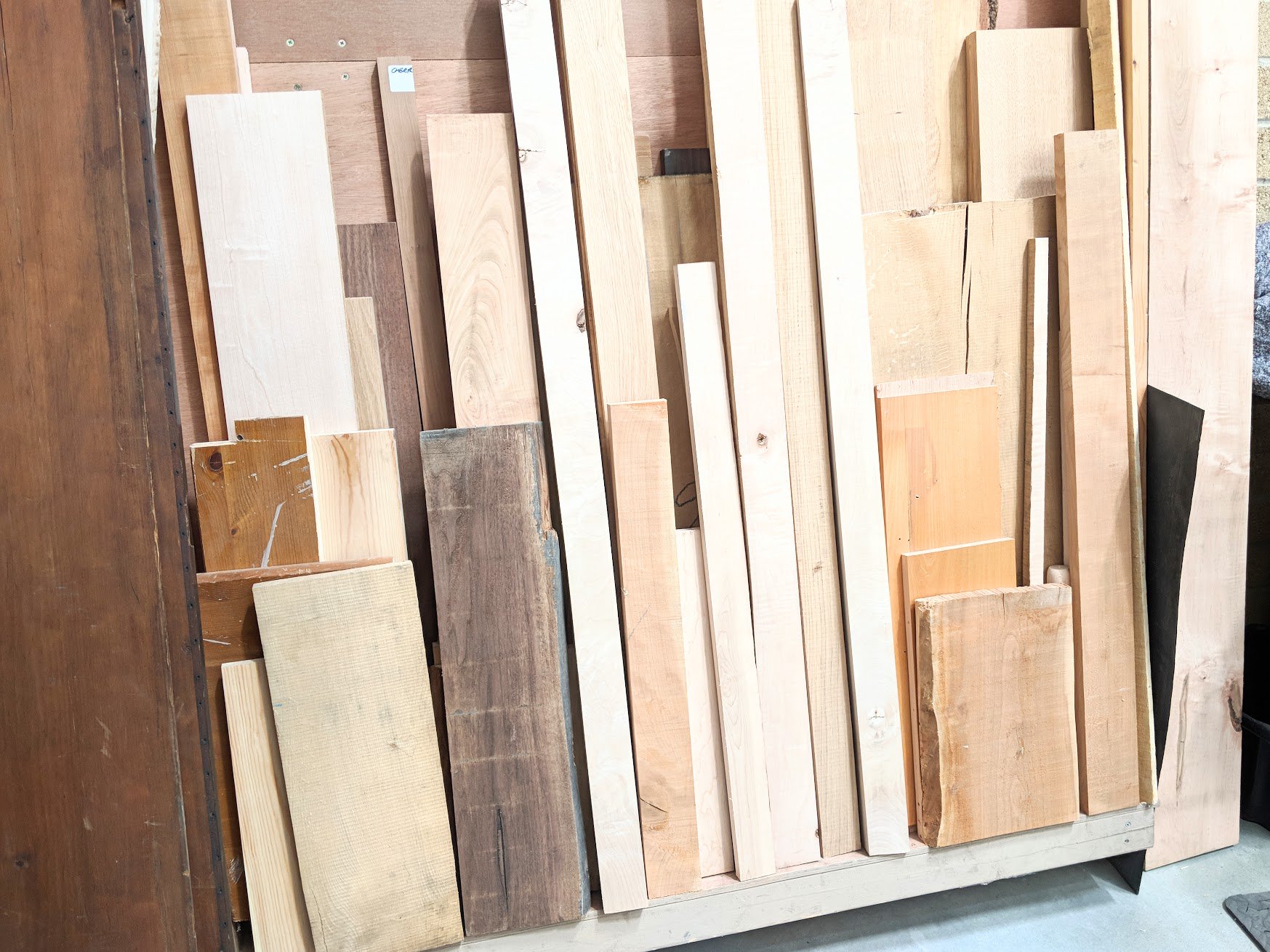
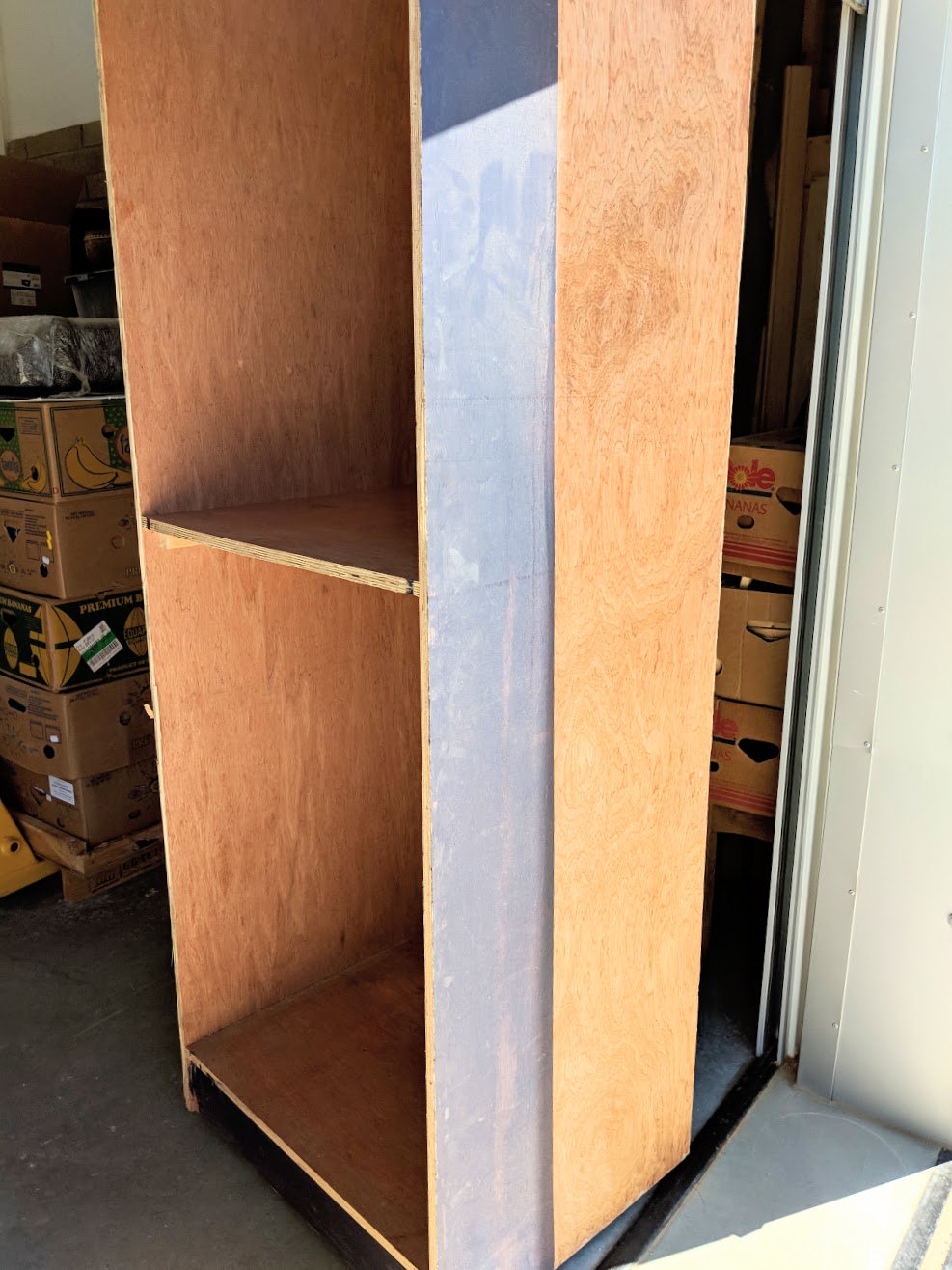
I have some former plywood cupboards I want to repurpose by reshaping, and retrimming and adding shelves and dividers. My reason for mentioning offcuts is simple enough. Short lengths often clutter up and when floor space is of a premium it readily increases its footprint with each offcut saved. Vertical storage maximises efficiency when you have only limited space, but more than that, efficient stowage means easy identification and retrieval. Most of the time a good storage system for wood means you can see at a glance were what you need is. Also, though we do make videos for teaching, this is still very much my main making workshop; the extension of who I am and my creative workspace. I'm settled on my system because of convenience and simplicity. With boards, beams and sections mostly stood on end I can easily tilt boards to free up the one I want out.
Comments ()