
Cutting Housing Dadoes—The Case for Small Routers
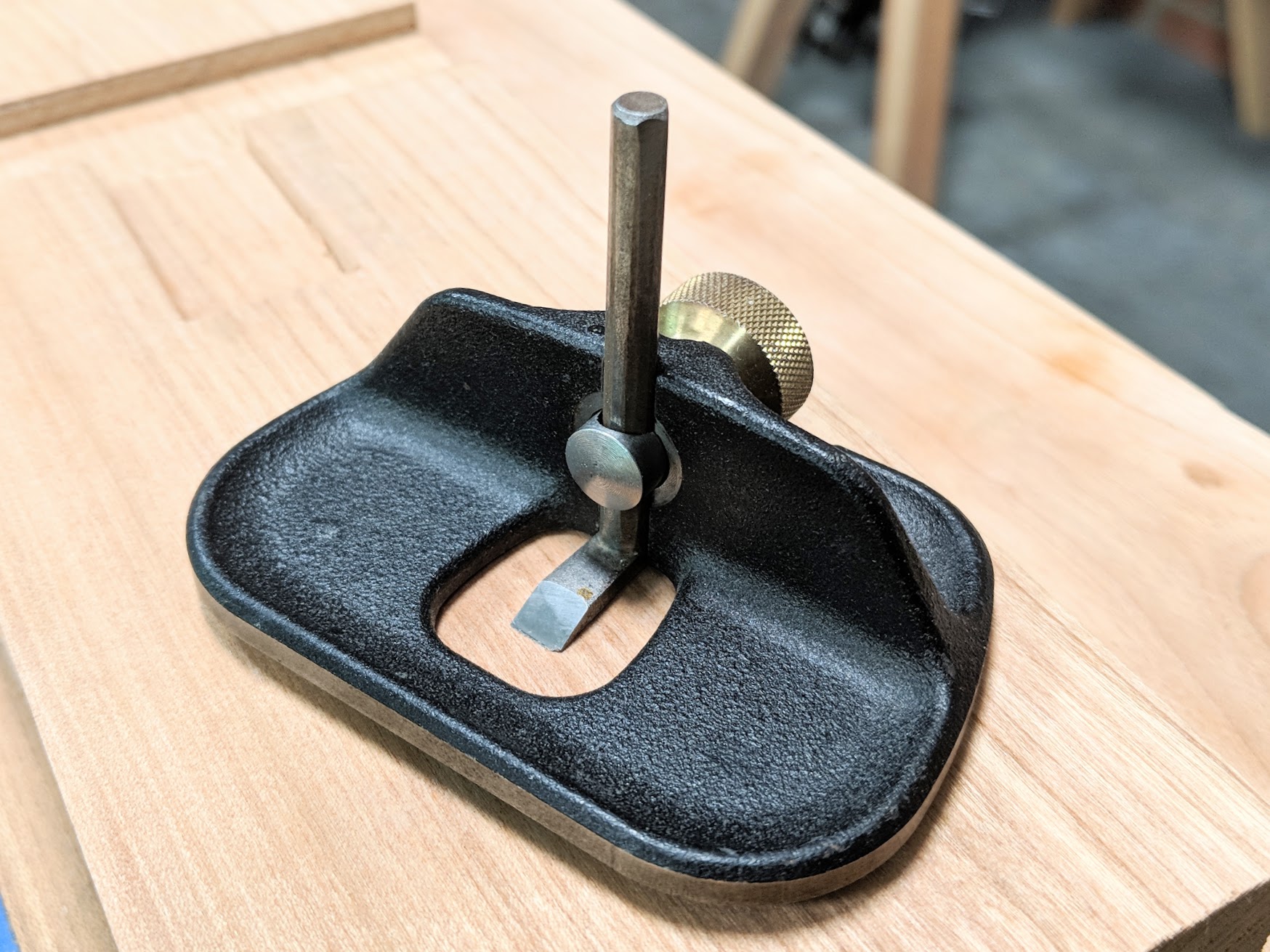
Hand routers come in a wide range of types and sizes, wood and metal ones work the same and there are advantages as always to wood on wood. You shouldn't think that the ones with adjustable depth control or superior to the pinch-adjust types nor that metal routers are better than wooden ones. They each have their own idiosyncrasies. The small Veritas router, as with the similarly sized Stanley 271 and the Record 722, is a very capable and apt tool for many areas of router work. You can learn to pinch adjust in micros of a millimetre, which in my view surpasses the accuracy you can achieve with adjustable versions because they suffer inaccuracy. Almost all of models I have used through the years have looser linkage and securement leading to a knock-on shift twixt adjuster and cutting edge. That is rarely the case with pinch and cinch setting.
A Case for Small Routers
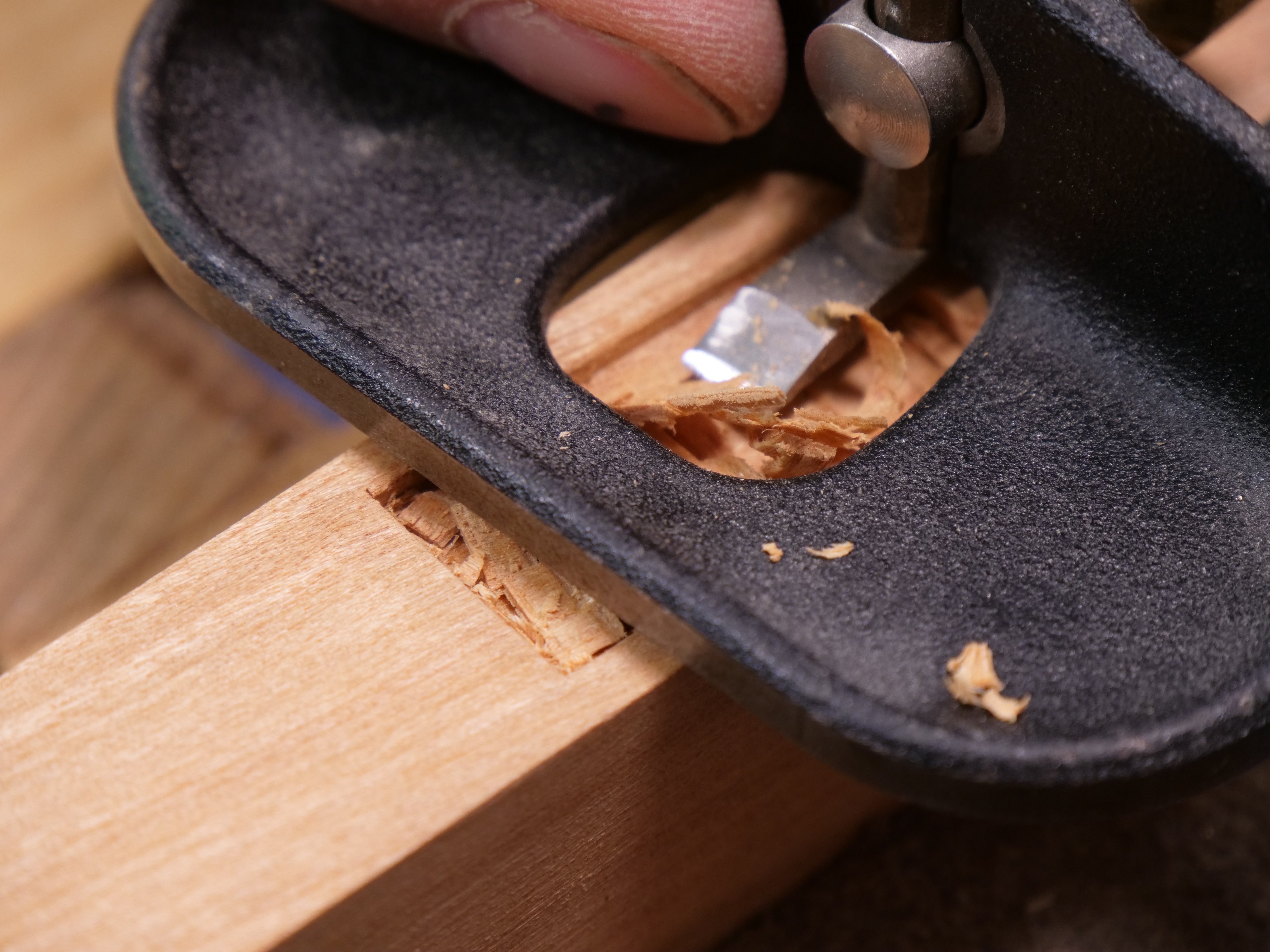
When it comes to perfecting housing dadoes and recessing for housing hardware or inlay, such as that, here is a tool that shines. In it's smaller sizing it's a punchy and compact plane and, as with many feisty smaller versions of most all things, seems always able to hold its corner. Though it is particularly useful narrow material and confined areas, a dado across 10" wide, 1/4" deep and 3/4" wide is no hardship at all. The sole of the plane encircles the blade in its closed-throat position and so maximises registration to the workpiece surface, now matter whether approaching from within the recessed area or from the outside edge. This encirclement allows the plan sole to bridge the recesses with full-based stability even on narrower stock like box rims and door edges. The blade can positioned outboard so that the cutting edge extends beyond the body for bullnose work as needed. The ductile cast iron body is to the expected standard of Veritas and measures 3 1/4" wide by 2 1/4" deep and comes with a 1/4" wide high-carbon steel blade..
Blade Holding
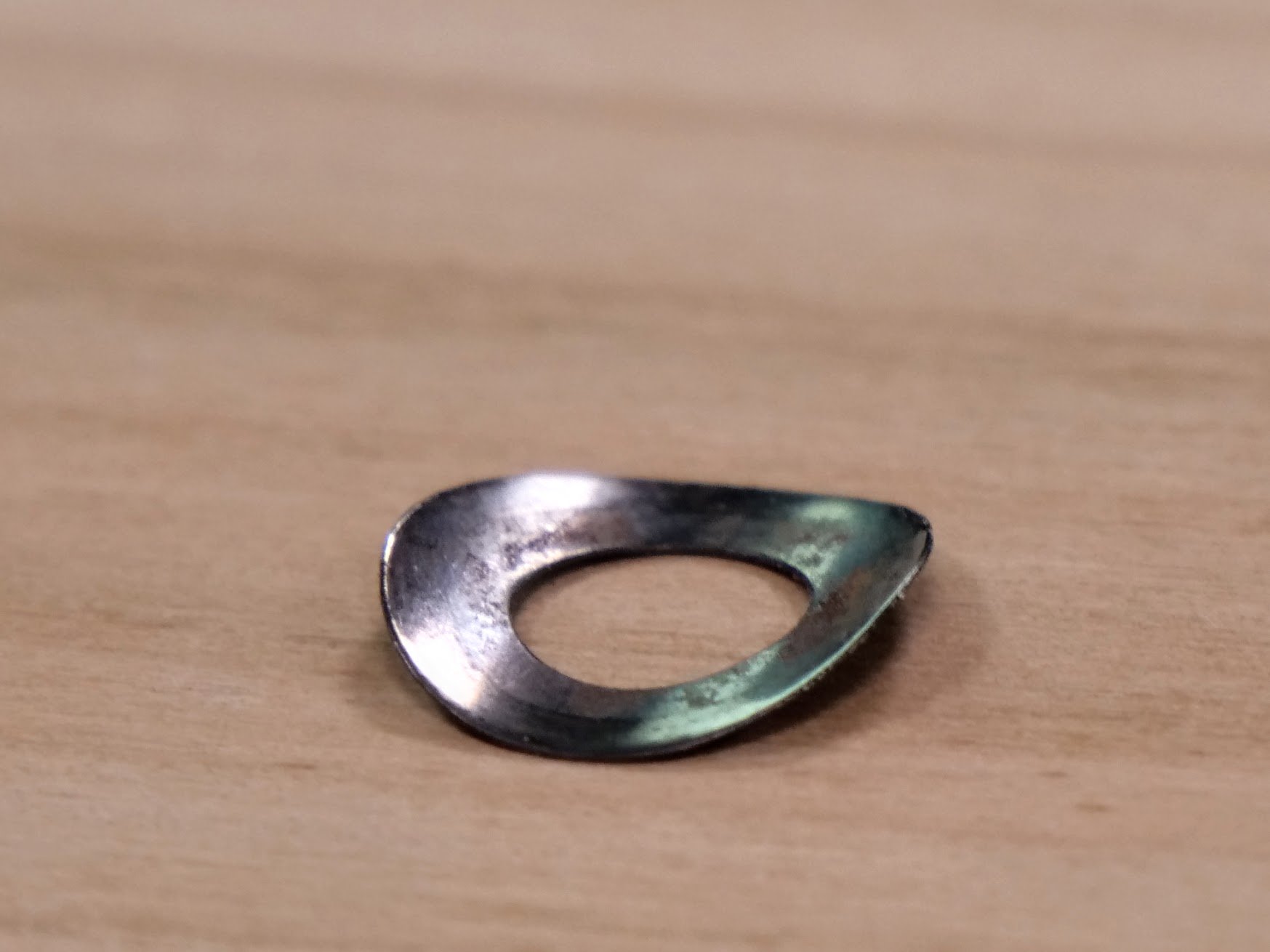
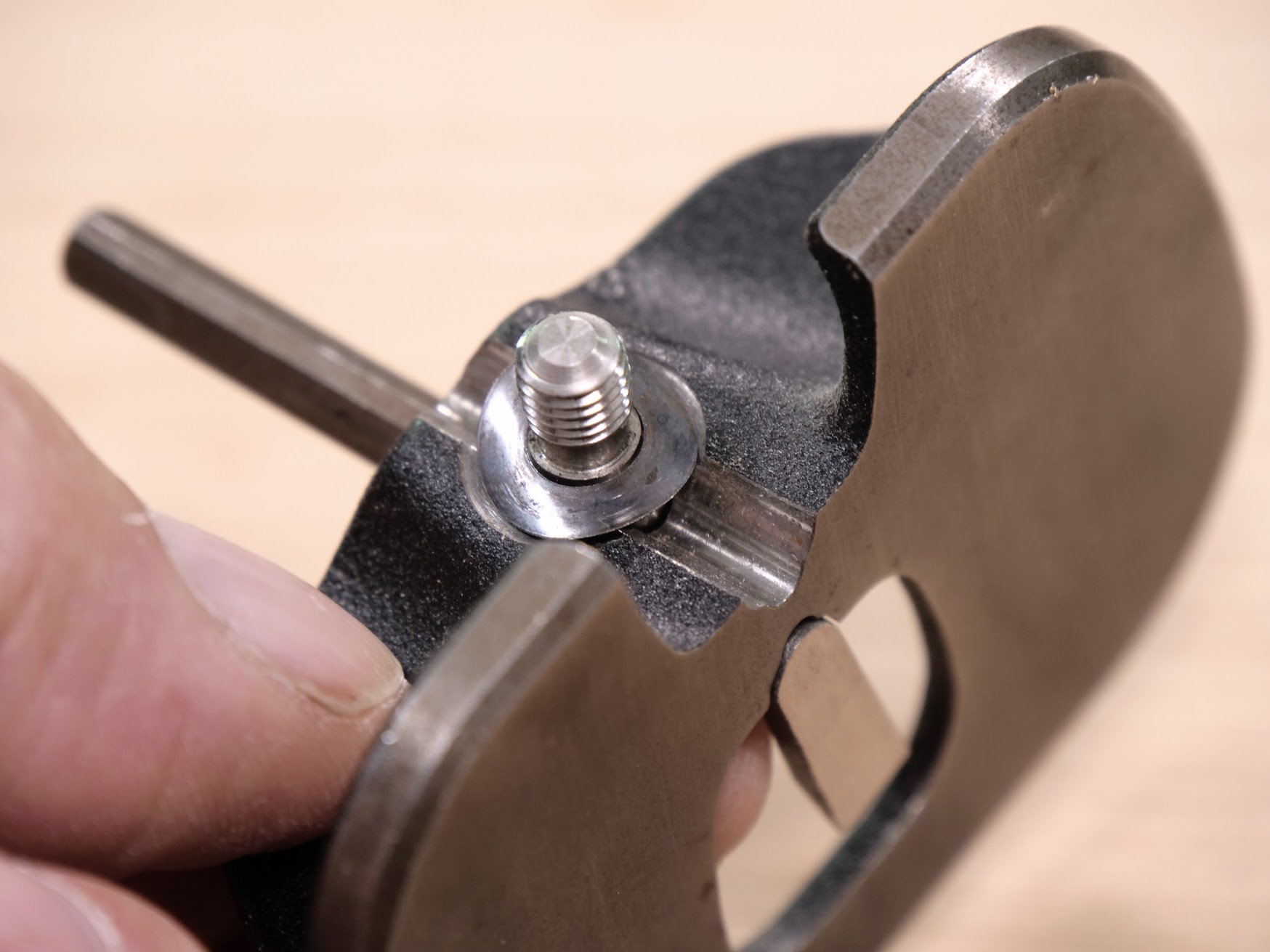
My first impression of the Veritas small router plane years ago now was that it's a very tidy plane. There's an advantage in a very simple addition to this plane and that is a simple spring washer used on a variety of appliances that provides tension to components via a bent but continuous disc washer that in this case creates a spring tension between the locking mechanics and the blade. As such, when the knurled lock nut is loosened a half turn the blade retains its setting until you pinch-adjust the depth between finger and thumb to establish a different setting. This is surprisingly quick and accurate so don't despise its simplicity or its unsophisticated adjustment capabilities. You'd like it.
A criticism I first had and brought to the attention of Veritas was the annoying twist of the blade under pressure advancing into a cut brings. This and the fact that heavy pressure can pull the blade deeper suggests that a different locking would be better. The problem is that this would disallow pressure afforded by the spring washer.
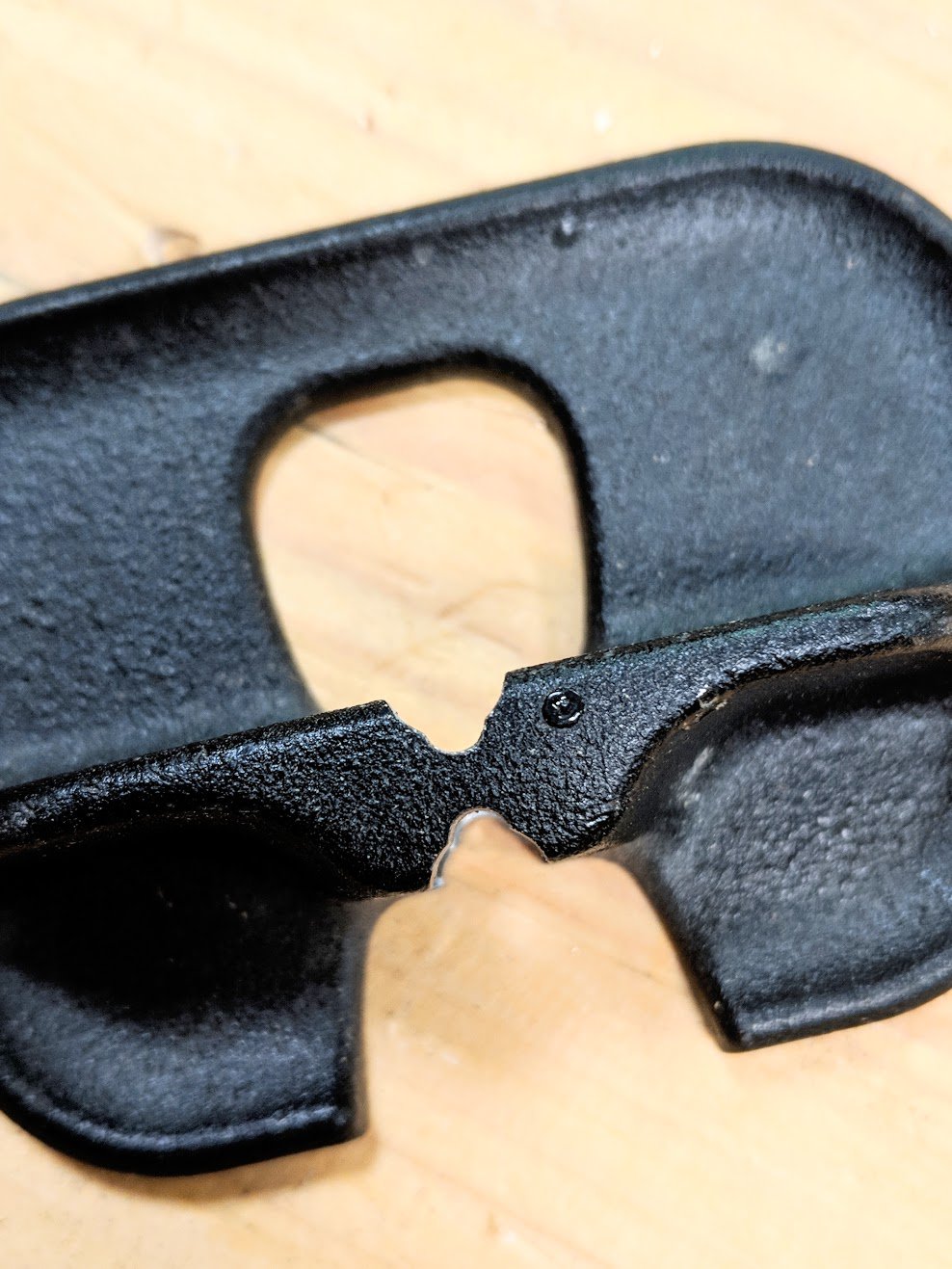
One problem, the first one, I managed to correct quickly and acceptably myself,he swivelling of the blade. I noticed that the milled channels were not a single round but two rounds of different radii.
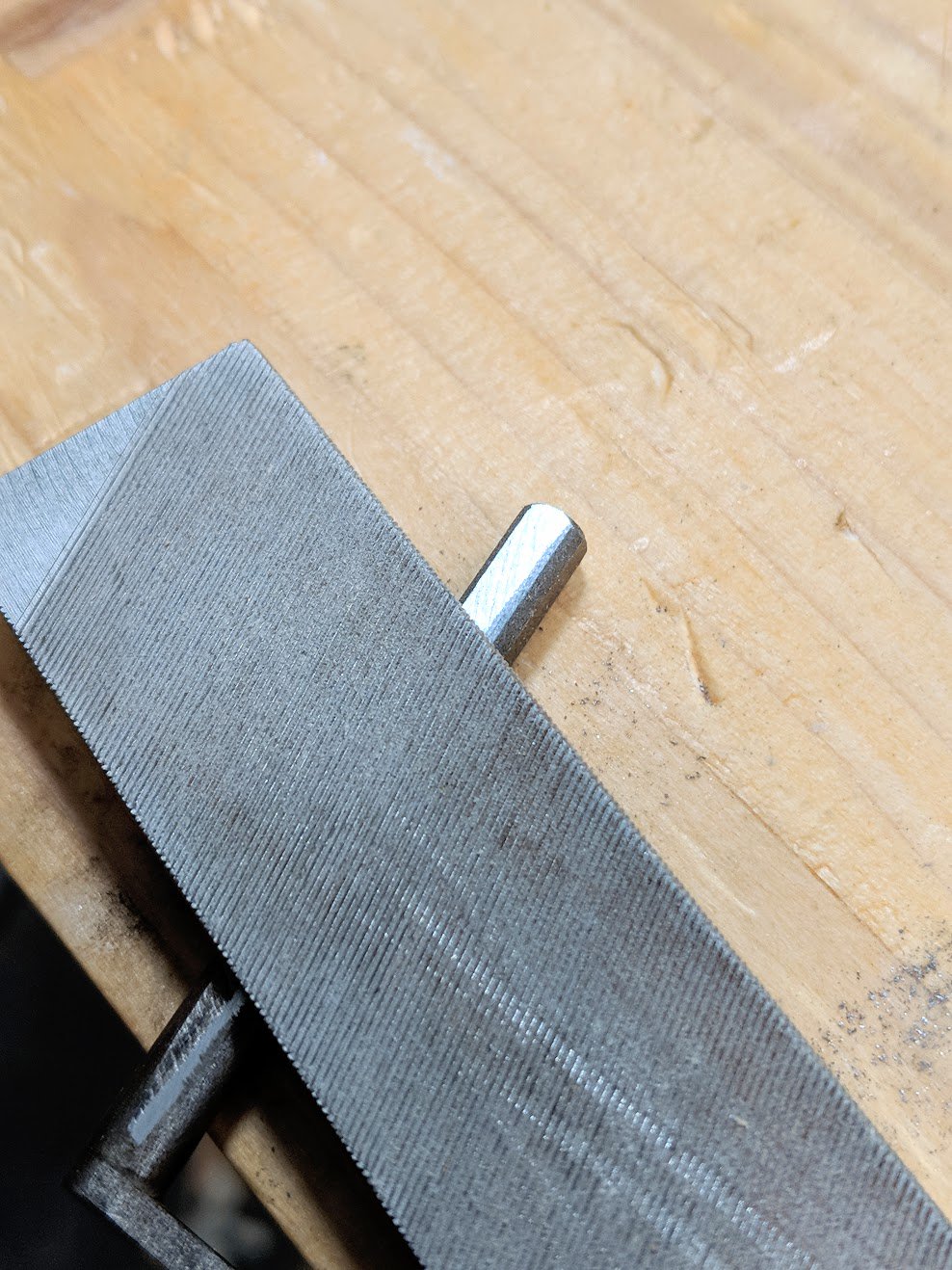
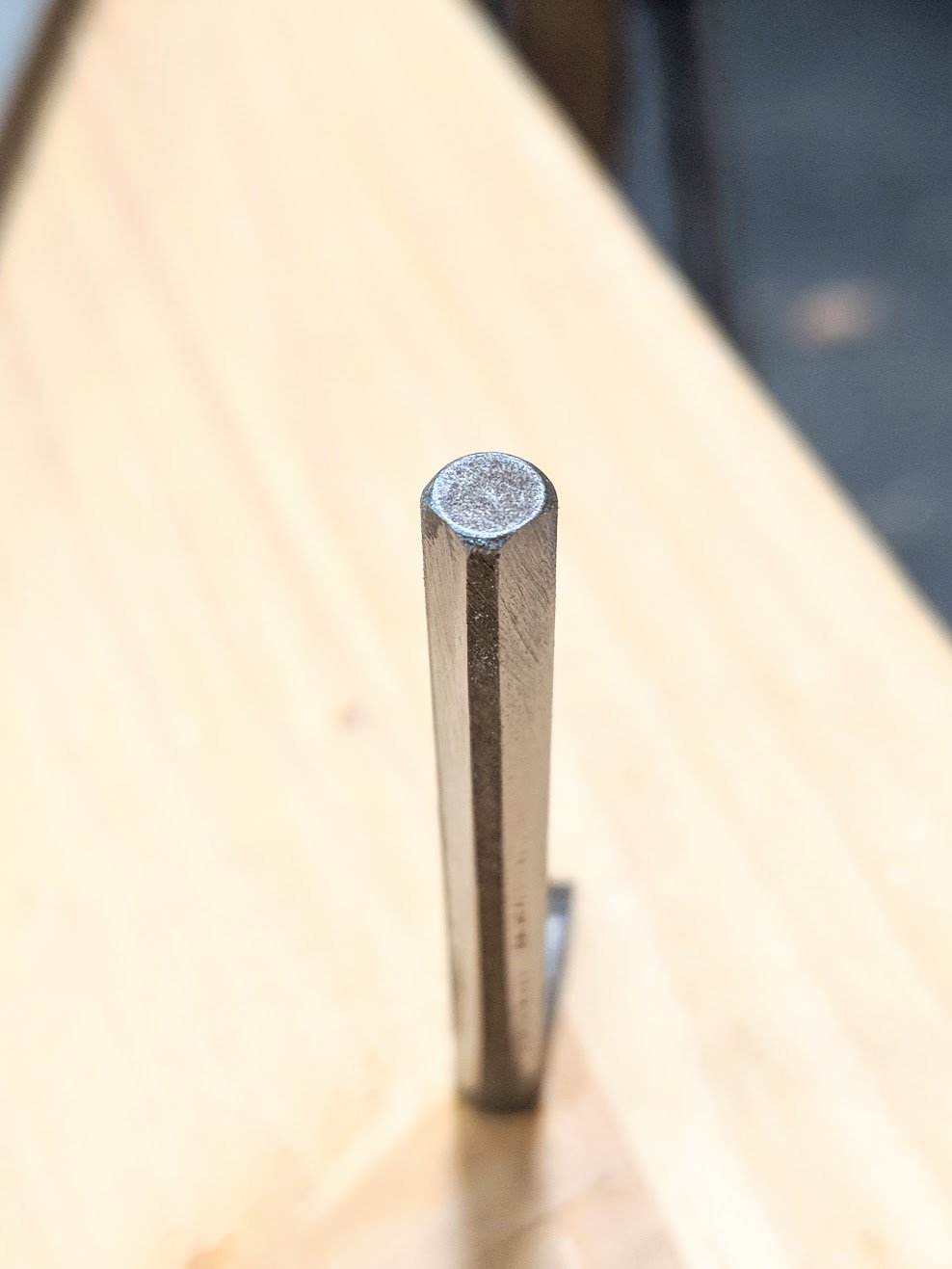
I simply filed my stem to a forty five each side giving me a ninety-degree corner but I left some of the radius in the corner so that it would fit nicely against the two walls.
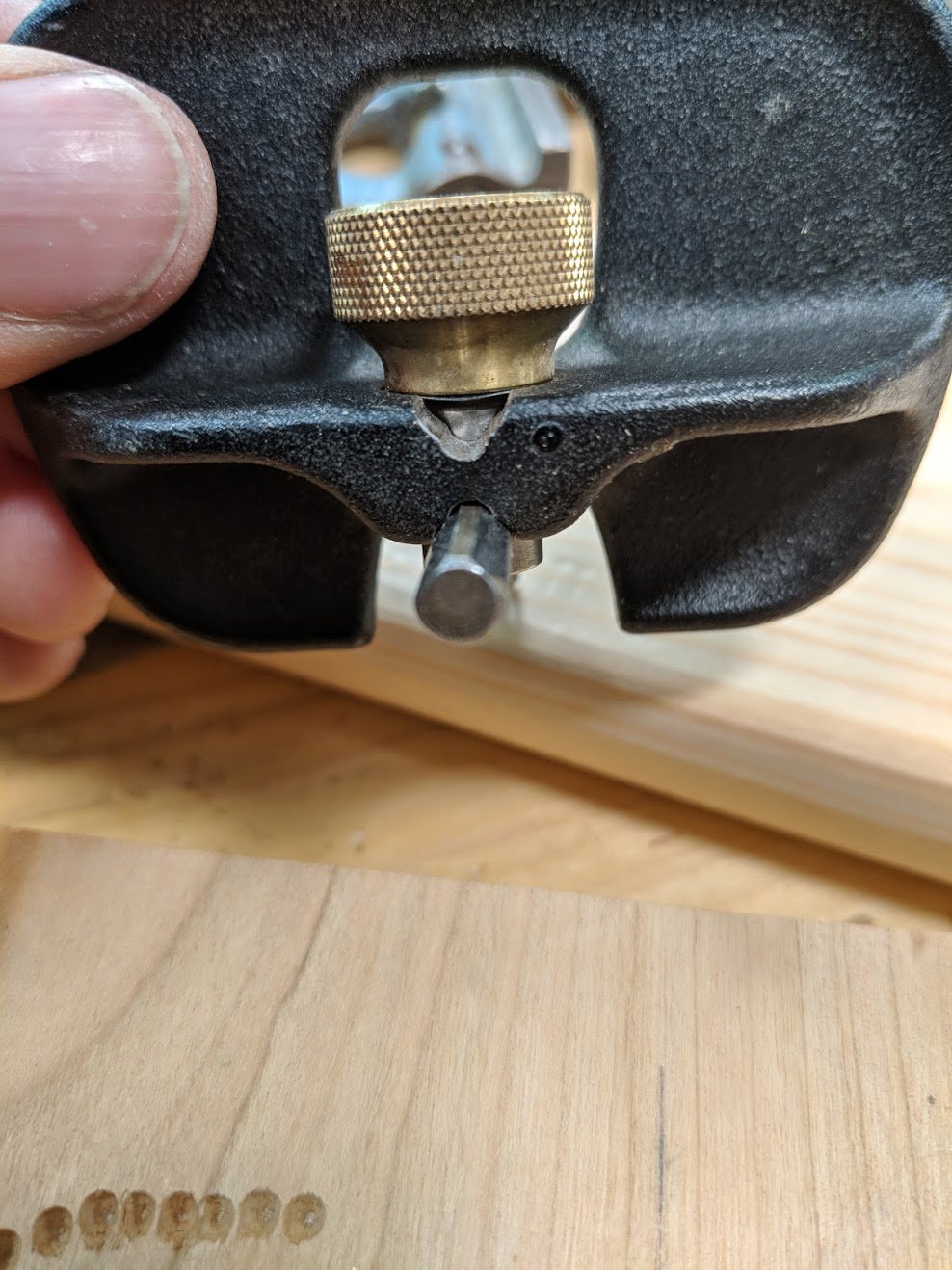
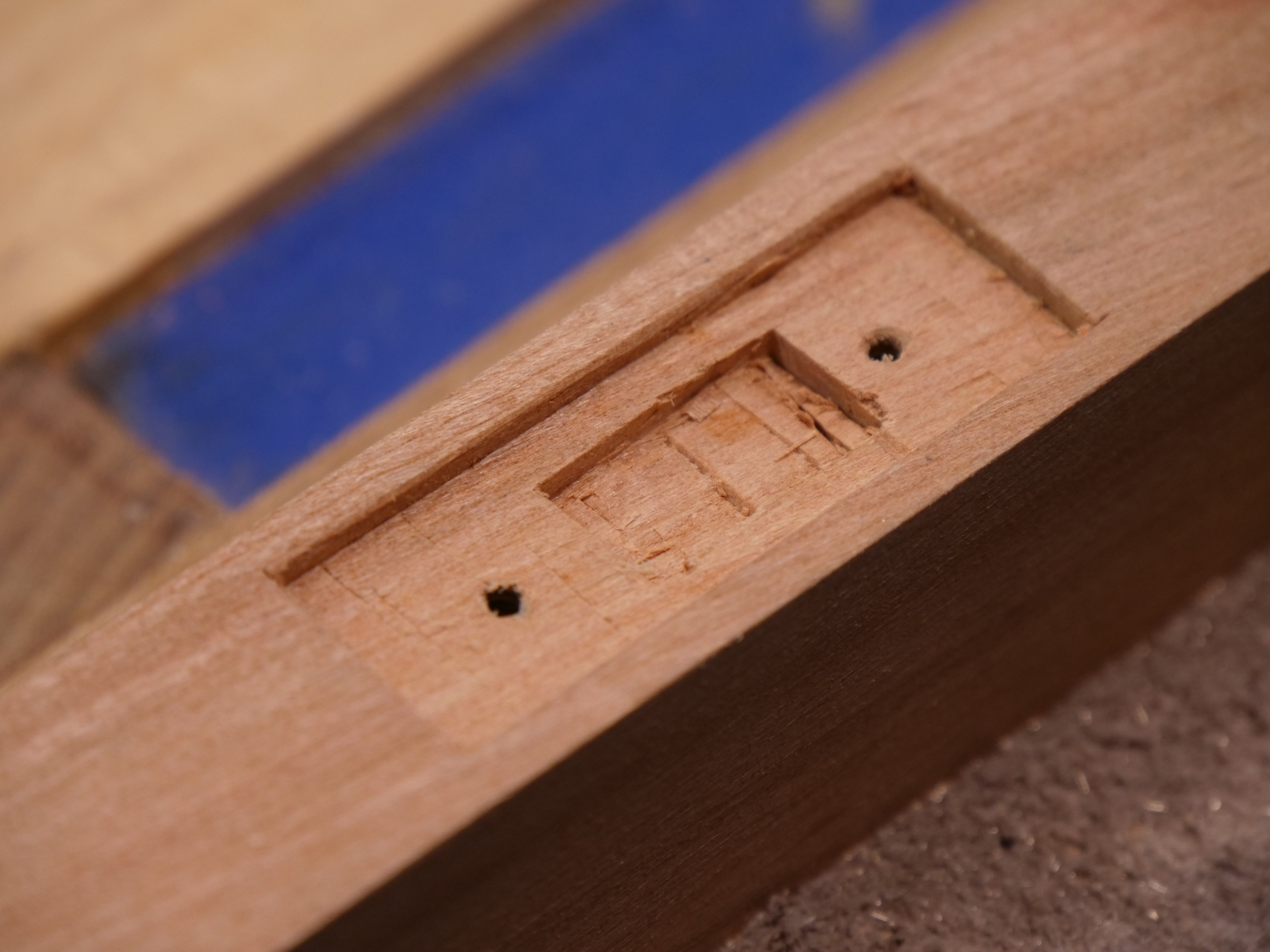
I did this to both sides of my stem for installing both ways. It worked—no more swivel. The second problem I can live with. An extra twist on the knurled knob seemed to cinch it tight enough so long as my my cuts were shallow. This is not the large router version and is indeed more intended for more delicate work.
My thoughts are the usefulness of small hand router planes like this for use in tighter and more compact positions. It's less appropriate for trimming the face of tenons because of its short length.
Here is how I use it for a series of levelling tasks:

First of all I determine my depth, set the cutter to the right distance from the sole and then use the router as a knife-edged marking gauge between my width lines.
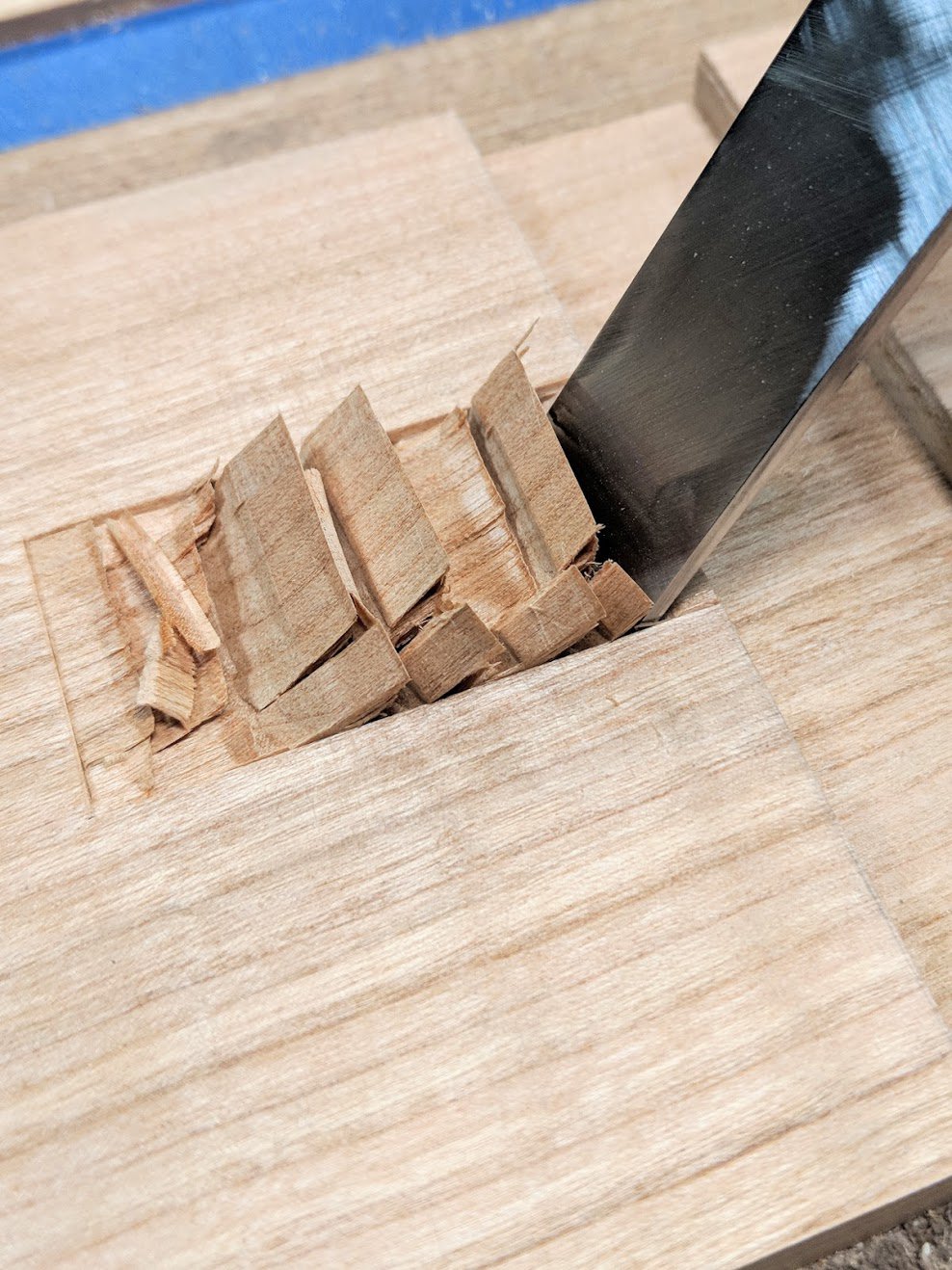
Remove most of the waste wood as per usual for housing dadoes. You can see this on YT if you haven't already.
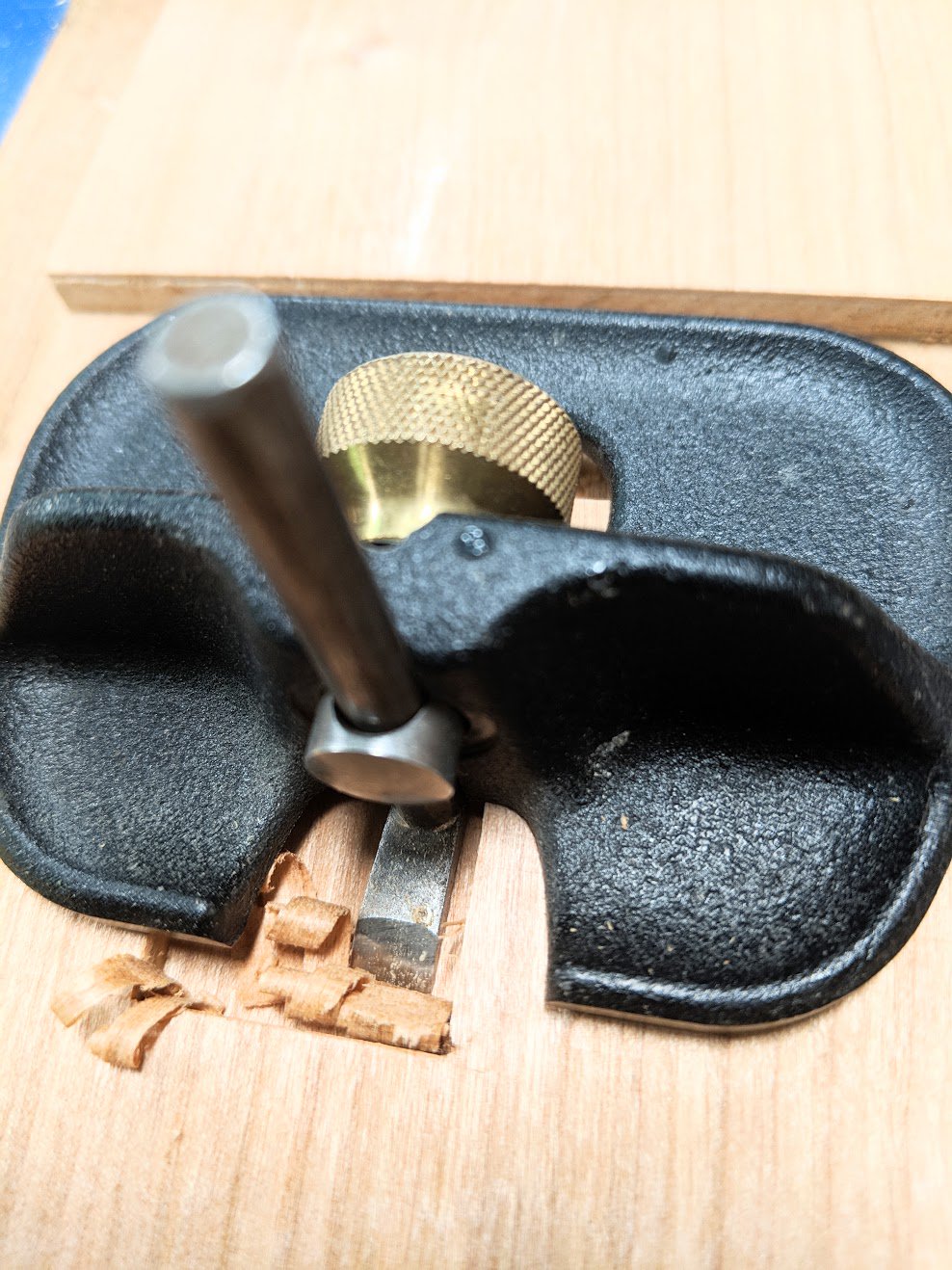
I chisel down to about 1/16" (just under 2mm) from my depth line and then reset my router plane depth to1/32" (1mm). That way I can take my plane to the housing and move nearer to final depth. Once that is done I can reset to final depth using the existing depth line and finish the cut.
Outboard Use
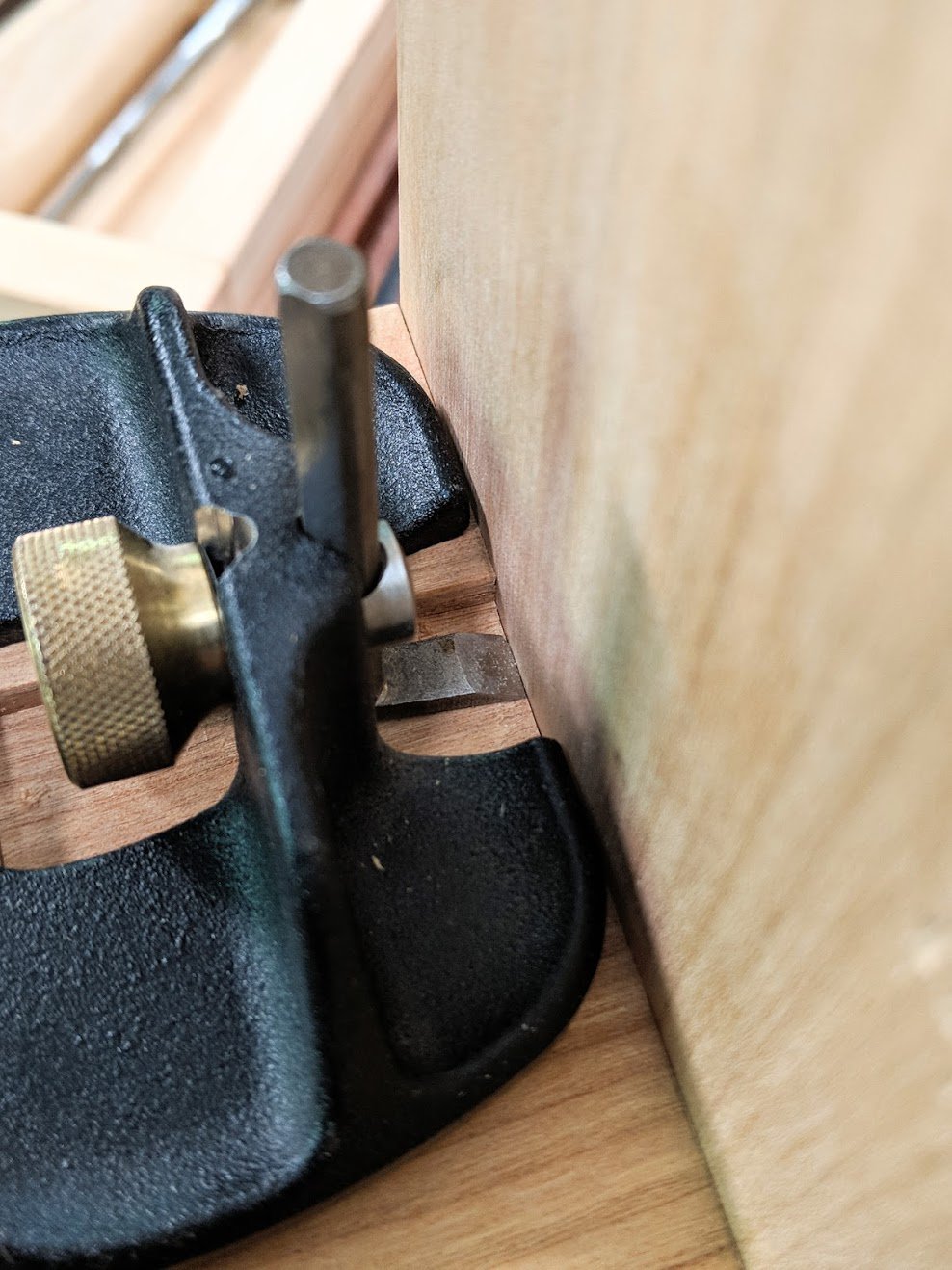
Outboard is perhaps more unlikely but hand to have in the fray.
Sometimes you will come up against an end wall for some obscure reason. Usually when something has been installed wrongly or an afterthought is necessary. Again, we chisel out the waste and install the blade outboard. Works a treat. It is also handy where visibility might be impaired when the blade is installed normally.
The Crux of the Blog
Here is my reason for this blog. The Veritas router can be had for under £40. You might think it's a lot for a little plane with only finger-pinch adjustability. It's not! Not at all. This is another of those lifetime tools. The minor adjustment I made and using it sensibly is of minor importance. I see the Stanley 271s and the Record 722s going for quite high dollar amounts so this is a very inexpensive alternative and it does work great without some of the neglect with buying secondhand.
Comments ()