
Is the Scrub Plane a Sledge Hammer?
Someone wrote in and said, "Sharpening a scrub plane iron to strop level,10,000-grit—Really?" Well, I thought to myself, 'Where did that come from anyway?" I mean, Yes! Why not? Then I said to myself, 'Why, anyway?'
I'm not altogether sure if it was a rhetorical question but it felt like it. The short answer from me is yes,always, generally. But I did feel that the question, if asked genuinely, deserved a forthright answer. Whereas most of us do see the scrub plane as a more heavy hogger plane best suited to hogging off masses of waste wood quickly and effectively to get down to the bone and nearer to the final levels without wasting effort and energy, sharpness on our finer planes and such like that. Ain't nowt wrong with that, so you could just sharpen to 250-grit and the plane will cut off what you want well. It's more to do with proclivity I suppose. I like to take all of my cutting edges to optimum level even though technically it may not always be necessary in for instance rougher carpentry work, such like that. The reality though is this, most of the time it takes just a matter of seconds to go from a coarser 250-grit level on up to say a 10,000-grit stropping level. The difference is only 30-40 seconds and such effort makes much greater ease to the work and the surface cut leaves the wood silky smooth even from a scrub plane generally meant for coarse-cut working. So in my view the little extra effort is so well worth it. Especially is this so if you use the plane for more than mer stock removal.
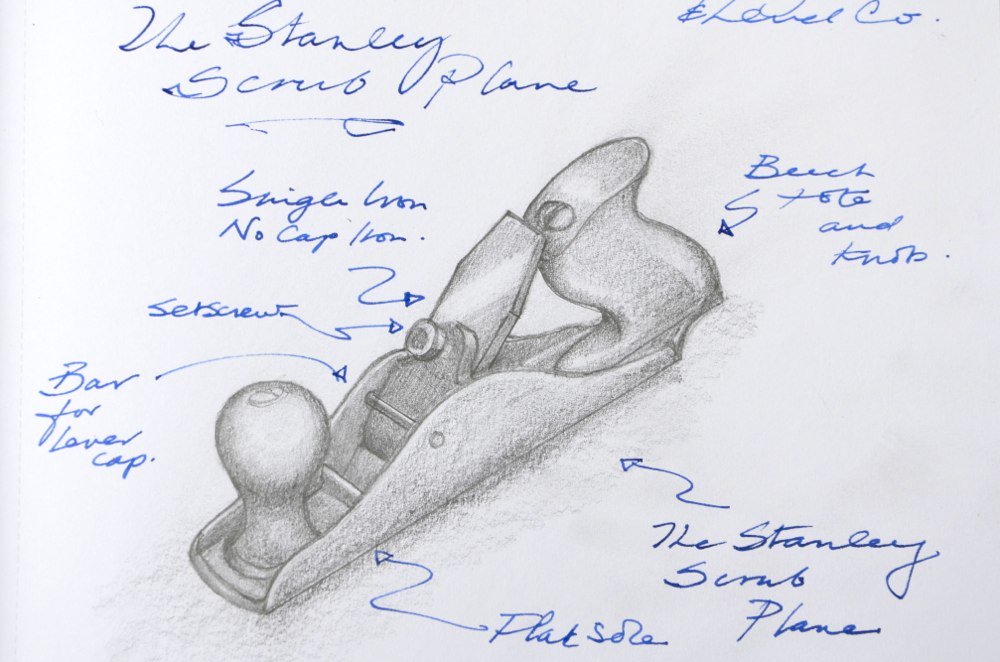
When I used my first dedicated scrub plane I did think it to be the ugliest plane Stanley ever made and I still feel a bit that way about them. As the dedicated planes that they are though, and I am talking about the Stanley # 40, they remove heavy amounts of stock such as defects in a heart beat. Now that we know they work well, they are hard to get hold of here in the UK, primarily because they were only made in the USA by Stanley USA.
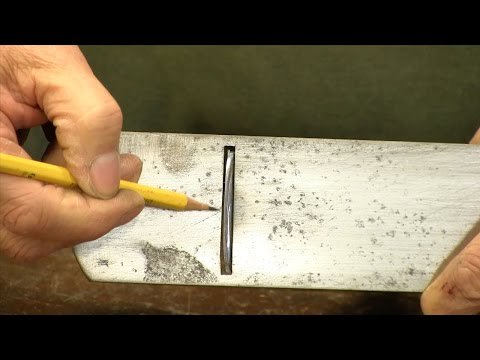
The adapted scrub plane for finer and versatile work
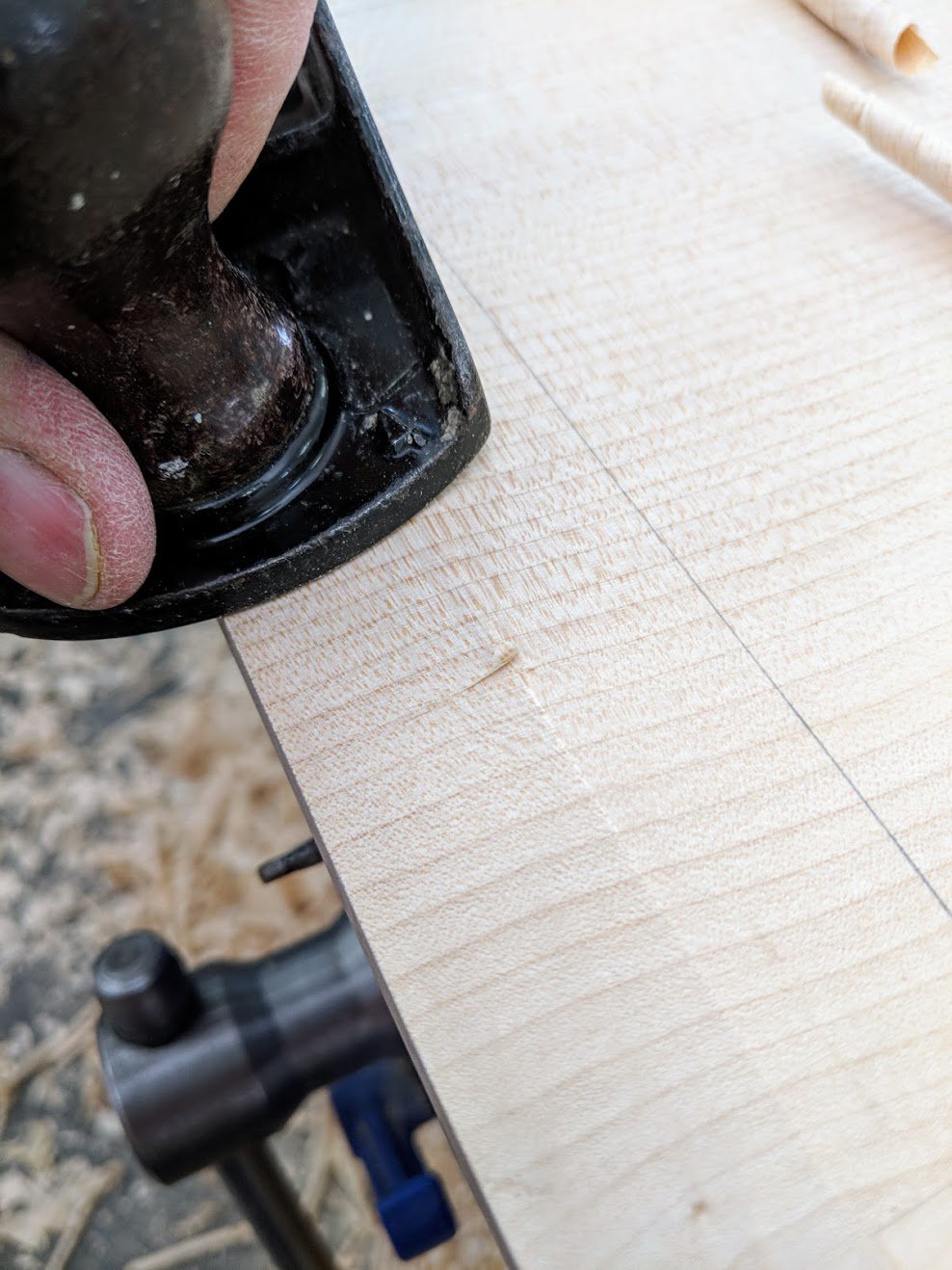
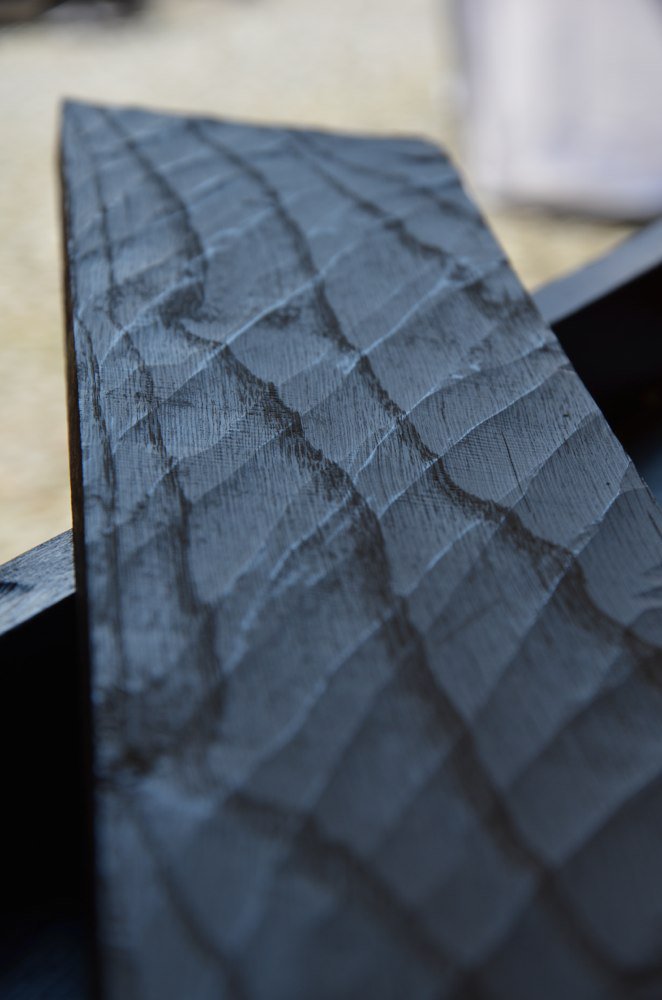
Altering a standard #4 plane to work as a scrub plane does not mean your plane is for the rough work of its original counterpart the #40; not at all. Changing a Stanley the way I do mine means your scrub plane will perform predictably and can be used for refining work too. Sharpening it to the higher levels means you will tear the surface far less, reduce characteristic chatter and skudding and create a very lovely surface where you thought it might not be possible. In fact, it will actually leave a surface reminiscent of the 16 and 17th century craftsmen where the subtle undulations of their wooden block and jack planes with their crowned irons textured their surfaces to reflect the true skill of their hands and leave you feeling this truly is hand made. And I use my scrub plane for other work too; stopped chamfers, bevelled edges for raised panels, roughing out my roundovers, things like that. So instead of seeing the adapted #4 scrub plane as a brutish sledge hammer, I perceive it much more delicately and as an instrument for much of my finer work too.
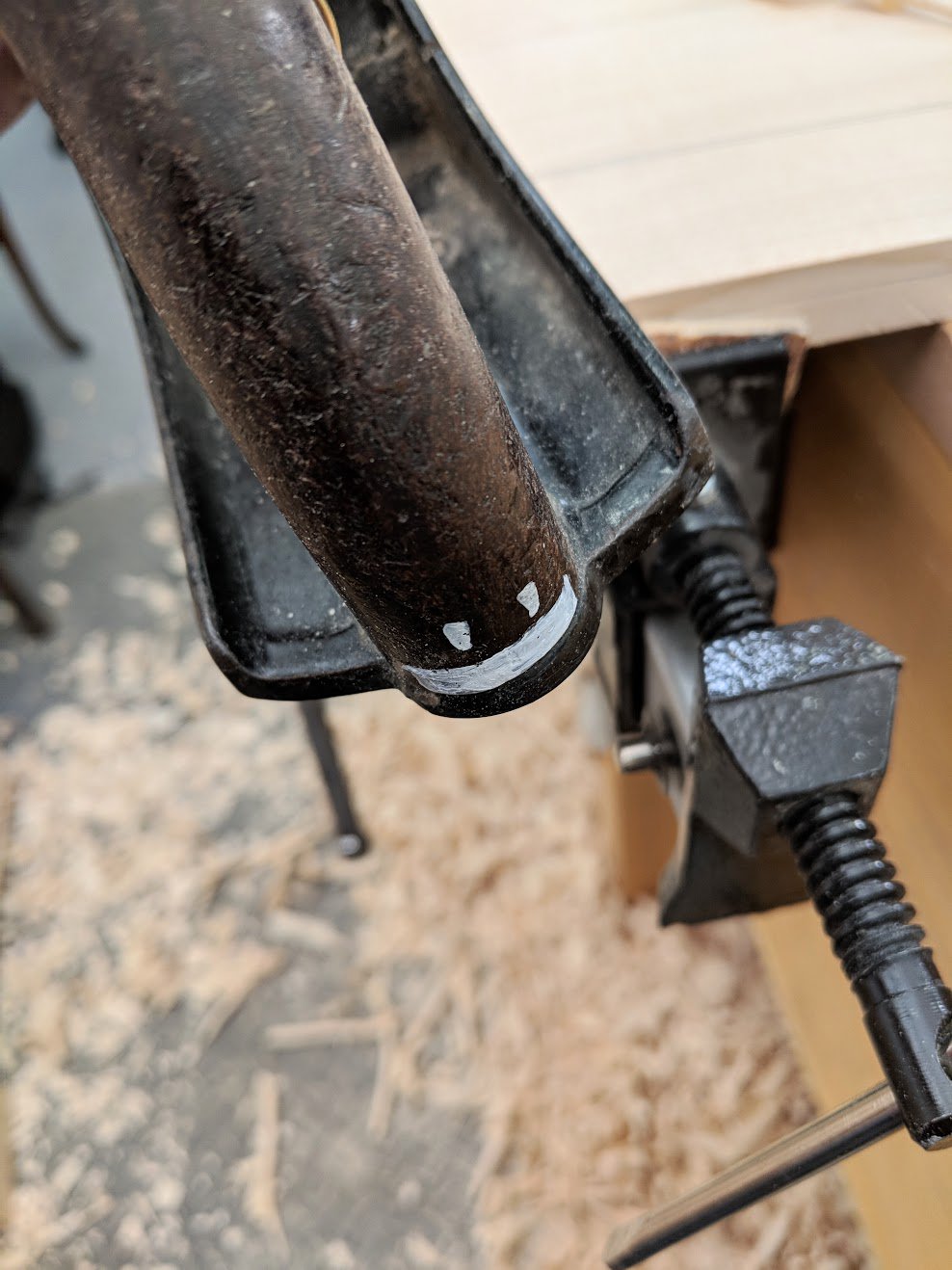
I find it best to identify the scrub plane with it's own mark (on the heel). Nothing worse than landing a scrub plane thinking it's a smoother.
Watch out for another article I am putting together to create a substitute scrub plane too. Coming up!
Comments ()