
Just What Do You Call This?
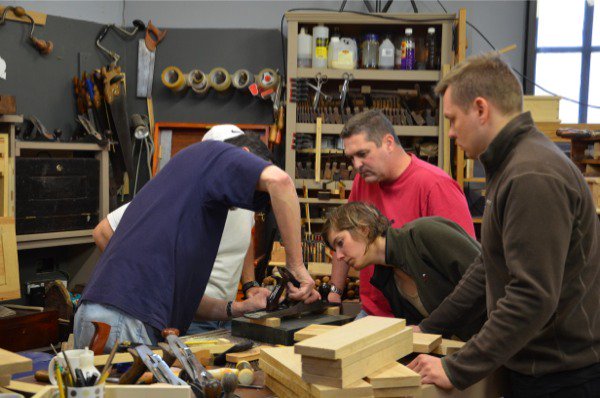
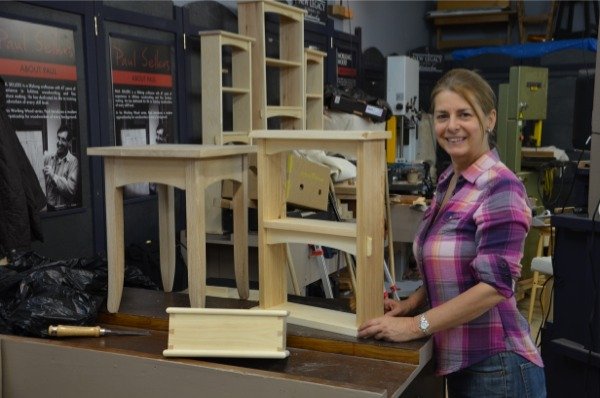
In silence they smiled. Uncommon, occasional and always silently. It was the silence somehow that spoke the most-the inaudible loudness of it that loudly spoke of an inordinate joy and the funny thing about it was this, in the silence of that occasional, uncommon smile, others around knew about it, shared in it and it was passed from one to the other because each knew and understood that which somehow needed to remain unsaid. Old men, craftsmen, seemed to me humbled by work then. There was no competition between them, they knew the sanctity of working together, of sharing space, workbenches, atmosphere, places, work. They were, well, grateful. It seemed to me a hidden merit that the men had bonded through trial. There was no wingeing, no complaining. A Second World War had left them sobered and for two at least a First World War too. At least that's how it seemed to me. I never heard them speak of the atrocities. I just knew it through my dad and then through them.
Standing on the other side of inhumanity, with the remnants of open wasteland where houses once stood and no one played, I recall the recovery needed by those who obeyed the demands of others who still, even in a postwar era, saw them still the more as chattels. Men in smarts who set themselves above these men with whom I somehow now belonged, men who knew little of muscle and sinew coordinated to lift, strain and twist wood against and with their bodies and then tools with which they changed shape and shaped change. I would watch as the fresh edge sliced beneath extended arms and a series of what seemed like musical notes rose from the successive strokes as rhythmic beats. Those planes that caused the silent smiles would lift broad bands as swathes of fine wood that fell as if wheat stalks beneath a swishing, swooshing scythe. The pitch changed, a slighter sound came with more strokes, a lift of the plane heel and this smile in silence revealed yet more unwritten, unmentioned inner joys. It's the sounds that shape textures here then there, then colour changings, such like these that mattered to my understanding. Things like these mattered because I would unknowingly be approaching and then live in the age when such things would no longer be heard, not seen and thereby not understood.
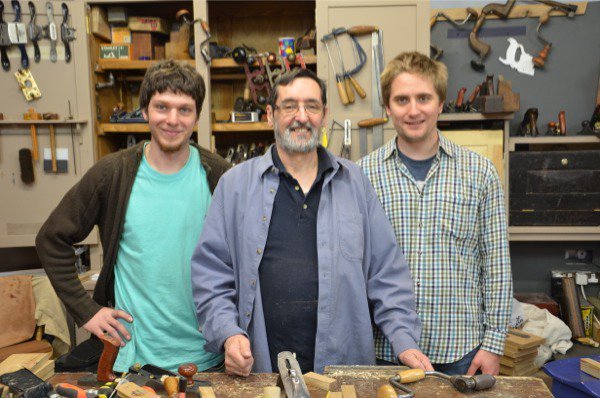
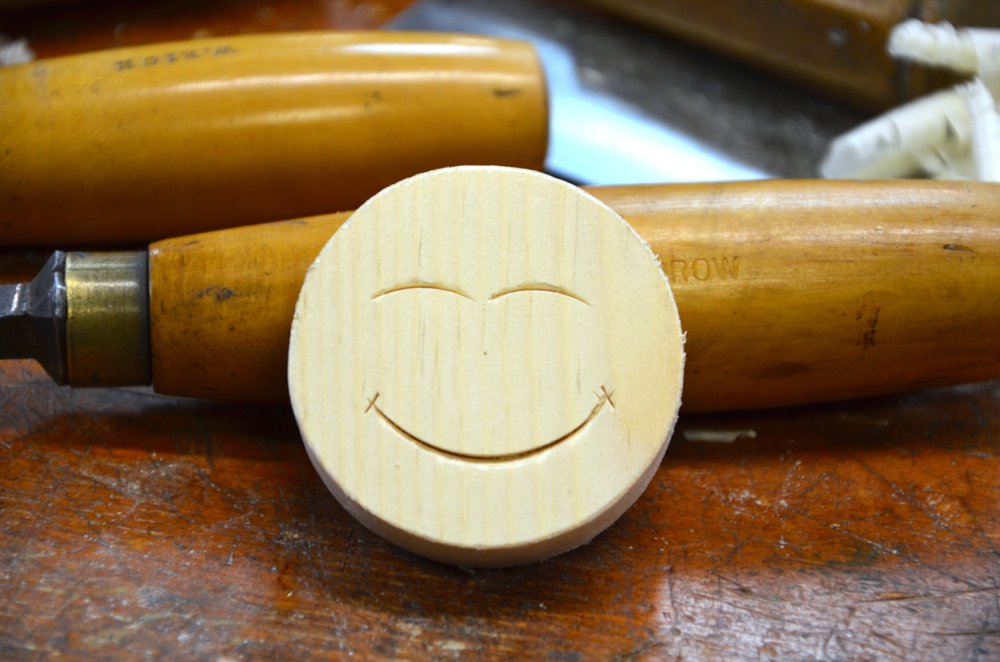
Of course the manly thing as a boy was to see but not say. Now people say it more than anything, as if the shaving has become the end in itself and no longer the surface. The men I knew as boy and man in working never said look at those shavings, don't you just love them? And the sound the plane made as a metre in his poetry of work lay untapped; an unwritten poem and a work of art in sound and sight. "Look at that, that shaving just stood right up from the plane!" the unspoken words proclaimed in awe. All present marvelled that inward admiring you can't at all explain. No such thing would be said in that era now gone by a generation of crafting men we no longer know of. But indeed these men, often with hid feelings feel much and shared such in their inner workings as treasures they found as they worked. Such things, though guardedly kept, were harnessed so as not to falter at their bench. Even then, in my early day, there was a fear at the risk of somehow losing pay for idleness despite two world wars. There was a sense of all keeping their heads down when the bosses came in in smarts, immaculately dressed and always arrogant, aloof. The good thing though was that they could never remove those hidden gems as treasure found when a single split severed perfectly to reveal a hidden tenon and a plane two eyes, a nose and a mouth. The bosses never knew the singing and the harmonies between men stood at benches and cigarettes smouldering in the shavings as they spilled to the feet of the same men. "Eh up, lad, get some sand!" the cry went up and then the voices sang once more and the smiles between the benches united the men again.
Whereas it is all too easy to criticise, we can create an imbalance if on the one hand it's somehow unmanly to speak in poetic phrases of what we feel as we work. On the other hand not all any more can feel gleeful when the scent of pine wafts pervasively from the sole of a plane as your fingertips trace the surface left so smooth and levelled you can scarce but feel it. You see we live in an age when such common things have become so rare they will never be sensed again by ninety nine point nine percent of our world. Can it be wrong to fear losing such sensing? These things I think are well worth my dwelling on you see. I hope to preserve such things in the lives of those who follow me and I hope I am here just long enough to make sure the videos made alongside my posts and writings and ramblings go out to this and the next generations. Administrators and facilitators, politicians and leaders in educators (not teachers), people many trust and depend on to make good choices, are often not making the good choices at all. Such like these may do their best, many do, but most often they will know very little of appropriate things. They will know nothing of what I sopeak of. Often they survive and prosper more as gifted orators and because they speak with such great confidence they often go unchallenged. If you read the piffle in the Times last week you'd know what I mean. So a president here, a prime minister there, each and all the world leaders deciding the futures of so many, manipulators of statistics and people mostly supposed to need them. But I am sure you know of these things. They don't, mostly cannot, truly grasp the meaning of what I speak. They must speak as though they do though, and therein lies the danger. That's why I must work to make my deposit good; felt amongst others who do genuinely care. We must understand that it is not so much what we make that matters but how we make. If I have learned anything through my many years of woodworking it has been more from the silences and the quiet times working alone and gently with others who also feel the same privileged life of working with our hands.
This thread has steadily woven itself amongst woodworkers of every kind in the silences of thoughts and smiles. It has no class, no exclusivity, but embraces all as it reaches beyond all professions and trades, guilds and such and all the more where I see amateur woodworking thriving in the hearts of men and women, children too, who may not know altogether of what I speak but inside themselves there is something that drives them to work with their hands whenever they can.
Comments ()