
Skills Lost Regaining Future
Before you read this in its entirety, if indeed you do, let me preface it by saying I am not saying there is no skill in anyone. Of course there is and there are skilled workers in many fields everywhere. But my adventures in woodworking have shown that hand skills re used less and less and robots and such will replace manufacture, reduce costs and produce dumbed down products quickly and more cheaply than humans can or will. Because of things like this, my belief is that the skills humans have proven themselves to by highly capable of in all spheres of hand working are becoming more and more dormant. Left unused, as they definitely are, there may well be a dearth of skilled lifestyles in all spheres of life be that farming and animal husbandry or any realm you care to name in woodworking, metal working and creative art. Educationalists, governments and politicians and economists have all swayed the outcome of craft education through decades of being unchallenged. Now for the article:
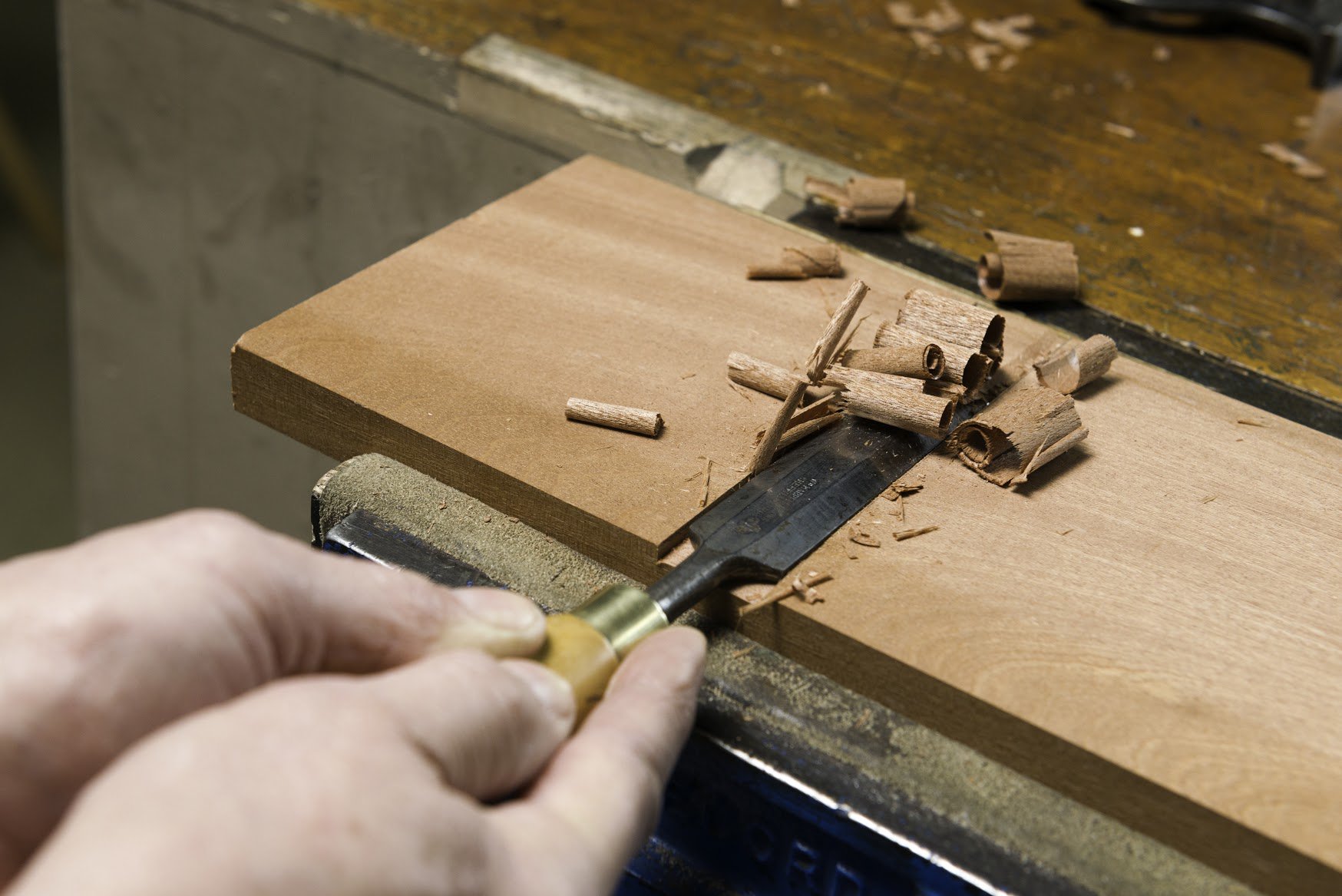
There are often setbacks to life—many of them. When others sail on through eventualities, we can find ourselves struggling even with the smallest things. At least it can seem that way when we're in the thick of it. I remember days when men at workbenches surrounding me slipped a chisel through a cut and as the excess peeled upwards the surface beneath was silk-smooth, cut pristinely to lines on three faces with a final slicing stroke, and dead on they split the gauge lines. Seeing but one line they somehow entered unmeasured coordinates and there was nothing more to be said. I admire this level of skilled work, it's a marvel to see such spectacular orderliness in people who subjected themselves to self discipline over a long term. I have always enjoyed such things, but I think the skill I speak of is seldom witnessed in our world today. Most of us go months without seeing it in the day to day yet such was common up to the 1960s early 70s.

I think that perhaps some of this is the reason why people are so glued to watching even ordinary, unskilled stuff being done by human hands. What was once common to me in my young apprenticeship days I've seen gradually disappearing and guess what? Surprisingly, it might well be more likely that the present unskilled will be the ones that replace these craftsmen of old. What's exciting to me is that it's for anyone and everyone who wants to invest themselves in it.
So I'm not at all speaking about people taking a day to cut two or three dovetails to perfection, nope! I'm talking about a new and emerging generation of woodworkers I see replacing the ones I once knew-true artisans in amateur realms with a few professionals who seek such methods and standards. The days when the saying 'In the land of the blind the one-eyed man is king.' are changed. I'm not saying these things to wave a red rag offensively at a maddening bull of opposition so much as to ask myself just where did all of those skilled workmen disappear to? You see skilled work is not merely a perfect outcome but one that combines working efficiency in progressing the work. Given enough time we can all get the exam questions right, that's why exam periods have a set a time limit. Prior to the exam we were allowed time to establish the skill and knowledge first. That gets ramped up before the exam to prepare us. When the exam comes is when the test of whether we worked sincerely or not.
I recall one of my practical exams was to cut hidden dovetails at the corner of a three-directional frame (think fish tank with rebates) with mitres to the three directional pieces forming the corner, and it had to be completed in four hours. The joint had complexities to it and it was indeed complex by virtue of the fact that I had never attempted anything like it before. We were each given drawings, tolerances to work to too, so, thinking caps on and scale rules at the ready, off we went. Mathematics, geometry and even algebra were included in this construction of joinery. You see time adds the dimension of reality because ultimately that's what the test that you must face in your work amounts too whether that's for pay in work or to be expeditious with your ever valuable time—reality! The outcome was that over the years, with practice, a drawer dovetail takes about half an hour and completed drawer about two hours total to make. That's within my time frame for making a living and make a living with my hands I did. Of course we should always be sympathetic to skills that take time to develop and also and especially if learning difficulties are there. That goes without saying. Efficiency is something we should all work for because accepting reality is part of it. No one gives us a blank cheque and none of us have time to waste I am sure.
I think that the decline of being in a skilled world where good workmanship in most cultures thrived in villages, towns and cities is at the closing end of the visible and possibly an irreversible decline in industry proper. Much skilled work is not so much in the realms of three-dimensional craft work as we might once have known it but high demand adaptation of human work transferred from physical labour to a digital world. Does or can that mean we will ultimately not know what skilled craft work actually was or is, even in the near future? By that what I mean is, will we no longer know it from the doing of it or seeing or knowing someone else that did it or knows how much skill it took to achieve it? That is, they understand the precedents set by former generations in previous centuries who tell us such work existed and was indeed skilled? Many of us today take credit for being skilled in the lost arts because we in our generation actually no longer know what we are looking at when we see someone working with their hands.
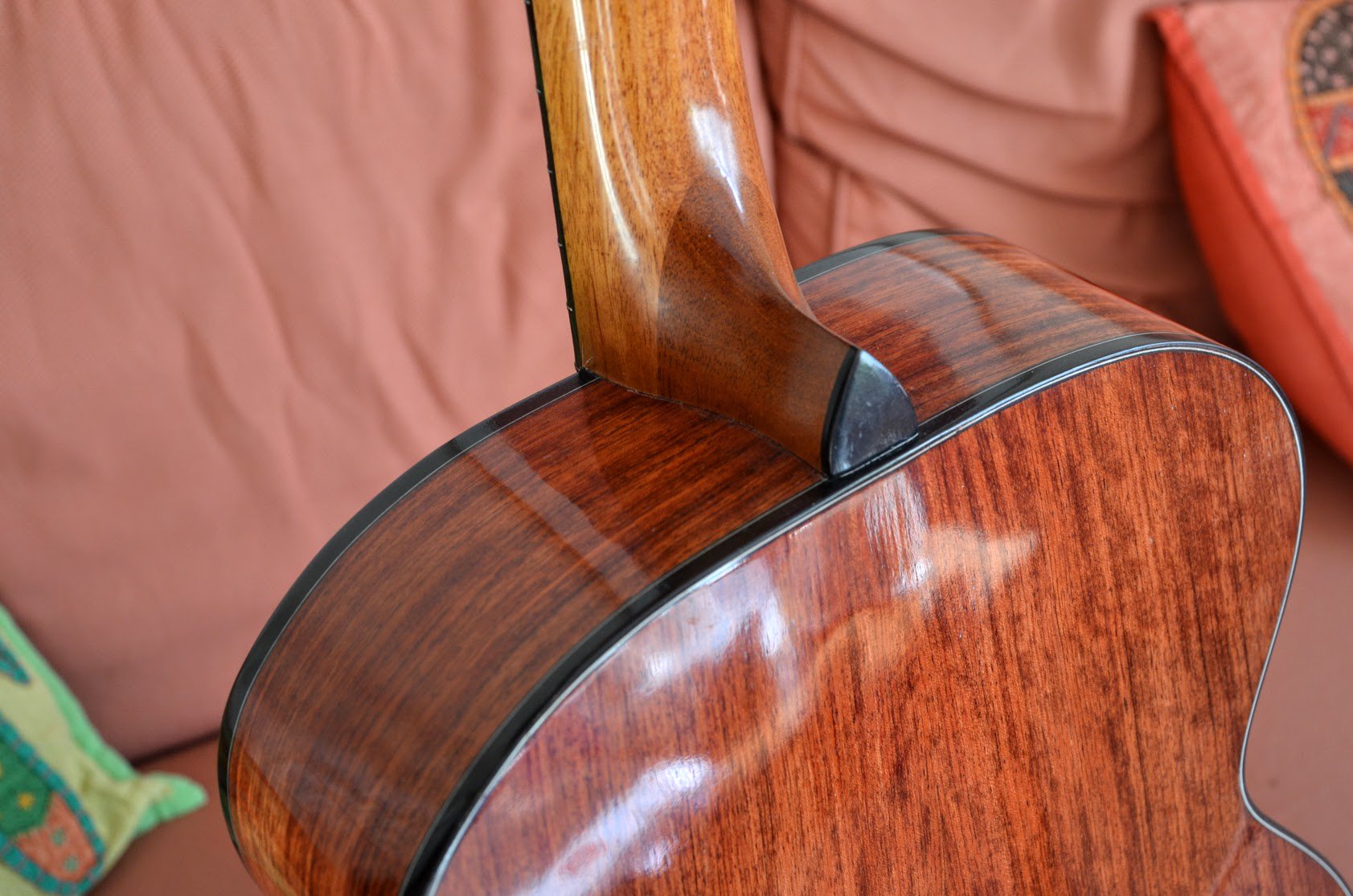
Not all hand work is skilled. I very seldom see skilled work, so if in my own life I no longer see truly skilled work being executed by skilled artisans, and I confess I look for it wherever I go in the everyday of life, then what's to be done? This guitar above was made by Joseph when he was 16. It was a combination of mostly hand work with some machine use but very little. His skills came in a variety of ways working materials with hand tools of every kind since a very young age. I would consider him a skilled woodworker who has learned to work effectively and without fanciful ideals
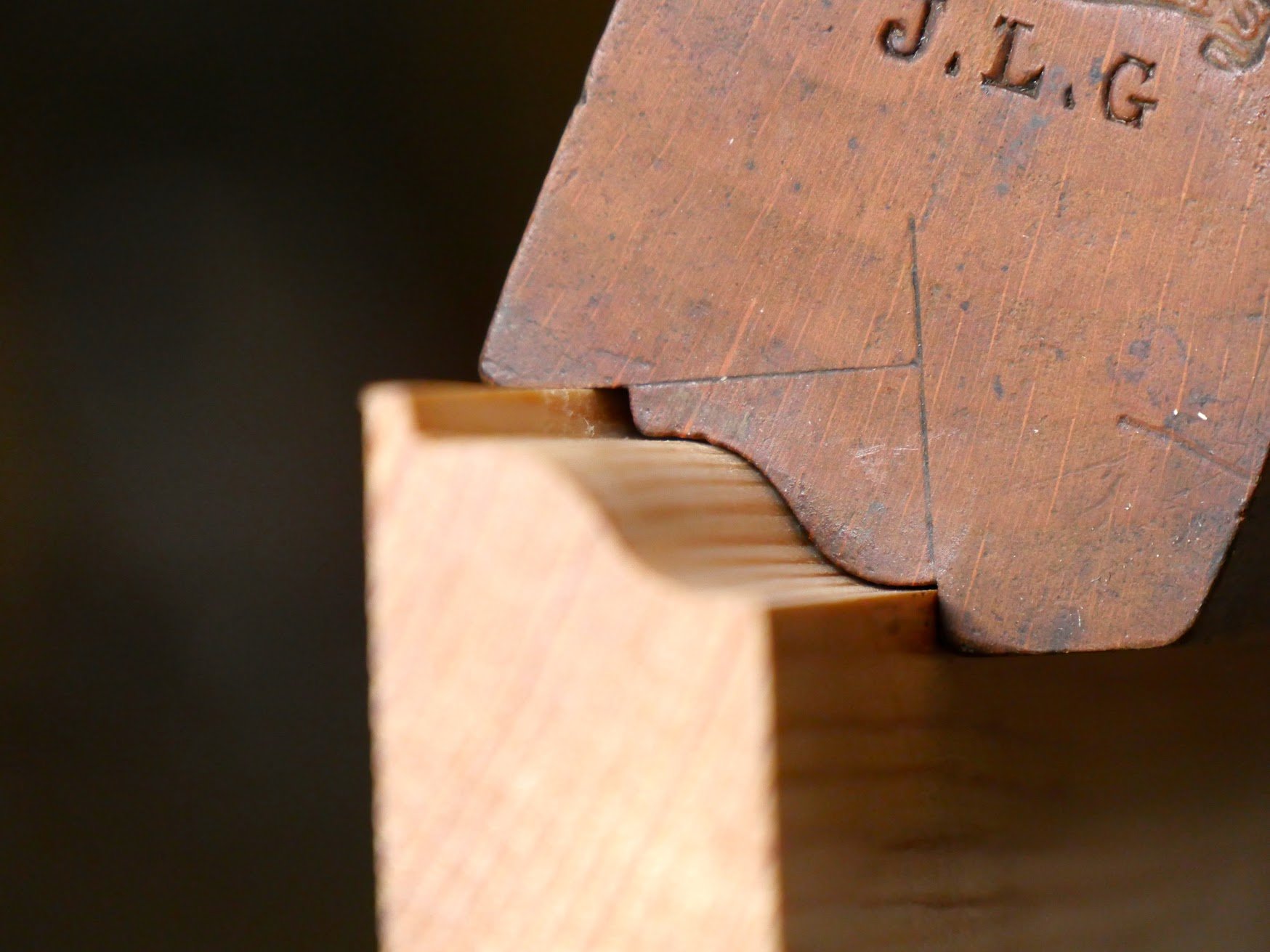
The moulding plane above comes from an era when men made not only the moulds with the planes but the plane to work with too. In the 1700s it was a common craft to do such things and it wasn't considered specialist either at the time. It's hard for us to imagine, but the moulds these planes made were so smooth and crisp they needed no further work, especially not sanding work. Moulds made with power routers on the other hand do need added remedial work to remove the rotary cuts left on the surface. One method requires skill, the other labour. In most workplaces now the labour is replaced by digital reference via computers to replace skills This then, on the one hand, becomes unskilled work and, on the other, we cannot deny the cleverly engineered process.
Speed is not necessarily what I am looking for but more the efficiency I am so used to in my working with hand tools. You see people often compare their efficiency levels with machines but fail to realise just how efficient men were with hand tools after they had established their skills. Efficiency then as now came in the rote practice of repeat performances of tasks. Over and over they repeated tasks, hundreds of times, spending 8 to 10 hours just making dovetails, chopping mortises and fitting tenons. Personally, I took myself off the conveyor belt purposely. The work bored me, it was injuring my health and my sense of self worth and wellbeing was severely diminished. Visit any factory in the 1960s before the export of production and you'll understand what I mean. This was the outcome of people leaving craft work to become part of the factorial systems of mass manufacture. It was the continuation of demoralisation as the art of craft began disappearing. You see, often, people can no longer discern just what skilled work is. You can't really talk of modern laser cut recesses filled with epoxy tinted with powdered turquoise as inlay when it's just epoxy filler belt sanded down to level. The maker can call it 'an inlay of turquoise' but that's not what it is at all. Somehow novel ideas, novelty, has all too often replaced skilled work. What would happen if indeed we lost the ability to determine just what skilled work really is. I hope it never becomes just a thing of the past.
So whereas I might accept that in this culture we rarely if ever actually stand and watch skill being performed in front of us by crafting artisans making their living from it as in times past, there is a possibility that we are turning the tide in amateur realms and we can come to a new place where we actually witness things being made skilfully in home shops and garages. It doesn't have to be complicated. Skill that leads to sold work is simple enough. I envision a new world for woodworking enthusiasts around the world: boat builders and guitar makers, furniture makers and many crafts we may have even lost. It's this that encouraged me in the work I do with amateur woodworkers back in the late 80s. Living in the USA for the first time, I realised that my craft would not only be kept alive in amateur realms but, actually, utterly thrive there. So now my craft (and others too) IS thriving and it appears on a worldwide scale!
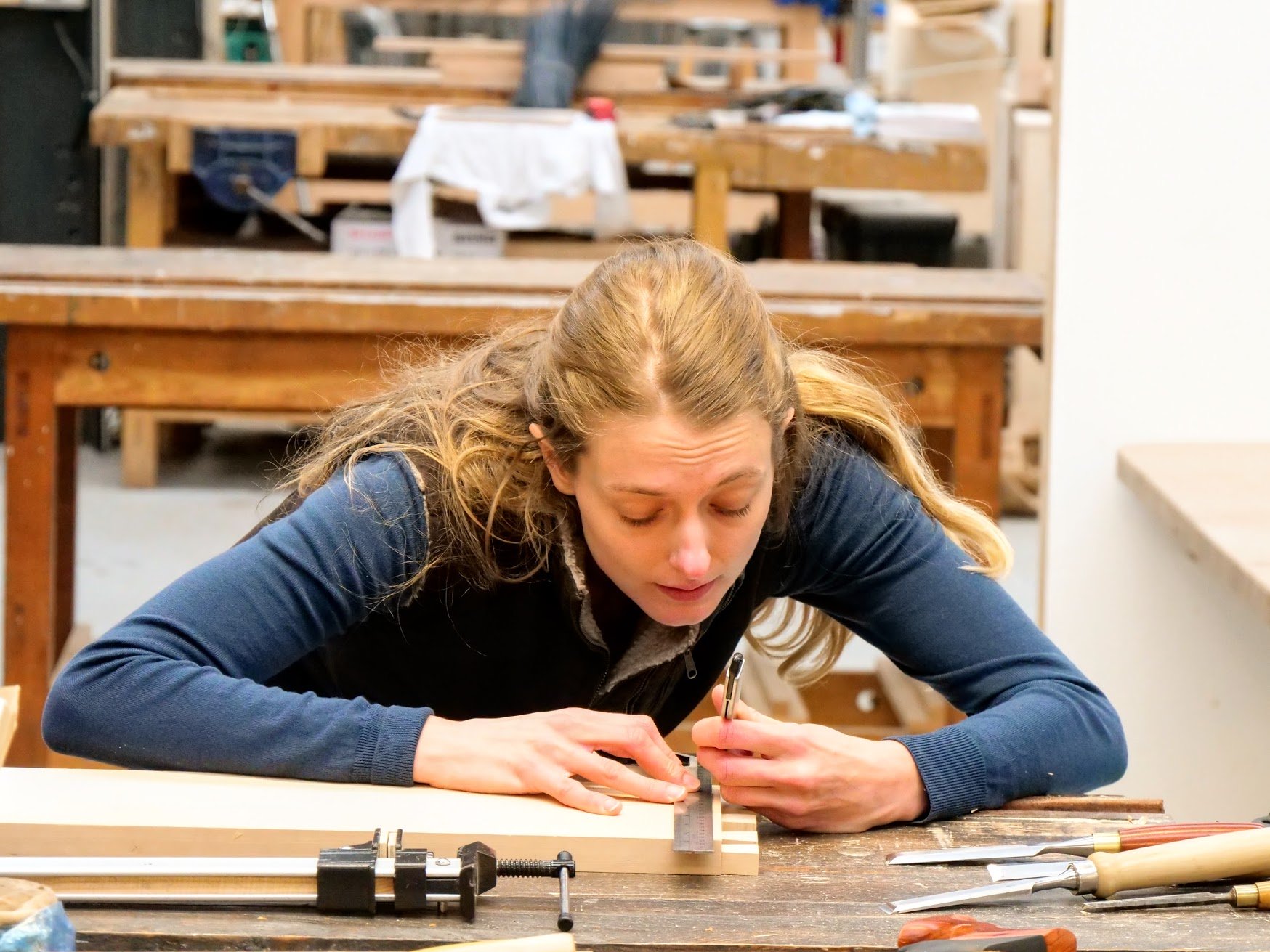
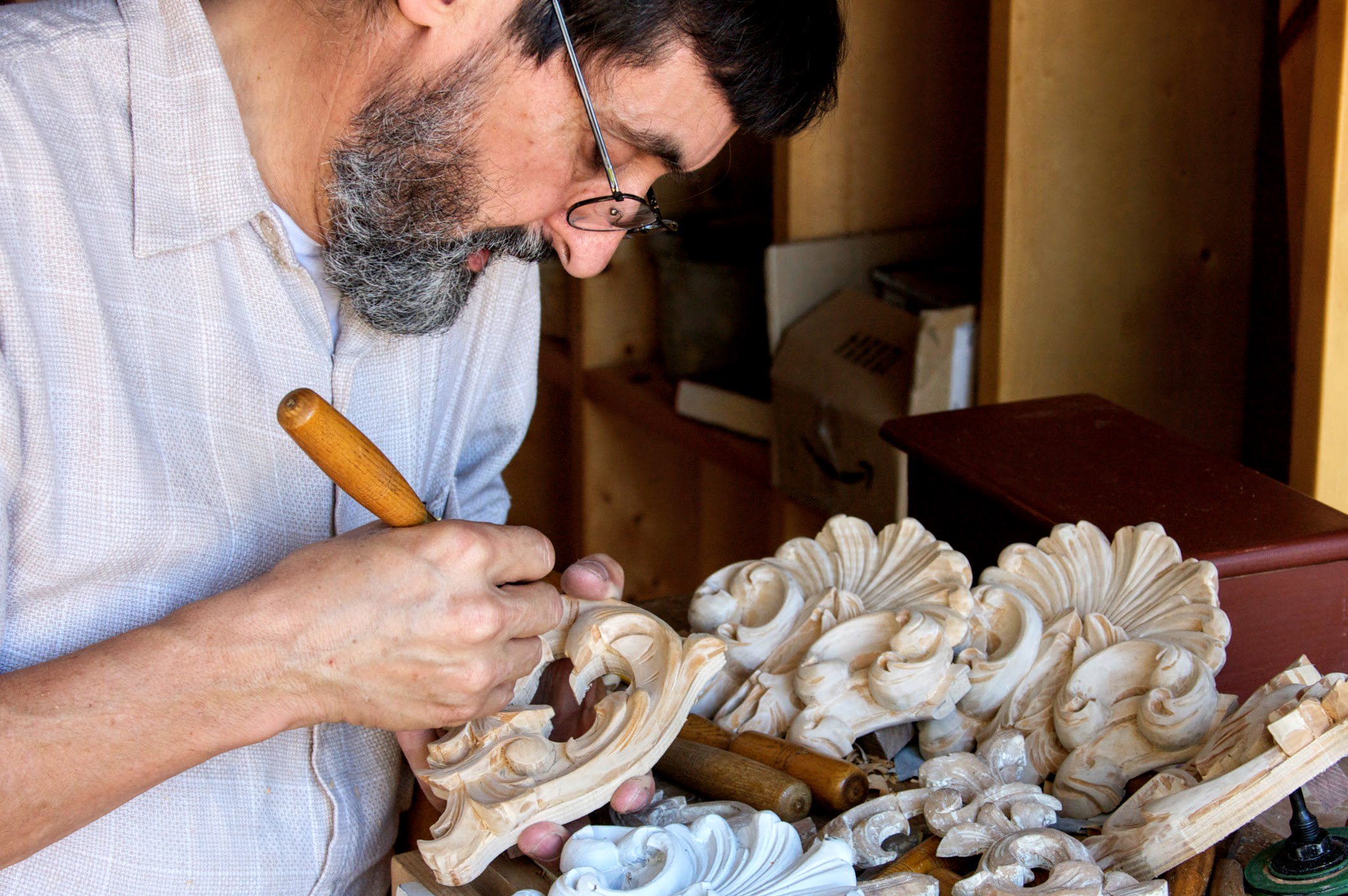
I watched Hannah making her dovetails a short time back and the effort she went to reminded me of myself when I first understood that sharpness and accuracy were synonymous, that they could be used interchangeably in the same way that keen and keenness can mean sharp as well as extremely riveting. Such words in my world interplay remarkably with sensitivity, carefulness and paying absolute attention. I have seen in my own life how when I work with the intensity I'm speaking of here I enter realms few might ever know of. It's here that I lose myself in thoughtlessness towards all other things. Time disappears from me in my disconnect. Interruptive invasions quickly pale away: people, concerns, the work of others. I'm isolated, arrested if you will, in pockets of safety, as if inside a huge bubble and all of my attention becomes focussed in a perfect ecoclimate as a permaculture of industriousness that shields my effort and energy from all commerce and industrialism and my industrious world thrives.
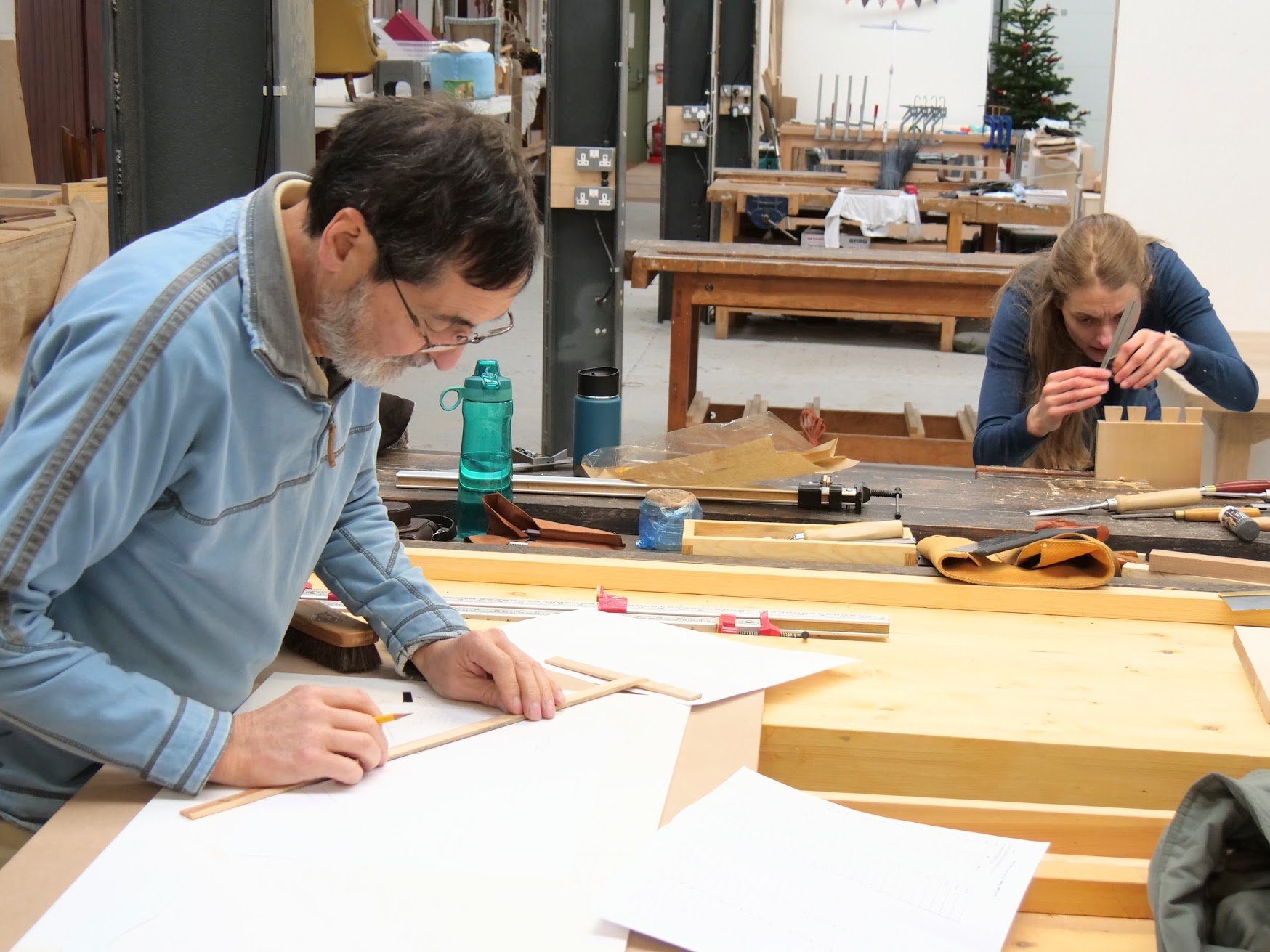
Though this type of mental and physical isolationism ensures safety for creativity, even so, mistakes can and do happen but always I feel a sense of being in control and by this comfort I feel apt to climb over any and all failed issues and any image of perfection I may have of myself . By this I do feel able recover, recovering any lost work restores me and I learn from what I did wrong. I say 'did' wrong rather than 'went' wrong because in my view I feel that what's important to my recovery is my taking responsibility for my work.
I was working at my workbench drawing up my next project and weighing up the differences and changes I might make as I did. Hannah chimed in gently and sympathetically with, "Technical question." and we checked over the issue to find that there was none really. But then she asked me to help her look for a hinderance to a non closing gap on her dovetail joint. We talked about what we couldn't see and I suggested she consider relying on touch alone. My fingers traced their way along the surface until an almost imperceptible rise became apparent. But the apparency wasn't so much visual so not by sight at all. The reality often is that when you see a big gap you look more for a large problem and not a minute one. I detected the slight rise near to the inside side of the shoulder line. Pressing the dovetail together meant that the slight rise elevated the outer meeting line many times more so that the gap looked five time more than it actually was. Some very minor paring, barely discernible as I said, seated the joint line.
I say all of this because when I first discovered the diminishing levels of skilled work in workmanship, and then the new reliance on machine work to replace or displace the need for skill, I also saw that it was more a question of imbalances caused by the diminished opportunity to see what skilled work truly was. Once I saw that the enemy wasn't the machine I knew that the answer would be for people to see skilled hands working the tools and working the wood. If people saw a dovetail being cut skilfully they would believe that they too could do it too. All I needed then to do was use the modern technology to show others all over the world that, whereas machines do have their place in the execution of some work, they should never be allowed to rob us of skilled workmanship and our ability to pursue skill in accomplishing our own work. Especially is this so in amateur realms where self high demand brings extraordinary results. As I hope we see from this, often it's the smallest of things that elevates itself into a seemingly large issue. Seeing it for what it is becomes imperative.
The way I see it today, in light of developments in industry, even in spite of it, you my friends are the future of craft skill. You are the ones your children and grandchildren will look to and say my parents, my grandparents, were highly skilled people and they cared about skill and the arts enough to preserve it in our family.
Comments ()