
A Long Post On My Feelings—Part I
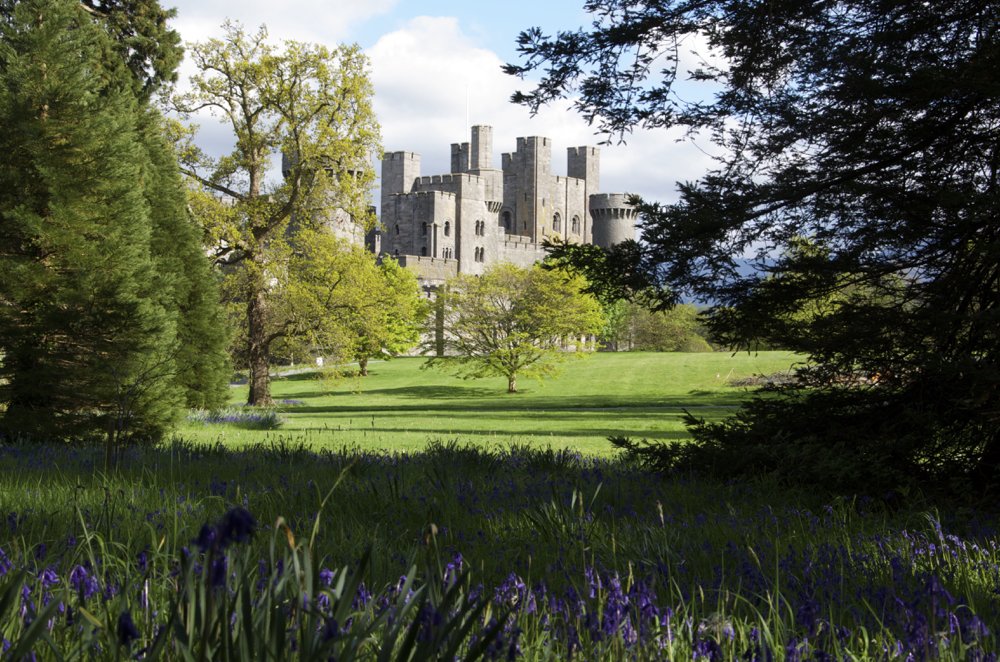
At first I felt daunted. The thought of moving so soon after returning to England from Wales (two years ago) reminded me of former struggles of tearing and down and rebuilding up. Here we'd been welcomed and we like our newfound friends. Even so, we soon found we needed a place to call our own, a home studio workshop. Most likely this will be our last workshop move. It will be nice for everyone to have a little more space to be creative in.
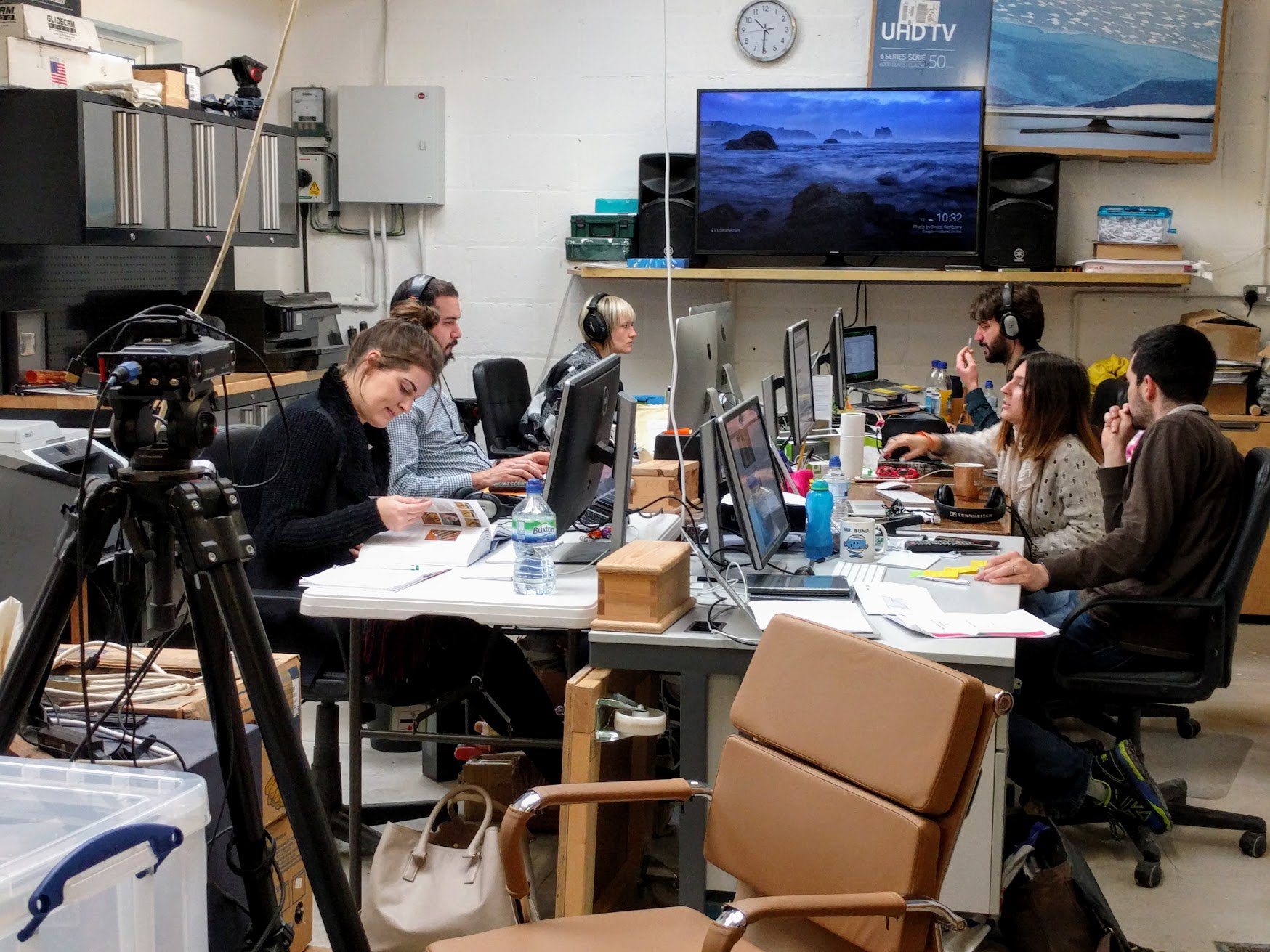
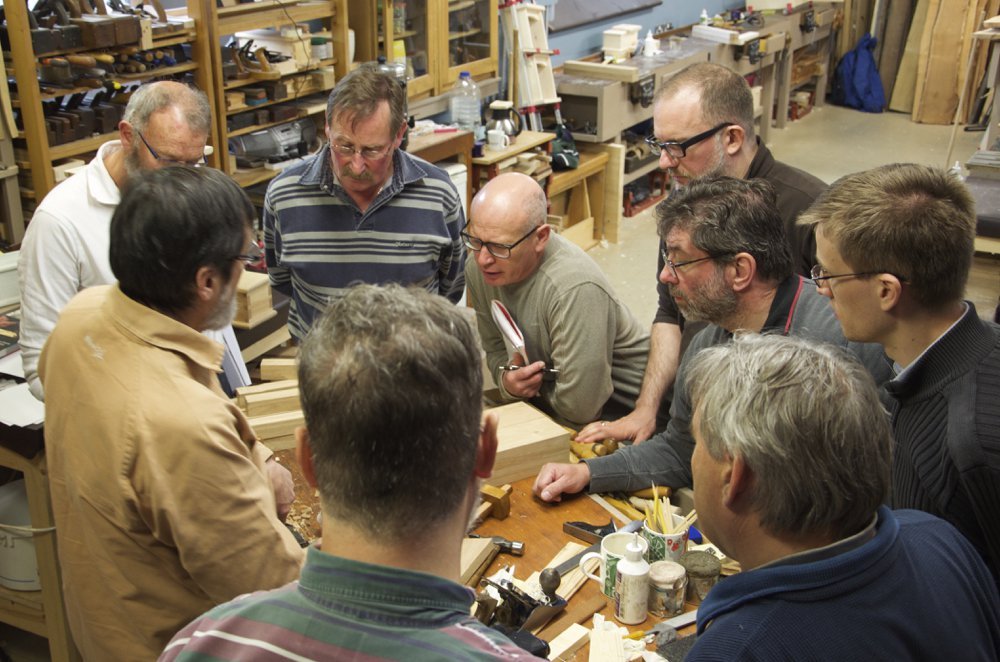
At first, I did wonder if it was indeed the great north-south divide you may know nothing of. People with different accents, class, different cities and towns unfamiliar and such like that. A sort of dividedness where Rudyard Kipling coined the phrased "ne'er the twain shall meet". But that wasn't it all. We made good friends with people fast and we will always be friends with those we've come to know now.
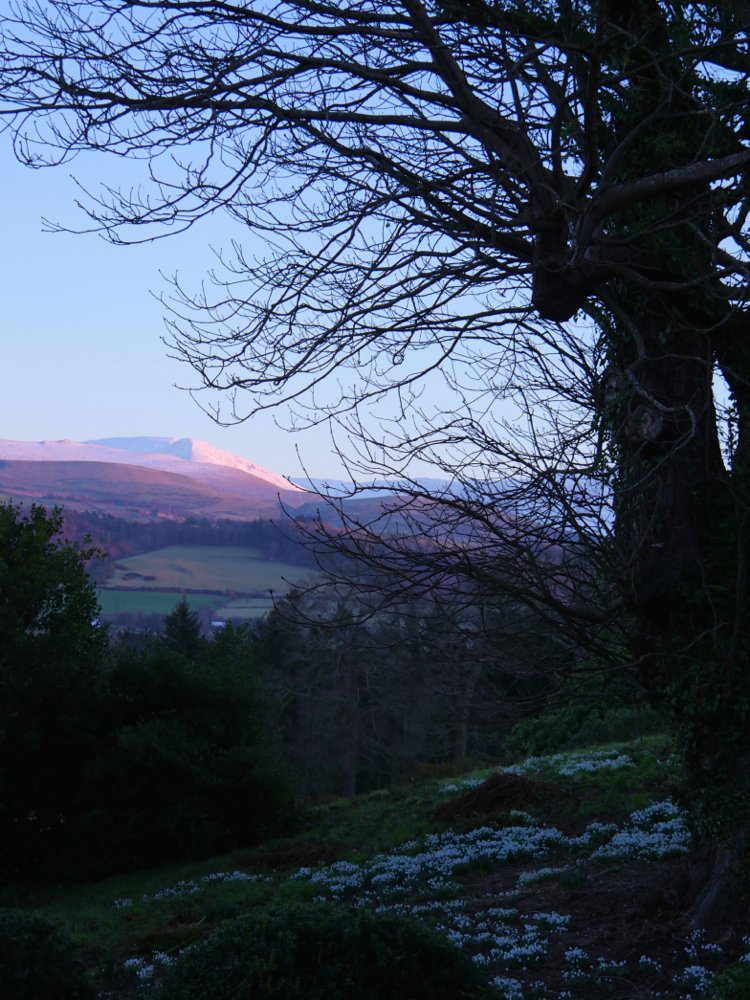
My return to England proper follows my great 28-year escape—something of a wilderness journey, a detour into unpredictability. My coming back to England has altogether felt right for me even though I do feel something of a sojourner in my own country, a sojourner in more a strange land Because the cultural shifts are indeed so great, England sometimes seems more to me, my second home. It's not really the same one that I left exactly 30 years ago, to the month. Roots can be hard to put down, especially tap roots. That said, I think I would rather be here for the next leg of my journey and the vision I feel for the future work we are about to embark on than anywhere else in the world. Living in the USA did a great thing for me. It took away social class and gave me acceptance. I became myself
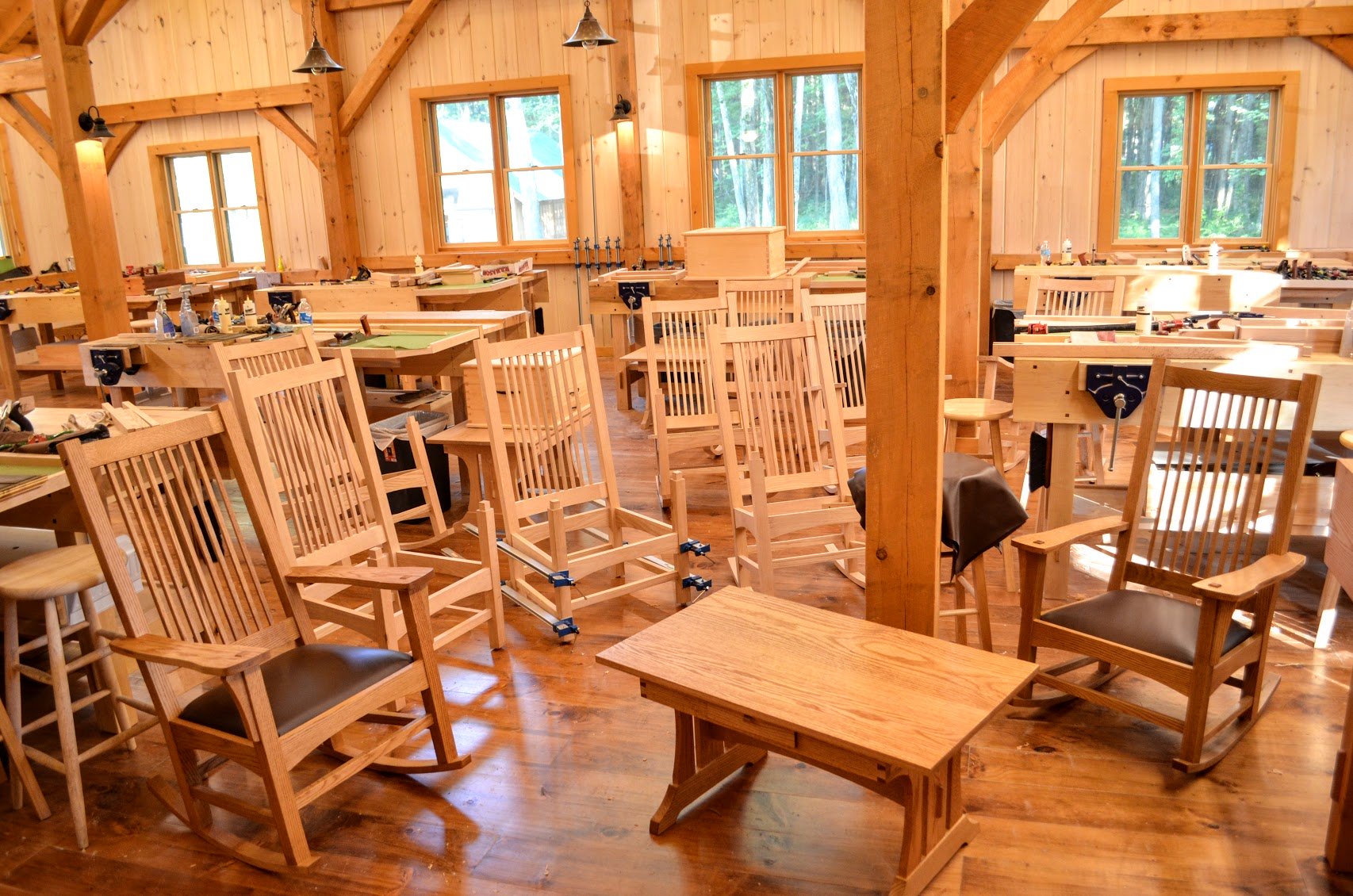
With my personal feeling of settledness came a sense of security for my work and with that a sense of passing what I own to the coming generations. With the development of the internet and its digital world I see my work ever-expanding in special ways I never could have envisaged. It has become more all-inclusive because of what I learned in the USA. That seemed to me never possible before.
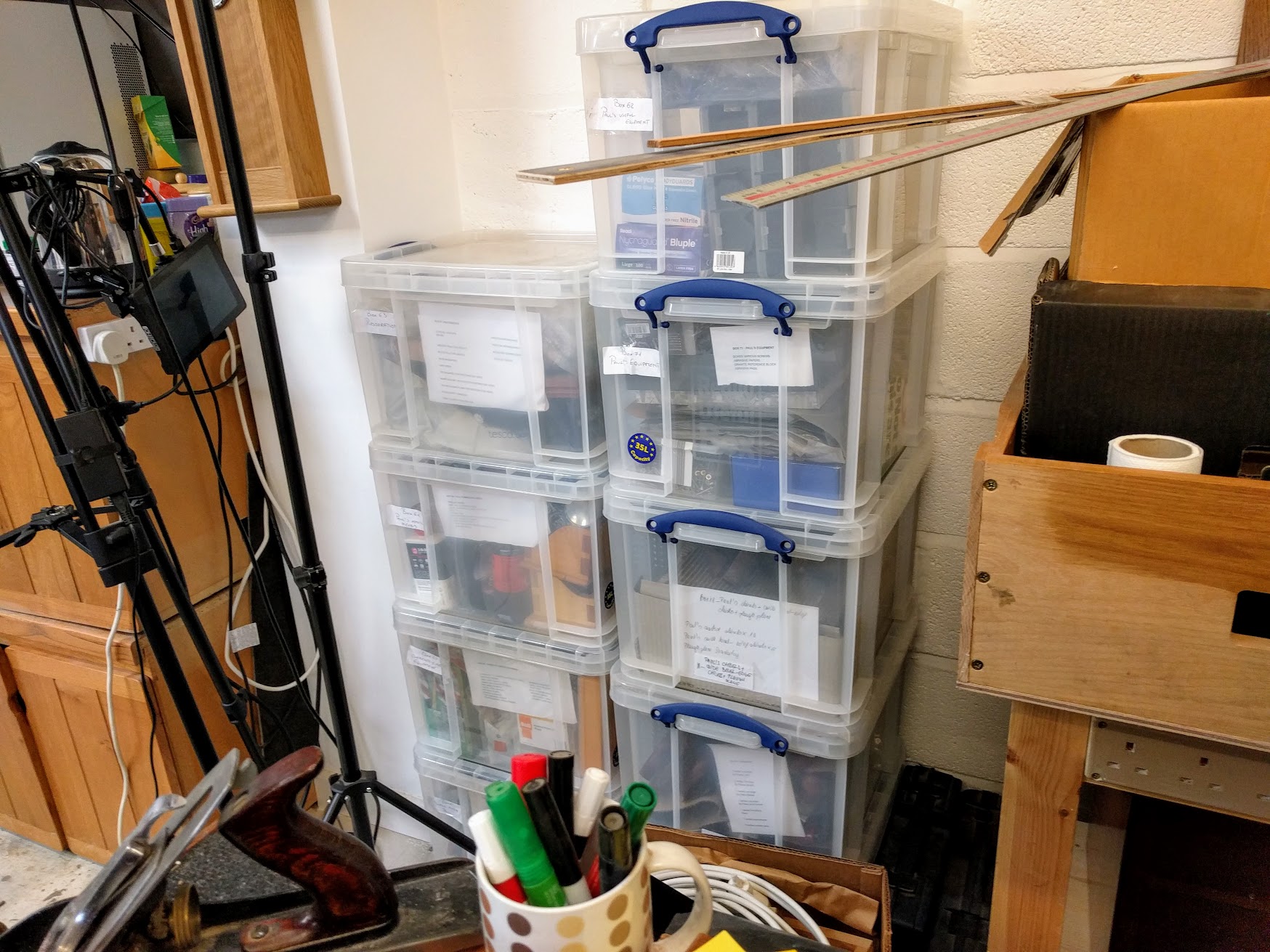
Dismantling my workshop this last time is actually the first time that I've actively categorised all of my possessions by way of tools so thoroughly. Today I know where every tool is because they are in numbered boxes and also they are protected at that. Previously they'd been boxed up for travelling and transportation only. This time they've been archived for different reasons and can be readily retrieved without relying on my personal knowledge of where they are alone. This then has helped me to feel so much better and though perhaps far from aesthetically attractive I do feel a peace about it. My tools and equipment ranging from artwork, projects, prototypes and so on are safely stowed and yet accessible by box number, pallet, make and maker, nickname, preferred name or whatever. In many ways, it's been quite cathartic in that I felt energised to rethink my whole dependency thing. For three decades I have owned thousands of hand tools. I was never really a collector only but more a hunter-gatherer-user from the start. Collecting seemed empty to me even though I do understand why individuals collect beautiful tools.
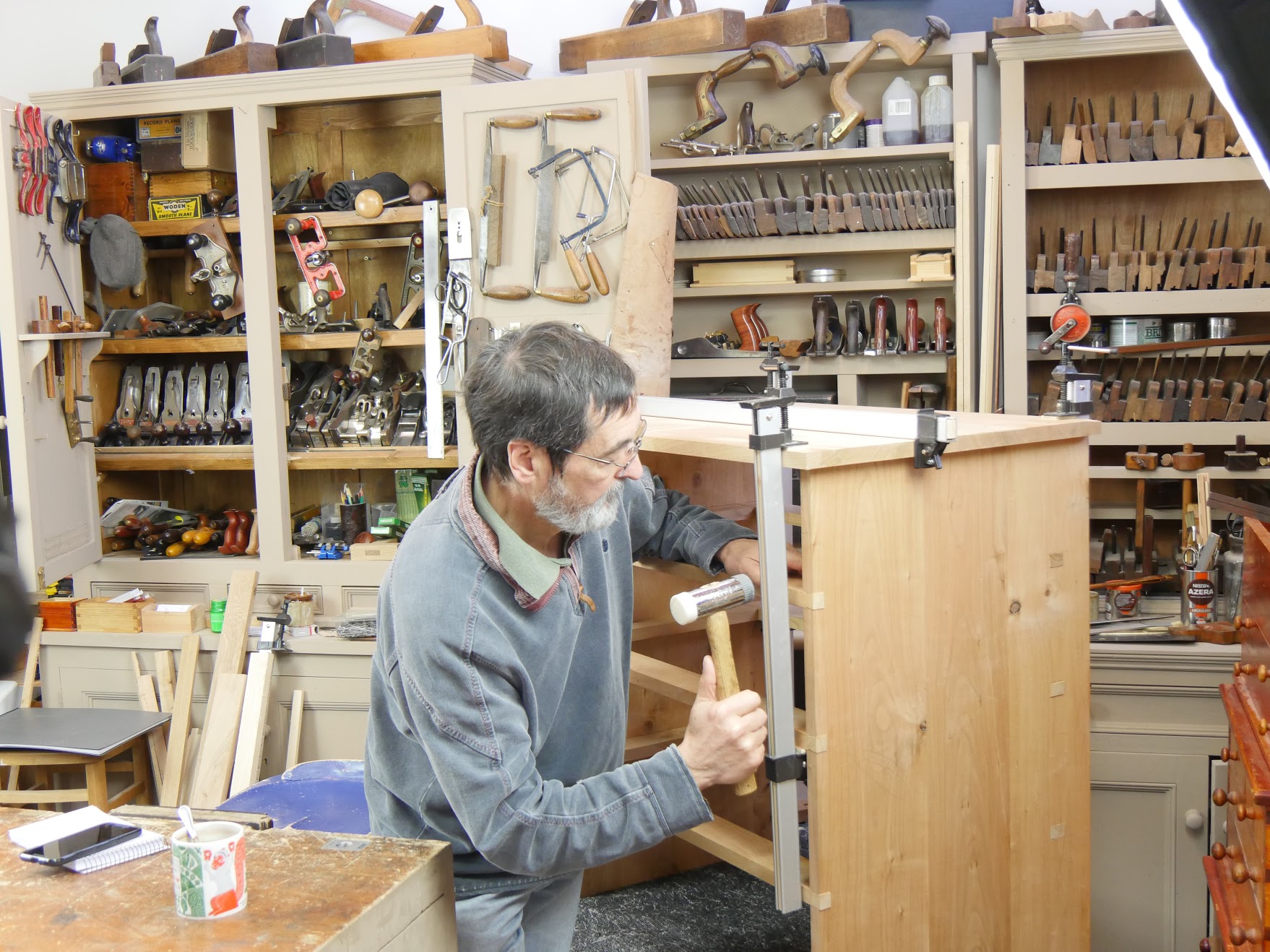
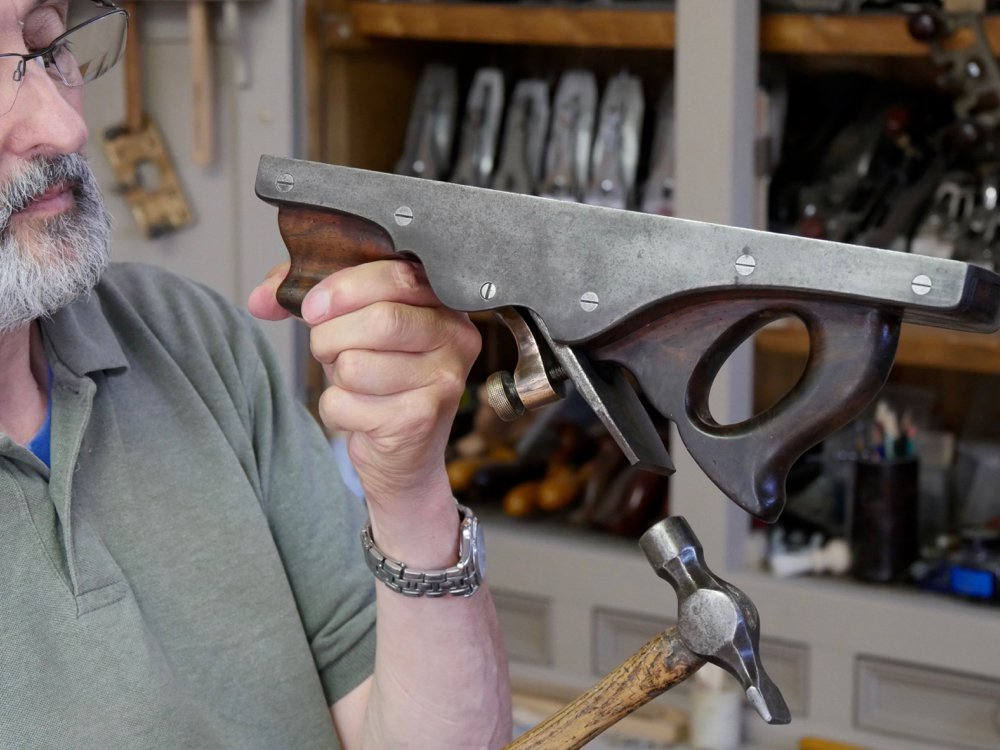
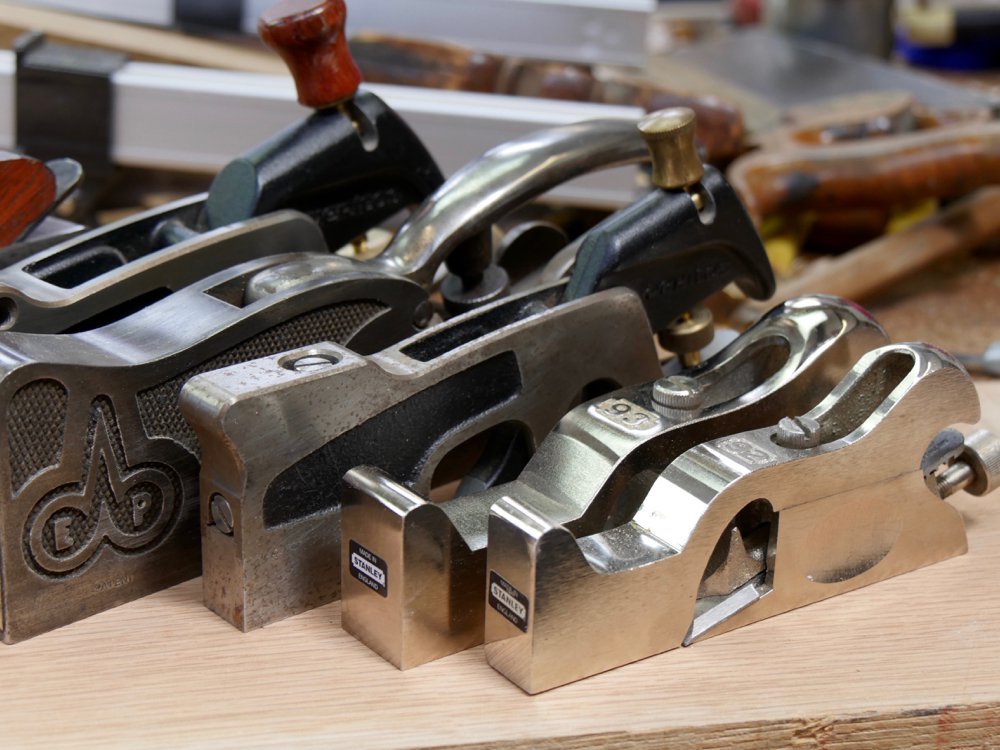
I had always gathered tools to better understand them. I wanted to understand the owners of them, the ones that used them and earned their livings using them where possible because there are so few like myself that actually used hand tools and made their living from working with them. I actually don't know someone who makes their living from primarily working with hand tools. I also wanted to discover why it was that the users preferred their particular version of a tool over say more 'developed' models. Through this type of inquiry, I started to unravel the past, open up new trains of thinking. Just why was it that the Preston spokeshave with its centralised adjuster became a deviation from the more common path following say the Stanley #71? Other makers copied the #71 pattern and Preston strove for something out of a new mould. Other makers of tools developed their own versions of planes from cast iron because the metal casting was newer, it was accessible and it was inexpensive too. It also required much lower levels of skilled work when compared to the making of wooden planes. A thousand planes could be cast in sand in a day when a hand made plane took up to half a day of highly skilled workmanship to make. Here they were engineering something different. They were engineering patents, patentable versions to own the patent itself. It didn't necessarily mean they had made the better mousetrap, just that they could self-protect through owning the patent of their own version of a tool for a few decades.
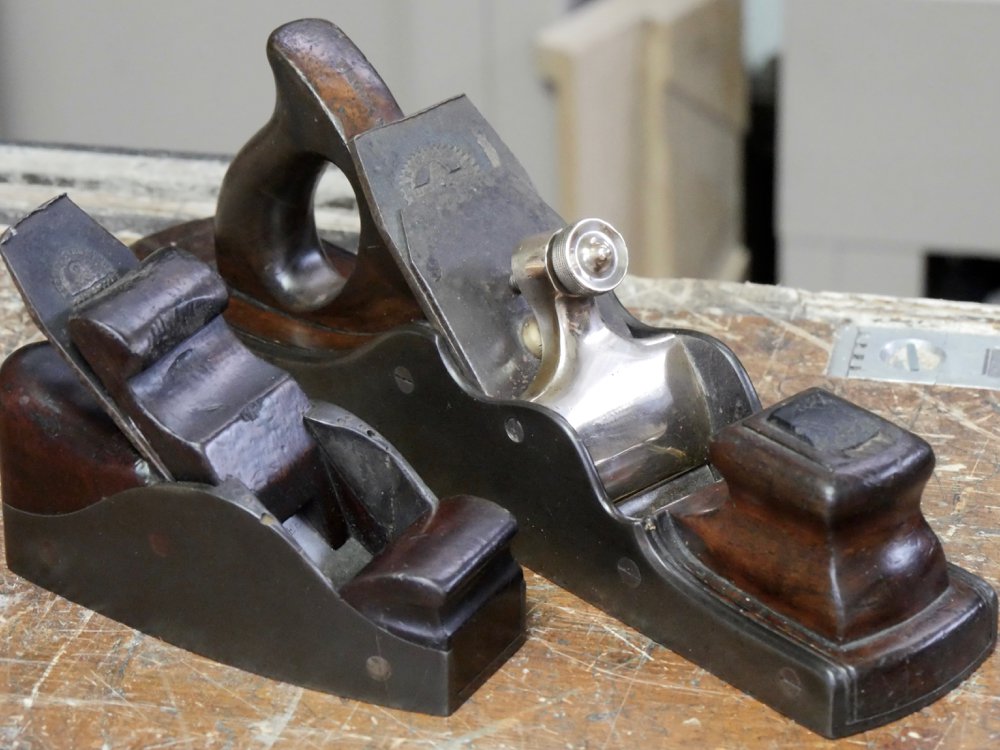
Throughout my own life, my workshop walls have mostly been clad with tools and books about wood and woodworking, trees and resources. I'm not at all an academic in any way (as if that needs saying). I like working with my hands and building things, sharpening things, creating ideas and developing things three-dimensionally every day. Without this, I think I would simply dry up and die. But I have always found craft working of every type so totally fascinating, especially so in the development of my own craft. So whereas I am constrained by time to focus more on my own craft because it is indeed so vast, I'm still intrigued and fascinated by the craft changes in different crafts through the centuries and decades. I see more clearly now why the meaning of crafts and then the lack or loss of meaning of crafts in our modern world has been in decline. The graph I might draw would show a peak from 1500 to 1800 and then a levelling off to the 1890s followed by a steady decline after World War I.This might more be seen as the era of dumbing down the need for skilled labour generally and its cultural impact where people lost the value for it. In industrial realms, it was steadily disappearing and now, in private realms, there is a quest to rediscover it. My belief is that this stems from the changes that always come with cultural shifts. People are learning that craft and craft working can mean so much more to us than we at one time realised. Whereas at one time it was just the industrious way of earning income and providing support for family life, agrarianism itself and so on, in amateur realms it was the pursuit of something that would cost them. they wanted the challenge of hard work and something difficult to accomplish. That alone is why so many amateurs pursue it with such passion. That is why I so love my craft and I so love working with amateurs.
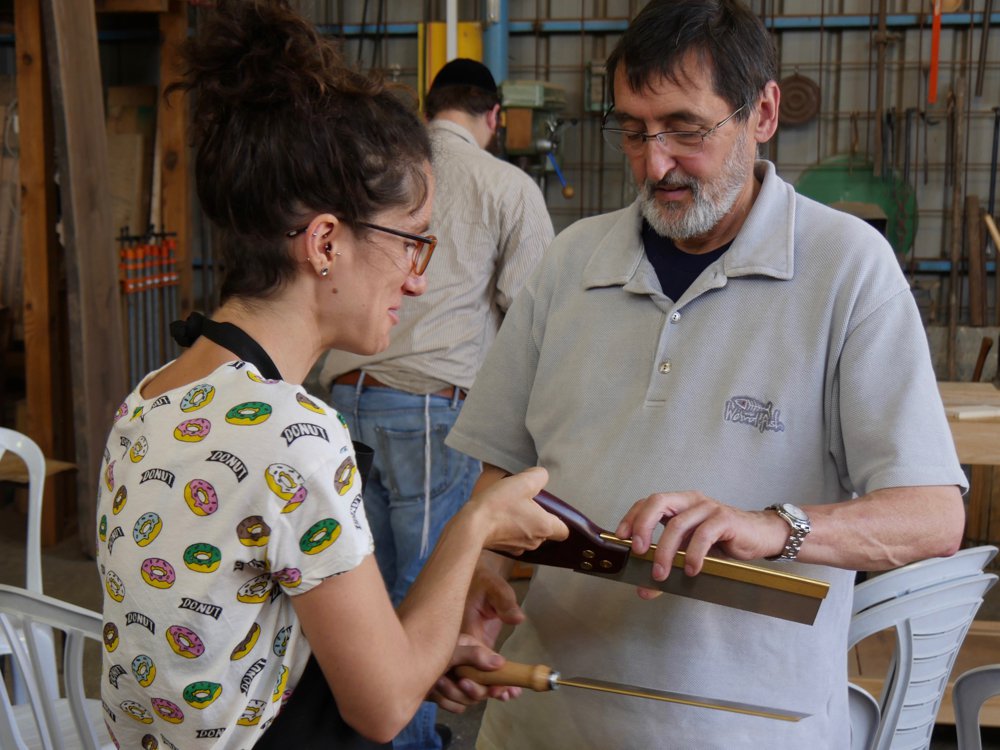
I'm always active in my craft and talking to others about theirs as long as it is not just a pastime but a serious interest of work. I suppose I have never had the luxury of time to pass, not even at airports! In my working area, I seem always to accumulate in an ebb and flow of having and not having. I pick up a saw secondhand from the gravel and grass somewhere and strip off the rust, recut its teeth, fix its brokenness and restore it. I then add it to my gathering of tools or I give it to someone I care about that works with their hands, works alongside me or will work with their hands by my encouraging them with a tool. Whichever, it's gone beyond compulsive and obsessive and stems from my feeling that if I don't lift it from the grime it will somehow be absorbed into a sort of excess of cultural dissipation and meaninglessness. You know, trampled under foot into the ground to rot. This happens when a world stops caring, loses its identity as an industrious producer, loses its dependency on making and growing and cooking—such things like these. Things like useless tools (that's tools used less than they should or could be) and equipment soon become lost in an excess of mass non-concern. So I start to restore a tool and learn more from my find about a predecessor I never met but came to know through his tools. By these things, I connect to my past, to the men that passed a hundred years ago or even two and three. So the saw joins others on my walls and the walls seem to wrap around me with a warmth I can't always describe in a world and a culture that's ever-changing and often, in places, losing its identity; it's a warmth I can't always find words to describe in a world that's losing such warmth and depth and enclosure. So I think of places like Sheffield differently today than when I was young and discovered an Industrial Revolution when I say this, but others places, too. So you see that I find my tools, my workshop, give me security even in a world where I know a single catastrophe can wipe them all away.
It's funny writing down my feelings this way. I have likely said all I need to say but want to write all the more. When some people, woodworkers who love woodworking, hang posters of tool chests on their walls it makes me feel a little sad. It's not at all that they are doing anything particularly wrong though. My hope is that as they grow they will go ever deeper through their discovering for themselves what craft work means for their life. Posters often depict the life of another and another's personal world. It's a world that's not so much theirs but one belonging to another. It's something they might yearn for in the same way we might yearn for a steam-train era or horse ploughing where shiny ribbons of twisted earth colour an unfolding landscape row by row. Of course, it is decorative and enjoyable to gaze on, and it can well be aspirational. I too, keep such things to look on, but creating your own workspace leads to an enrichment I want everyone to own for themselves.
Gathering tools one by one adds depth and dimension to our working world through a surrounding of our senses. We pull a tool from a shelf and turn a square edge to a mould, a rough, unlevel board into a glass-smooth loveliness. We put the tool back and move on to another. The saws too hang in wait. The teeth catch the light and glint like bejewelled pinnacles in beaded rows ready to cut tenons and dovetails and rip away waste wood stroke by stroke. The handles are mine; perhaps I should say they've 'become' mine. Shaped and smoothed by the roughness of my hands and the dust of the wood between my hand and the handle I grip every day. It's smooth, yes, but it's more than that. No other material feels like it. This is loveliness. Pure loveliness. in a way, it reflects kindliness and warmth, depth, wholeness, the result of a sort of marriage if you will. So I hang my saws close to my right hand and always look at them with fascination as I do. My eyes seem to draw their beauty into my insides. It's not in the least sentimental. Such things are the extension of all my intent in the making of things. Who can understand such things?
Comments ()