
Mags Often Misrepresent Safe Practice
Is Image More Important Than Safety?
I thumbed through recent issues of wood mags and though I have known it for years, I thought it might be good to tackle the giant issue surrounding machine safety as some woodworking magazines don't always project the right image. In fact some give the impression that no safeguards or safety equipment is necessary at all, the exact opposite of what the woodworking machine industry teaches altogether. My concern is that the woodworking magazines get most of their support from amateur woodworkers looking for guidance and inspiration. This advertising sector caters to the amateur woodworker industry with only a little crossover into professional realms. Thumbing through the magazines I was not really considering safety at all, just looking for content of interest to me, but I soon became conscious of the lack of safety equipment being used, which started my inbuilt alarm bells started ringing page after page. See if the images below don't cause the same sense of concern for you.
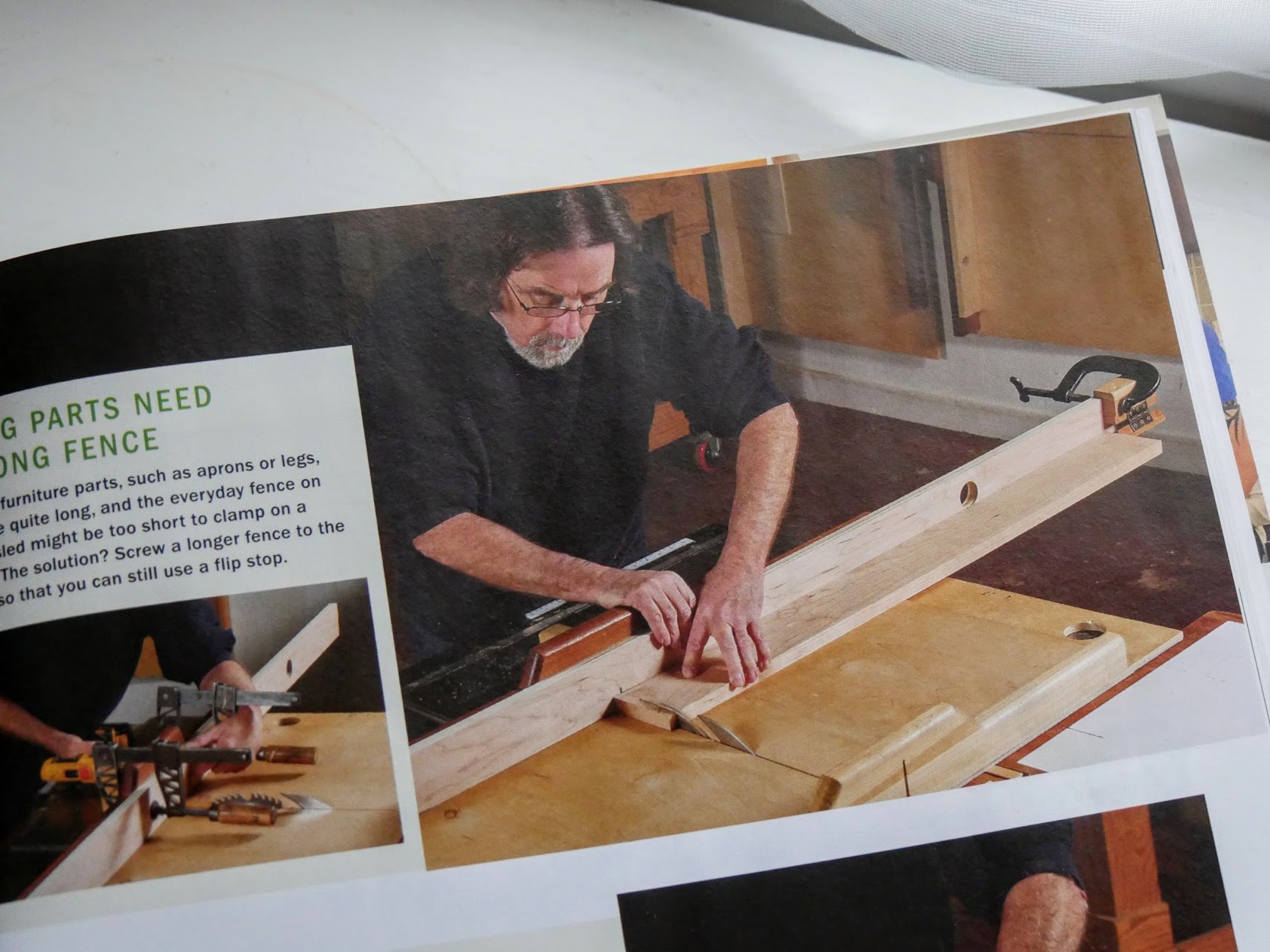
Image 1:
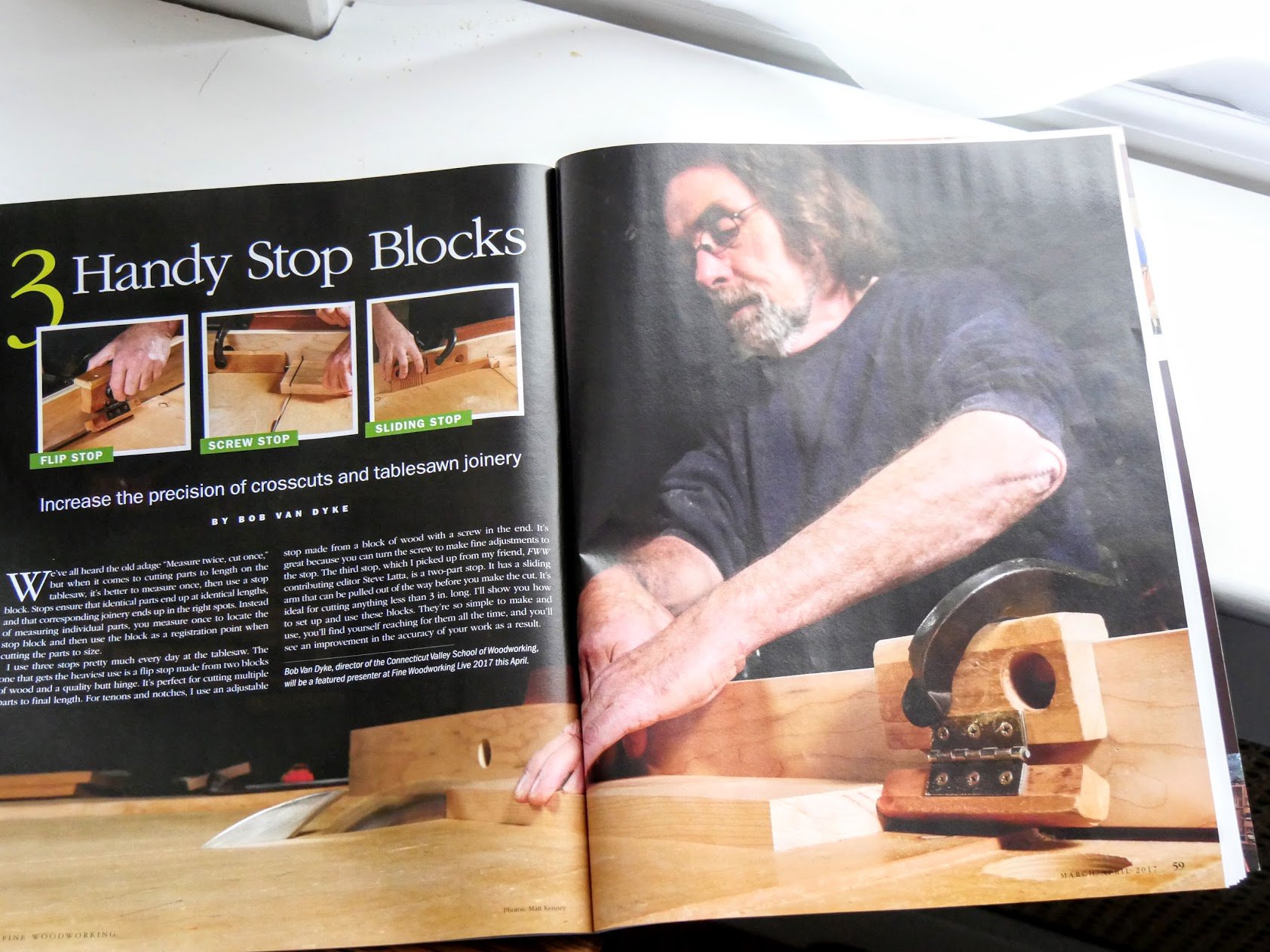
Image 2:
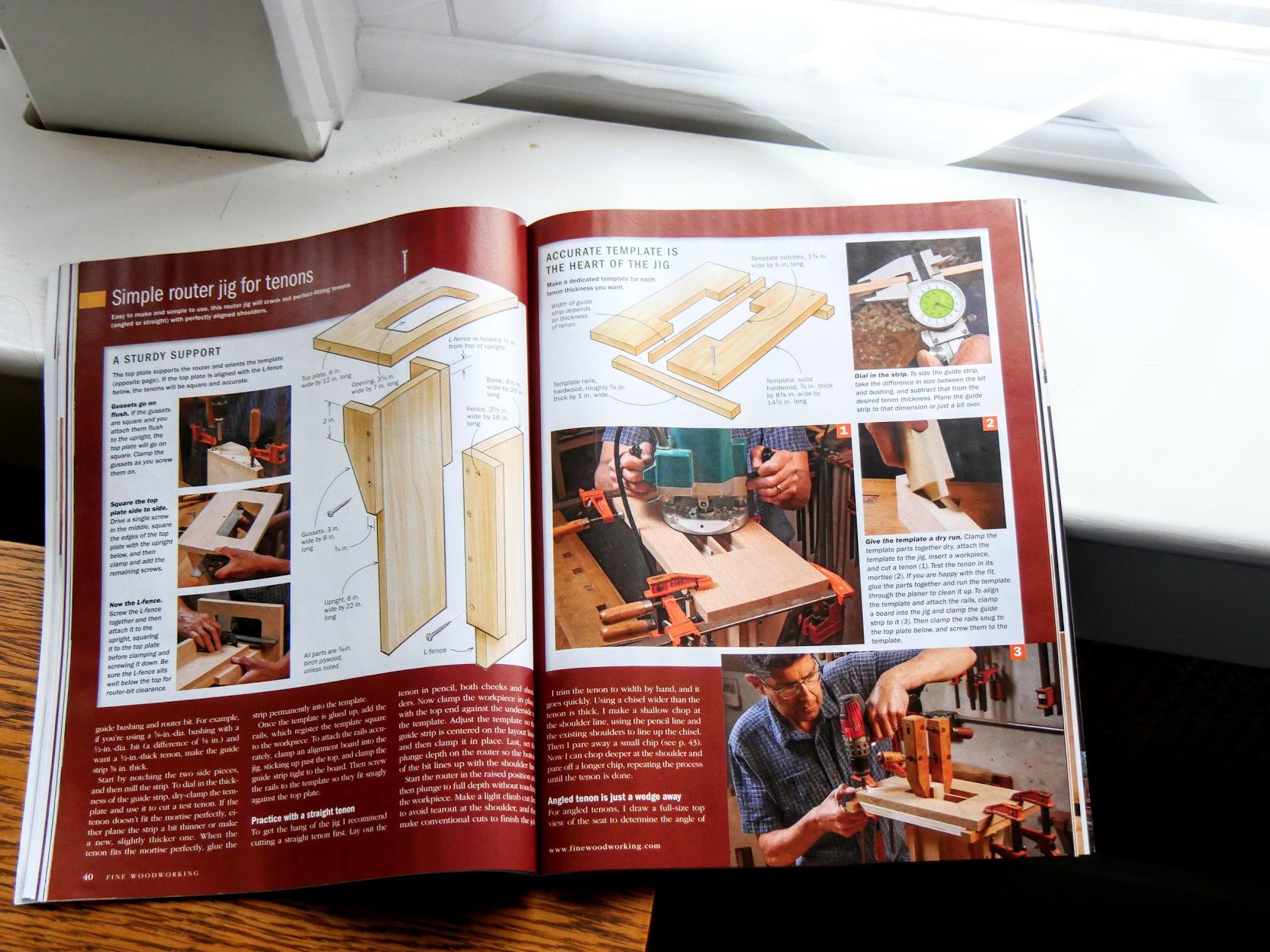
Image 3:
Image 4:
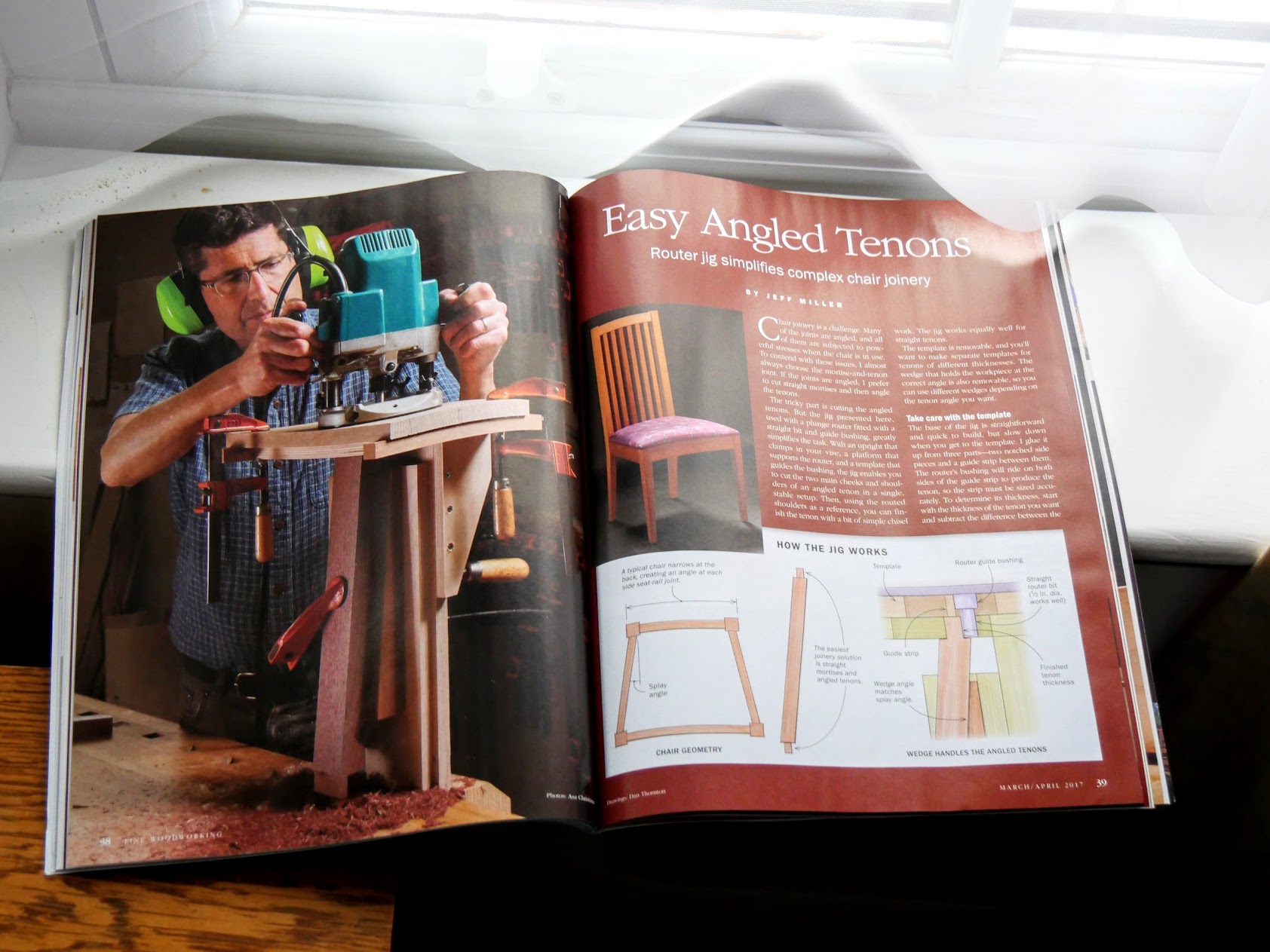
Image 5:
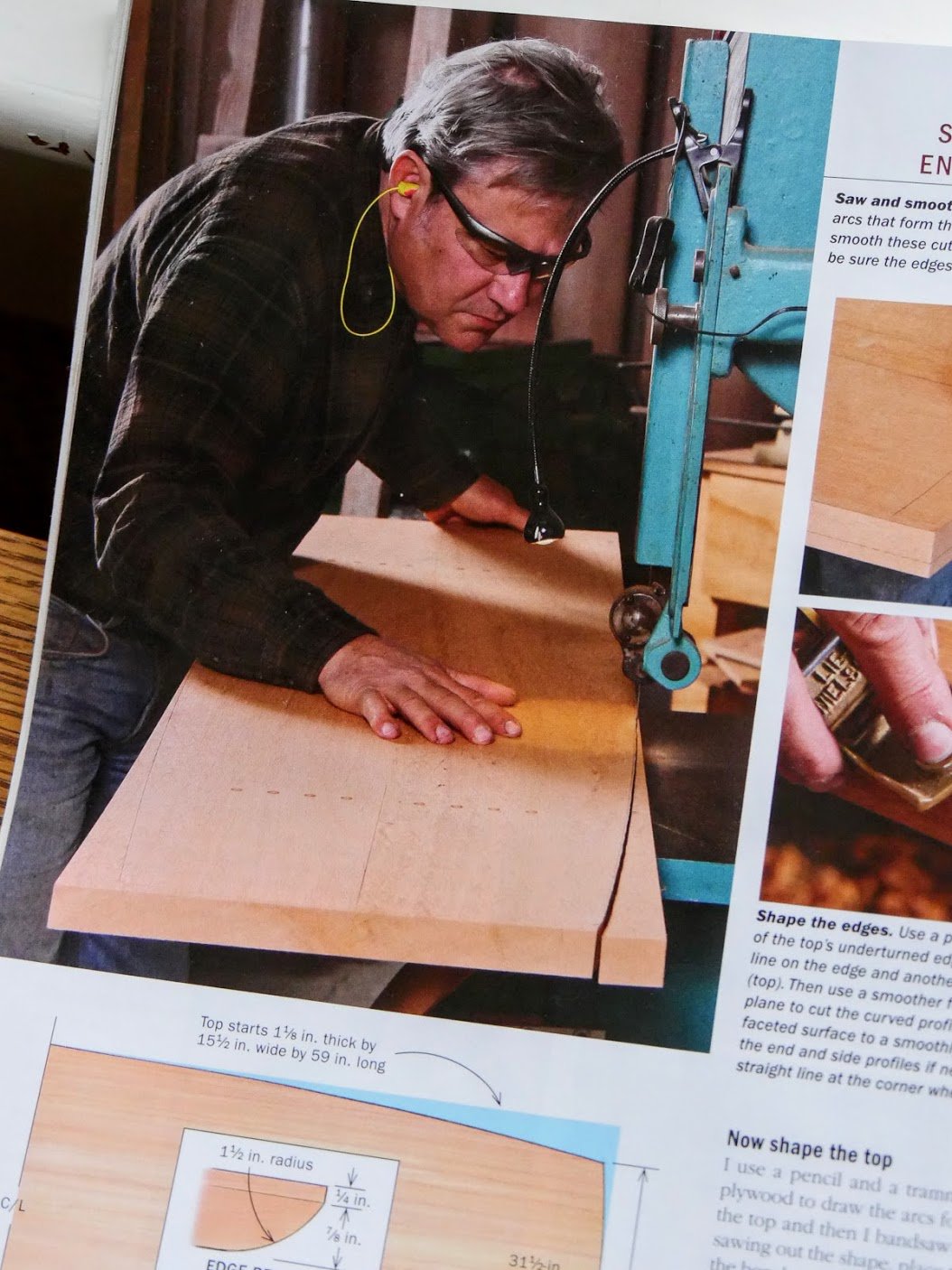
Image 6:
So here we are, five images spanning a few pages with not a face shield in sight and only one pair of safety glasses between four of the five images. Then we have zero regard for any dust protection issues and that is of great concern to all woodworkers. Now I know you can say to me that all woodworkers know about machine dust, tablesaw kick-back issues, noise that causes partial impairment and even permanent hearing loss and so on. Of course that is not really true at all. The people in the pictures are all professional-level woodworkers, authors, editors and so on. Evidently they don't feel the image they convey with regards to safety is questionable. If that is so, why would we expect the amateurs and those brand new to woodworking to be conscious of dangers that are often less obvious and even well hidden.
The trip mechanism in my brain asked the question, why is it that something so unarguably dangerous as machine woodworking is presented with such passivity toward safety and with no need to show industry standards for normal health and safety protocol put together by professional bodies of the woodworking industry itself? Yes, I know all the reasonable arguments. "They are just posing and not really working." "The machines are not switched on, perhaps, therefore there is no need to wear any safety equipment. Why would you?" Well, actually, in a couple of the images, the tablesaw is running and there is no need for anyone looking in, to believe that the others are not either anyway.
Image 1:
a: The man has no safety mask on at all b: There is no blade guard over the blade c: The man has no safety glasses on. d: The man has no protective dust mask or respirator equipment.
The dangers ever present in this scenario are:1: He is breathing harmful dust as he works with the machine no matter how good any dust extraction is. 2: Even though there is a riving knife in place my experience has shown that the wood can still close over on the rear upthrust of the blade and and kick-back the wood at his upper body and face. 3: There is no doubt that the small offcut is a missile waiting to catch. The drafts and movement of wood often cause an upthrust on small pieces and can deliver them to the rear upthrust of the blade once detached as shown. 4: The dust from tablesaws is of course extremely fine and circulates in the atmosphere even with the best dust extraction in the world. This dust is some of the most harmful to the whole respiratory system, eyes, nasal passages and throat.
Image 2:
Same as above. I included this image of the same issue from a different angle because it doubly gives a bad impression.
Image 3:
It's made me more conscious as an industry leader that I too must always take the essential safety precautions for my own health and then again project the need for safety to my audience. Though in this image he is only using a drill-driver, I recall a time in my life when the bit caught in my shirt and spun the drill up my shirt and badly bruised my nose and eye. It could have been worse and I might have lost an eye and more. I hesitated to add this image because how often do we really reach for eye protection when using a drill-driver. Decided to leave it in and risk the criticism.
Image 4:
a: Obviously the man has no protective dust mask or respirator equipment. b: He has glasses on but insufficient to call them safety glasses as they have too much openness surrounding the the lenses and no side shields.
The dangers are that 1: He is breathing harmful dust as he works with the router which has no dust extraction attached. The extremely fine dust from routers is spun at high speeds and circulates in the atmosphere even when dust extraction ins in place. The dust can cause damage to the whole respiratory system, eyes, nasal passages and throat. 2: Wood from router cutters is constantly thrown from every type of cutter, often splintering like spear or needle points and throw-back to the face.
Image 5:
a: The man has no dust mask or respiratory protection at all.
The dangers are that 1: He is breathing harmful dust as he works with the bandsaw.
Obviously the machine user here has his earplugs and close safety glasses on. That's good, but the dust from bandsaws, especially older models, which often have no portals for extraction, is notoriously harmful and bandsaws are well known for gathering up dust from cutting directly around the wheels of the bandsaw, which then spin the dust around inside the wheel enclosures until it escapes through any and all gaps. It is nearly impossible to close of the enclosures.
It's about image
Projecting the the image but not the right or perhaps correct image is mostly what I concern myself about here. In reality all of these men should look be wearing full protection when working with woodworking machinery.
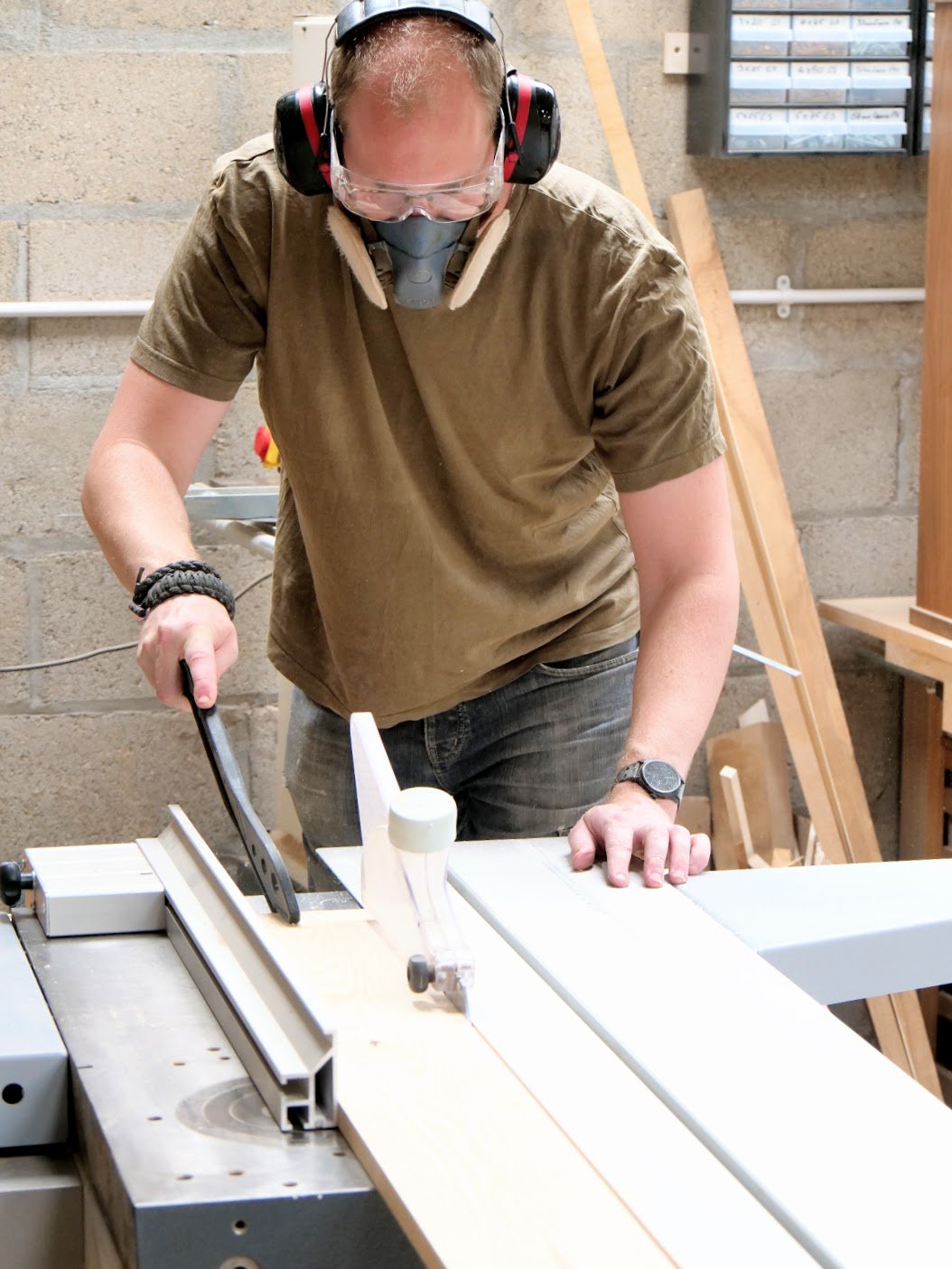
Now then, I asked myself this further question. Why do some woodworking magazines show the heads of the men at all? After all, it really contributes nothing with regards to technique or method. Leaving out all head shots would not lessen information in any way. My answer? Posing in shots with relaxed faces creates the image they want to express and that is that woodworking is not inherently dangerous at all. Not only is it dangerous, woodworking machinery is ranked as the most dangerous of all industries.
These images convey the impression that highly proactive woodworkers do not use protection because the methods are safe and there is no need to wear industrial protection beyond just ear defenders. Those of us who have worked in the industry for a few years absolutely know that this is far from true. In all of these situations these men are in danger of losing their sight. They are also breathing toxic waste from finings in the surrounding atmosphere that they cannot see as well as dust and particulate thrown directly at their faces. The man on the tablesaw has the added danger of kickback.
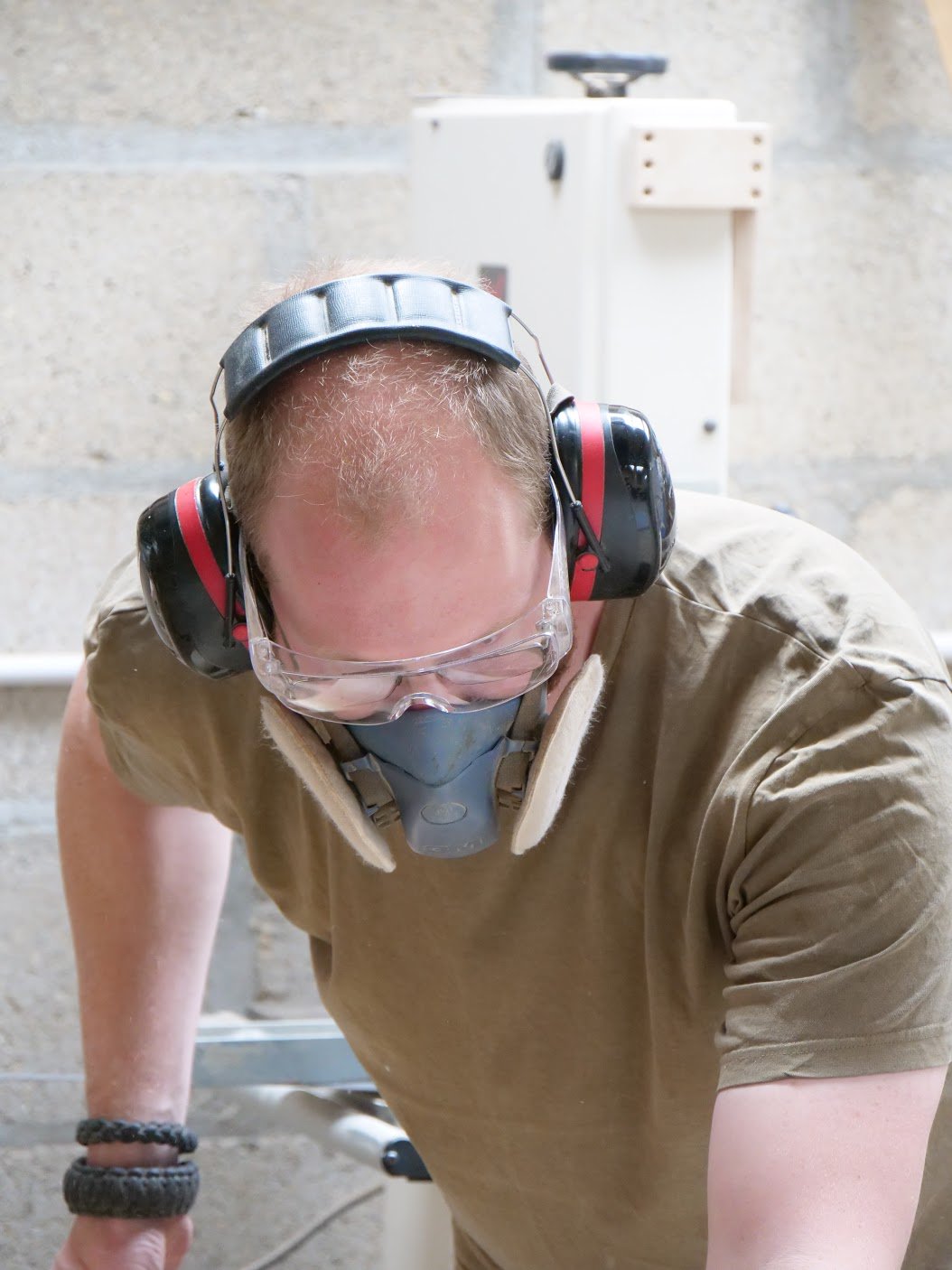
So why do the editors allow poses that include the faces? As far as information goes the faces or facial expressions give nothing to the reader and are inconsequential. Mostly it's to do with presenting the acceptable image that down plays the essentiality of safety to its core audience. In my view it is of little value to put a little disclaimer in the corner of a page if the images send another message that woodworking without protective equipment is perfectly safe. No one is exempted from responsibility in this. Not the authors, the photographers, the editors or the publishers. They all have responsibility for promoting unsafe practices. Even with safety equipment things go wrong in a split second. We can take care of our lungs, eyes and faces with very low-maintenance equipment.
My advice to any new woodworker wanting to compliment their work by using machines for dimensioning stock would be to find courses tailored to specific machines. Good online material is available from recognised institutions too. You must be careful of course, as looking for information based on good experience can be hard as some things are based more on opinion than experience. Look for experienced teachers and organisations with the right background. Generally these are information based but then you must put into practice what you are taught and by experience you will gain the experience you need to anticipate potential issues. No one else can substitute for your individual responsibility.
My hope in presenting this at this time and publicly is that the editors, publishers and authors of magazines and articles will not get offended (as they sometimes have) but see that they are promoting unsafe methods to project the wrong image and express the wrong information. We all have a responsibility to the public to make woodworking as safe as it can be and especially to make others aware of the possible hazards.
Comments ()