
Sharpening Router Cutters By Hand—Simple Works Best

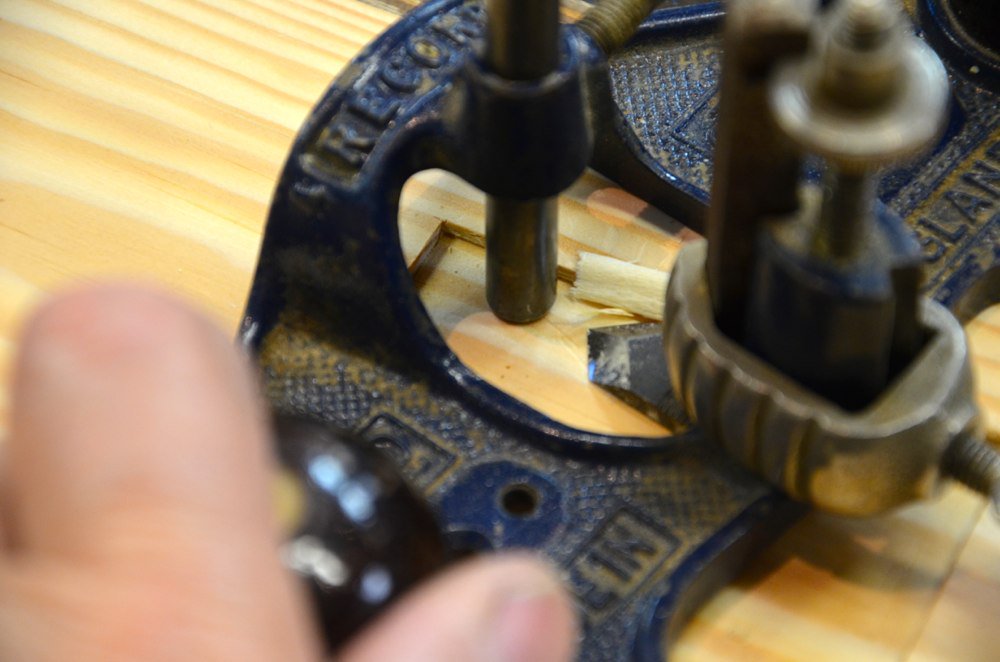
I like simple, unfancy, non-invasive sharpening methods as most of you reading my blog and watching my videos will know. Simple things, simple systems that are not at all simplistic but work effectively and efficiently. So I strive to find them—not just for me but for you too. A question about router cutters and how to sharpen them (not machine router cutters but hand router plane cutters) comes in often enough to show that it is a struggle for most people to achieve a good sharp and square edge to them is not without a struggle. If you have super-strong fingers it is less of a problem, and I do, but if you don't the chances are you will create a two-directional camber to the bevel and this creates a problem for establishing a cutting edge parallel to or coplaner to the sole of the plane. This then results in an uneven or marginally stepped surface over the routed recess. For much of the work we do that might not be so important, but when we want a recess as flaw free as possible it is.
If you need to know how to establish the presentation of the cutting iron parallel to the sole face go to a series on the router plane that includes setting up for a perfect finish to the recess surface here. It's one I really worked on and developed and used most of the content of for my last book, Essential Woodworking Hand Tools. Developing the bevel is where people mostly go wrong, so I developed another sharpening method that works for developing the sharp edge and also works for maintaining the cutting bevel square to the edge so that the bevel does not undermine the work you did in developing the parallelism of the cutter to the sole. I perhaps might have considered including in my book but it will work here to tell people just fine.
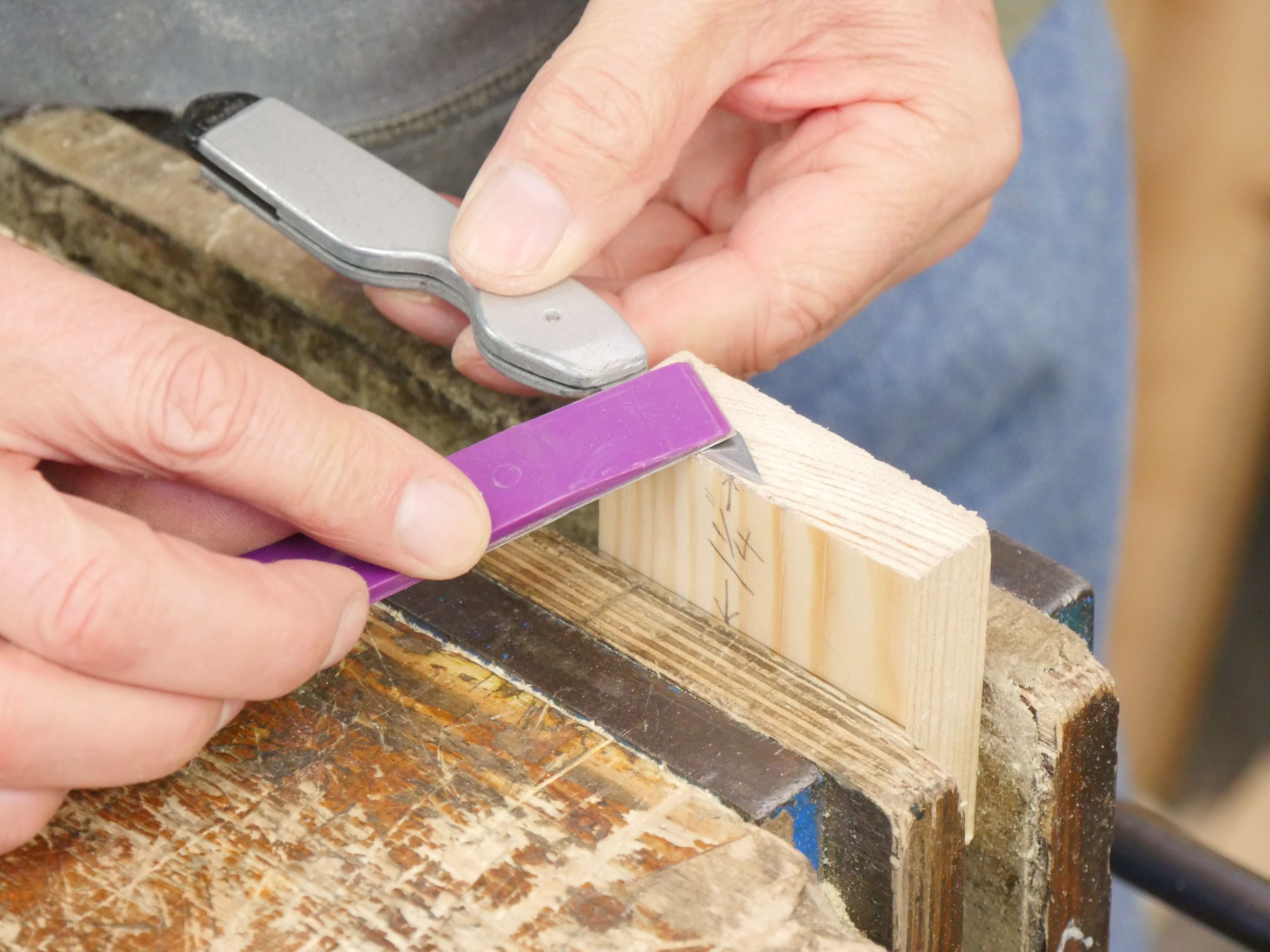
The method I now recommend came from my work on establishing and maintaining the correct angle for knife-blade sharpening here. By adjusting the height of the 'table' using the vise you effectively determine the bevel you want depending on the work you are doing. Raising the table steepens the bevel, lowering the table makes for a shallower bevel. It's dead simple and highly effective. Though my process for sharping knives went through an evolutionary process over the years, the best yet was the latest one I ended up posting on in a blog post above at the beginning of January this year.
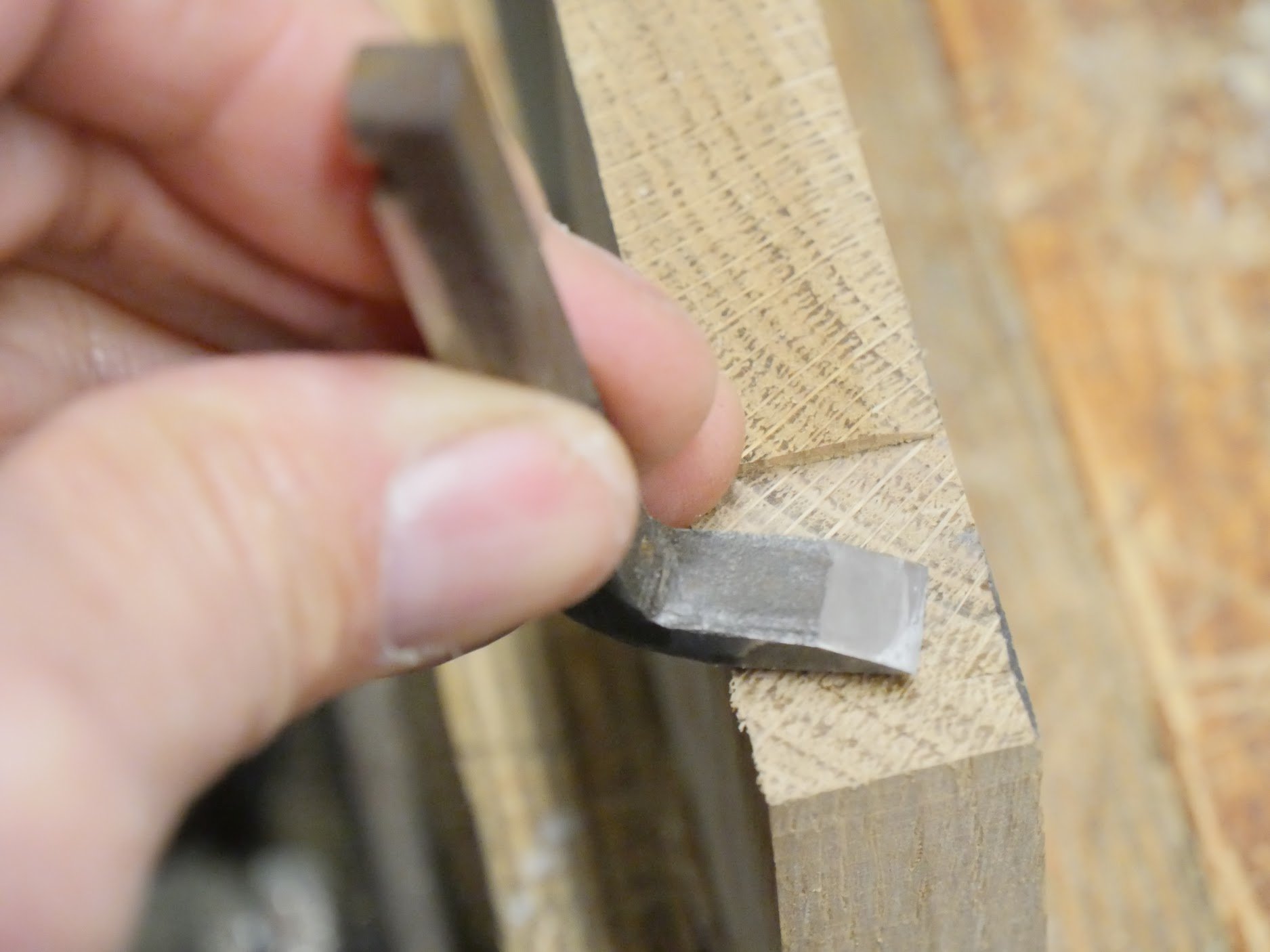
Firstly I created a step-down by simply sawing the step-down as shown. I bevelled the adjacent higher surface to allow the sharping hone access across the whole bevel without tripping. You can actually create a second step-down at an angle for sharpening spear-point cutters on the same platform. The first step-down is for square cutters and acts as a butt stop to push and secure the cutter up against. By placing the cutter with the blade overhanging just a mil or two the hone makes sharpening these otherwise awkward cutters a breeze regardless of the make. In preparation for some lectures over the weekend I sharpened six different makes of router cutters perfectly with no obstruction at all. Sharpening the spear-point cutters simply means using the same bevelled step but turning the support to do the second bevel to the opposite side.
Distances
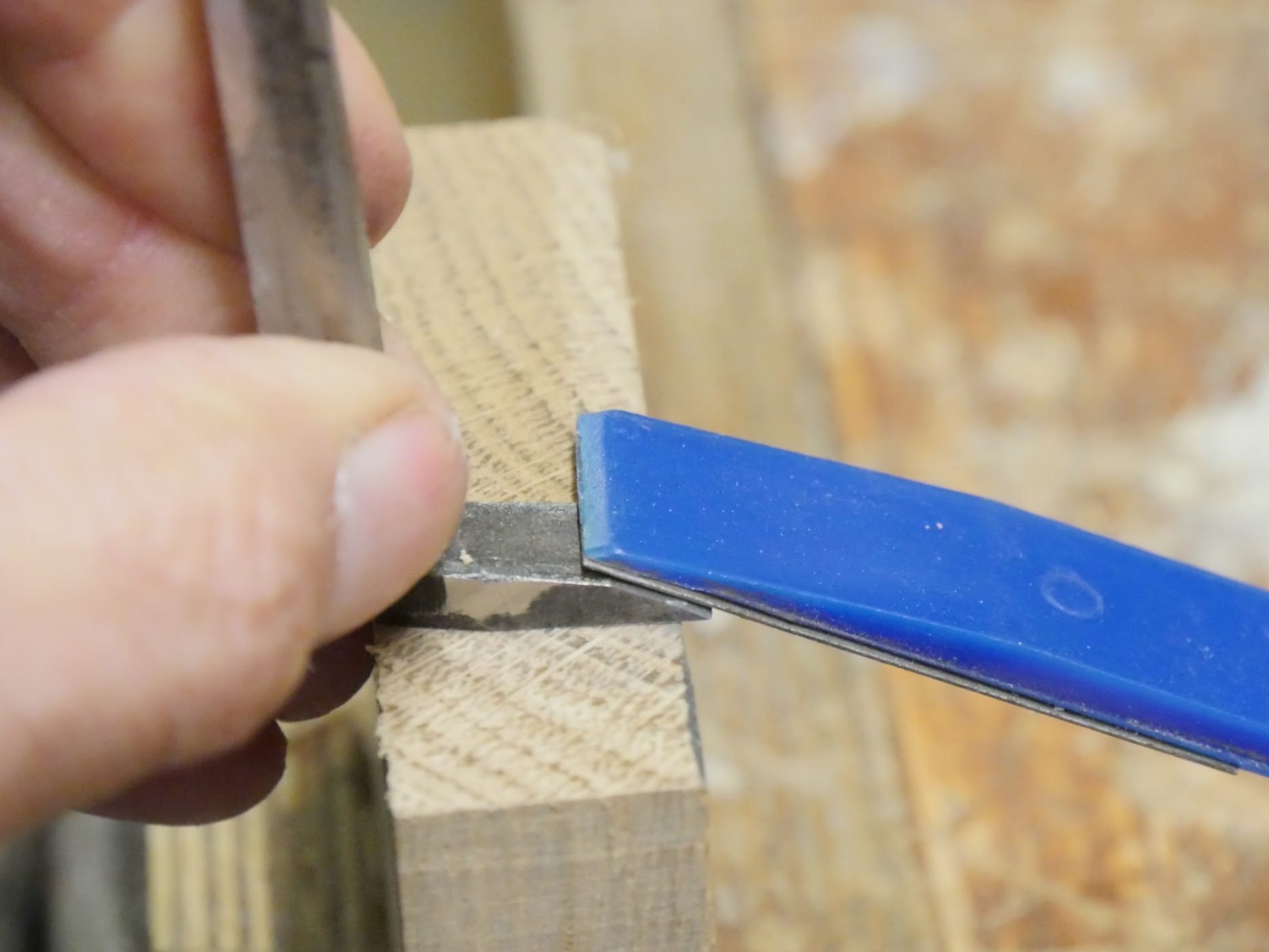
—— Because the sliding of the hone on the bench top is moderately variable, so that you use the whole surface of the diamond hone, the bevel of the cutter develops a very slight and almost indiscernible camber, which in my view is perfect. I use a circular motion with no fluid at all and this works fine because you can wash or wipe off swarf quite easily if needed. Set the platform 62mm (2 1/2") above the bench top with the top edge of the platform parallel to the bench. It's best and easiest to square a line across the platform at 62mm. Once the bevel is established using this method it takes only a few seconds to refine it further with the other hones going from medium to fine and then superfine. I even buff mine out to 10,000 with buffing compound on a leather strop as it takes so little to go the extra mile.
Comments ()