
Tips to Keeping Panels Flat
I will likely keep mentioning this when we are making the one in cherry for the filming but it is important to sow the seeds now.
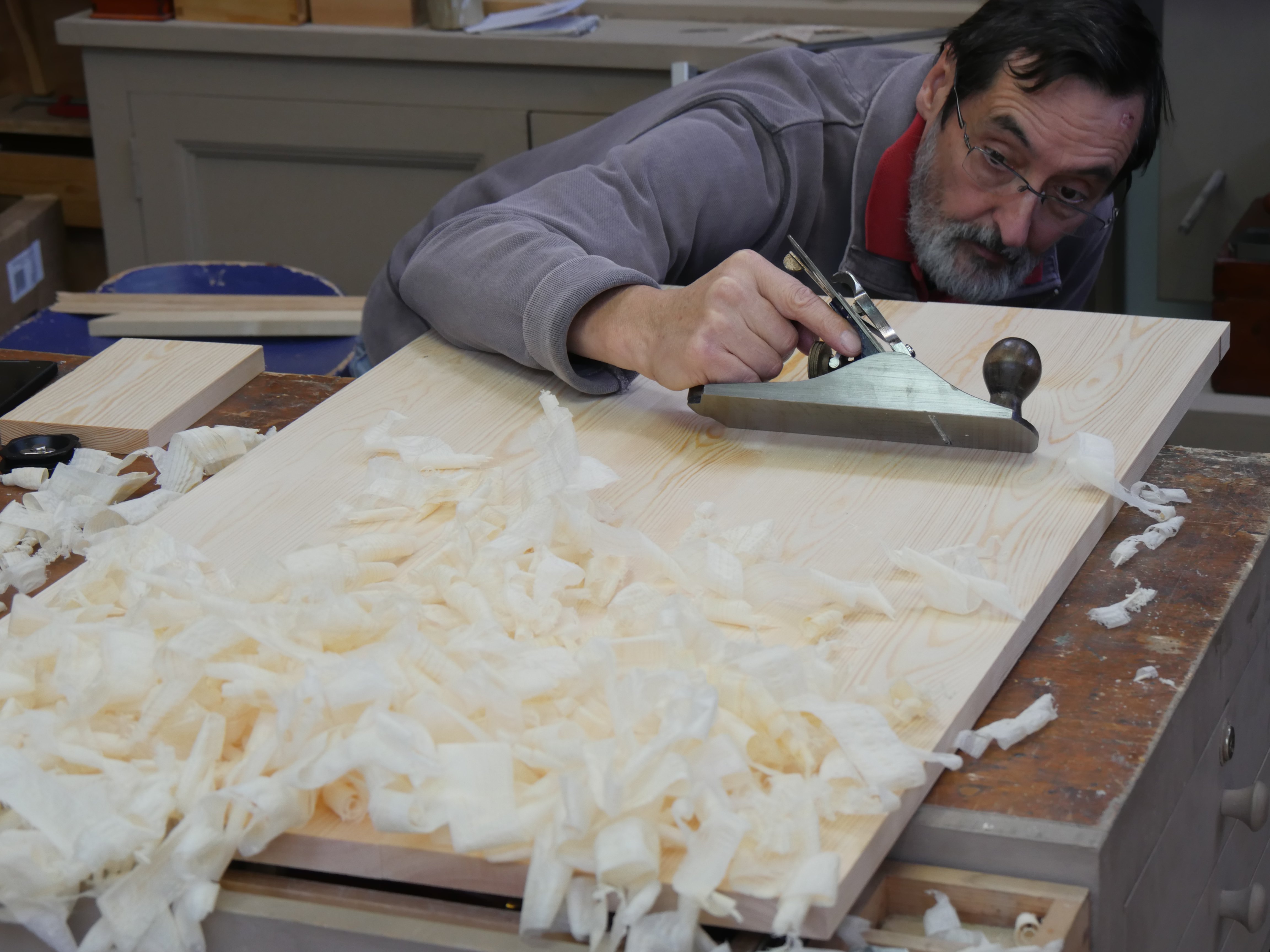
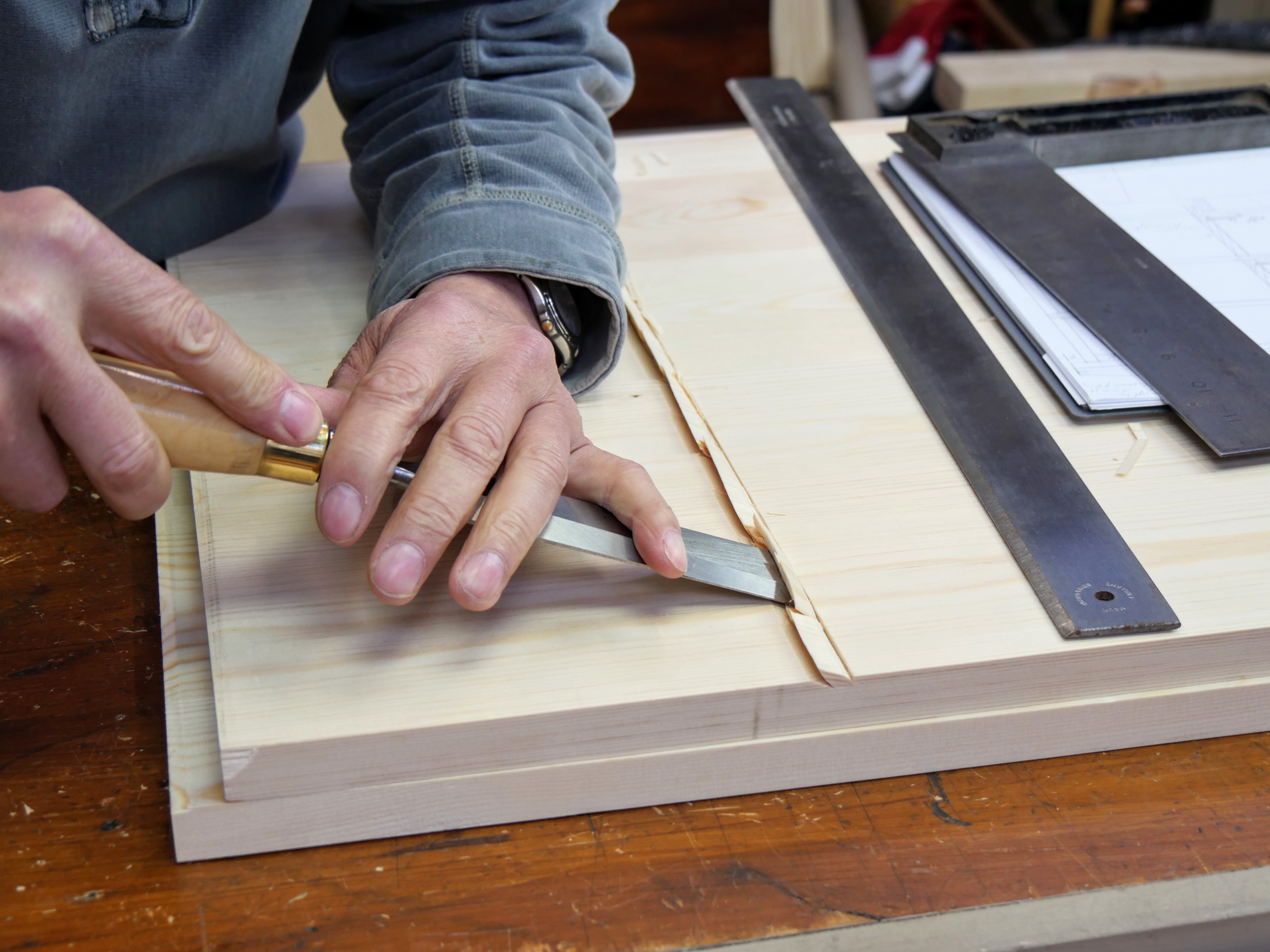
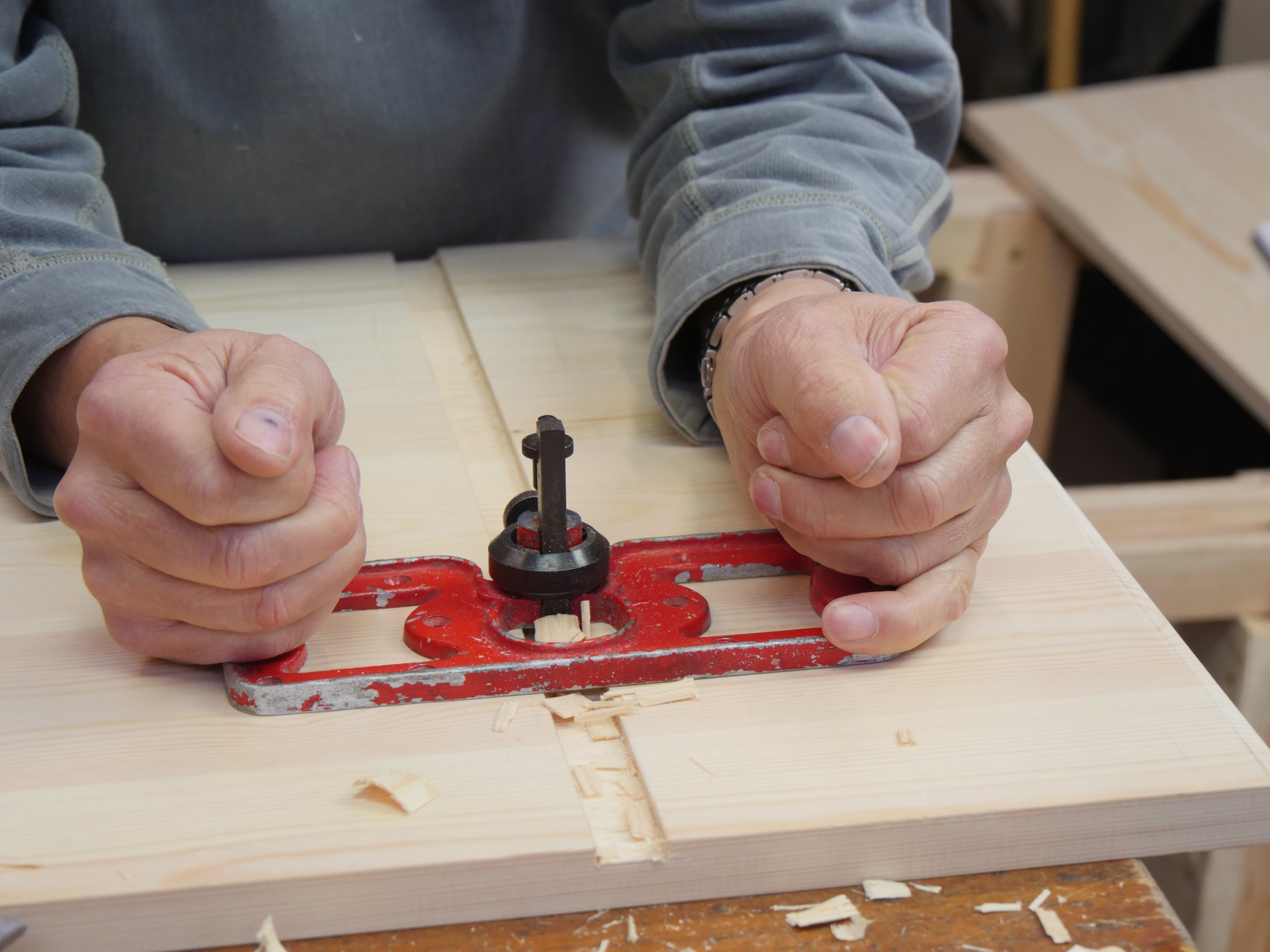
Progressing the prototype for a more compact, Shaker-style dresser slowed down a little with my Texas trip and then catching everything up for Christmas and the holidays coming up. With everyone gone from the studio I have had a little self-time working alone, which is now much rarer than it was in times past. This project has some simple elements I am complexing with added joinery features that will allow for expansion and contraction and at the same time hold everything together. Today I polished off the housing dadoes so I am ready for the divider frames that both fit into the housings but then dovetail to pull the sides in and keep them there. I have also designed the divider frames between the drawers to take mortise and tenons in an area where expansion and contraction will take place so that the M&Ts slide with any atmospheric influence. Of course no one except those watching the video series will ever see this feature or understand the complexities. Most people don’t know that wood does indeed shift throughout its life after being converted and made into a project even though they might use the term shrink. We woodworkers better understand it because it so determines how it and we work.
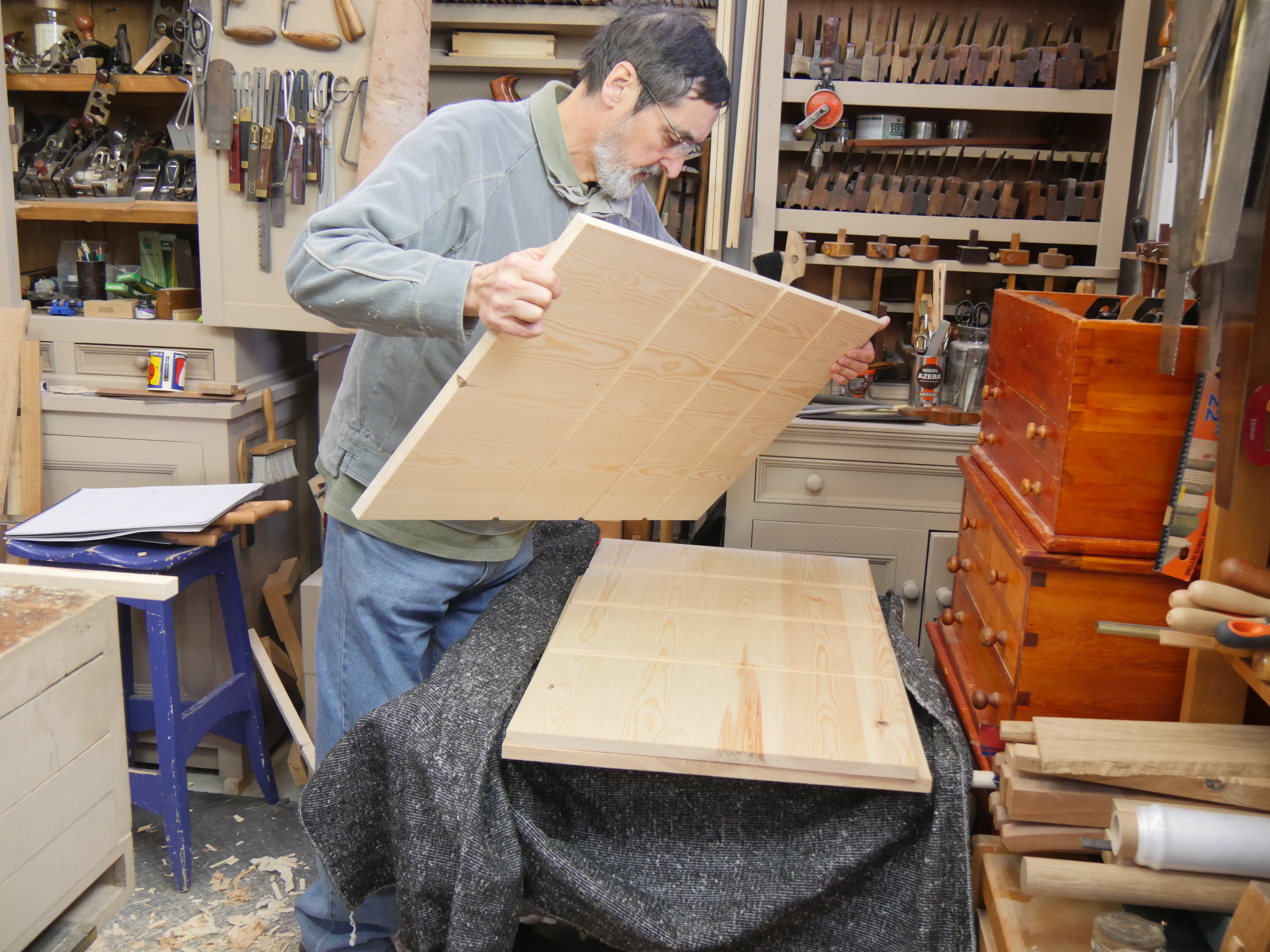
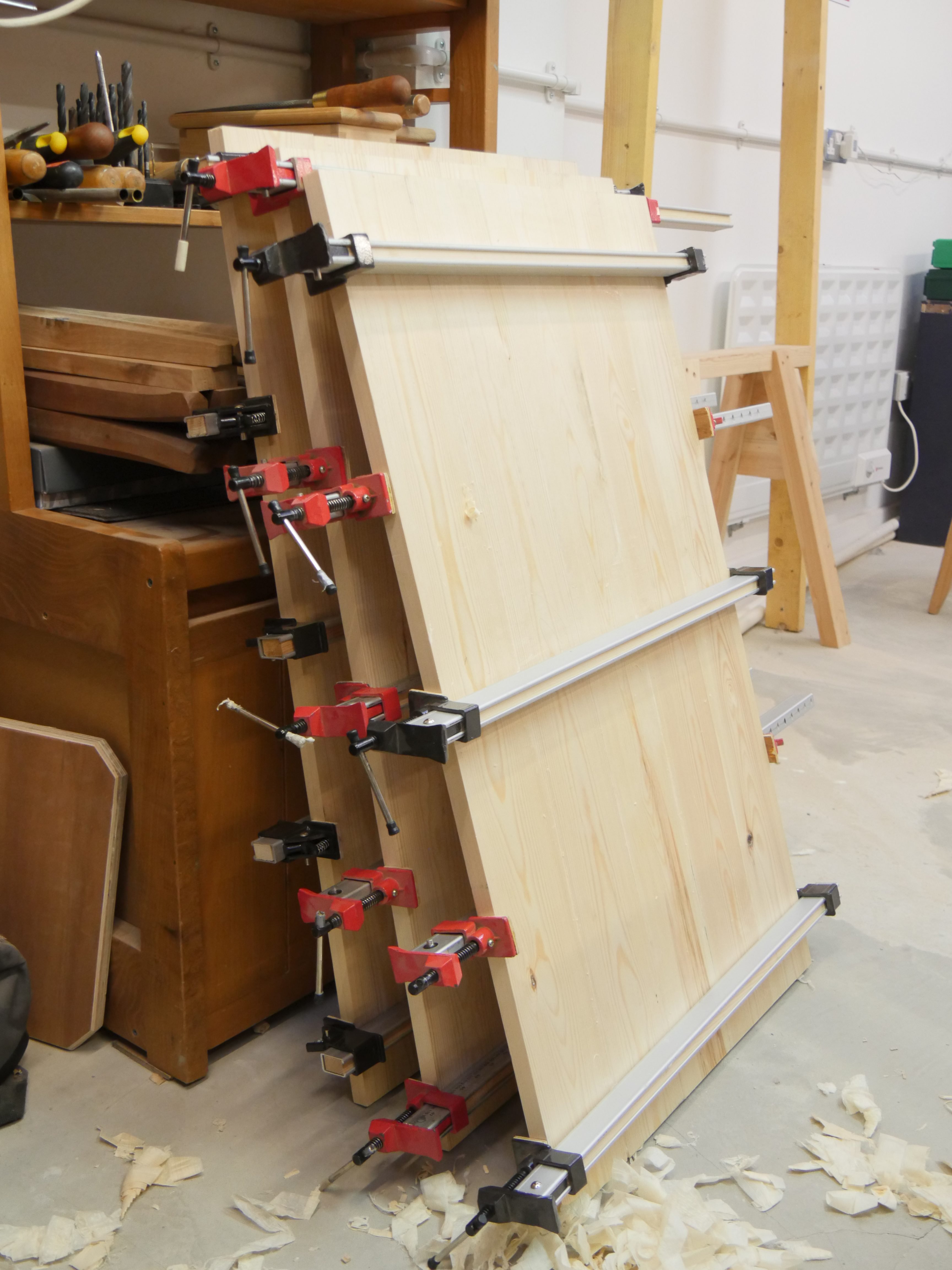
There are some things I have done consistently over the years because of the influence of drying, expanding and contracting and such that’s really helped with the time span I might not normally experience but others likely will. One was to keep the clamps on after the glue up. Two, adjust the tightness of the clamps without squeezing the wood to death and bruising it; so just taking up the slack each morning. Three, blanket wrapping at the end of the day having stacked the three boards face to face first. Four, shrink wrapping the panels if indeed I removed them from the clamps for an extended period. Usually that’s when `i am working on the wood rather than just being ready to work on it. I have found that keeping clamps on or reclamping with opposing clamps as you do for glue-ups of panels, keeps the boards or panels flat by disallowing movement that would otherwise result in distortion. This is especially so with softwoods, but some hardwoods too. Clamping disallows this to happen in the first place. In this case five opposing clamps is enough. It works. Point five, keep the work away from any localised heat sources as much as possible. Even or especially passive sources such as sun through windows, which people commonly forget in homes. Radiators, heat stoves, especially when they’ve been off all summer. Especially is this so with new work, by the way, because mid sections of wood retain moisture longer.
My workshop seems fairly constant with regards to humidity. Over a four week period it seems that the boards shrank daily and then stopped. I good test besides loose clamps is to measure widths (not lengths because wood shrinks negligibly in its long axis) to see what the lose. You can also use weight too.
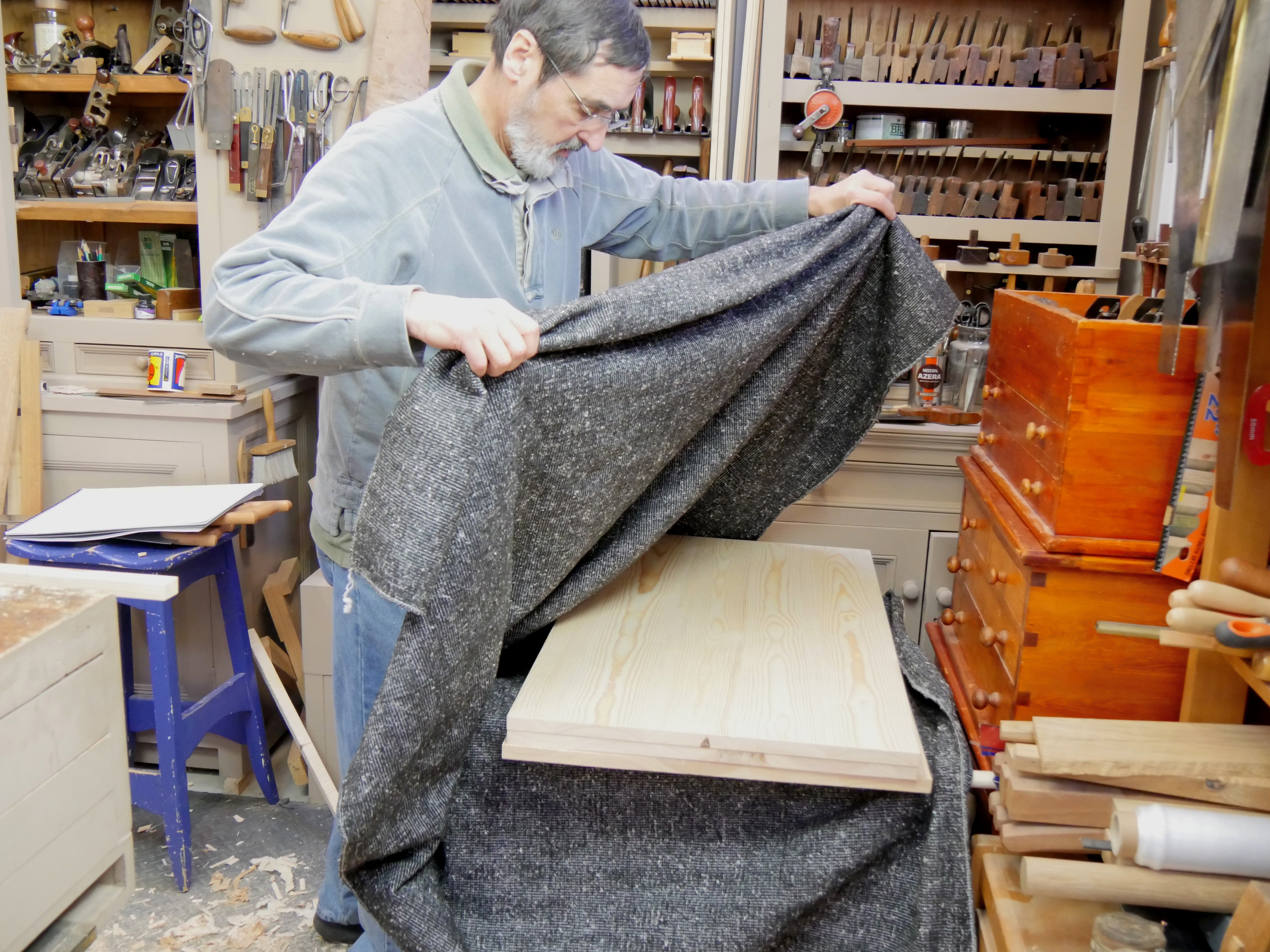
Tonight I blanket wrapped at close. Once the joints go together the joints too will constrain movement as will glue and fastenings. It is an especially good idea to use shellac on what will be endgrain areas such as tabletops as this ensures much more even shrinkage and it matters not when you do this so why not apply two or three coats sooner than later?
Comments ()