
A Name in Iron Survives Five Decades
My hand forged name stamp has survived five decades settled in the top till of my tool chest. Of course these imprinting stamps are not really used too much so it's not really wear that works them out of use but more likely loss of physical possession. Name stamps identify your tools mostly and were not used to stamp your work. that said, most wooden tools carried the name of the maker using a simply name stamp. In wood, these tools didn't wear out because of course they didn't cut wood but imprinted it by consolidation. That's why they are, well, impressive.
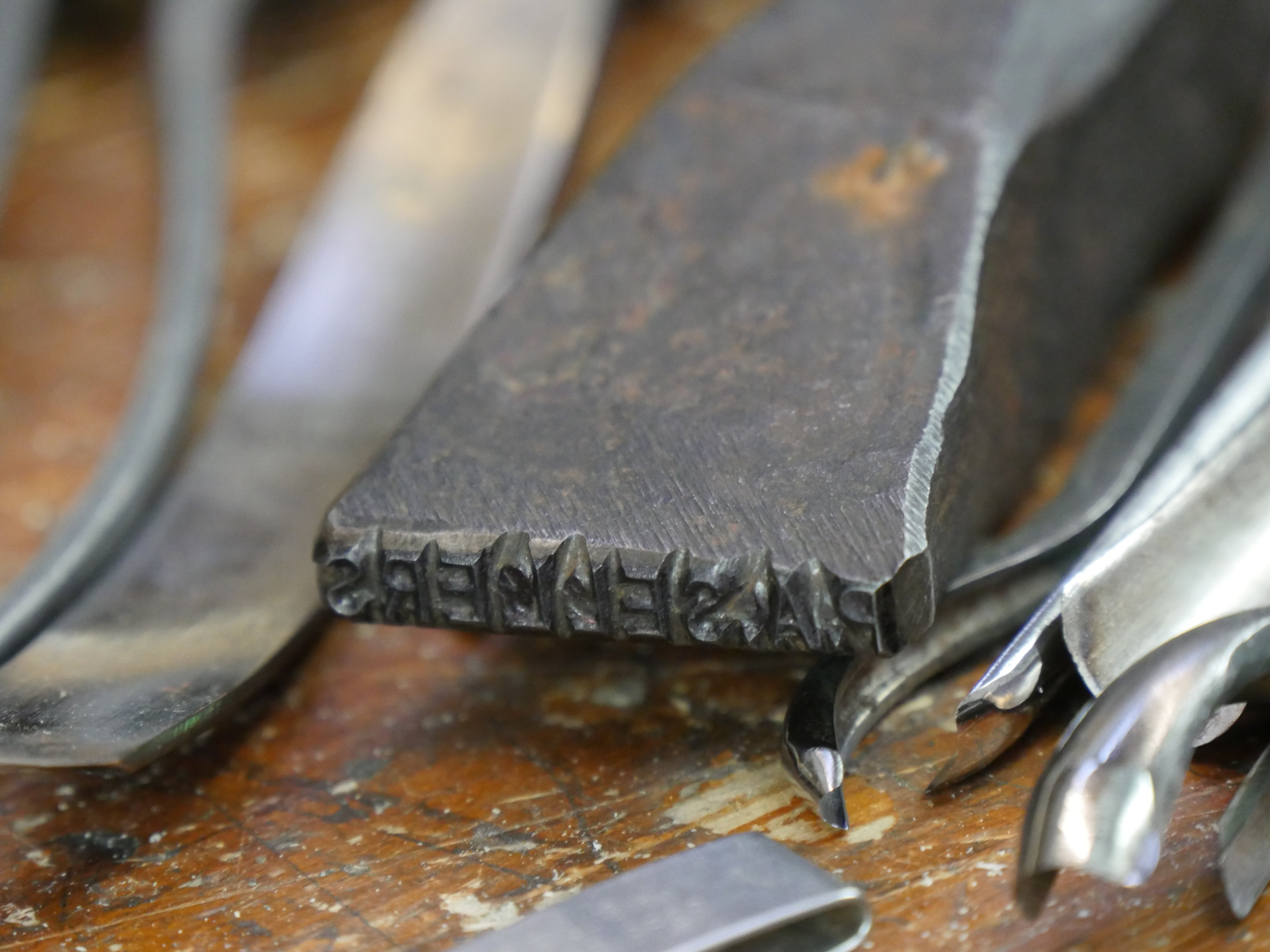
In 1966, George, the man who mentored my five-year apprenticing, told me to order my name stamp. It wasn't a request but an order. He showed me his and the stamp it made in wood and steel, brass and bronze and it made sense to identify my tools the same way. It seems a small thing now, but it cost me a several days wages and I had but 10 hand tools to stamp. In those days there were no permanent markers as such. The nearest thing to plastic pens were just about emerging with the now ubiquitous Bic biro. Since then my name stamp has embossed many hundreds of tools I have owned, sold or passed on. Many of my past apprentices own tools with my name stamped indelibly on them.
The thing about applying a name to your tools is more than mere identification. When you put your name on something, no matter what, you apply something to it even if it it is a stamp, as in this case. You show that you authored something and that you had authority in it and over it. A scientist researches a work, assembles his knowledge and then the work of others and attributes the work of the other by the side of his own, thereby acknowledging their authority in the document he produces as fact and proofing. A man or a woman signs their work and show their authorship and ownership of it. It's a necessary step in the scheme of life.
My name stamp grew in significance as I aged and as I accumulated more tools to work with. I like the name stamp all the more because the blacksmith who fashioned it did so by eye and without a computer and the stamp has a masculinity to it that I like too. It’s not prissy but made accurately and with a sensitivity I have only ever seen in a well-trained blacksmith working with nothing but iron and steel tools, an iron and steel anvil, steel tongs he made himself and then a steel cross-pein hammer. He translates sensitivity in the transforming of hard steels by forging his sensitivities into the raw steel. From light or heavy blows, with the same hammer, the steel moves according to his will and the outcome seems formed as if from soft putty. My name stamp is raises my name in ridged arêtes of hardened steel. I worried I should lose my name amidst my other stored treasures and fail to pass it to my family. I now have it secured in my bench drawer and hope never to leave it elsewhere than with me again. My work continues and so too my name and the authority in authoring future work, be that new books, video presenting, classes, lectures and then of course making. The stamp will be applied appropriately to future tools, I am sure.
For the main part an eye will pass over the stamp without thought even though to me it seems an impressive work making name stamps in the forge rather than by engineering and CNC. I see more and more work come from plasma cutters and such and see its stamped out soullessness. I am glad that the ancient work of the old didn’t escape me and that it still surpasses the present makers who think themselves clever from punching a few keys.
Comments ()