
From Junk to Funky Functionality
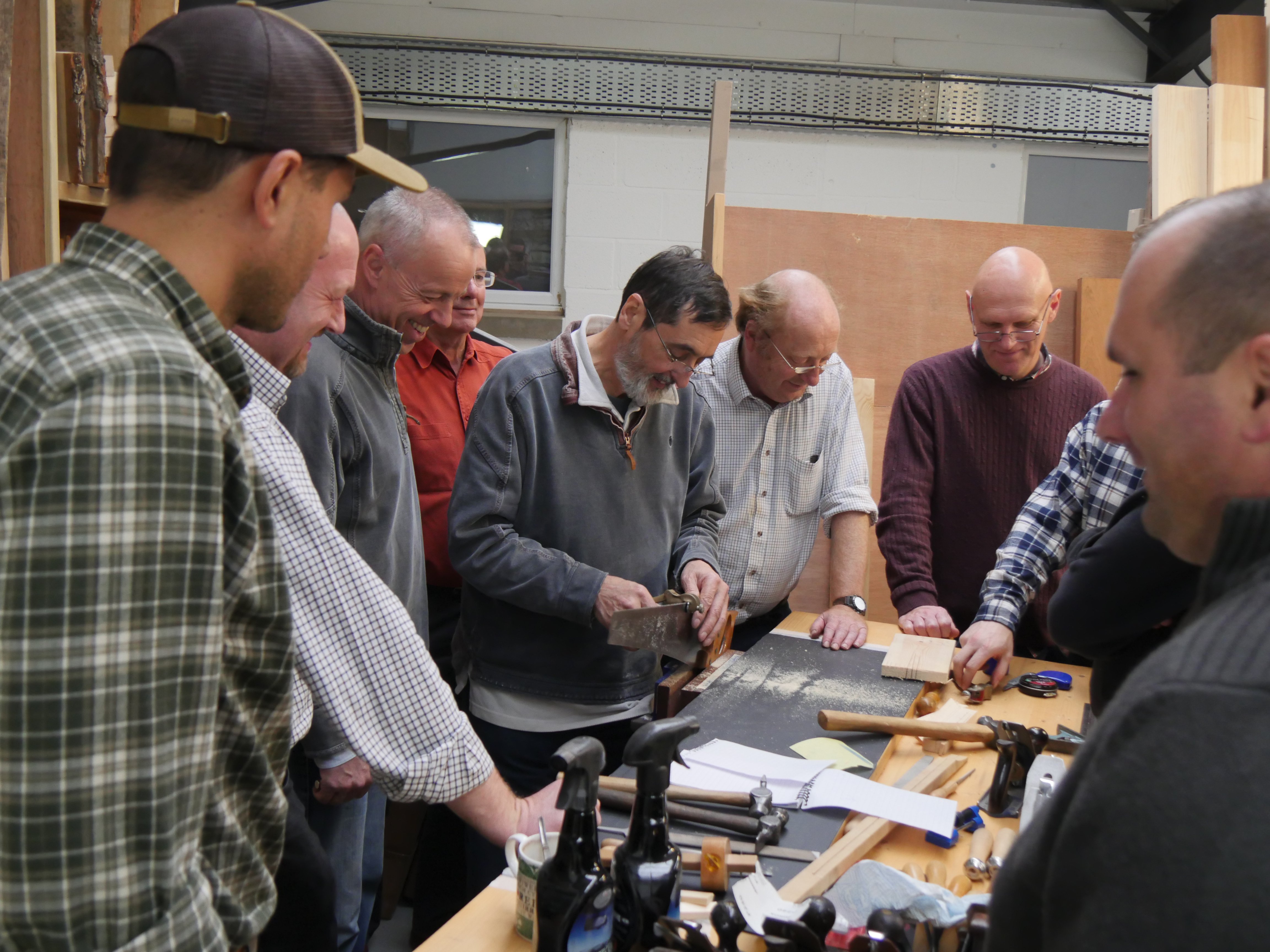
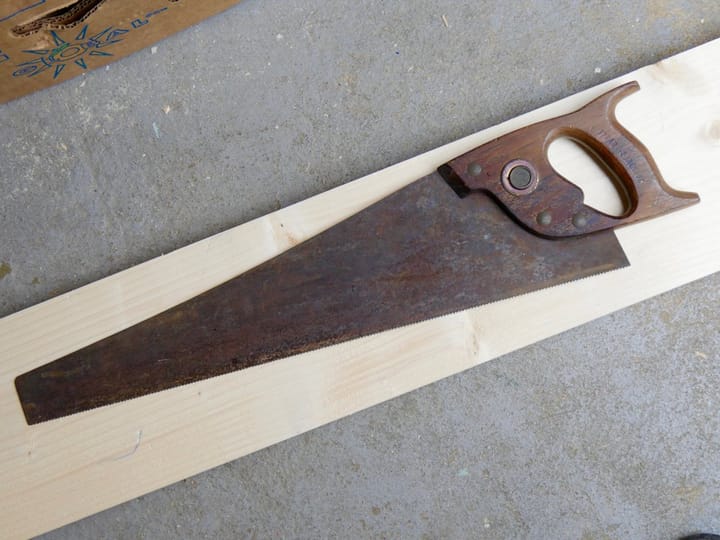
We gather in a cluster around my bench. I twang an old saw as everyone finds a stool to perch on. Suspended in a sense of apprehension new learning in class always has, I break the ice with a welcoming nod and a "Welcome to the inner sanctum of my workshop." Smiles break out and someone comments, "I've seen this so many times on video and here I am inside." There is no predicting occupations; an accountant and an engineer. A train driver stood next to a just retired railway signalman. One says to the other, "We've probably sworn at one another in the past." A painter and decorator works near a vineyard owner from California and there is the usual meltdown were differences disappear and what they came for totally unites them. Saws and planes in rusty condition lay destined for new life. Oil and wet n dry, flat and three-sided files, diamond plates and more equipment all support the work ahead. Before long there is an intensity in the atmosphere as the first filing tops off the teeth and the files strike at the rusted gullets.
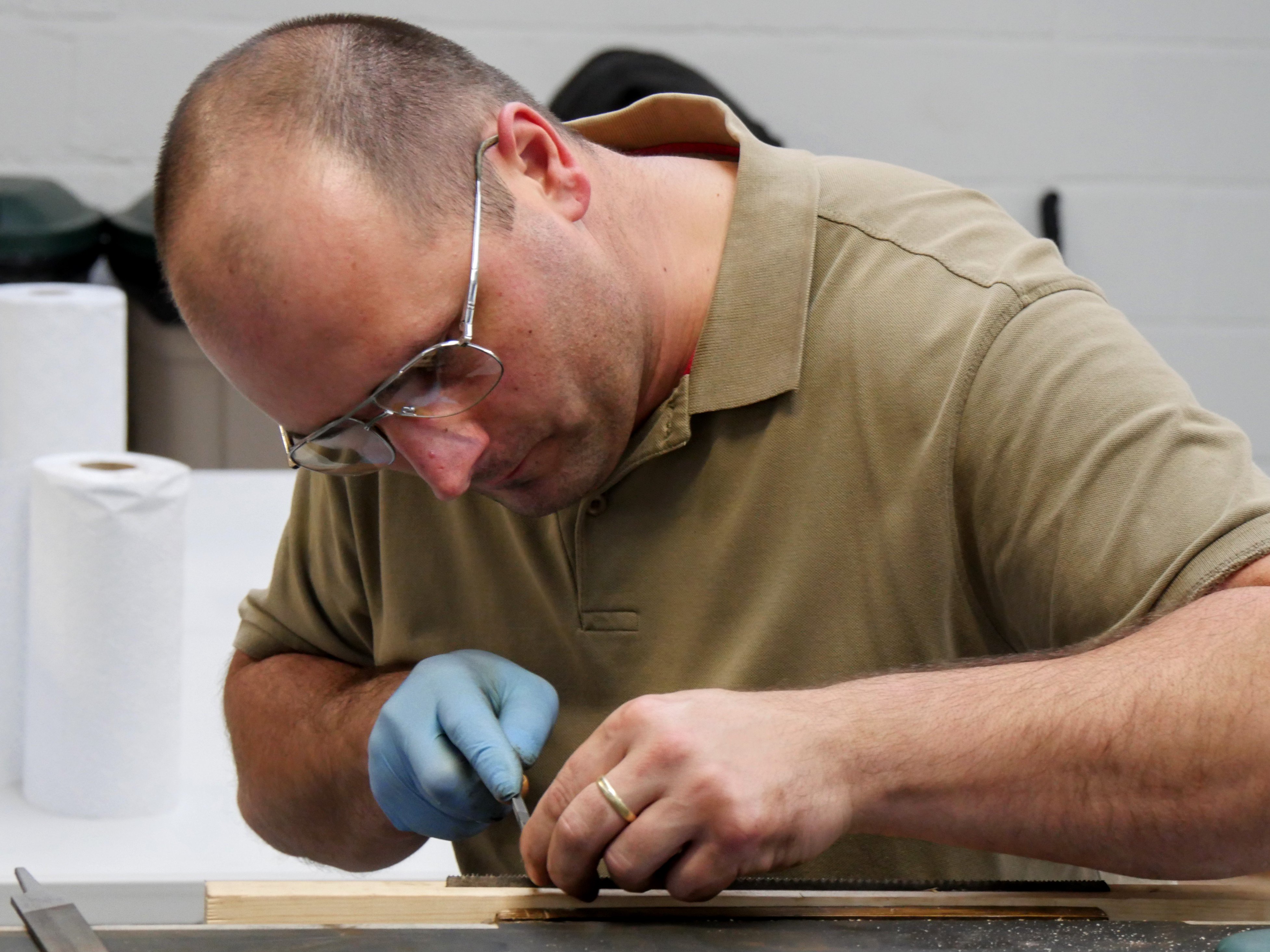
I am of course taken way back fifty years to my first sharpening when George, my mentoring craftsman, said, "You sharpen the back of the tooth that's leaning away from you." It wasn't until 20 years ;later I realised that whereas that was true, I was actually sharpening the front of the teeth leaning towards me with the same stroke. He just forgot to tell me that bit. At the bench, mine, I am able to explain about the light on the topped teeth, how we can gauge the degree of misshape by the amount of width reflecting from the now flat tops. They watch me as I move the file into the face of one tooth and reshape it to better symmetry. Moving along the saw, which has badly shaped teeth, the shape of each one becomes uniform. The saw I was sharpening turns out to have super-hard teeth (unfortunately) so it takes me a little longer to get through the badly work and poorly shaped example. But when I was done it sliced through the wood like a hot knife through butter. Everyone tried it and they were amazed.
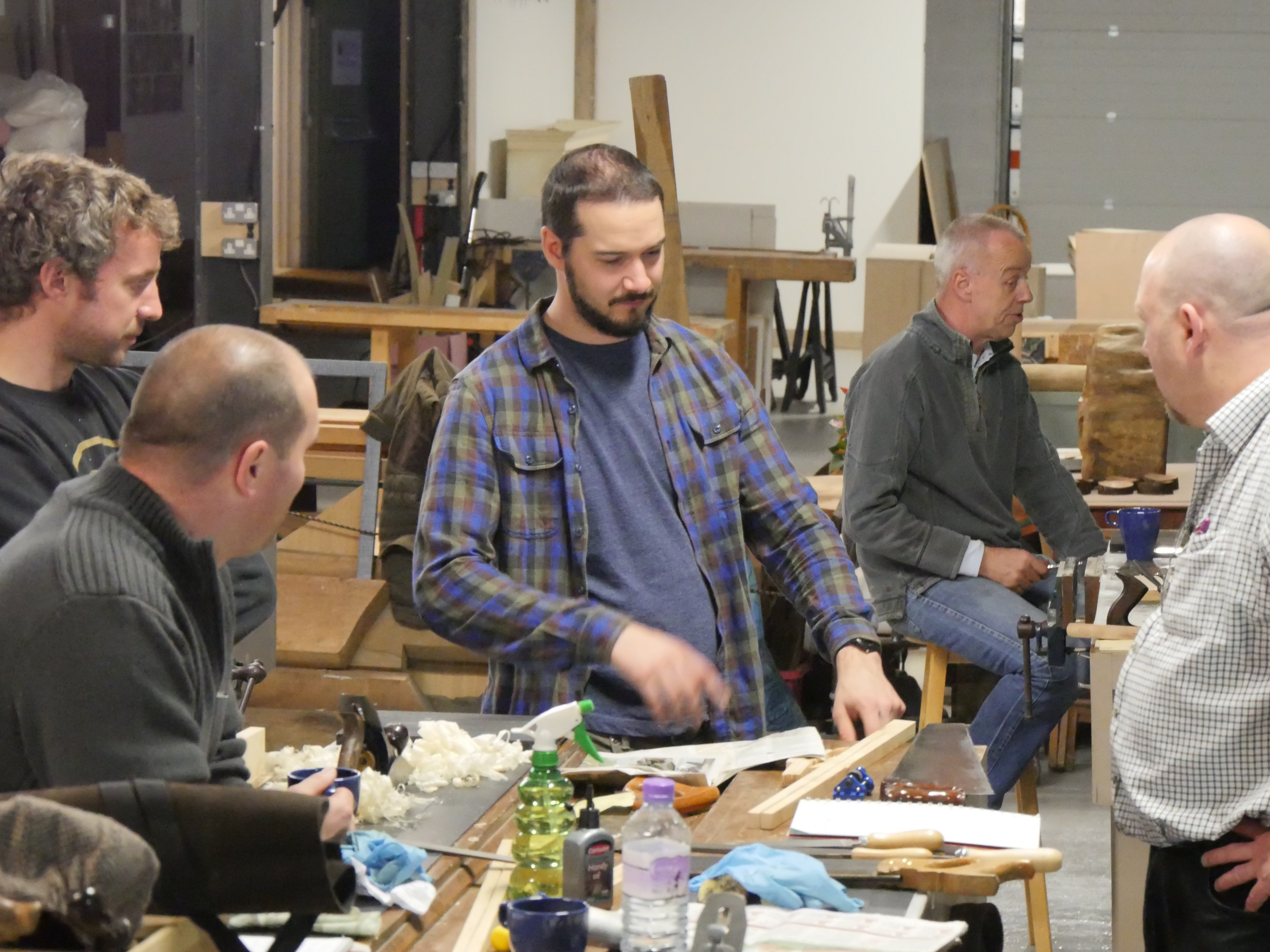
We fixed up the two saws I provided, which were a handsaw and a smaller 10" or 12" tenon saw. Whereas we could have provided new saws for the exercises, it was the misshapen teeth that gave the added dimension they needed to learn to reshape the teeth as well. The profile of the teeth determines many things. It affects the aggression of the saw and the depth of cut too.
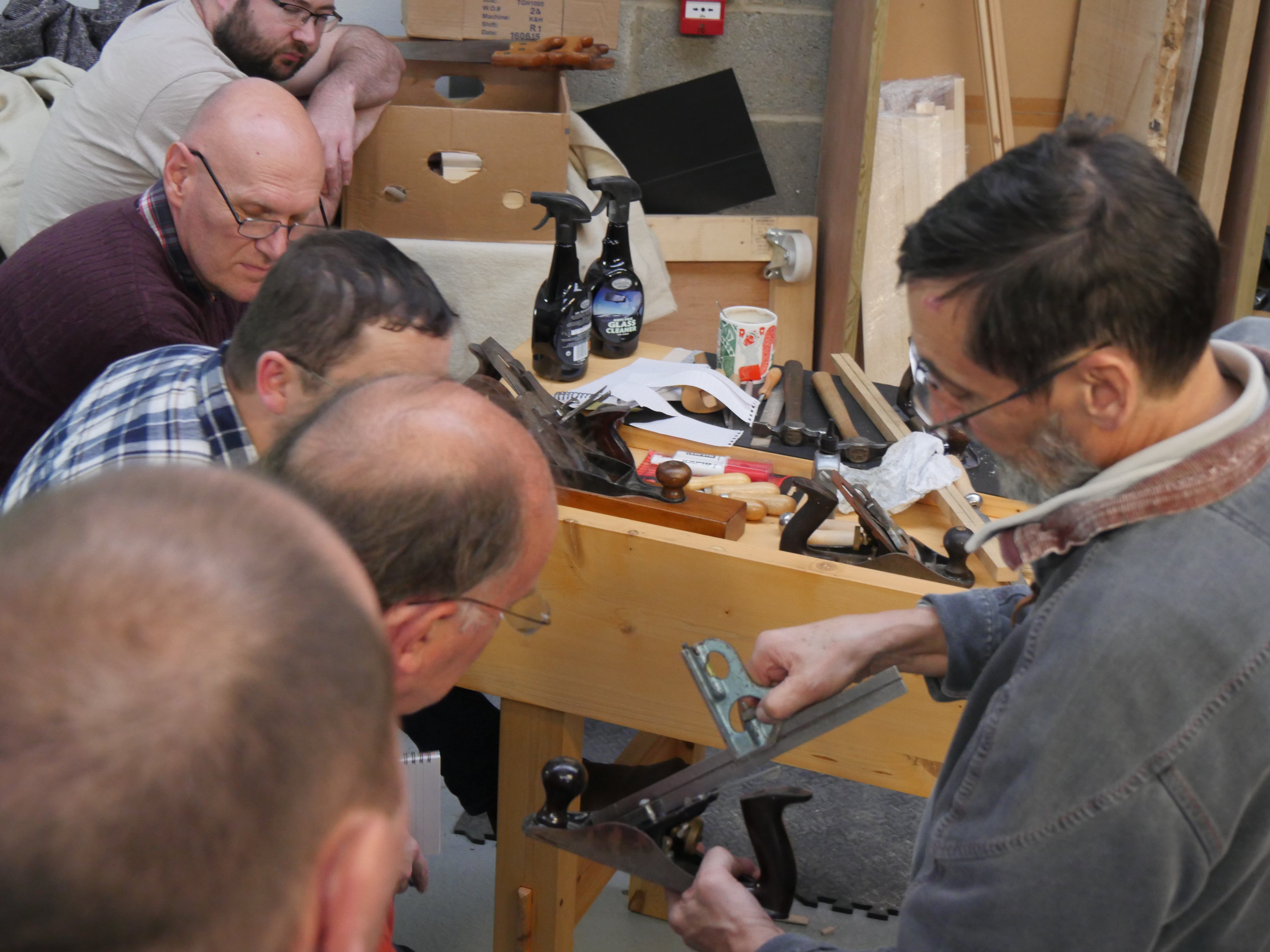
On then to the planes in the afternoon. We allowed about equal time for both saws and planes and it took every minute of the day to progress both tool types to become usable tools. Of course I stuck to me ever faithful #3 and #4 Bailey-pattern models as these are likely long term to be the models that will survive the test of time. With sole flattening and iron initiation, we had planes swiping of shavings after about an hour on the restoration work. I think everyone had success with both tool types and many of the students had never used a sharp plane before.
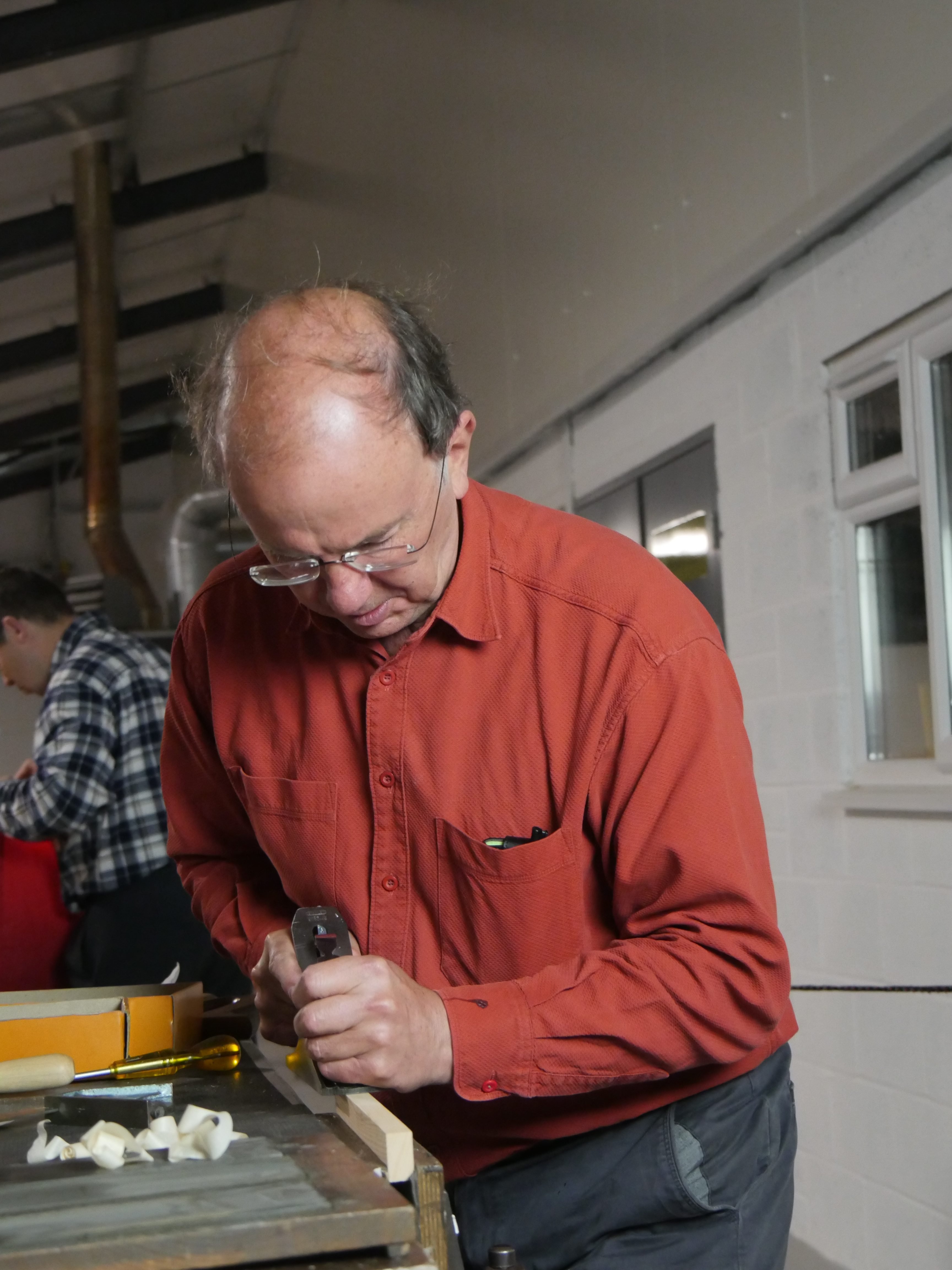
It is hard to evaluate what a class like this means to everyone. Judging by the way people left I would say it seemed 100% successful. But they will fill out their evaluations of us and we can make changes to improve any area we may not have thought of. It was indeed a great class so I look forward to the next one in two weeks time. This will be another two-day introduction called Discovering Woodworking.
Comments ()