
Chess, Anyone? Chequers Maybe?
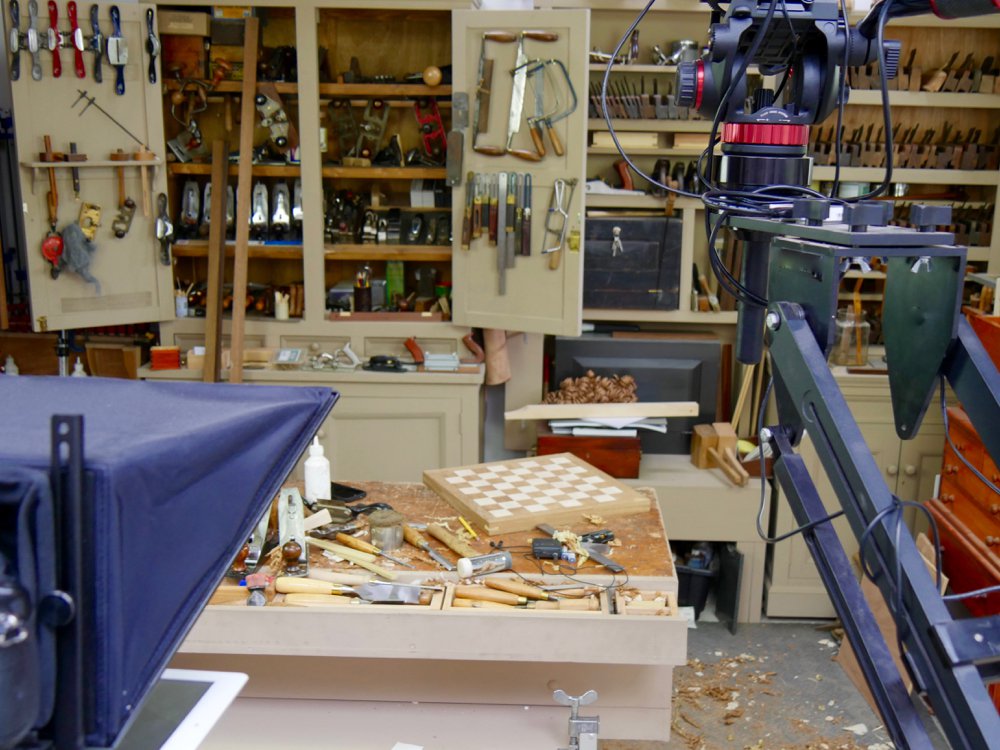
You’ve asked me if I could show how to make one of these for some time now. We filmed the methods for making it this week so it will soon be developed into a video once our editors start working on it. It will be a great video series for those of us who just love hand work to engage the wood with and also the senses too of course. I have loved making this chess board for many reasons not the least of which the excursive and wellbeing it brought to me through the simple yet significant challenges it brought me. What fascinates me is that I still enjoyed every bit of it because by choosing hand tools and hand skills I created a sphere I that demanded more of me. Time, effort and then, for me at least, the all important elements many try to avoid difficulty and risk, these are the things that stretch my mind, body sinew and muscle. My emotions are bettered this way and though the work is a hundred times harder than working wood by machines, there is always this indescribable feeling of worth that no one can really describe because worth of this kind defies words.
I planed my wood to thickness with a £12.24 pence brand new ebay #4 hand plane that wasn’t a Stanley and enjoyed that immensely because it seemed to me ingratiating. I also used my old Stanley #4 too but mainly because not everyone can get hold of the cheaper plane outside of the UK. I couldn’t really tell the difference and I mused on that through the day. It seems as though the cheap imports have managed to improve where Stanleys consistently worsen. Anyway the work did do me a great good and then there’s the added reward of my using the making of the chess board to teach simple woodworking techniques and methods to others around the world that might never have access to machines or want to use them. I am thankful that more and more people feel equipped to work with hand tools.
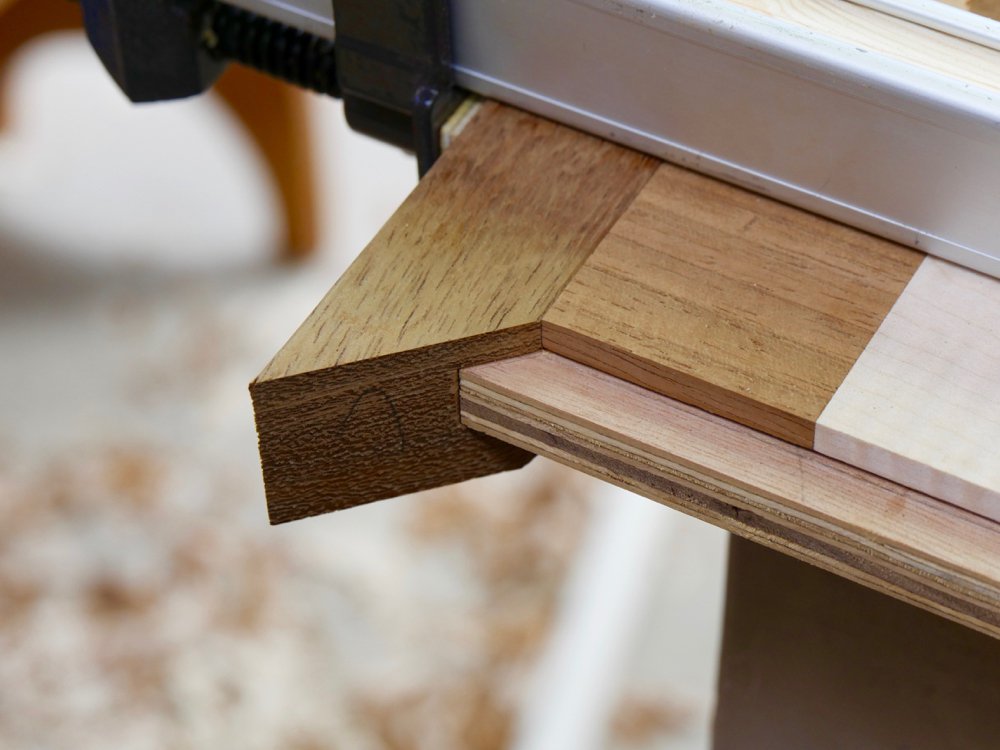
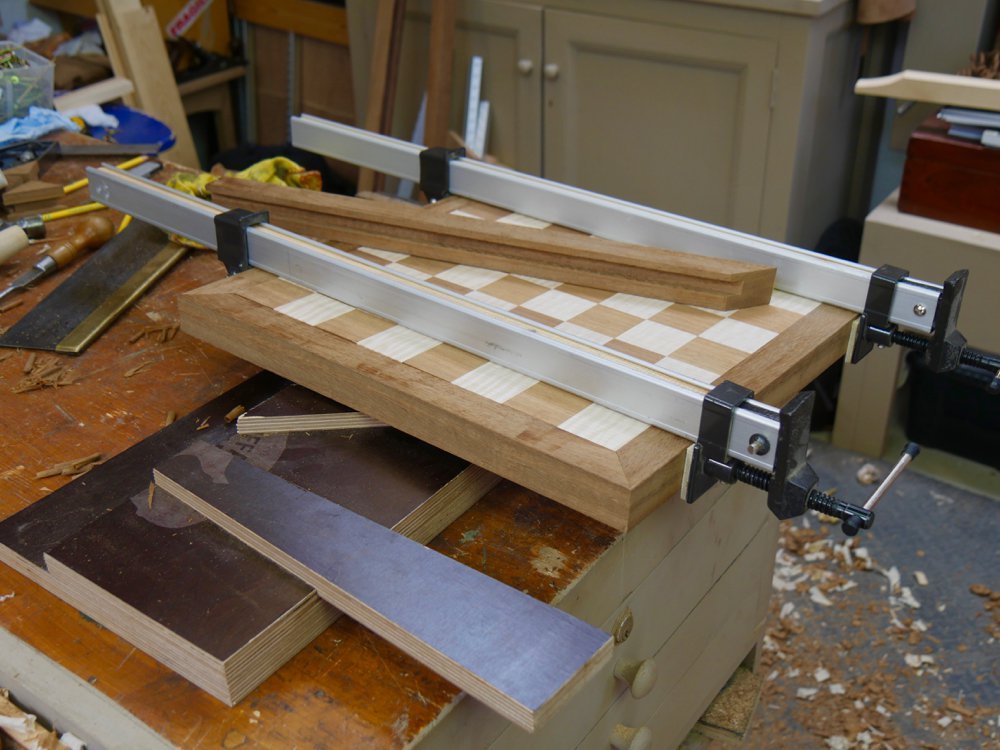
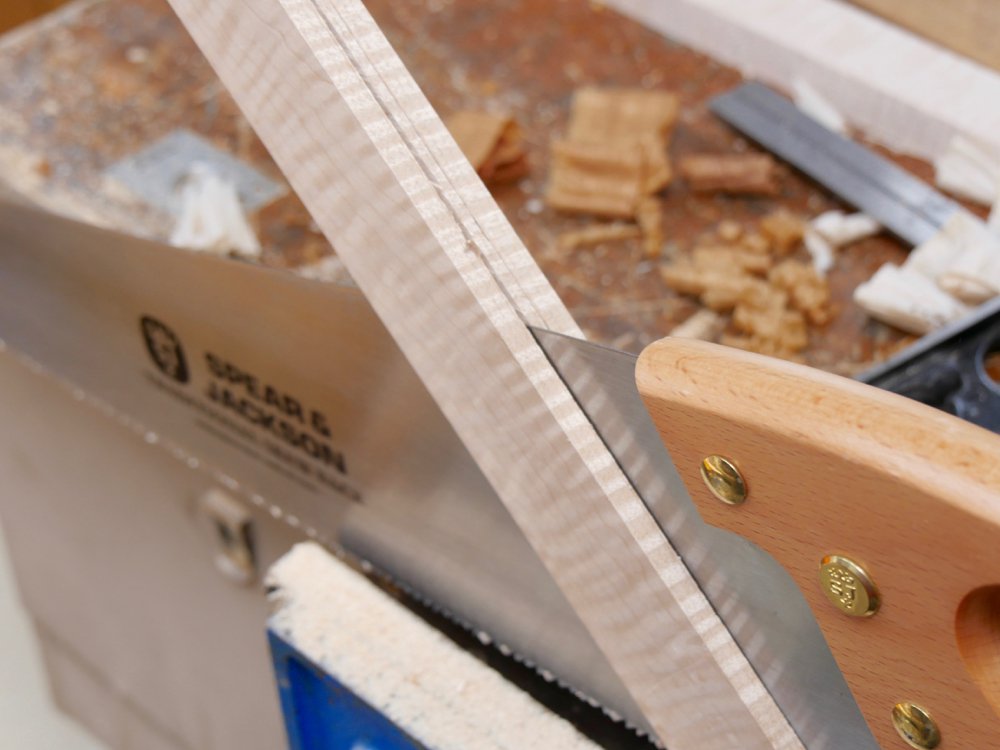
And here we are with a chess board. I made it using a handsaw for rough cutting, a #4 hand plane, a 12” tenon saw, a dovetail saw and plough plane. I used some layout tools, a marking gauge, a square, a chisel and a chisel hammer and a knife. Ten simple hand tools in all.
The dovetail corner pieces worked just fine without a router and router bits. No jigs, no router table. Just the tap tap of a mallet on wood. Nice.
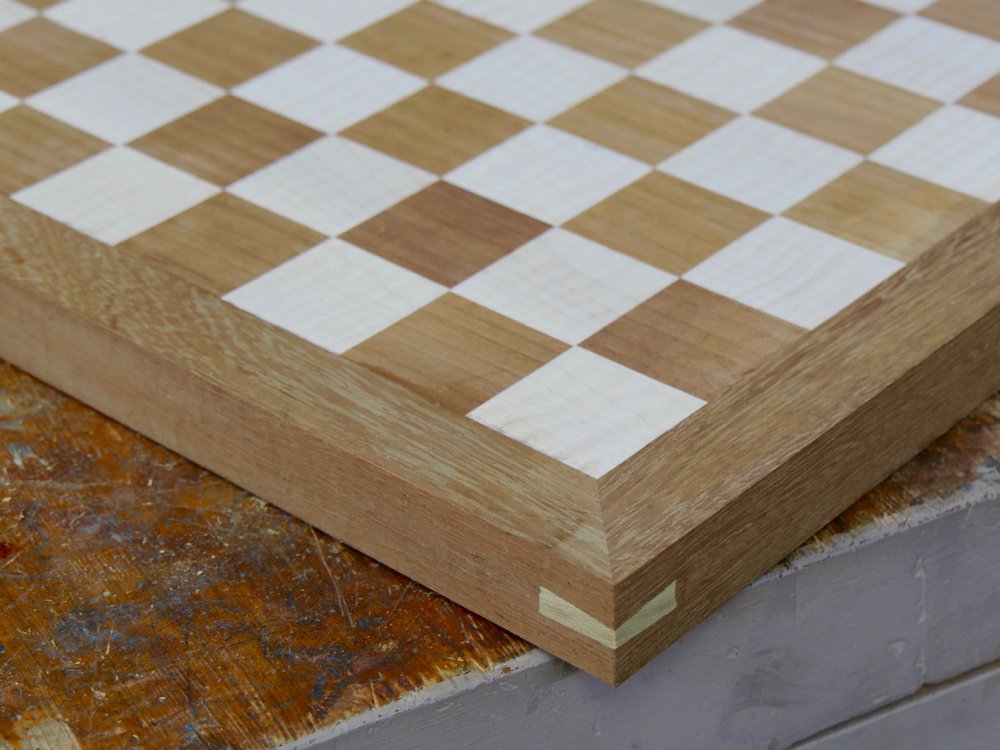
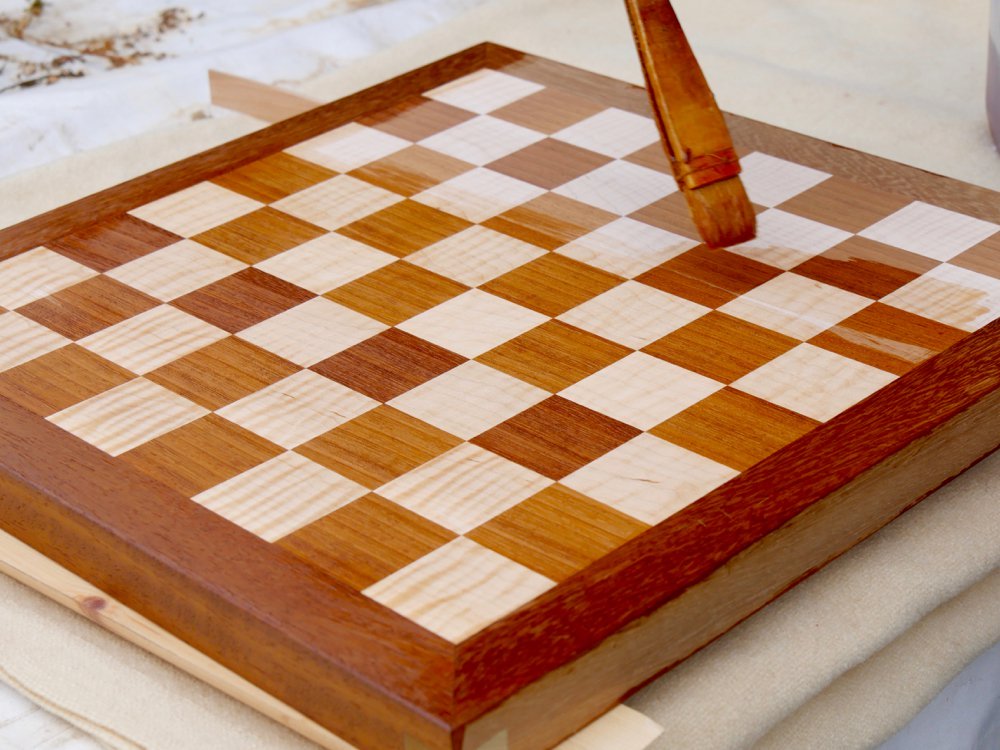
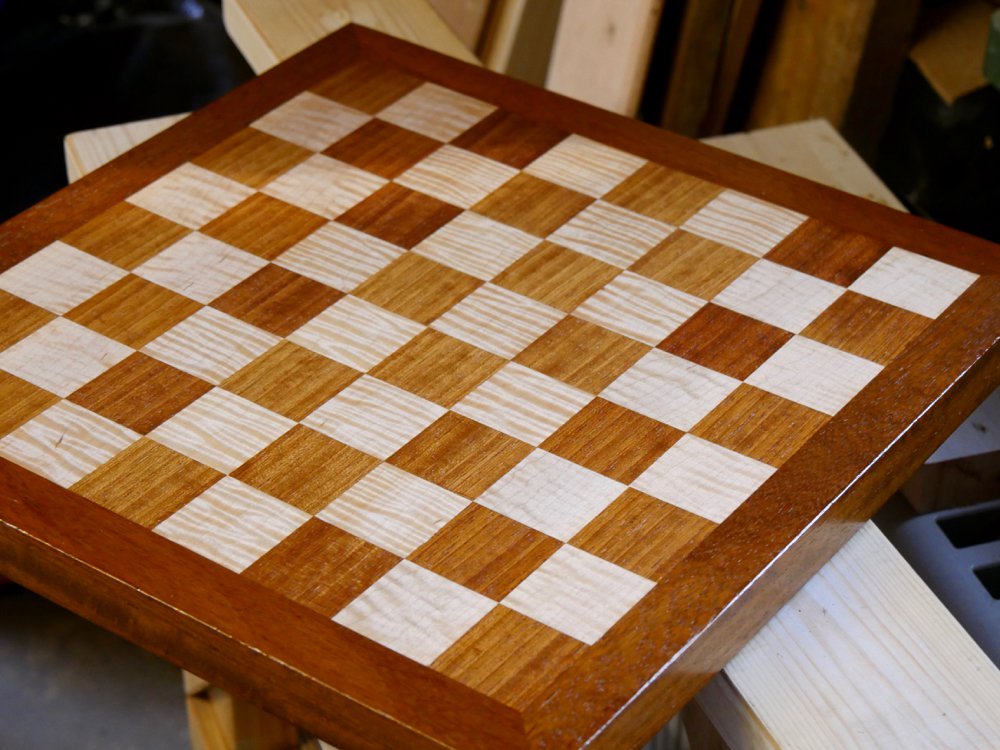
Most of the wood came secondhand. The brown mahogany squares came from wood used as a packer between a benchtop and a vise. I bought the vise on ebay. There was just enough between bolt holes to get the 32 brown squares from it. I had some curly maple left overs for the white ones and then I was stuck. I went along to Oxford Wood Recycling for some more mahogany not feeling much hope for the right match and ten minutes later I left with a perfect stick of wood that matched exactly. I know, it didn’t seem I planned it out much, but that’s how I work best and I ended up with a victory.
How was your week my friends?
Comments ()