
Rebate Plane #1—Concluding the #78 Duplex Filletster Plane
By now you may well realise that the Stanley #78 moving filletster plane is a useful plane to own and a first choice rebate plane. Unfortunately, because of the missing information, diminished woodworking in schools, diminished use of hand tools generally and then of course machine only exponents who cannot understand why we woodworkers like to use hand tools and develop the more skilled levels of workmanship hand methods require, this particular tool is all but disappearing. Of course it shouldn’t disappear if you do indeed need some rebating even if just occasionally in your work.
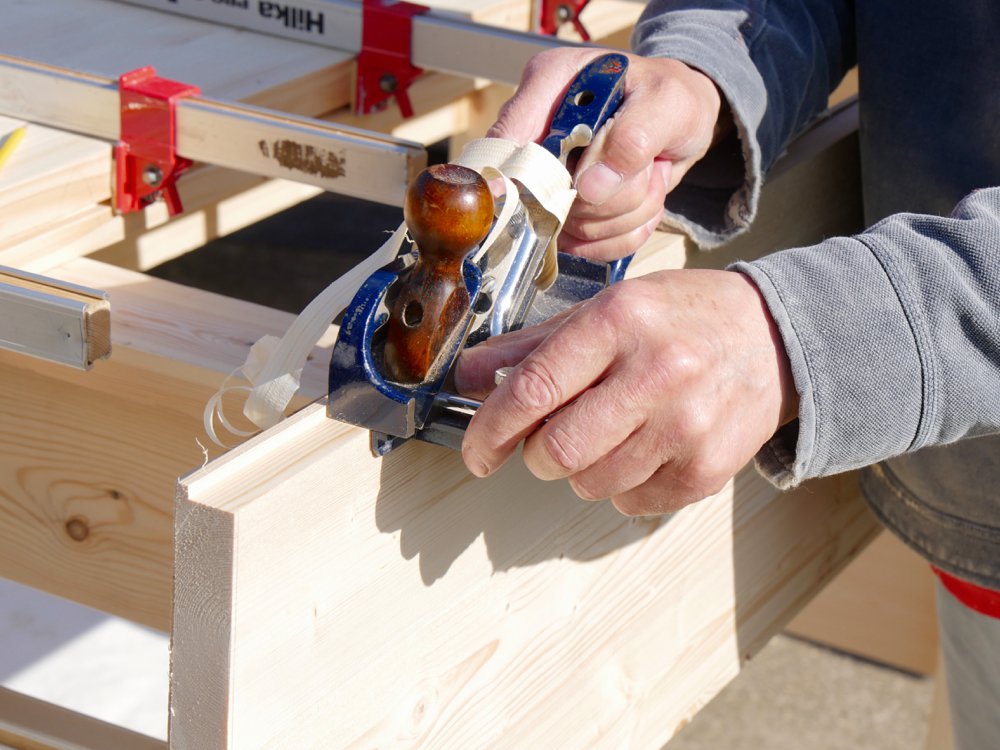
As far as essentiality goes it’s one of those borderline planes I almost included in my latest book Essential Woodworking Hand Tools. It is more versatile than all of the other rebating planes because of its fence and depth guides and its easy setting. You can readily plane end grain as in shoulder lines and such too so don’t think you can’t because you can. If and when you do it’s a good point to sharpen up the blade as this gives pristine results with the least resistance. You can also plane across the face of tenon cheeks too to remove face grain for fitting tenons into mortises and then the bottoms of large and wide housings and dadoes. Very handy. I often use this plane up against and adjacent to the shoulders of tenons on the face grain taking one or two swipes and then completing the outer reaches of the surface of the tenon using my #4 smoothing plane. This is a great combinational use of two very different planes too.
Safe use
As with all of the rebate planes, you must watch for the exposed corners of the cutting iron because they are exposed along the corners of the plane’s sole and will puncture the skin more readily than any other part of plane’s cutting iron; so handle the plane with care. I mention this because we are so used to handling regular bench planes by grabbing the body overhand somewhere either side of the cutting iron area. If we do this with rebate planes we end up claw-clutching the corners of the cutting iron.
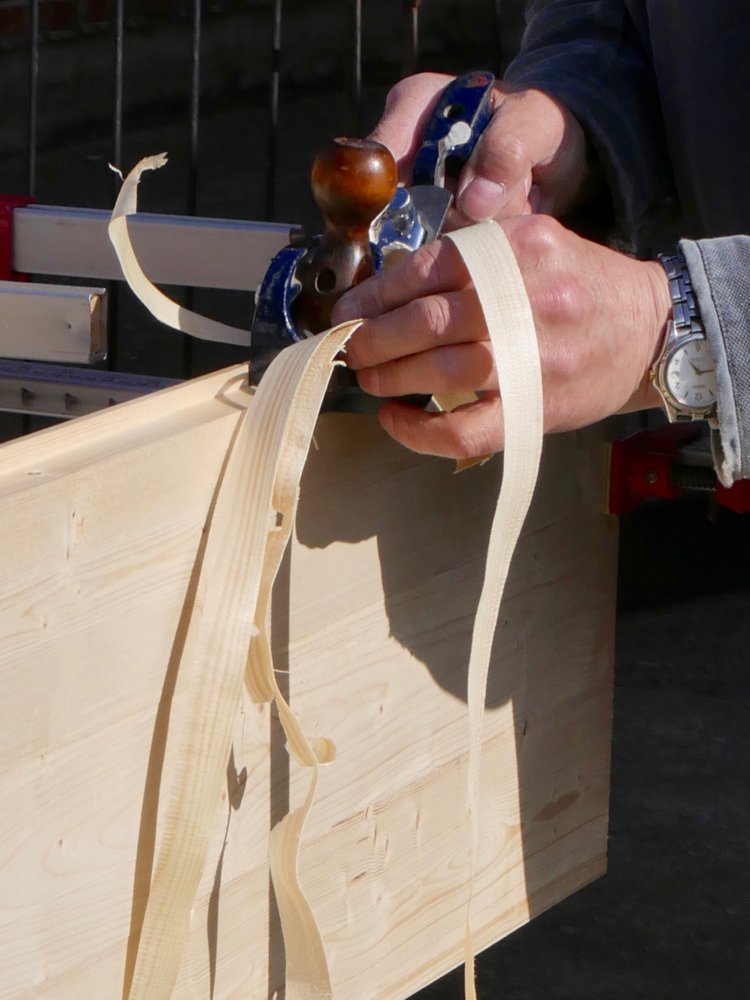
With a heavy (deep) setting the # 78 plane will hog off thick, full length shavings and this is indeed useful for initial cutting and getting quickly down to close depth. Especially is this so with softwoods and less dense-grained woods. Ultimately we want the best surface and this means you should reset to a shallow depth setting for finalising the rebate as this will give a surface finish similar to that achieved with the bench planes.
#78—Its rough-edged appearance
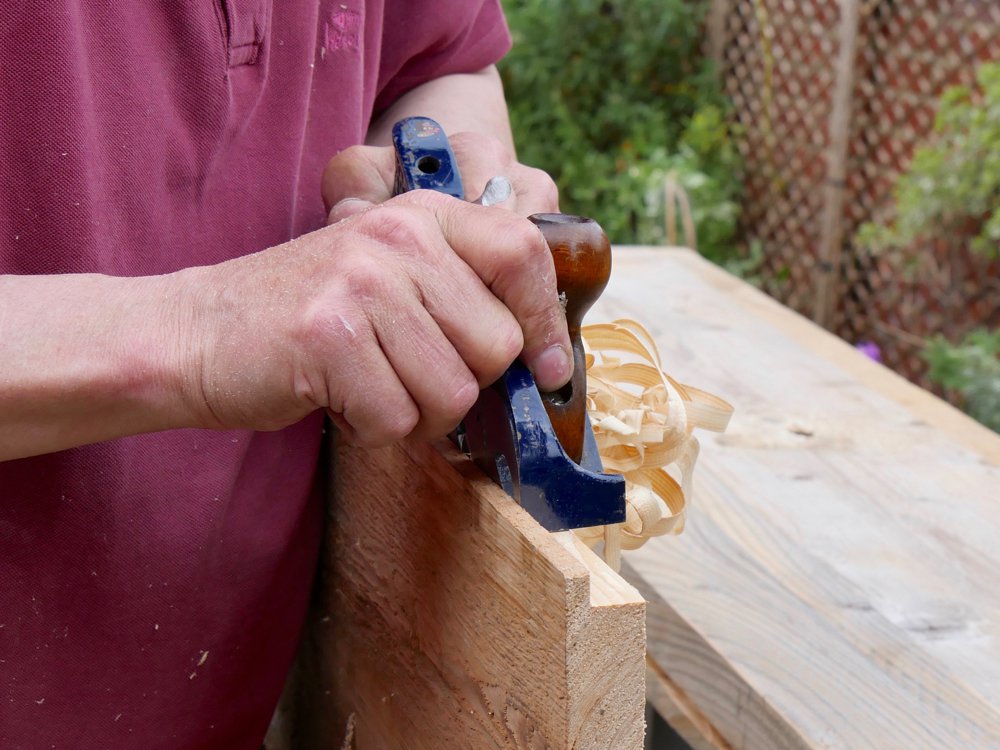
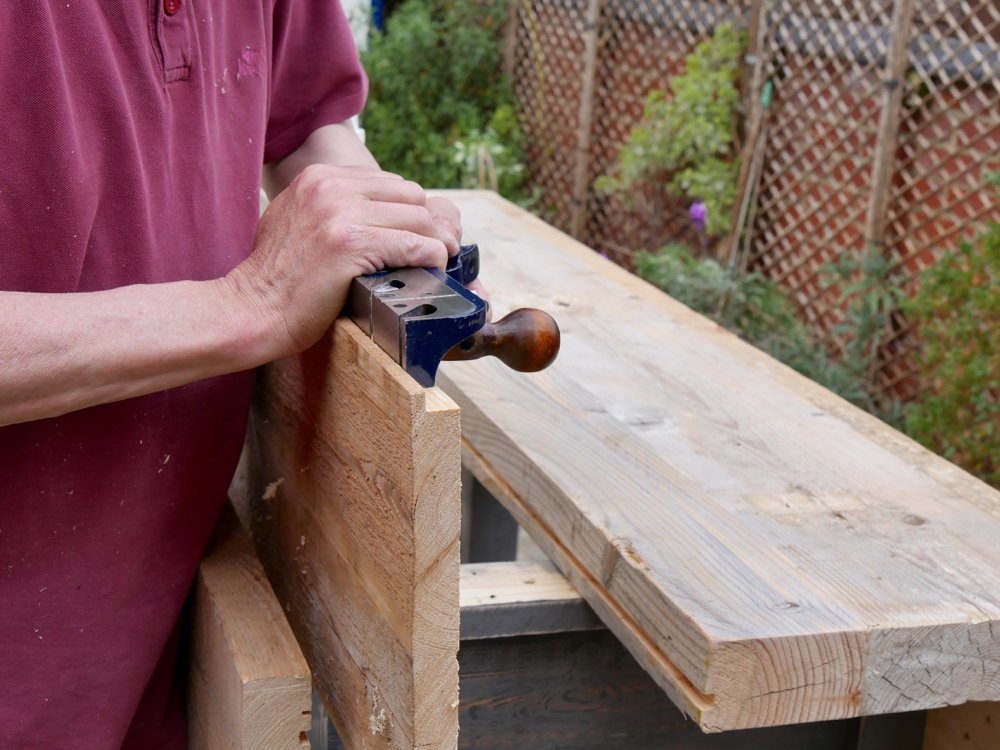
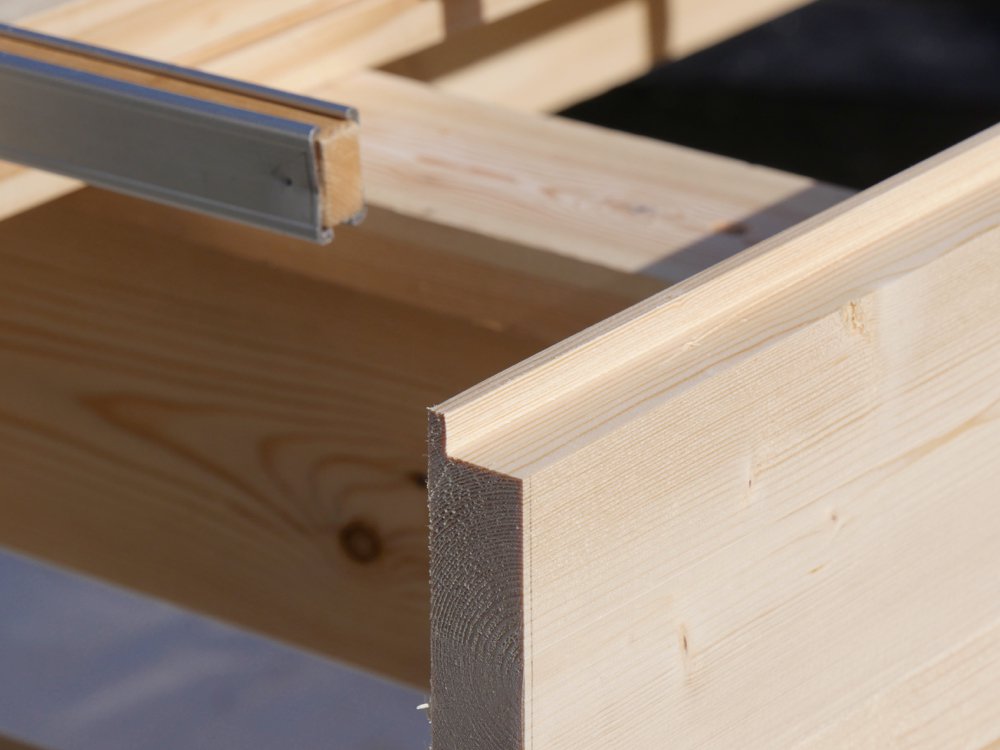
Compared to other rebating planes the # 78 plane is the workhorse in that generally it performs almost all of the tasks the other rebating planes perform but it looks, well, just a bit crude. Don’t let its harsh and less refined appearance fool you, it performs refined cuts very nicely, both with and across the grain and on end grain too. Because of its rough outer character you should not lean towards treating the plane more roughly or indeed fail to work with it to refine it all the more for your working of it. We have covered much of that in the previous blog, but I have met many “diamonds in the rough” through the years that have fooled me with their abilities and ultimate charm. This is definitely one of them. Initialising your particular plane will be your introduction to the ongoing fettling that we must get used to in the day to day working of every plane we have. These opening steps prepare you. They are critical. I can tweak my plane for use, disgorge the throat of clogged shavings and be back in the zone within a few seconds most of the time. This is what makes my life so enriched and this is what makes my work stand out in the day to day of life. For me it is not what you make so much as how you make it. This plane can be an answer for joiners and furniture makers, boat builders, timber framers and several other woodworking trades. Placing it alongside a 1” shoulder plane is not to compare apples with apples, but if you need to start with a plane that does pretty much everything then this is the one to start out with. Add others I will be talking about in this series as you see fit according to need and enjoy working with what you have.
Rebate plane #2 of 10 rebate plane types coming up next!

Comments ()