
Why Pick a Pull or a Push?
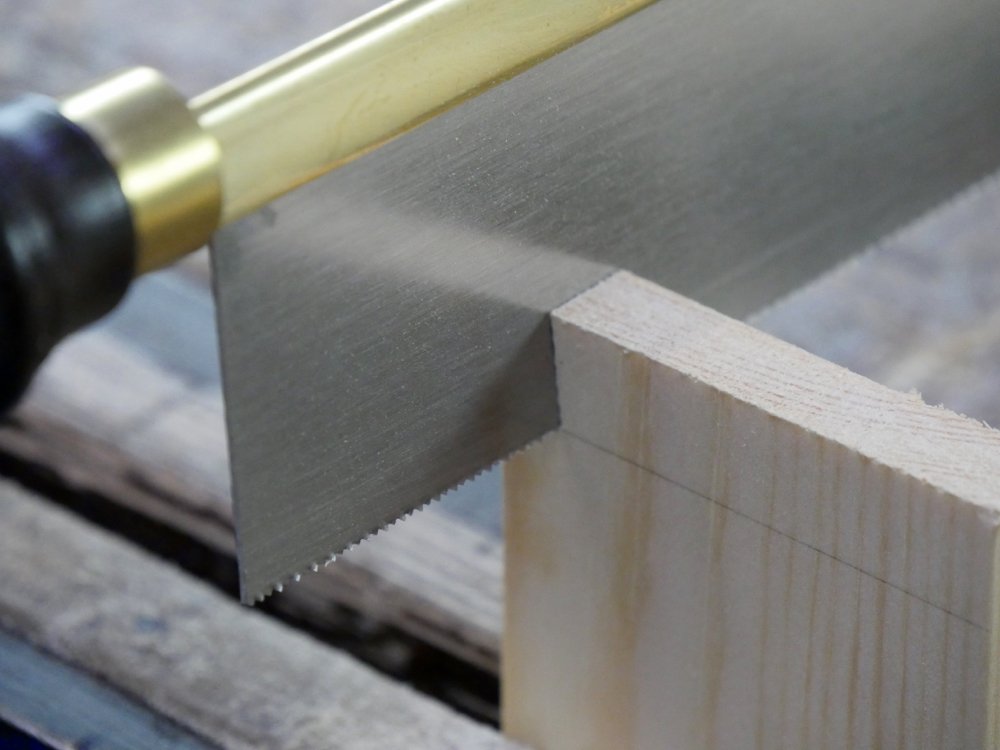
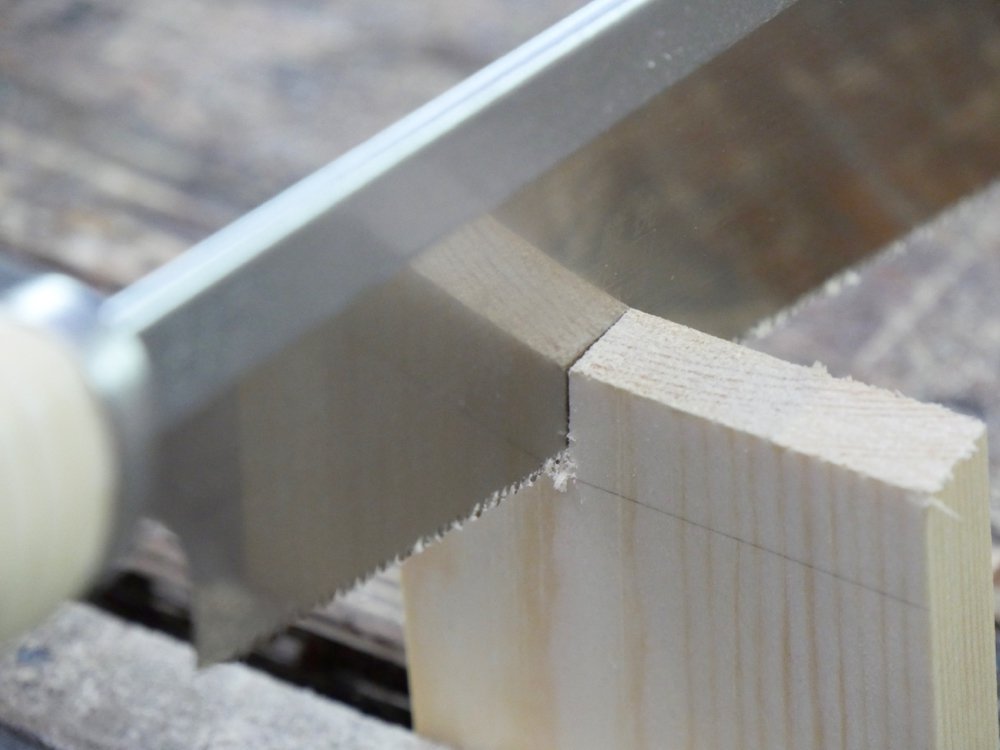
It's an interesting thing so many have converted to pulls when pushes work so well and can be sharpened a thousand times when you own skill. Thankfully a Sheffield saw maker remains to still make only resharpenables and so too a Canadian maker and then American makers too. It warms me that they haven't sold out. For me it would be a great sting to lose the gift of sharpening western saws and so lose the need for western saws under the onslaught so I do all I can to teach the craft of sharpening them to preserve it in the world's generations.
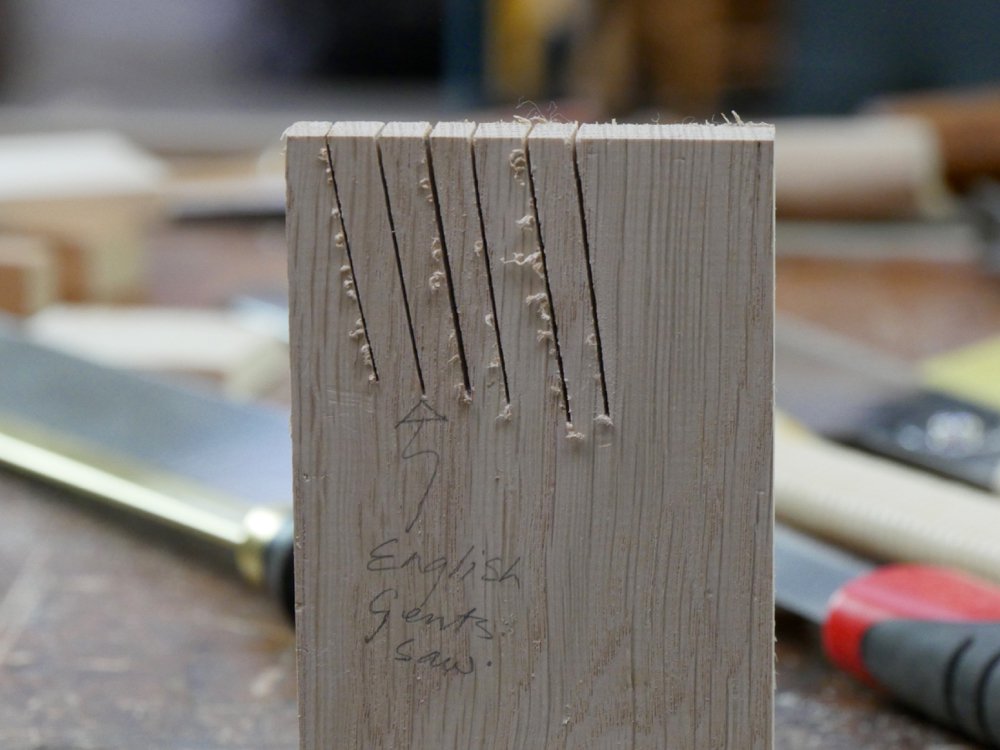
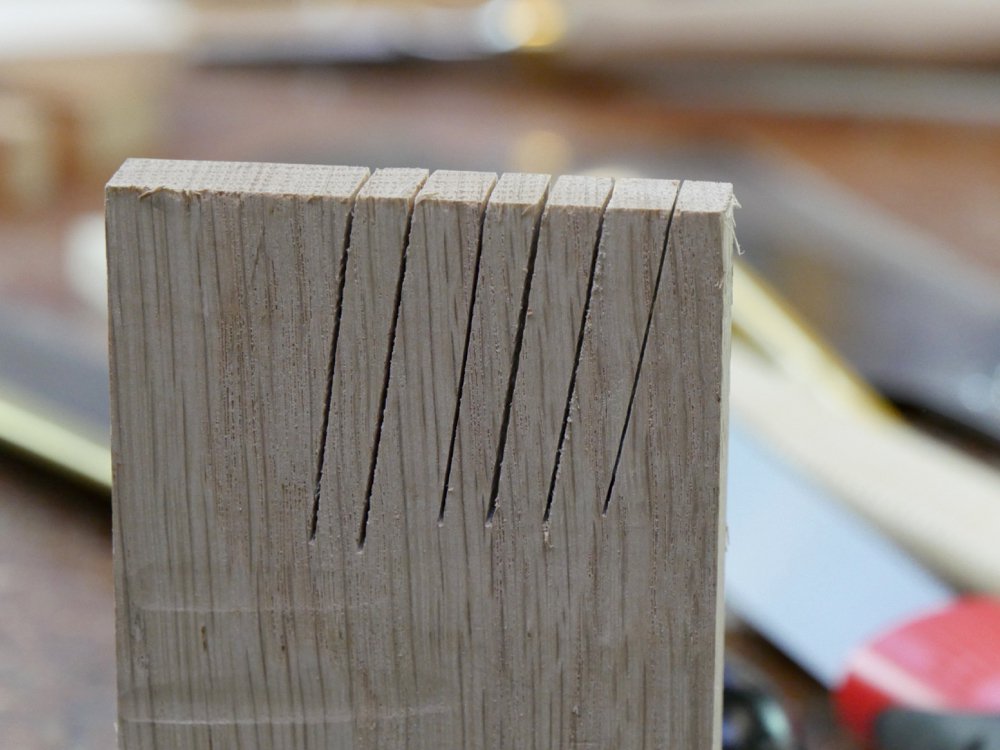
I cut these dovetailed lines to defy the mindset that thin import Japanese saws work better or best, give the best or only good results, cut thinnest and work the easiest. It's a question of mastering skills whichever way you work a saw. if you gave up on one for the other then you might well have missed the best of both worlds. Of course it's not really altogether true that Japanese saws work better or are thinner or are easiest and I don't believe it's as simple as a one saw cuts all or an either or as some might hope or say or teach. I hope to expand on this shortly.
These saw kerfs shown show both sides of the saw cuts into and through oak. The arrowed line in the top image indicates the one cut made with the western saw and the others made with four different Asian saws. You can see the in- and out-cut results from new saws (bottom out-cut will be second from right in bottom image). Oh, and the saw I used for the western saw cost £17.79 brand new and I have used one of this type for two decades with no issues at all. Anyway, all food for thought.
Comments ()