
How/Why You Use Your Journals?
Mr. Sellers,
My wife will happily tell you that I spend WAY too much time fussing over stationary and pens. Nonetheless, it's a joy for me. I'm always curious how creative and productive people do their work. You have tons of content on how you use woodworking tools. I'd love to learn more about how you use your notebooks.
Do you, for instance, have one notebook going all the time? Or do you have books for particular projects or types of projects? Do you have a brand or a style of notebook you prefer? I suspect you'd prefer one that lays flat when opened.
Your sketching chops are admirable! Do you have a favorite resource for learning and developing those skills?
I'm also curious about how you plan and manage a project's workflow. Maybe this is something you don't think about often, especially for pieces you've built many times. If you're building something new, though, do you work out an "order of operations" first? Forgive me if the answers to my questions are in your blog someplace.
I'm still exploring! You've written about the essentiality of drawing. I journal and sketch as well! My favorite notebooks have been Moleskines, but I was recently stranded without one for a few days and turned to a legal pad. I loved having the extra surface! Now I want to try a larger format "full time" notebook. I'd love any recommendations you have.
Thanks for your work and the marvelous content you provide!
@llen
Answer:
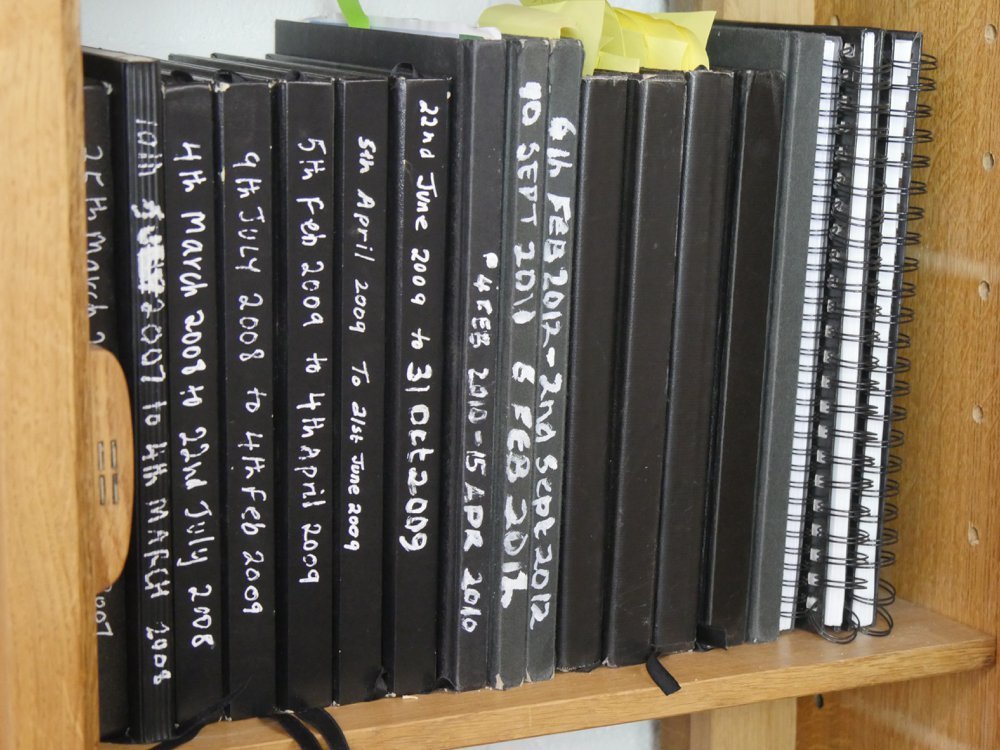
First of all I don’t like throwaway pads but I understand what you say about legal pads. For the rest of the world a legal pad is a USA size of notepad so it’s similar but not the same as an A4. A bit like a larger sized school refill pad. I used to use these but they seemed to be always telling me, “throwaway, throwaway!” when something inside kept saying, “Don’t lose it, don’t lose it.” So everything I wrote on legal pads was indeed thrown away because of its temporariness and I have almost no notes or records before say 15 years ago. Then one day I said to myself that I was losing valuable stuff from my life not the least of which was my drawings that tended to have blue lines equally spaced throughout them. An art professor in one of my classes kept very random notes of her progress in her sketchbook.
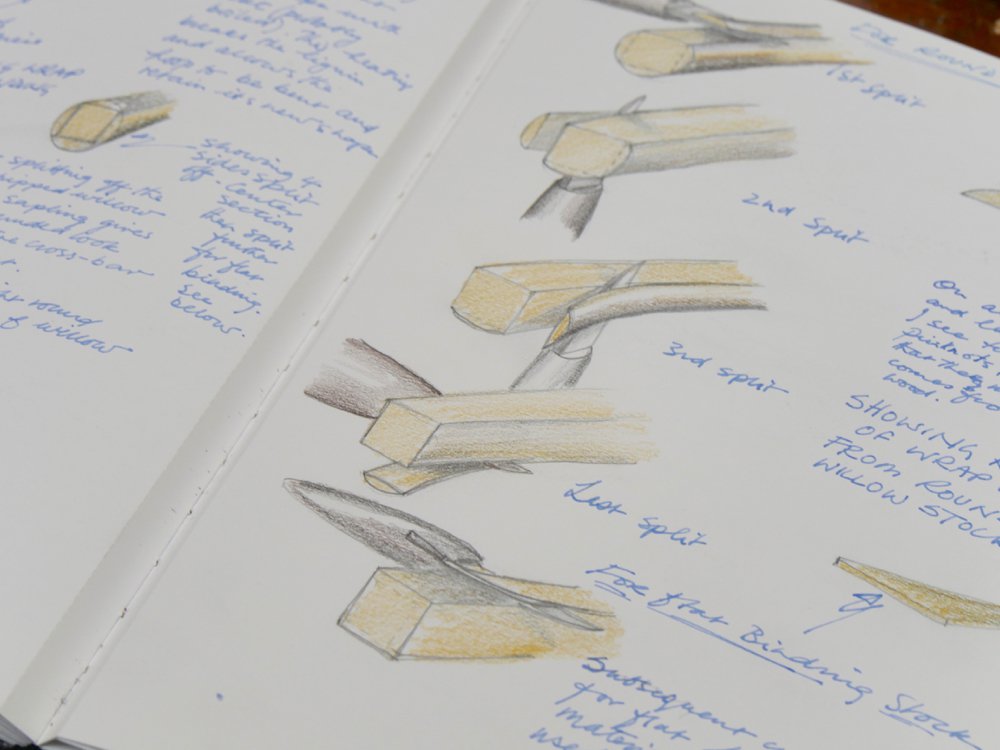
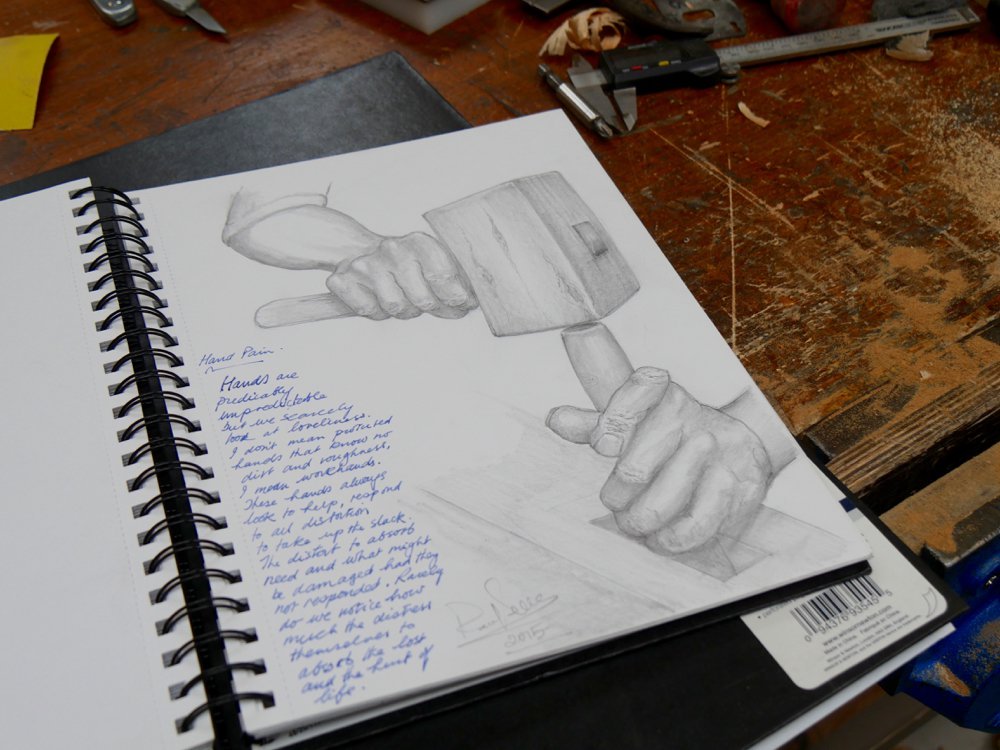
Though annoyingly random, she did indeed keep everything and had a total reference to look back on and rely on. I went out and bought the one made by or for Barnes and Noble called Sketchbook Punctuate which is trademarked by Barnes and Noble USA. It costs about $10 and has 192 pages so 96 sheets of acid-free 8” x 11” (7 1/2 x 11” actual useable surface) white sketching pages. Each page is perforated for easy removal but they stay in place too, so you don’t need to worry about losing a sheet accidentally. It also has a satin ribbon marker for keeping you page, which I do find handy. The ISBN-13:978-064158603-3. I like the smoothness of the paper as it only minimally influences the drawing texture and it doesn’t bleed when I use fine liners for pen and ink drawings or indeed technical drawings with technical pens. The drawings in my new book came from these sketchbooks which I tend to call journals because a write, note and sketch in them depending on what I want.
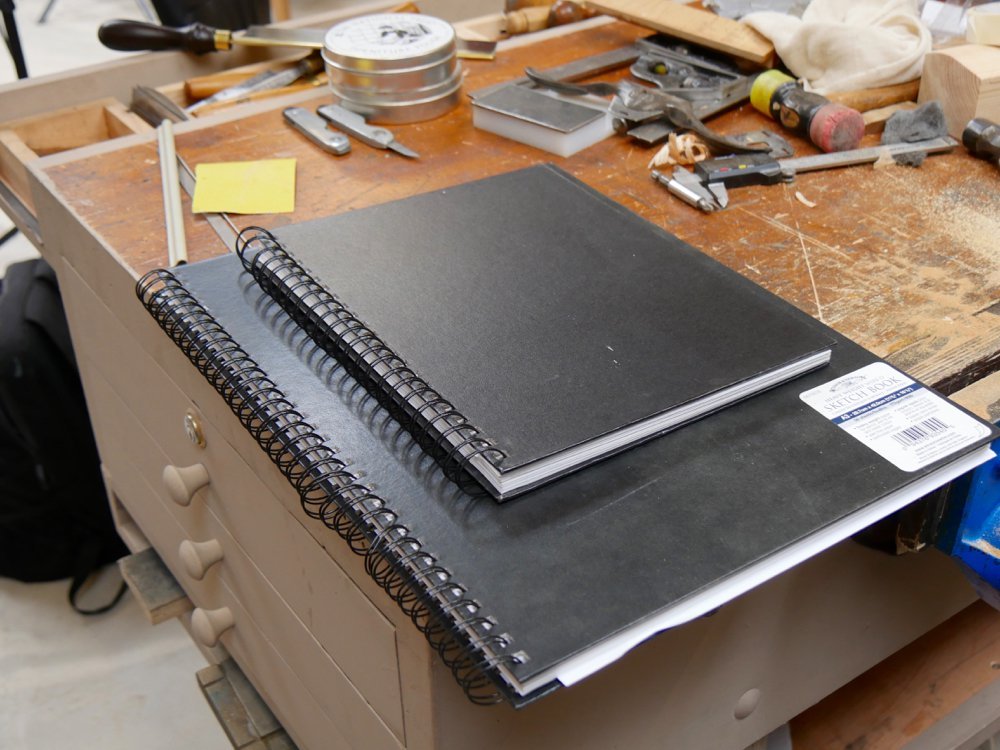
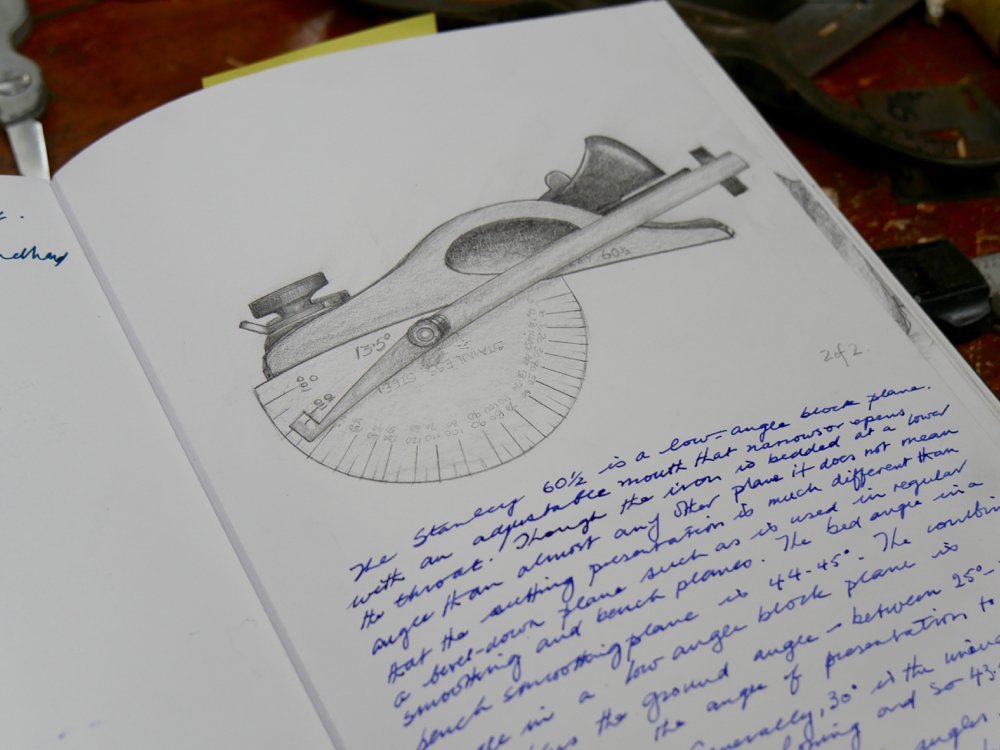
I also use Windsor and Newton wire bound sketchbooks regularly too. In many ways these are better because they do lie flat but I do not like the wire binding for the spine generally. I have just got used to them. I only like the way they seem to catch on everything and often a ring will end up deformed in some way and the pages don’t turn until corrected. These are useful for larger format so my main ones are 8 1/2” x 11 3/4” of useable surface. The next size I like is the UK A3 sketchbook size 11 3/4” x 16 1/2”. This allows for larger detail say in technical drawings and such but it also allows bolder sketching I might use for my work. Drawing is an ultra important skill that computer skills cannot at all match but I know this might well cause a negative response. CAD may be OK for technical drawings. No one is knocking that, but there are drawings computers create and in many ways people are robbed of developing skills that never emerged because of the computer and because they never had the opportunity to fully develop skills as yet undiscovered and undeveloped or under developed. The one thing that drawing of any kind does is it makes you look and it makes you see and it makes you understand what otherwise escapes the eye. In my view if you haven’t drawn it you haven’t seen it. I was pleased that my drawings made it into my book because they bring that part of me into the book that expresses what I feel about shape and flex, sinew, muscle, pressure and much, much more.
I do use a single journal at a time but this is the one I also write as a daily record of my day. In this case I write the date and day as an organised record. In large sketch books I don't do this so this is not usually date worthy though most likely my sketches will be dated. Because by nature journals show a continuum of workdays and the work in progress they do end up as sequential references.
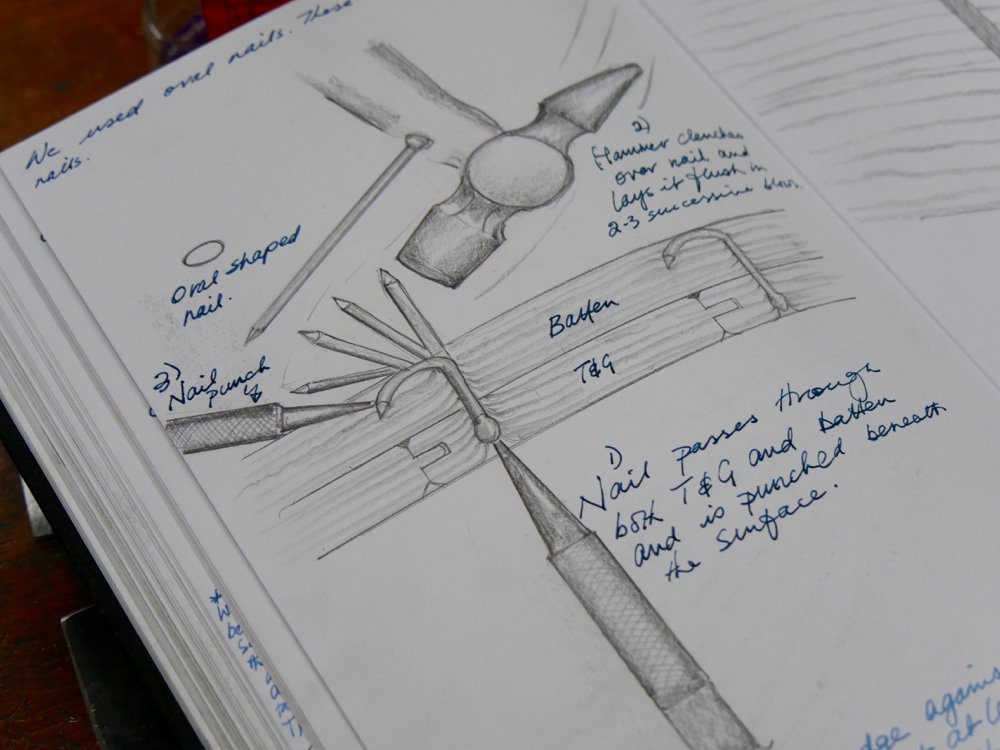
It’s not really overly time-consuming and, even if I spend an hour a day plus drawing time, it has been such a part of my worklife it’s as second nature to me to draw and write as it is to make and what I do in my journal is a pre rehearsal prior to commitment.
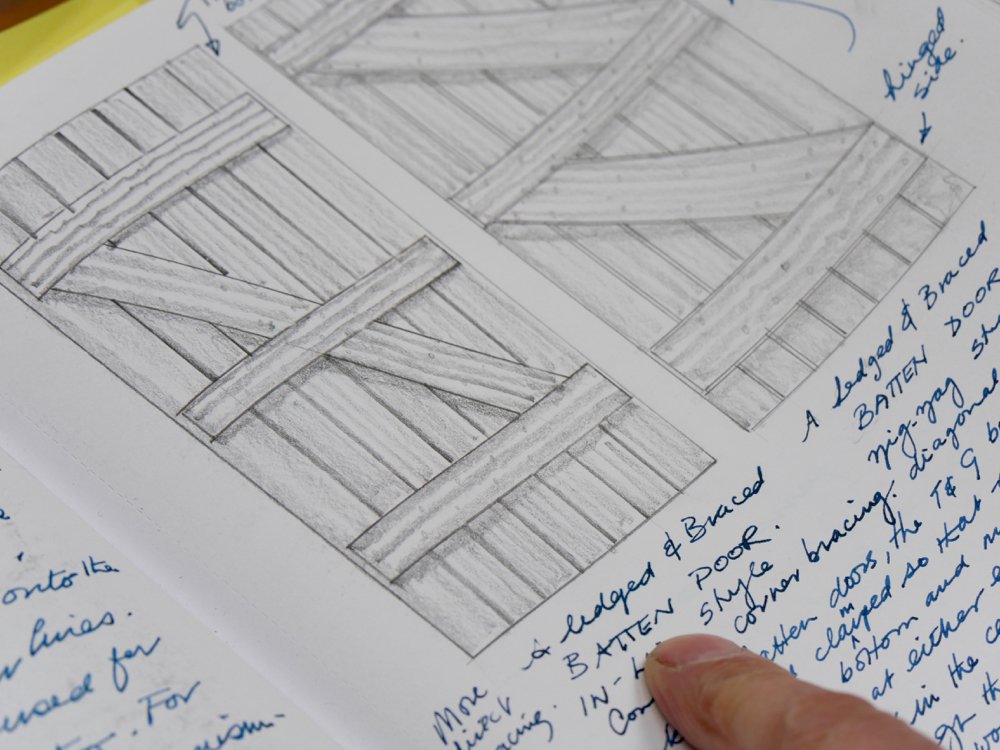
Why write?
Writing makes you think through the making stages. My writing will mostly be notes to myself to engage myself with my imagined process even though many procedures are very standard; rough cut to size, surface plane the first registration face, search the grain for issues such as colour or figuring suitability, damage, flaws, joinery suitability and so on. Notes accompanied by drawings records my thoughts on such specific issues. I don’t think that this is a common practice but today I can testify to the absolute value of this throughout my worklife. Writing and drawing minimises mistakes that can be very expensive in time and materials and then wasted energy, emotion all of which will drain any craftsman.
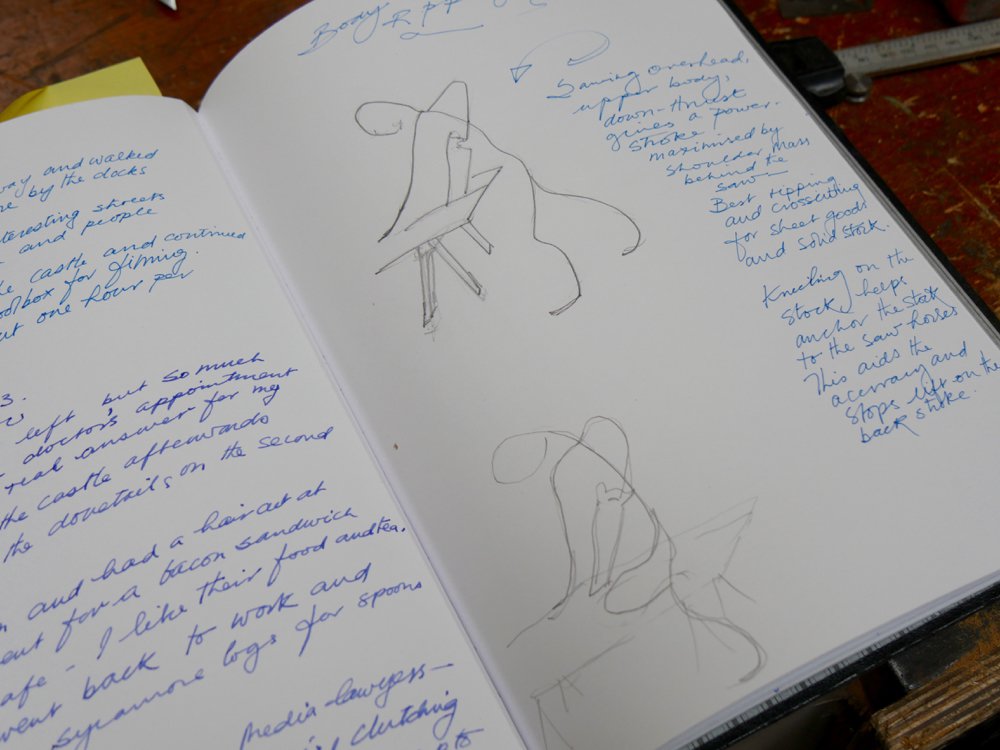
Most entries begin with stacked items, bulleted, where I have determined certain facts that need to be established. In practical terms this will start with the appointments I made before I go to a customer’s home or a time to meet with them at the workshop. I keep notes of meetings which are really interviews. I garner a lot from such meetings and gather their thoughts and feelings that are important to them. In their home, taking notes of the contents I feel seem key to their lifestyle.
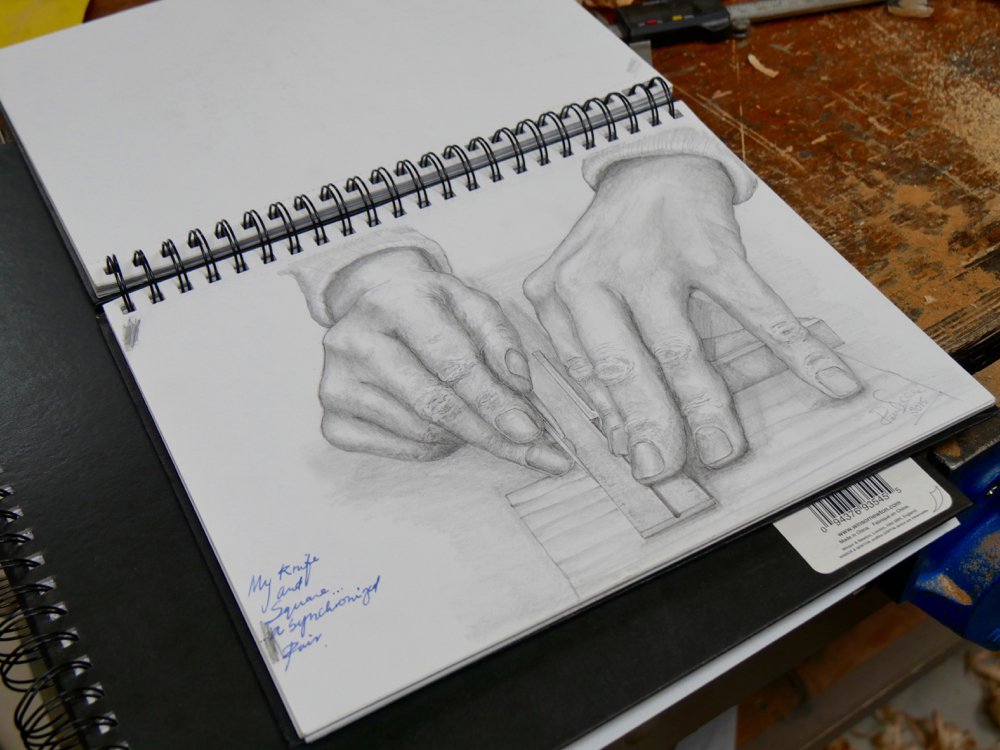
My journal has rough notes on pages next to developed and more formal notes including cutting lists but then I have a rough-work page where I scratch out quick points on any issue I don’t want to lose. Writing or drawing sketches record a concept and thought more as an aid to memory and this saves me regret when I might not remember a key thought pertinent to my writing or drawing or whatever else I think is important.
Comments ()