
Cam clamps for almost free or about £1 each.
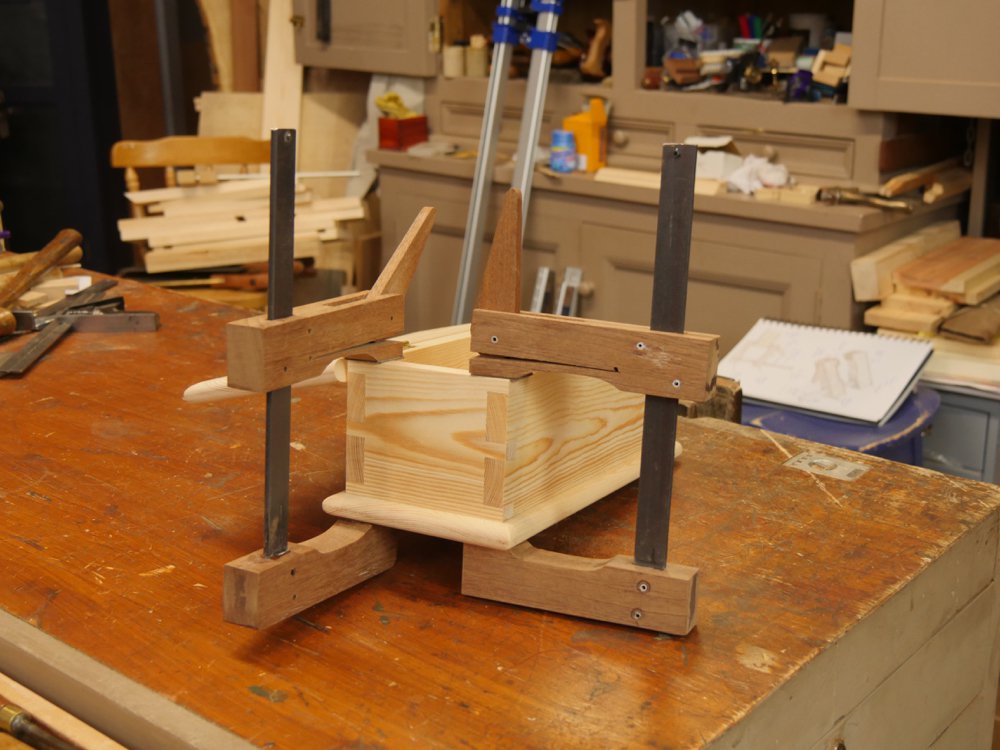
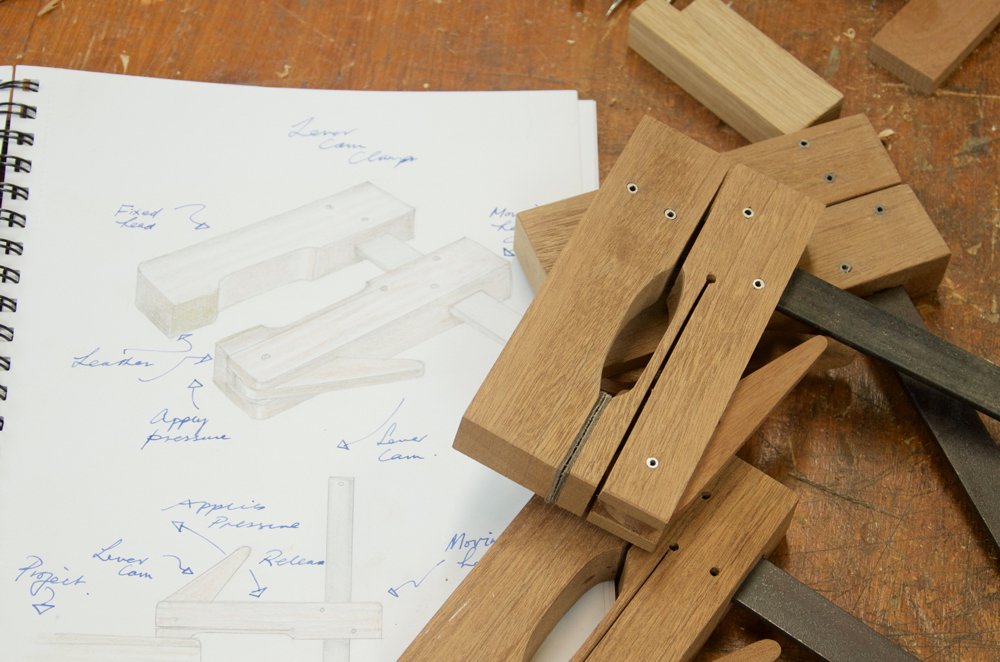
A few weeks ago I made some cam clamps for the woodworking school but used only hand tools to make them. These are the ones I made, clamping the box bottom on above. I think we may be the first to video making them completely by hand, except for a battery-driven drill, which we didn't really need. Of course we wanted the video to open up the whole process for anyone and everyone and especially those not wanting to work with machines. Because there has been a very definite void regarding making useful equipment such as these by hand I thought we would fill the gap without much more of a do.
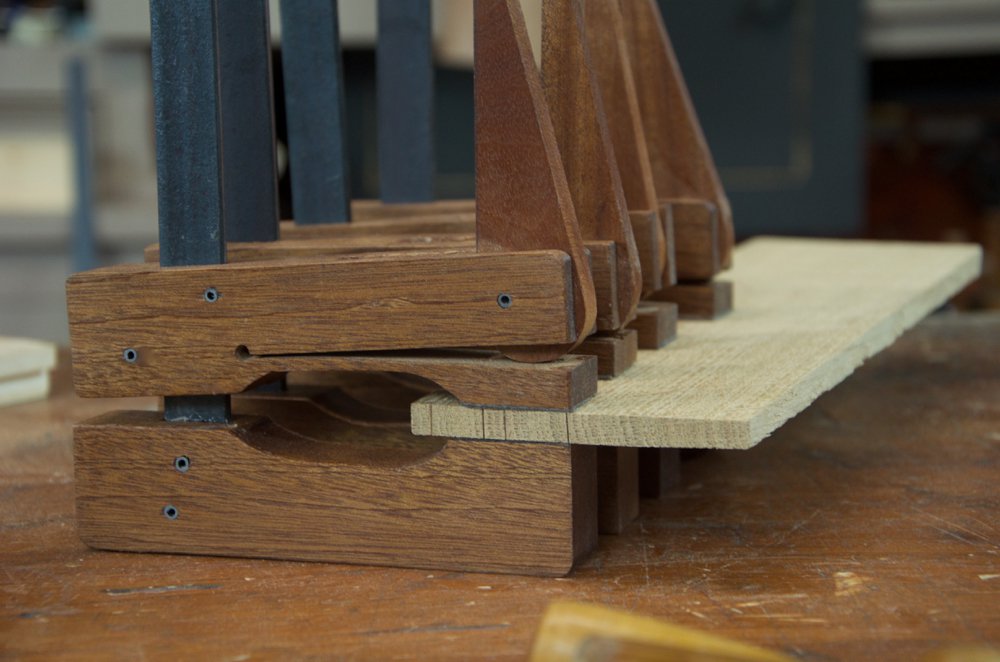
Cam clamps are not new at all, but they are less seen than the ones we are used to seeing today. These clamps have distinct advantages you might not see at first glance. One is the unique clamping action that exerts direct pressure without the usual twisting torque that occurs through threaded clamping heads. On thin and delicate materials this type of clamp has unusual advantages via the applied energy of the lever cam. The other enjoyable feature of cam clamps, often called by a trade name, Klemmsia, is just how light they can be. Favoured by stringed instrument makers making violins and guitars, cellos and such, They are indeed indispensable. Though I used steel for the bar, I could have easily used alluminium, which works well enough too. You might choose metal size and type according the work type you might engage in. I have made these clamps from1/8" to 3/16" thick bar stock by 3/4" for beam strength. For general and heavier clamping, but still relatively lightweight, I suggest you try 3/16" steel.
If you want to learn how I make these we made a short three-part video series on woodworkingmasterclasses.com to train you. The processes is crystal clear, simple and requires only a handful of very ordinary tools. In about an hour os so you will have your first clamp.
https://vimeo.com/156679586
Comments ()