
Face vise front alignment question
Question:
Mr Sellers,
I am trying to design and plan my first work bench. I’m liking the Roubou style, but after reading your blogs and watching all the videos I am intrigued with your jointers bench with the apron. My question had to deal with long panels and the front vice. You have answered the question about how the front vice doesn’t necessarily need to be flush with the bench (a big issue with those who promote Roubou’s bench); how do you handle these long boards? I’ve noticed in your videos and now see the behind the scene look at the bench how you have your tenon saws on the front apron – how do they not get in your way?
Thank you for sharing your accumulated knowledge. I always look forward to your new videos and posts.
Very appreciatively,
Jason Zvokel
Answer:
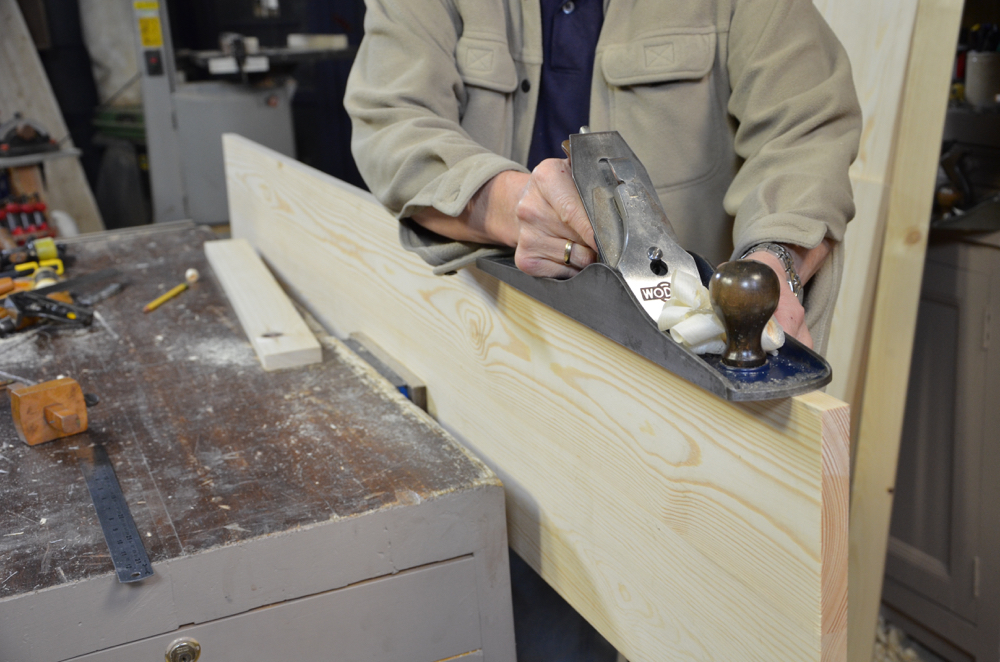
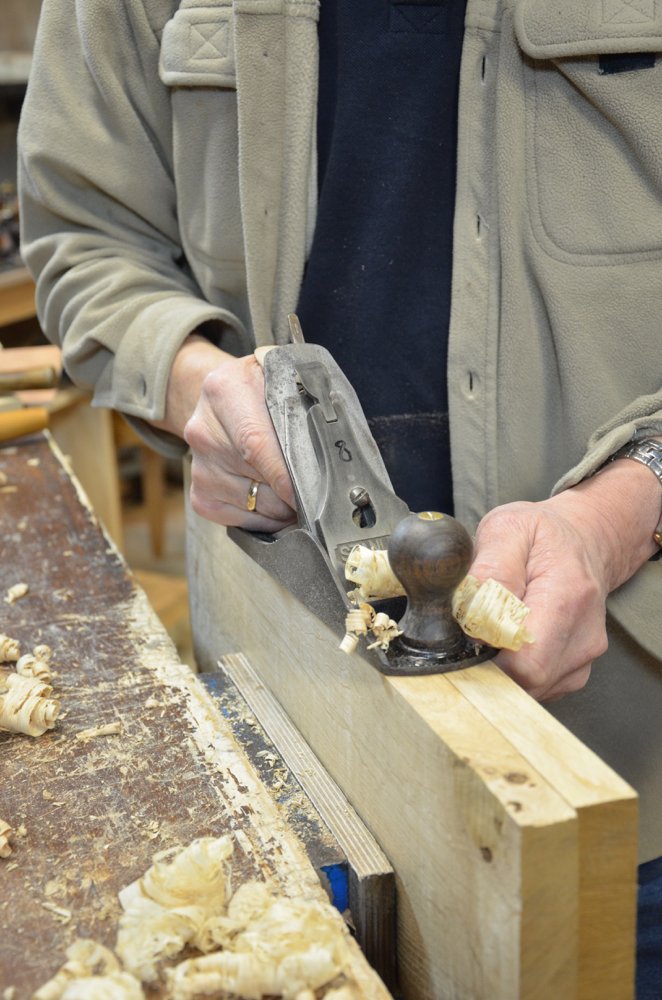
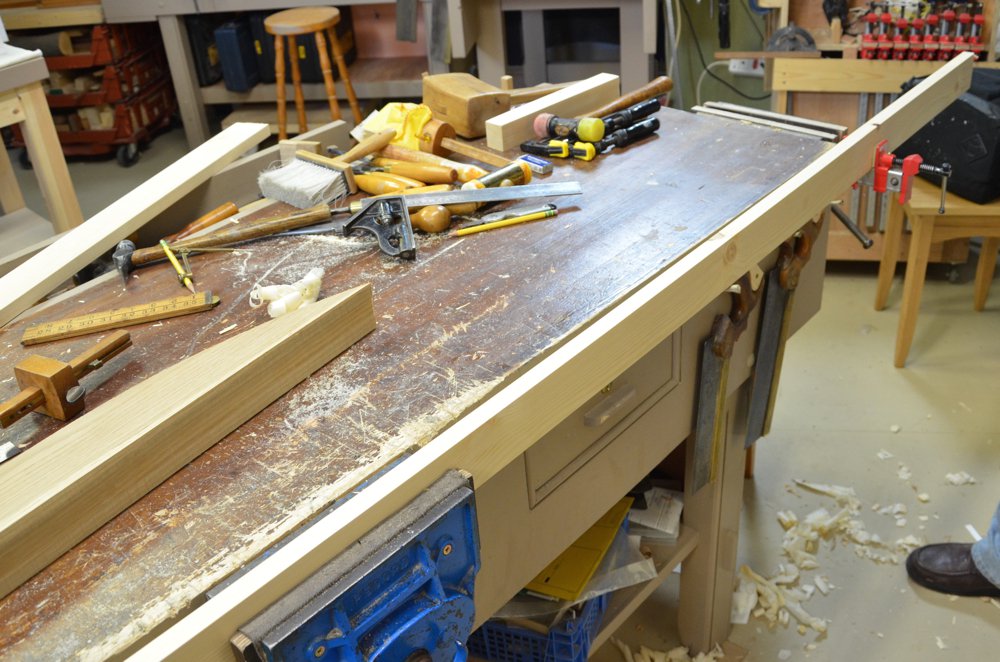
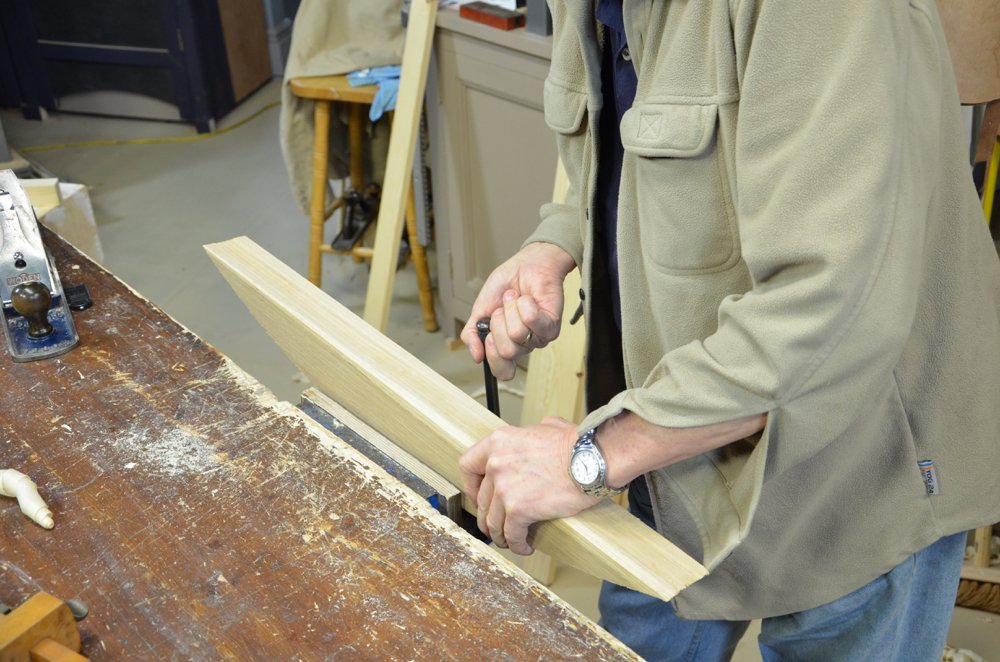
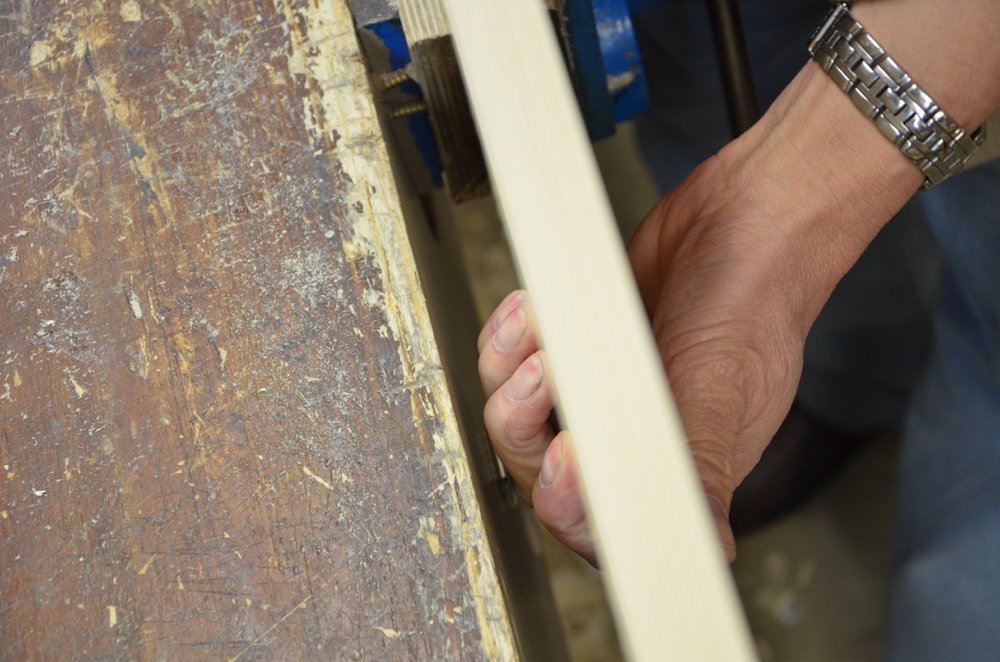
Actually, I don't really understand what the issue is if you are using the type of vise that I use. I try to imagine why I would want anything clamped tight to the long edge of a bench top and can, if I really apply myself, think of an occasion every five years where it might possibly be useful. Most tabletops are six foot long for the average family home. King size beds are around 6'3 (1.91m) less the posts, so are similar in length. Generally these two pieces if furniture are the longest in any household. Putting the boards centred in the vise with 1 foot (300mm) of it fully gripped by the vise means I have 30" overhanging. Usually glued up tabletops are made from 6 to 8" (150-200mm) wide boards say 1-1 1/2" (25-38mm) thick and usually hardwoods such as oak or cherry, walnut, maple and such. These woods in those diameters don't bend easily with that much beam strength. The board will barely flex over so short a distance if being planed to true up. Combine two in the vise as we generally do for edge jointing and we have twice the resistance to flex during edge planing. Now on narrower materials this does change but only marginally and narrower pieces can usually be taken care of on the bench top or still in the vise but moving it along on the vise. This is how I have done it for decades. Okay, most woodworkers downsize their materials for planing to near finished sizes. This is increased economy and ease of work.I tried to think of what I make as a rule here and I can scarcely think of many components being more than the lengths give but with 98% of component pieces being somewhere below 48" (1.22m). Even then that is more rare than normal and most pieces are under 36" (.91m). I could go on but then these pieces so readily fit into the standard vise that I've happily used throughout my woodworking life.
Now then, I added a tail vise because everyone felt my bench was lacking in some way and I even put dog holes at that end so I could take pictures to show what dog holes were and did. Again, I never use these additional "accessories". However, what I can do and what I might find useful occasionally is adding a clamp in the tail vise as I do in my main vise from time to time. Now this can be used to support the end of a long piece of wood.
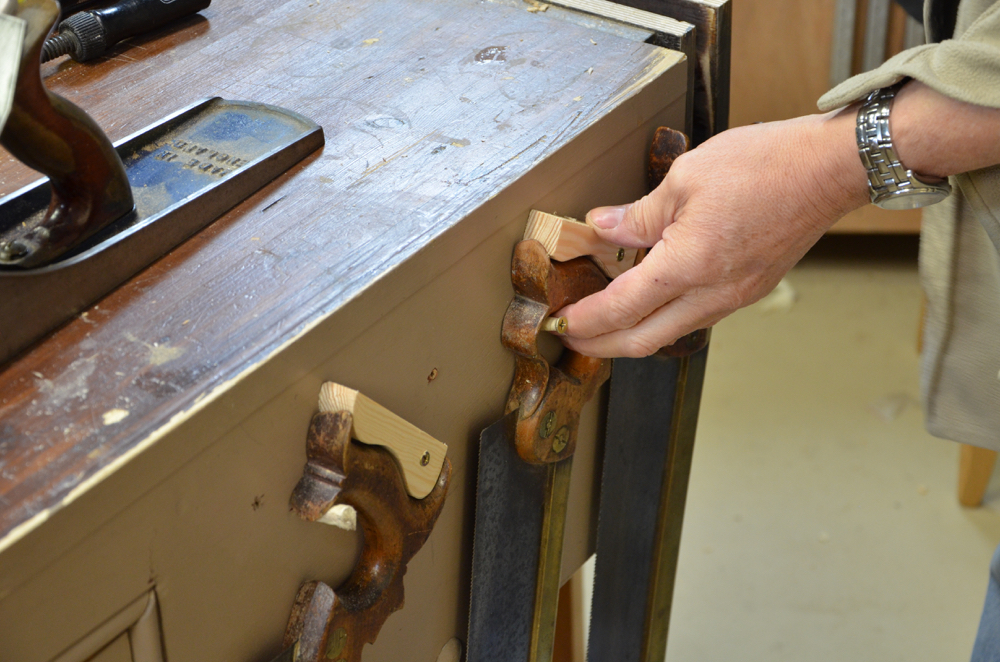
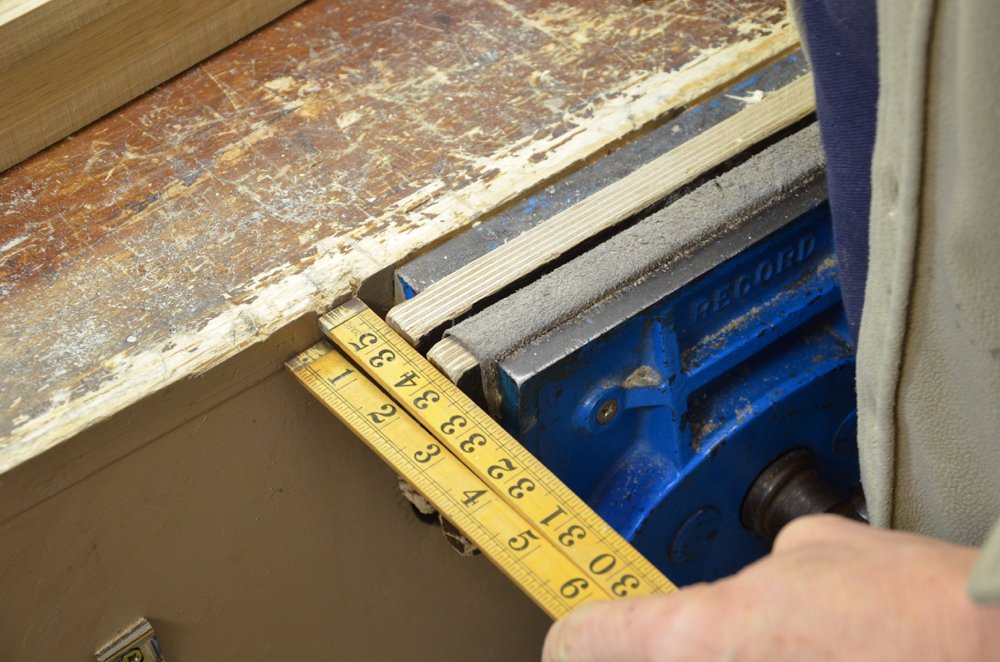
With regards to my hanging my saws where I do. I would be lost without this facility. Far more lost than I am without a flat-front aligned vise jaw. My three saws hang there patiently awaiting my interchange of use between the three. I find three saws can quickly and awkwardly clutter up a benchtop in a heartbeat. My system beats any I have seen to date. They don't really get in the way especially when you are used to them being there but even then this is rare as the vise with the jaw lining provides and 1 1/4" (30mm) gap and the saws and hooks protrude only 1" (25mm). The greatest advantage to the overhanging vise is crystal clear. You can grip your wood and install just about anything in the vise without struggling with a full handed overhand or underhand grip. This is no small thing. For those who might perhaps have made the mistake of installing a flush vise the answer is very simple. Just add a dummy wooden vise jaw to the face of your bench with two screws. That way you can remove it if you don't like it or remove it when you want to clamp something along your benchtop edge.
Thanks for the question Jason. I hope my answer makes sense of it. I am answering this as a blog entry as it is a common enough question.
Oh, of course, there is always the maxim that you never miss what you never had.
Comments ()