
#80 scraper update info for new ones
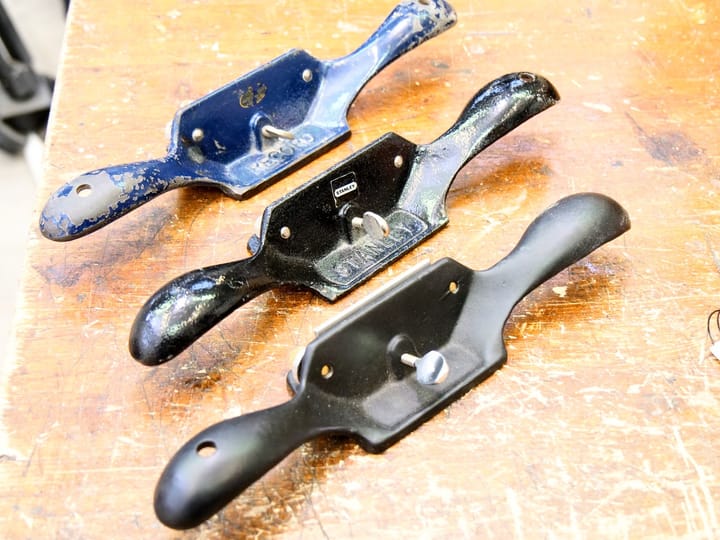
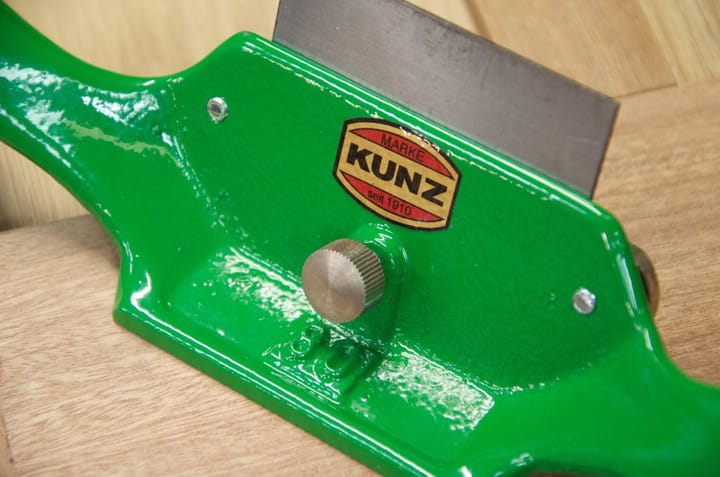
There are many wrong assumptions about scrapers and that's why so many people abandon them when they arrive brand new. I often hear visitors in my workshop where one of them points to #80 cabinet scrapers and tell their children or spouses that what's on the workbench is a spokeshave. Look in the spokeshave category on eBay too and and you will always find one or two #80 cabinet scraper in there described as spokeshaves as well. It's a very common mistake even with woodworkers and especially those that don't know hand tools.
Without instruction and guidance a new woodworker will have to wade and troll through the molasses of mass misinformation to find the right information for progressing use of the tools made.
Because the cabinet scraper looks very like an oversized spokeshave it is all too easy to think spokeshave, bevelled cutting edge, bevel down, bevel up, push the wrong way, plane type shaving and much more. You must pretty much dismiss all of this. It's not bevel up or bevel down. How about that for fooling a new woodworker??? I already discussed burr and scraper as total misnomers too, so that takes some thinking outside the box. Perhaps this drawing will give you more of a close up of what happens with card and cabinet scrapers.
So, when the blade is installed into the body of the scraper you will see that the cutting edge is not presented like a plane edge, a chisel or a spokeshave at all. That is, bevel inclined and pushed, edge first into the wood. Nothing like it. This is what foxes those new to woodworking. Edge tool into the wood makes great sense. A turned edge makes no sense at all, at least at first.
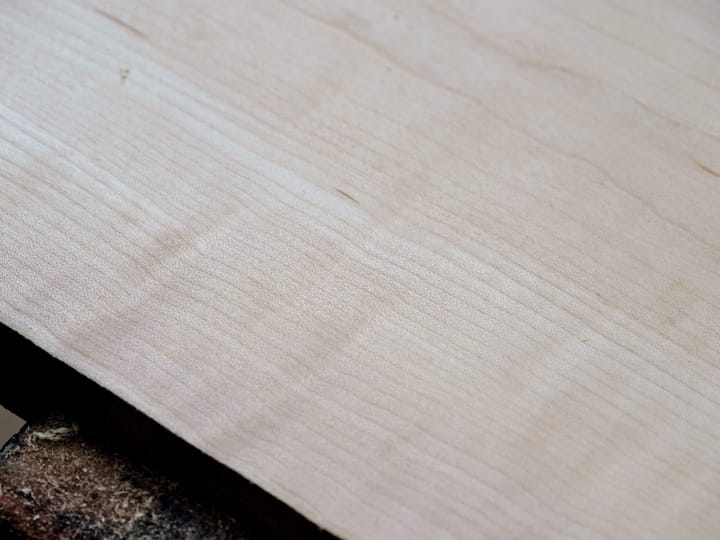
Because we describe the edge as a burr we can be forgiven for thinking this is just some kind of rough edge resulting from filing that is then used scraper fashion to scrape the wood semi smooth. This is definitely not at all the case so don't think just rough filing an edge is the desired goal because you would do better just using sandpaper and abrading the wood. This tool relies on a highly developed cutting edge that is totally different than just sharpening a bevel as with a plane. The edge or bevel is ground, honed through various grits and consolidated too using a burnisher. This is simple enough to understand and to do. Not too much different than say sharpening a plane blade really. It's the next stage that changes the dynamic of the tool's cutting strategy. Once the bevel has been established and honed we do something we call 'turning the edge'. It's not hard to do and it is not always easy to do. Turn the edge too much and the edge fractures or fails to reach the wood altogether. Turn it to little and the edge fractures leaving the wood feeling like 80-grit sandpaper. Get it right and the surface will feel as smooth as silk. The tool will level adjacent surfaces to an indiscernible level and very light sanding with with worn 350-grit abrasive paper then makes the surface feel like glass. You'll love it.
I think the drawings will help you to see just what the strategy is. This is the only tool developed for a cutting edge that cuts wood this way.
Comments ()