
Plane Questions–Another Answered
Question:
Mr. Sellers,
When using a plane, no. 4 or larger, I have a tendency to remove more stock at the end of my stroke than at the beginning. Is there a technique you can recommend to keep my stock removal level?
Thank you,
B C
Answer:
There are several reasons for this happening, some we can counter and some we can do nothing or little to counter. Sometimes it's you and sometimes the plane and then other times it's the wood itself. Most often we blame ourselves for things yet to be sensed, yet to be understood and yet to be mastered. Skill, sensitivity and understanding rarely happen straight of the bat and take time to develop. It's best to make and master and allow flawed work to exist in projects we use to develop our skills than to pile shavings of wasted work, but that's just my thinking. Saw horses and picnic tables, workbenches and carpentry projects work well for this. Often the issues surround the unseen physics of planes, planing, wood and so on and, in our ignorance, we press where shouldn't and don't press where we should and so we make things worse. This is where we need to understand what corrective work we should do to balance out any bias.
Most people do think that if the plane is perfectly set and sharpened that pressing the plane down to the surface is all they need to do. They believe that when they push the plane from one end of an edge to the other opposite end that the plane should logically, simply and automatically remove a perfectly parallel shaving. Unfortunately that's not usually the case. Measuring a shaving after planing may well show that the thickness does indeed vary in thickness. Repeated shavings is exacerbated with each stroke. Experience tells you when to make adjustments and periodically take two shavings of compensation at one end. Variance happens all the time but with one or two shavings this is often not discernible but variance can depend on the following:
- The sharpness of the cutting iron.
- Plane type as in bevel-up bevel-down, width of iron, plane weight and more.
- Wood type.
- Grain type.
- Pressure applied.
- Speed of plane including variance thereof.
- Angle of presentation.
- Pull-stroke or pull-stroke.
- Use of cap iron or type of cap iron (or none).
- Type of cutting iron assembly retainment as in wedge or lever cam, screw pressure etc.
- There are many more considerations.
So, no small area to consider at the end of the day and of course most of these things we need not even give thought to. To us, as crafting artisans, it is our at-the-bench consideration we need to be most concerned with. Whereas the above considerations all affect the work, seeing beyond the physics is what really matters. Countering many of the above issues is mostly a matter of using minute by minute strategy at the bench, in the vise and with the plane in hand. I frequently flip my plane around and pull for two strokes to effect a cut and restore surface levels and parallelism, and that without thinking through the whys and wherefores. Strategy and methodologies often defy explaining because by simply flipping the plane end for end and pulling instead of pushing you may use three countering techniques in the process and at once and not know actually which one was the one that actually worked.
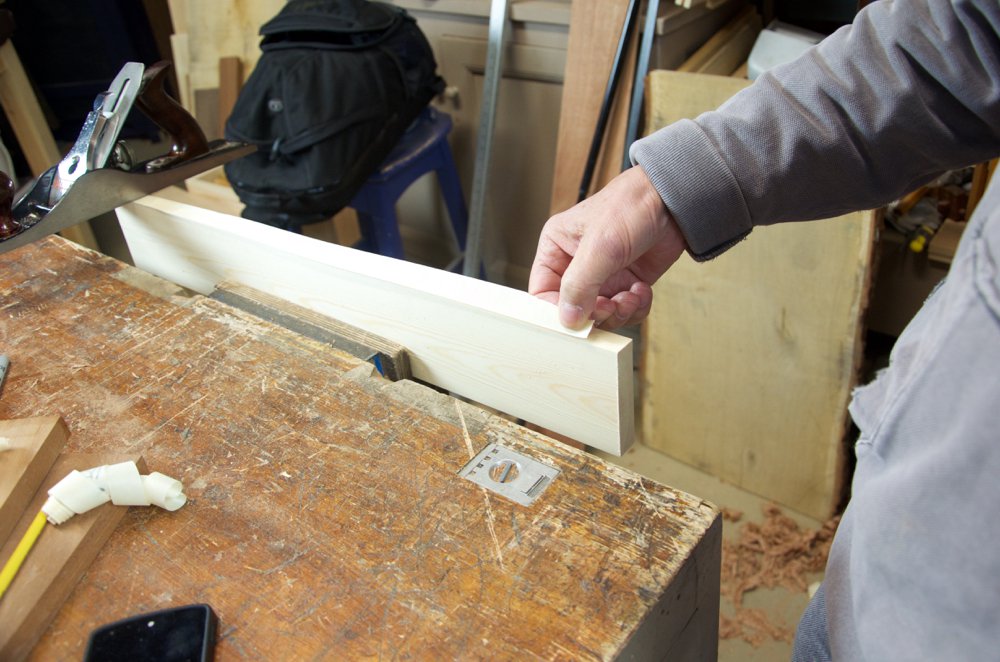
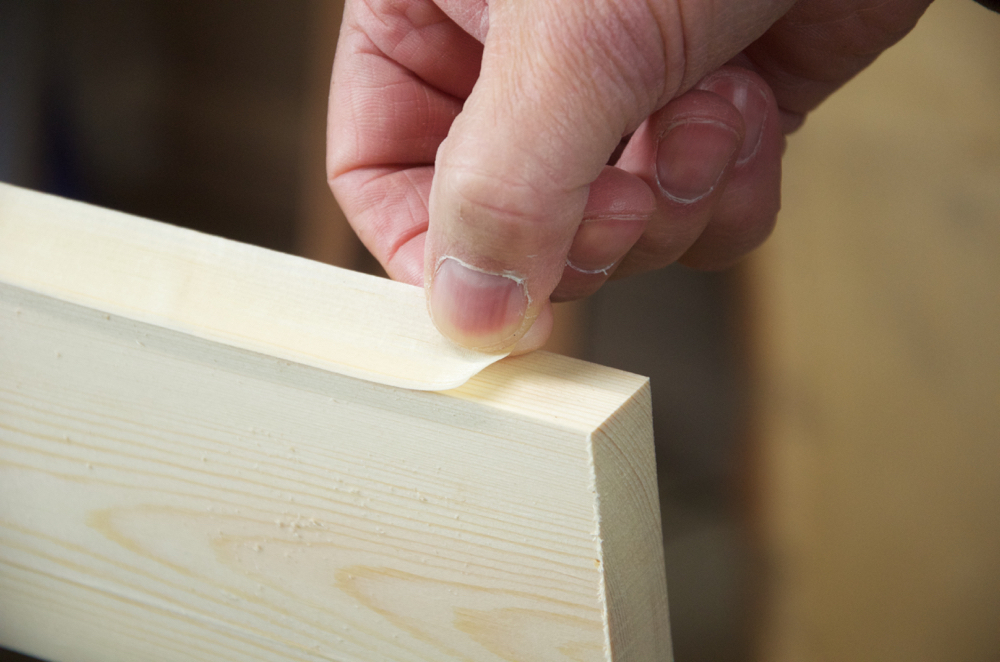
What is rarely mentioned today is that when a plane is pushed into the wood the woodgrain in the shaving itself is compressed and consolidated by the rise at the fore end or hump of the cap iron. Two dynamics take place at the critical juncture where the sole meets the plane directly in front of the cutting iron. This actually follows physical laws of countering forces whereby one force be that push or pull, acts upon an object as a results of its interaction with another object. A combination of several interactive forces take place that cause various results. In our case with planes, The fore (and to a lesser degree rear) aspect of the plane's sole presses downwards compressing the fibres down. This compression unites with the surface friction of the sole to then push the fibre that will form the shaving ahead of the plane and the cutting edge of the cutting iron which also pushes against the wood in the same way a damp finger pushes a piece of paper into a hump when the paper is held just ahead of the forces being applied. Adding a slight skew to the angle of presentation adds an additional dynamic and a combination of all of these things affects the thickness of the shaving and thereby the width of your wood by planing. The grain, in reaction, when sufficient force is applied, springs back from its friction-compressed state into the cutting edge and is severed from the main body of wood. The shaving compresses into itself as the stroke continues and so we see Newton's law in action without necessarily knowing that that is what's taking place. When I made the video on pulling the plane with a rope, to show how the plane pulls itself to task, I also measured the shaving length against the board to compare the shaving to the length of the wood being planed. The shaving was one inch shorter even though I stretched the shaving to the point of snapping. Here I took a shaving full length and then offered the unrolled length of the shaving to the wood I took it from. When I took a thicker shaving twice the thickness the consolidation was even greater and so the shaving was shorter. This is not at all scientific but it shows the influence the plane makes on the wood clearly. I learned this when a bet took place between a man 30 years my senior and an apprentice who didn't believe the craftsman when he said taking a shaving would produce a shorter length. The bet was a pork pie from Blackwell's pie shop.
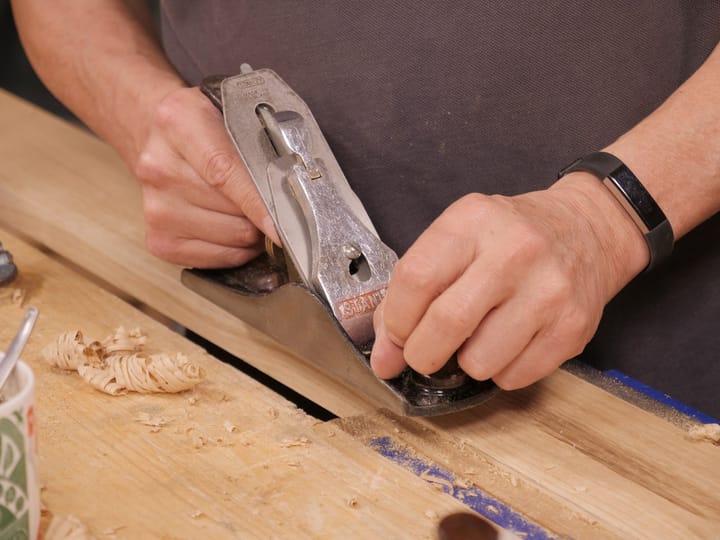
In your case it can be that you are applying greater downward pressure through the plane and down onto the wood's surface (I call this the bulldogging syndrome. An impression from graphics on carpenter's vans and adverts around the world). This then increases resistance and friction and thereby compresses the surface fibres all the more if indeed that is what is happening. Lighter pressures reduce this. It is especially important to minimise pressure in softer-grained woods like pine where resistance anyway is often much less because of fibre softness but then increased all the more because of the higher resins in the wood. Remember that rosin for the bow strings of instrument bows is made from resin and that it is used to increase drag on the instrument strings to prevent slippage and increase vibration and pull on the strings of the instruments. Most people, when the start the cut, use lighter pressure as they land and position the plane on the start of the cut. As they move into the cut they worry that the plane will deviate and so apply more aggressive pressure when they are part way into the stroke and by the end they are really applying downward and forward power much more aggressively. Try to relax and even out the pressure and also practice to understand what is transmitted to you through the plane itself. This then means that the plane becomes as much an instrument of transmission as it is a planing tool. You can, every so many strokes, turn the board around and work from the other end, provided the grain is favourable.
I hope that this helps your understanding as a partial answer of possibilities.

Comments ()