
Tool Cupboard Drawer Joint Detail
Question:
Could you explain more about the joinery for the back of the drawer or tell me where you explained it in more detail? Thanks…I love your work and philosophy.
Bob
Answer:
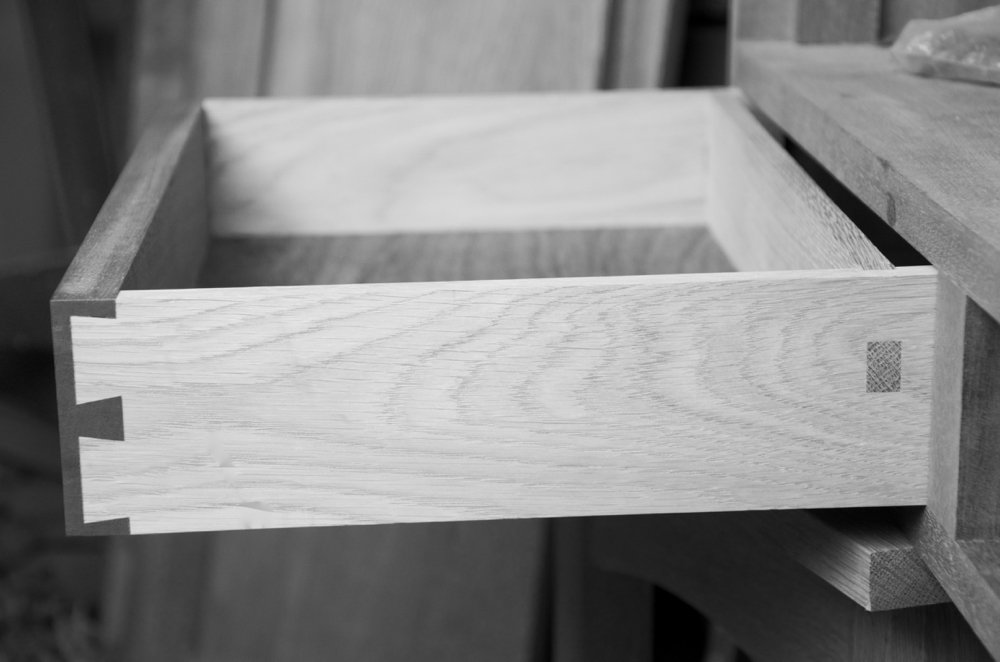
In the UK it has long been common practice for work drawers to use a housing dado at the back of drawers, so that you can extend the sides and create the ability to cantilever the drawer and see right to the back while keeping the drawer secure and safe in the enclosed recess.The length of the extensions either side depend on the length of the drawer and the space you need inside the actual drawer. If you are indeed very limited then you would most likely choose to use a common dovetail joint because that maximises the volume. So I use it on all my drawers for these reasons alone. What you and others picked up on was a deviation from the normal common dado.
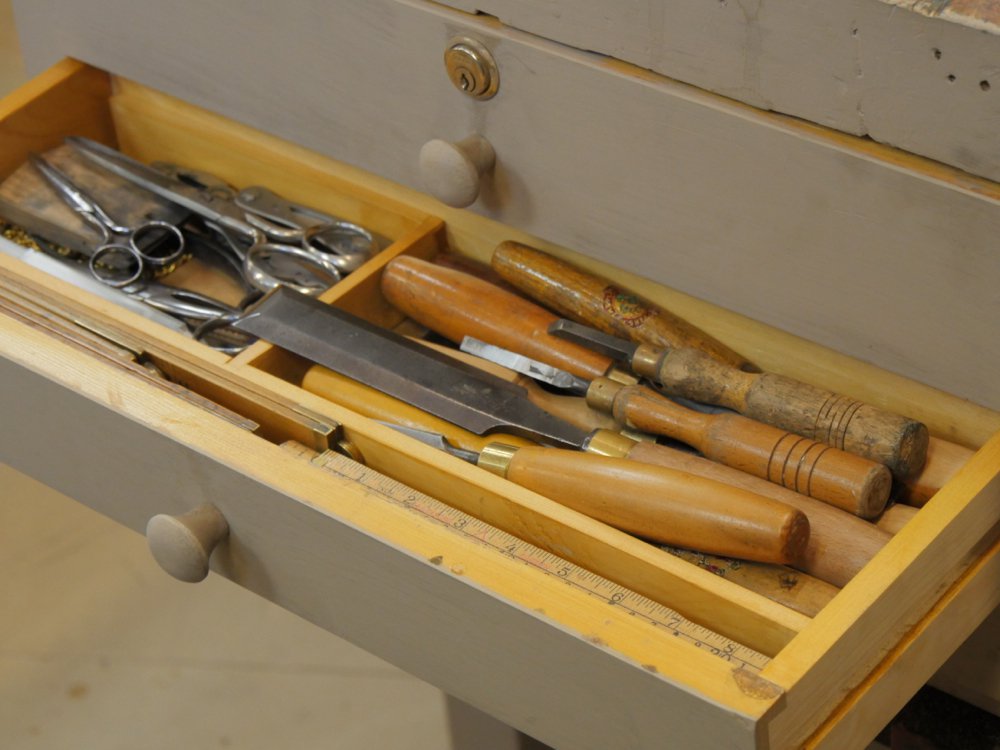
I have tills at the end of my workbench that have common through dovetails to the back corners because of the restricted length I can afford the tills or drawers. I have to warn my students at the start of each class that the drawers are only 8" long and if they pull them out they must pick up every piece and put them back as they were (which of course is impossible). In my day no man would ever have touched another man's treasured tool boxes or drawers, but today it seems that people feel they have that right. It is very irritating but it happens. When it does, it is almost always very embarrassing for the person if i have not had chance to warn them.
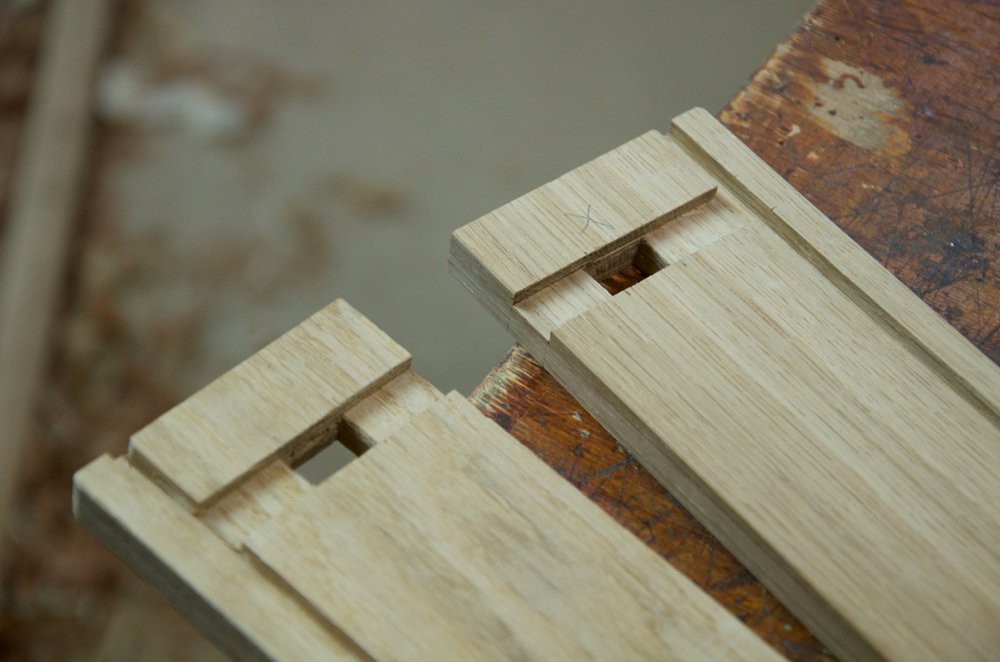
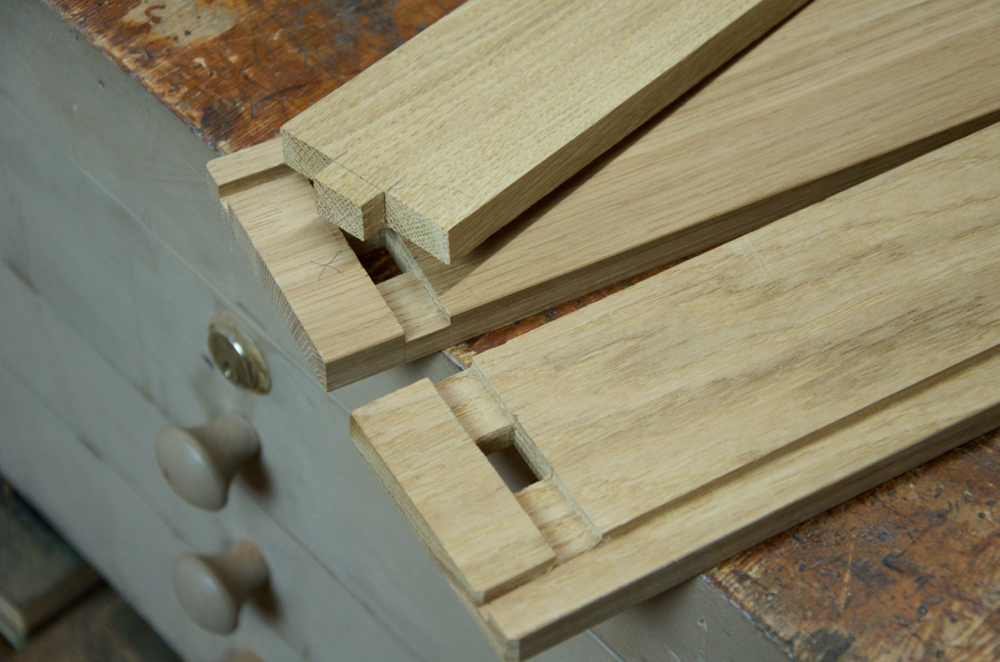
The housing dado alone does of course work but I always felt it just lacked the certainty of mechanical strength dovetails give even though I have never had a housing dado turn loose in 50 years. About 25 years ago I began incorporating a tenon into the housing dado. I felt it extended the length of the joint to give added resilience. Then I started to twin the tenons on wider drawer backs because it assured the customers of an extra measure in my work. I then added wedges, one or two depending on mood swings, wood type, joint size and so on. No formula here. This meant that I originally cut my mortise or mortises dead to gauge lines and then opened the outside extremes of the mortise to leave a slight gap each side. Driving in a wedge or wedges created a dovetailed tenon so this was when I developed a dovetail-tenoned housing-dado joint.
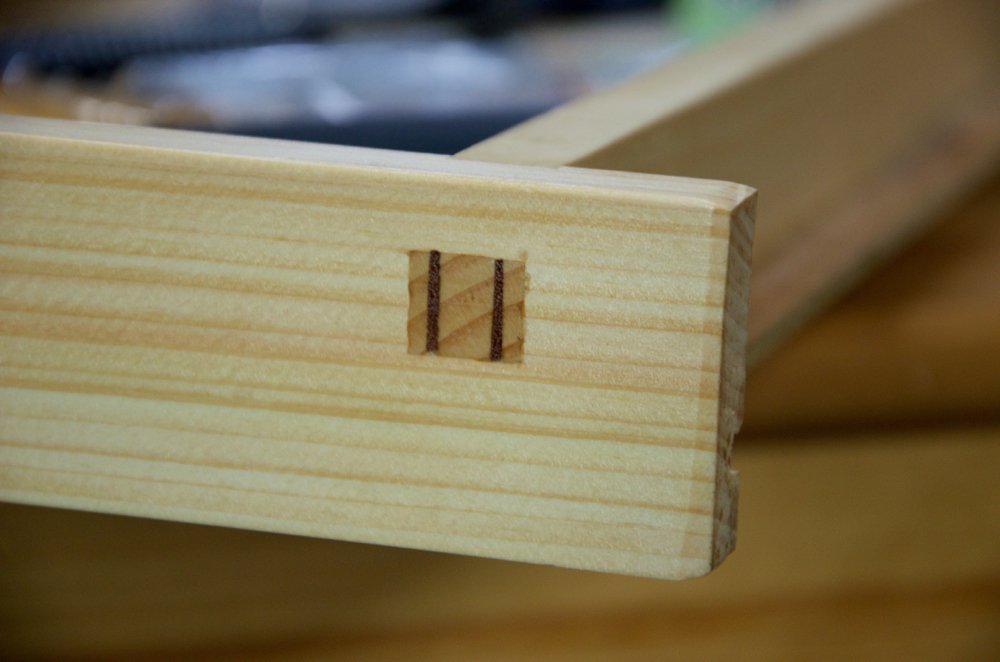
The housing dado in this case is but 3/16" deep, the same depth as the drawer bottom groove. Using the through tenon means you need not have a deep housing dado unless you want to. As you can see here, I don't always wedge the tenons as I feel it might not be necessary or appropriate but there may not be much logic to my decision. My choice for twinning the tenons is usually based on drawer depth and so width of back piece.
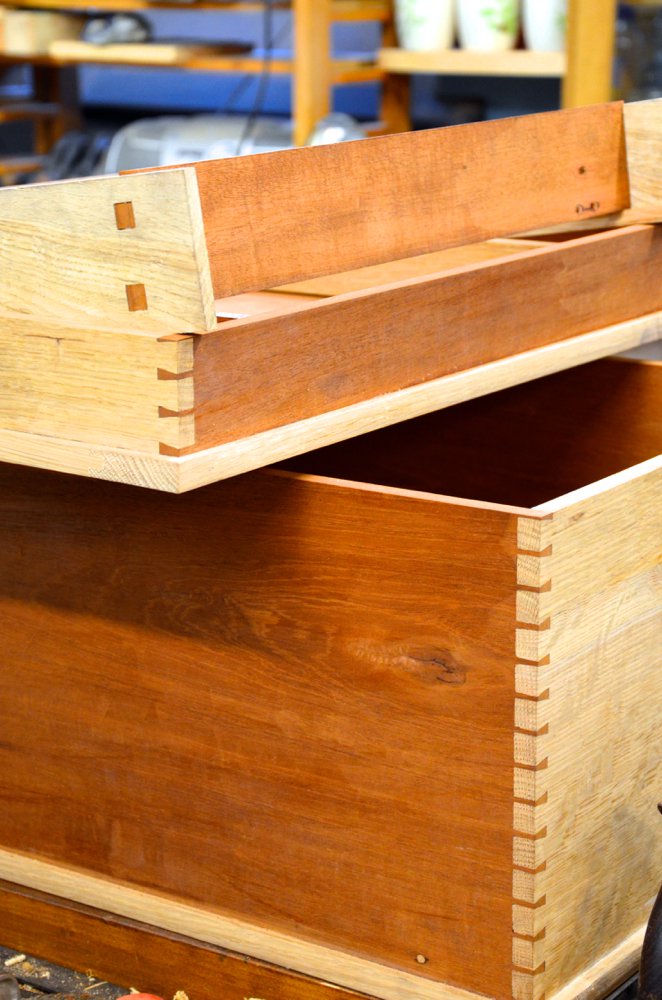
I like to incorporate small details into my work. It's a pleasing surprise for customers, friends and associates and somehow triggers appreciation for the extra measure. This joint takes about the same time as a through dovetail so it does not create excess work. Beyond that I just love the way it has function, comes together, works, looks, everything about it.
Comments ()