
Recessed or overlaid, which stile do you like?
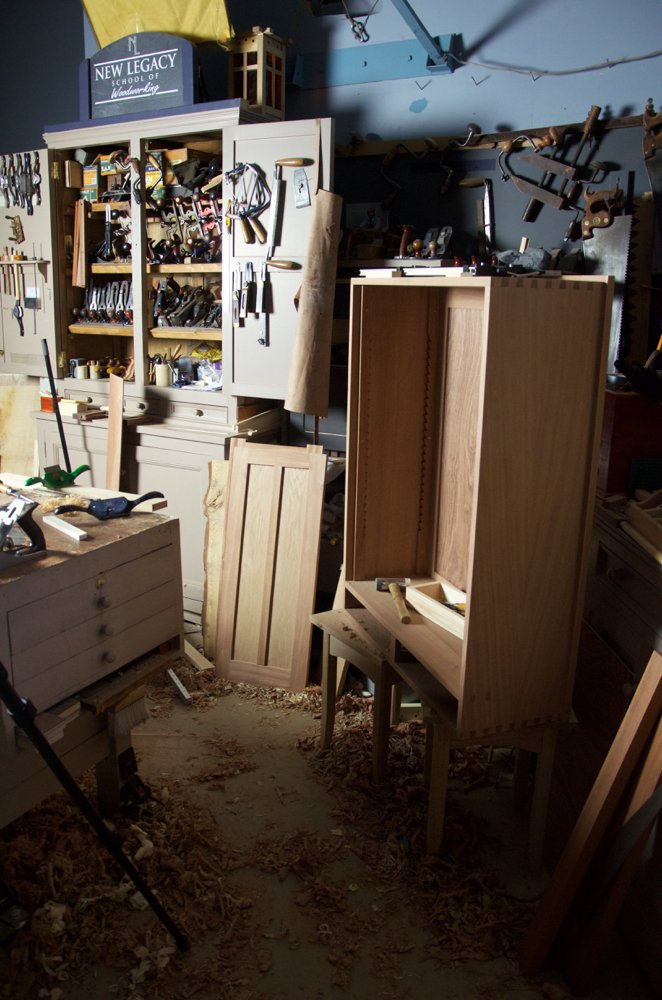
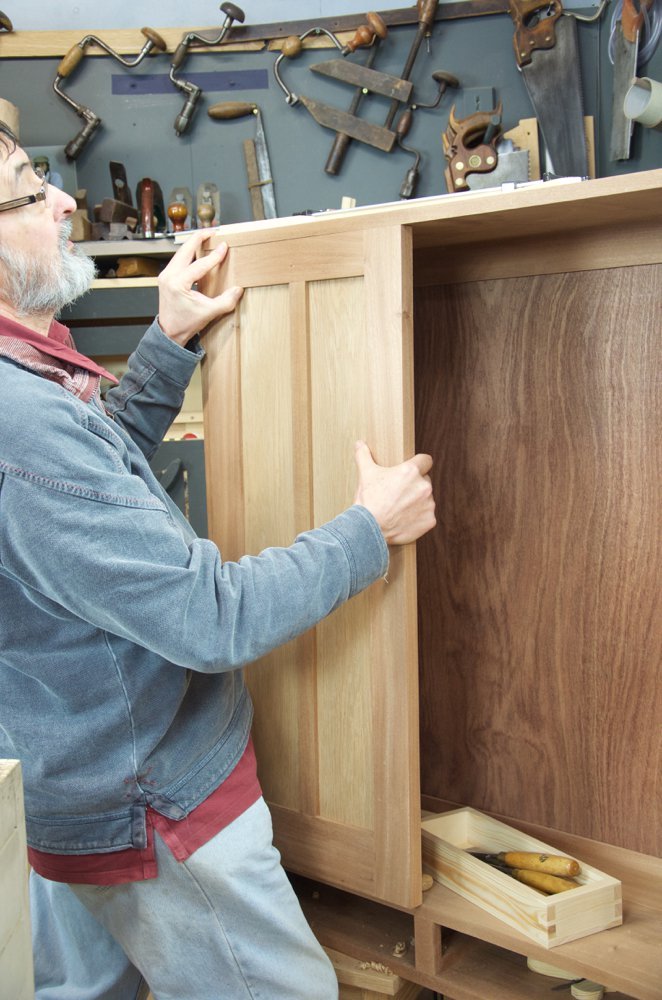
I made two doors for the new tool cabinet I started to build recently and we of course filmed the work for the series now released and running on woodworkingmasterclasses.com. The doors like this must be twist free as must the cabinet itself, the drawers and so on otherwise you have alignment issues on all front and especially with recessed doors does this show. It was US mass-manufacturing boxes on kitchen walls that really introduced overlaid doors and drawer fronts and although it did lead to decades of ugly shadow lines and too much busyness as a facade, it's real value was that nothing needed fitting. Drawers fit inside openings with an inch of crawl space all around each drawer and all drawers ran on metal runners that needed replacing after a decade or so or at least that's how it seemed to me when I lived there. Doors too had cranked hinges that aligned with the inside edge of the door and you could fit a zillion doors in a day. All in all it was indeed the death of quality and craftsmanship to say the least. Europe did not escape such tragic unskilfulness either. It came out with the deplorable 32mm European hinge system that also copied the overlaying idea for speed and efficiency and managed to do away with the American face-frame concept altogether so no frame was seen at all. Then again, on the other side of all of this there came the highly specialised kitchen companies who chose the higher end of quality and eschewed cheapness to continue offering real craftsmanship. I like these things.
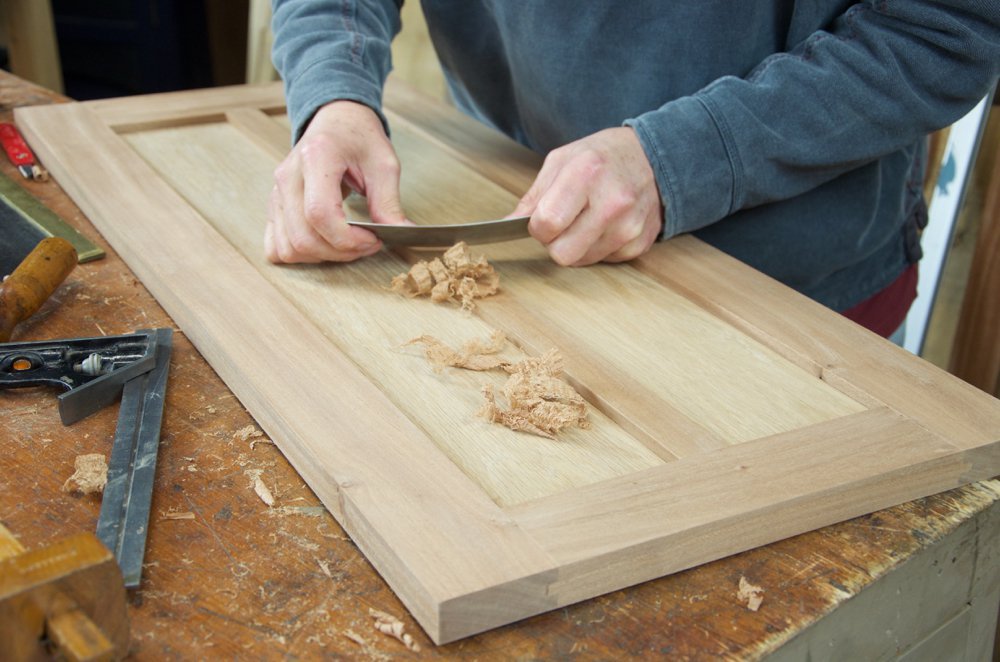
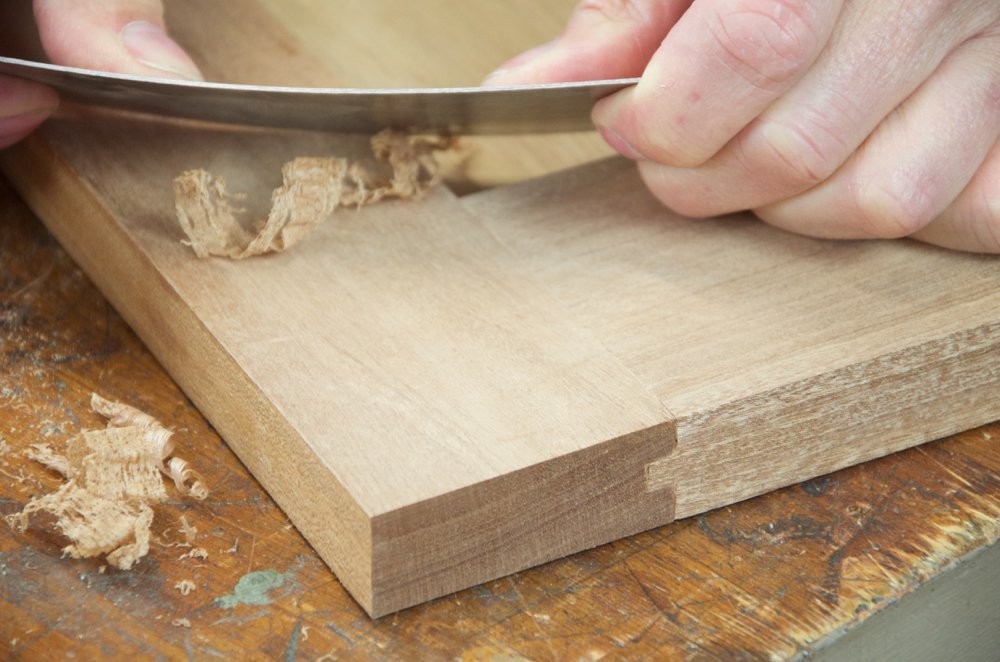
The methods we taught in making these doors for the tool cabinet are methods that guarantee twist free doors and yet we still cut the mortises by hand, tenons by hand and planed the wood twist free by hand. Doors with such short rails can be hard to perfect because even a small misaligned plane stroke can and will create a twisted door. One of the things I loved and have always loved is the perfecting of a joint with just hand tools. I have done the same with machines and that's fine too, but when a joint enters perfectly at the start and slightly tightens with increased friction on the faces of the tenons and the mortise walls there is something just very different that most people might miss. I suppose what it is is the minutest flex of a wide chisel or plane stroke that somehow feels completely owned by you. Yes, mortise holes and parallel tenons do come from the spinning teeth and blades of machines, but the difference is the dialling in of fixed distances and stops. Don't get me wrong, I think that the men who developed the machines were highly skilled and knowledgeable engineers, but it really leaves the man making the door outside the loop. The parts align perfectly and the doors come out straight and unwarped, but achieving this with just hand tools, where every tenon face and mortise comes from chisels, saws and planes, well, it just leaves me still with not mere pride but pore and transparent joy. Until you've experienced this you really cannot understand it. Each of the joints, one by one, individually made and perfected, slipped together like a hand inside a glove and I knew that my now older hands and brain and upper body aligned to bring them each together. This to me is a real gift to me.
Within the how to make a door section of the series I introduce all of the fail-proof methods we use for making doors. I developed these methods for making mortise and tenons decades ago and stayed with it all the way through my life because of the success it brought to the work. I walk through how to size a recessed door, fit a recessed door, how to hang single and twin doors with recessed hinges and so on. Even this is special because we displaced overlays to conserve the tradition and quality recessed and properly fitted doors. Let's face it, the only reason overlays took off and displaced recessed and fully fitted cabinet doors and drawers is because it was fast and cheap.
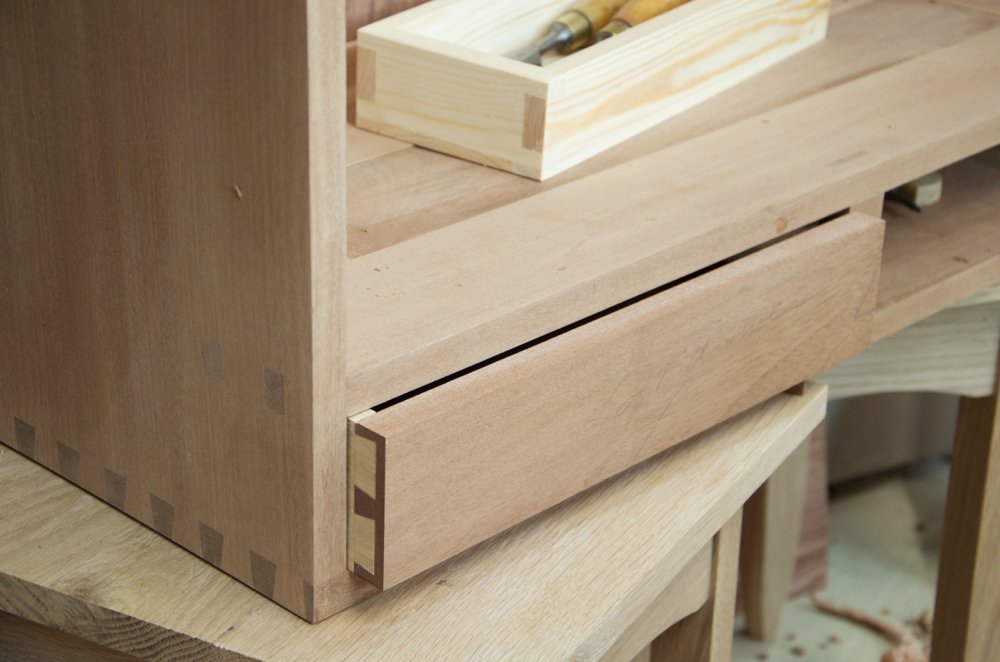
The drawers for the bottom section of the cabinet are nearly done and these two must be as twist free as the doors but the reasons are not usually so obvious as with the doors. A twisted drawer, especially smaller ones like these, rock and jam and rarely align and sit well.
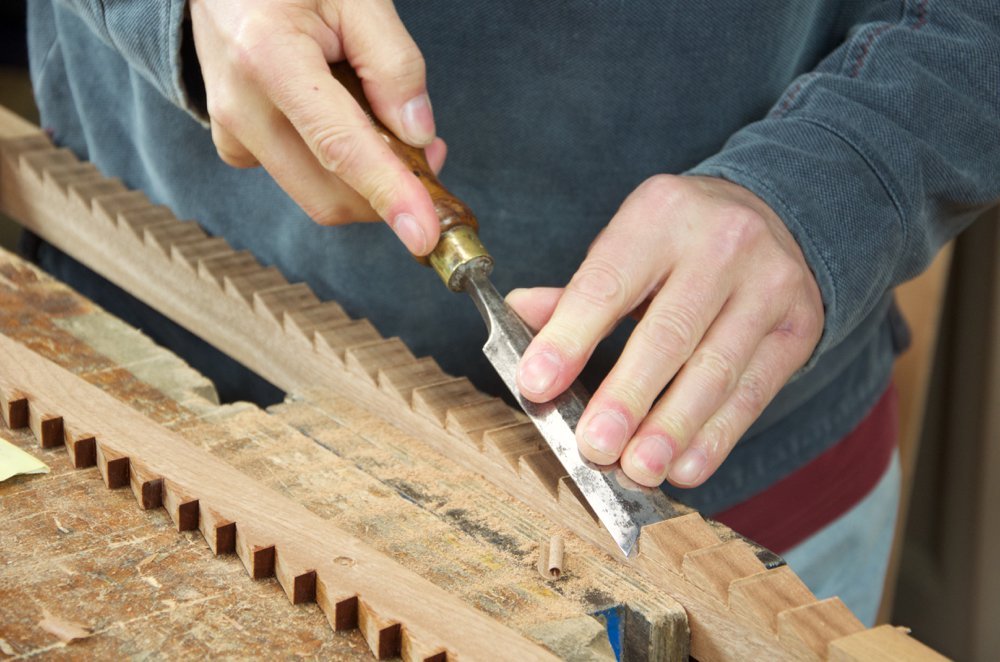
We filmed how to make saw-tooth shelf adjusters using only a 1" chisel and tenon saw and a knife and square. They take about five minutes for a perfectly matched fit and can usually be made from a scrap of wood.
Comments ()