
Safety for Kids in Woodworking
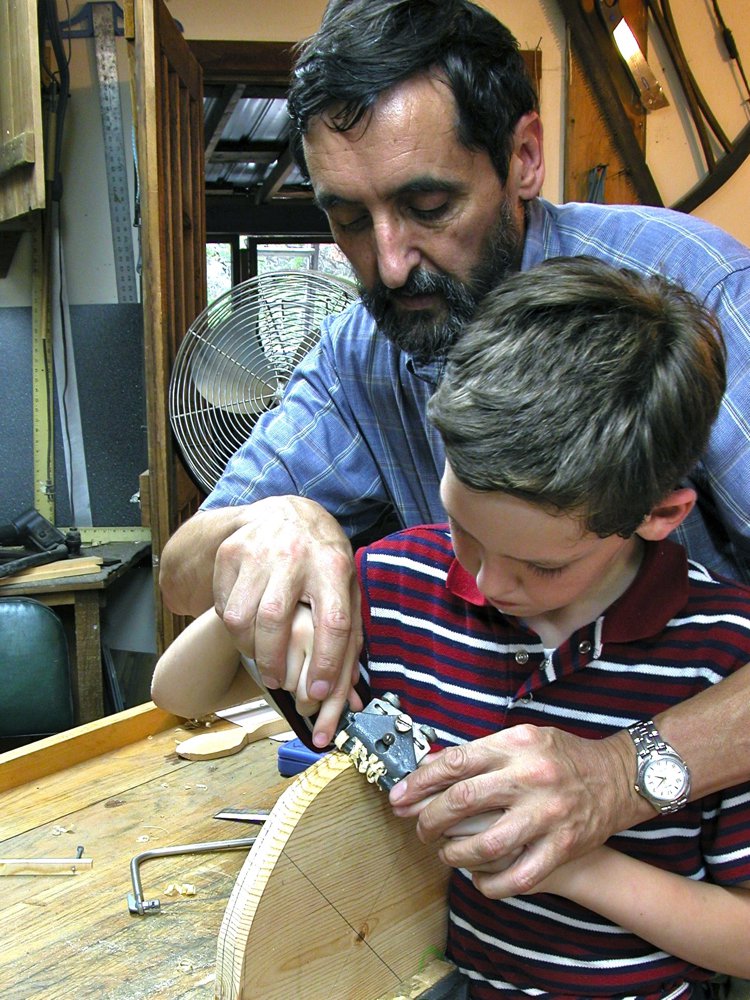
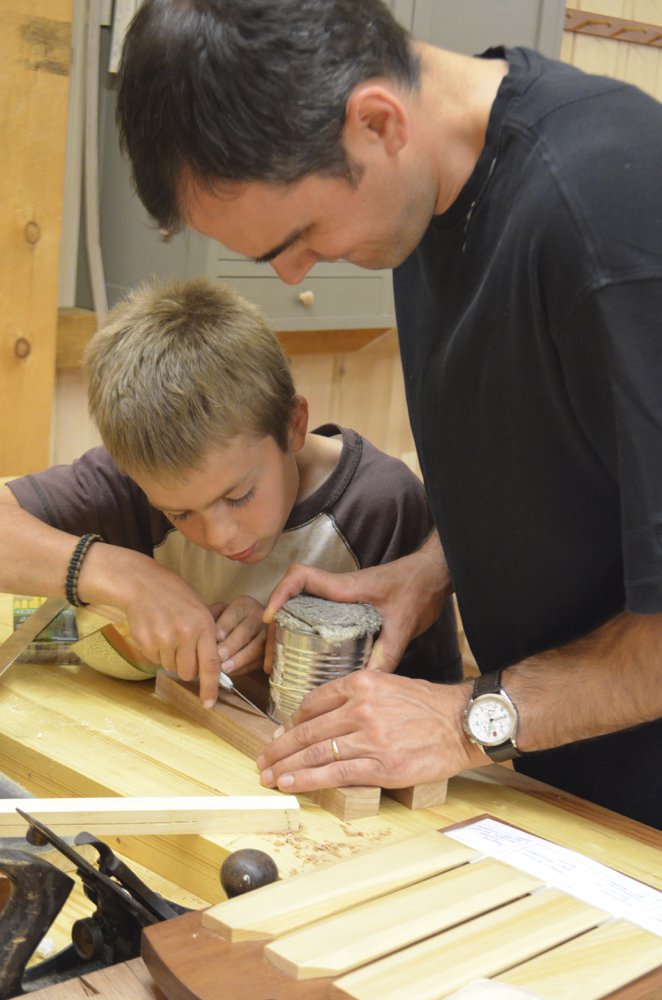
You all know I have strongly held that a massive sector of our woodworking society is withheld from entering woodworking because of the predominant use of highly dangerous machinery they feel intimidates them. The intimidation is of course very real and so it should be. Woodworking machines are very highly dangerous and should be regarded as off limits for children, even when supposedly supervised by adults, simply because wood splits, spins, twists and changes its shape when a saw line releases pressures and tensions in the wood as the machine blade cuts into it. I have as you know spent all of my fifty years working wood and though I am best known for influencing the real woodworking campaign with my advocacy for the use of hand tools, I am equally or more proficient with every woodworking machine ranging from four head cutter heads down to three-wheel bandsaws. I have stripped them down and rebuilt them and of course used them throughout my life. When it comes to children using them, and the last time I posted on this many commented that their children had used chops saws and tablesaws since they were 10 years old and such, it is my belief that something is as yet undeveloped in children to use machines when they are under a certain level in their age to fully employ the synapses as an adult. In other words it's as if their thumb has not yet grown so they try to grip with four fingers alone. Please listen to me on this. Machines are not for children; they are mass manufacturing methods for reducing wood to mass make goods economically.
The ubiquitous pillar drill (drill press USA) seems innocuous when you see it standing there running. It runs quite quietly, you pull a lever, the quill lowers centred in the wood and a hole appears seemingly from nowhere. So what's wrong with this picture?
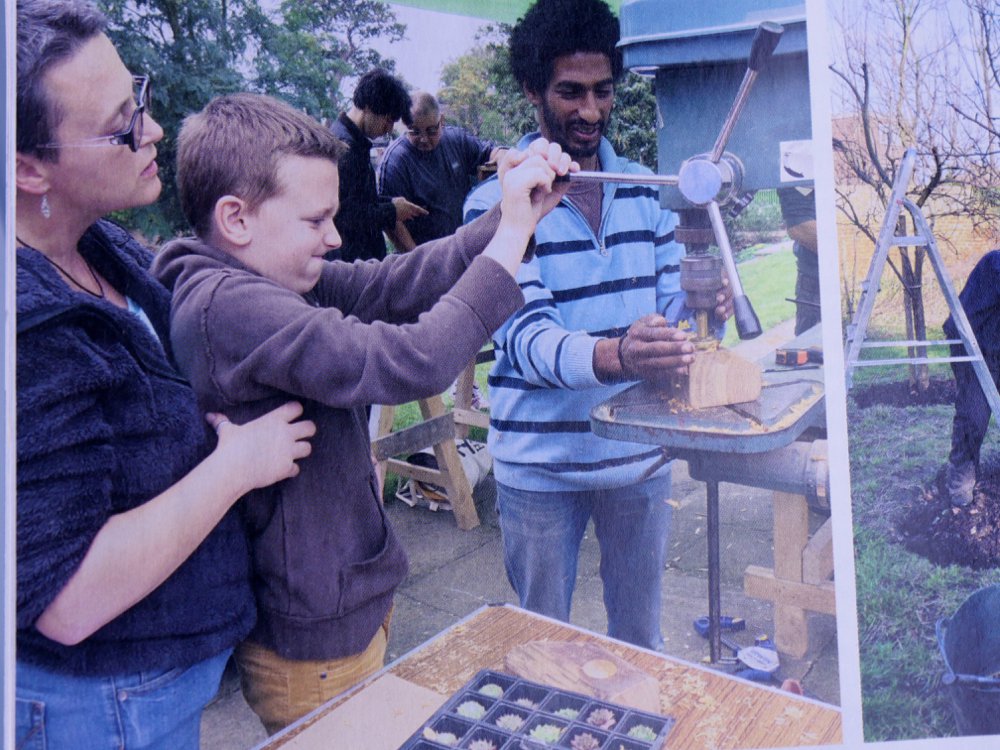
First of all I think those of us in the know have a responsibility to raise a red flag no matter who runs the show. This event is being run by the British organisation the National Trust. An organisation well known as a highly responsible organisation within its sphere of expertise. The first impressions are those of children's fun, experiencing woodworking for the first time, stimulating and inspiring generations and so on. The National Trust is naively involved in the support of something without managing the event from the standpoint of safety because of its, well, ignorance. Most of us could just pick holes in this and of course we all overlook things in our enthusiasm to encourage the next generation, but that does not excuse us from responsibility. Here is the list of issues in the picture above.
1: The child is pulling on the lever to send the drill bit into the wood. He has no experience of pulling and between him and his mother there could pull the whole unit over onto himself and the woman holding him or someone else in the unfenced area he is working in.
2: He has no safety glasses on to protect his eyes.
3: The woman has no safety glasses on.
4: The man supervising has no safety glasses on.
5: Safety shields would be more effective for everyone in this case as the wooden block can be dislodged and fly from the table.
6: The work holding seems adequate if that is indeed a clamp holding the work in the background, but the child is still pulling on the press and the man's hands are still cupped around the block of wood. Perhaps his hands are to prevent flying bits from hitting the child, but it sends a message saying it's safe to have your hands in this close proximity, which without having control of the lever becomes a problem.
6: Clamps lying on the ground.
7: Is the child being lifted to task? If so, can there be enough control?
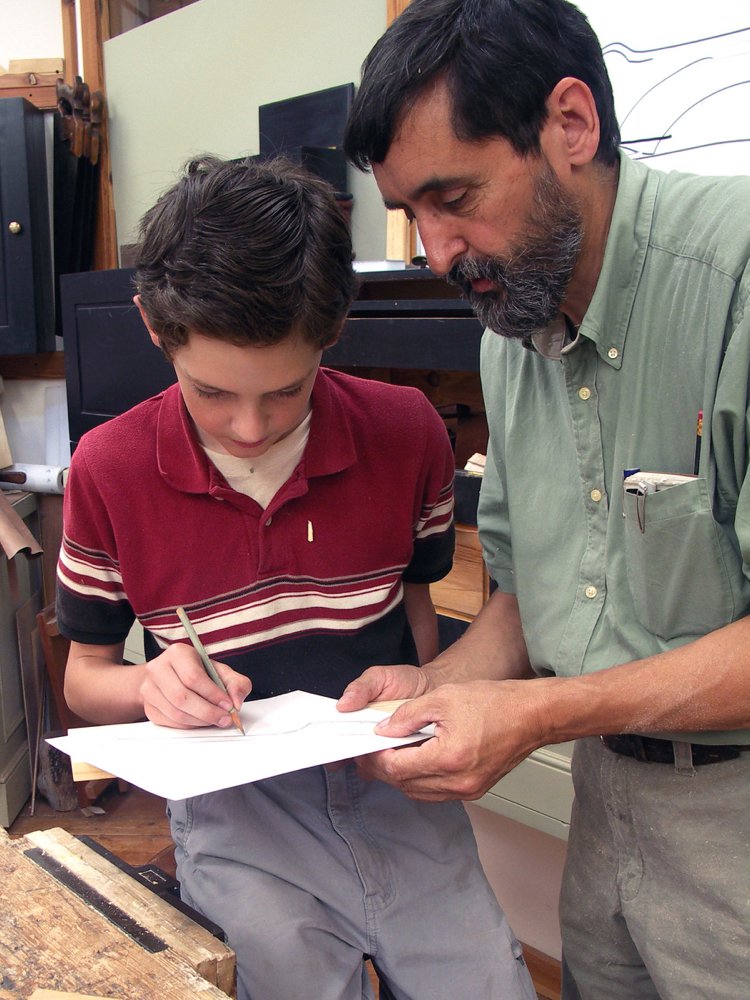
It is a difficult call when you do not want to stymie creativity and touching the palate of our children, but safety and children is often overlooked in our enthusiasm to encourage. It can all seem so innocent and indeed it is. The issues I mention are industry standards no one would generally challenge, but when we come to children even the industry standards may well not meet the need because indeed children are often inexperienced and usually unpredictable. Safety equipment and risk evaluation are inexpensive ways of preventing sad and unnecessary injuries. Both bring peace of mind, so when we see these issues we should sound the warning rather than risk harm coming to anyone and especially a child. Having taught and trained hundreds of children and young adults through the decades I am not risk averse, but I am risk conscious and unnecessary risks are unacceptable.
I did try contacting the National Trust at Rainham Hall but I found their system difficult as ever to navigate on a local level so I decided that this would actually be a more effective way anyway.
Comments ()