
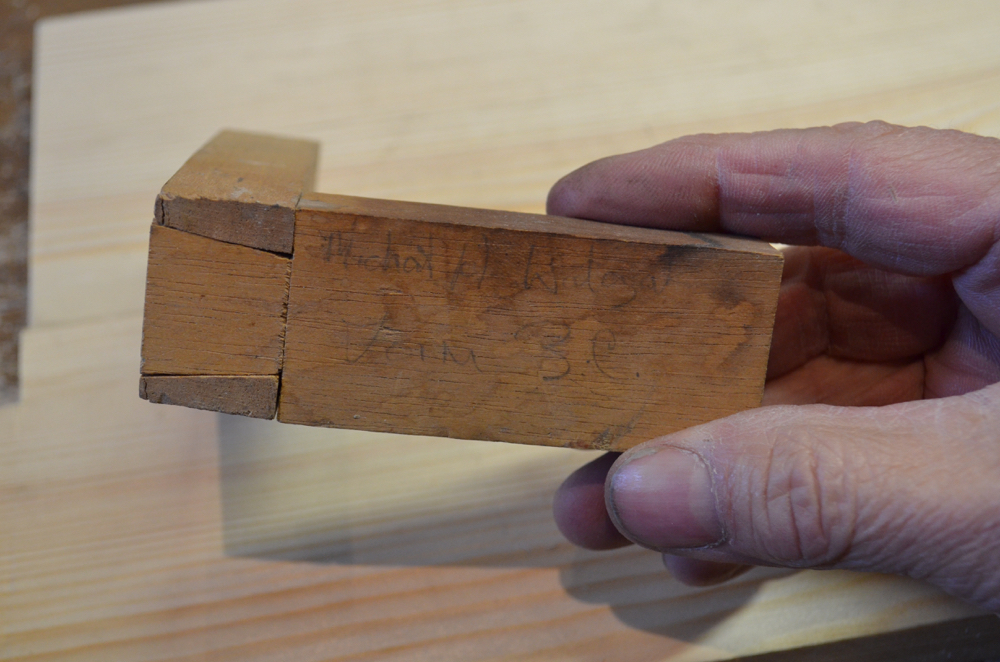
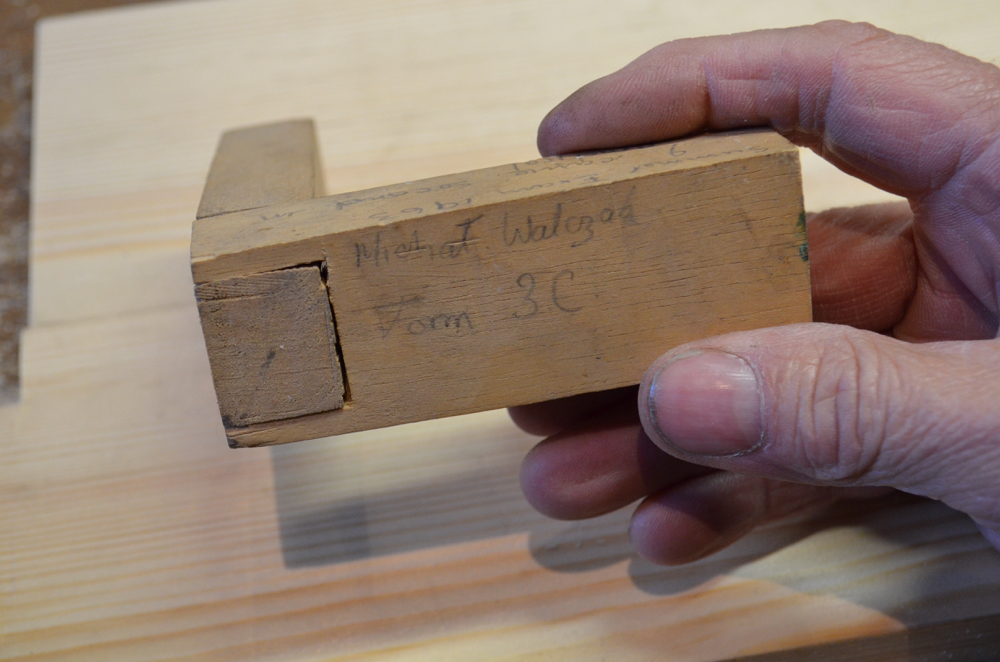
A boy made joints in 1963 and kept them. Why?
A student showed me how joinery from a woodworking class in 1962 started out. Later he showed me the writing desk he made. He went to grammar school and was channelled away from something he loved to do something more acceptable. Manual labour for him was frowned on because “academic abilities” trumped manual labour meant for the less intelligent. “It wouldn’t be good to waste such an intellect doing manual work.”
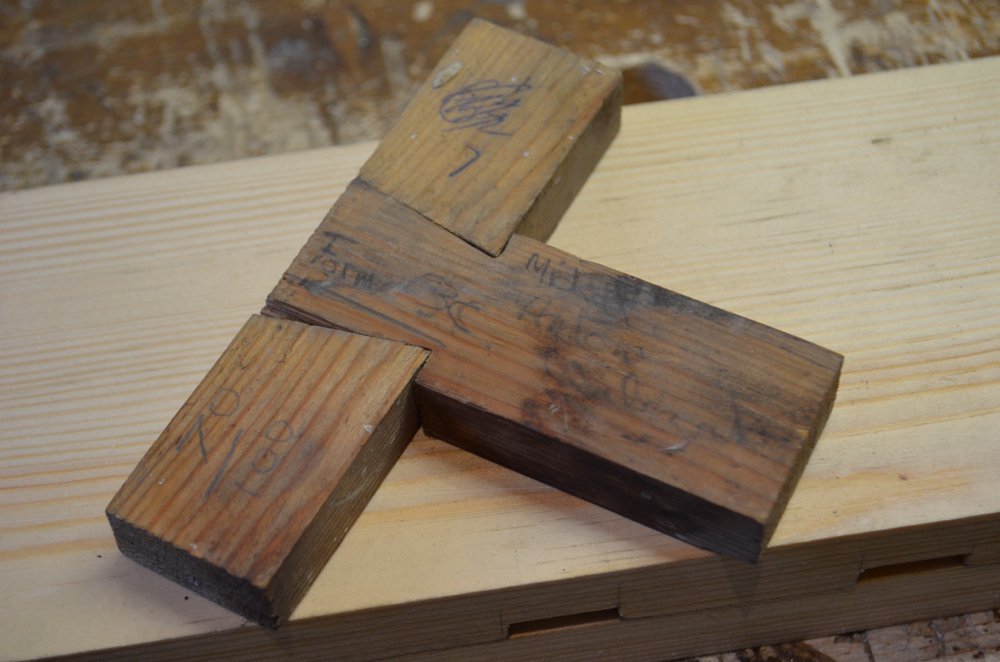
Here in my class he revisited that first love picking up the hand tools again and the embers glowed without fanning flames. Impassioned throughout the course he sensed the same feelings from 50 years ago. By the course end he was planning retiring into a fresh and new occupation revolving around woodworking.
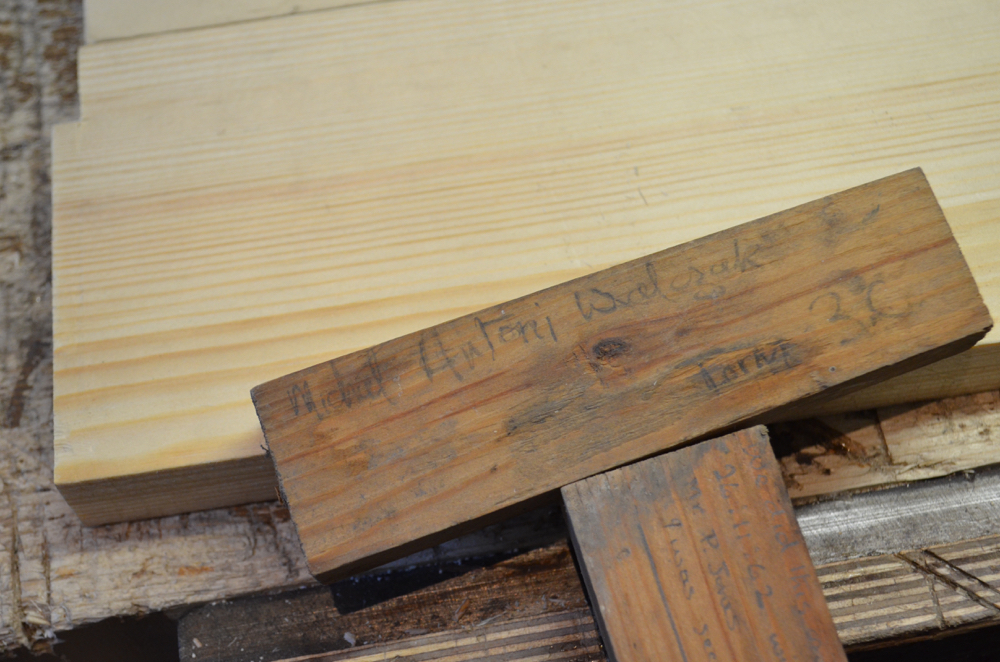
Of course this happens to people feeling this way. At the workshop door people harken back to school woodworking with great affection and a fondness starts the conversation of how they once loved woodworking. Such things are rarely expressed the same way of other subjects. Maths has no smell and neither does geography. Woodworking for hundreds and thousands is now mostly a postponed experience. People come here to unlock their past and the years and decades of neglect disappear as they rediscover realms of creativity. Something that never came to the fulness it was supposed to unfolds and just as maths and English language once layed down the basics as building blocks so it is with woodworking, metalworking, art and other three-dimensional training in school long ago. I think that we generally use maths and English language (If English is our first or necessary language) throughout our lives at different levels, but most people put woodworking, metalworking, art and craft work aside.
It’s a sad thing that once school is done it’s difficult to progress a craft at an age when development potential is best maximised. Now of course I am not at all talking about wood machining here. I have to emphasize this because wood machining is a totally different dimension than hand woodworking. You can learn enough about wood machining in a few hours to competent and safe levels using machines to cut wood. An hour for a bandsaw, a tablesaw, a planer and jointer. Two hours for a router, two to three hours for a spindle moulder. Mostly this is nuts-and-bolts assembly of components, adjusting mechanisms, blade and cutter changing and alignment, depths of cuts and so on. Beyond that it’s building jigs to give guaranteed results as risk-free as possible. That is the jigs simply prevent the machine, hand held or static, from shifting direction and gouging the wood and the skin. Safety of course becomes the pivotal issue for most training. High torque equipment can twist the machine, the material and the user rapidly out of synch and when one of these shifts out of synchrony things go rapidly wrong and the machine the material and the user are all on the whole or in part in danger. Of course it’s not always flawed use of equipment causing the danger, in fact it is most often the material that causes issues. Wood splits when you least expect it to, and shifts when stresses are released under the whirling tips of cutters. Unfortunately these stress releases almost always take place at the tip of circular saw teeth or at a spinning cutterhead revolving at thousands of RPMs. Of course hand tools also have their own safety issues and with both machine and hand tool methods we must develop procedures that minimise the risk factors to enjoy safer woodworking. I suppose for me it’s herein that the two worlds of machine and hand tool woodworking generally part, that’s if they were ever together that is, but not in the way some might think. It’s not that machines are the enemy or anything close to that but that they can be exclusively prohibitive for the majority of those who want to become real woodworkers using hand methods. If you grow up in today’s machine-dominant work you soon start assessing woodworking from the very wrong perspectives. If that is the case then you realise that you must spend many thousands on buying machines and support equipment as well as additional safety stuff too. The footprint is major massive and never ending and so is the protective space you must have to enclose and protect it from the weather. Even though my workshop space is 25’ by 50’ I actually work in a space less than a single-car garage. My workspace measures 8’ by 10’. Whereas you might get machines into that space, it’s not really practical and safety becomes even more problematic. If you have hand tools and benches in there too, manipulating the space for a working environment becomes impossible. Of course people do such things to make things work and also to prove others wrong, but it’s far from easy even with everything on wheels.
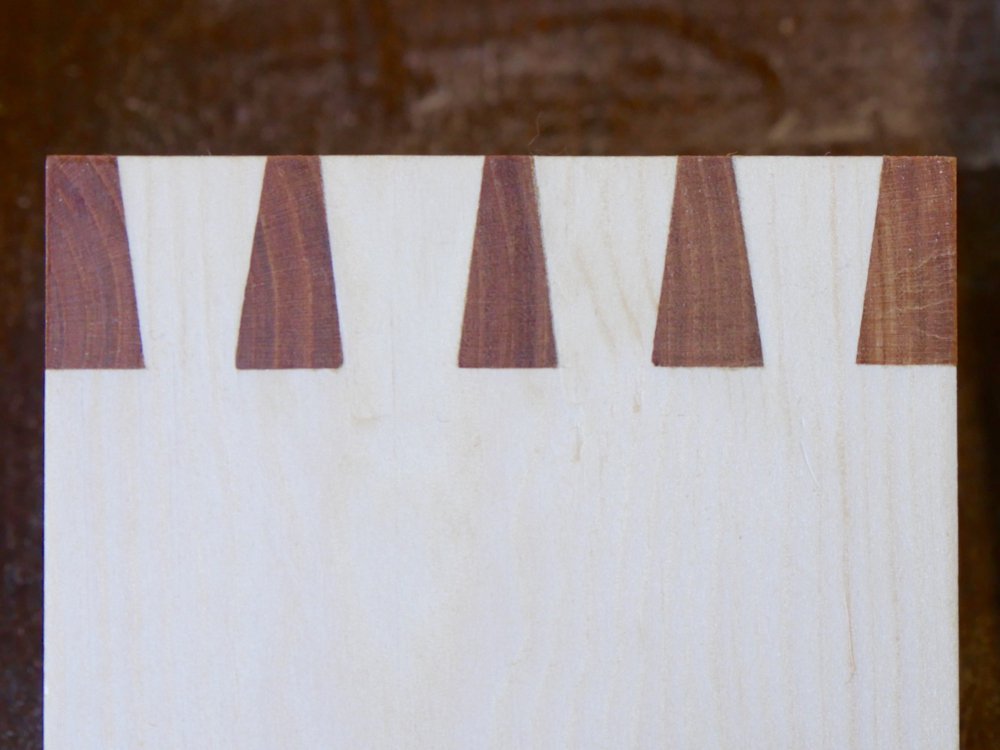
I think these joints above this one look like mine 50 years ago too and were important steps for a thirteen year old in school. This one here is mine today and they took me about five or six minutes to make. Without those first ones I would never have got to these. I am so glad i never once used a machine to cut dovetails. A friend of mine did once because some jerk told him to. He regretted it all his life because he felt cheated.
I loved seeing what he made as a craftsman working alongside him for two decades and lamented with him for the boss that told him he had to use that router.
I also loved seeing the excitement in the voice of the man who recalled the days with his other mates in class fifty years ago. Imagine the stimulation that took place and him keeping the joints for 50 years in a box and feeling such affection for the making of them, the school woodwork teacher, the tools used and the memories. Woodworking is more important to us than we think and of course I am not talking about any type of machine or CNC woodworking here. I am talking about what makes woodworking totally inclusive to everyone anywhere as a self sufficient craft.
Comments ()