
Why I do what I do
Often it’s the unexplainable things of life that make the most sense to our sensibilities. Strange really, when you think about it. The leaf a tree carries and the way wood severed from it’s root in the same stem brings life to what we make from it. These things are things a scientist explains and then fragments what he or she analyses to reconfigure aspects of it to create something saleable to make money.
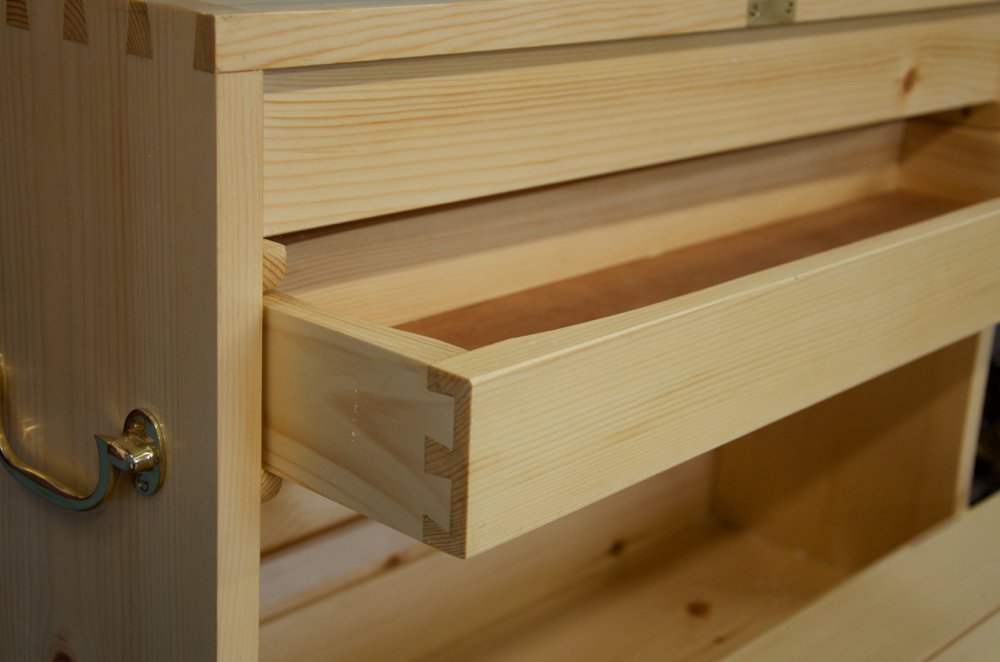
I think that science proves a few things we already know and understand. Many things, really, but then comes the disintegration of all the constituent parts and we end up with MDF and phenolic resins, pressed fibreboard and plastic laminate. No matter how I slice it, the tool box wouldn't be the same in MDF.
For a while there, because of a TV show or two mostly, people lost interest in doing it themselves and let a machine do the work for them and we almost lost our sense of wellbeing in the progress of it. Mostly, for me anyway, it’s been more seeing natural things being displaced if you will and then reformed into artificial substitutes commercial enterprises convert into something called economy and industrialism. This includes people too of course--humanity considered as fodder in the pursuit of ever expanding consumerism we call markets.
I am convinced there is a need for human recovery in every person living that results from commerced life to recover some sanity that goes well beyond using commercial methods of industry to give us a place where we can rest from it. I am also convinced that the process of working with our hands contains the whole process to a speed we can understand and recover ourselves from by mastering skills and better understanding the different woods we work with and the tools we use. I think these things are important enough to me for me to write 2-3,000 words every day for people to read. It’s worth giving up my free time in the evenings and weekends to make my days longer and extended beyond my working hours of making, and teaching and building to build a more secure future for people to recover in and at the same time preserve my craft. I do not believe that without this effort, apprenticeships and that art of my work as a crafting artisan will be safe. Certainly no politician or industrialist can be entrusted in any way with it. Of course it's not just my one craft I speak of. It's spinners and weavers warping treadle looms and blacksmiths in their back yards learning to form steel into things of use and beauty. Potters, basket weavers and so on.
When I speak of recovery and wellbeing I speak of progress you see. I cannot reverse the effects of living in a digital era of technology where virtual has secured its tenure as permanent reality, but I can teach people that the mental attitude towards working manually needs to change. That men and women can see work unfold from raw material into something so well made it bespeaks of an era 300 years ago when fine workmanship exemplified a worker’s respected life that was indeed sacrosanct and clean, wholesome and pure. A period when people worked within the sphere of limitation attributed to them. An allocation of time for them to learn and to grow and to understand that work was an honourable place to rest in and enjoy. I can even use that digital era of expression to advance my cause in helping others get off the conveyor belt even if only to recover for a little while and discover their own saneness is still there inside them.
For me and for thousands beside me, work is healing. That’s the other part of recovery. Recovery is to find that which was lost or damaged or abandoned. Machine and hand are not really two sides of the same coin to be flipped and seen as coequal in existence but for the main part to exact opposites. Call me a luddite if you will, but people along the way have protested against the industrialism we live and claw our way through today. But we can hold to that aspect of respect that gives us the opportunity to live and breath in the cleanness of honest work in an honest atmosphere of minimised pollution beyond commercialism and mass manufacturing. It’s a personal sphere of unindustrialised space were we close the doors to commercialism and learn to live and breath a different way. People fought hard for such freedoms so I could go to work with my hands. It wasn’t altogether the halting of progress in times past but the fight against the very giants of industrialism we face in the everyday of life today.
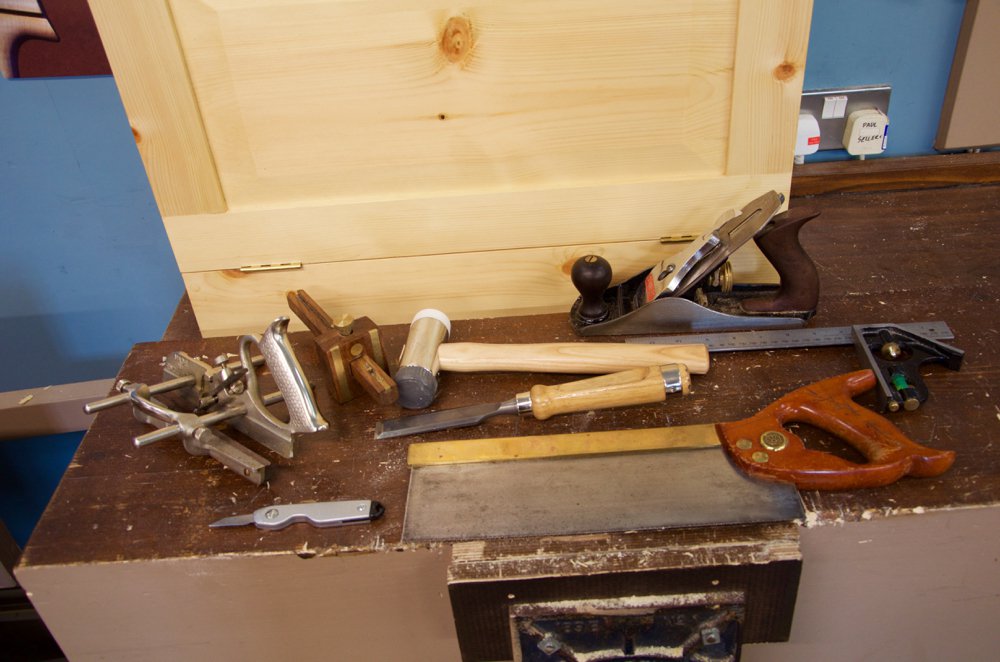
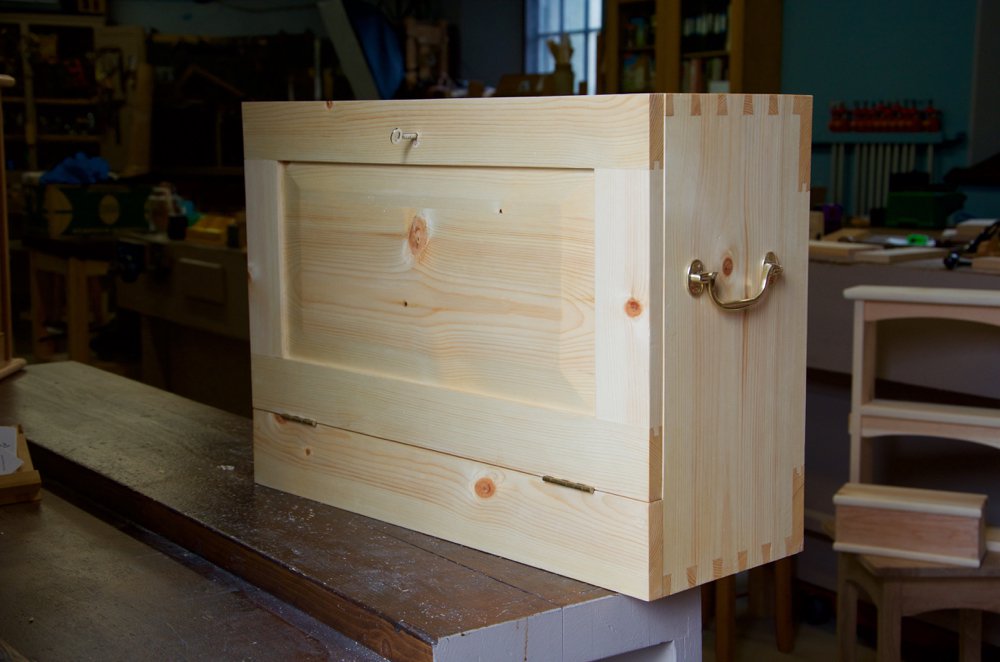
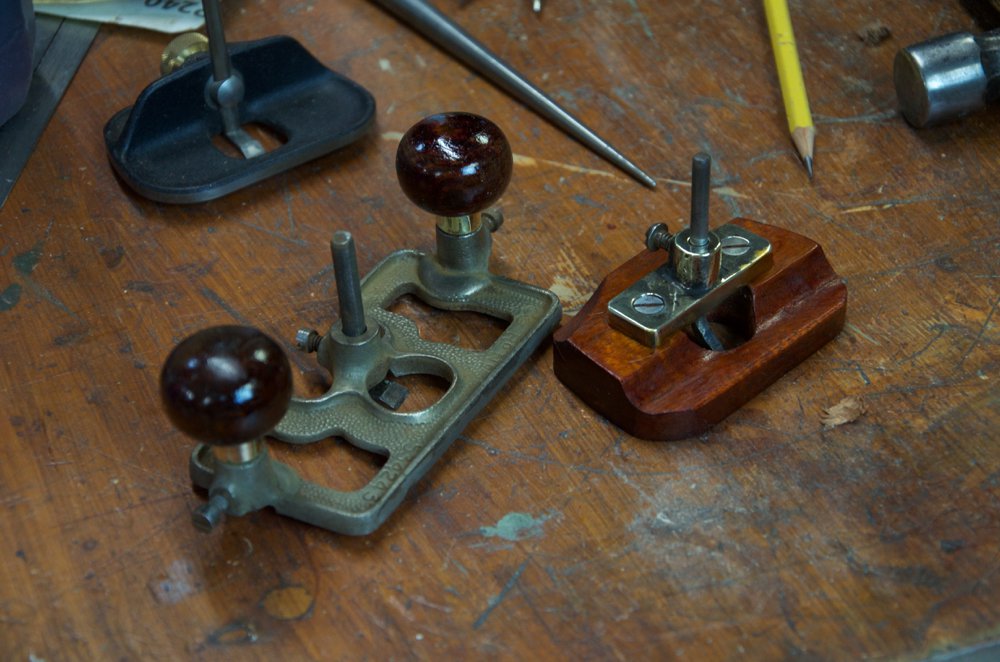
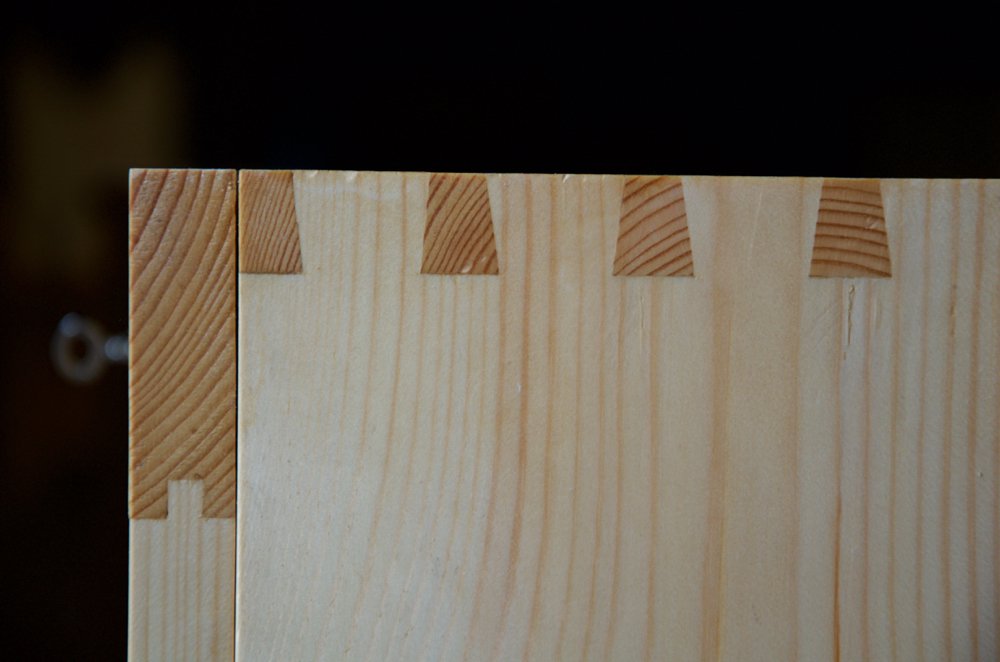
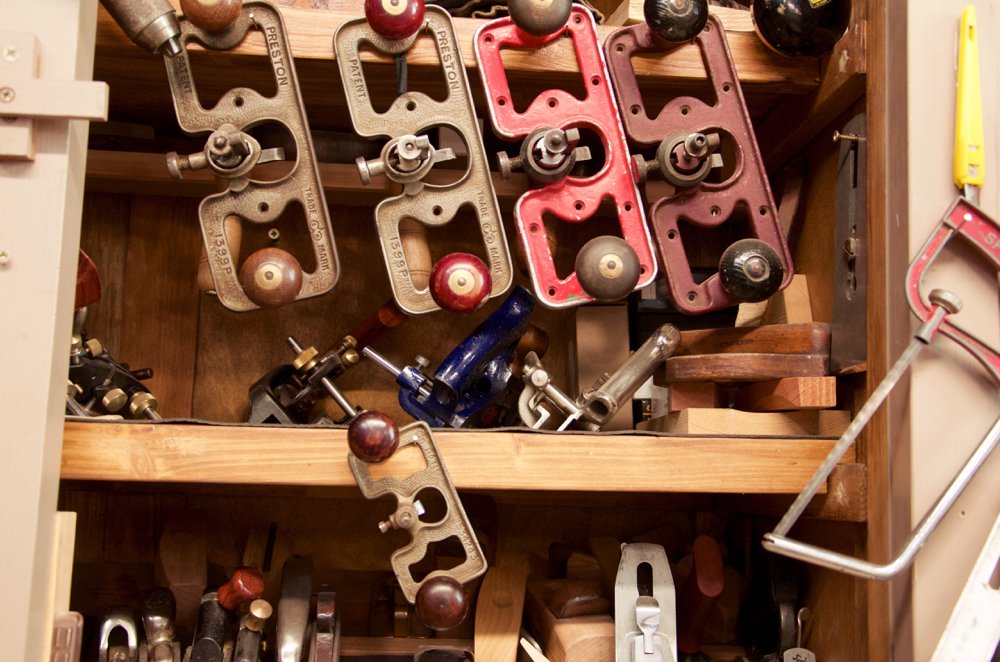
Two decades ago men laughed at me at woodworking shows with these few tools on top of a joiner’s workbench in Mesquite, Texas, Tulsa, Oklahoma, Kansas City, Kansas. Places like that. They were mostly the salesmen who sold machine routers and who grew bored when sales slowed and they were empty and never knew wood. Eight tools made this whole box—door and panels, frames and dovetails, mortise and tenons—everything. Imagine such a simple thing as this in today's age and you don’t imagine something stultified and old fashioned but, if you are like me, you imagine a future lifestyle working your hands in your craft and a new life unfolding in the lives of others. You imagine sane afternoons and evenings with your sons and daughters, your wife and your husbands enjoying banter back and forth as you build a new dining table or a new bed. These are the things industrialists know nothing of without making it a money-making enterprise. I think that this is why I do what I do and it’s why people follow my classes at the castle and the videos we make for the future of future generations. I LOVE what I do more today than when my working began 50 years ago because it involves you and thousands of others who love working with their hands.
Comments ()