
The joiner's axe
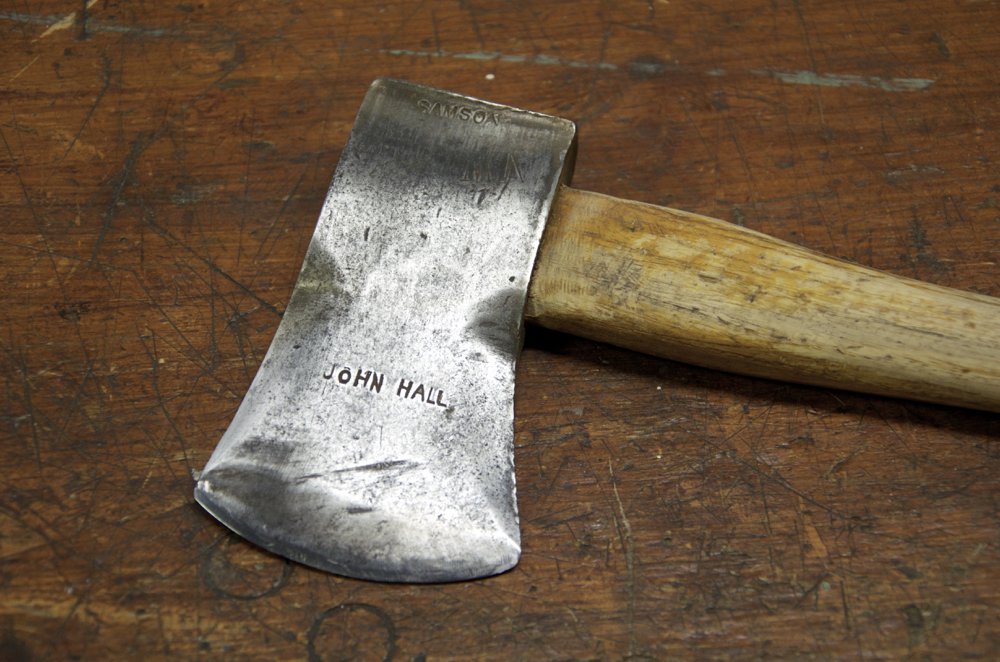
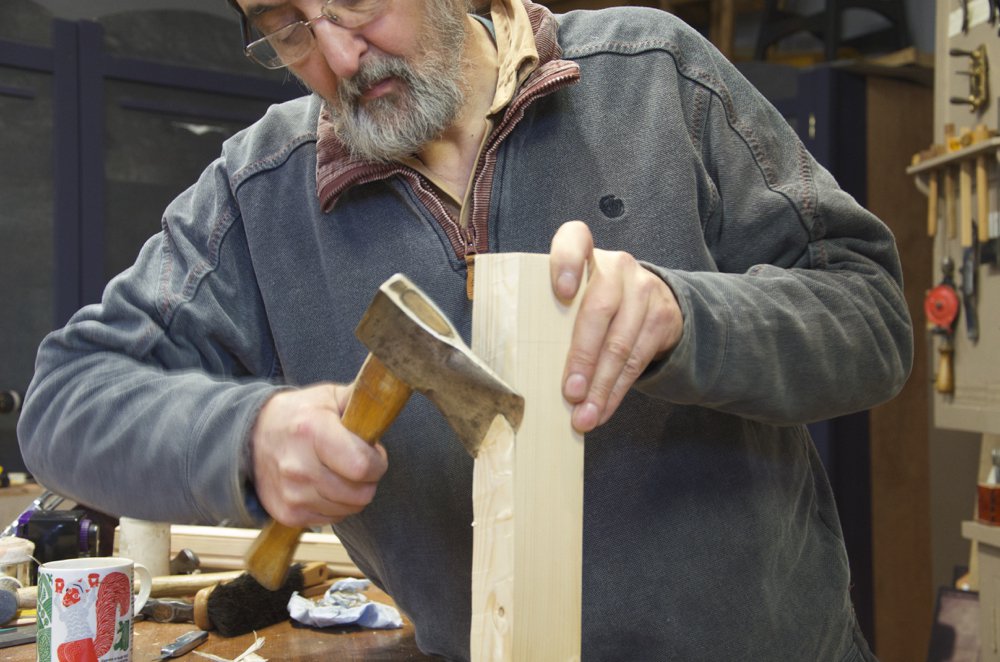
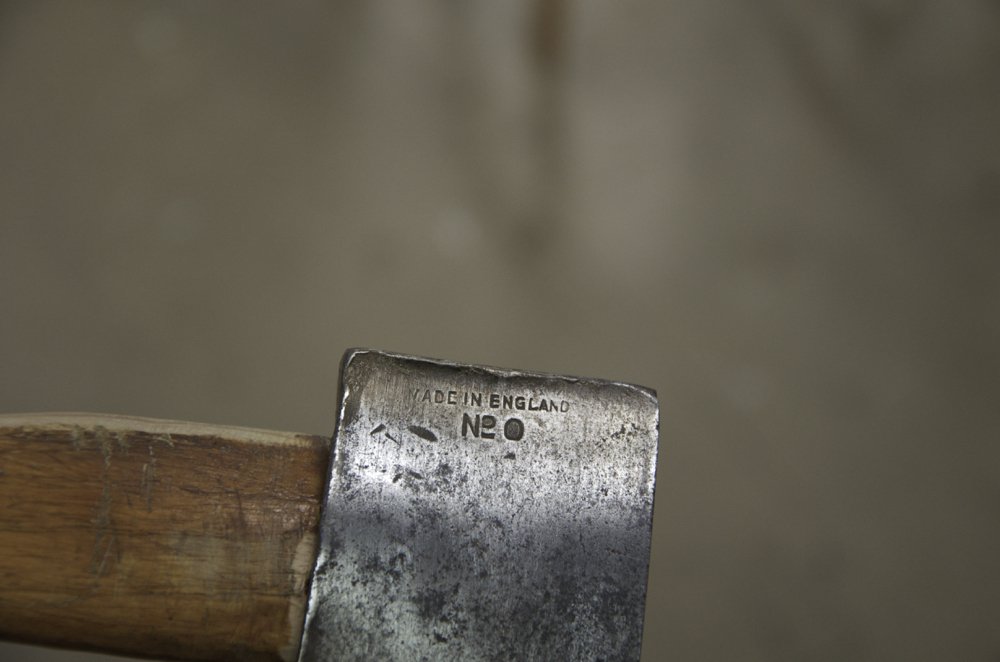
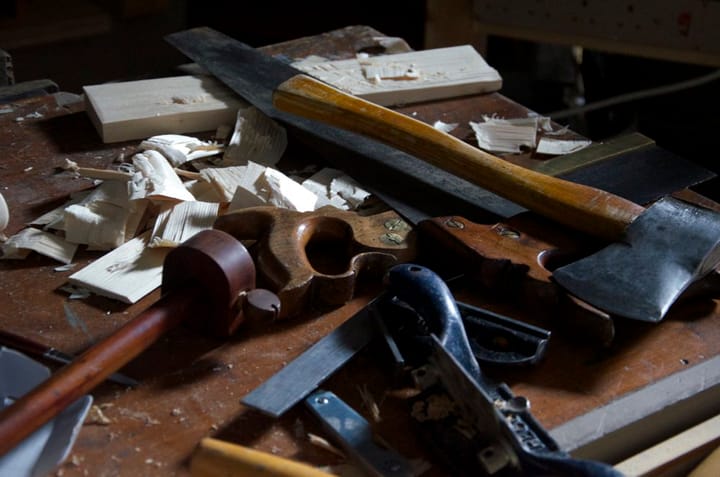
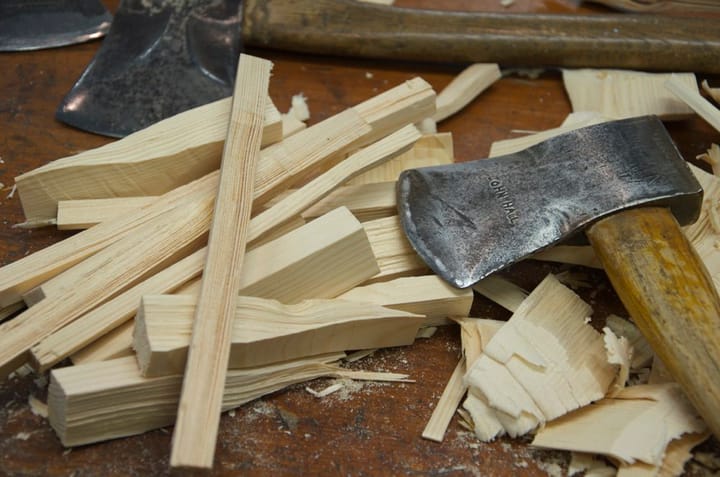
Here is the joiner’s axe (UK spelling). It’s perfectly shaped in every way and it’s mine. A joiner’s axe is not a green axe or a carving axe but it carves and shapes wood as well in most cases too. It’s not a felling axe because of its size but you could fell with it on a smaller scale. A joiner's axe is used to split wood but we never called it a hatchet because it was an axe. Perhaps a hatchet always seemed more like a dulled ax used to split wood by dull force whereas my axes are always sharpened for a prime cutting edge because it wasn’t generally used for firewood splitting as with a kindling axe. I noticed the first use of the term hatchet for me was in the US, hence my spelling of the word ax momentarily above. My wood splitting days began with fire starter wood at about 8 years old. I picked up fruit boxes from the greengrocers who seemed always glad to get rid of them and gave me an orange for each box I took. That was a prize for me. Fruit was not on our menu and mister Hannah knew our family needs for food. The family axe hit the concrete regularly enough and eventually reached a point where it was indestructibly rounded to a 1/8” radius. It worked fine because nails and stapled wire holding the boxes together responded well to the same axe edge. It was the all-rounder for chopping firewood in the hands of an awkward boy and an ideal tool for me to discover the best way to understand how wood splits. And so my woodworking days began.
The joiner’s axe for a Brit fulfils many a unique purpose not the least of which are wall plugs used for fixing wide skirting boards to plastered brick walls. The plugs are propellor shaped so that they twist into brick gaps as the are both driven in and dry out.
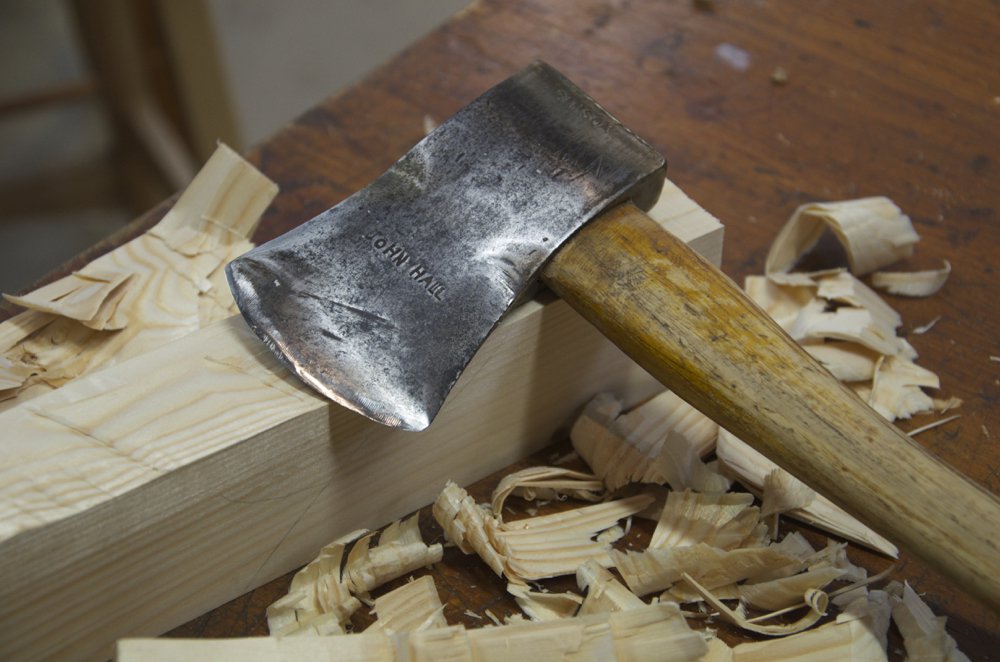
The joiner’s axe is a scribing tool that removes stock fast from the edge of architraves in internal corners and then scribes skirting boards to awkward floorboards and such like that. The tusk tenons are bulked-out with the axe as are large housings and tenons. There is much more to shaping a joiner’s axe than meets the eye. It’s the most versatile axe I know of. It’s beautiful really.
Joiners use axes for roughing out work of every kind and any woodworker should seriously consider the owning of a good joiner's axe. This of course becomes especially so for rough shaping all sorts of furniture parts including table legs of every shape. In the absence of machines, the axe reduces stock more rapidly than almost any other hand tool, but all the more when I use it for rough-shaping different styles of table legs. I use mine to cut tapered legs as much as by bandsaw and more complex shapes including beidermeier. For work away from the bench and when electricity is beyond reach, say for site work and such, an axe can cut an arch, points to posts and pegs. We'd take half an inch off the width of a door in the pre skill-saw days and of course combining this with a plane it went fast.
Anyway, get a joiner's axe and get used to using one.
Oh, axes are not for children though. Pass it on.
Comments ()