
Mixed methods for spoonmaking
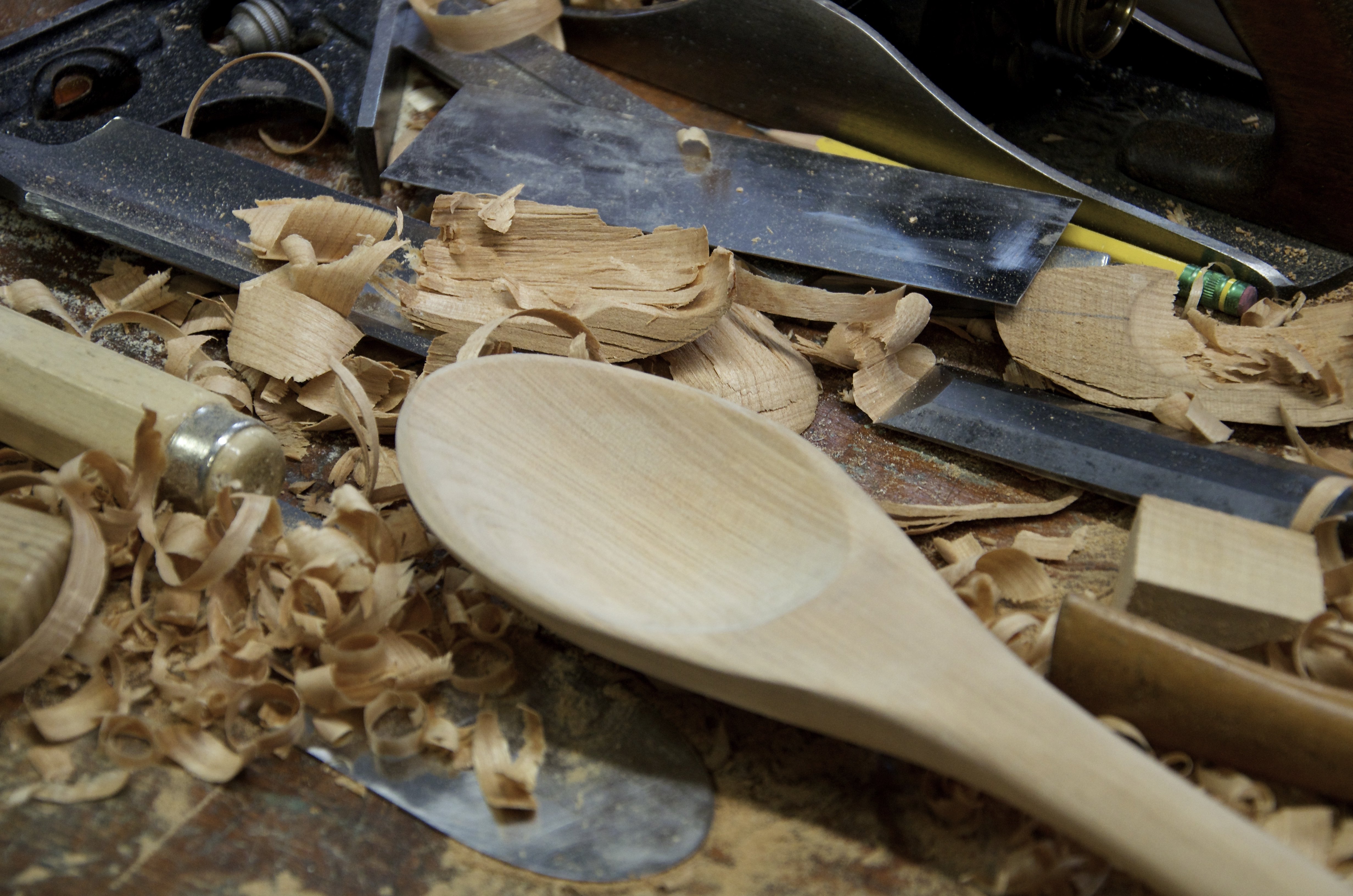
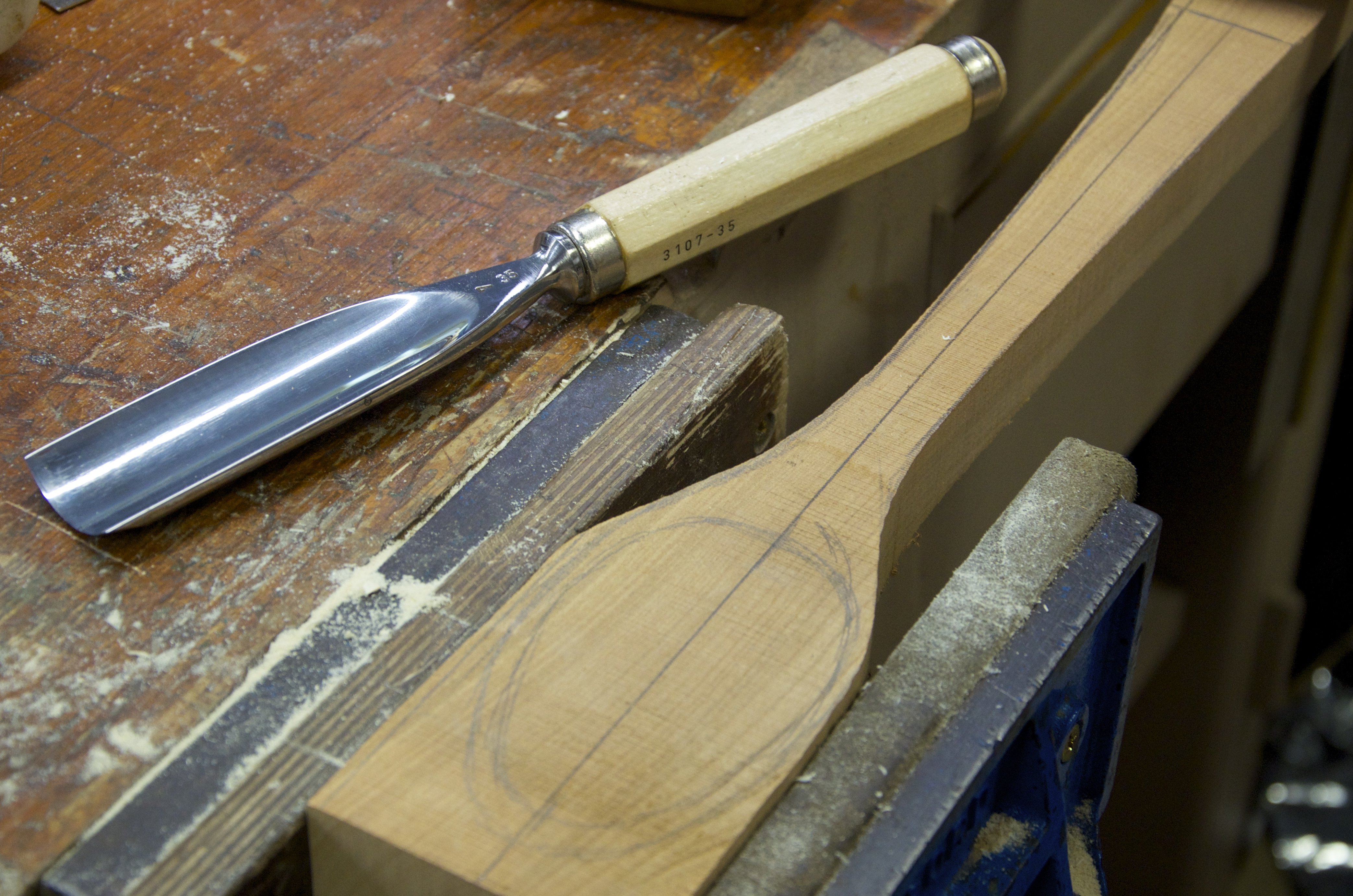
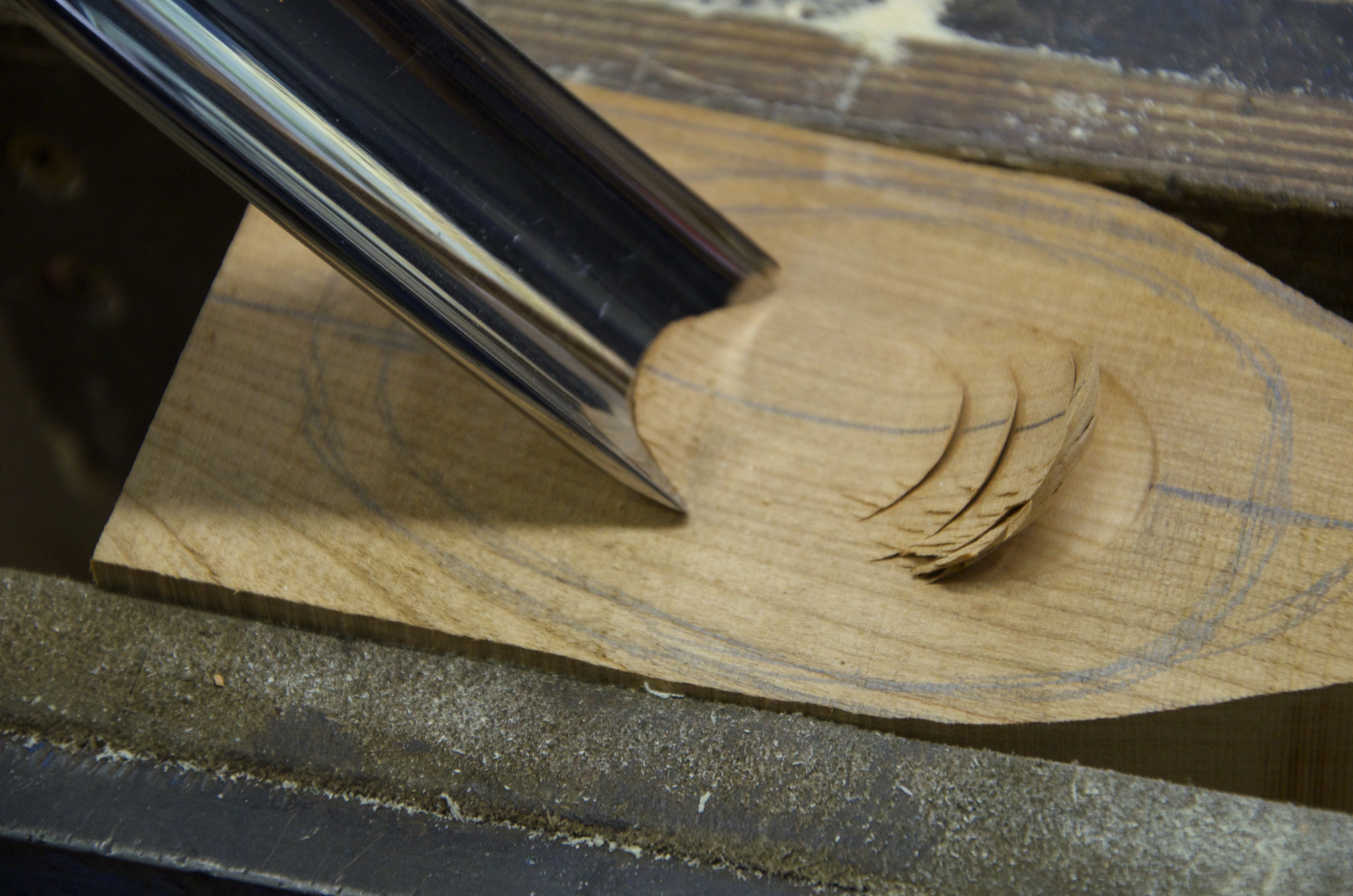
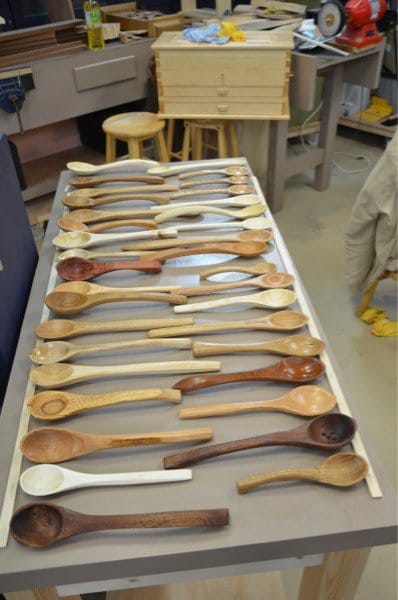
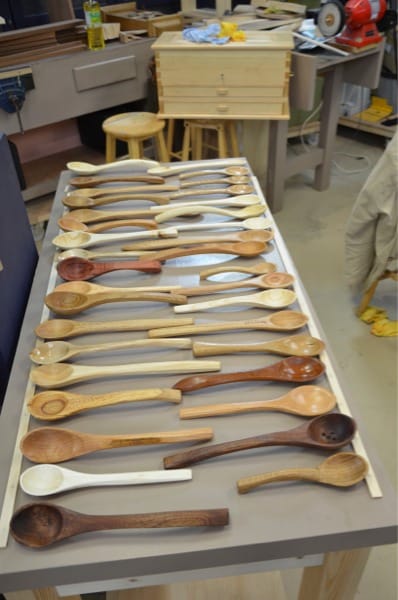
I can't really say that I like or dislike carving spoons with special knives and I suppose it has something to do with who I am as a furniture maker working in a workshop at a bench. I've made and sold thousands of wooden spoons and of course I've also taught hundreds if not thousands to make them. My methods revolve around fully dry wood and not green wood and mostly my materials come from scraps from flat boards rather than riven and split limbs. My tools are conventional woodworking tools used by different crafts. In this case the bowsaw for roughing out, the gouge for scalloping and shaping and the spokeshave for refining and truing the shape. I used a couple of card scrapers to finish of the shaping and the spoon is ready to go in about half an hour to an hour--ready to sell really.
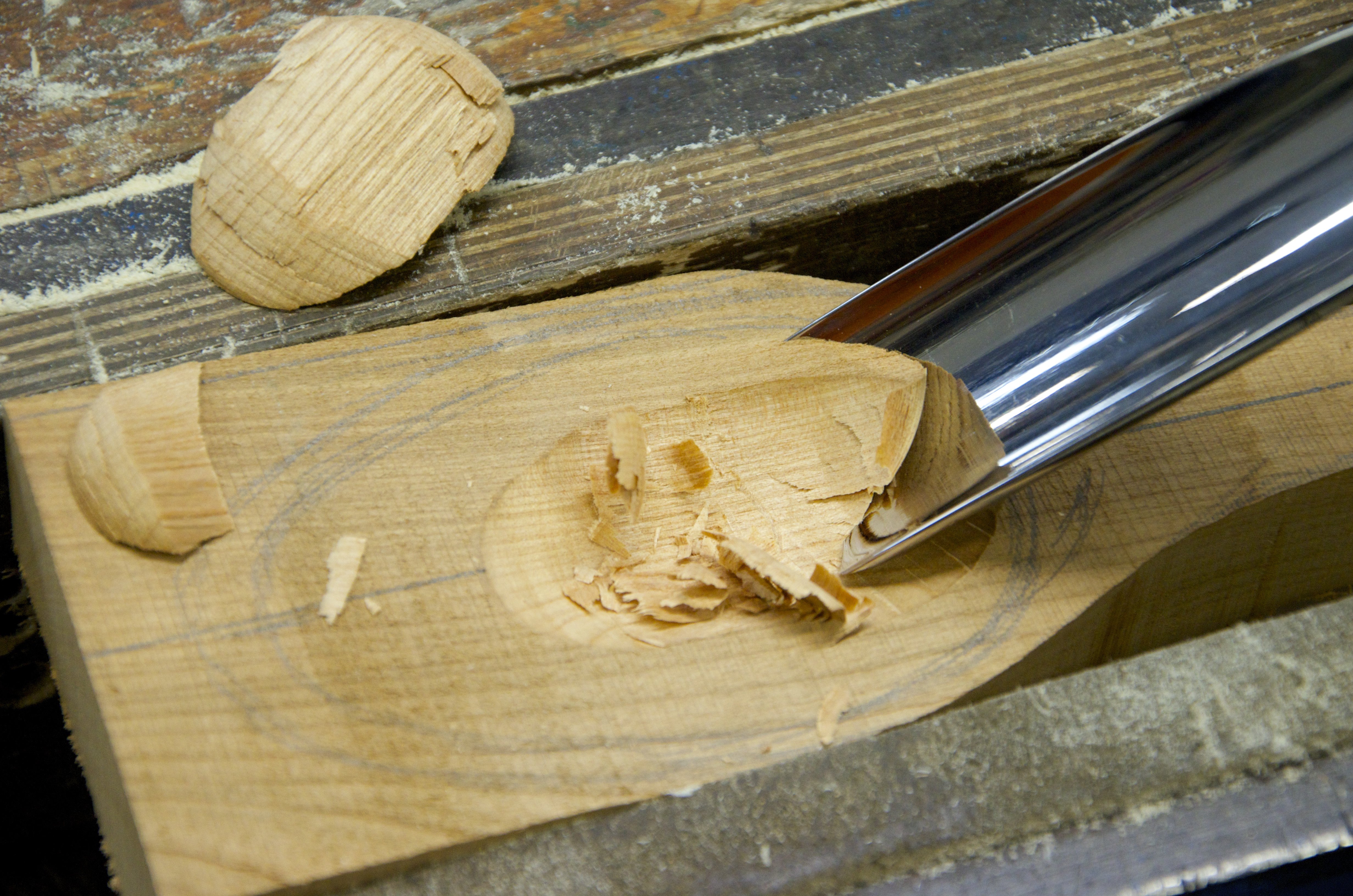
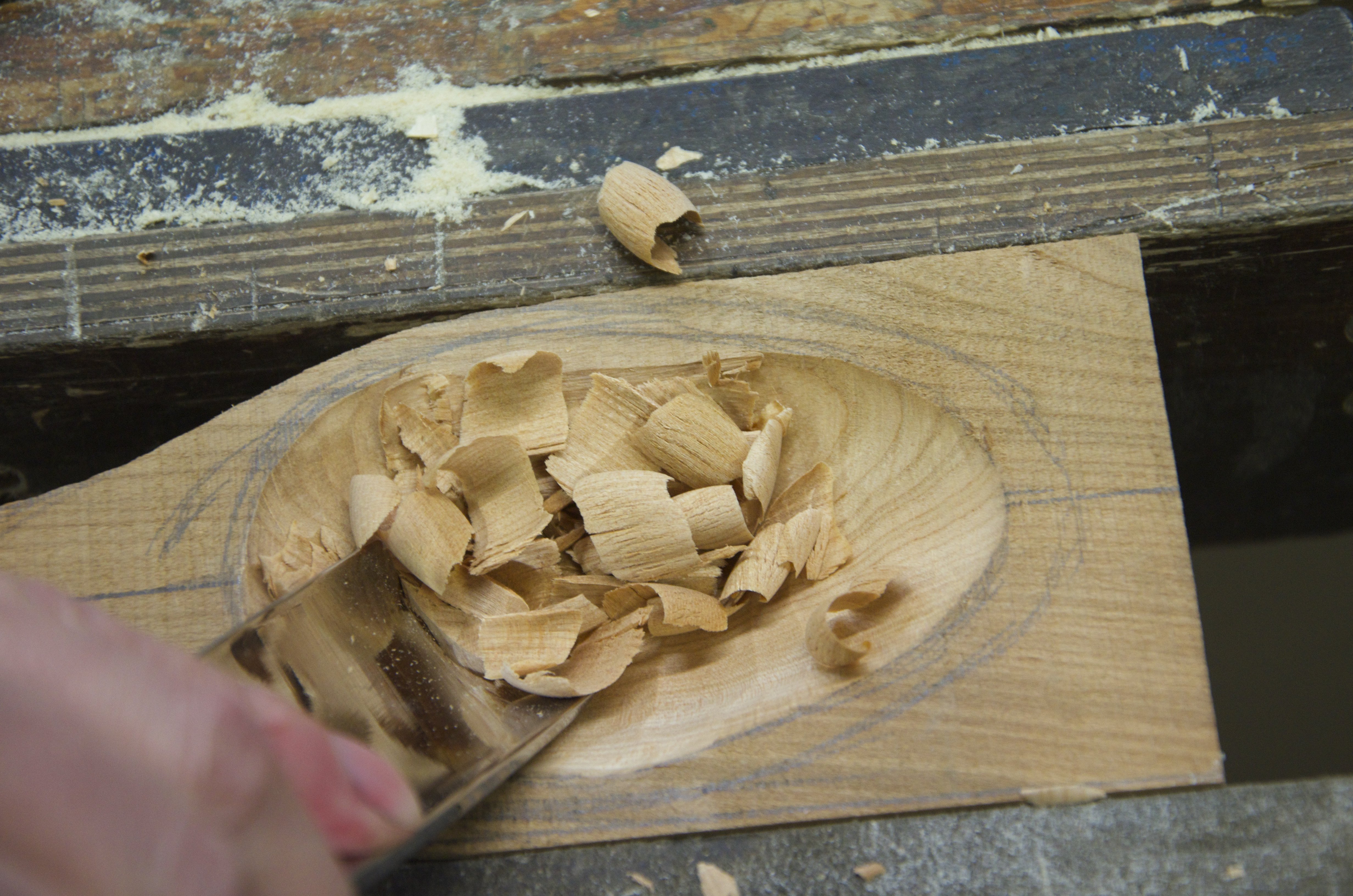
I prefer these tools to knives mostly because they do it so well. Cherry makes a good spoon, one of the best. I used a gouge today to carve out a large cherry spoon. It takes so little time with a gouge. The great benefit is you can fully carve the spoon from fully dried wood. when wood is dry of course it’s fully hard and in about five minutes a large bowl is full carved and scalloped to almost perfect symmetry. Another advantage of course is the spoon is ready for sale and further drying is needed and there is therefore no wait time sell your spoons.
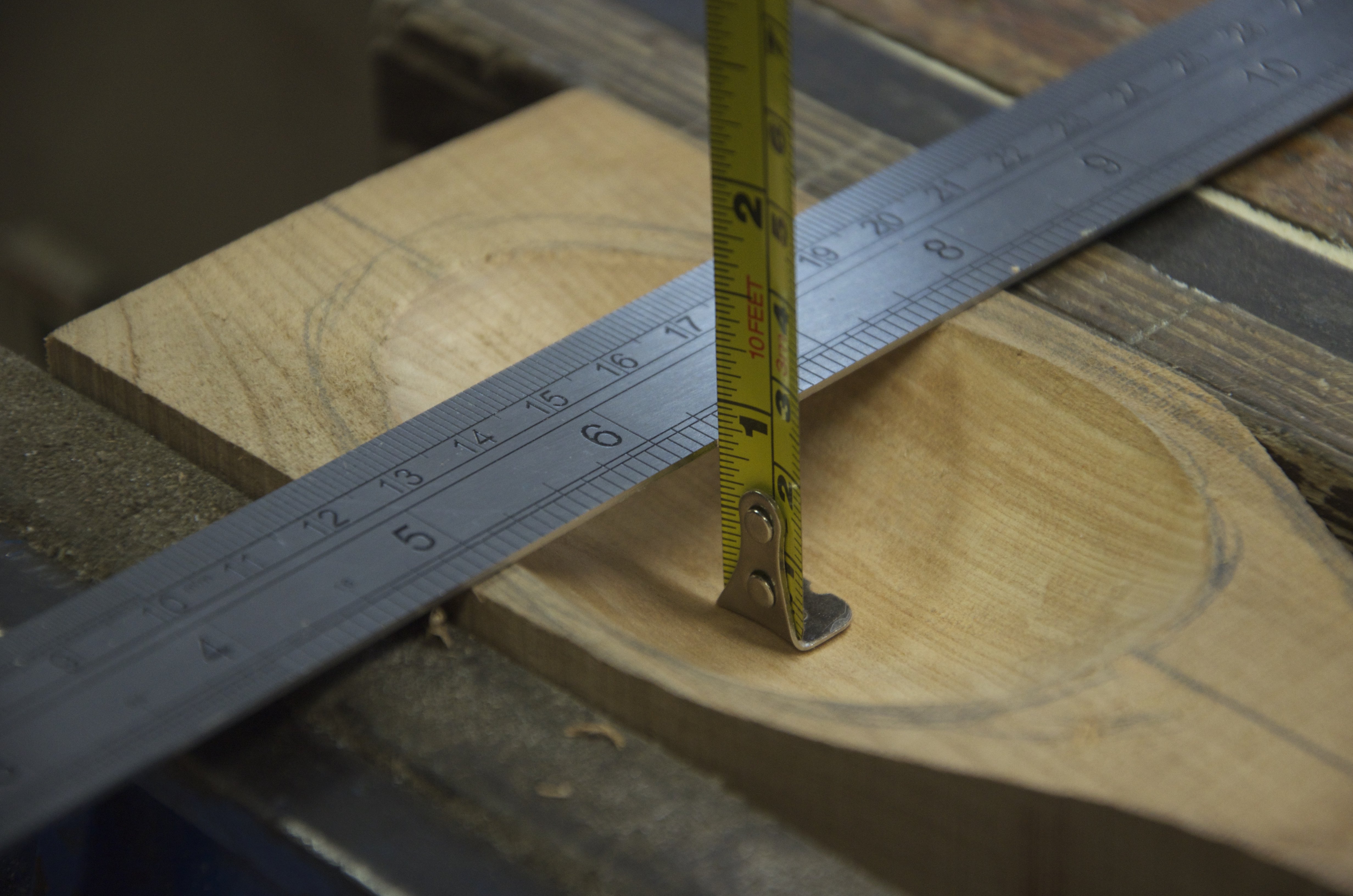
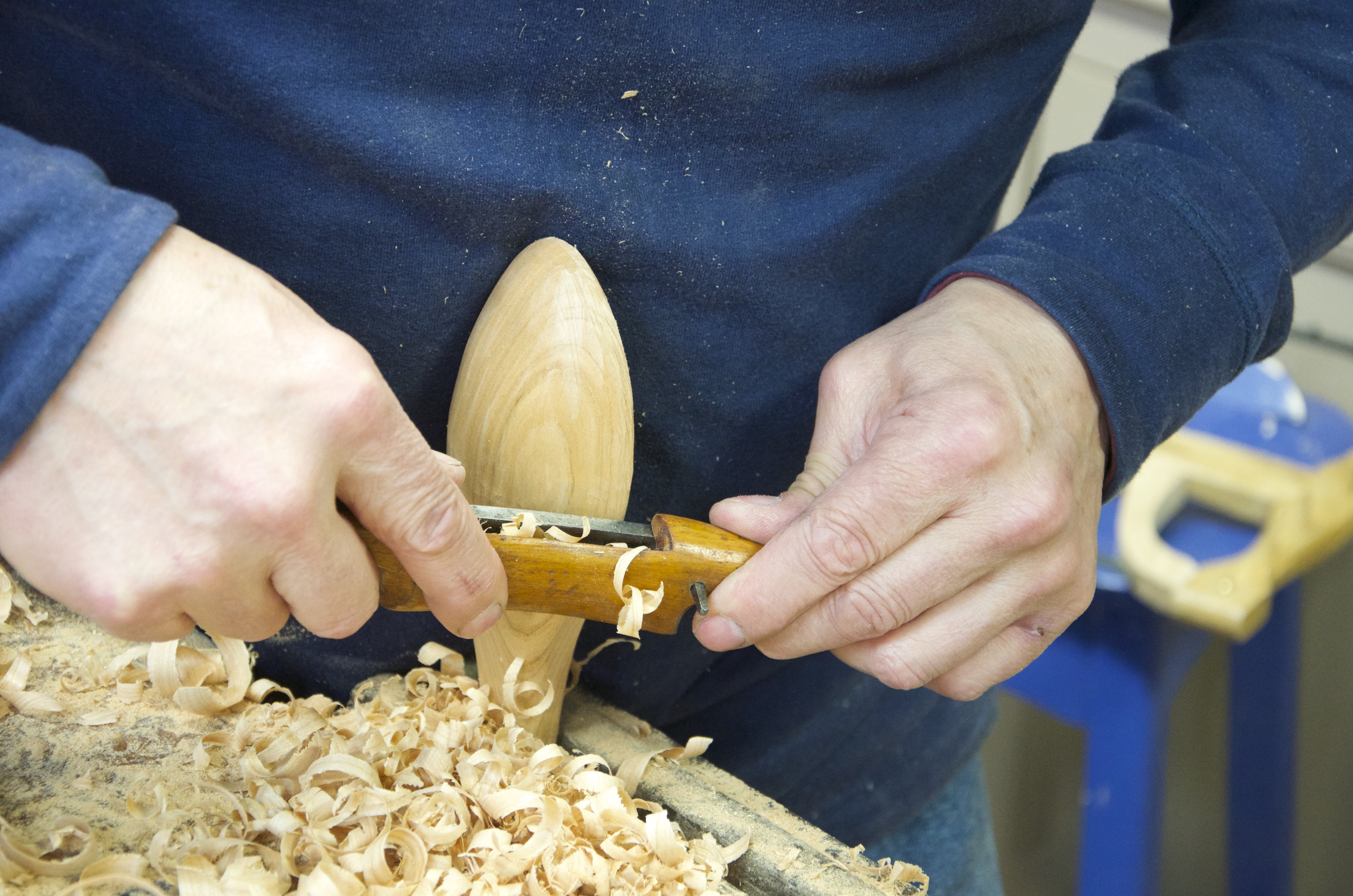
This large spoon came from the bowsaw, the spokeshave and the scraper. I like the concept of carving spoons with hook knives, but they don’t work to well on fully dried and seasoned wood like this. It’s the gouge and the spokeshave that makes the big difference. The leverage you get with the gouge means more power to you. Using a mallet or chisel hammer means the depth comes in a a minute and refinement in two or three more. Another great advantage of course is your hands are always behind the cutting edge. Perfect for getting children into spoon carving effectively, productively and all the more important, safely.
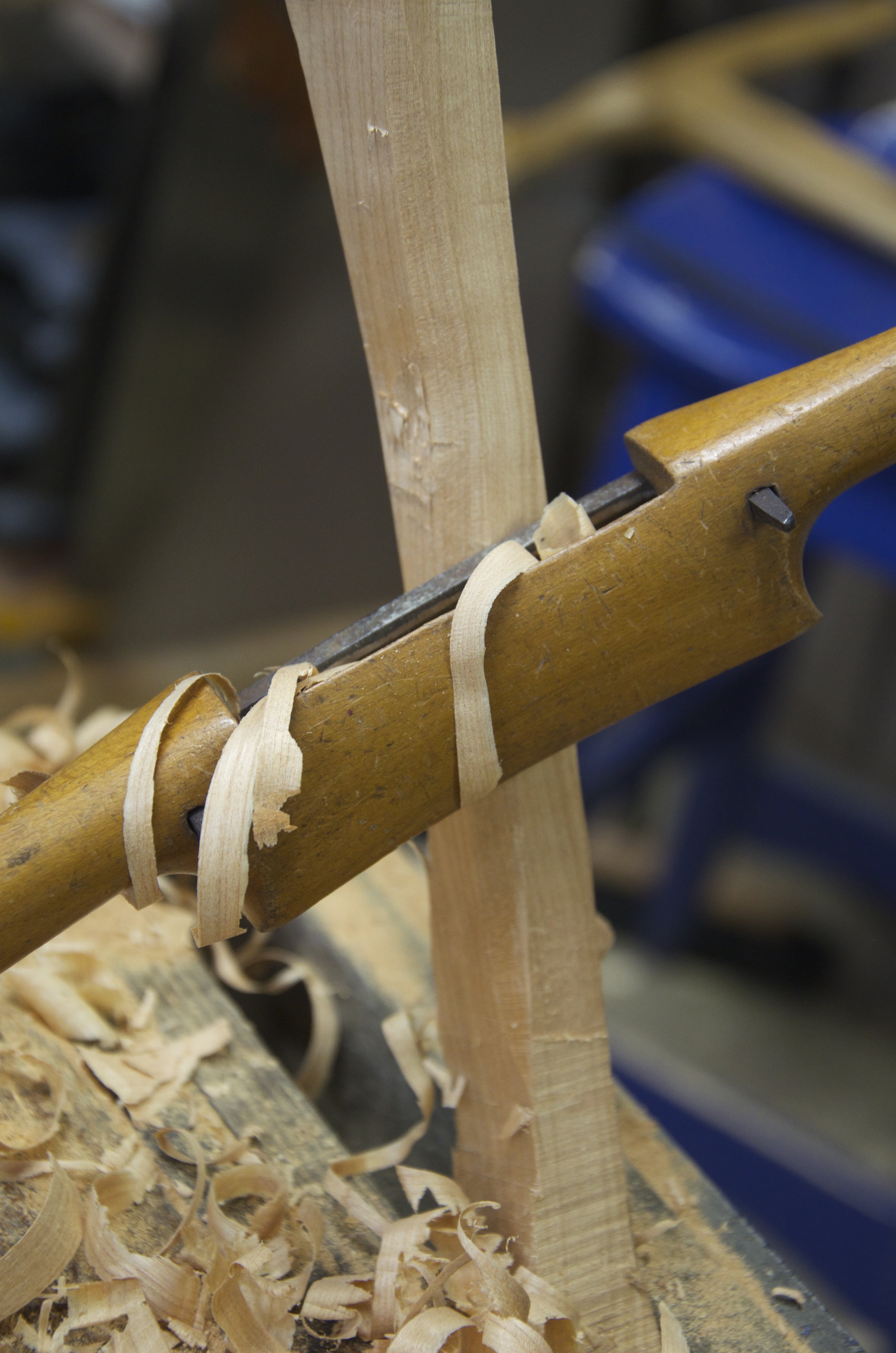
I used a wooden spokeshave for this one and cherry is a wondrous wood to work with these two tools. As I said, it’s hard, resilient, dense-grained and very lovely with its rich honey colour and swirling grain patterns. Much more lovely than many other softer hardwoods. It means that all of the scraps from my furniture making become lifetime spoons, spatulas, garlic boards and much more.
Of course as a furniture maker I am using slabbed wood and not riven and split limbs. The sections clamp well in the vise or to the bench top. I never liked sitting sown to work and have stood within two feet of a bench vise for fifty years six days a week and 8-10 hours a day on average. mUch better for your back than shaving horses I think.
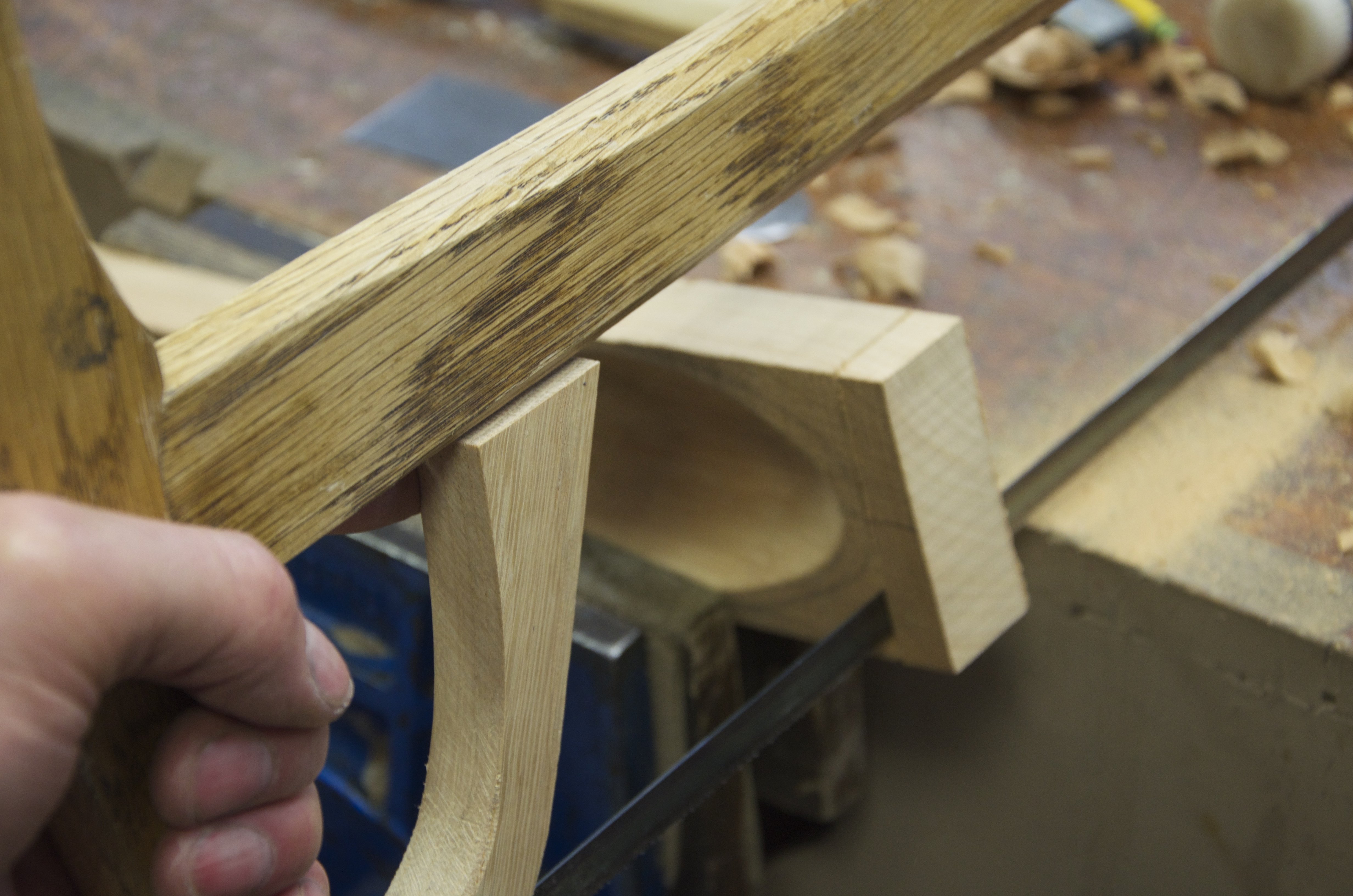
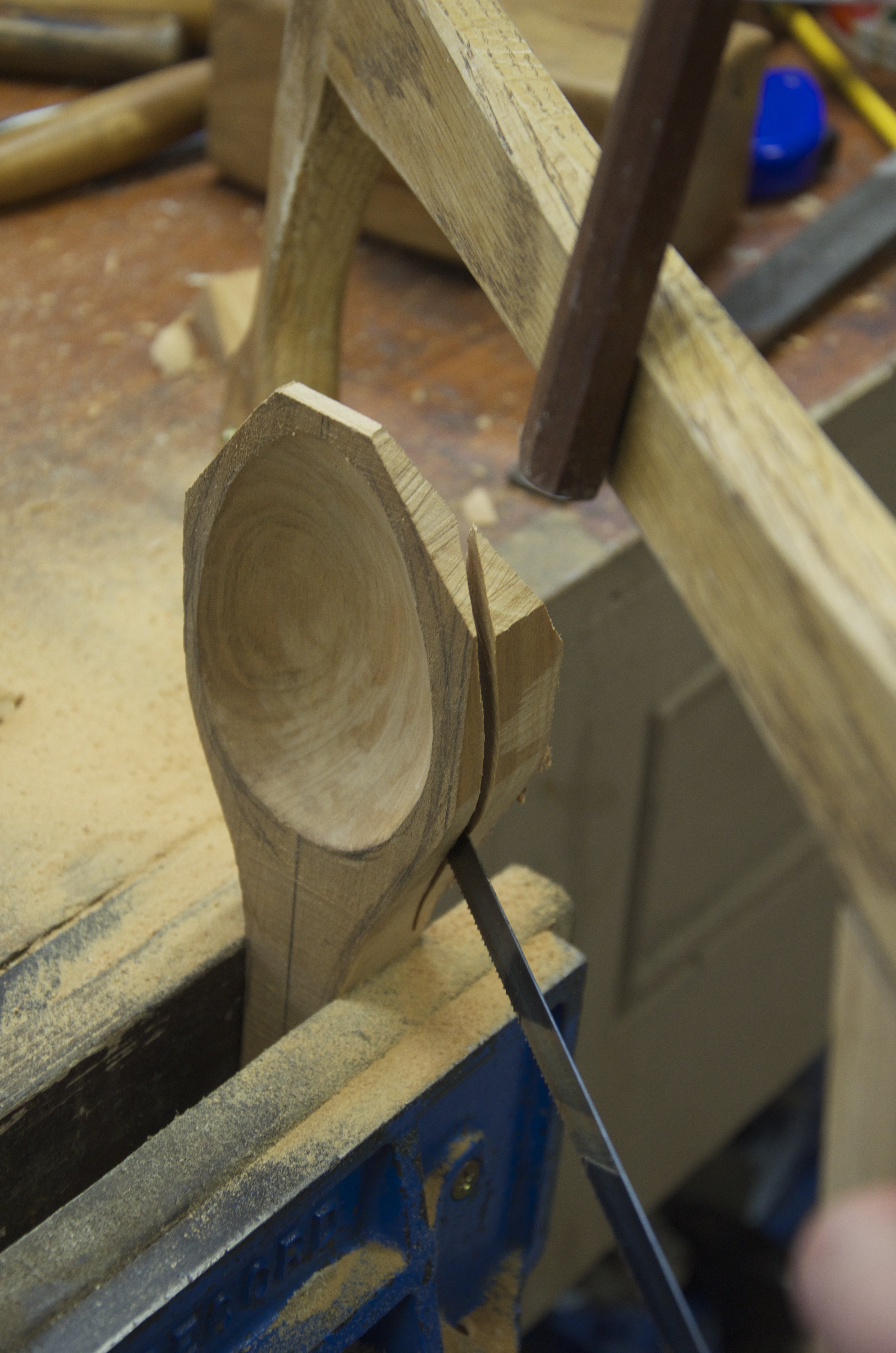
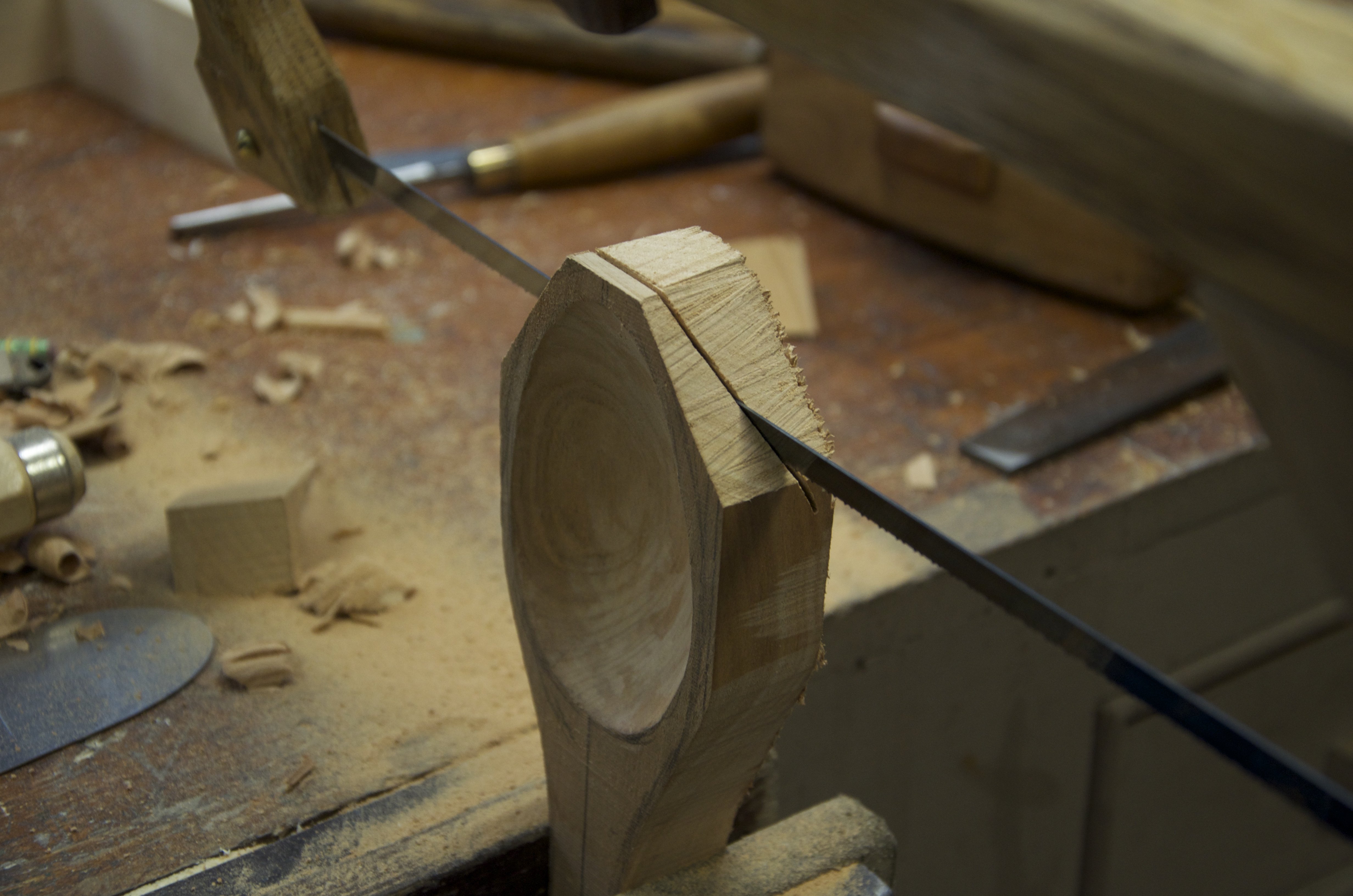
The cherry when dry or green cuts very nicely with my bowsaw and so the main shape can be cut readily and then also the bulk of the waste comes away in a heartbeat. I suppose the remaining shaping comes from the spokeshave in a few more minutes work. When the wood is dry of course it is the very best. I use a 1/2” bandsaw metal cutting blade with 14 teeth per inch. These blades will cut thousands of linear feet and last me for about three years of use unless I somehow damage the blade. Not too likely. I buy a bandsaw blade and snap them to length. I get six bowsaw blades for £16 so that’s £2.60 a piece.
Comments ()