
Squared drawbore pegs that work like real ones
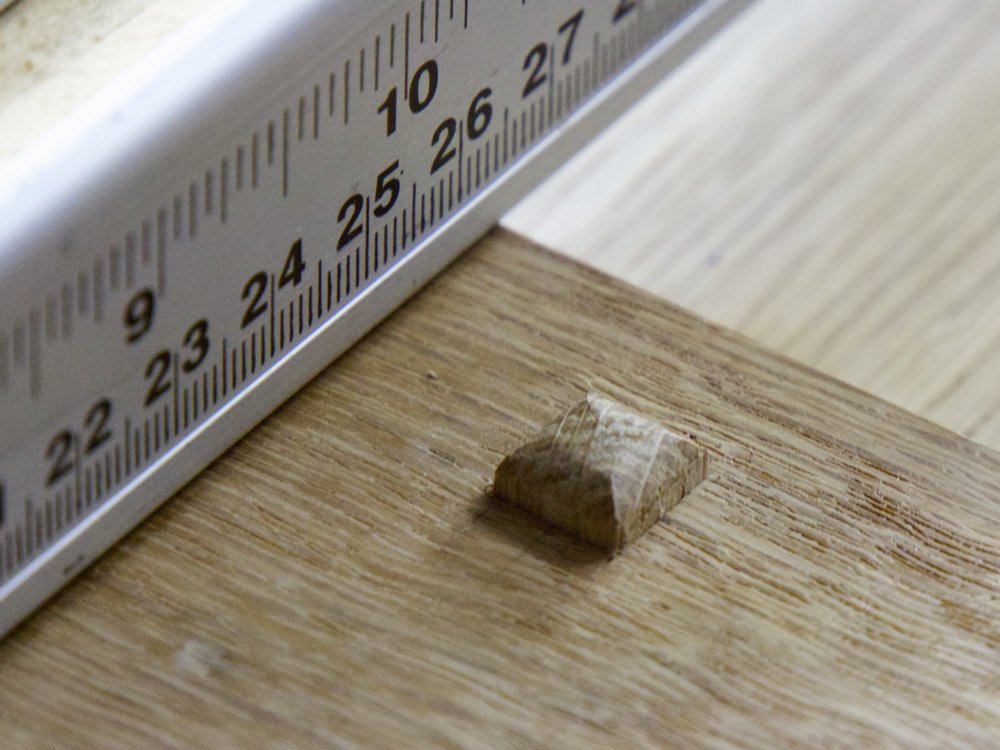
I used squared draw-bore pegs on my trestle table last week and some of you asked how it works. Square pegs do work but they are more difficult to cut accurately and deeply. It's best to use the conventional method using the offset round hole. That means boring the 3/8" hole through the mortise piece all the way through, inserting the tenon fully down to the shoulder and putting the point of the bit into the hole and centring the point in the tenon piece to mark the tenon. Withdraw the tenon and bore the same sized hole 1/16" nearer to the shoulder.
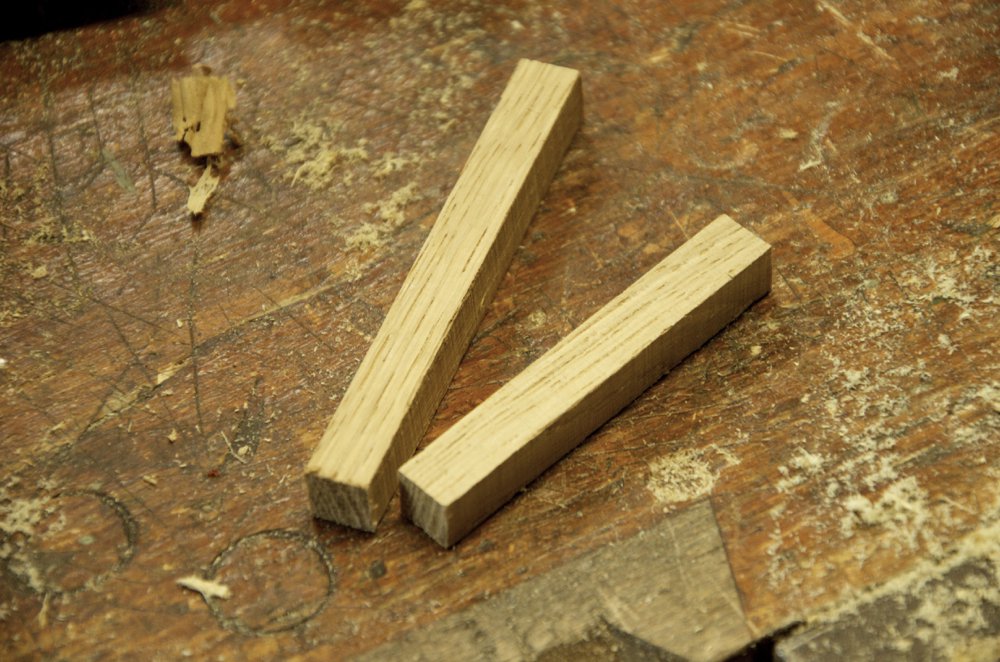
Now it's time to make the peg. Cut the peg blank a fraction over sized. 1/32" is enough, but that can depend on the wood used, so 3/8" plus 1/32" or so.
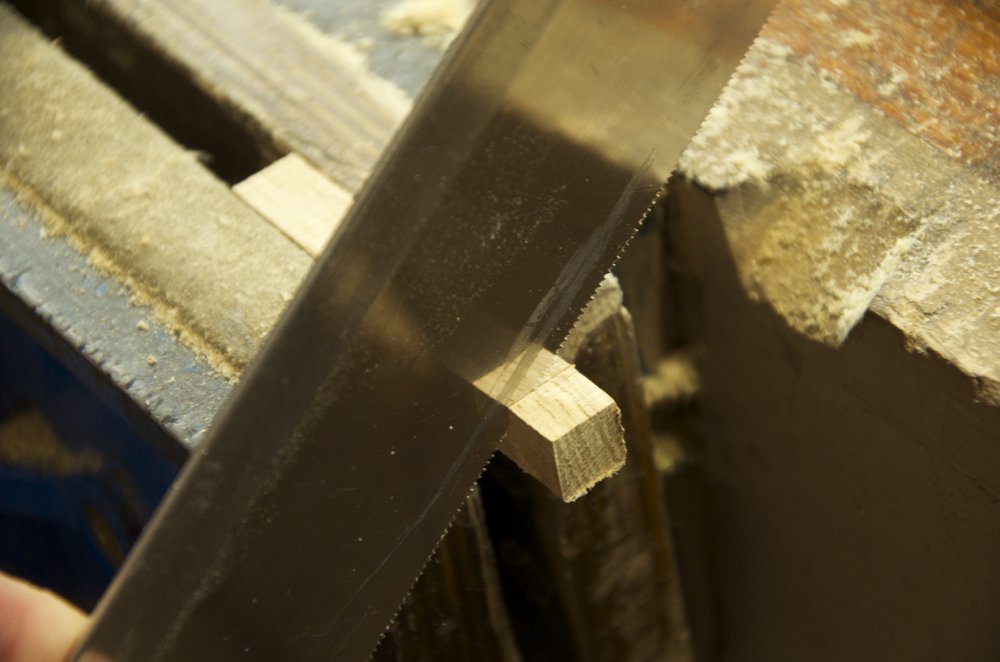
Cut a 45-degree cut on each of the corners but not too deep. The distance from the end depends on how deep you can cut the square recess into the mortise piece. 3/16" is deep enough but deeper works well if the mortise piece is from thicker wood.
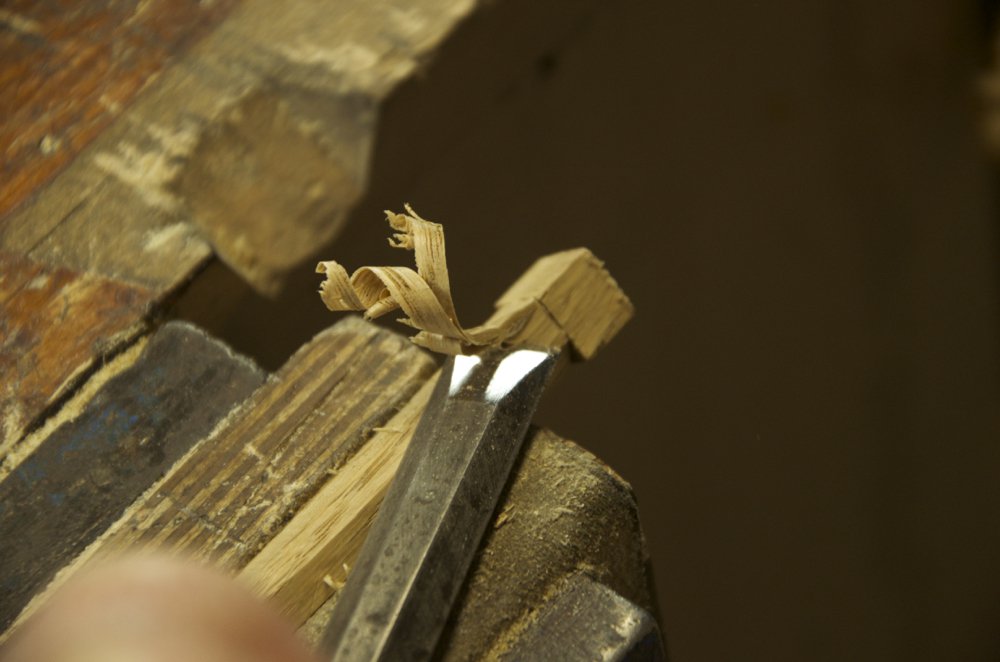
Pare down the corners to the shoulder at 45-degrees and along the full length.
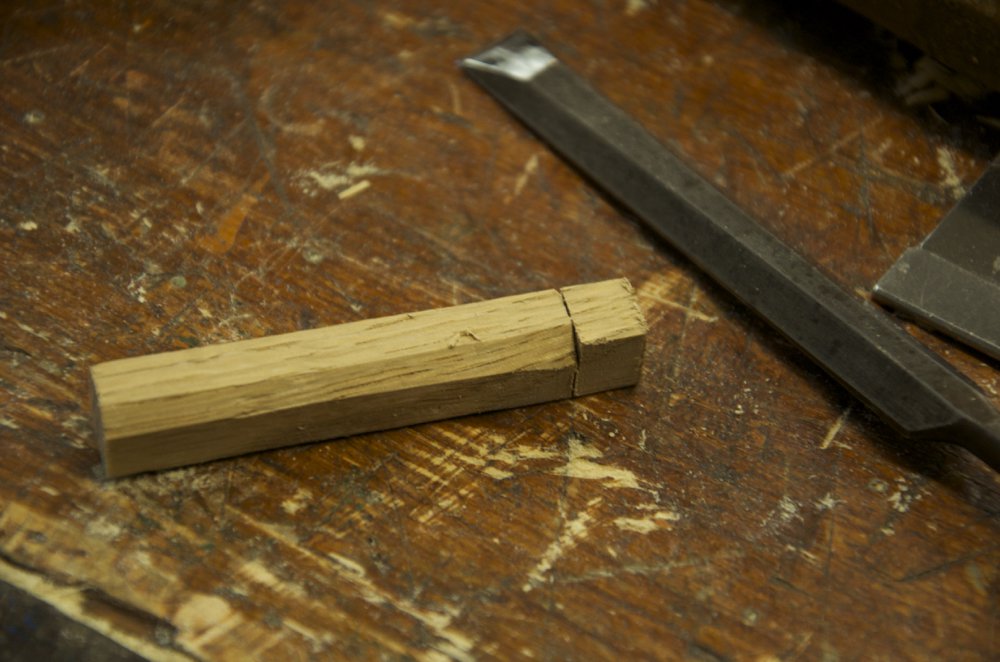
The blank will now look like this.
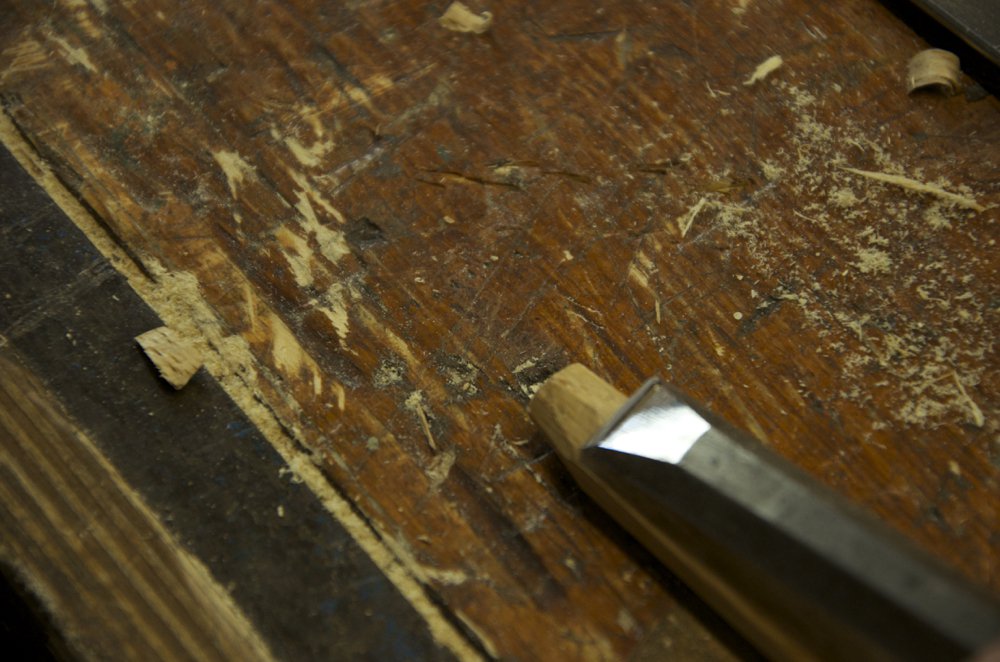
Make a point on the end as a leading edge into the hole of the dowel maker and the mortise and tenon holes.
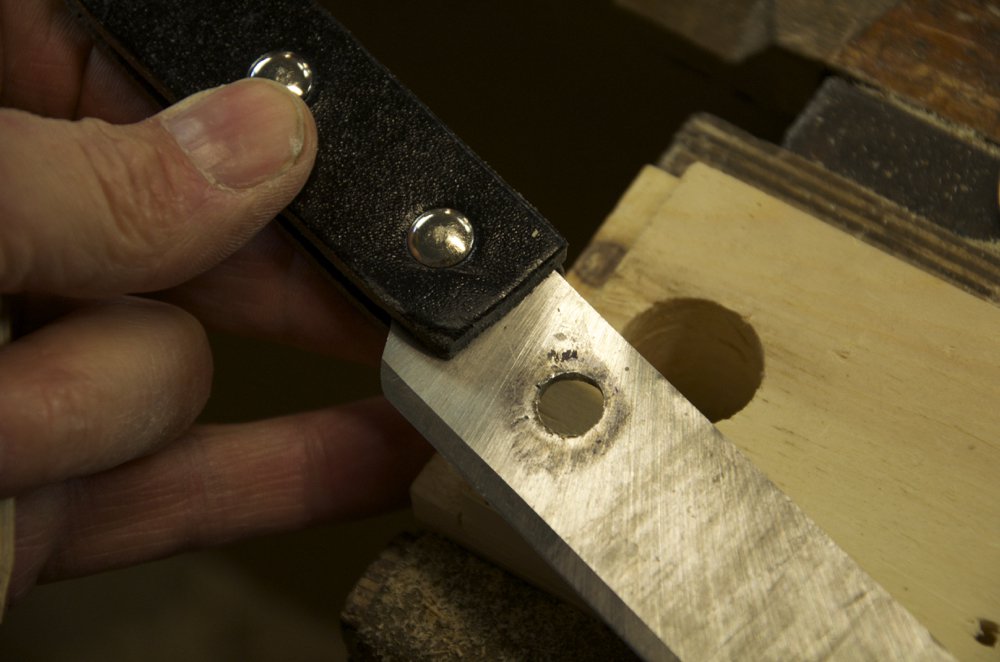
I drilled a 3/8" hole into a hacking knife but an odd hinge with thick enough plate works well too and so does a thick washer.
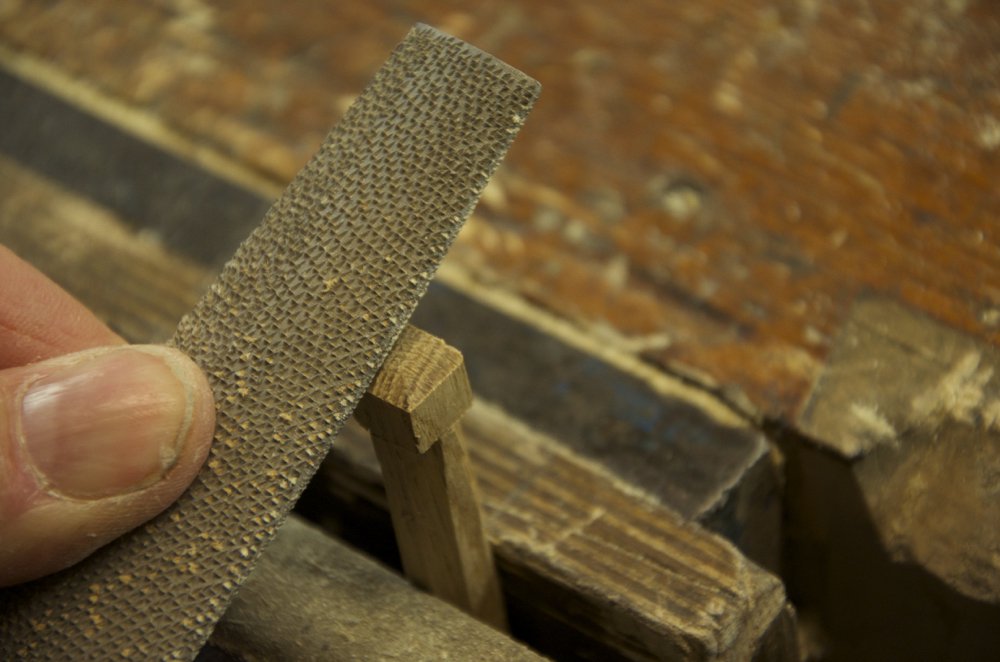
I used a rasp to rough out the rounded corners...
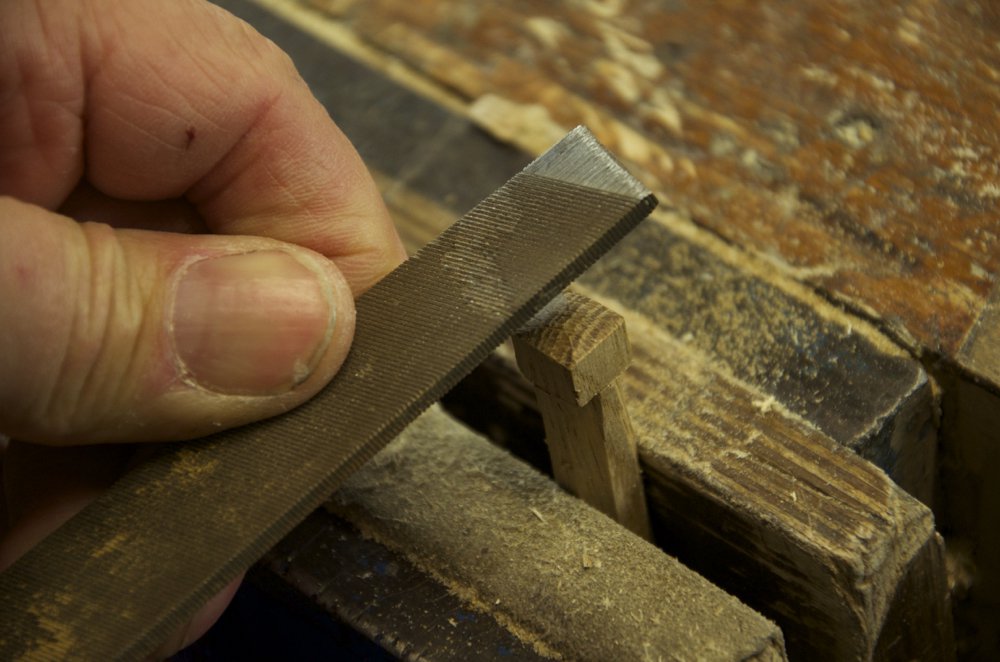
...and then finishing them off with a flat file.
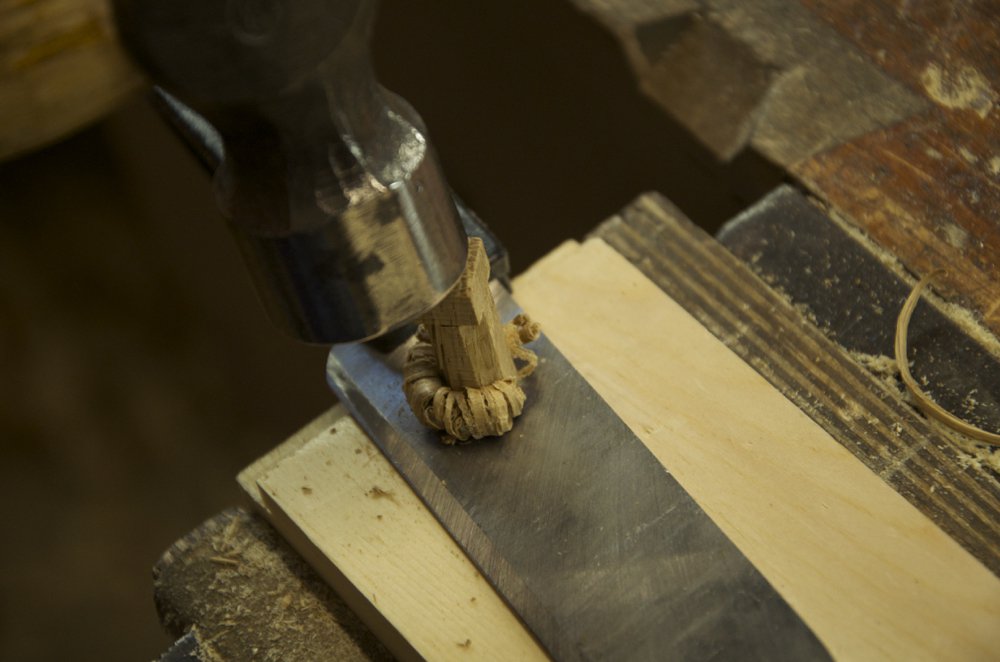
Drive the blank into the hole to remove the corners.
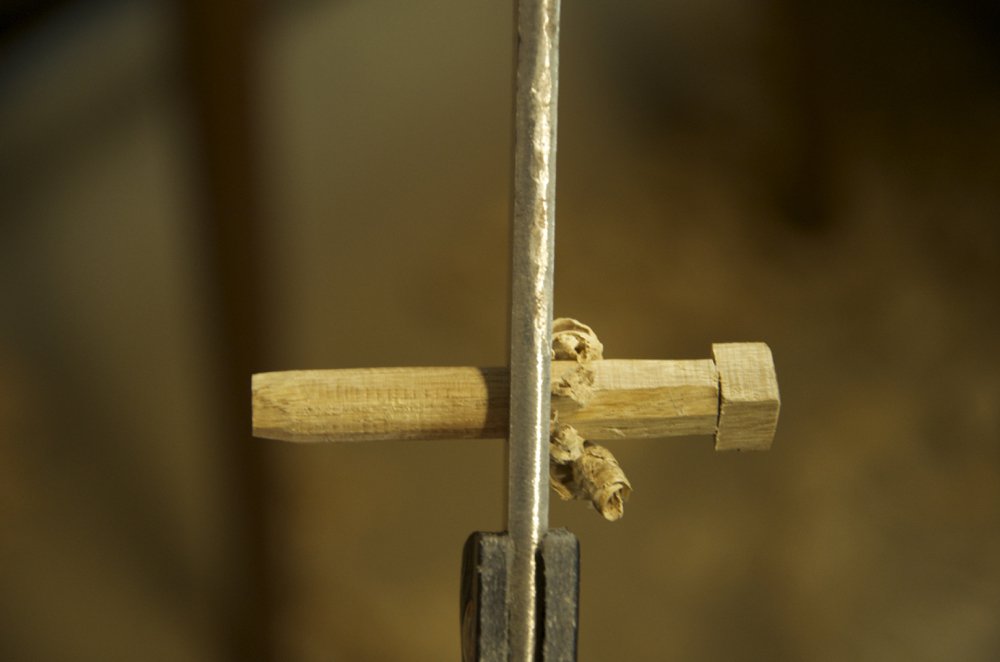
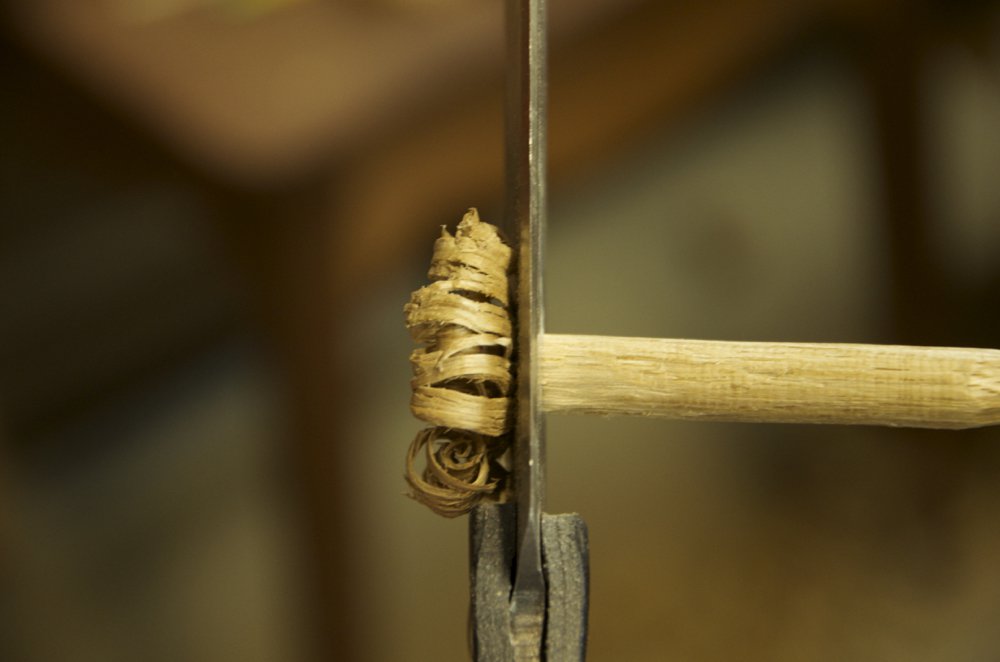
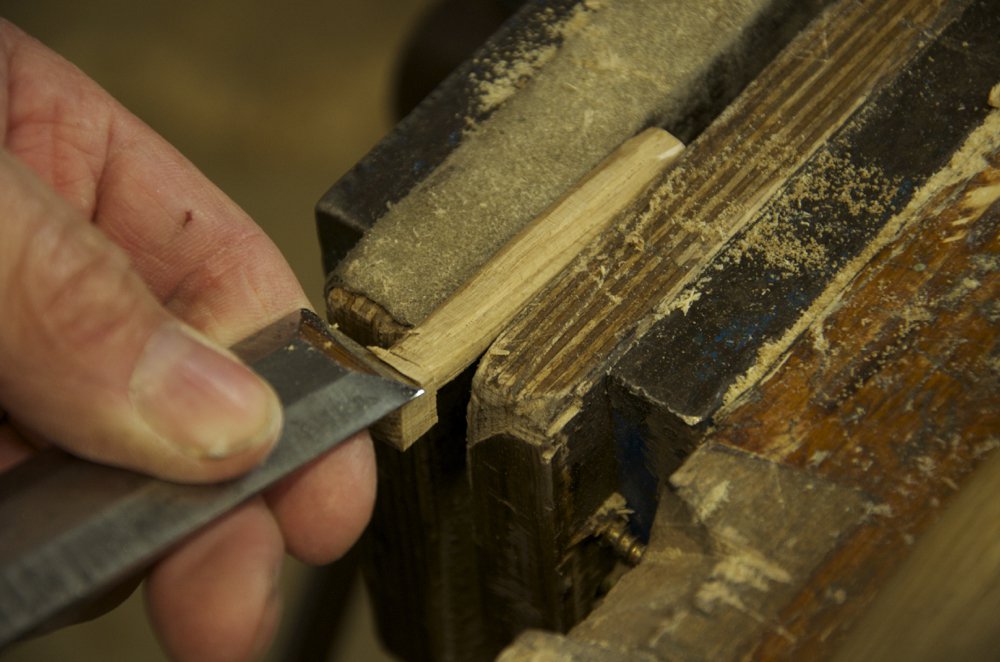
Pare a leading edge onto the square edges of the blank, angled from the full size of the square so that it's a little under where it first meets the hole.
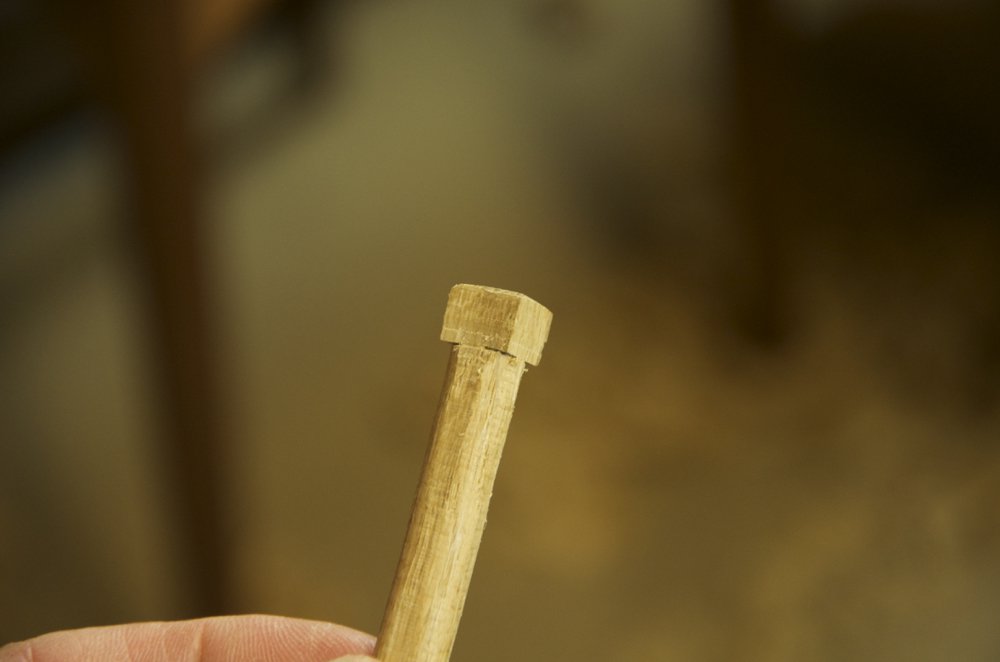
Now the peg is ready to be driven.
Comments ()