
Paul, Long plane? Bevel-up, bevel-down? Part I
Question
Hi Paul,
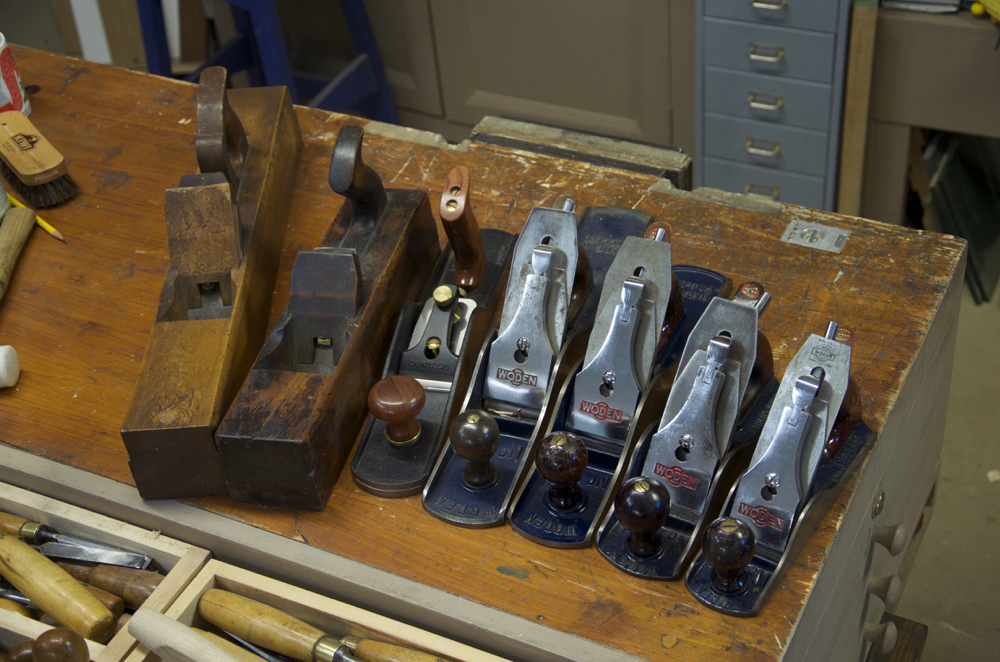
I need some help on deciding what direction to go in regards to purchasing a hand plane. There are a few to choose from and just when i thought i may have it figured out another one pops up. Now all i have right now is a standard block plane and an old Stanley no 4 smoothing plane. I have a little bit of a budget but not much. Basically i build tables and book shelves and what not and sell them as a little side project but I'm starting to take it seriously and i would like to flatten and hand joint boards with hand planes because i cant afford a machine jointer or a thickness planer. A lot of what i read online people say to go straight to a no 7 or an 8 but on the other hand a lot are saying buy a no 5 jack plane or a low angle jack plane so you can inter change irons for different tasks. Im an Englishmen like yourself in Canada with Veritas knocking at my door but they are expensive! I do like the sound of their low angled jack plane with the different irons because I'm on a budget but it seems to short for jointing 4-8ft boards. What would your advice be to a 23 year old just starting out?
Answer
I had a similar question in my personal email this week when someone, following research online, concluded that for some reason they then needed a bevel-up jack plane as a first-purchase best all-rounder plane. So we can talk about that in a minute but I think that there is a serious problem here leading to equally seriously flawed thinking. I confess feeling a little sad that the reason you wanted to use hand planes was because you couldn’t afford machines. Lets look at long jointer planes.
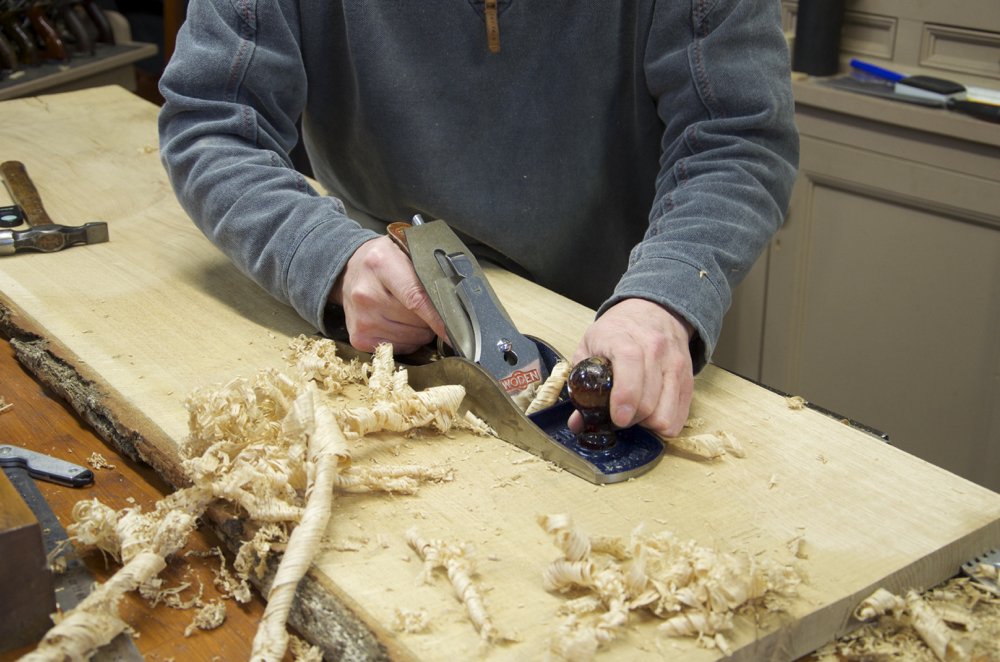
Unwieldy, awkward, heavy, sluggish and absolutely unnecessary. I think that’s how I might best describe them. Secondly, the reason secondhand ones are always in good condition is because no one ever used them. I have yet to meet any craftsman that ever used them in my 50 years continuous woodworking. That includes the old craftsmen I worked under as an apprentice. None of them had a #7. So who was it who said buy a #7 or a #8. Always remember the saying from Benjamin Franklin quoting Socrates in part, “the first responsibility of every citizen is to question authority.” So, on what basis do people say go for a #7 or 8?
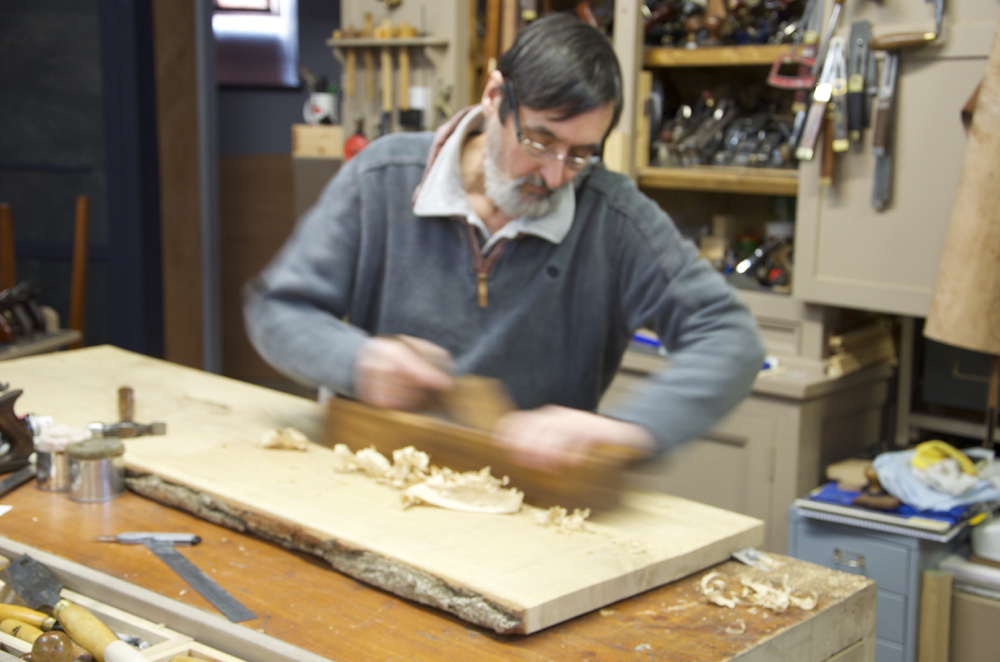
Now then. I cannot give you this experience, but a longer #7 sized wooden jointer plane is a totally different animal altogether. I don’t expect anyone to agree and even anticipate some thinking me to be a crank in what I say next but I have to say it in the name of truth. No modern all-metal plane comes close to a well-made wooden jointer plane. It weighs about the same as metal ones depending on the chunk size of the wood used, but in terms of lightness on the wood it feels like about one eighth the weight and glides so absolutely smoothly.
Personally, I have no use for a plane longer than a #6 max. Totally unnecessary, impractical and difficult to address to the wood. They are never flat because the steel moves all over the place depending on temperatures and such. Surprisingly wooden planes change only minimally by comparison, so the supposed greatest attribute of owning long all metal planes is compromised by the fact that metal planes move when when temperatures change. As I said, most long-soled planes are never actually flat and they also flex very easily under pressure too. Wooden planes do not flex, by the way.
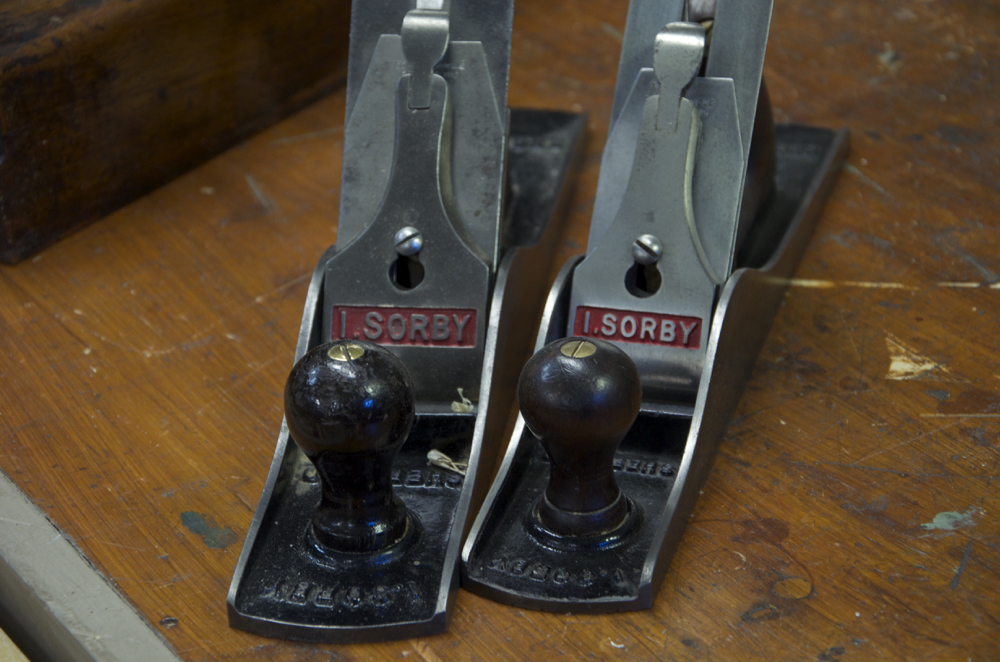
I think buying a bevel-up plane instead of a standard bench plane, be that Bed Rock or Bailey pattern, should be purely a matter of choice and not something based on current trends and then based on erroneous information. In my view one simple fact remains and that is a bevel-up plane will not accomplish a small fraction of the work the bevel-down planes will, but a bevel-down can do everything a bevel-up plane does and of course more. That makes it a no-brainer for me. Of course there are some elements of physics playing their part here and I am not saying owning one as an additional plane to bevel-downs isn’t well worth it, just that bevel-downs win hands down for 99% of all tasks. I should point out here that your using the name “low angled jack plane” automatically means a bevel-up jack plane, for those who might not know.
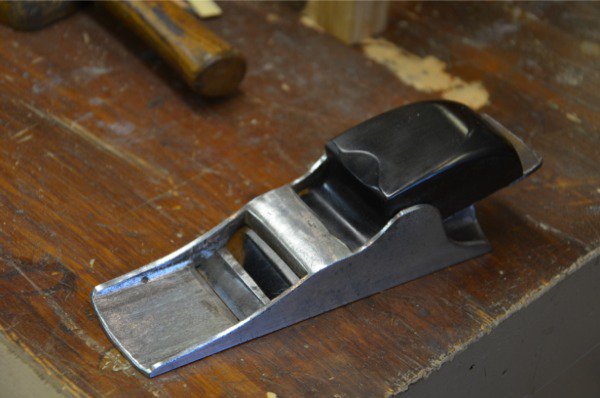
Of course bevel-up planes are not new to woodworkers. They’ve been around for about 250 years or so. Today’s makers just copied what existed in the Stanley range and added a few improvements of their own that make them functional and some really high end ones do parallel the beauties of the early 1800’s.
I think things have gotten a little silly these days, when it comes to planes and such. I have a list for tomorrow of the planes I would recommend in order.
More tomorrow.

Comments ()