
Thoughts on Peace and Safe Working Environs
Thanks for your response to the previous post
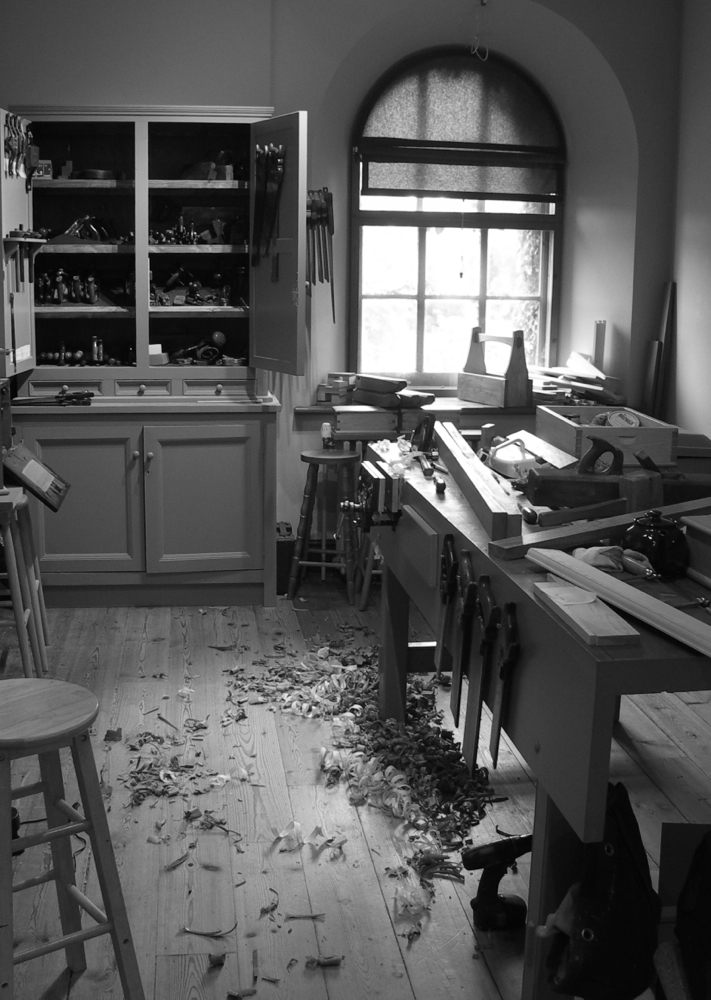
It was refreshing to see the response to the blog post on Lifting Your Spirits, here and on Facebook too. I can see why people have such a mix of feelings and passions about issues regarding machines versus hand tools and so on. I’m certain it’s because many of us feel defensive of whichever path we’re on and I think I see much of the dilemma too. Woodworking has changed in the last half century and I've been a part of watching the changes that transformed it from being a man's occupation to perhaps more a pastime, an interest and a hobby. I have never liked the terms like these particularly, primarily because I have always thought they somehow diminish the significance they actually have for people. Aside from that, I, like most people I know, never had time to pass nor time for a hobby. I have always considered woodworking to be a more serious issue and that's because it has been the way I earn my living.
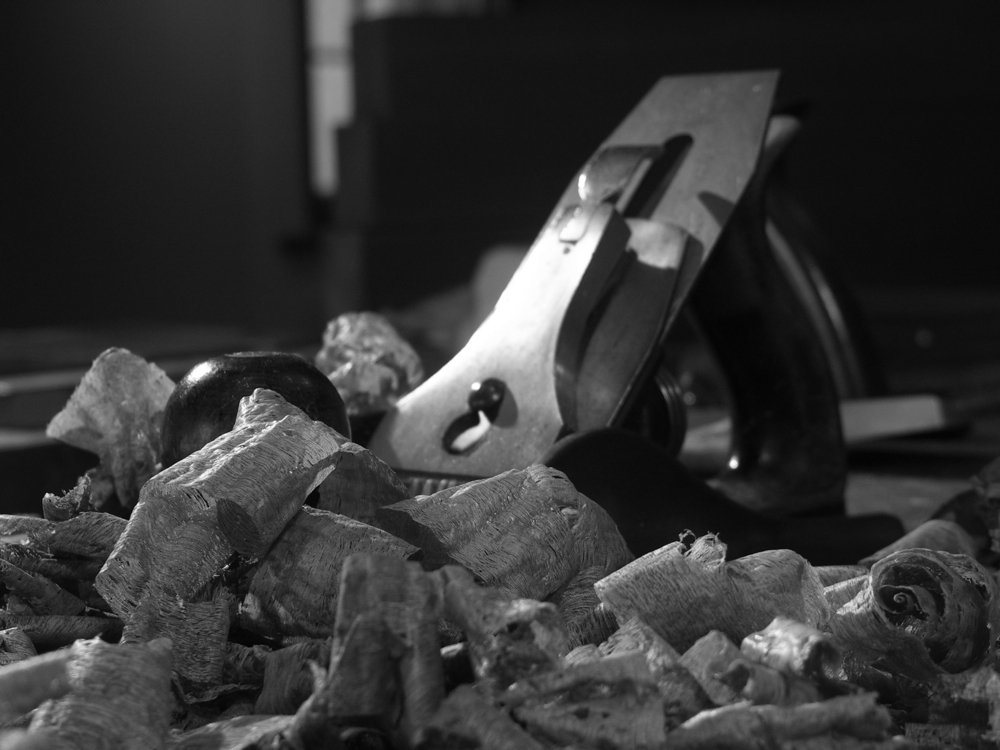
Over the more recent decades I have seen that woodworking can hardly be distilled into any particular camp and all the more so since the online presence of forums bringing every blend and hybrid to the table for sampling. New terms are used many of which are terms only but the practices are the same; a bit like the outer casing of a DeWalt drill changes but the gubbins inside remains principally the same. We're forced to buy a new one every year not because the drill driver is worn out but the battery stops charging and the battery costs almost as much as a new drill driver. It's a funny thing how fashion has invaded my craft. Ten years ago we had 12-volt drill drivers. Turn up on the job site today with any thing less than 18-volts and you'd likely be laughed off the site. I'm glad I left that world behind by choice and remained true to my goal in pursuing craft and skill. I changed the bandsaw blade on my 40 year old bandsaw today and enjoyed seeing the tension tighten the band to the wheels for some strange reasoning. just rambling again.
Machine woodworking—a highly charged situation
I do see what tugs at people working outside of the craft to earn their corn and feed their families but wanting leisure time to be filled with wood and working it. Not many readers here are woodworkers earning their living from their work. They have scant time at weekends to be creative and like to accomplish what they make as quickly as possible. The machine reduces labour time drastically for them and enables them to maximise the levels of accomplishment they want to within the allocated space we call recreation time. Slicing up the pie of time a weekend gives them between weekend chores around the house, car washing, mowing grass, cleaning house, time with family and some rest and relaxation too means woodworking (or any other craft creativity) is slotted in as best it can be. Machines do cut wood fast and minimise what many would refer to as wasted time. Many say it also drastically reduces the skill levels you need too. Here in is the rub for many. Machines do cut time costs down, but then you must figure some other cost thingies into the equation. Machines themselves don't come cheap and it's not just the cost of the machines themselves that I mean. Yes, there will not be too much change from £2,500 for four or five half decent machines whether you buy new or secondhand. But machines cost much in space too and boy do they quickly eat that up; I mean they do take up a lot of dedicated space; like a massive footprint of occupation around which you must constantly trip and tiptoe. Then there is what I call the hidden occupation. This is the one where the atmosphere you live and breath is totally charged; occupied if you will by a fine filtering extraction doesn't quite grab. This becomes all the more consuming in confined spaces. After just one hour a filter of fine dust starts coating your glasses and the surface of your skin, your clothes and your hair. The walls gradually develop a layer and thin cobwebs hitherto unseen start taking on their own external levels of dust-cholesterol. Your longs and bronchi too no doubt if you're not very careful. The invasion of noise from one machine then synchronises the extractor (collector) and before you know it therein is yet another invader of precious space so there is no place for others to occupy your creative space with you either. I mean who wants to stand in a shop with a dust mask on and hearing protectors and such like that. These are all things by which I start to examine something we call quality of life.
The competition between hand methods and machines
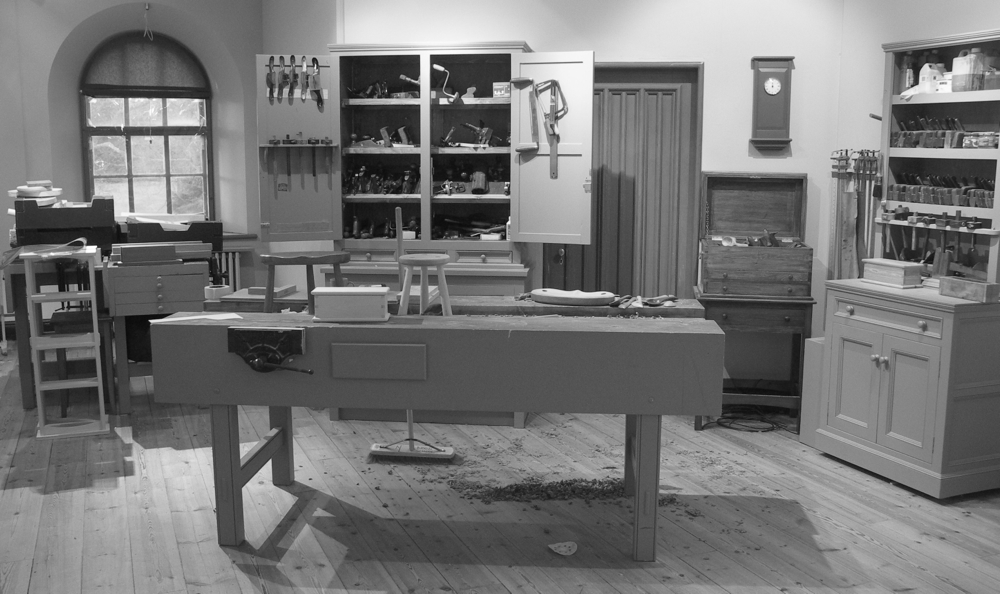
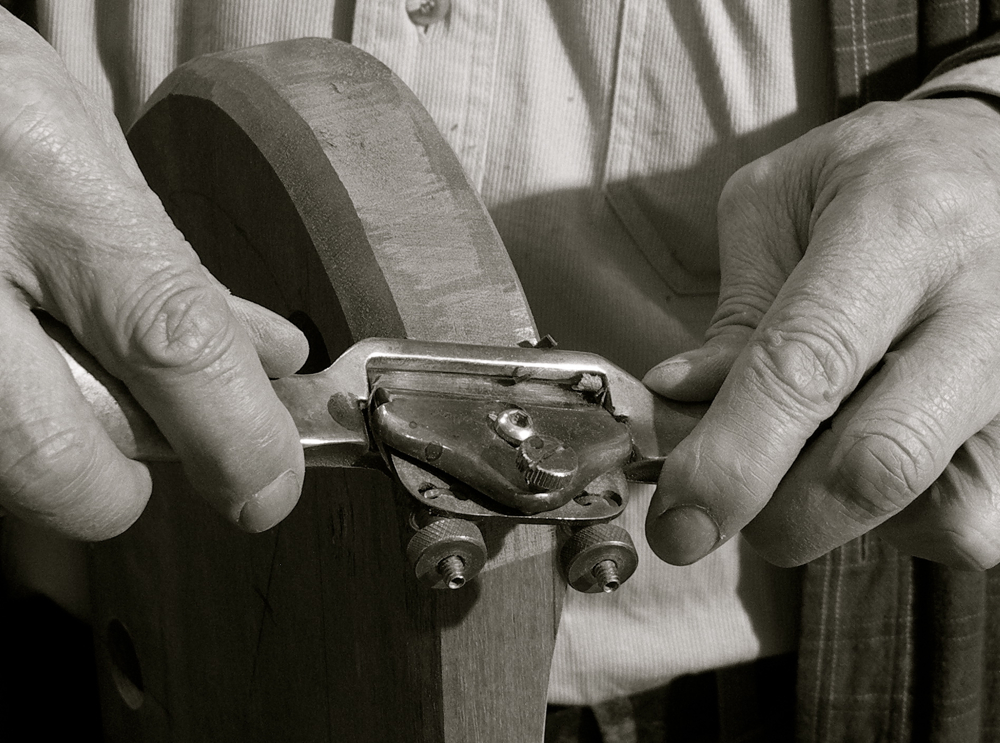
My US cousins might be surprised by the fact that here in the UK very few woodworkers have a machine shop. Many if not most have no machines at all. They just can’t give up the all too valuable space. Actually, I know a lot of US friends in woodworking that have no machines either, mostly because they live in an apartment or a rental house though. Mainland Europe is the same as the UK I think. I'd be interested to hear from 100 Europeans to see how many have a machine shop. Personally, I do own machines. I have a chopsaw, tablesaw, planer/jointer, drill press and three bandsaws. Most of my machines are old models, maybe 50 years old. They are not what we might call heavy industrial models, but they are for serious professional use say in a small one- or two-man shop. I can’t recall the last time I used the mortiser even though it is a very nice one, but the other machines I use every other week or so I suppose. I can go a month and not turn any of them on. Some of this is probably due to lack of space, but mostly it's personal preference. The big questioning for me has and always will be why do people feel that there is a competition between hand methods and machines? Why do people think machines are always so much more efficient for everything when that’s not always the case? Why do people feel hand tools are old fashioned, highly demanding and slow... so very slow? You see you have to consider other factors when you use one method over another. Hand tools do demand skills and many woodworkers, amateurs and professionals (professional meaning they earn their living from carpentry of some type) no longer have these skills to rely on. I think that that's why they tend to avoid them and use machines. It's not generally the case that they use the machines because they couldn't survive using hand methods, that's been my experience, but that they just never developed any sort of hand skills at all. They mostly never had the opportunity. I think that it's true to say that machines need more a level of confidence and less so skill as such. Of course they cut wood into sections super fast. No one denies that at all, but then there is the constant concern for noise, dust, personal health and the health of others and the safety and wellbeing of user and materials. I have talked to many part-time woodworkers, male, female, young old, and in most cases they feel ill-equipped to work with machines. "Very intimidated", is a common phrase as to how they feel about them, and rightly so. They feel highly challenged by them and I understand that because they are dangerous. It takes a long time to feel truly competent and thereby comfortable with using machines. They do demand a high price when it comes to peace and wellbeing.
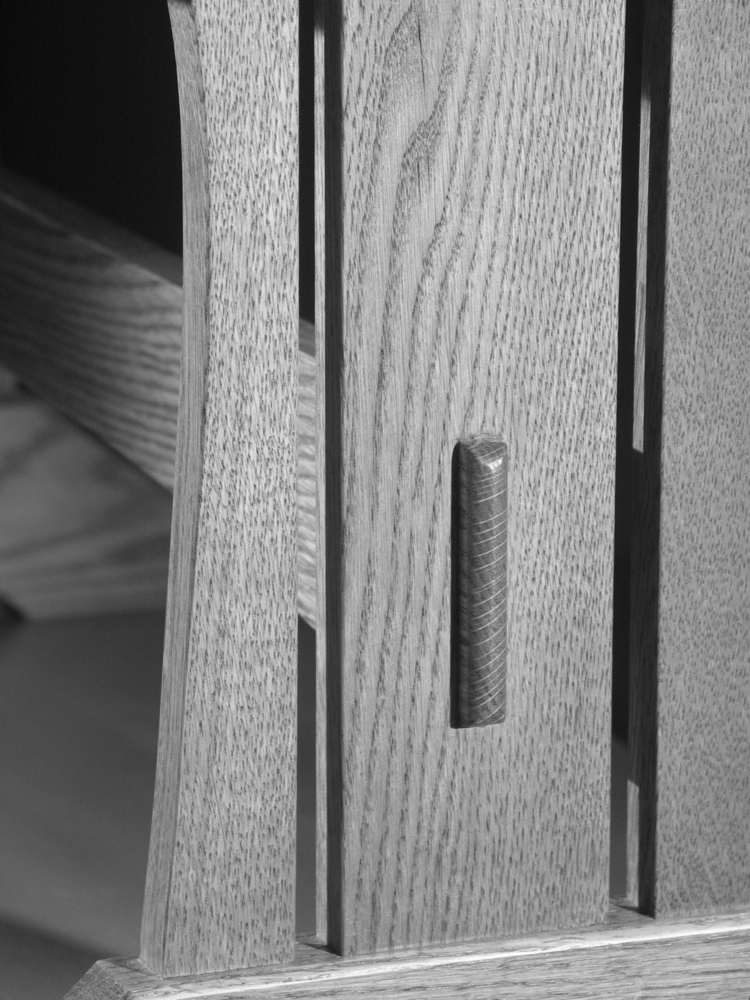
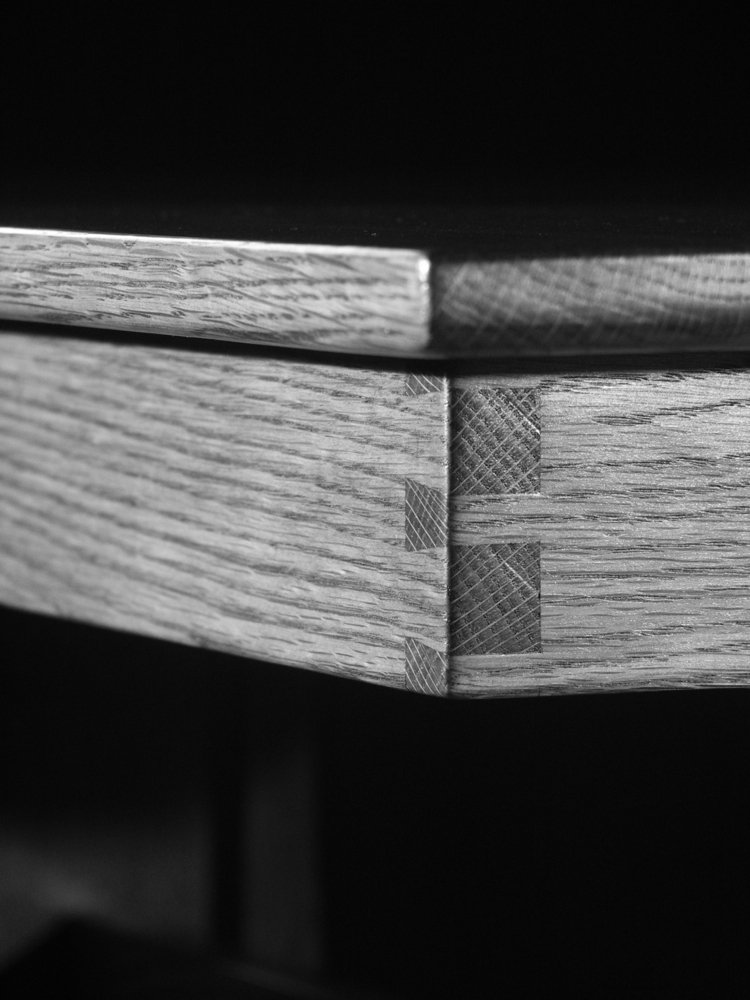
Oh, the black and whites? All hand work!
Comments ()