
Working at the Hub of Woodworking
The epicentre of real woodworking
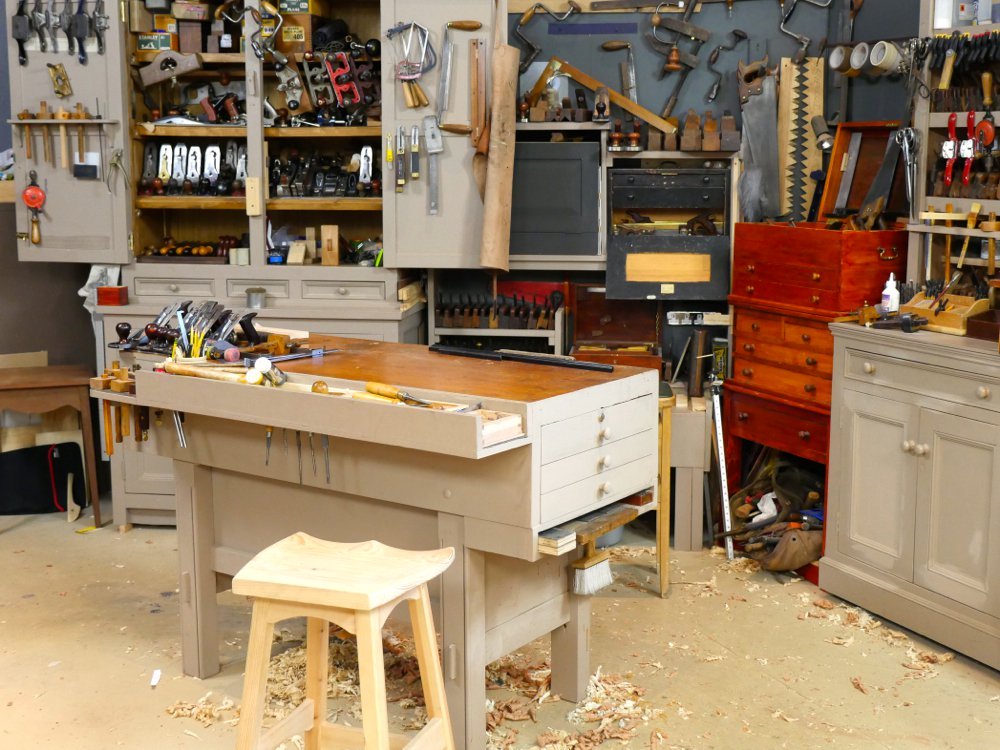
I’ve worked with many hand tool woodworkers through the years either in my own workshops, the workshops of others, my bosses in my early days and so on. I’ve worked with a couple of dozen and more other artisans too. Men and women who worked with their hands in blacksmithing and pottery, spinning, sewing, weaving, basket making, stained glass making and others too. Even though the crafts were very distinct and different, each one of them had two key elements common to the work lives of the artisans; one, the tools they worked with were never much more than an arm’s length away, two, their work revolved around a central hub. For the blacksmith, the forge and the anvil stood a mere yard apart or so from one another with the stump beneath the anvil being the chief sweet spot for working on and from and holding a couple of hammers, some tongues and a hardie cutter. The blacksmith stood triangularly to both anvil and forge in equidistance and the work was heated or hammered interactively throughout the day , but the anvil was the key anchor for the constructive and creative work. With the potter it's no different. There’s more to being a potter than wheel-throwing. Hand building opens the craft up to a massively diverse range of functional and creative work and here again the workbench or the wheel anchor the worker to a fixed local around which the work rotates day in and day out. Other crafts, not all of them, are pretty much the same.
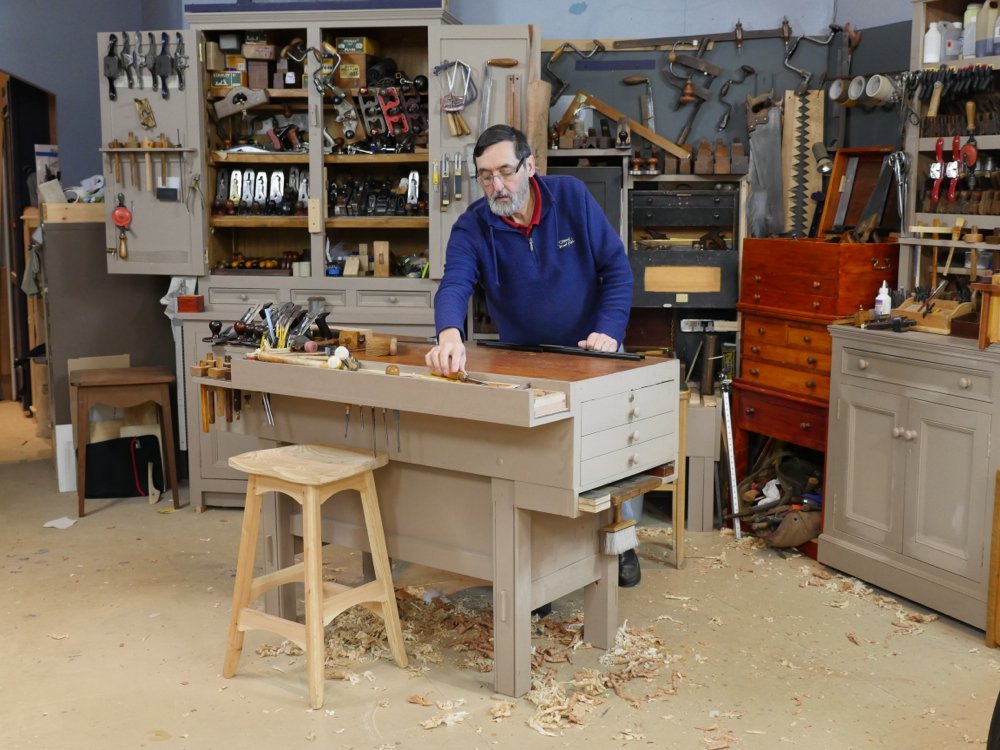
Few crafting artisans move very far from whatever central hub holds their work. My benches have evolved over a number of years and though my favourite is my three-foot centre-well, I use three types intermittently through the day. Some of you asked me to walk you through the bench I use in the filming, that I assumed is the wide-topped one with the added-on well on the far side from me. Unpacking the elements that make the bench work for me might help you to develop your own. Then you can develop your own further to refine its customisation. If you are at all like me, wherever you go you will always want the same set up.
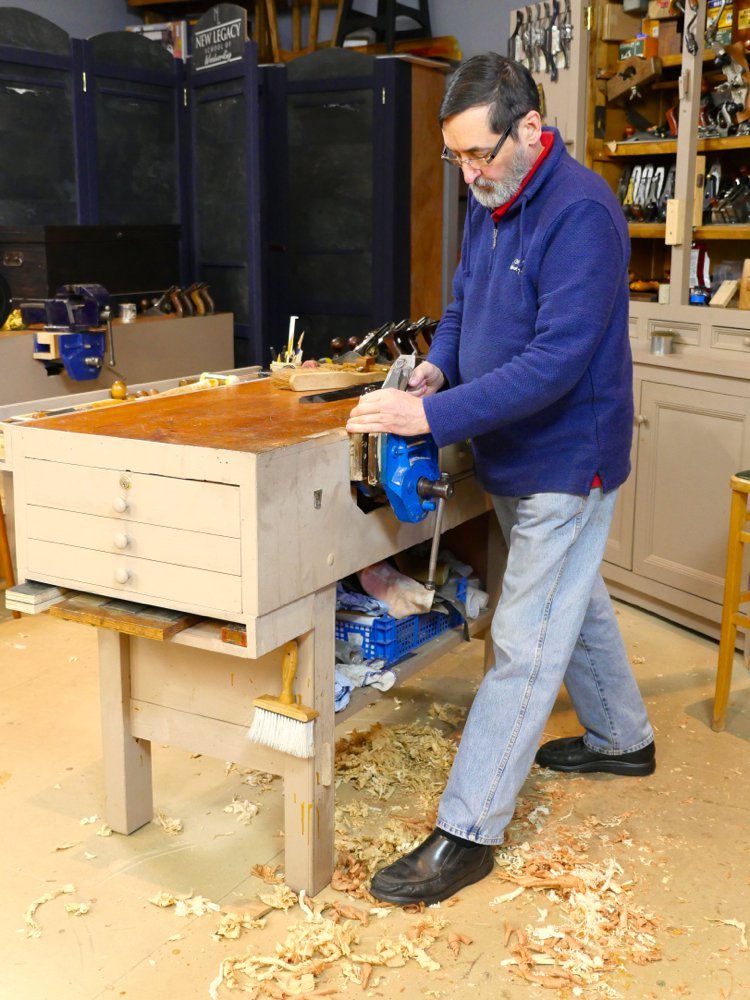
The first bench I worked from was too tall for me. At 15 years old I still would grow two more inches. Today, exactly 50 years on, I’ve stood about 2” taller at between 5’10 1/2” and 5’11 and used the same 37 1/2 - 38” high bench height I worked at when I was 15 (Variation in personal height usually revolve around footwear). That’s probably more than anyone you ever knew because I work a minimum of six days a week, a minimum of 8 hours a day and a minimum of 50 weeks in any given year. My back’s good and so are my neck and legs, knees, ankles, eyesight, hearing and all the bits in between. So I suppose you must find your zone height. I've banged on about bench heights enough in the years past. This article is more about living within the zone of your creativity and that means definitive comfort within reach of your work and your tools and your equipment as much as possible.
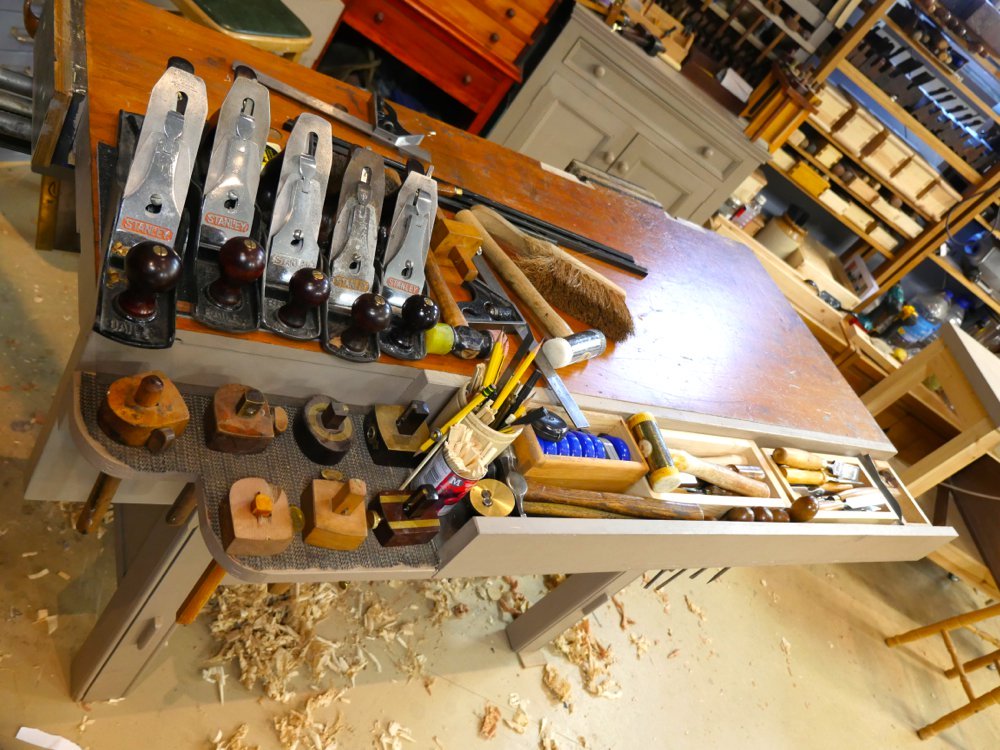
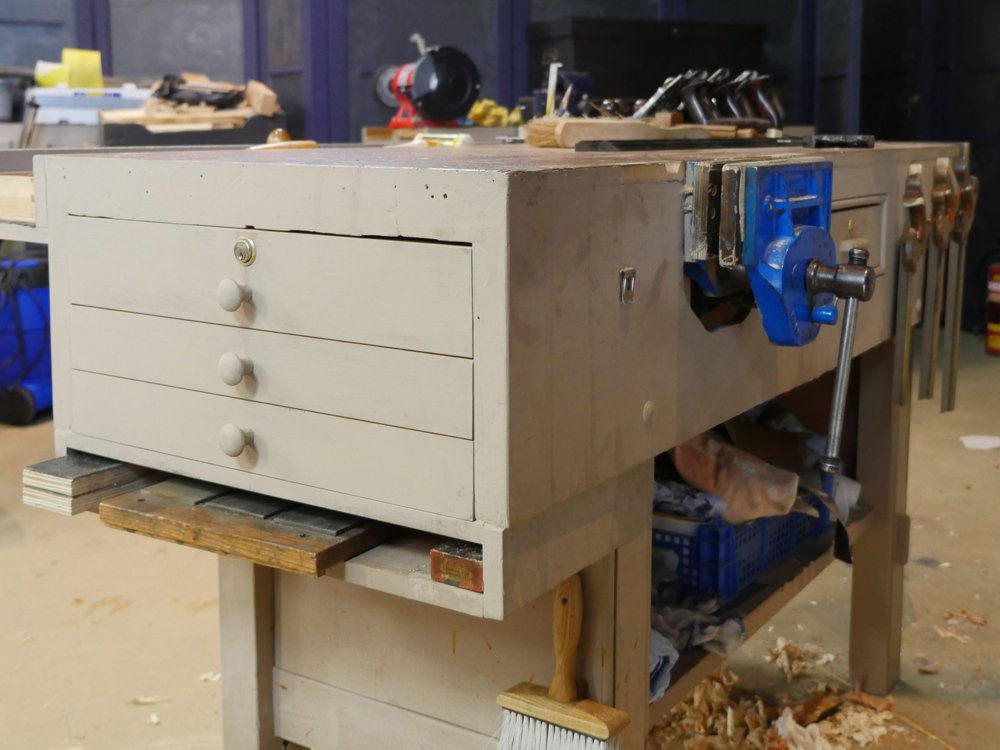
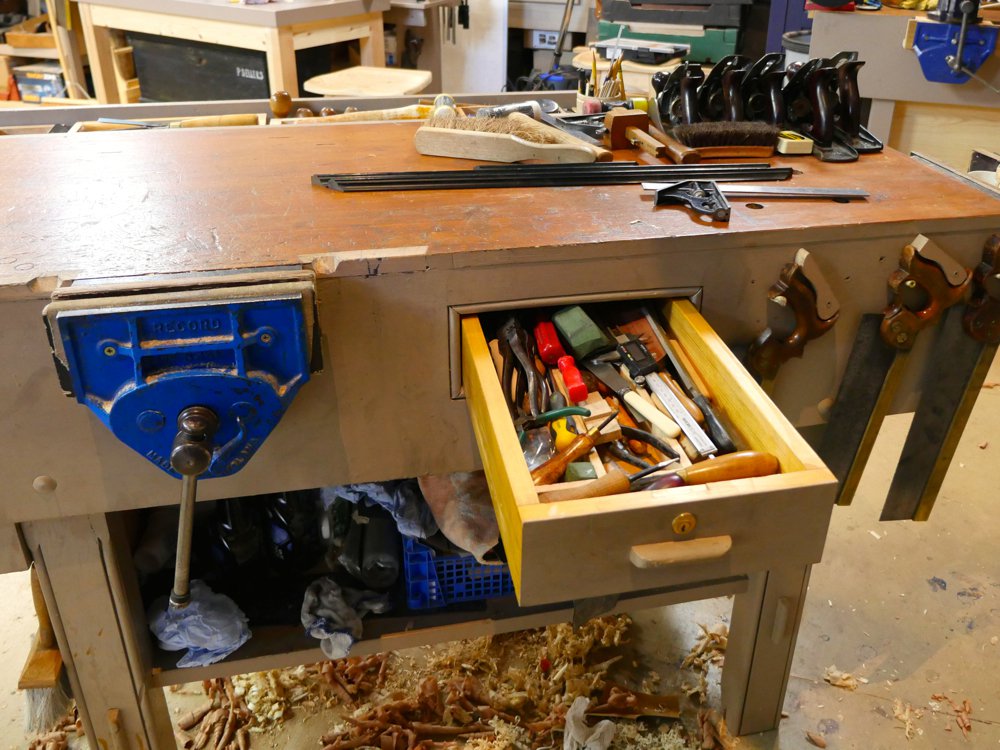
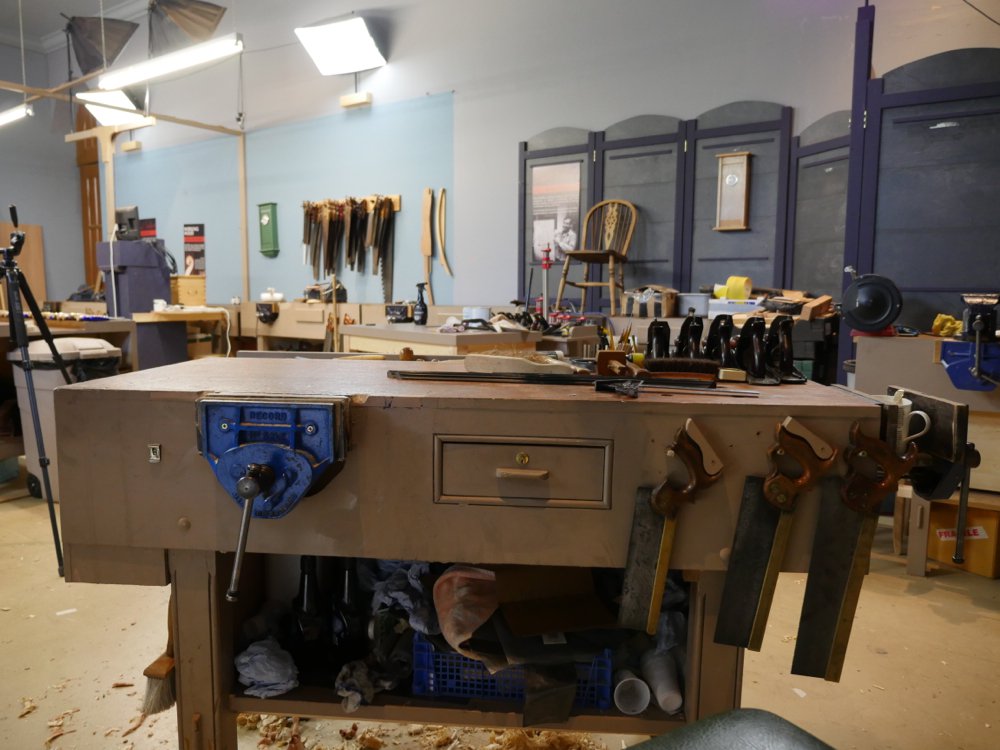
Most of my tools are on or in my workbench to my right because I'm right-hand dominant. Additional tools are in my tool cupboard immediately behind me but offset to my right of my right arm. Other tools are in two tool chests to my left but when I step-spin on my left leg to my left the tools face me and my left hand pulls open the drawers so that my right hand reaches in to retrieve the tool I want. To the right of these tools is a tall cabinet with shelves holding my moulding planes. I sue these frequently enough to want them near. Drawers in the end of the bench are on my left when stood at my bench and I pull these open when facing the vise with my left hand to look for what I need or to lift a drawer to the bench top. Notice the narrow opening beneath the drawers. This where I keep my sharpening stones and strops. Beneath that is a duster brush hanging on the leg of the bench. Beneath the bench is a blue crate full of metal working consumables. Another drawer in my bench apron sits in the centre of the apron and is convenient for my right hand access. Most importantly is the position of my vise. I am right hand dominant and this means I place my tools to my right for throughout-the-day convenience, keeping the top directly in front of me free and clear as much as possible. Over to my right when I am standing facing my vise, hanging from hooks on the bench apron my side, are my three most used tenon saws; 10”, 12” and 14” long. At the far end of the bench and furthest from me, is a tail vise I really don’t use. I put it there so people would take me seriously.
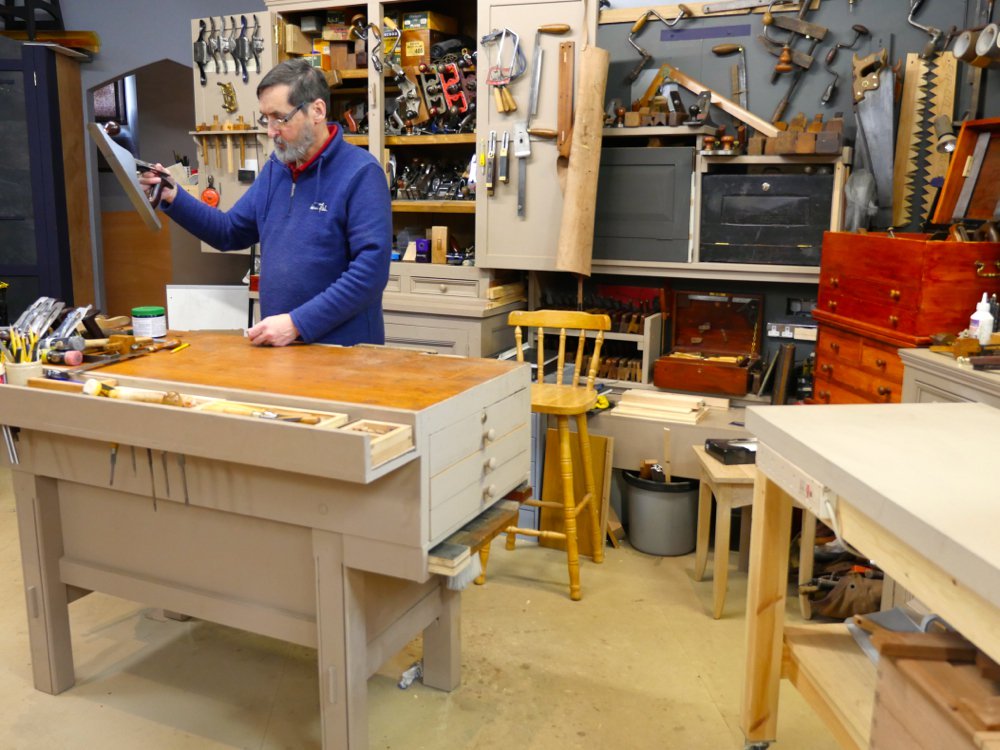
Oh, yes! Just behind me are two joiner's tool boxes and behind and to my right is my tool cupboard where I keep bulky tools like planes and braces, additional saws and awkward stuff too. Below the cabinet is a supplies cabinet for the nuts and bolts of a woodworkers life. There's another beneath the moulding planes shelf unit too.
Machinists on the other hand set their work zone up like a mini factory system and generally cannot work from a fixed point because they mostly flit from machine to machine throughout most of their day.
Tomorrow, or soon anyway, I will post a second blog, but please feel free to start asking me questions as soon as you like.
Comments ()