
Removing the Hurdles and Building On Future Generations
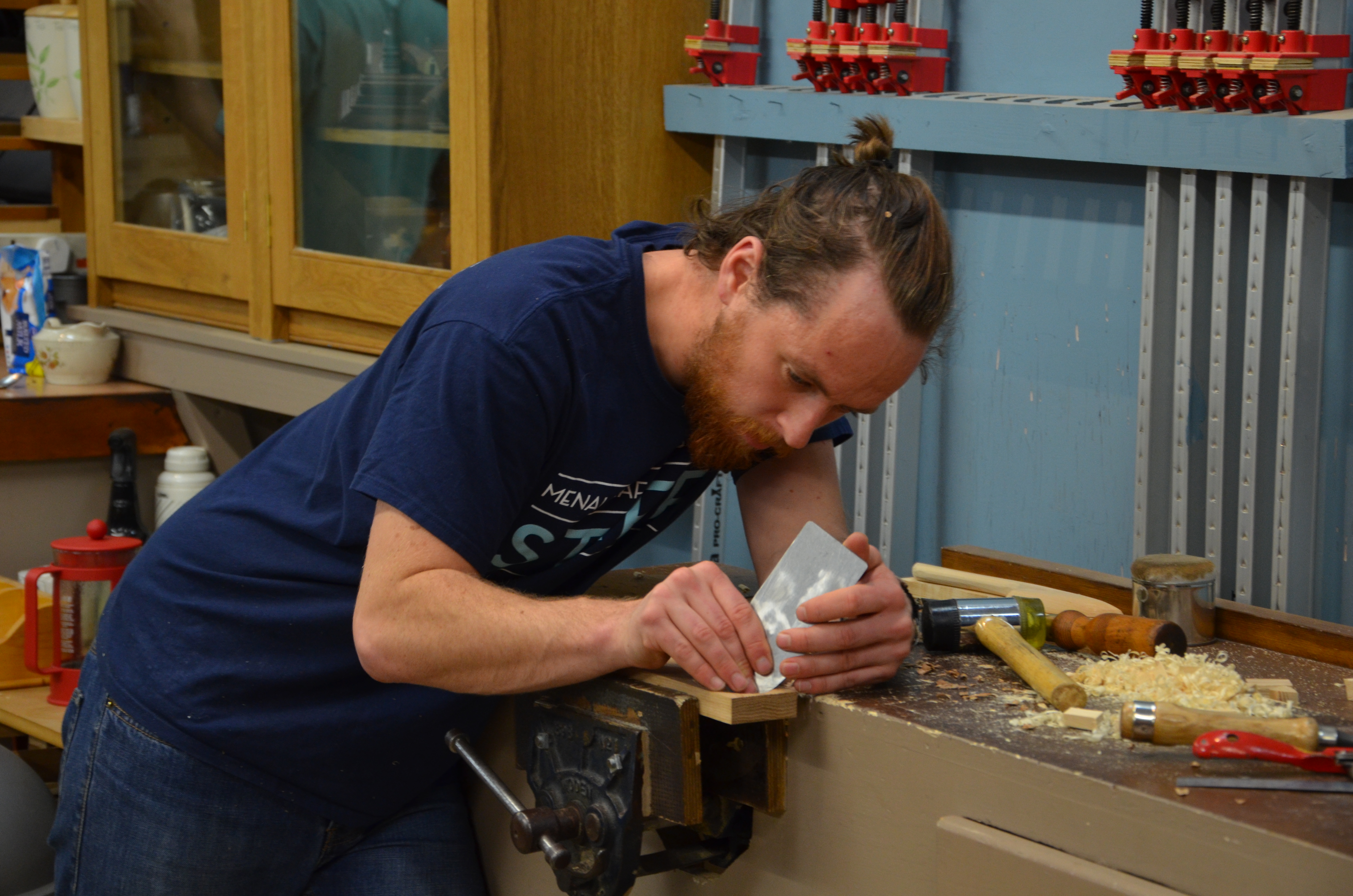
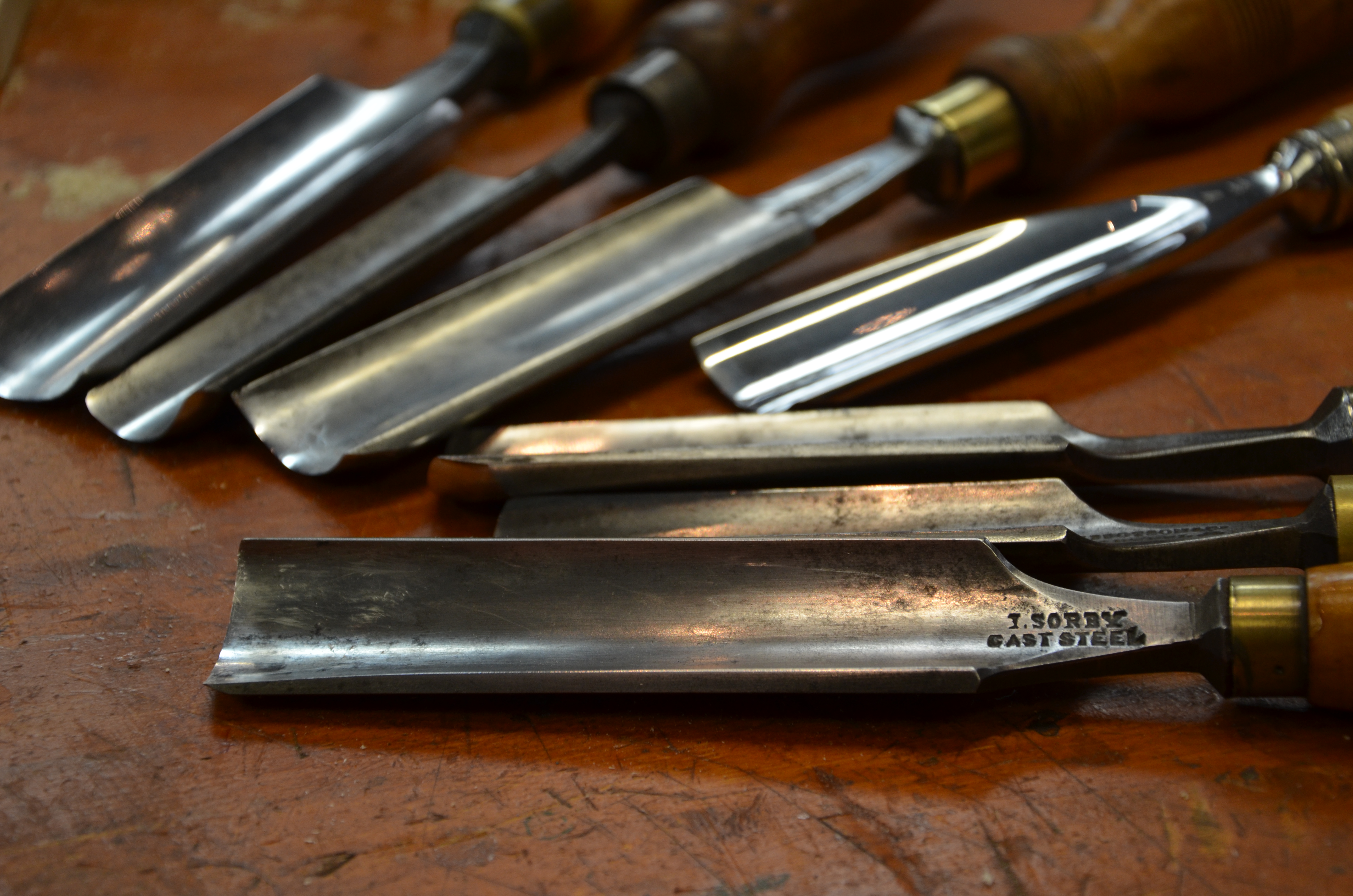
My students stand awkwardly around my bench and start asking me about the tools they should look for starting out. It’s usually the case at the start of every class I teach. I think it makes sense because they don’t see fancy tools around my bench but mostly common ones, they seem bemused or unbelieving, but then I realise it’s not unbelief but surprise. That’s interesting, is it possible that something old and simpler trumps the more technically advanced and highly refined? Is it possible that wood gurus giving tool reviews in mags and those selling tools are trumping them up and indeed dissing the old models disingenuously. Well, fact is, it doesn’t really matter. What matters is what works in front of them and that’s what makes what I do work. I’m not selling tools and equipment and when the £2 chisel slices the wood with pristine cuts they feel totally empowered and in just minutes their eyes open wide and they understand.
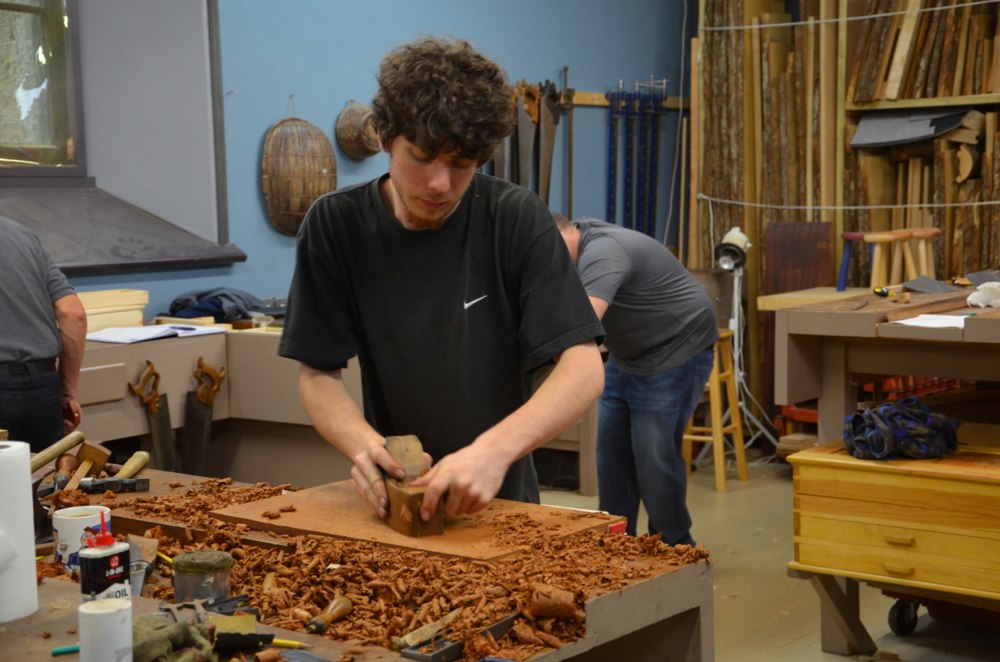
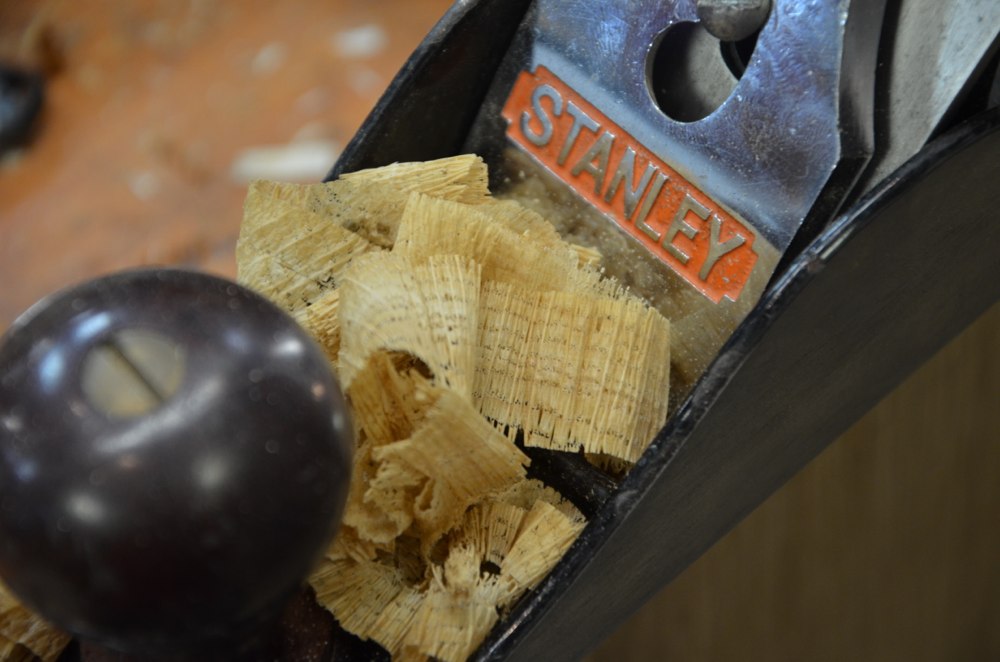
Dismantling the work of the sometimes disingenuous is ever easier and seeing those lesser planes and chisels parallel the work the best of the rest can do I see the wow factor reversed so that the wow plane is more a junker Stanley with plastic handles and a nickel plated adjuster. The shavings twist off the cutting edge with each successive swipe and before you know it we’ve enabled another half dozen woodworkers to equip their shop with tools that really work and work exceptionally. Currently, looking at eBay a few minutes ago, I can buy half a dozen buy-it-now Stanleys for under £20 plus shipping of about £5. Now that’s a lifetime-plane even for someone like me that works their plane hard for several hours in any given day. I think that that’s a pretty good default position if you think about it and that’s what I want in my craft for others. I want woodworking to return to its former state as an inclusive not an exclusive craft and that’s making woodworking available to everyone.
Thick and thin irons, hard and harder steels, specially made steel alloys for plane bodies all have their place, of course they do, but when you’re starting out you just don’t know what you really want let alone truly need. That’s why I’m here. I’ve used every plane there is and what I share isn’t the merenes off opinion. You see things like this matter and that’s why we do what we do. I say we because more and more people are thinking along these lines and that means woodworking is indeed becoming more and more inclusively real. So, today we talked through the misunderstandings and the misrepresentations and misconceptions of things like water stones and scary sharp systems to dismantle the erroneous message now circling the globe. What all woodworkers really need more of is simple and not complex so we keep it simple as can be and very real.
Countering the profound strongholds in the ever growing transfer of power in hand methods of woodworking is becoming more and more workable. I love the reality this insider knowledge brings to my students and that they feel more equipped than ever to take charge of how they choose to work with powerless power. It’s important to pass on the truths so that when they leave in a week’s time they will look at planes and chisels differently. They will know that systems sold in magazines and catalogs do indeed work and even have truth in them but they will also know to question the sources with swinging sales tags and look a little more deeply knowing that they watched the ordinary produce the amazing and there is nothing pricey in sight.
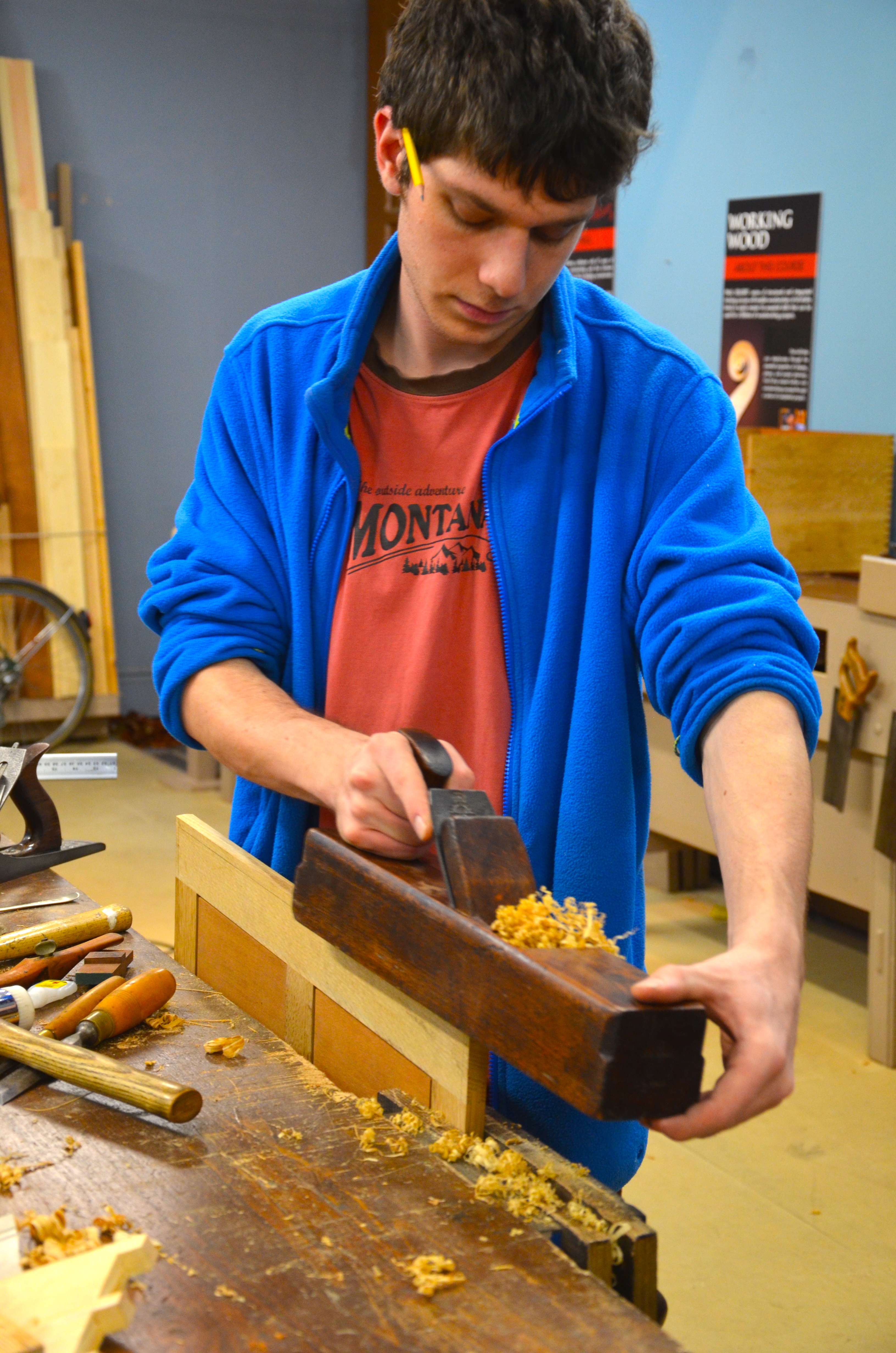
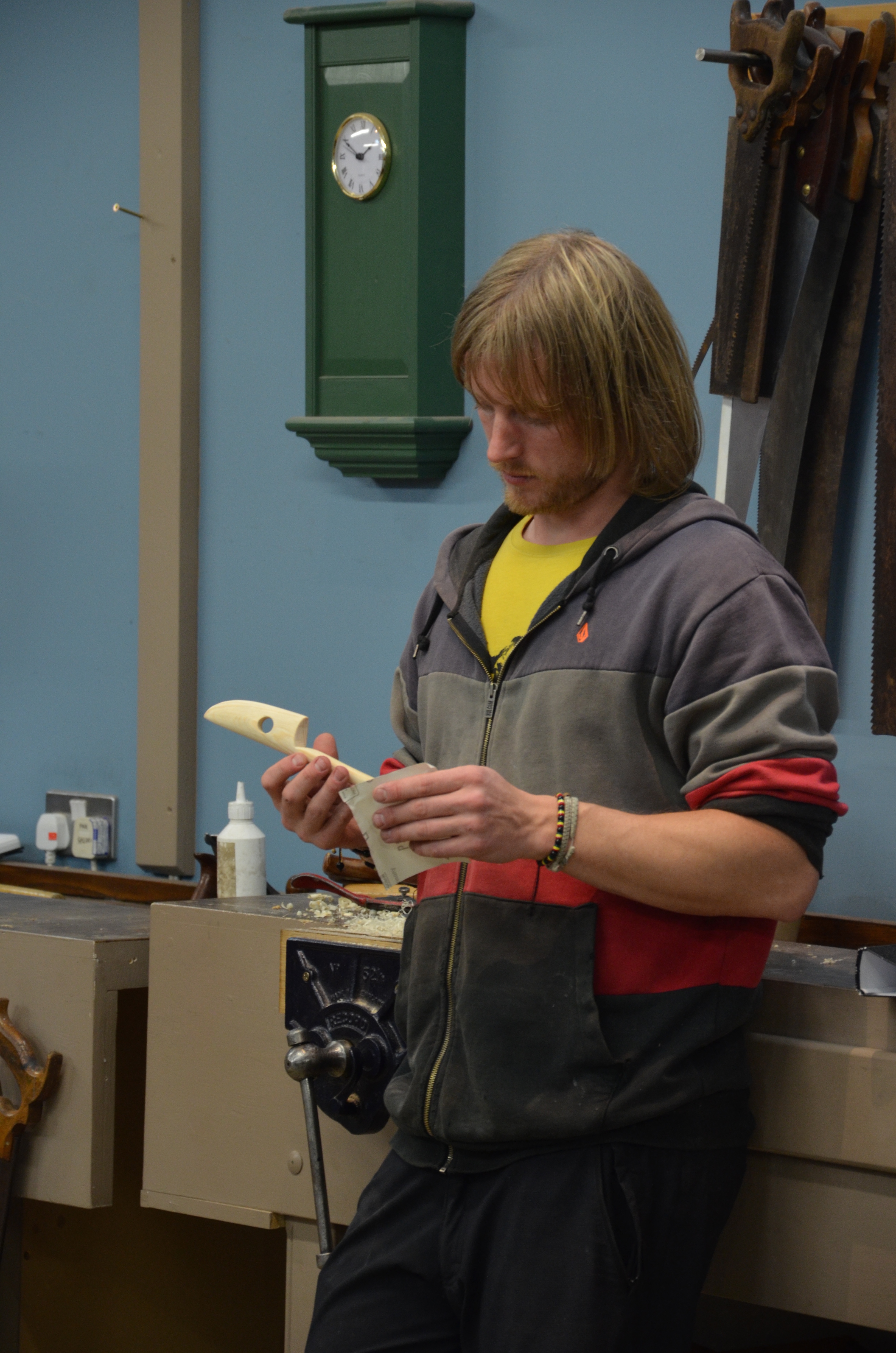
I think steps in training are important so we make a spatula to look into what we cannot see. The millions upon millions of elongated cells that make wood what it is are diverse yet we , they, must understand what they cannot always see in the fullness needed to understand it. The diverse cuts with saws and chisels and spokeshaves needed to shape a spatula are the beginning of understanding and this is more fundamentally important than anything I know. As to a spoon, well, I taught them techniques necessary to make a violin and a guitar neck as well as carving out the belly and back of a violin. They just didn’t know it at first. soon a spoon emerges from an angular block of oak and yes it was hard on the hands and the arms to say nothing of the fingers, but when we wrapped up and swept the floor I felt like we crossed over into a new sphere that hitherto they’d never experienced.
John’s a ways down the road and leaves me and my work in two days. Well, he doesn’t leave me so much as take me with him in the edge of the cutting tools and the ways he knows to adjust them to task. He’s got wooden bodied planes fine tuned to perfection and says he has yet to find any metal bodied planes to match them. Of course my work finds meaning in recognising the break that severed people from the connection to the real issues. Machining wood severs the connection between man and tools and man and wood. My work is now living in him and thousands of others and he takes it on to another continent. I’m fulfilled. That's my work succeeding and being passed on as students and apprentices move gain the working knowledge they need to become real woodworkers.
Comments ()