
Questions Answered - Advice Needed on #5 Stanley Planes
Question:
Hi Paul,
My name is Jamie. I'm 18 and just starting out in woodwork (specifically Luthery, however I really enjoy all kinds). I was wondering if you'd be able to help. I am looking for a number 5 plane and really don't know where to start. I know you have a beautiful collection and probably have some useful information to help me. My options are to either purchase a cheap hand plane like Silverline. Or pick up an old stanley and restore it. Restoring does scare me a fair bit but I'd give it a go. I thought i'd ask if either you'd advise restoring, or would you advise buying new. (if you have a number 5 for sale for me to restore, please let me know!) I think car boots are going to be my best option. But would love too hear your opinion.
Thank you for being such an amazing inspiration.
Jamie
Answer:
Hello Jamie,
Thanks for the question. It’s unlikely that I would ever advise someone to buy a new plane over a secondhand or older model because in functionality, older made Stanley or Record bench planes work just as well as any of the new ones once they are restored if that is indeed needed at all. They are reliable lifetime planes too. Not sure about Silverline products. I feel less inlined to recommend them generally. It’s not that I necessarily prefer old planes or that I am nostalgic. I just prefer using what’s available and well proven. Hundreds of thousands of users through a century and half can’t be wrong surely. The other issue surrounding your question is that we tend to put off learning what we feel uncomfortable with. I understand that, but really, there’s not much to truing up and fettling the Bailey pattern bench planes and included in those is the #5 jack plane.
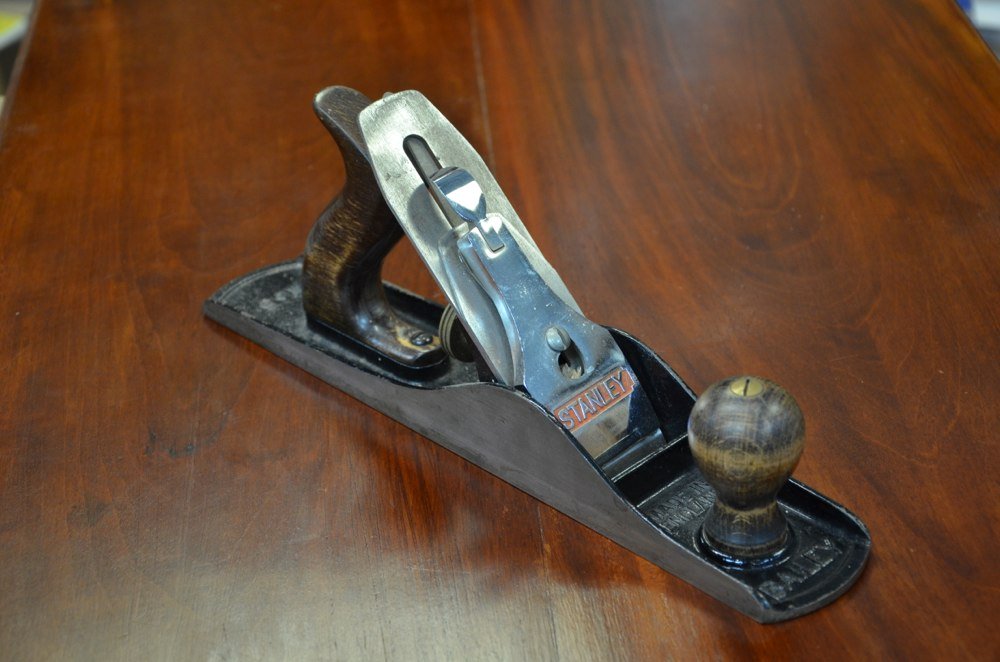
A #5 jack is excellent for luthier work and will straighten and thin all of your stock for fronts, backs and sides and it will do that within thousandths of an inch as needed. The jack plane measures around 35.5cm (14”) long and has an overall width of 64mm (2 1/2”). More than sized for making guitars, violins and cellos too.
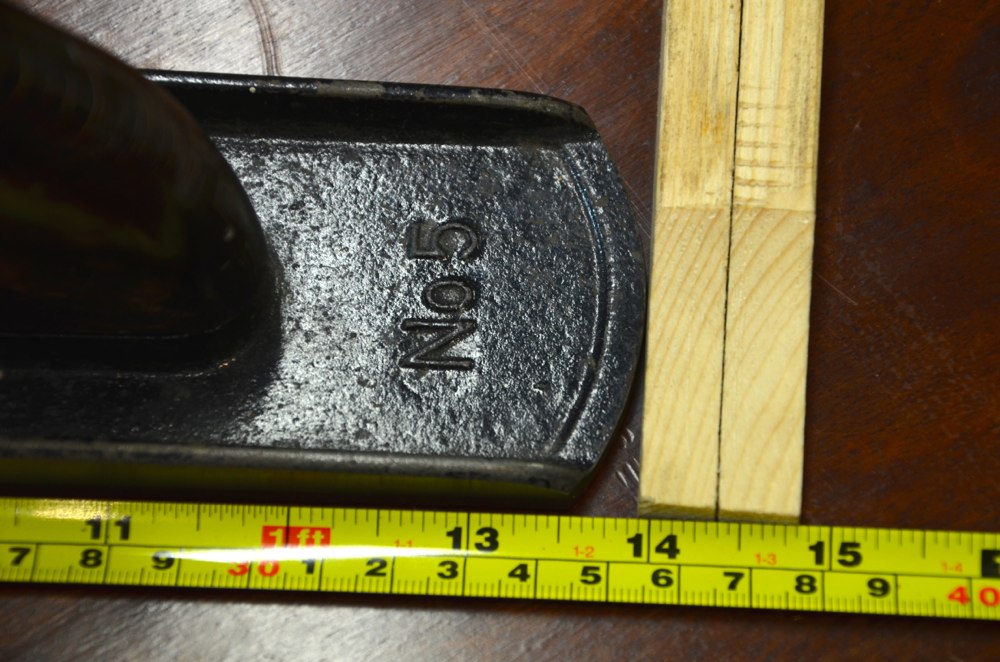
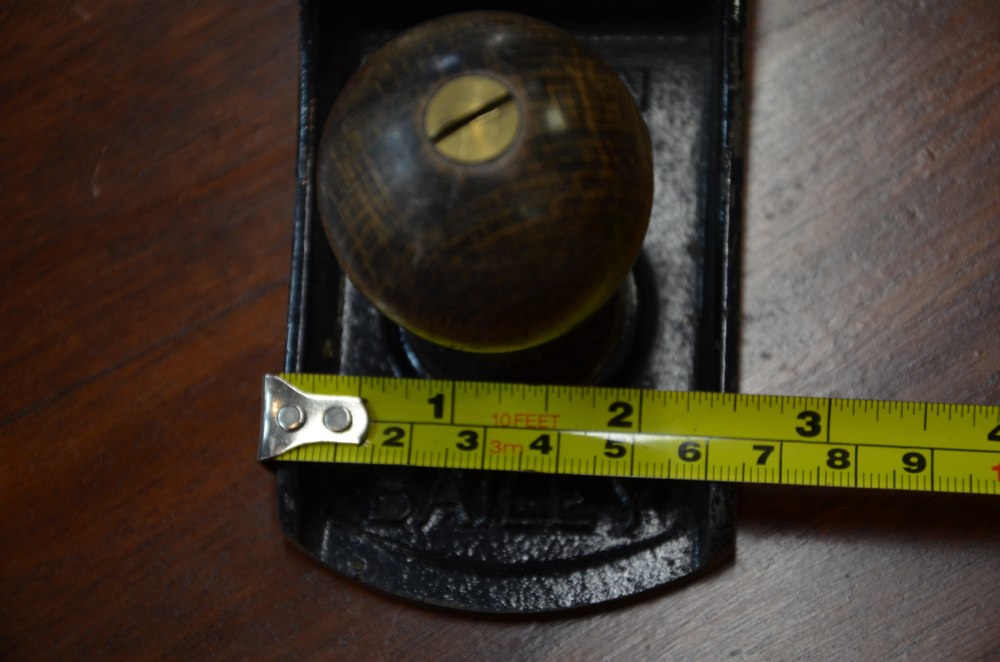
Here are the steps for restoring your #5. Don’t be intimidated by your thoughts, anyone can do this. It’s not particularly demanding or skilful. More sensitive than anything.
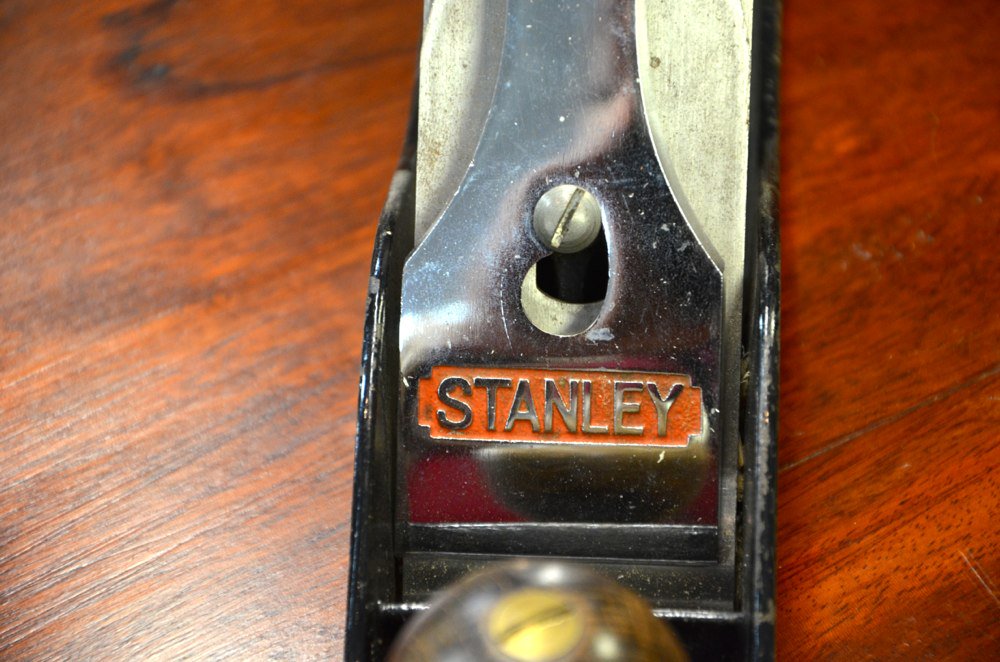
My #5 is a typical eBay find. The sole isn't flat at all. Almost make a good boomerang.
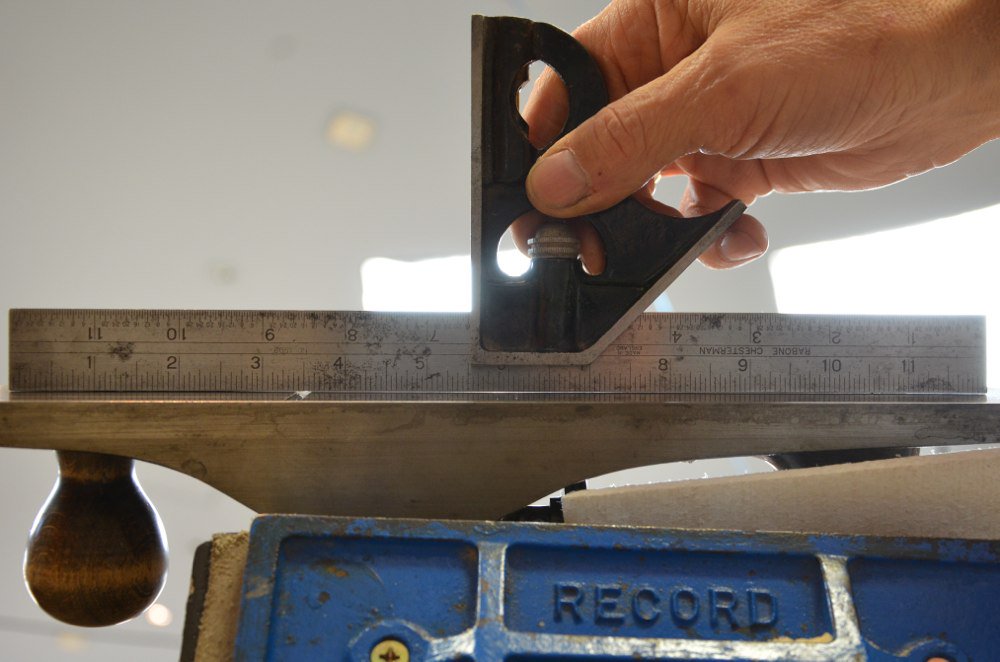
It’s also hollow across it’s short width too and at first you’d look at the pictures and think it would take forever to flatten. In actuality this one took me about 15 minutes so don’t be daunted and though the eBay find might not be as bad as this one, it’s not unusual to find one as bad as this one.
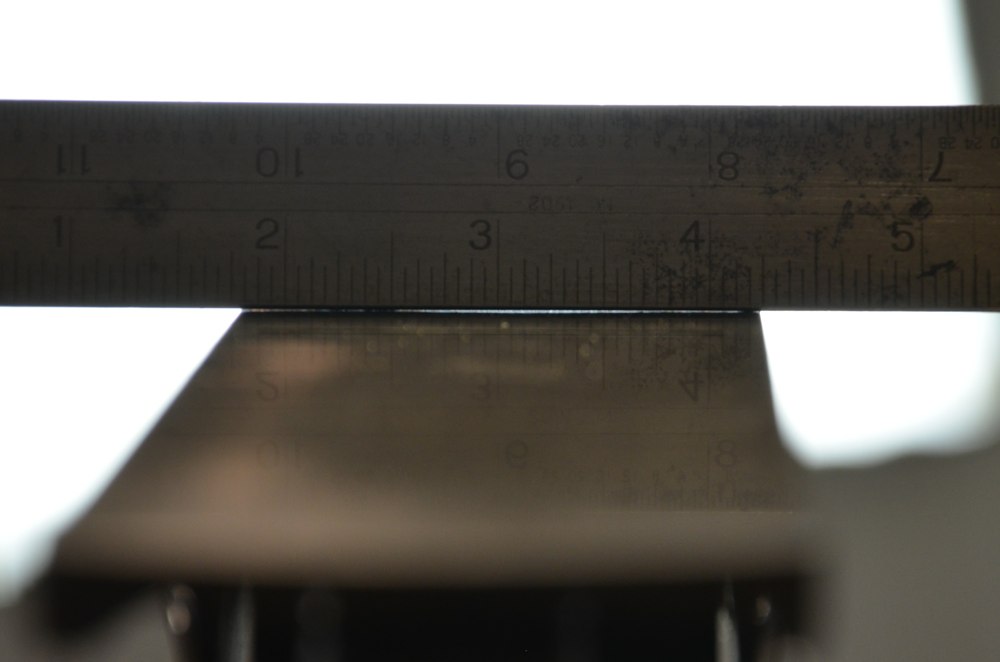
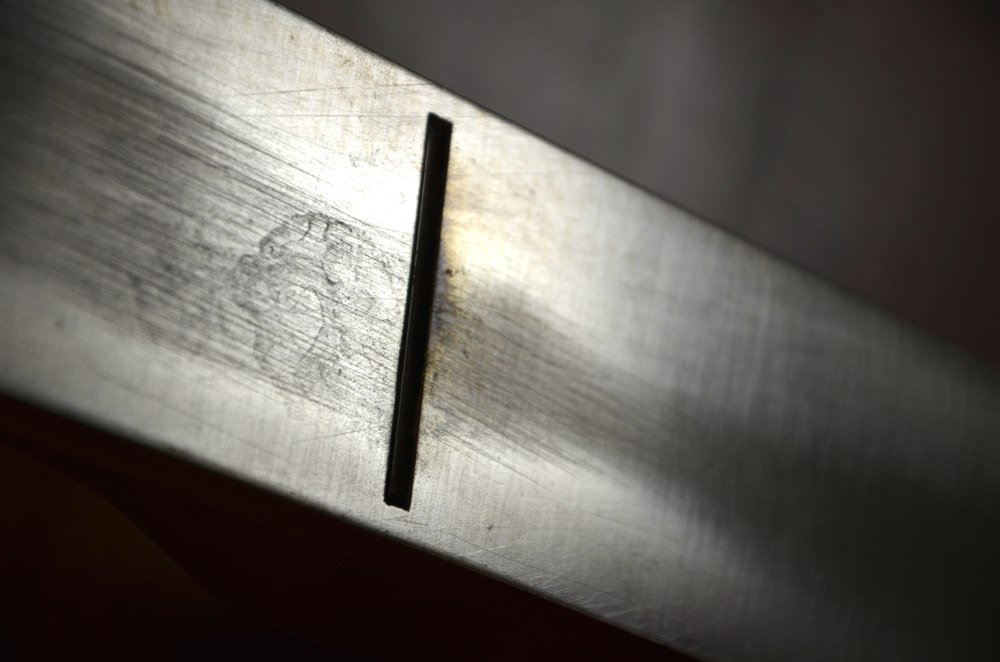
In fact it’s quite common to find planes hollow across the width because many joiners use their jack planes to plane narrow boards of wood, MDF, melamine faced pressed fibre boards and much more abrasive stuff such as plastic laminates and plastics too.
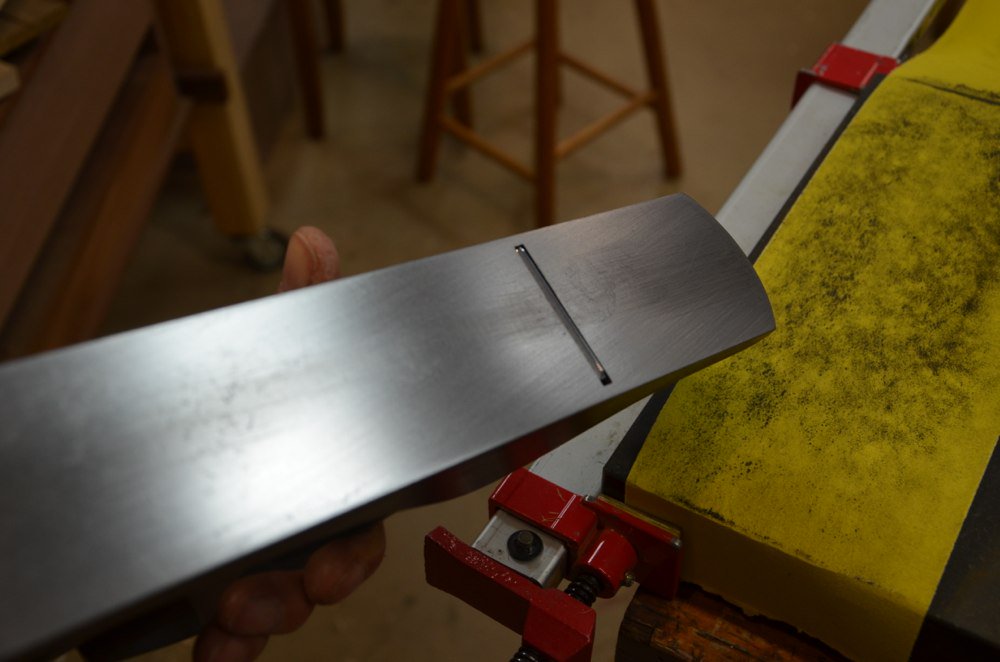
I happen to own a proven dead flat granite slab so placing 140-grit abrasive paper on the block gave me the right start. You can use float glass or even a tile if you test it for flatness first. Sometimes, machine tables are close enough too. I have used wooden 4” x 4” lengths of wood and MDF. Choose your flattest surface.
I used 4 feet of 140-grit abrasive paper 4” wide for the first level major abrading and then polished further to 600-grit. Plenty fine enough.
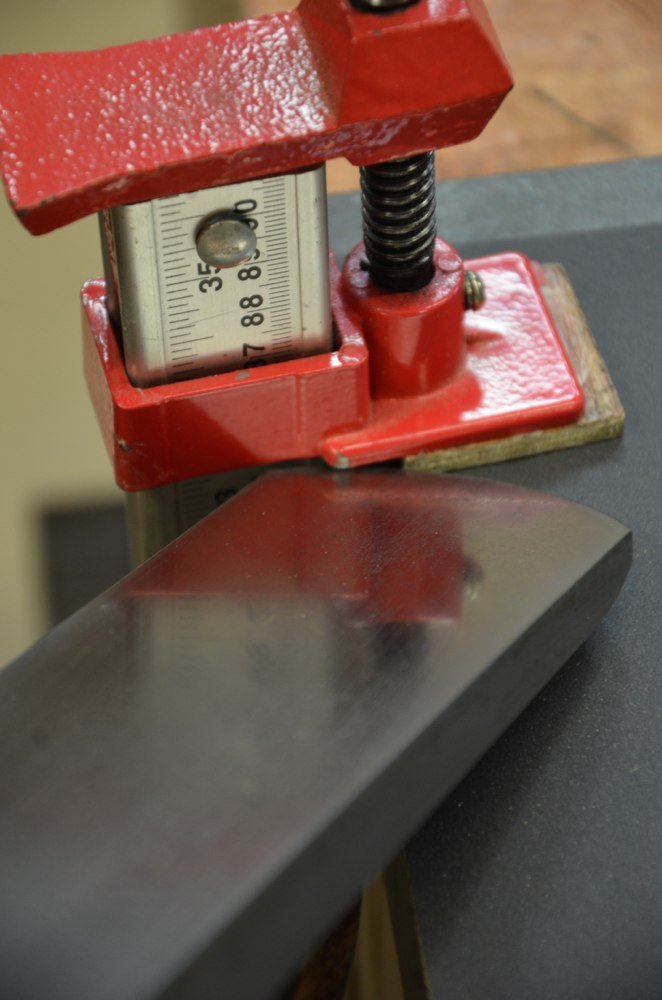
Make sure you keep the lever cap locked in place at normal pressure with the blade retracted. This keeps the sole in tension and so maintains as closely as possible how the plane will be in its final tensioned state during use.
It’s not necessary to abrade to a finer level, but you can if you like. Wood is surprisingly abrasive and soon undoes what polish you might attain. I went to 600-grit straight from the 140.
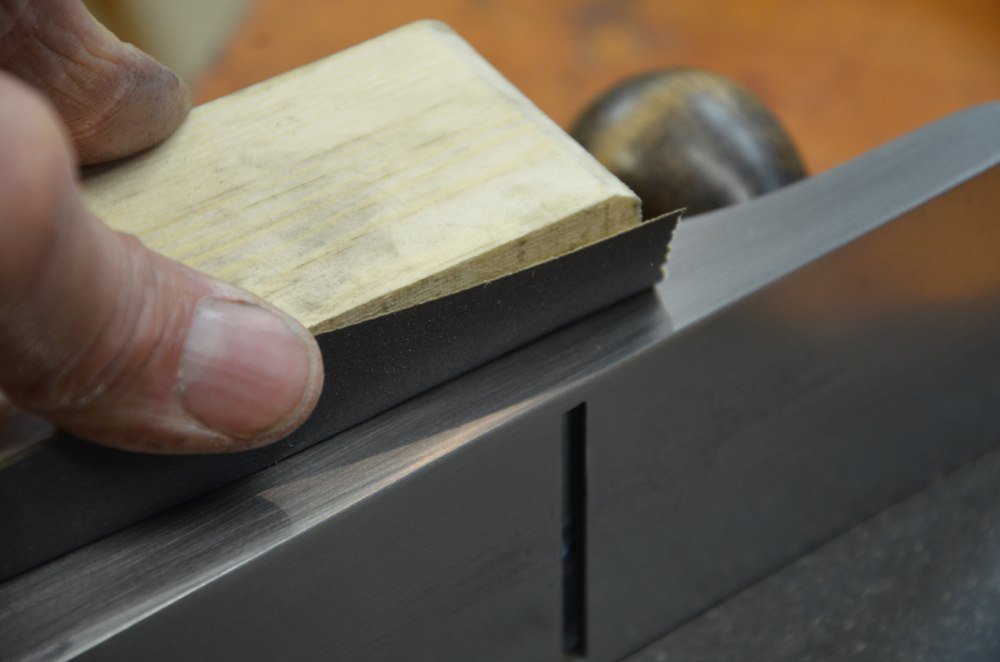
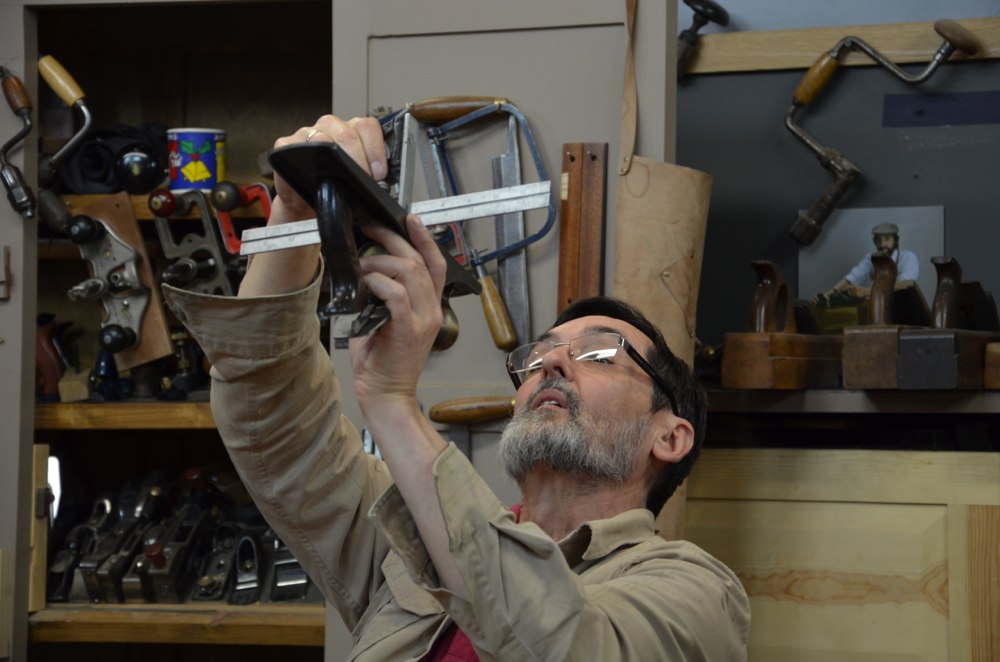
I cleaned up the sides with abrasive paper but it’s not necessary to square the sides to the sole.
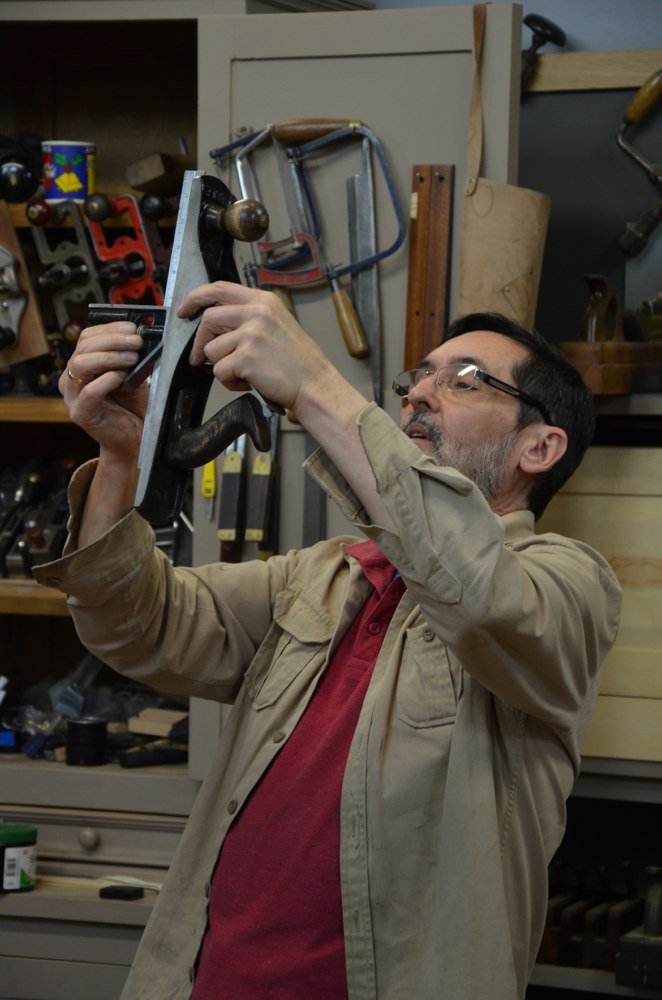
Using the light and a true straightedge is usually enough to check for flatness. I first offered mine to the light and even fractional glimpses of light is not necessarily more than a thousandth of an inch.
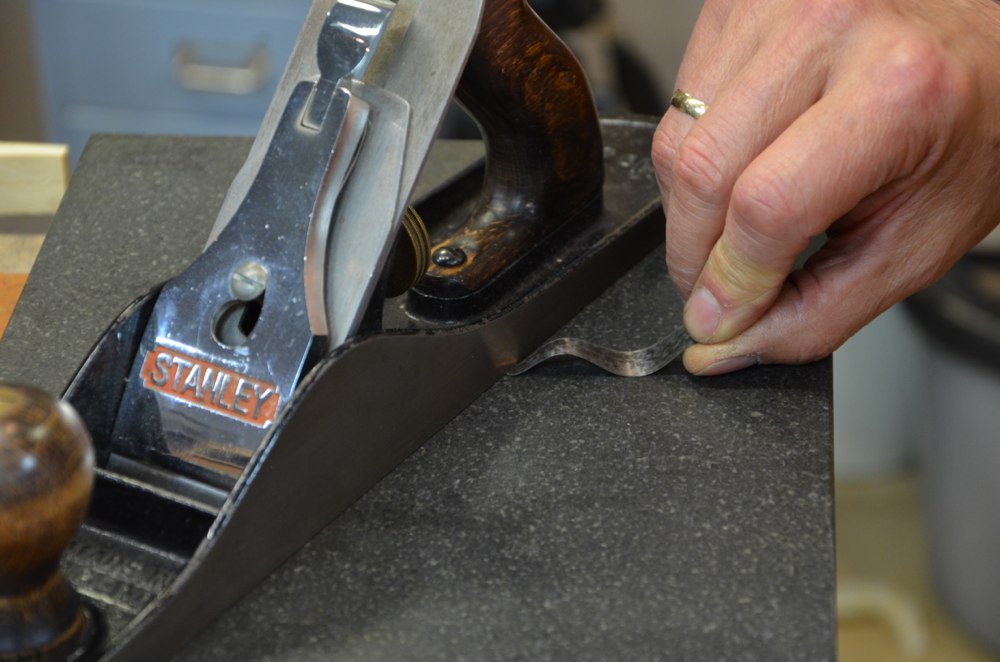
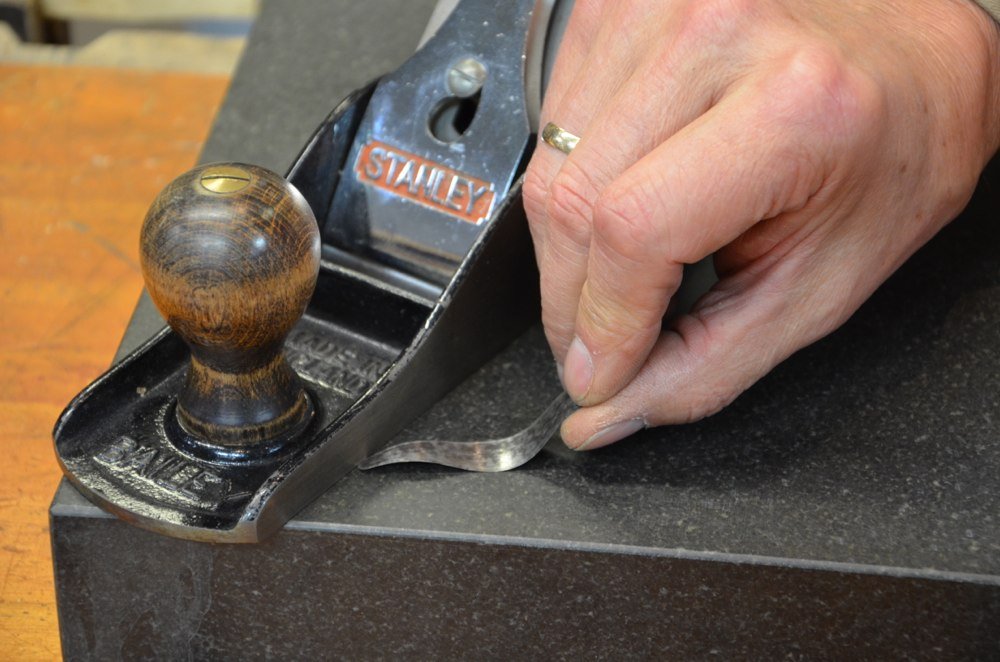
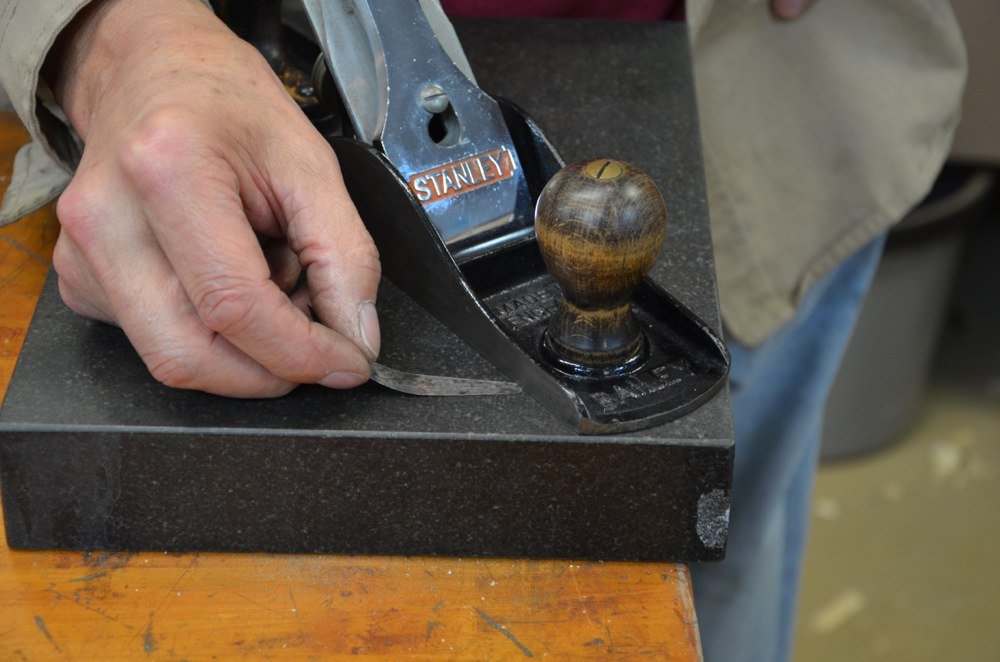
I used a 1/1000” feeler gauge on my test slab and the gauge penetrated only around the rim where I had bevelled the outer edges as I always do.
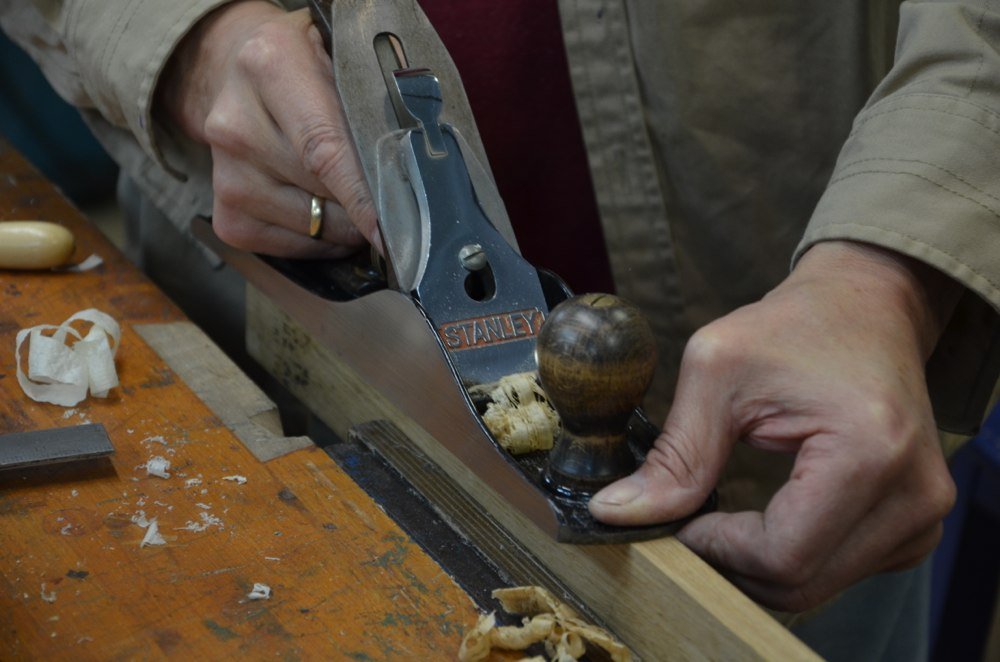
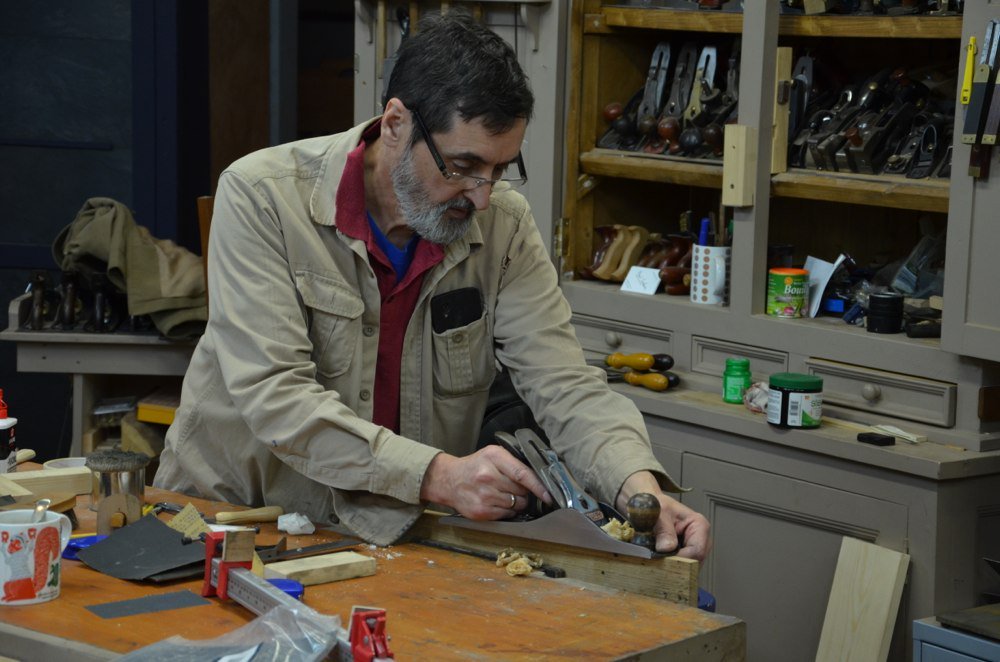
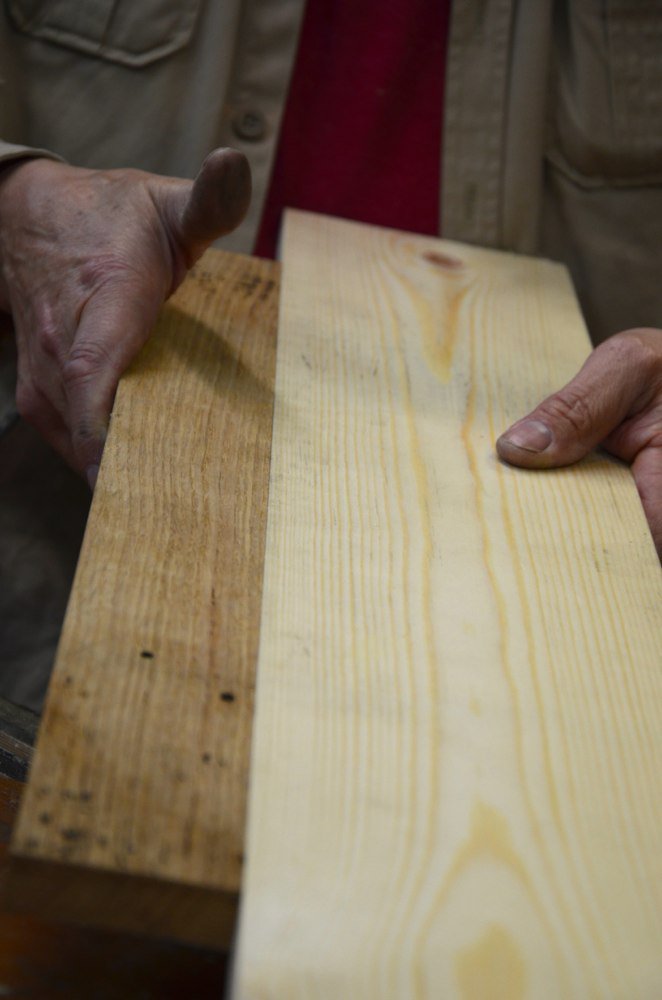
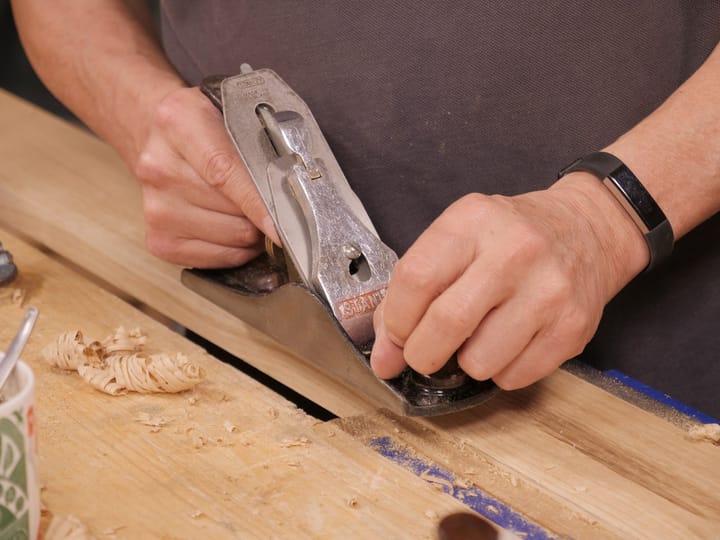
To additionally prove my surface flatness I plane two boards independently and placed the edges together and they joint line was perfect.

Comments ()