
Added Schematic Drawing for Stanley #71 Router
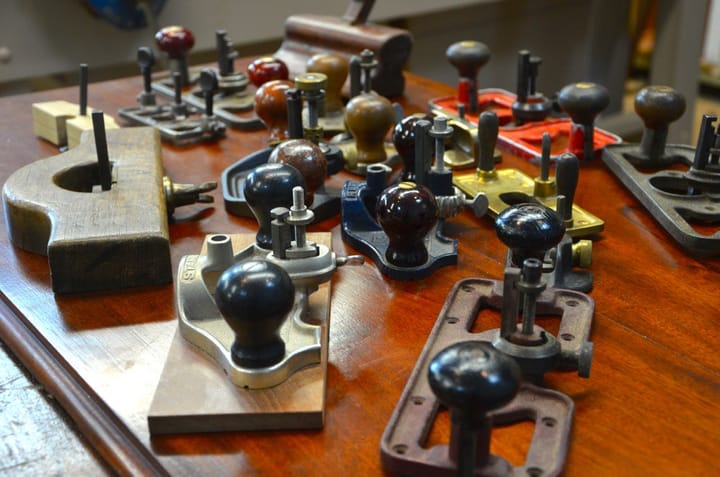
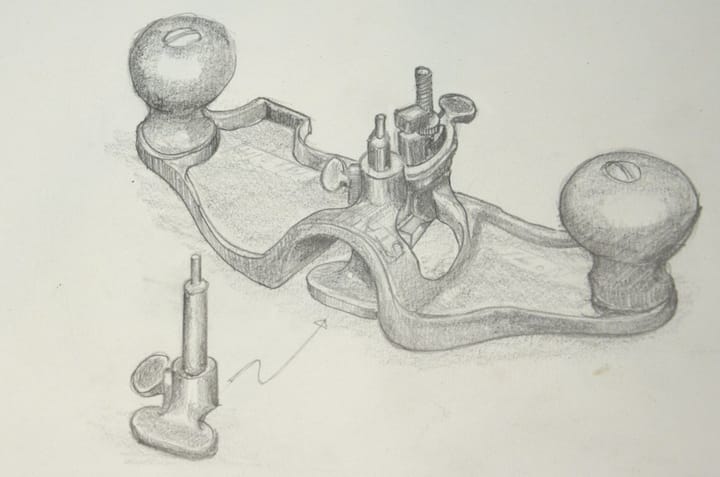
Both modern-day makers of the router plane, Veritas and Lie Nielsen, sized their planes to the same or similar footprint of the Stanley #71 and Record 071 plane. Both makers omitted including the depth rod accessory and adjustable shoe for attaching to the arched front of the plane as in the early make of the plane prior to 1900. Obviously the original maker felt that there was an important enough need for this in the improved model so you may want to consider this when you are looking for a hand router. I have used both types without problems but I do like the depth gauge rod for different applications from time to time and also the ability to use the adjustable shoe for the edges of boards and such. Lie Nielsen offers a flat soled router plane and the split soled model emulating the Stanley version of the 71, but of course this means buying two models. Its easier to add the wooden sole and of course costs almost nothing whichever plane or maker type you buy. Having said that, there isn't provision for screwing a wooden sole to the plane but I surmise that you could use the slot used for adjusting the fence. I would use cheese- or dome-head setscrews and thread the wooden board to do this.
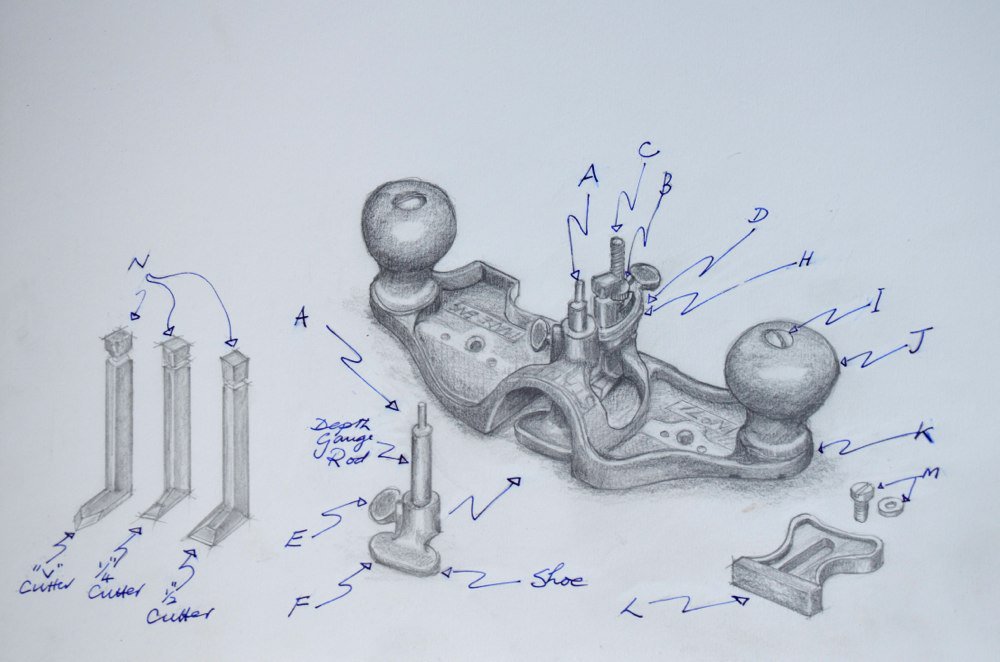
The repeat of the text from the Stanley #71 Router pamphlet from my previous blog yesterday is added because I reproduced a drawing with keys to identify the components parts to the plane.
Stanley router plane No 71
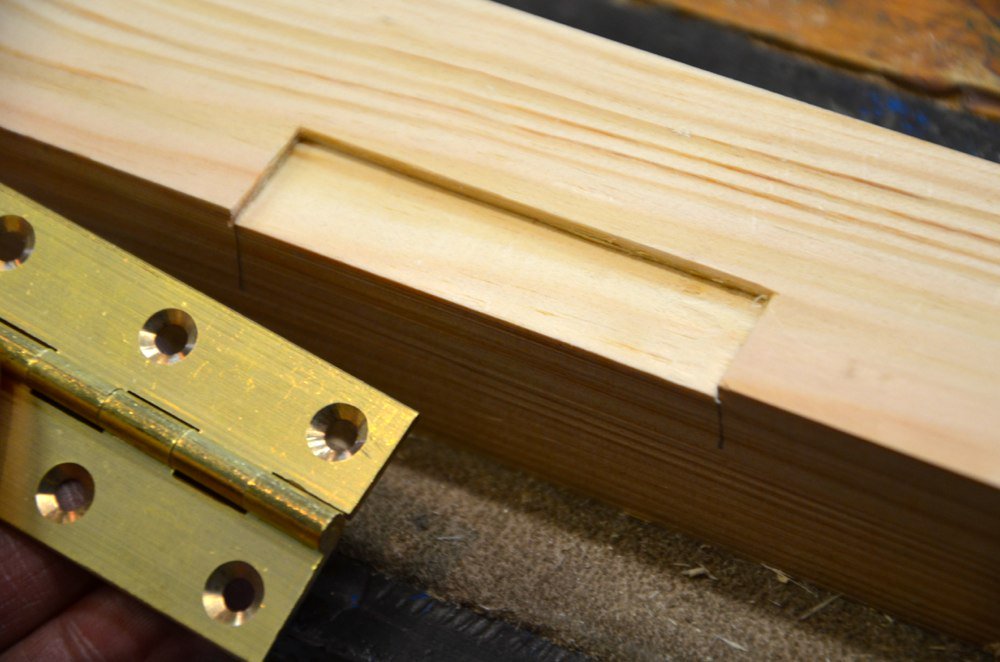
For surfacing the bottom of grooves or other depressions parallel to the surface of the work. There are many applications in pattern making, cabinet work and in fact almost all kinds if woodworking that call for these tools.They are particularly practical for routing dadoes for shelves, stair stringers or where pieces of hardware are to be recessed into the surface or edge of a board, such as large hinges or lock strikes, etc. It is not possible to show all these, but the user will discover places where the tools will prove their value.
CUTTERS-Cutters are made of high grade quality steel and are hardened and tempered. The shanks of the cutters are graduated in 1/16ths for 1" which makes it possible to reverser for duplicate work and for approximate depth adjustments. Three cutters (N) are furnished, 1/4" and 1/2" router cutters and a (3 piece) "V" or smoothing cutter. Cutters are adjustable and depending on type of work can be held on front and back of cutter post (D) by means of clamp (H) and clamp thumbscrew (G).
VERTICAL ADJUSTMENT OF CUTTERS-To adjust cutter to desired depth, loosen thumbscrew (G), turn adjusting screw nut (B) up or down on adjusting screw (C), and tighten thumbscrew.
SHOE-A shoe (F) for closing the throat is provided for use on narrow work if a closed throat is practical and is fastened to depth gauge rod (A) by means of the shoe thumbscrew (E).
DEPTH GAUGE ROD-This rod (A), fastened by means of thumbscrew (O), may be used to control the depth of each cut, preventing the cutter from taking an excessive cut which would be inconvenient. For example, a cut 1/16" deep can be cut repeatedly while still allowing the cutter to be set for the final depth of cut. One end of the rod is of small diameter for following in a small groove.
FENCE-An adjustable fence (L) is provided for use where the cutter is to run parallel to an edge. One side of the fence is designed for straight work while the other side is for curved work. Fence may be fastened to either left or right side of working face of plane bottom (K) by means of fence fastening screw and washer (M).
KNOB-The two hardwood knobs (J) are fastened to plane bottom by means of knob bolt and nut (I).
Schematic of Stanley #71 Router plane.
Router plane on wide housing.
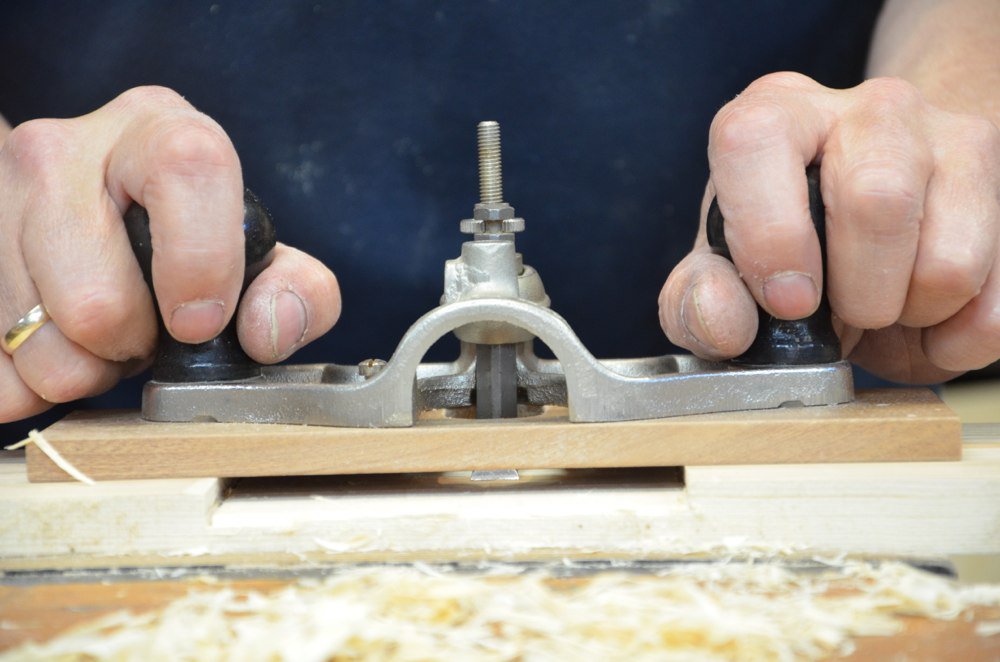
The photo shows how to rout openings wider than the plane bottom (should read wider than half the plane bottom). The attachment of a flat board to the plane bottom is the simplest way to span large openings. The plane bottom is provided with screw holes for attaching such boards as necessary.
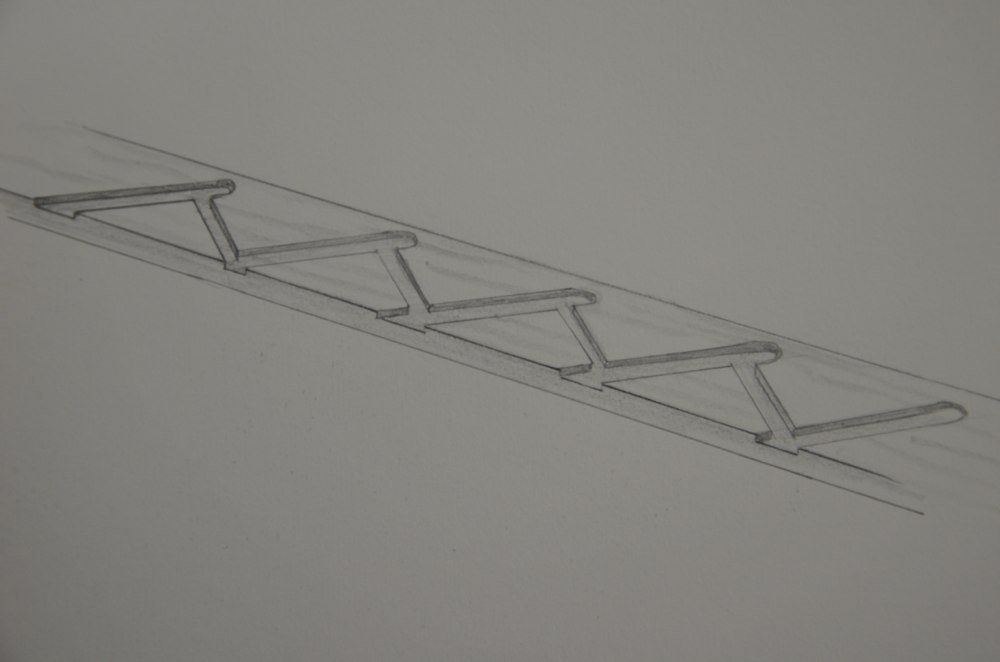
Here is shown a common job in home construction where this plane can be used - routing the stringer for the step and riser of a staircase. The other pictures show a stopped dado and a routed shape for an inset.

Comments ()