
Toolbox Issues for Us Woodworkers
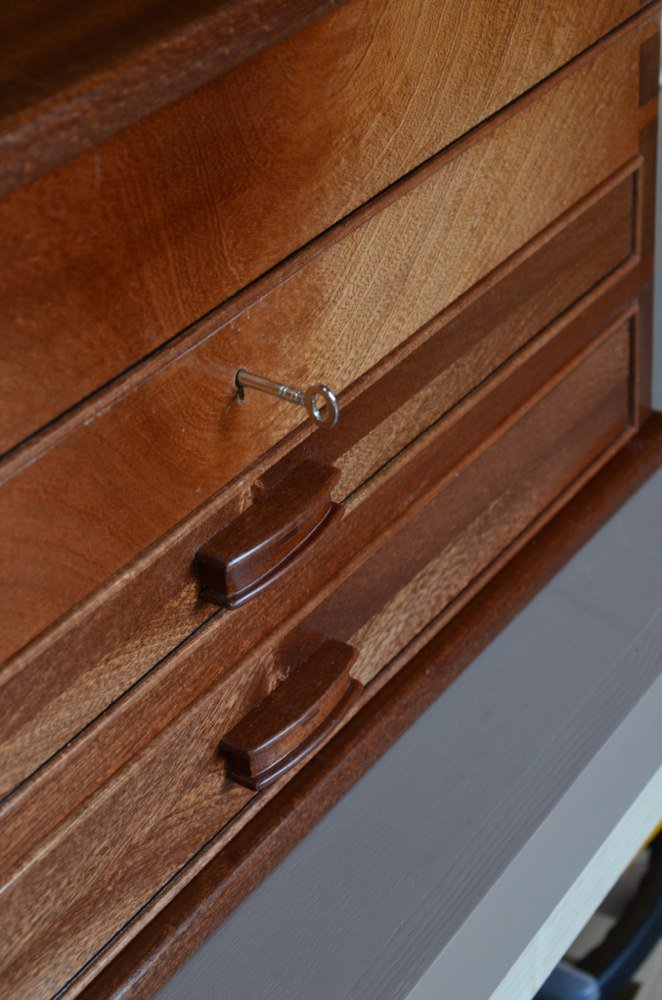
Some of you asked about my fall front tool box and asked how it was made and for plans of it. It seems it would make a good wooodworkingmasterclasses series but a lot of the details are already in the tool chest build we did last year. I think the joiner’s toolbox Is a practical tool box that holds a goodly amount of kit. Don’t dismiss this one, it carries well, works in the shop as a minimalist space hogger, offers the easiest access of all in some ways and of course the tills can be pulled to the bench to work from directly. It’s also readily scaleable and have half a dozen of them in various sizes.
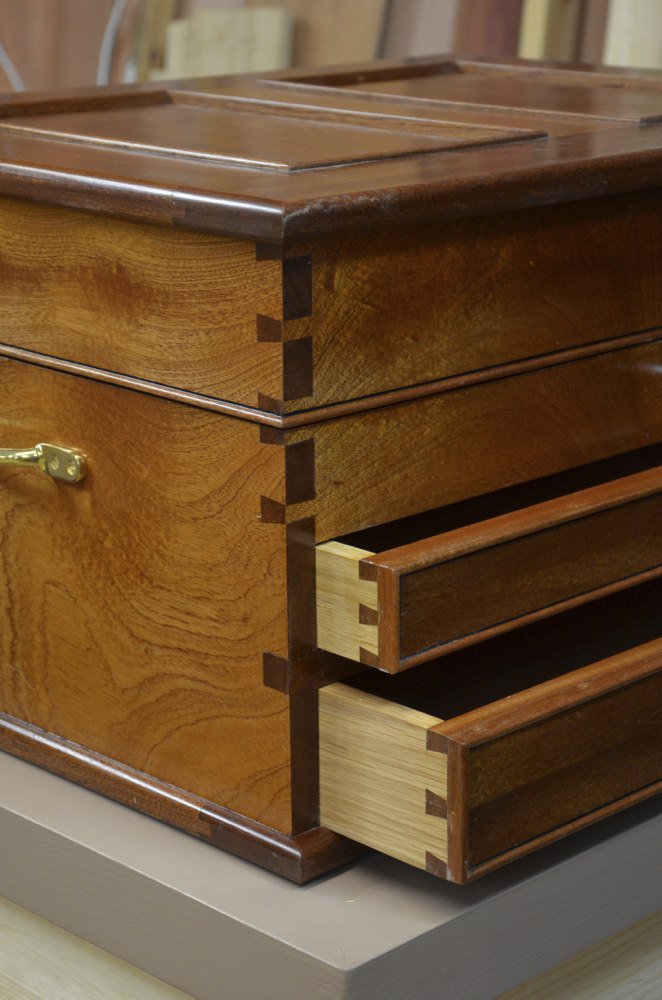
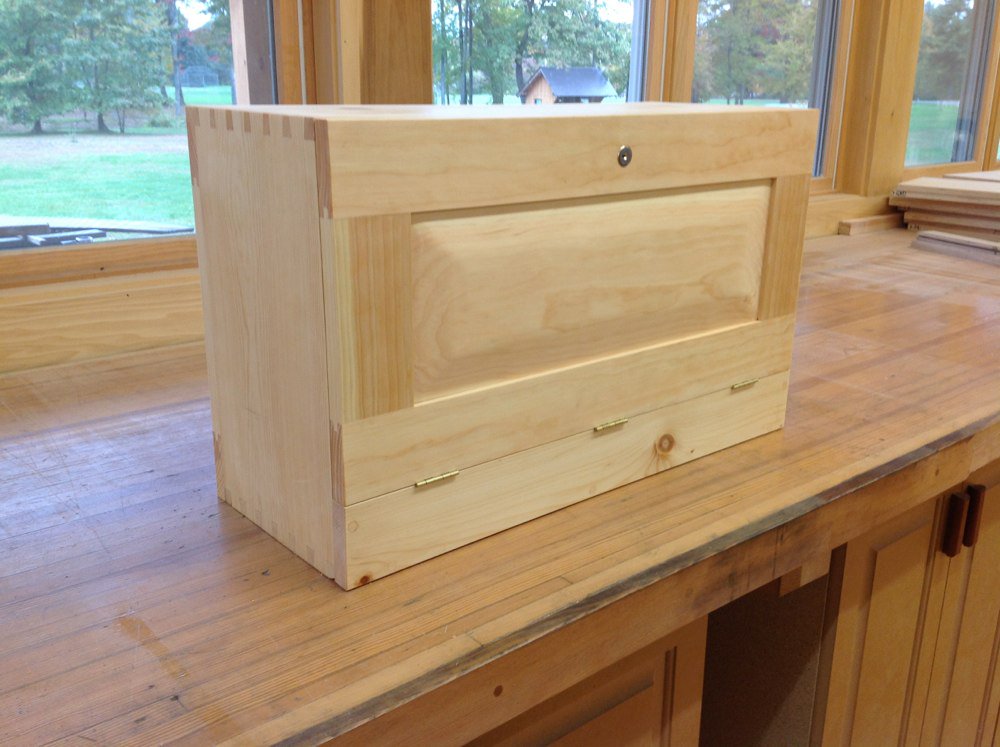
I designed it. As far as I know no other existed before it came about. Having said that, all of the ones I have seen LIKE it are the commoner ones I find all of the time here in the UK , which are the ones skinned back and front with 1/4” plywood that’s screwed and glued to the main box. I wouldn't dismiss this one either. I can make the superstructure for one in about three hours and have it functioning ready to make the tills.
Tool boxes are of course a personal statement in the cabinet maker’s shop. (Cabinet maker UK is furniture maker). That said, I have different ones I have made through the decades and I probably own about 20 fall fronts as shown or similar, 10 chests to this pattern or similar and then of course the ‘bin’ type like this one here of which I have half a dozen two of which my wife uses for keeping the children's treasured things as they were growing.
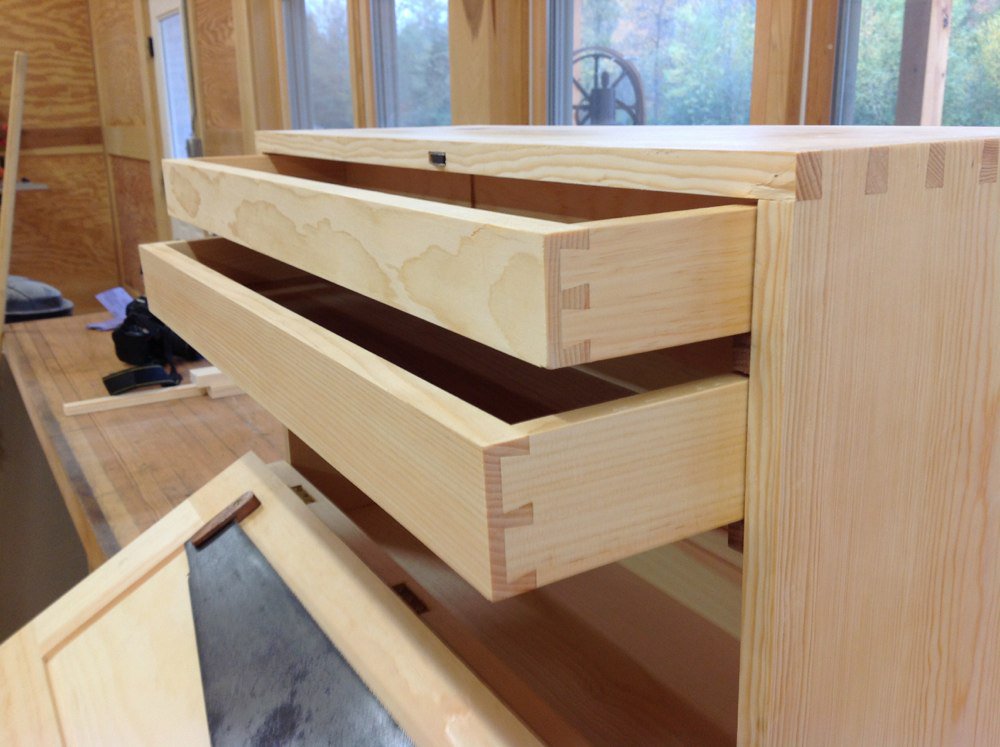
What’s different to the skinned plywood ones? I decided not to use plywood because in almost every example of ply-skinned ones I have seen, the plywood has broken down. Therein is my reason. Painting them helps greatly and then not leaving them in a dark damp cellar works well too. Of course its a quick and simple thing to replace the plywood too. I think that they are good for site work, keeping around for working at home and so on. I also think the method of construction shouldn't be lost as it does mark an era of the start of and reliance on plywood for panelling work too.
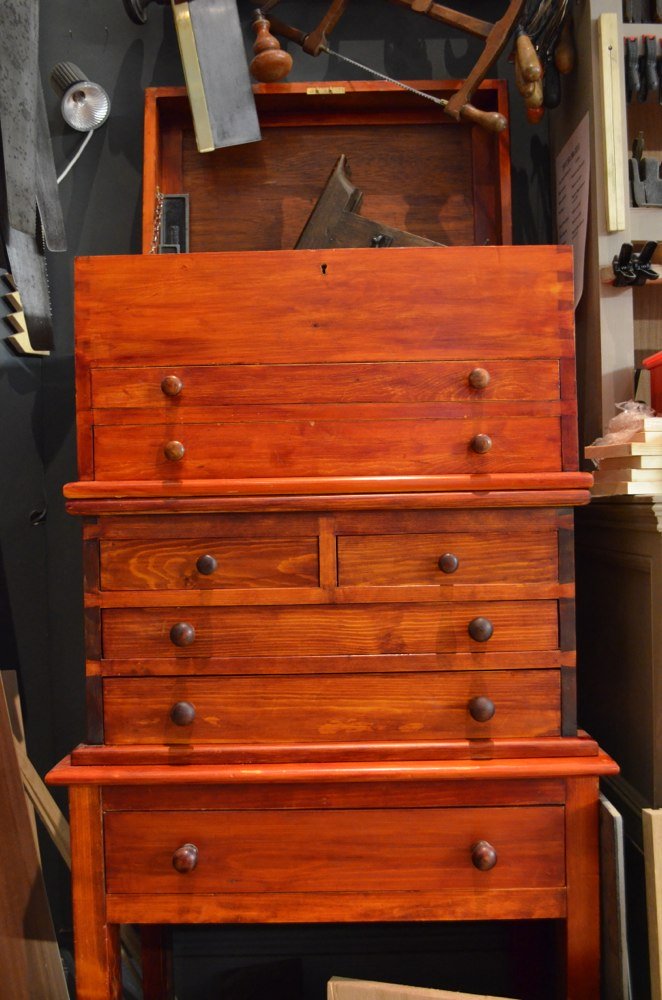
On my design I developed it so that it had door and frame construction in the build, dovetailed joinery for strength to the superstructure, which is standard anyway, and of course drawer construction inside. I used raised panels too, to add a learning dimension for students, but also because, well, they look nice.
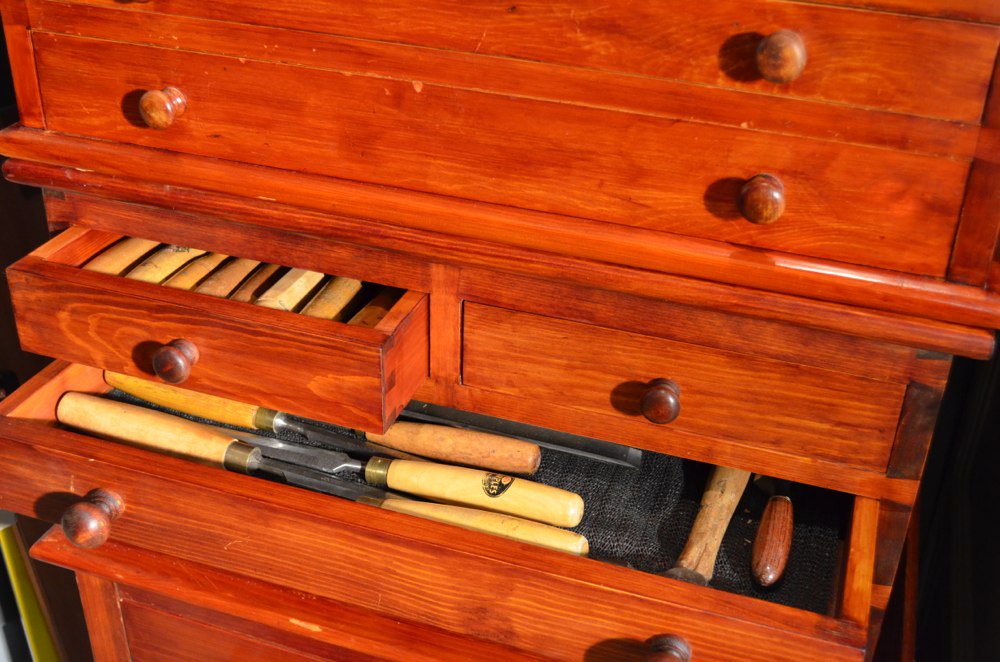
At the ultimate end of course you have the cabinet makers tool chest. These are usually weighty affairs because of the hardwoods and they were and are the show off tool chest apprentices designed to pass for the guild exams for entry into the guilds. These were often examples of general joinery, yes, but also more intricate details such as veneering and cockbeading, inlay work and carving sometimes. Then of course there is the Seaton chest and millions of others beside. Excesses in everything never stop, but I think nice work in a tool chest is sort of a private enjoyment for the crafting artisan. Perhaps I will find time for none in my retiring years but somehow I doubt it. We have a lot to do yet to complete what I would like to complete.
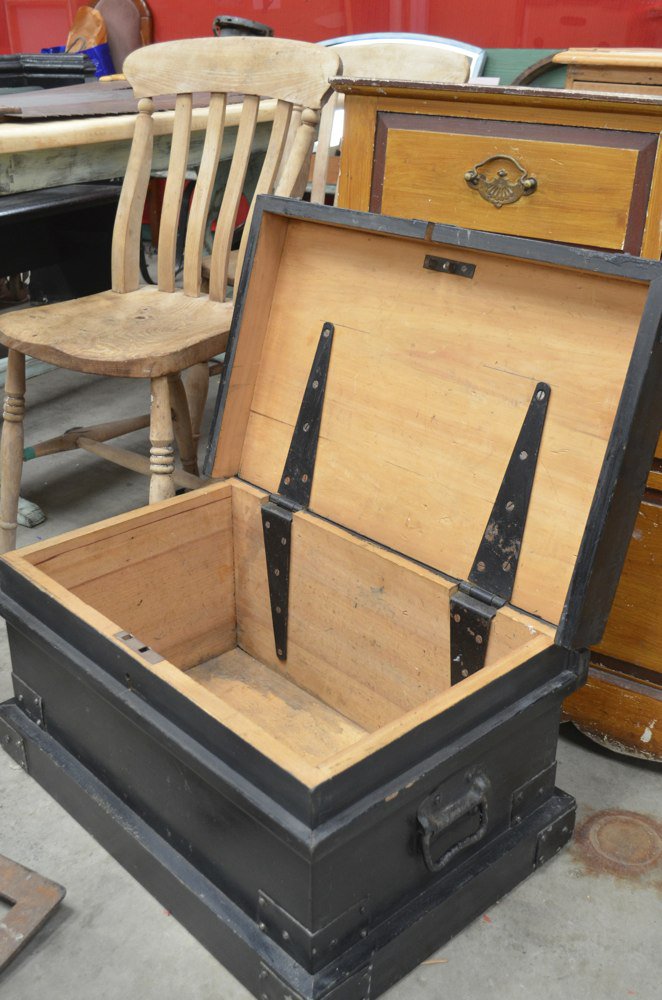
And then of course you've got this. Built like a battleship and ready for war. These chests were built for war service by servicemen in the military of two wars. That's why so many exist. Sad times and sad losses for many when the tools came home but the men and women didn't.
If you have little time to look at tool chests and boxes look at these here.



Comments ()