
More on My Small Joinery Workbench
NOTE:Just so you know, Paul has a newer Workbench series. If you are interested in the updated version of Paul’s workbench please click the button down below. This page links to a cutting list, tools list, FAQS and much more.
Click here to go to the workbench page
It's Only 32" by 5'0" and it Works Well
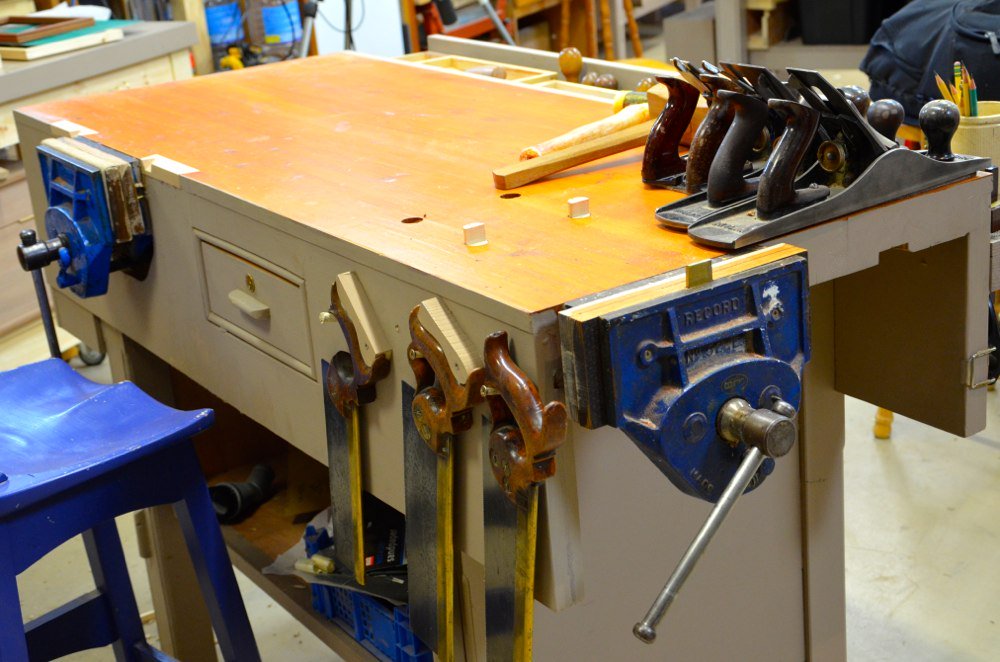
Though I use this bench because its narrower size and short length better suits filming for Woodworking Masterclasses, I certainly haven’t found the wider flat surface any great advantage at all and I sorely miss my well and two-sided benchtop work surfaces. Occasionally someone will comment that the flaw in the well stow for tools is covering the tools with a project and so blinding access to the tools. If you really think through this you will see that the concern is quite silly. 95% of work revolves directly around the vise and the immediate surface surrounding it. The mid-section of the well area is of little consequence as an actual work area until you are perhaps planing or scraping a large surface such as a tabletop or frame of some type. In such cases I think ahead and move what I might need to an accessible part of the well and get on with the work. Simple.
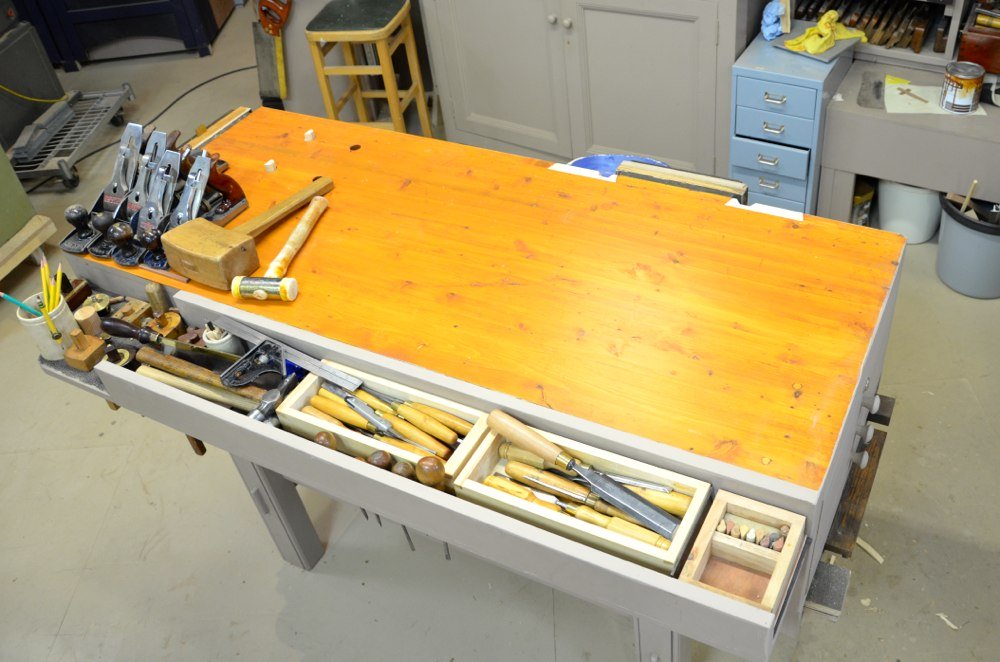
On this workbench I added the well after I had made the workbench because at the time of making I only needed a smaller bench to travel with me from time to time; to demonstrate at show venues or to teach from in other locations. Otherwise I need time to get used to lesser benches and that can be frustrating.
I find it most useful for stowing gauges and screwdrivers upright through holes in the bottom. They are ready to hand and easily stored.
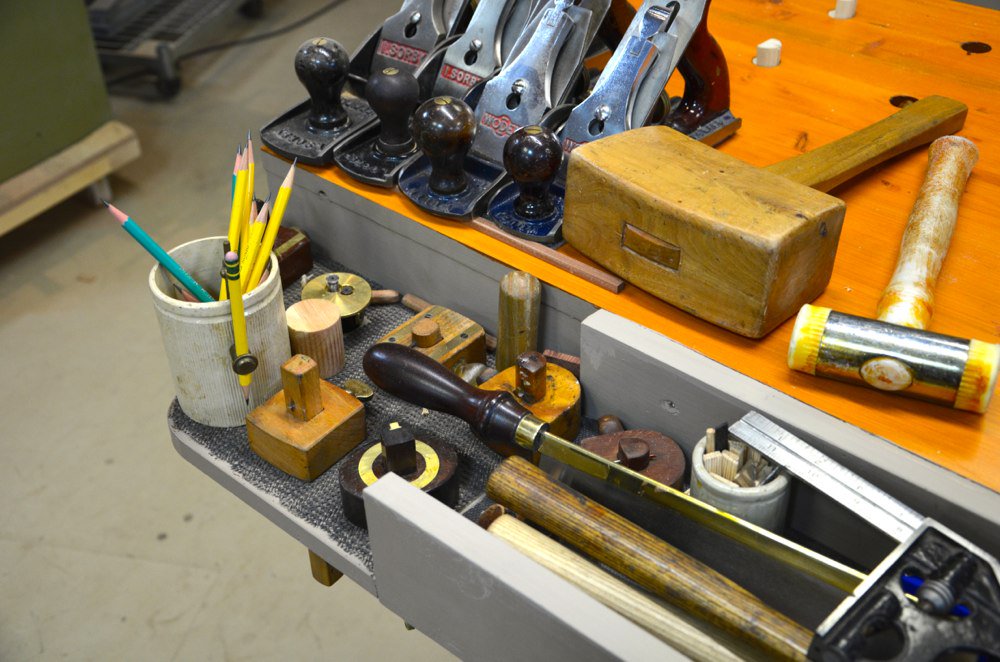
Some say the same for the drawer in the apron but...
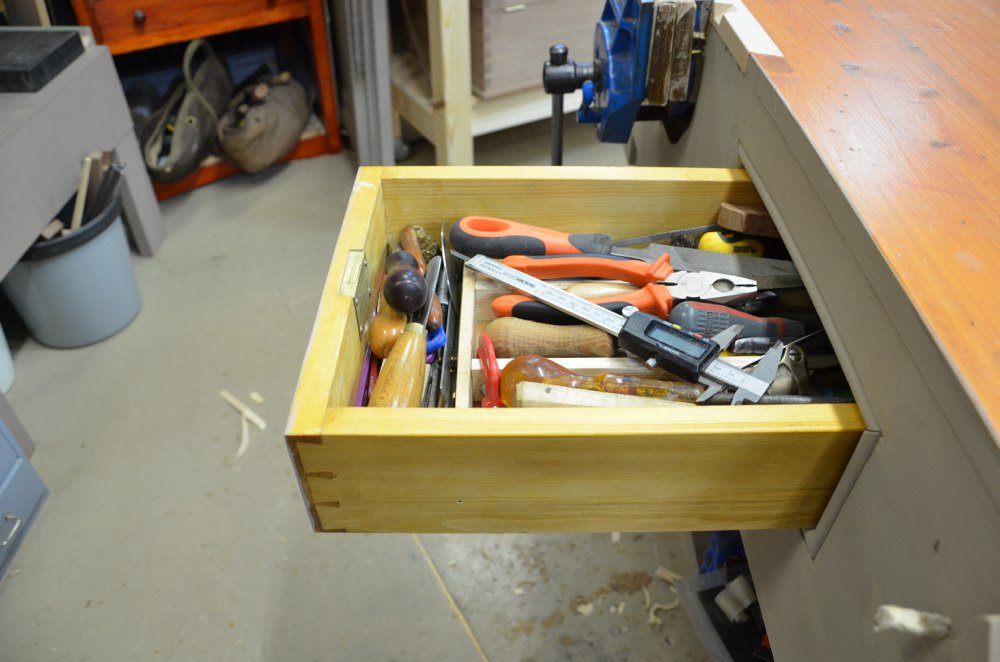
...the advantage of having a handy place for non-conformist tools offsets any and all occasional first-world problems. Also, you can find flaw with any design, but, working from my experience, I find that automatic forward planning, thinking ahead, making decisions as I work into my future is all part of the craftsman's mode of constant processing and critical thinking. It’s what separates him from a world of theorising and non craft working. Without it work life is hard. The well and the drawer/s work almost all of the time. I would say about 98% for both combined. That makes it most practical compared to not having either. My tools with round handles never roll off the bench or around the bench top. My whole bench top working area is always free to work on and the mid section of well area is clear for me to span with large wood sections, frames and so on.
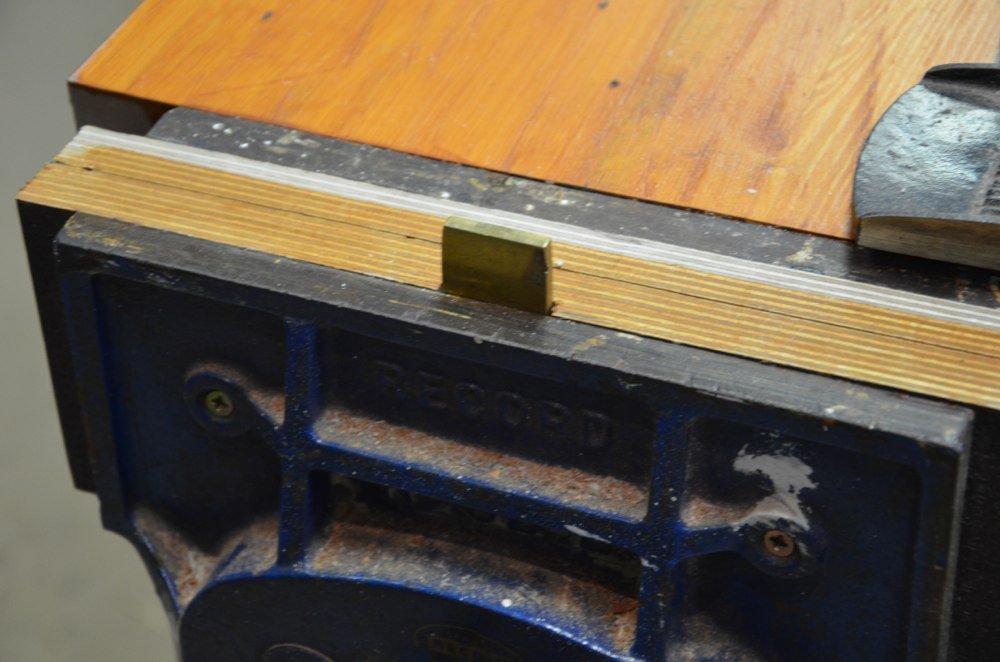
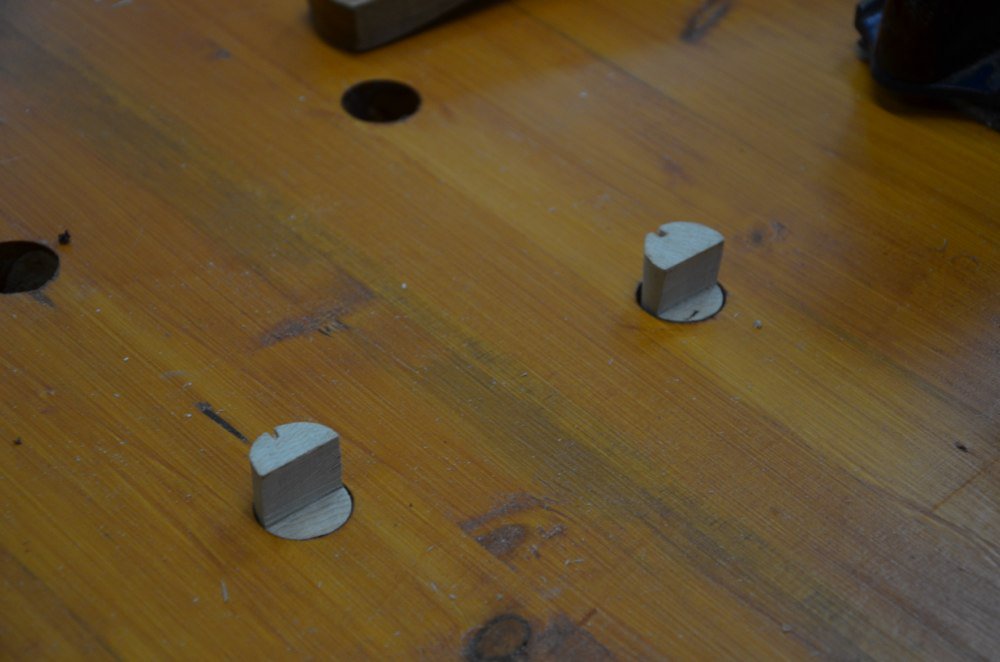
Though I almost never use bench dogs as such because of my clamp-in-the-vise systems they may as well be in the bench as an added option if needed. I retrofitted a non-dogged vise with a brass dog in the wood and it works really as well as the built in models I have used with no compromise.
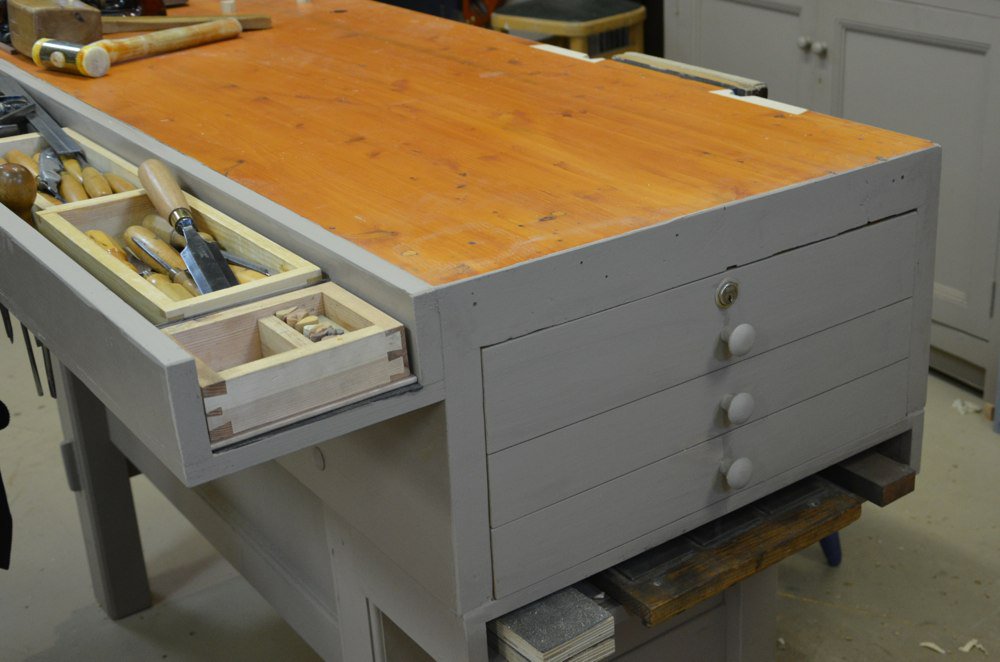
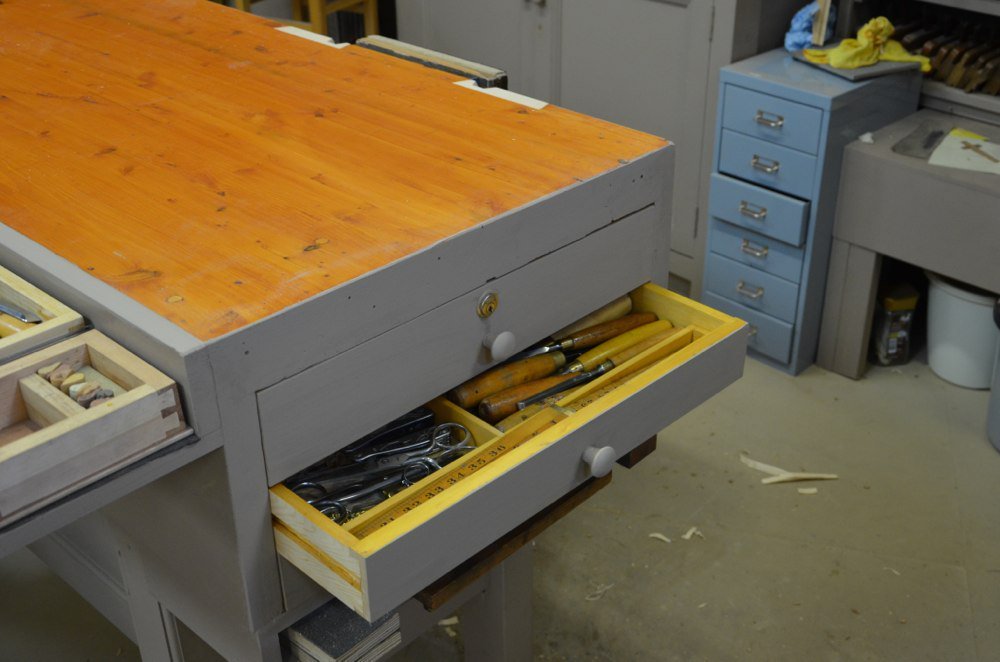
These tills are excellent us of space as you can see. I can pull the whole till out and place it on the benchtop to work from or pull tools as needed. The only issue I have is that occasionally a student will be intrigued by them just before a lecture and pull on one. because they are so short front to back, 7” or so, they pull on them and the whole thing drops the contents to the floor. This is a more recent phenomena surrounding over familiarity, as in my day no one would ever, ever have touched anything of a craftsman’s and especially his tool chest, tool tills, drawers or whatever. Very disrespectful all around.
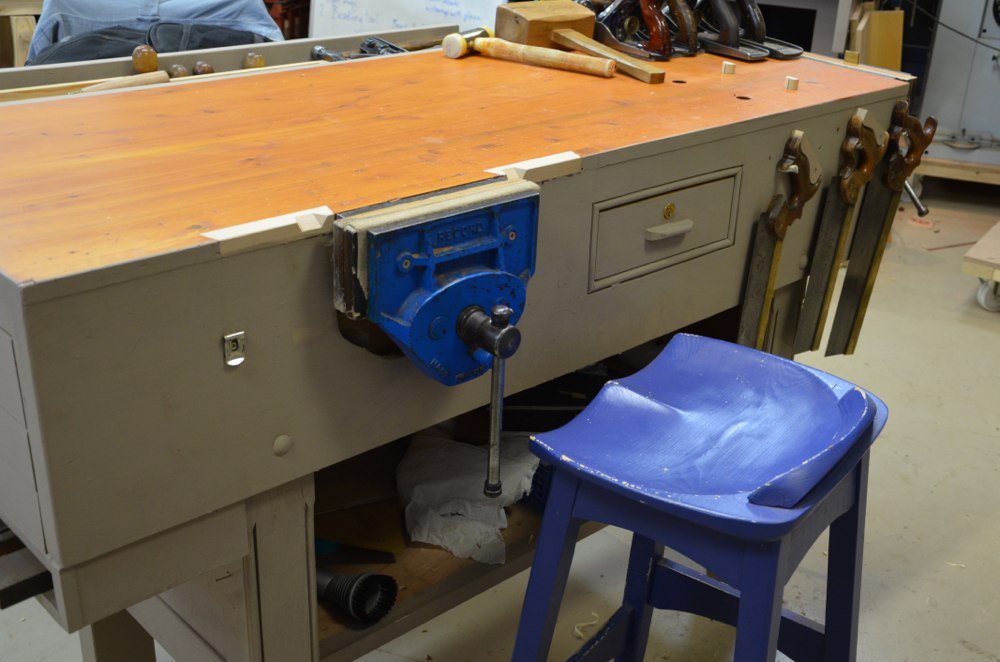
The top is only 60mm (2 3/8”) thick, leaving the well deep enough for chisels and squares and many of my other tools. On my other bench, my big bench, the well is an inch or so deeper and that means my plane (lying on its side, heaven forbid) can be stowed in the bench if I need too. Amazingly, though the top is so thin and made from pine it is rigidly inflexible and does not bounce anywhere at all, at all. It is redwood pine from Northern Europe. Don’t be misled into believing benches must be made from hardwoods or indeed fancy woods. That’s not the case. I do like hardwood benches too. Beech, ash, oak, maple all make good benches, but pine works as well for me and most benches in Britain were indeed always made from softwoods except school benches for children that were usually made from beech.
Conclusion
This bench does everything I need as a joinery bench. It is immovably stable, rock solid to work from and though only pine is used it still takes two people to lift and move it and even then they need to be stoutly built. The added well is by no means a compromise. I can reach it easily and retrieve tools as needed. I quite like the way it feels under heavy weights and even when the vise is fully extended it will not tip in any direction. On push strokes toward the vise with a big saw or planing and scraping across the benchtop it remains put. that's what I want from a workbench. I think the bench really does need the five foot length. Any shorter and they tend to scoot in the direction you are pushing in along=the-bench strokes.
Comments ()