
Knowing Your Customers and Being Known by Them
I don’t believe it is unrealistic to derive your full income from being a woodworker no matter where you are in the world. It does seem that some governments have legislated protectionism into its governance for different reasons and not the least of which is ensuring protection for the customer or should I say consumer. Germany seems to be ahead of the game on one hand, with extreme levels of legislative controls, whereas here in Britain, whoever picks up a claw hammer or a drawknife can call him or herself a carpenter, chair bodger or the total escapist ‘green’ woodworker. I must admit I do like the freedom we enjoy in deciding to make change. The fact is that, for the main part anyway, if we are no good, and our products inadequately made, we will most likely go under before we cause any real distress. In other words we survive by being fit - that’s making products fit for purpose, not the dog-eat-dog survivalism we left our corporate jobs for.
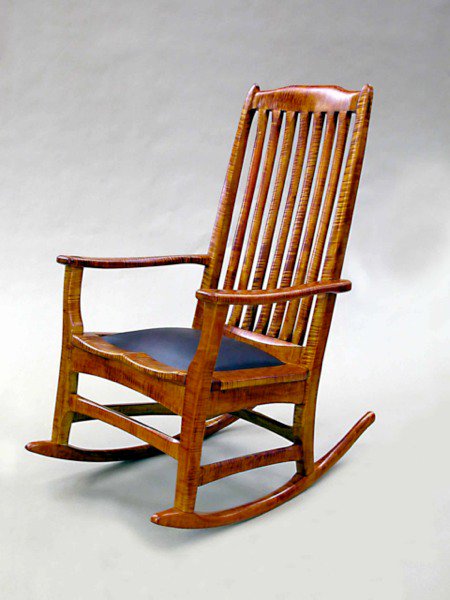
Anyone offering an honest piece of work will indeed stand out and the quality of work always sets us apart because, no matter the background, it seems to me that a percentage of people always seem to recognise quality workmanship. I recall a furniture maker in Texas lowering a car onto four of his small oak tables made with traditional joinery to prove the value of what he had. The legs sank into the earth 3” but the joints held and the car stayed there for three days. He sold tables and other pieces throughout the weekend and established himself as a fine furniture maker based on his educating strategy. He never had to do that again, but that was what it took to persuade people that his work was different.
I strongly think that we woodworkers need to give more insights into what sets us apart and whereas the car trick was a bit over the top, and it is unlikely that most of us could indeed offer such an exhibition, we can’t usually just expect people in todays world to understand what we are bringing to the market.
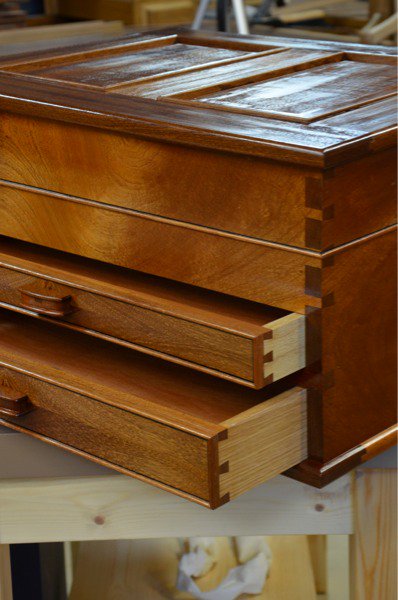
In my workshop I have several joints sitting out in the visitors area for people to look at. These joints tell a story and especially is it of value in relating to what might otherwise not be seen inside the jointed areas of say a table or a chest. Dovetails especially seem to impress people.
This week three people from China came in to see my work. The older man was a woodworker also and he was happy to see what we were working on. He seemed a modest man, humble in spirit and expressing only appreciation without saying a word. His wife too seemed of a similar disposition. The daughter, in her mid twenties, assertively insisted that I could sell my work and “make a lot of money.” It seemed to this confident visitor that I had never thought of that and now at almost 65 I needed someone to help me see where I had failed myself.
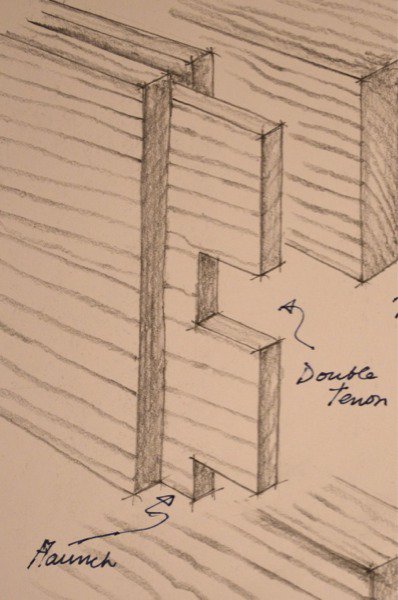
So, it is important to educate your future customers. This can be done in different ways. Video is much simpler now than ever and a short film can show you at work making the joinery. You can also demonstrate at the workbench at craft show venues as I did for decades. This really works well. I once saw a man demonstrating carving a ball and claw chair leg at a show and people stood there for half an hour totally glued to his demo. Creative work is always electric and of course you can print a brochure of what goes into your work to support any audiovisual you might have there too. Drawings of Mortise and tenons and explanations of which joints you used where. Before many minutes pass people are asking questions and most days when people come into my shop they are asking if this or that is for sale and how much would it cost to have something made.
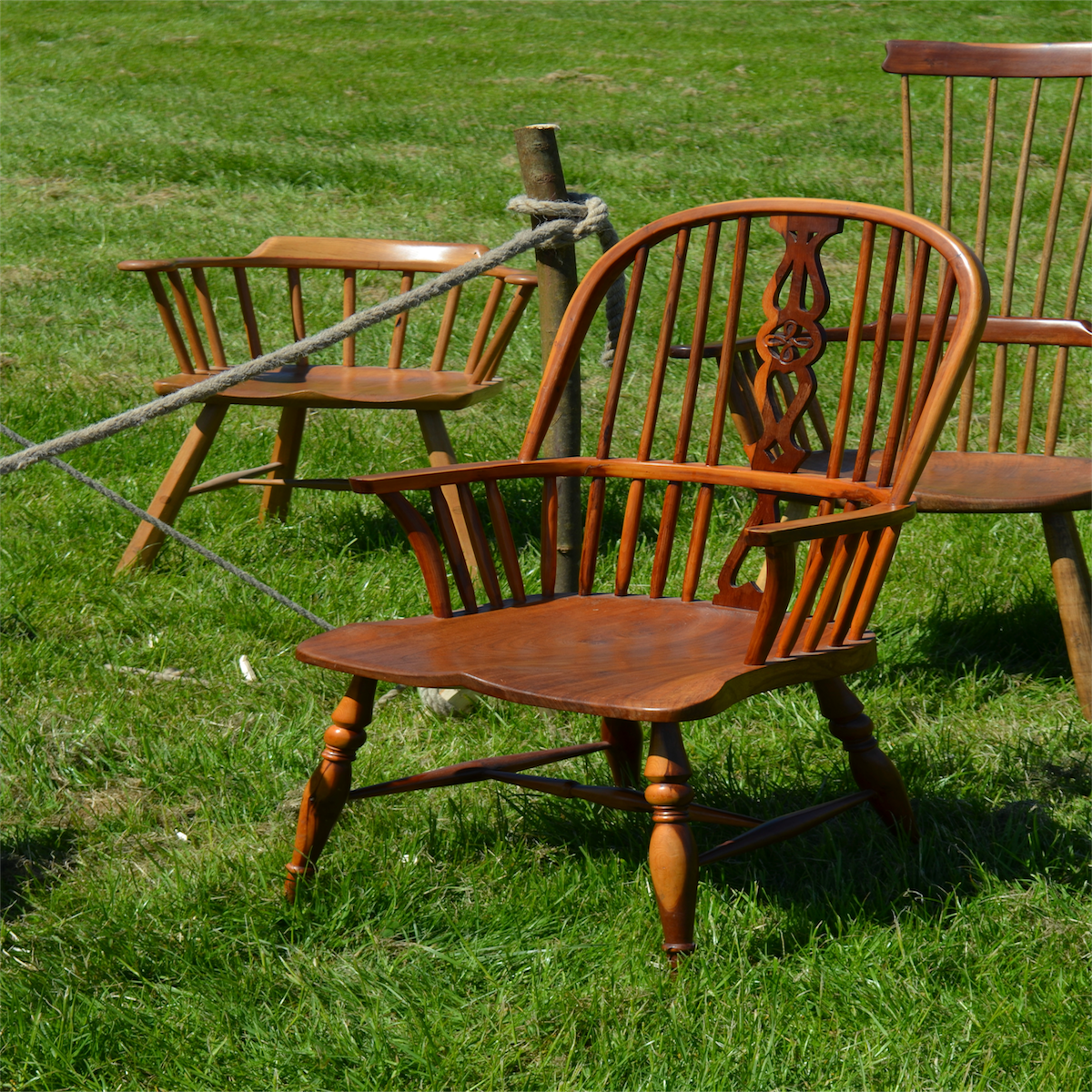
It is important to take your work to an audience of you don’t have a venue to work from that shows your work. In every shop I have owned I have always set up a reception area showing my work. Sharing what I do is as important to me as the actual making of it. It’s here that I engage the most and it’s here I can best explain my ambitions and goals and indeed my life as a lifestyle woodworker. There will always be a percentage of people who want to buy a piece knowing it was carefully made by hand. I’m not saying it’s an easy passage being a maker, designer, marketer and salesperson, but somehow it seems so much more relational and you develop something so much more substantive when people know that the piece in front of them didn’t come from a factory or from another country or continent.
Comments ()