
A Bevy O' Octagonal Chisels
More Thoughts About Chisels.
Someone asked me if dovetail chisels sold in pairs for left and right hand use are worth owning. A few years ago I bought some new old stock 3/8” bevel edged chisels with London-pattern boxwood handles from a jobber friend of mine for $2 each at a US woodworking show. I realised that I could make two dovetail chisels without any loss and I did. Then I realised that I had just complicated the whole process of dovetailing without really thinking through the issues. I now had two more chisels of very, very limited use to take care of and I inevitably picked up the left one instead of the right or vice versa almost every time. The benefit over what existed before was barely, ever so barely, discernible, which makes me look at other issues surrounding bevel-edged chisels and fineness. Always remember that tool makers are naturally inclined towards looking for something new to make. First create the illusion of a perceived need and lack and you create the demand. I doubt whether it was a craftsman going to the chisel maker declaring some lack that brought these tools about because you don't really find them in pre World War II tool catalogs or indeed R A Salaman's Dictionary of Woodworking Tools. That said, there is of course always entrepreneurialism that shouls always welcome new ideas. Nothing wrong with that at all. Better mousetraps and all of that.

When I cut dovetails my normal bevel edged chisels are close to hand on the benchtop. I use every size from 1/8” to 1 1/4” routinely throughout most days and especially when cutting any type of dovetail. I keep them in a tray in the well of the bench. I use chisels appropriate to width for chopping out the waste and then, if and only if I need to, I pull out a narrower chisel to reach into the inside corners of say a half-lap dovetail innards. A 3/8" chisel works best for most of this aspect of the work but 1/4" and even 1/8" are called for at times. I angle the chisel so that the very corner of the chisel slide-slices right into the corner and slice-cuts a pristine inside corner perfectly.
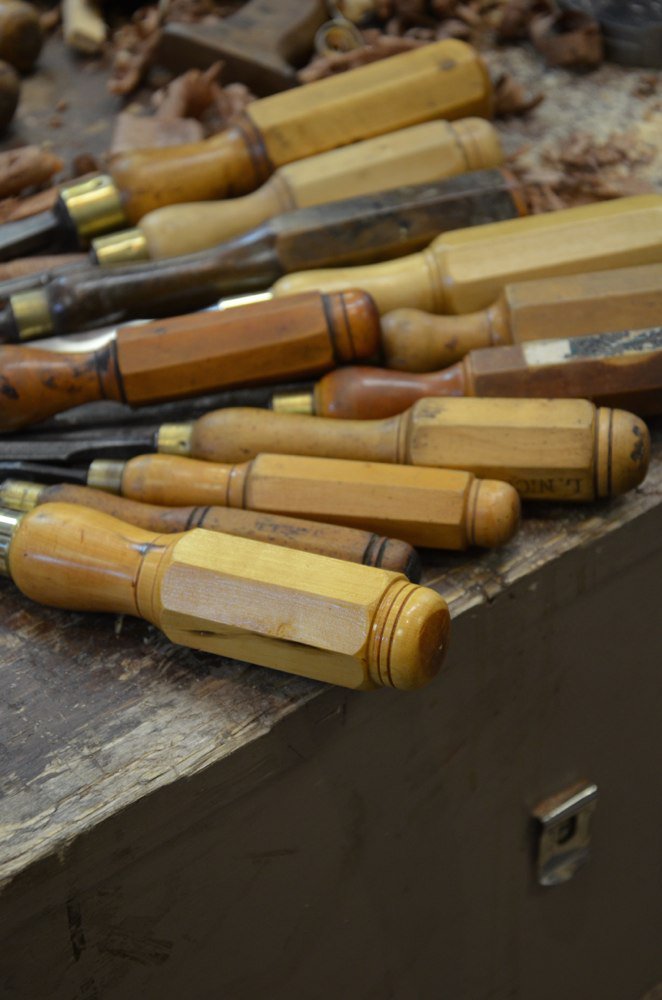
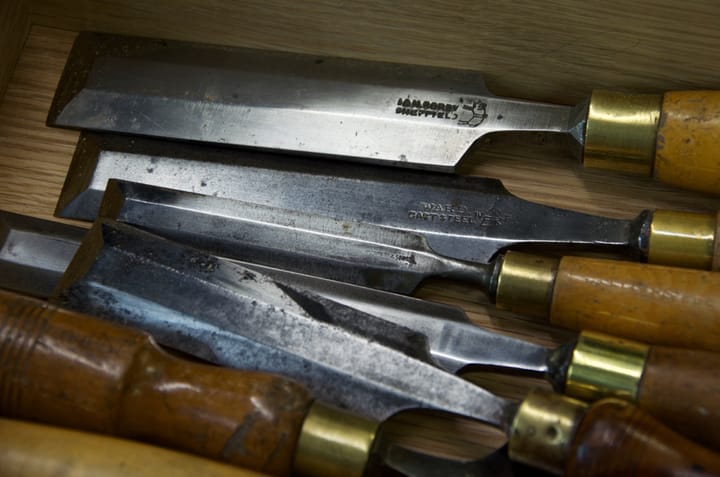
My personal chisels are old chisels mostly, which I have bought through the years as secondhand tools. Most of them are wooden handled Ward, I Sorby or Marples from between the mid 1800s to the pre 1940s, but I have others made in more recent decades too. The old chisels are refined. Very refined. When I say refined I don't mean snobby refined but craftsman defined. I think there was a reason for the highly f]developed models and that it wasn’t some pretence of refinement for appearances sake but an exactness demanded by working men for efficiency combined with effectiveness. I think that the steel works as well if not better than many modern chisels I have tested and used over recent decades and that they are not only equal to the task but they have all proven themselves to, one, be readily sharpenable (not to soft and not too hard), two, take a keen edge and, three, equally if not more importantly, hold the edge for a goodly amount of work, which is many hours in a day for the more general work.
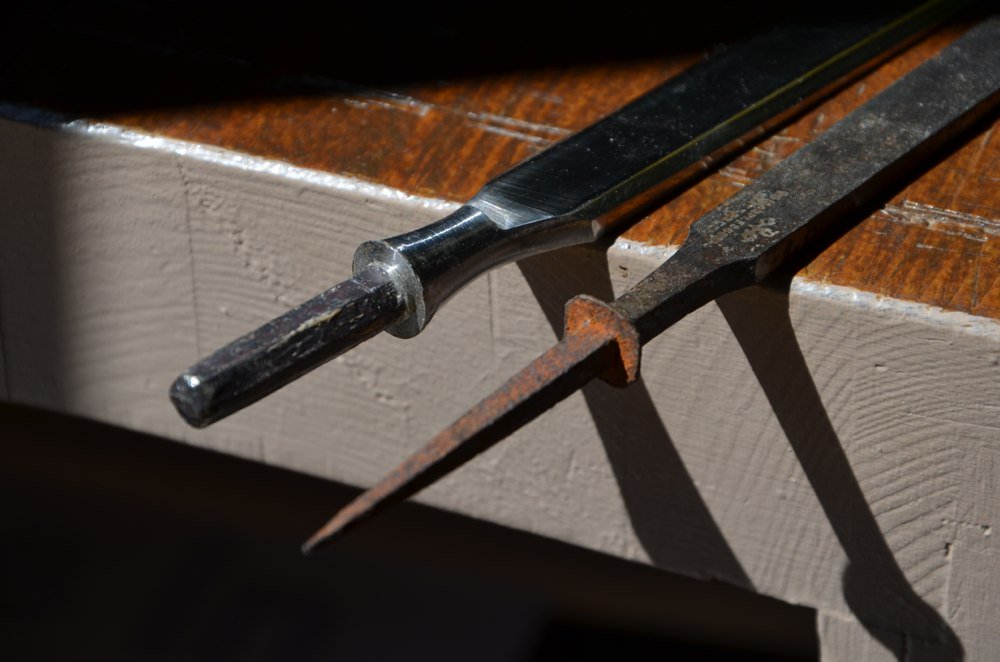
The refined tangs of old are still lovely to see as compared to the ugly ones of modern makers...
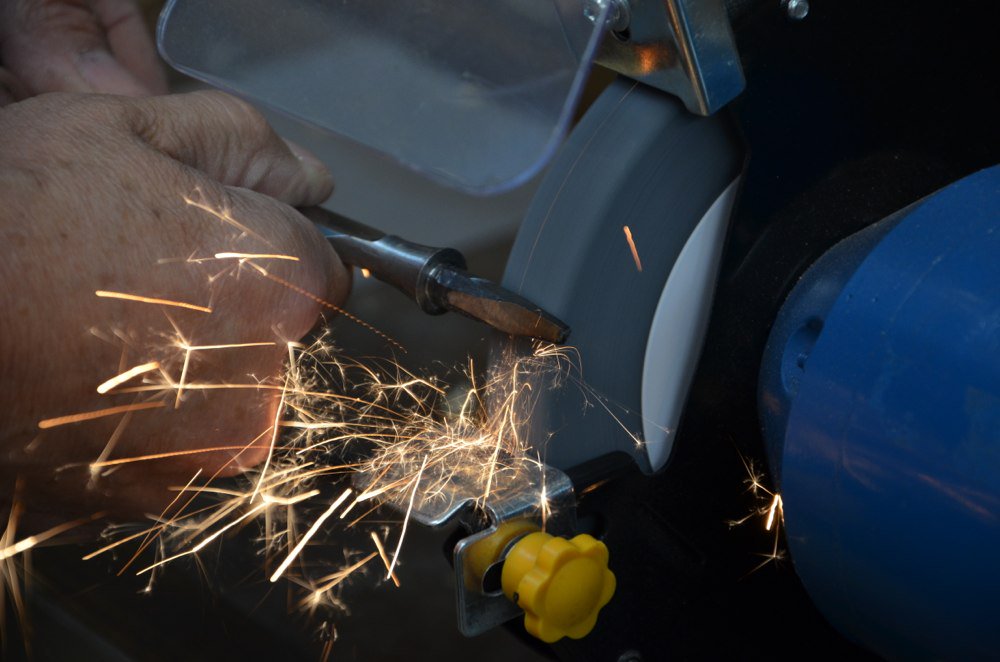
...I ground the tang to a point for good measure and installation into the new handle.
The thing I like about them the most is that they were designed for fine woodworking, yes, but that they are strong yet lightweight with good balance in the hand and that’s what makes them efficient. On a more recent level, most modern-day chisels are made to thicker dimensions with narrower bevels and thicker sides to them. They look and feel clunkier and though they undoubtedly are more robust for heavy work, they often project the wrong impression. If you look at chisels made with a steel cap and stem passing into or through the plastic handle of a chisel it somehow conveys a message to the user, “Go on, beat me with a waffle head hammer. I won’t break.” In times past, when we only had wood for handles, a craftsman would never have even thought in those realms and would never have stressed a wooden handle in any way. Why do we not think that way any more? The men I worked with all had beautiful wooden handled chisels and had used the same chisels for fifty years and more with nothing done to degrade them. The chisel, saw and plane handles on their tools reflected their sensitivity and care in the use of tools and work. I think we should return to this even if chisel handles are made from unbreakable plastic.
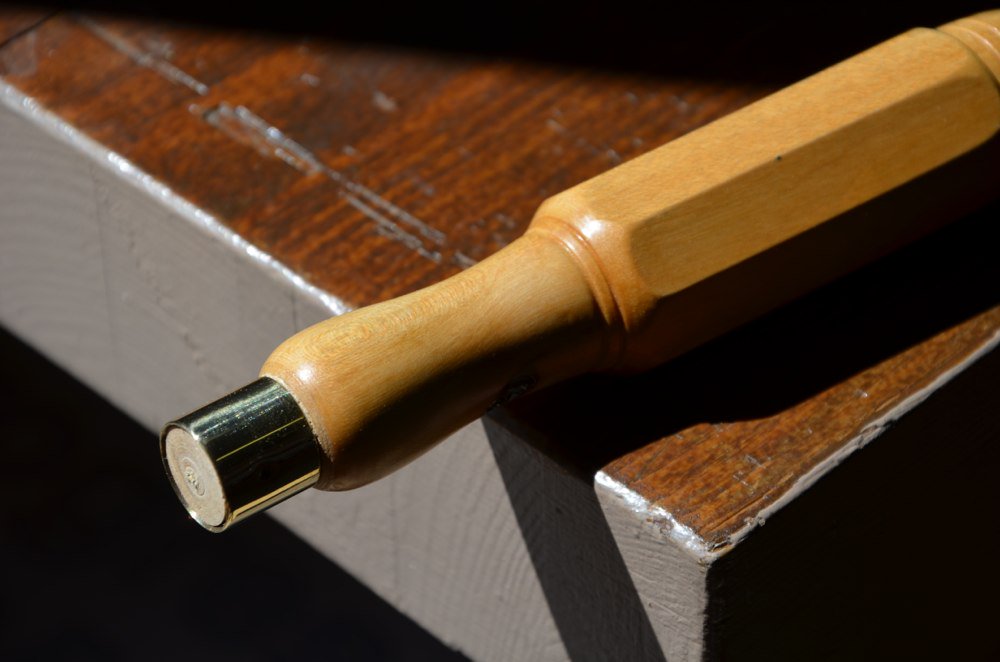
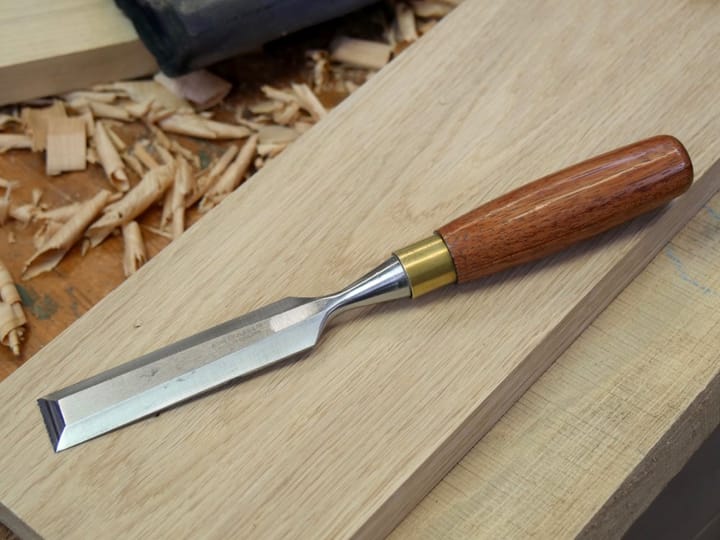
I made a chisel handle for a video on making replacement London-pattern chisel handles yesterday. I fitted it to a refined Aldi 3/4” chisel to show how we can take a £2 chisel and make it into a £30 in about half an hour or so. It is much simpler to do than it looks and the handle made the chisel one that I would like to own and use.
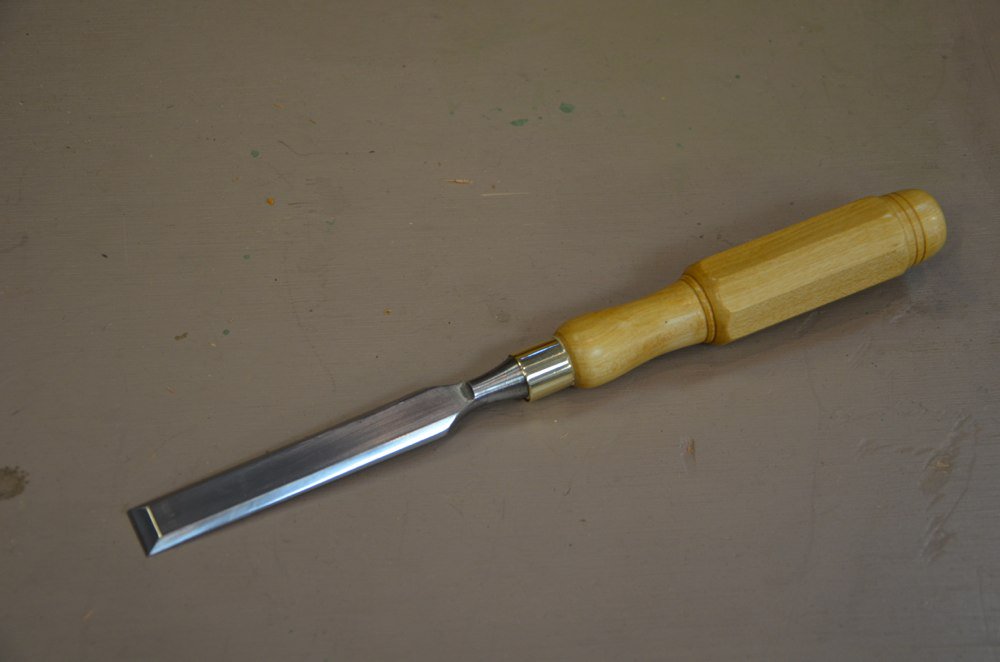
Here is how it looked when done.
The wood is Indian Laurel cut on the bandsaw from the inside of some birdhouses I made using the outer circumference of a 6” diameter limb. I got four chisel blanks from the 9” length, so from one innard I got a £15 birdhouse and four chisel handles. The Laurel feels about as hard as Boxwood and turns just as beautifully and readily. It looks very similar and works the same with hand planes to form the octagon.
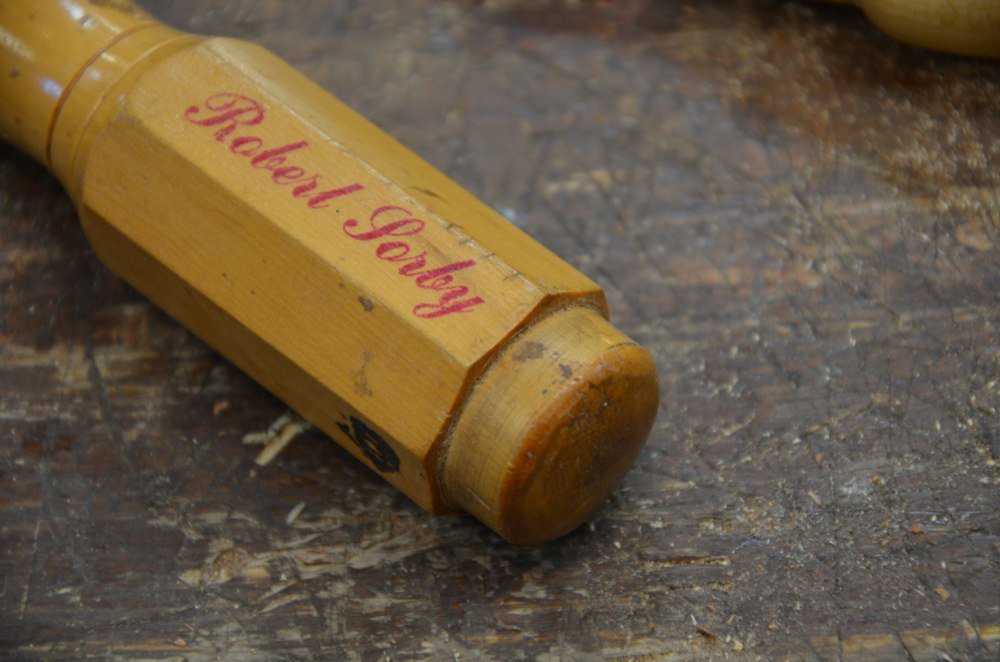
For some weird and very daft reason, after over a century of making fine boxwood chisels with hexagonal handles and a single ferrule with no hoop, Robert Sorby decided to add a silly and flimsy hoop to the the top of their chisels. These hoops come off after a while because the handles always shrink unless you live in Houston, Texas. I chucked mine back in the lathe and refined the shape more like their former counterparts for comfort and shape.
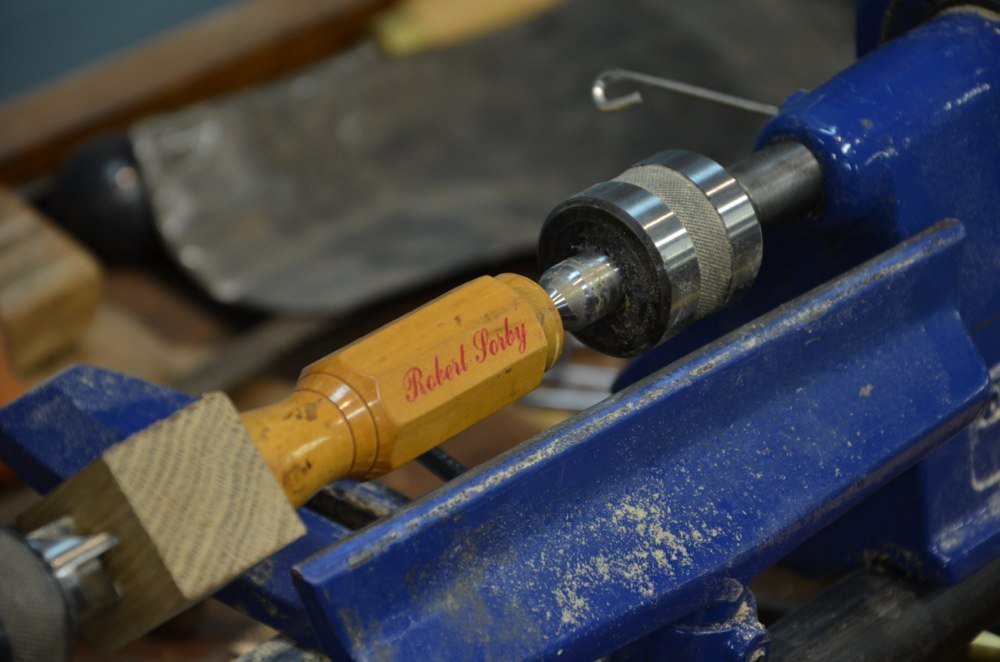
It takes just a few minutes to restore the tool to the former glory of the company father's standards.
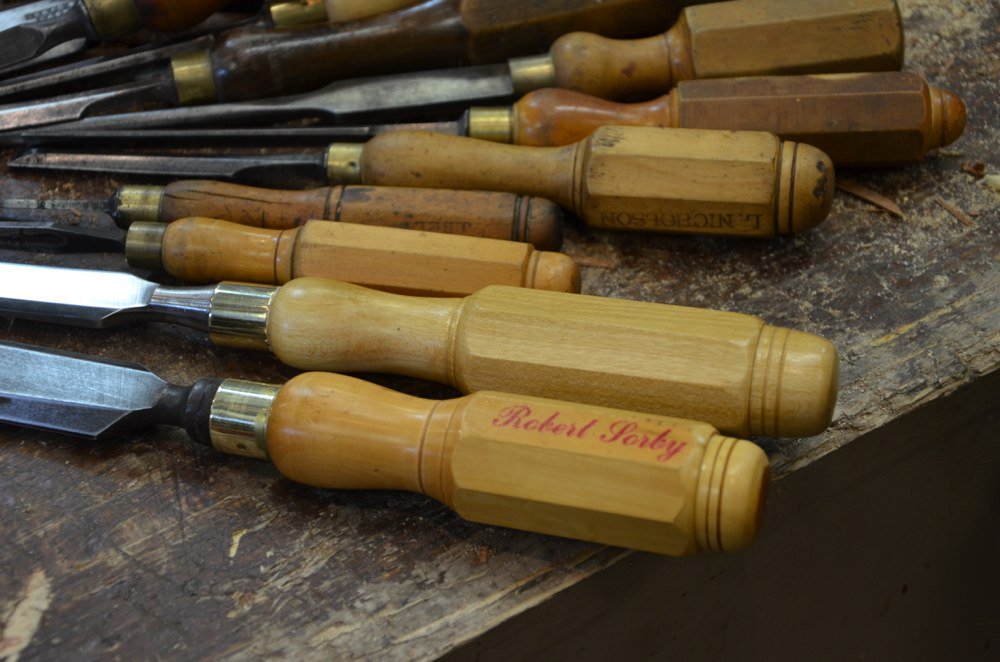
A bevy octagonal chisel handles is about as lovely as it gets.
Comments ()