
Historical Perspectives Still Holding Good For Our Future
The future of woodworking seems ever brighter when I look in on times past.. I spend time still after all these years looking at the work of those who went before me. Tenons and dovetails aren't at all new to me but they are filled with information about standards of workmanship, methods of work and working, material types, sizing and of course the obvious things such as style.
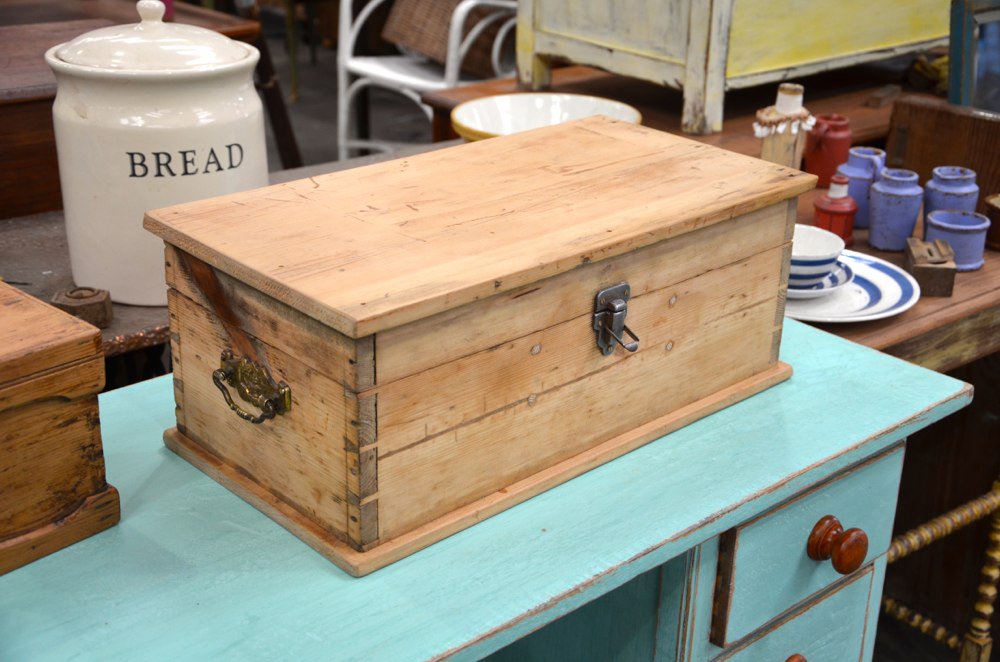
For much of my life I have seen dovetails nailed with a single pin through each dovetail. People today often describe this as slipshod. When I made my first dovetailed Joiner's tool box I was told to nail the dovetails and that's what I did. Just like the ones shown here but with oval nails. In most cases the nail mattered very little because boxes in pine were always painted for protective sealing and appearance. Boxes were of course the pre-plastic days and ways for transporting dry goods, storing them and of course keeping them safe. Today we see poor substitutes for wooden boxes that have no real joints but glue, staples and wood filler that might look good but have no built in longevity. What a difference to think a box might last over a hundred years and even two and three and still be going strong.
A close look at these boxes shows gauge lines that actually seemed to make very little difference to the maker.
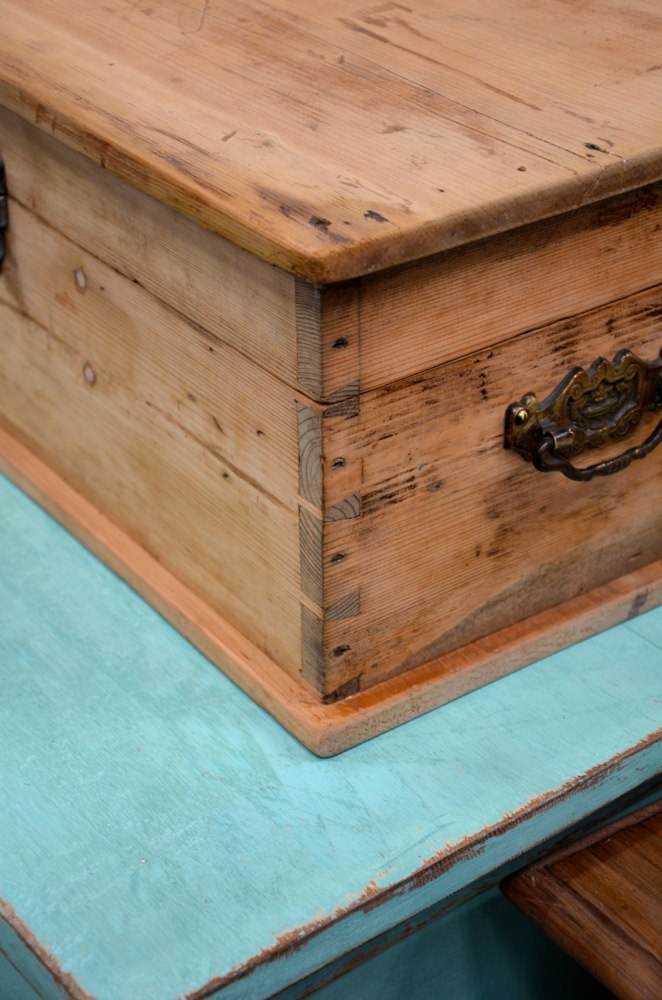
Looking in closely the shoulder lines were often strayed from and so too as ever the depth of cuts of saws.
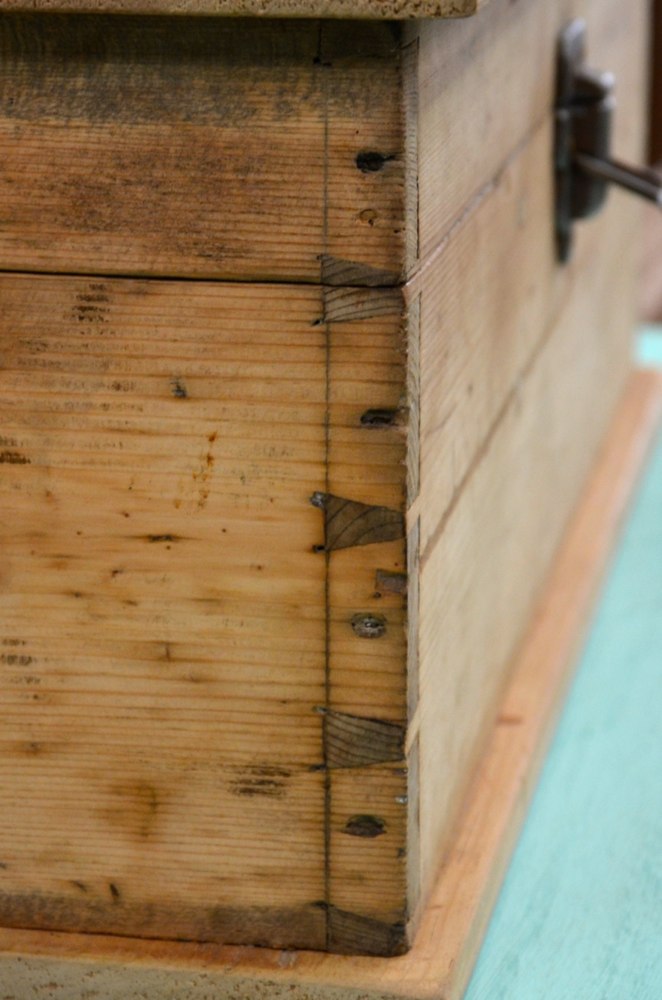
The alignment of angles too seemed of secondary importance and all of this shows my point. The boxes were made quickly and with tolerances close enough to guarantee strength yet without being overly concerned with accuracy.
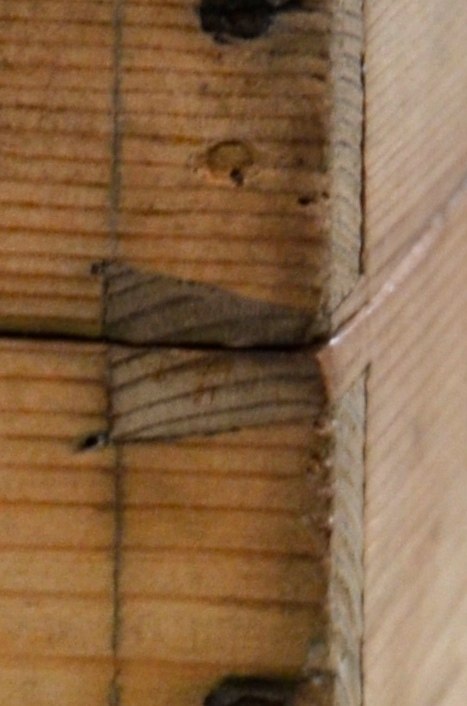
Look at the marking gauge lines on this box corner above where I have enlarged the area around the meeting point where the lid is parted for the opening. This was the greatest discrepancy of about 1.5mm. Not a close tolerance at all but the joint is tightly made.
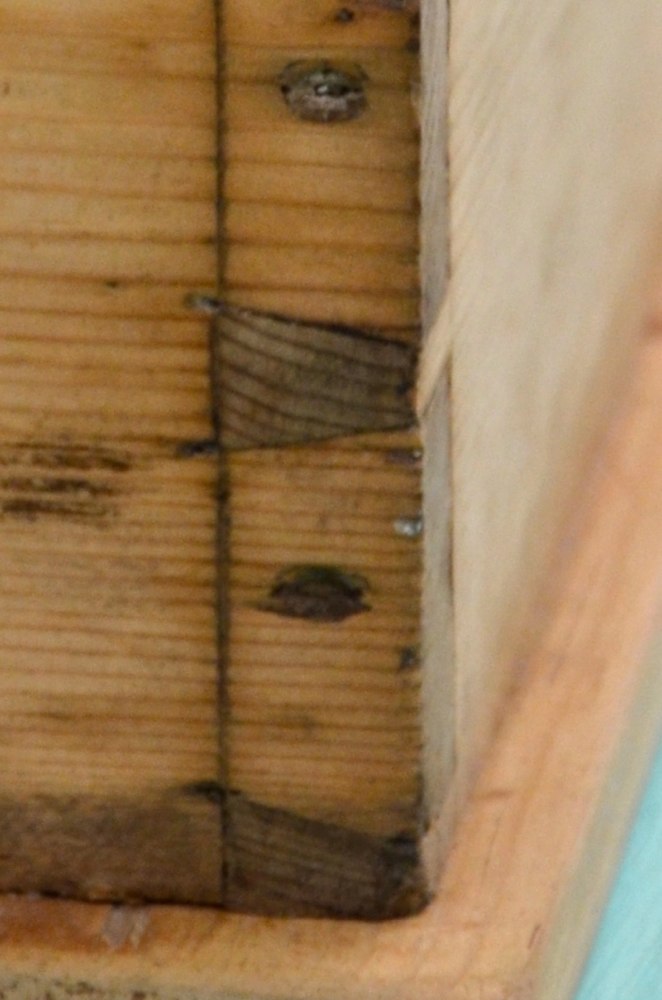
In the next image of course we see the nail head holes in the dovetails. Notice there was no filler used. No putty.
Saw kerfs rarely stopped at the lines on vernacular boxes like these. New woodworkers may not be aware of this. What's your box for? Tools or a fine secretaire. Perhaps a beehive or a kitchen box holding onions and potatoes.
The angles to the dovetails are all different and though close not close enough for the maker to have used a dovetail guide. The spacings are different too. Layout was unlikely.
Fast, effective, practical woodworking at its best. Economy of time, materials and real woodworking.
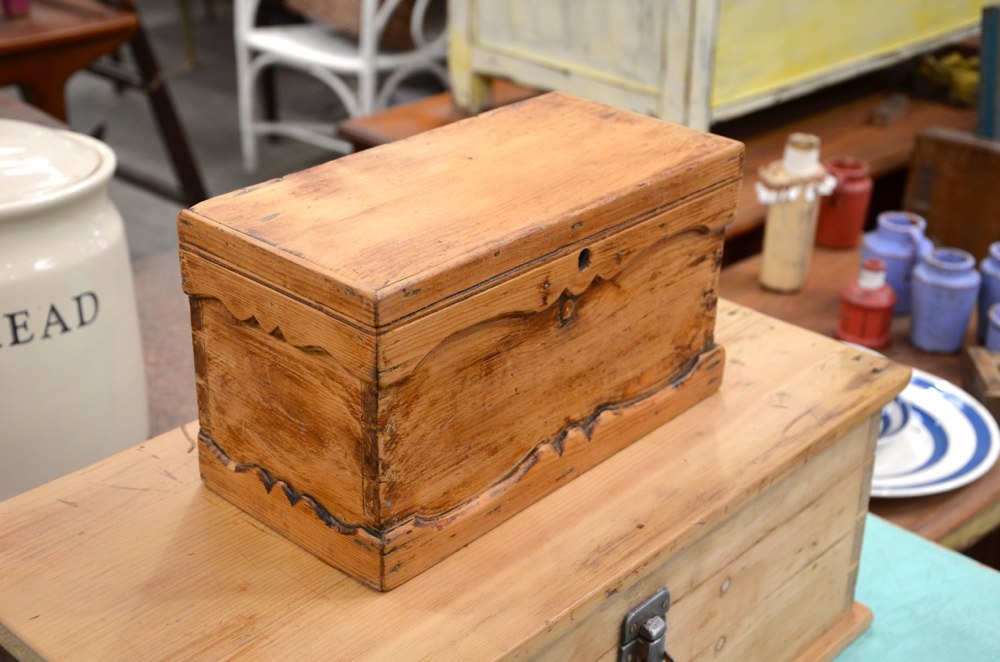
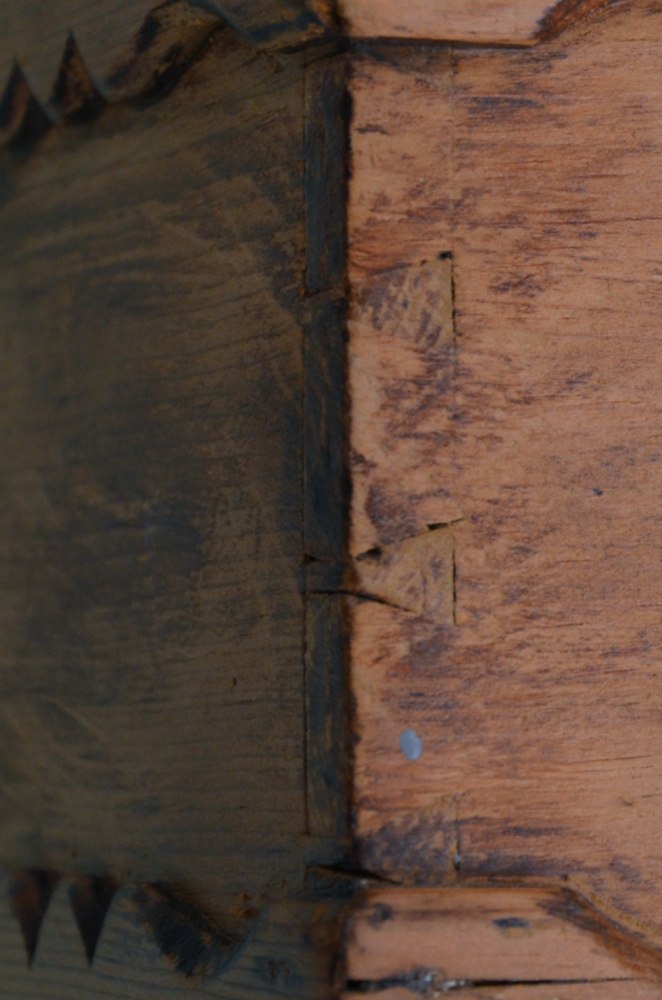
I liked the last box quite well. Added decoration nailed in place and then signs throughout of paint removed. If the craftsman who made this was never known we know he passed on the traditions of dovetails purely by sighting his dovetails too. You are right again, they are not brilliantly executed but simply and effectively done to store things he really valued.
Comments ()