
Questions Answered - When Do You Put Things in Order? Part III
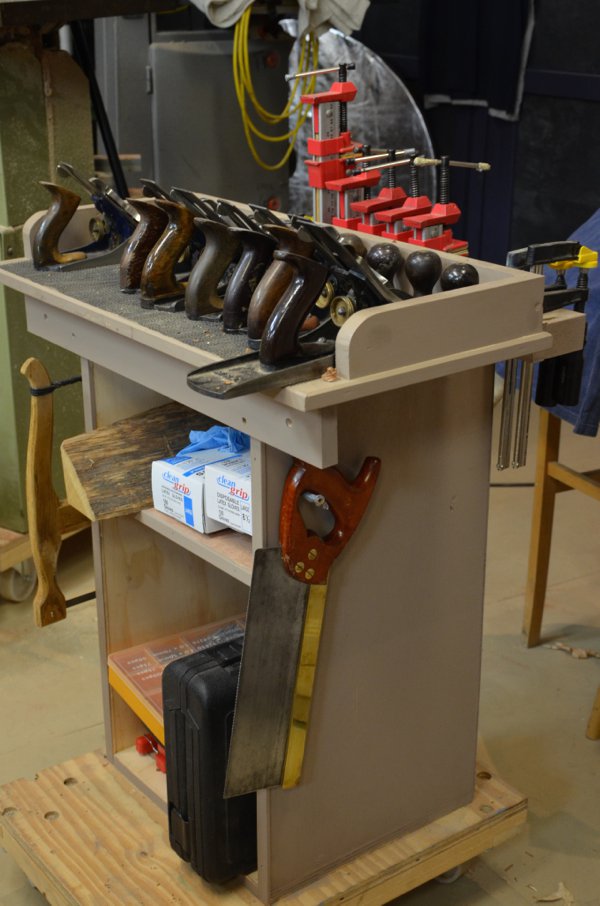
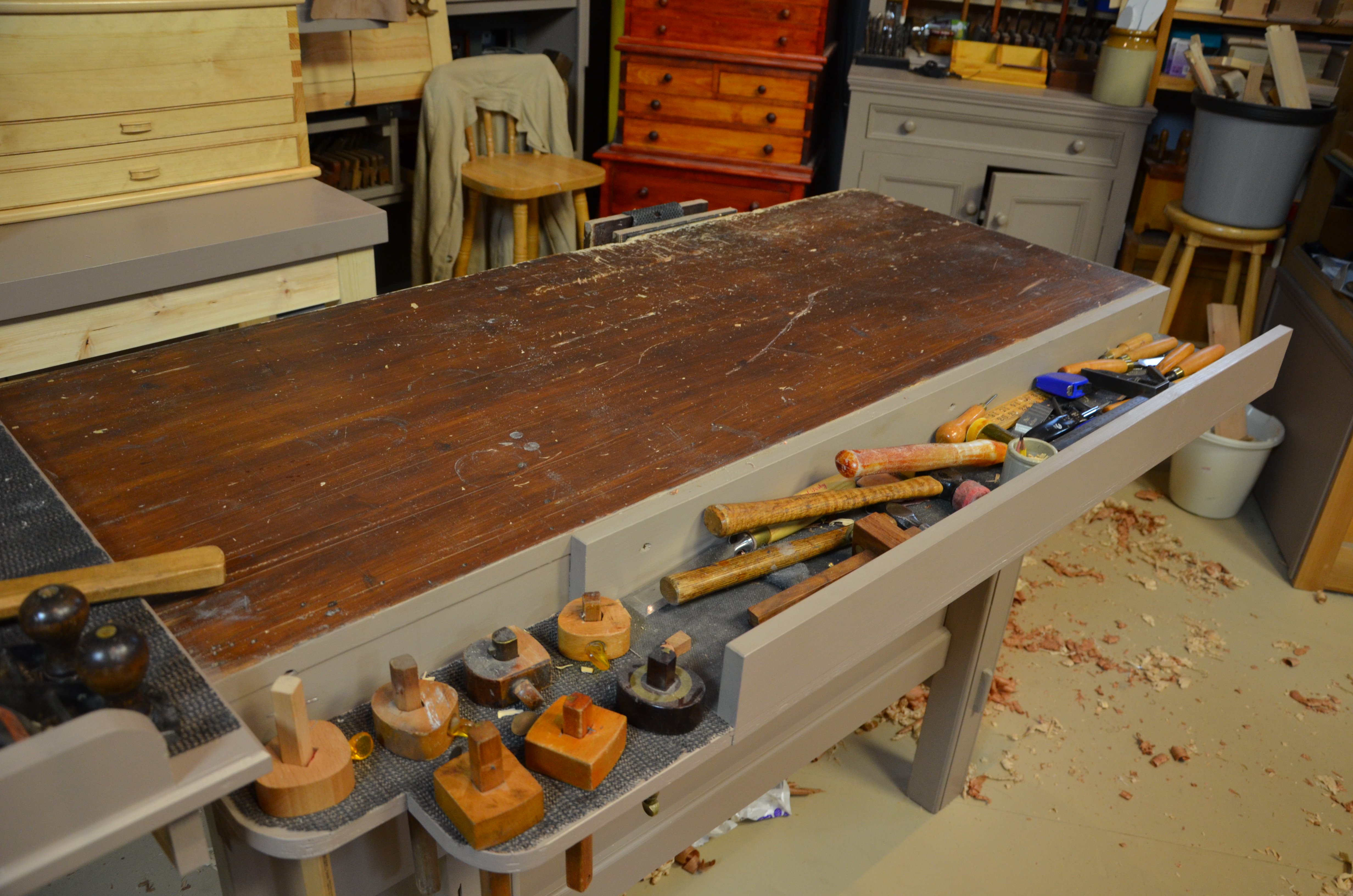
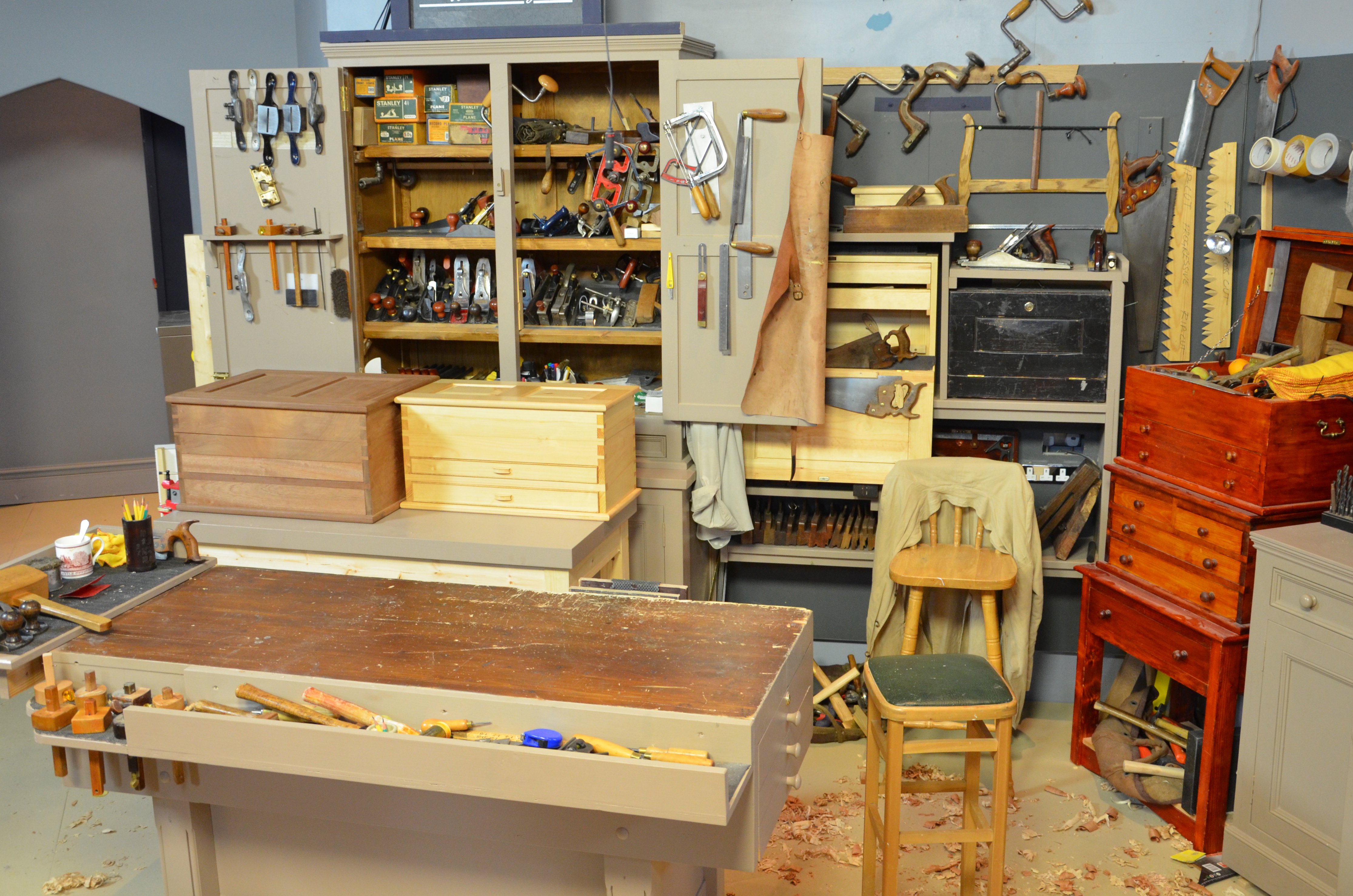
Of course we would all like a clean and orderly shop and sometimes things get away from us for a period. This is especially so in particularly small areas where we can actually least afford to lose a square inch of space to mess and disorderliness. I friend I had was always superbly organised in his office and his home shop. I once said I would love to be as organised as he. He quickly replied, “I have no problem getting organised at all…” and stopped for a few seconds for me to contemplate his shocking self-righteous remark. Then he continued “…my problem is staying organised.” Though his comment helped me realise that it was no easier for him than it was for me to be self disciplined and take care of issues as they occurred, rather than leaving everything until things got so bad it was impossible to move, six months later, sitting in his office or visiting his shop, nothing had changed. The books and ducks stayed in the same place, unread and orderly. Life is more than that. Then again, I see shops that look more like a Poggenpohl kitchen replete with plastic laminate countertops to boot rather than a working shop.
Even with a clear bench, my workshop still looks like a workshop.
This last part in the series is a brief one about wood and wood storage. Probably this is the most difficult one for most of us because we are reluctant to throw out hard earned wood and the resultant small offcuts that should we go out to buy it would cost us a few pounds. Hand tools always to me seem to find their natural place on the bench and in the cupboards and central areas surrounding the work zone of the bench. They remain in close proximity for obvious reasons, but the wood we use has so many different elements it takes a little working out what to keep and what to get rid of. The new wood and lumber is always easiest. You just bought it in and you must fit it in as best you can. The racks I use are ideal for small wood, timber and board storage. Sometimes it’s awkward but I find with a little forward planning this system works.
Here in this rack I have all types of wood in every shape and size.
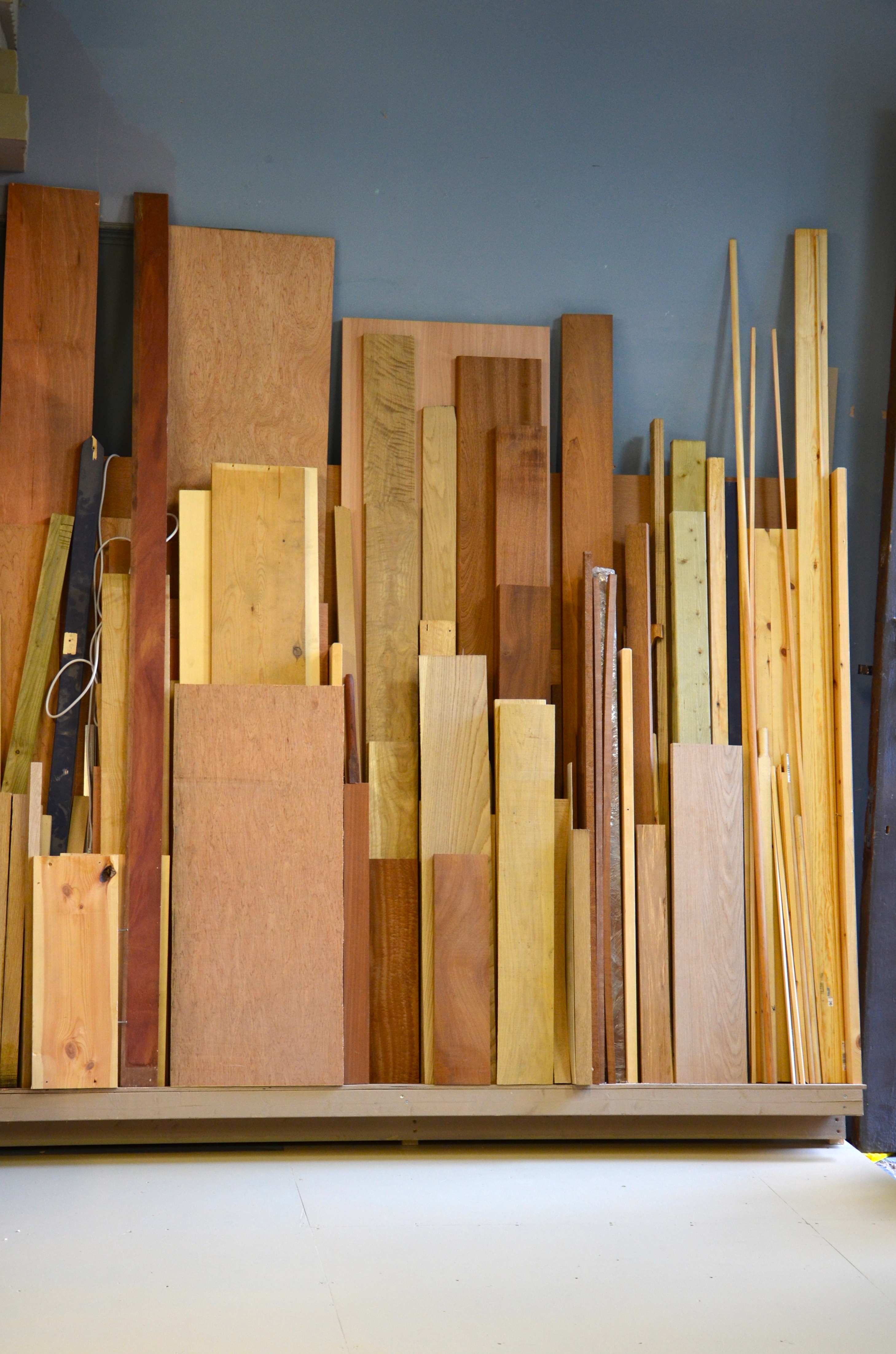
Furniture makers and general woodworkers rarely use wood longer than 8′ with the predominance of wood under 4′ long with a percentage at 6′. That being so, racks need only to take 8′ lengths. My racks will take longer because my ceilings are at 20′, but this rack really works for me. Tallest generally goes to the back and so to wider boards. There are vertical dividers at three foot centres. These are 1 1/4″ by 7″ deep and 4′ tall and are anchored to the plywood backer which slopes 12″ from the base to 6′ tall.
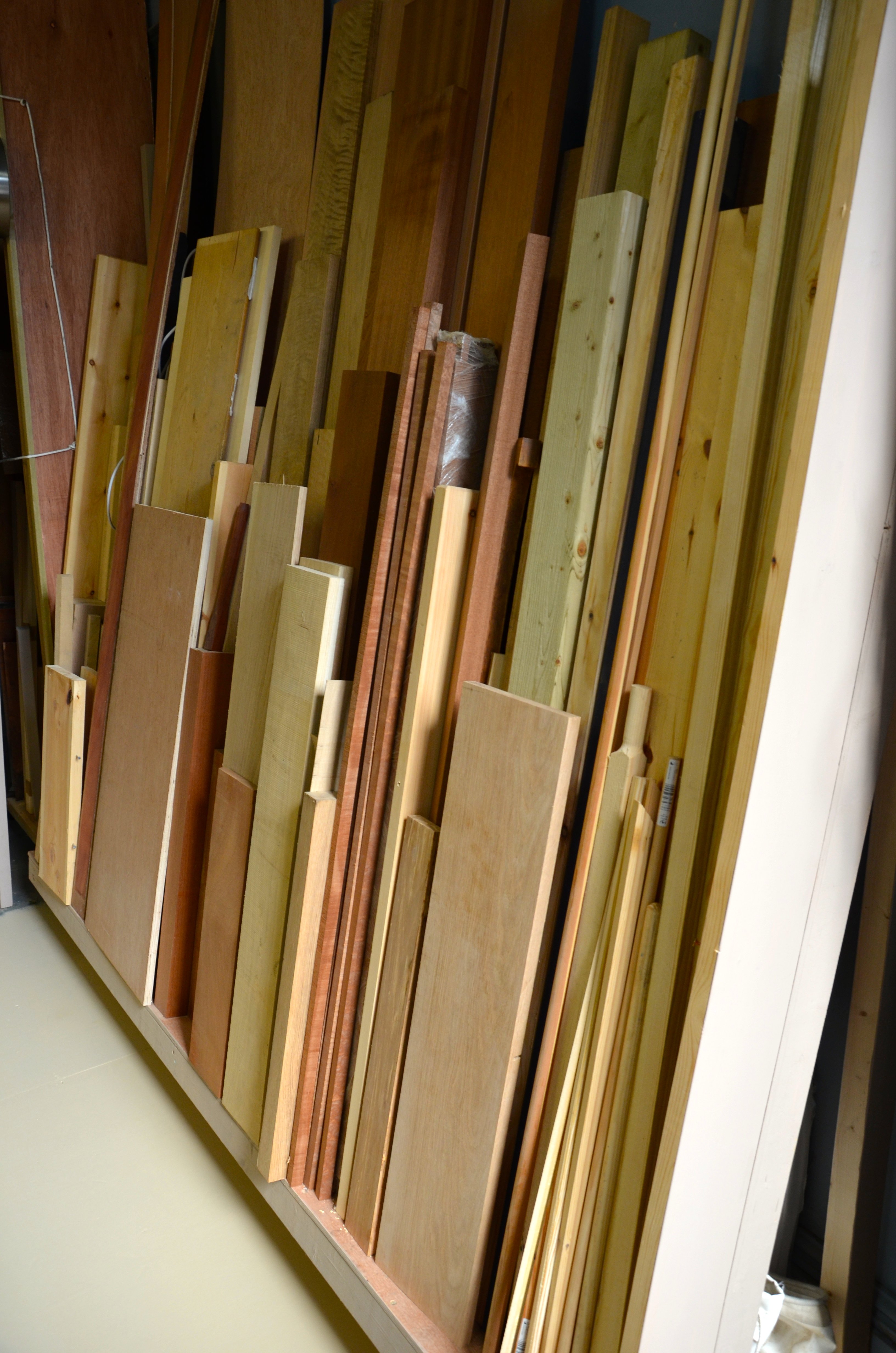
This keeps everything upright and reduces the risk of slippage. The racks I use are on wheels, solid-tyred castors 2 1/2″ diameter. We move the racks infrequently but they make movement possible when needed.
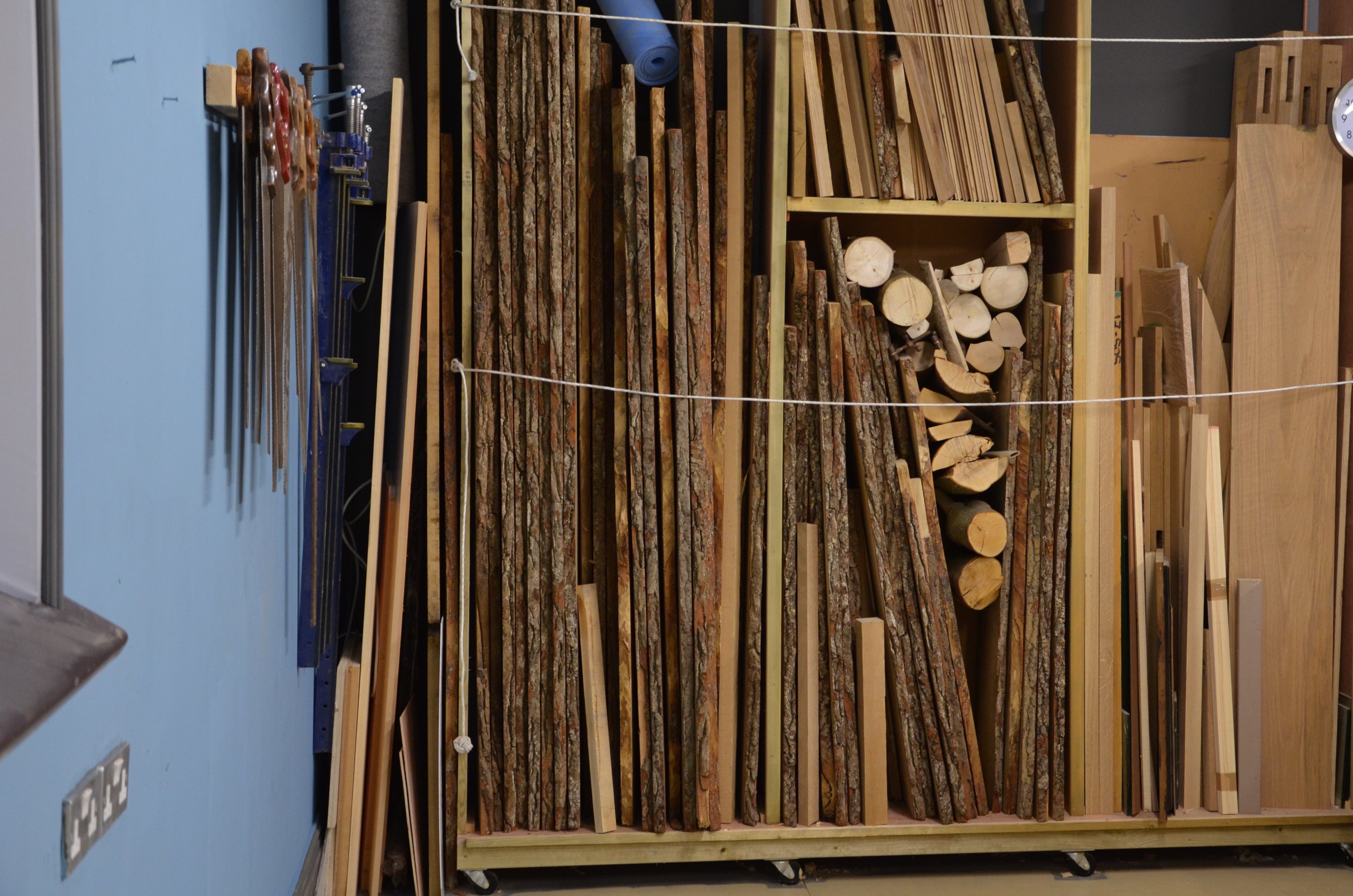
This second rack also tilts back but only 3″ as the wood is stacked on edge as you can see. This allows fuller access to each individual board and also multiple lengths. Customising the rack is very doable and again dividers prevent slippage and allows additional shelving for shorter sections.
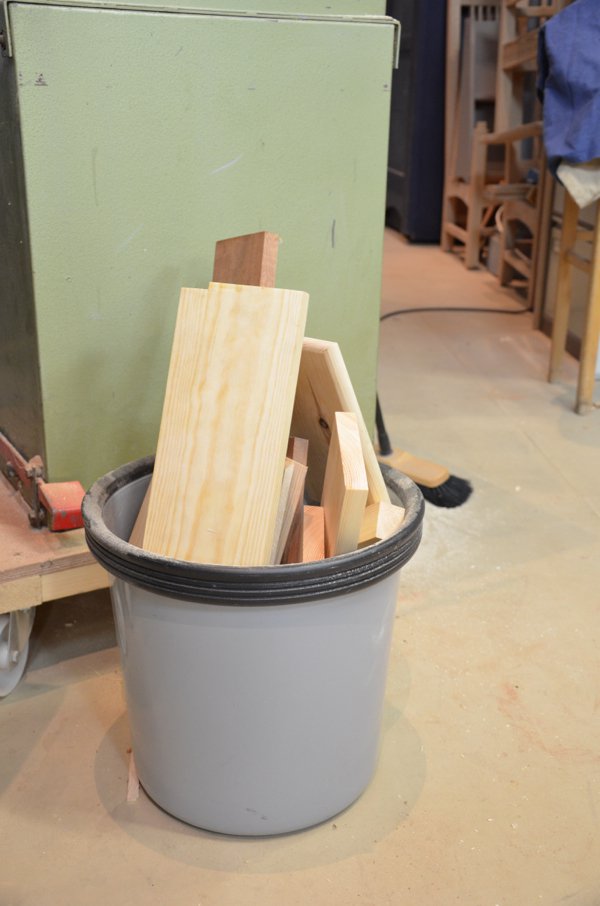
I keep two bucket bins not much bigger than a regular pail near my bench. All the small offcuts go into there until a particular project is completed. After a couple of weeks or so I go through the bucket and remove what I don’t want by cutting it into firewood for friends at the Bluesky Cafe in exchange for an occasional coffee.
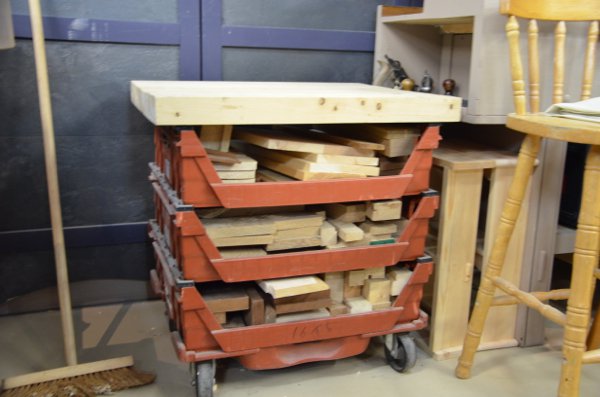
I also use supermarket delivery crates for small component storage. I bought 30 of them with sets of wheels two years ago and find them very useful.
In the past I made square bins 2′ x 2′ by 30″ deep and lined eight of them underneath my chopsaw out-feed tables. These bins take care of a wide range of offcuts.
To conclude my thoughts – It is unrealistic to think that any shop can look like this with perfect stacks in racks, swept nooks and crannies if it is indeed a working workshop. I am not sure if I would aim for that at all. The fact is that you have to start with a place for your stuff and the stuff we woodworkers have is not stacked sheets of photocopy paper in trays on desks but very awkward stuff none of which can be shuffled into piles like that. So we make the best of an awkward world and get on with life!
Comments ()